 Add to Chrome
 Add to Firefox
 Add to Edge
Less is more: Embracing sparsity and interpolation with Esiformer for time series forecasting
Oct 08, 2024
Time series forecasting has played a significant role in many practical fields. But time series data generated from real-world applications always exhibits high variance and lots of noise, which makes it difficult to capture the inherent periodic patterns of the data, hurting the prediction accuracy significantly. To address this issue, we propose the Esiformer, which apply interpolation on the original data, decreasing the overall variance of the data and alleviating the influence of noise. What's more, we enhanced the vanilla transformer with a robust Sparse FFN. It can enhance the representation ability of the model effectively, and maintain the excellent robustness, avoiding the risk of overfitting compared with the vanilla implementation. Through evaluations on challenging real-world datasets, our method outperforms leading model PatchTST, reducing MSE by 6.5% and MAE by 5.8% in multivariate time series forecasting. Code is available at: https://github.com/yyg1282142265/Esiformer/tree/main.

Evolving Multi-Scale Normalization for Time Series Forecasting under Distribution Shifts
Sep 29, 2024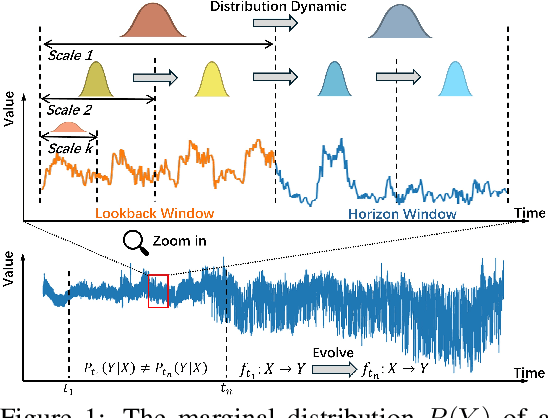
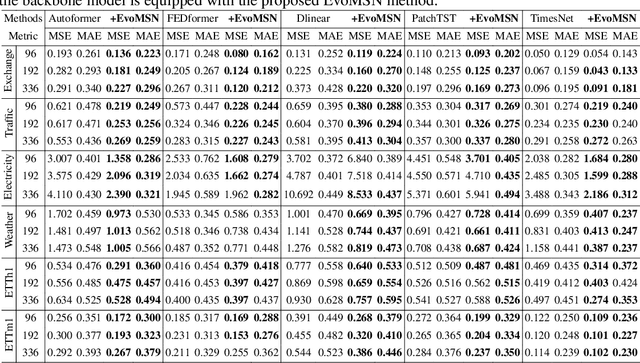
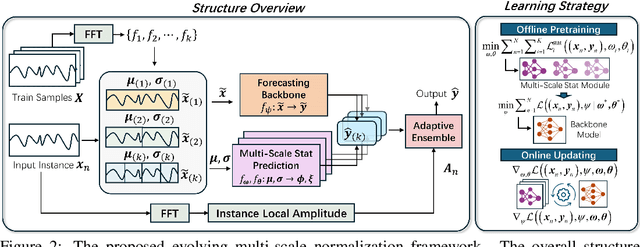
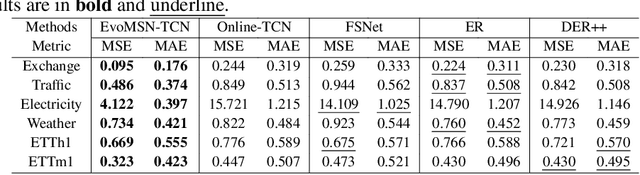
Complex distribution shifts are the main obstacle to achieving accurate long-term time series forecasting. Several efforts have been conducted to capture the distribution characteristics and propose adaptive normalization techniques to alleviate the influence of distribution shifts. However, these methods neglect the intricate distribution dynamics observed from various scales and the evolving functions of distribution dynamics and normalized mapping relationships. To this end, we propose a novel model-agnostic Evolving Multi-Scale Normalization (EvoMSN) framework to tackle the distribution shift problem. Flexible normalization and denormalization are proposed based on the multi-scale statistics prediction module and adaptive ensembling. An evolving optimization strategy is designed to update the forecasting model and statistics prediction module collaboratively to track the shifting distributions. We evaluate the effectiveness of EvoMSN in improving the performance of five mainstream forecasting methods on benchmark datasets and also show its superiority compared to existing advanced normalization and online learning approaches. The code is publicly available at https://github.com/qindalin/EvoMSN.
FuzzCoder: Byte-level Fuzzing Test via Large Language Model
Sep 03, 2024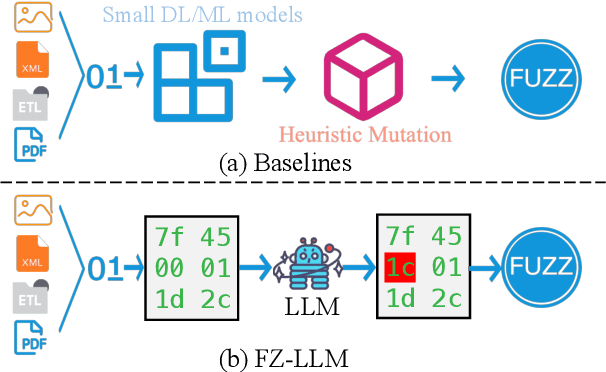
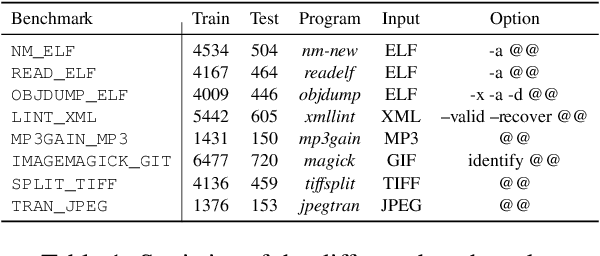
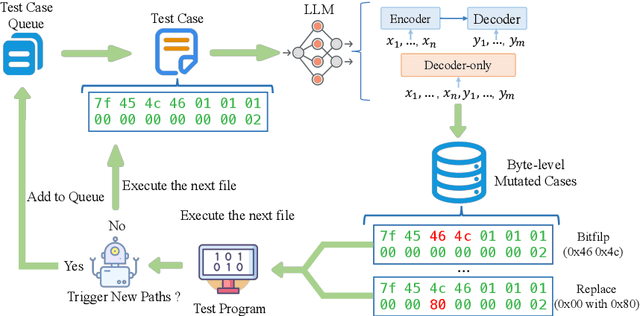
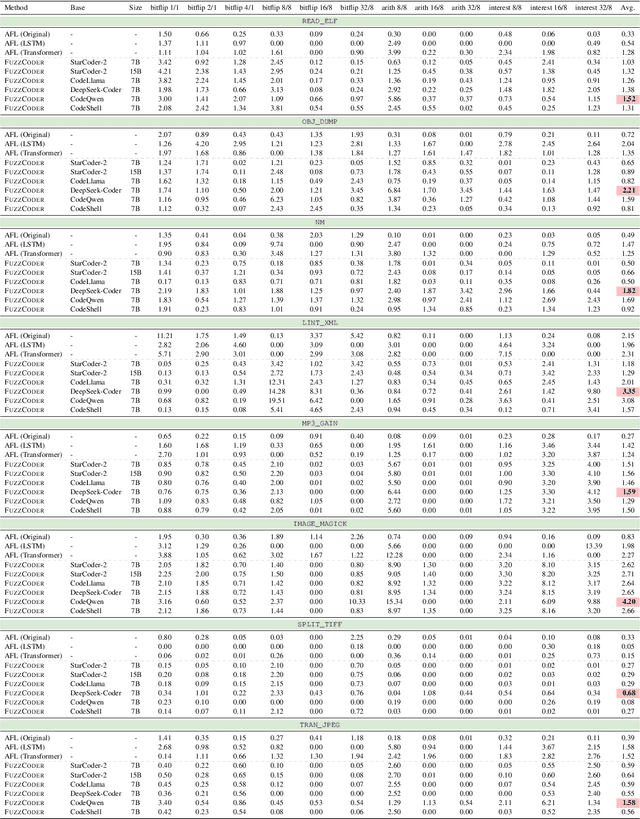
Fuzzing is an important dynamic program analysis technique designed for finding vulnerabilities in complex software. Fuzzing involves presenting a target program with crafted malicious input to cause crashes, buffer overflows, memory errors, and exceptions. Crafting malicious inputs in an efficient manner is a difficult open problem and the best approaches often apply uniform random mutations to pre-existing valid inputs. In this work, we propose to adopt fine-tuned large language models (FuzzCoder) to learn patterns in the input files from successful attacks to guide future fuzzing explorations. Specifically, we develop a framework to leverage the code LLMs to guide the mutation process of inputs in fuzzing. The mutation process is formulated as the sequence-to-sequence modeling, where LLM receives a sequence of bytes and then outputs the mutated byte sequence. FuzzCoder is fine-tuned on the created instruction dataset (Fuzz-Instruct), where the successful fuzzing history is collected from the heuristic fuzzing tool. FuzzCoder can predict mutation locations and strategies locations in input files to trigger abnormal behaviors of the program. Experimental results show that FuzzCoder based on AFL (American Fuzzy Lop) gain significant improvements in terms of effective proportion of mutation (EPM) and number of crashes (NC) for various input formats including ELF, JPG, MP3, and XML.
CURLS: Causal Rule Learning for Subgroups with Significant Treatment Effect
Jul 01, 2024In causal inference, estimating heterogeneous treatment effects (HTE) is critical for identifying how different subgroups respond to interventions, with broad applications in fields such as precision medicine and personalized advertising. Although HTE estimation methods aim to improve accuracy, how to provide explicit subgroup descriptions remains unclear, hindering data interpretation and strategic intervention management. In this paper, we propose CURLS, a novel rule learning method leveraging HTE, which can effectively describe subgroups with significant treatment effects. Specifically, we frame causal rule learning as a discrete optimization problem, finely balancing treatment effect with variance and considering the rule interpretability. We design an iterative procedure based on the minorize-maximization algorithm and solve a submodular lower bound as an approximation for the original. Quantitative experiments and qualitative case studies verify that compared with state-of-the-art methods, CURLS can find subgroups where the estimated and true effects are 16.1% and 13.8% higher and the variance is 12.0% smaller, while maintaining similar or better estimation accuracy and rule interpretability. Code is available at https://osf.io/zwp2k/.
APSeg: Auto-Prompt Network for Cross-Domain Few-Shot Semantic Segmentatio
Jun 12, 2024Few-shot semantic segmentation (FSS) endeavors to segment unseen classes with only a few labeled samples. Current FSS methods are commonly built on the assumption that their training and application scenarios share similar domains, and their performances degrade significantly while applied to a distinct domain. To this end, we propose to leverage the cutting-edge foundation model, the Segment Anything Model (SAM), for generalization enhancement. The SAM however performs unsatisfactorily on domains that are distinct from its training data, which primarily comprise natural scene images, and it does not support automatic segmentation of specific semantics due to its interactive prompting mechanism. In our work, we introduce APSeg, a novel auto-prompt network for cross-domain few-shot semantic segmentation (CD-FSS), which is designed to be auto-prompted for guiding cross-domain segmentation. Specifically, we propose a Dual Prototype Anchor Transformation (DPAT) module that fuses pseudo query prototypes extracted based on cycle-consistency with support prototypes, allowing features to be transformed into a more stable domain-agnostic space. Additionally, a Meta Prompt Generator (MPG) module is introduced to automatically generate prompt embeddings, eliminating the need for manual visual prompts. We build an efficient model which can be applied directly to target domains without fine-tuning. Extensive experiments on four cross-domain datasets show that our model outperforms the state-of-the-art CD-FSS method by 5.24% and 3.10% in average accuracy on 1-shot and 5-shot settings, respectively.
SLIM: a Scalable Light-weight Root Cause Analysis for Imbalanced Data in Microservice
May 31, 2024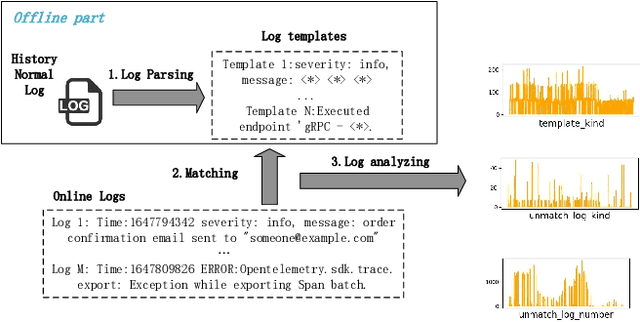
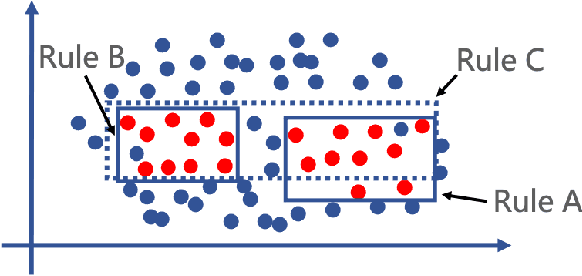
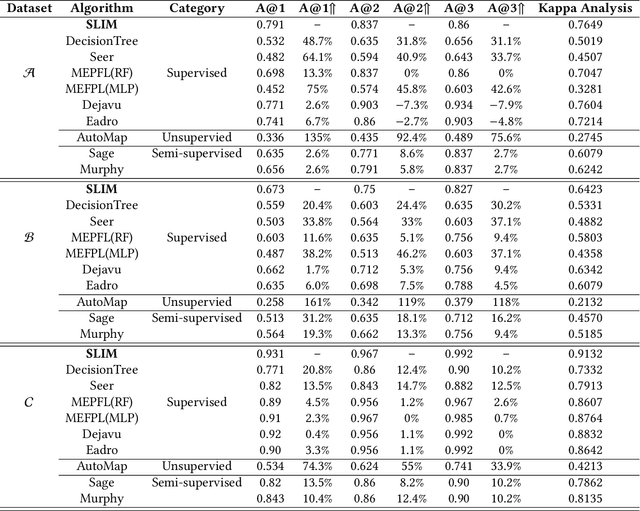
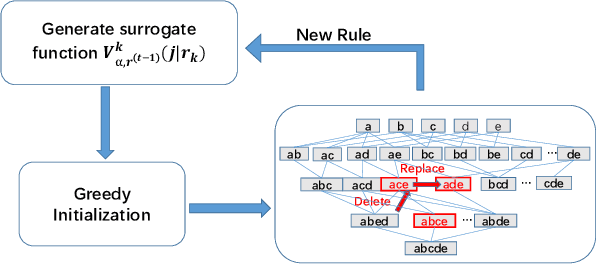
The newly deployed service -- one kind of change service, could lead to a new type of minority fault. Existing state-of-the-art methods for fault localization rarely consider the imbalanced fault classification in change service. This paper proposes a novel method that utilizes decision rule sets to deal with highly imbalanced data by optimizing the F1 score subject to cardinality constraints. The proposed method greedily generates the rule with maximal marginal gain and uses an efficient minorize-maximization (MM) approach to select rules iteratively, maximizing a non-monotone submodular lower bound. Compared with existing fault localization algorithms, our algorithm can adapt to the imbalanced fault scenario of change service, and provide interpretable fault causes which are easy to understand and verify. Our method can also be deployed in the online training setting, with only about 15% training overhead compared to the current SOTA methods. Empirical studies showcase that our algorithm outperforms existing fault localization algorithms in both accuracy and model interpretability.
Addressing Concept Shift in Online Time Series Forecasting: Detect-then-Adapt
Mar 22, 2024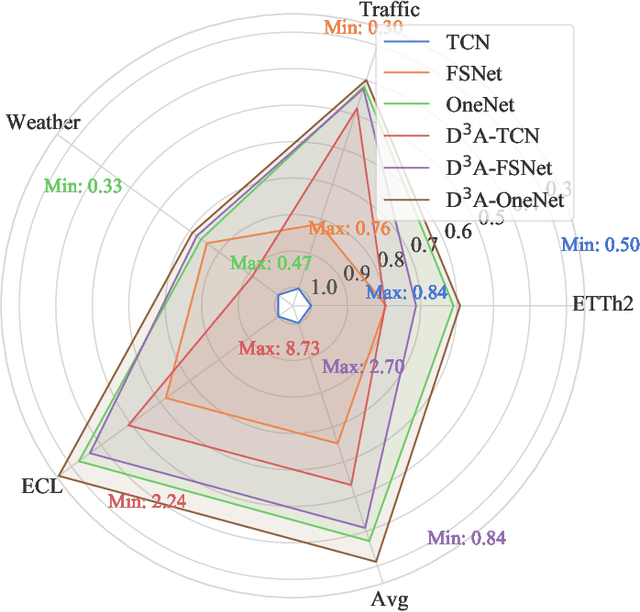
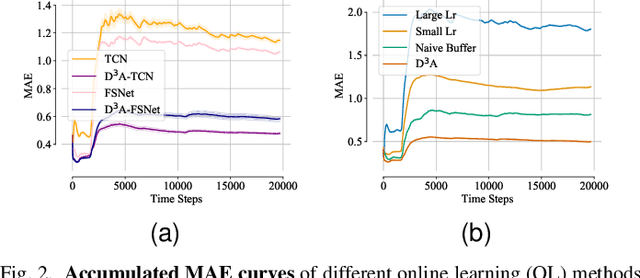
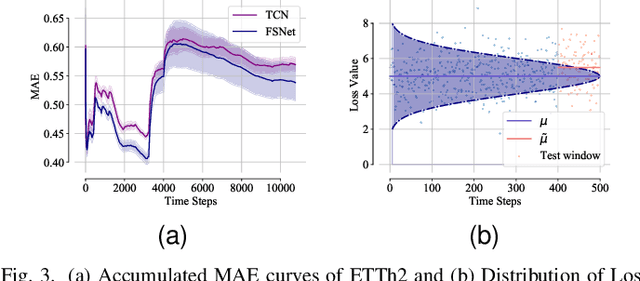
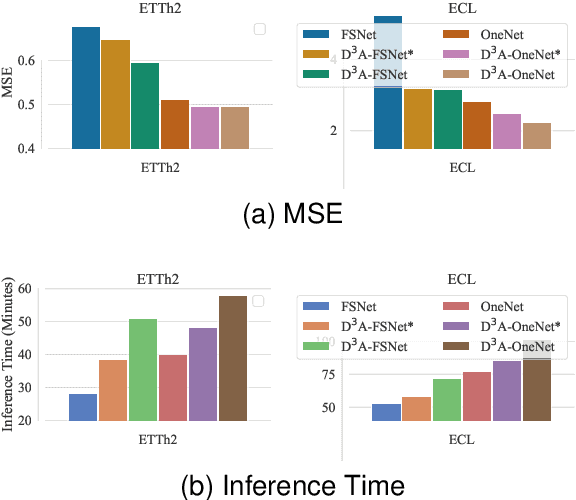
Online updating of time series forecasting models aims to tackle the challenge of concept drifting by adjusting forecasting models based on streaming data. While numerous algorithms have been developed, most of them focus on model design and updating. In practice, many of these methods struggle with continuous performance regression in the face of accumulated concept drifts over time. To address this limitation, we present a novel approach, Concept \textbf{D}rift \textbf{D}etection an\textbf{D} \textbf{A}daptation (D3A), that first detects drifting conception and then aggressively adapts the current model to the drifted concepts after the detection for rapid adaption. To best harness the utility of historical data for model adaptation, we propose a data augmentation strategy introducing Gaussian noise into existing training instances. It helps mitigate the data distribution gap, a critical factor contributing to train-test performance inconsistency. The significance of our data augmentation process is verified by our theoretical analysis. Our empirical studies across six datasets demonstrate the effectiveness of D3A in improving model adaptation capability. Notably, compared to a simple Temporal Convolutional Network (TCN) baseline, D3A reduces the average Mean Squared Error (MSE) by $43.9\%$. For the state-of-the-art (SOTA) model, the MSE is reduced by $33.3\%$.
Sparse-VQ Transformer: An FFN-Free Framework with Vector Quantization for Enhanced Time Series Forecasting
Feb 08, 2024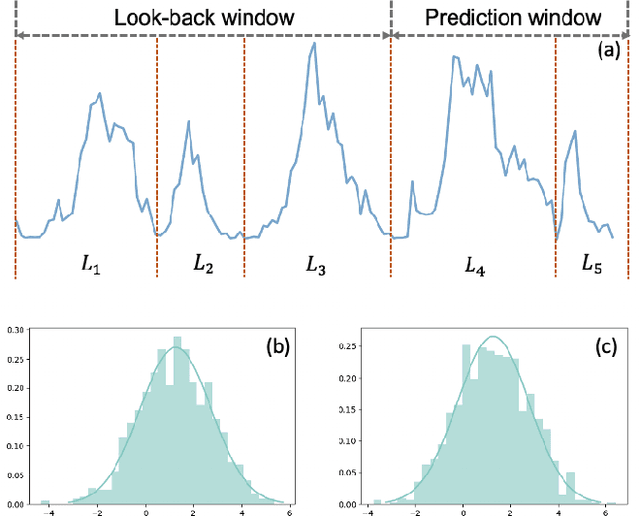

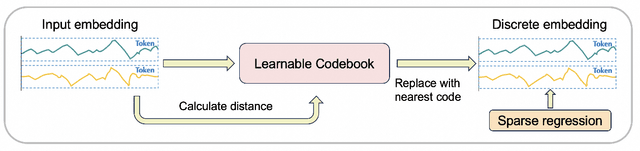
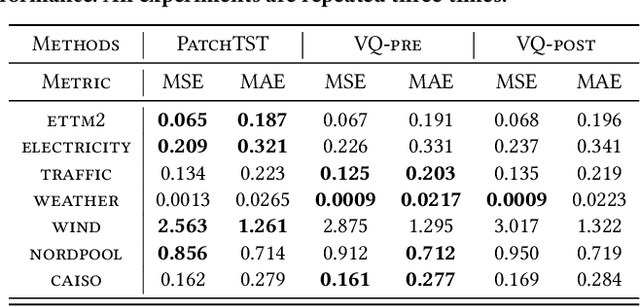
Time series analysis is vital for numerous applications, and transformers have become increasingly prominent in this domain. Leading methods customize the transformer architecture from NLP and CV, utilizing a patching technique to convert continuous signals into segments. Yet, time series data are uniquely challenging due to significant distribution shifts and intrinsic noise levels. To address these two challenges,we introduce the Sparse Vector Quantized FFN-Free Transformer (Sparse-VQ). Our methodology capitalizes on a sparse vector quantization technique coupled with Reverse Instance Normalization (RevIN) to reduce noise impact and capture sufficient statistics for forecasting, serving as an alternative to the Feed-Forward layer (FFN) in the transformer architecture. Our FFN-free approach trims the parameter count, enhancing computational efficiency and reducing overfitting. Through evaluations across ten benchmark datasets, including the newly introduced CAISO dataset, Sparse-VQ surpasses leading models with a 7.84% and 4.17% decrease in MAE for univariate and multivariate time series forecasting, respectively. Moreover, it can be seamlessly integrated with existing transformer-based models to elevate their performance.
FusionSF: Fuse Heterogeneous Modalities in a Vector Quantized Framework for Robust Solar Power Forecasting
Feb 08, 2024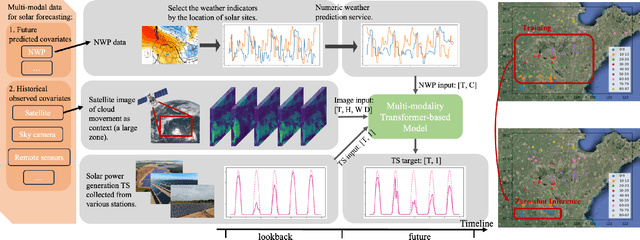
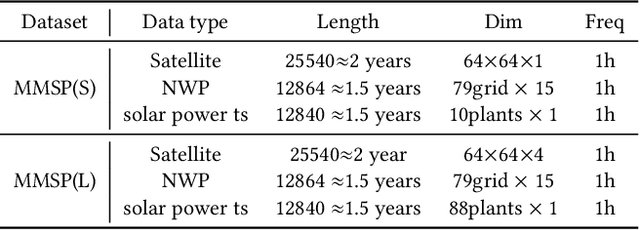
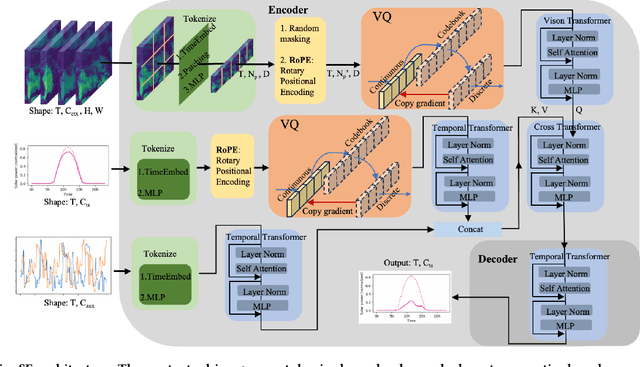
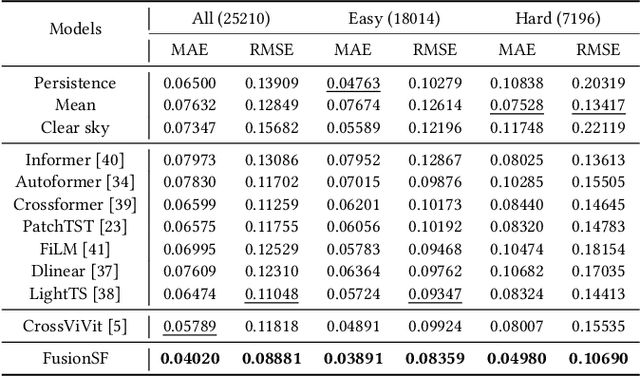
Accurate solar power forecasting is crucial to integrate photovoltaic plants into the electric grid, schedule and secure the power grid safety. This problem becomes more demanding for those newly installed solar plants which lack sufficient data. Current research predominantly relies on historical solar power data or numerical weather prediction in a single-modality format, ignoring the complementary information provided in different modalities. In this paper, we propose a multi-modality fusion framework to integrate historical power data, numerical weather prediction, and satellite images, significantly improving forecast performance. We introduce a vector quantized framework that aligns modalities with varying information densities, striking a balance between integrating sufficient information and averting model overfitting. Our framework demonstrates strong zero-shot forecasting capability, which is especially useful for those newly installed plants. Moreover, we collect and release a multi-modal solar power (MMSP) dataset from real-world plants to further promote the research of multi-modal solar forecasting algorithms. Our extensive experiments show that our model not only operates with robustness but also boosts accuracy in both zero-shot forecasting and scenarios rich with training data, surpassing leading models. We have incorporated it into our eForecaster platform and deployed it for more than 300 solar plants with a capacity of over 15GW.
Attention as Robust Representation for Time Series Forecasting
Feb 08, 2024Time series forecasting is essential for many practical applications, with the adoption of transformer-based models on the rise due to their impressive performance in NLP and CV. Transformers' key feature, the attention mechanism, dynamically fusing embeddings to enhance data representation, often relegating attention weights to a byproduct role. Yet, time series data, characterized by noise and non-stationarity, poses significant forecasting challenges. Our approach elevates attention weights as the primary representation for time series, capitalizing on the temporal relationships among data points to improve forecasting accuracy. Our study shows that an attention map, structured using global landmarks and local windows, acts as a robust kernel representation for data points, withstanding noise and shifts in distribution. Our method outperforms state-of-the-art models, reducing mean squared error (MSE) in multivariate time series forecasting by a notable 3.6% without altering the core neural network architecture. It serves as a versatile component that can readily replace recent patching based embedding schemes in transformer-based models, boosting their performance.