 Add to Chrome
 Add to Firefox
 Add to Edge
Matryoshka Representation Learning for Recommendation
Jun 11, 2024
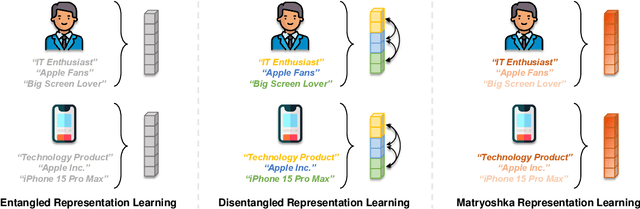
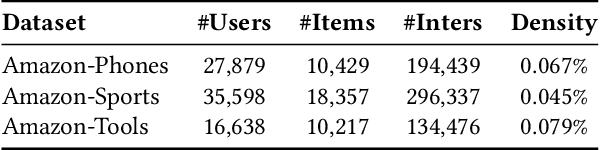
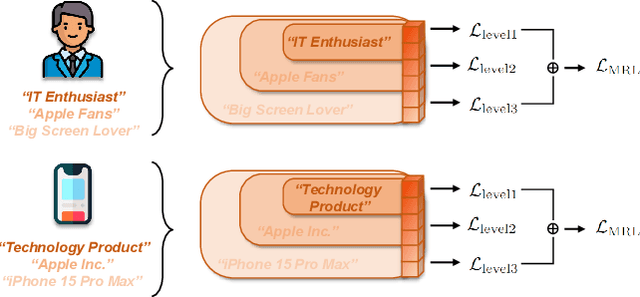
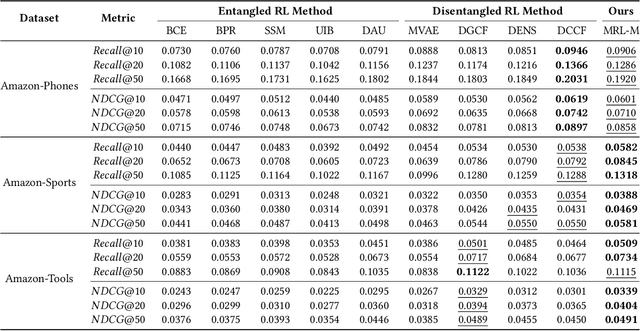
Representation learning is essential for deep-neural-network-based recommender systems to capture user preferences and item features within fixed-dimensional user and item vectors. Unlike existing representation learning methods that either treat each user preference and item feature uniformly or categorize them into discrete clusters, we argue that in the real world, user preferences and item features are naturally expressed and organized in a hierarchical manner, leading to a new direction for representation learning. In this paper, we introduce a novel matryoshka representation learning method for recommendation (MRL4Rec), by which we restructure user and item vectors into matryoshka representations with incrementally dimensional and overlapping vector spaces to explicitly represent user preferences and item features at different hierarchical levels. We theoretically establish that constructing training triplets specific to each level is pivotal in guaranteeing accurate matryoshka representation learning. Subsequently, we propose the matryoshka negative sampling mechanism to construct training triplets, which further ensures the effectiveness of the matryoshka representation learning in capturing hierarchical user preferences and item features. The experiments demonstrate that MRL4Rec can consistently and substantially outperform a number of state-of-the-art competitors on several real-life datasets. Our code is publicly available at https://github.com/Riwei-HEU/MRL.

Learning Manipulation by Predicting Interaction
Jun 01, 2024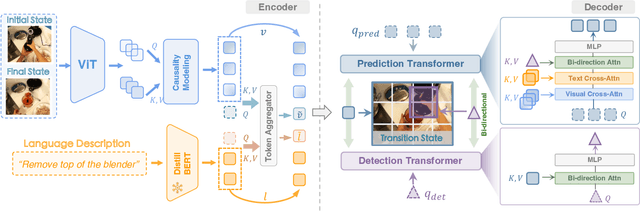
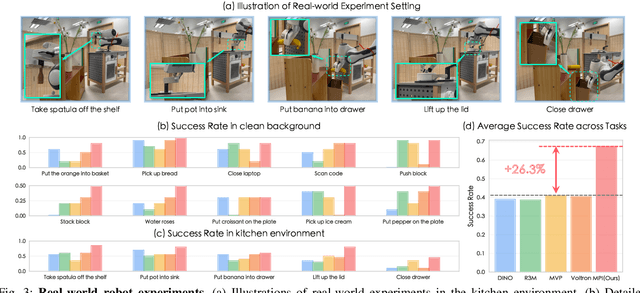
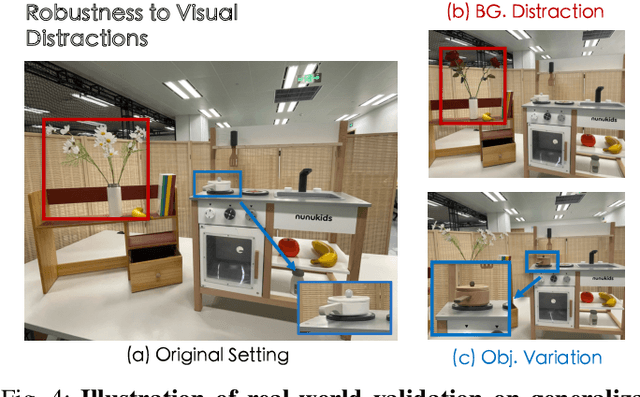
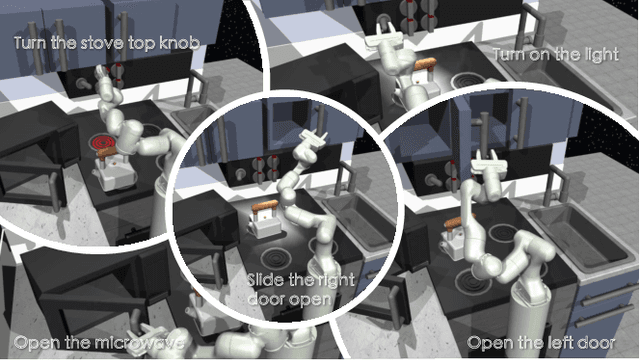
Representation learning approaches for robotic manipulation have boomed in recent years. Due to the scarcity of in-domain robot data, prevailing methodologies tend to leverage large-scale human video datasets to extract generalizable features for visuomotor policy learning. Despite the progress achieved, prior endeavors disregard the interactive dynamics that capture behavior patterns and physical interaction during the manipulation process, resulting in an inadequate understanding of the relationship between objects and the environment. To this end, we propose a general pre-training pipeline that learns Manipulation by Predicting the Interaction (MPI) and enhances the visual representation.Given a pair of keyframes representing the initial and final states, along with language instructions, our algorithm predicts the transition frame and detects the interaction object, respectively. These two learning objectives achieve superior comprehension towards "how-to-interact" and "where-to-interact". We conduct a comprehensive evaluation of several challenging robotic tasks.The experimental results demonstrate that MPI exhibits remarkable improvement by 10% to 64% compared with previous state-of-the-art in real-world robot platforms as well as simulation environments. Code and checkpoints are publicly shared at https://github.com/OpenDriveLab/MPI.
Vista: A Generalizable Driving World Model with High Fidelity and Versatile Controllability
May 27, 2024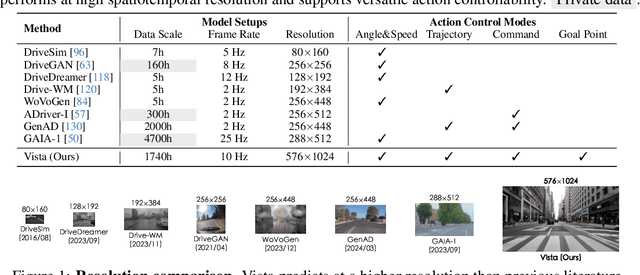
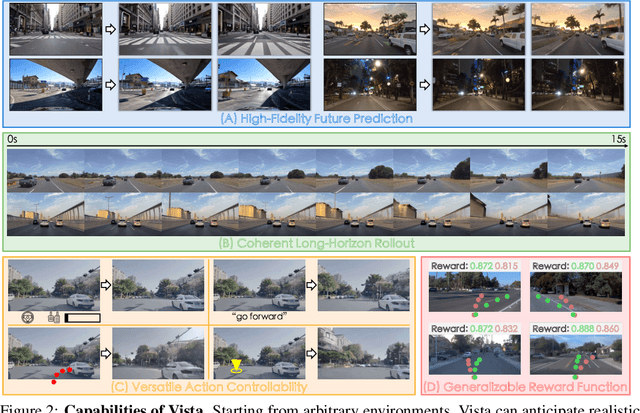


World models can foresee the outcomes of different actions, which is of paramount importance for autonomous driving. Nevertheless, existing driving world models still have limitations in generalization to unseen environments, prediction fidelity of critical details, and action controllability for flexible application. In this paper, we present Vista, a generalizable driving world model with high fidelity and versatile controllability. Based on a systematic diagnosis of existing methods, we introduce several key ingredients to address these limitations. To accurately predict real-world dynamics at high resolution, we propose two novel losses to promote the learning of moving instances and structural information. We also devise an effective latent replacement approach to inject historical frames as priors for coherent long-horizon rollouts. For action controllability, we incorporate a versatile set of controls from high-level intentions (command, goal point) to low-level maneuvers (trajectory, angle, and speed) through an efficient learning strategy. After large-scale training, the capabilities of Vista can seamlessly generalize to different scenarios. Extensive experiments on multiple datasets show that Vista outperforms the most advanced general-purpose video generator in over 70% of comparisons and surpasses the best-performing driving world model by 55% in FID and 27% in FVD. Moreover, for the first time, we utilize the capacity of Vista itself to establish a generalizable reward for real-world action evaluation without accessing the ground truth actions.
Navigating User Experience of ChatGPT-based Conversational Recommender Systems: The Effects of Prompt Guidance and Recommendation Domain
May 22, 2024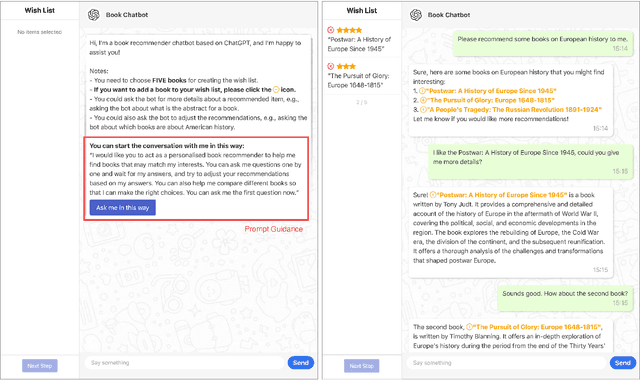
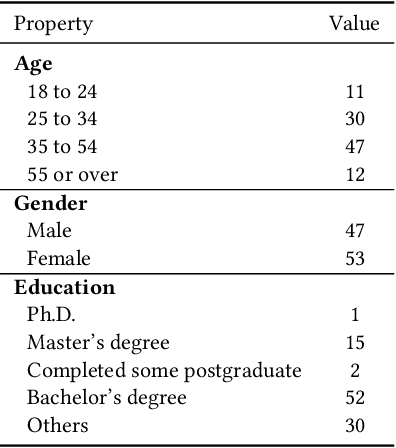
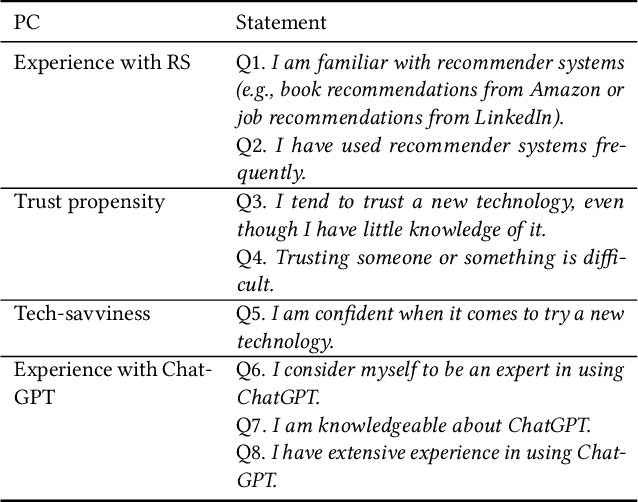
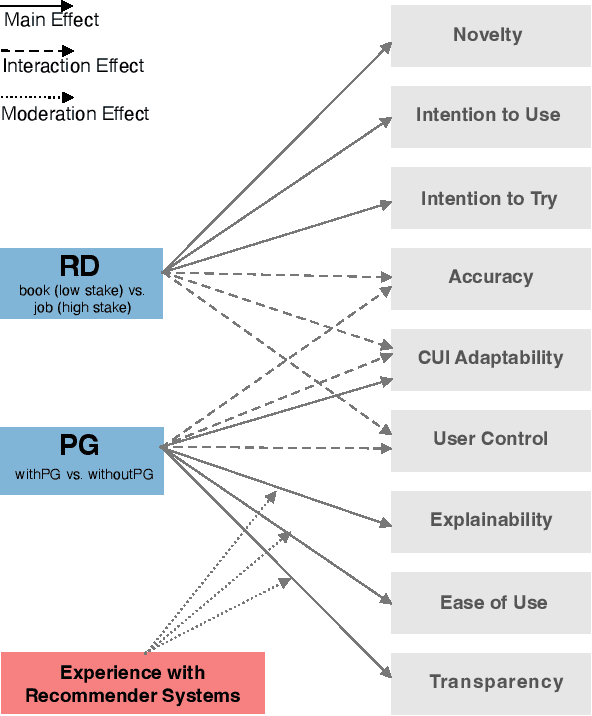
Conversational recommender systems (CRS) enable users to articulate their preferences and provide feedback through natural language. With the advent of large language models (LLMs), the potential to enhance user engagement with CRS and augment the recommendation process with LLM-generated content has received increasing attention. However, the efficacy of LLM-powered CRS is contingent upon the use of prompts, and the subjective perception of recommendation quality can differ across various recommendation domains. Therefore, we have developed a ChatGPT-based CRS to investigate the impact of these two factors, prompt guidance (PG) and recommendation domain (RD), on the overall user experience of the system. We conducted an online empirical study (N = 100) by employing a mixed-method approach that utilized a between-subjects design for the variable of PG (with vs. without) and a within-subjects design for RD (book recommendations vs. job recommendations). The findings reveal that PG can substantially enhance the system's explainability, adaptability, perceived ease of use, and transparency. Moreover, users are inclined to perceive a greater sense of novelty and demonstrate a higher propensity to engage with and try recommended items in the context of book recommendations as opposed to job recommendations. Furthermore, the influence of PG on certain user experience metrics and interactive behaviors appears to be modulated by the recommendation domain, as evidenced by the interaction effects between the two examined factors. This work contributes to the user-centered evaluation of ChatGPT-based CRS by investigating two prominent factors and offers practical design guidance.
Boosting MLPs with a Coarsening Strategy for Long-Term Time Series Forecasting
May 06, 2024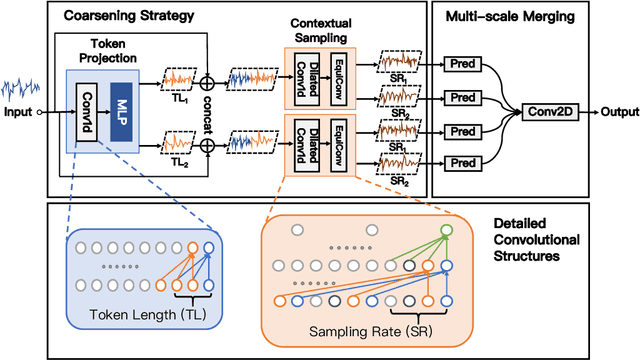
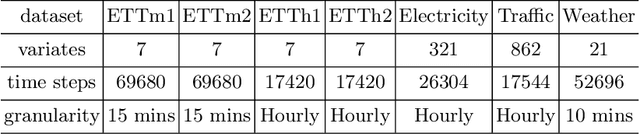
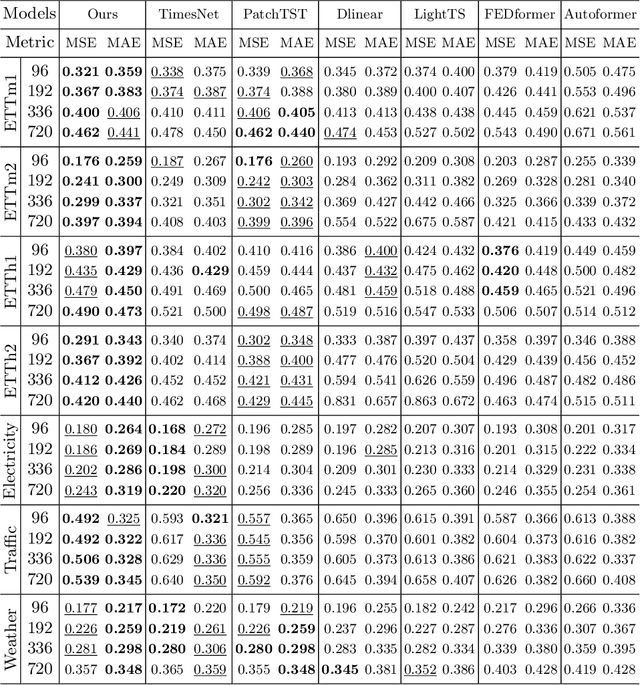
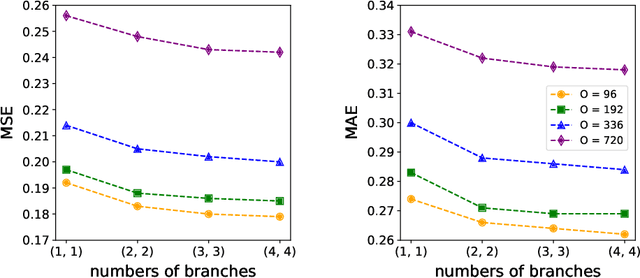
Deep learning methods have been exerting their strengths in long-term time series forecasting. However, they often struggle to strike a balance between expressive power and computational efficiency. Here, we propose the Coarsened Perceptron Network (CP-Net), a novel architecture that efficiently enhances the predictive capability of MLPs while maintains a linear computational complexity. It utilizes a coarsening strategy as the backbone that leverages two-stage convolution-based sampling blocks. Based purely on convolution, they provide the functionality of extracting short-term semantic and contextual patterns, which is relatively deficient in the global point-wise projection of the MLP layer. With the architectural simplicity and low runtime, our experiments on seven time series forecasting benchmarks demonstrate that CP-Net achieves an improvement of 4.1% compared to the SOTA method. The model further shows effective utilization of the exposed information with a consistent improvement as the look-back window expands.
Q2A: Querying Implicit Fully Continuous Feature Pyramid to Align Features for Medical Image Segmentation
Apr 15, 2024Recent medical image segmentation methods apply implicit neural representation (INR) to the decoder for achieving a continuous coordinate decoding to tackle the drawback of conventional discrete grid-based data representations. However, the INR-based decoder cannot well handle the feature misalignment problem brought about by the naive latent code acquisition strategy in INR. Although there exist many feature alignment works, they all adopt a progressive multi-step aligning paradigm on a discrete feature pyramid, which is incompatible with the continuous one-step characteristics of INR-based decoder, and thus fails to be the solution. Therefore, we propose Q2A, a novel one-step query-based aligning paradigm, to solve the feature misalignment problem in the INR-based decoder. Specifically, for each target coordinate, Q2A first generates several queries depicting the spatial offsets and the cell resolutions of the contextual features aligned to the coordinate, then calculates the corresponding aligned features by feeding the queries into a novel implicit fully continuous feature pyramid (FCFP), finally fuses the aligned features to predict the class distribution. In FCFP, we further propose a novel universal partition-and-aggregate strategy (P&A) to replace the naive interpolation strategy for latent code acquisition in INR, which mitigates the information loss problem that occurs when the query cell resolution is relatively large and achieves an effective feature decoding at arbitrary continuous resolution. We conduct extensive experiments on two medical datasets, i.e. Glas and Synapse, and a universal dataset, i.e. Cityscapes, and they show the superiority of the proposed Q2A.
DSFNet: Learning Disentangled Scenario Factorization for Multi-Scenario Route Ranking
Mar 30, 2024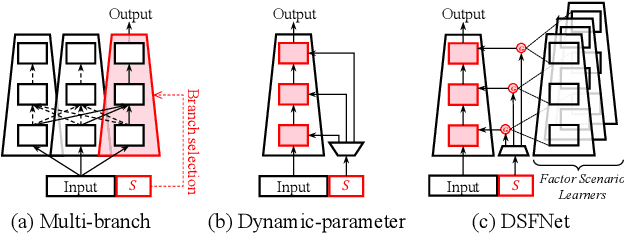
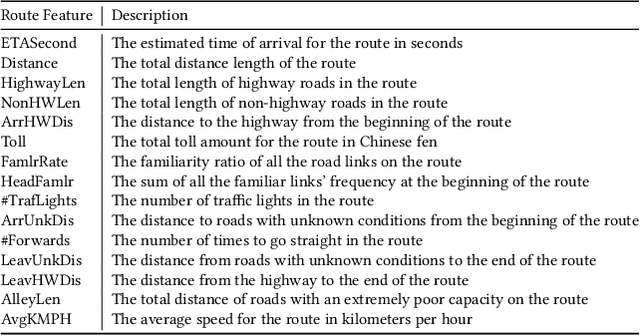
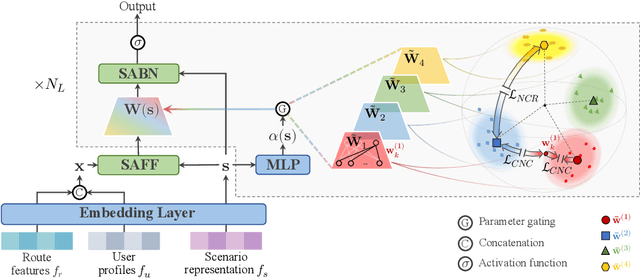
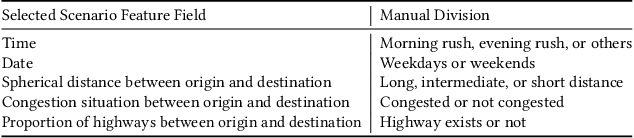
Multi-scenario route ranking (MSRR) is crucial in many industrial mapping systems. However, the industrial community mainly adopts interactive interfaces to encourage users to select pre-defined scenarios, which may hinder the downstream ranking performance. In addition, in the academic community, the multi-scenario ranking works only come from other fields, and there are no works specifically focusing on route data due to lacking a publicly available MSRR dataset. Moreover, all the existing multi-scenario works still fail to address the three specific challenges of MSRR simultaneously, i.e. explosion of scenario number, high entanglement, and high-capacity demand. Different from the prior, to address MSRR, our key idea is to factorize the complicated scenario in route ranking into several disentangled factor scenario patterns. Accordingly, we propose a novel method, Disentangled Scenario Factorization Network (DSFNet), which flexibly composes scenario-dependent parameters based on a high-capacity multi-factor-scenario-branch structure. Then, a novel regularization is proposed to induce the disentanglement of factor scenarios. Furthermore, two extra novel techniques, i.e. scenario-aware batch normalization and scenario-aware feature filtering, are developed to improve the network awareness of scenario representation. Additionally, to facilitate MSRR research in the academic community, we propose MSDR, the first large-scale publicly available annotated industrial Multi-Scenario Driving Route dataset. Comprehensive experimental results demonstrate the superiority of our DSFNet, which has been successfully deployed in AMap to serve the major online traffic.
Enhancing Programming Education with ChatGPT: A Case Study on Student Perceptions and Interactions in a Python Course
Mar 27, 2024The integration of ChatGPT as a supportive tool in education, notably in programming courses, addresses the unique challenges of programming education by providing assistance with debugging, code generation, and explanations. Despite existing research validating ChatGPT's effectiveness, its application in university-level programming education and a detailed understanding of student interactions and perspectives remain limited. This paper explores ChatGPT's impact on learning in a Python programming course tailored for first-year students over eight weeks. By analyzing responses from surveys, open-ended questions, and student-ChatGPT dialog data, we aim to provide a comprehensive view of ChatGPT's utility and identify both its advantages and limitations as perceived by students. Our study uncovers a generally positive reception toward ChatGPT and offers insights into its role in enhancing the programming education experience. These findings contribute to the broader discourse on AI's potential in education, suggesting paths for future research and application.
Generalized Predictive Model for Autonomous Driving
Mar 14, 2024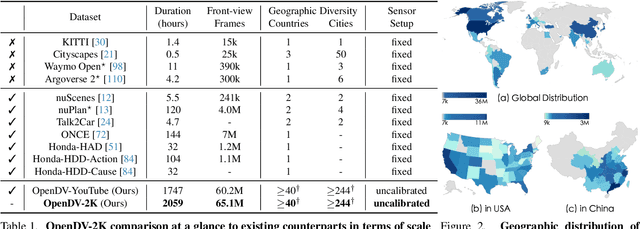
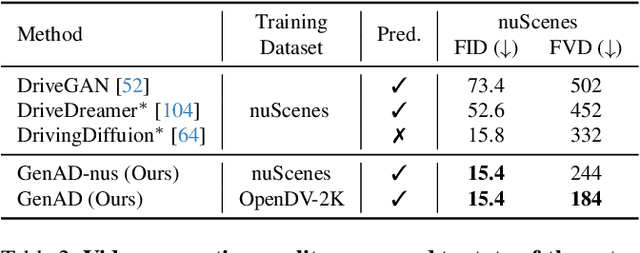
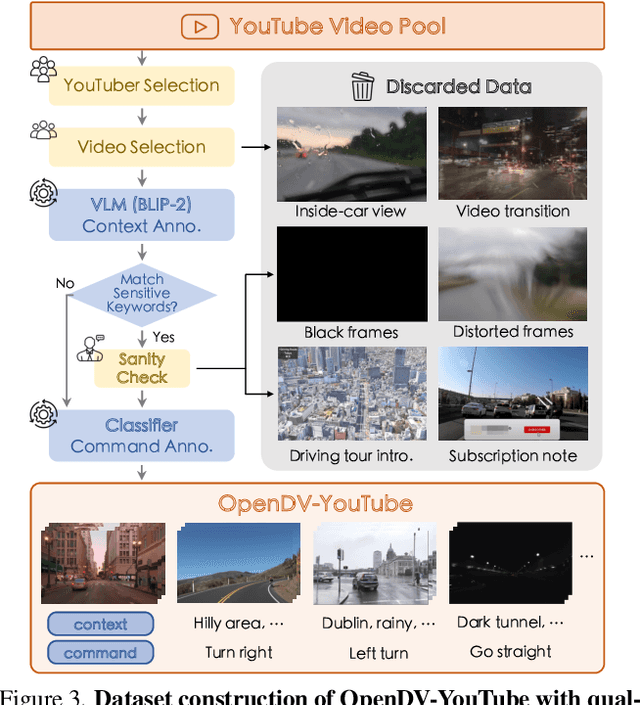
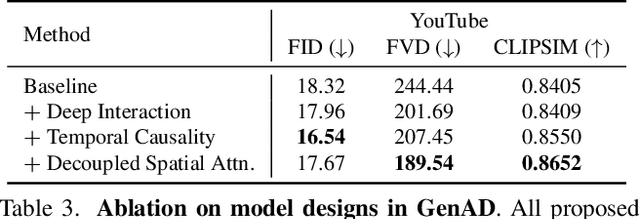
In this paper, we introduce the first large-scale video prediction model in the autonomous driving discipline. To eliminate the restriction of high-cost data collection and empower the generalization ability of our model, we acquire massive data from the web and pair it with diverse and high-quality text descriptions. The resultant dataset accumulates over 2000 hours of driving videos, spanning areas all over the world with diverse weather conditions and traffic scenarios. Inheriting the merits from recent latent diffusion models, our model, dubbed GenAD, handles the challenging dynamics in driving scenes with novel temporal reasoning blocks. We showcase that it can generalize to various unseen driving datasets in a zero-shot manner, surpassing general or driving-specific video prediction counterparts. Furthermore, GenAD can be adapted into an action-conditioned prediction model or a motion planner, holding great potential for real-world driving applications.
FedClust: Optimizing Federated Learning on Non-IID Data through Weight-Driven Client Clustering
Mar 07, 2024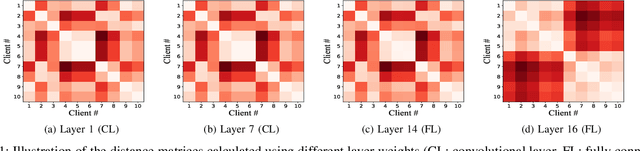
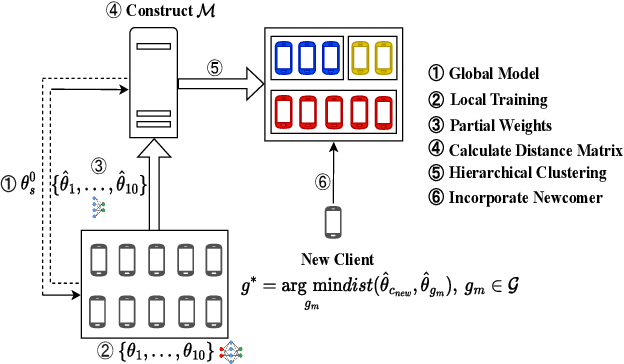
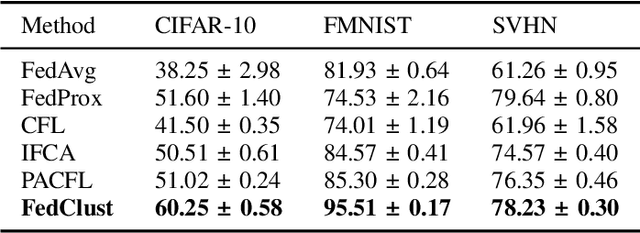
Federated learning (FL) is an emerging distributed machine learning paradigm enabling collaborative model training on decentralized devices without exposing their local data. A key challenge in FL is the uneven data distribution across client devices, violating the well-known assumption of independent-and-identically-distributed (IID) training samples in conventional machine learning. Clustered federated learning (CFL) addresses this challenge by grouping clients based on the similarity of their data distributions. However, existing CFL approaches require a large number of communication rounds for stable cluster formation and rely on a predefined number of clusters, thus limiting their flexibility and adaptability. This paper proposes FedClust, a novel CFL approach leveraging correlations between local model weights and client data distributions. FedClust groups clients into clusters in a one-shot manner using strategically selected partial model weights and dynamically accommodates newcomers in real-time. Experimental results demonstrate FedClust outperforms baseline approaches in terms of accuracy and communication costs.