 Add to Chrome
 Add to Firefox
 Add to Edge
UltraEdit: Training-, Subject-, and Memory-Free Lifelong Editing in Large Language Models
May 20, 2025
Lifelong learning enables large language models (LLMs) to adapt to evolving information by continually updating their internal knowledge. An ideal system should support efficient, wide-ranging updates while preserving existing capabilities and ensuring reliable deployment. Model editing stands out as a promising solution for this goal, offering a focused and efficient way to revise a model's internal knowledge. Although recent paradigms have made notable progress, they often struggle to meet the demands of practical lifelong adaptation at scale. To bridge this gap, we propose ULTRAEDIT-a fundamentally new editing solution that is training-, subject- and memory-free, making it particularly well-suited for ultra-scalable, real-world lifelong model editing. ULTRAEDIT performs editing through a self-contained process that relies solely on lightweight linear algebra operations to compute parameter shifts, enabling fast and consistent parameter modifications with minimal overhead. To improve scalability in lifelong settings, ULTRAEDIT employs a lifelong normalization strategy that continuously updates feature statistics across turns, allowing it to adapt to distributional shifts and maintain consistency over time. ULTRAEDIT achieves editing speeds over 7x faster than the previous state-of-the-art method-which was also the fastest known approach-while consuming less than 1/3 the VRAM, making it the only method currently capable of editing a 7B LLM on a 24GB consumer-grade GPU. Furthermore, we construct ULTRAEDITBENCH-the largest dataset in the field to date, with over 2M editing pairs-and demonstrate that our method supports up to 1M edits while maintaining high accuracy. Comprehensive experiments on four datasets and six models show that ULTRAEDIT consistently achieves superior performance across diverse model editing scenarios. Our code is available at: https://github.com/XiaojieGu/UltraEdit.

AdaToken-3D: Dynamic Spatial Gating for Efficient 3D Large Multimodal-Models Reasoning
May 19, 2025Large Multimodal Models (LMMs) have become a pivotal research focus in deep learning, demonstrating remarkable capabilities in 3D scene understanding. However, current 3D LMMs employing thousands of spatial tokens for multimodal reasoning suffer from critical inefficiencies: excessive computational overhead and redundant information flows. Unlike 2D VLMs processing single images, 3D LMMs exhibit inherent architectural redundancy due to the heterogeneous mechanisms between spatial tokens and visual tokens. To address this challenge, we propose AdaToken-3D, an adaptive spatial token optimization framework that dynamically prunes redundant tokens through spatial contribution analysis. Our method automatically tailors pruning strategies to different 3D LMM architectures by quantifying token-level information flows via attention pattern mining. Extensive experiments on LLaVA-3D (a 7B parameter 3D-LMM) demonstrate that AdaToken-3D achieves 21\% faster inference speed and 63\% FLOPs reduction while maintaining original task accuracy. Beyond efficiency gains, this work systematically investigates redundancy patterns in multimodal spatial information flows through quantitative token interaction analysis. Our findings reveal that over 60\% of spatial tokens contribute minimally ($<$5\%) to the final predictions, establishing theoretical foundations for efficient 3D multimodal learning.
Know3-RAG: A Knowledge-aware RAG Framework with Adaptive Retrieval, Generation, and Filtering
May 19, 2025Recent advances in large language models (LLMs) have led to impressive progress in natural language generation, yet their tendency to produce hallucinated or unsubstantiated content remains a critical concern. To improve factual reliability, Retrieval-Augmented Generation (RAG) integrates external knowledge during inference. However, existing RAG systems face two major limitations: (1) unreliable adaptive control due to limited external knowledge supervision, and (2) hallucinations caused by inaccurate or irrelevant references. To address these issues, we propose Know3-RAG, a knowledge-aware RAG framework that leverages structured knowledge from knowledge graphs (KGs) to guide three core stages of the RAG process, including retrieval, generation, and filtering. Specifically, we introduce a knowledge-aware adaptive retrieval module that employs KG embedding to assess the confidence of the generated answer and determine retrieval necessity, a knowledge-enhanced reference generation strategy that enriches queries with KG-derived entities to improve generated reference relevance, and a knowledge-driven reference filtering mechanism that ensures semantic alignment and factual accuracy of references. Experiments on multiple open-domain QA benchmarks demonstrate that Know3-RAG consistently outperforms strong baselines, significantly reducing hallucinations and enhancing answer reliability.
Enhancing LLMs for Time Series Forecasting via Structure-Guided Cross-Modal Alignment
May 19, 2025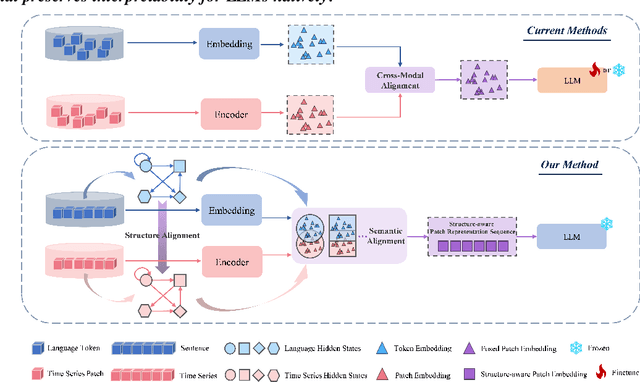

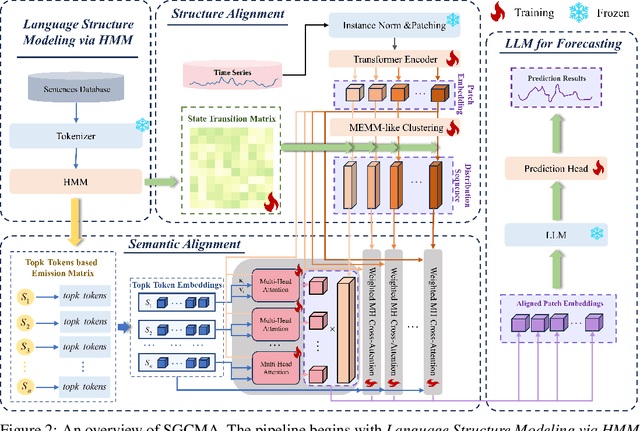
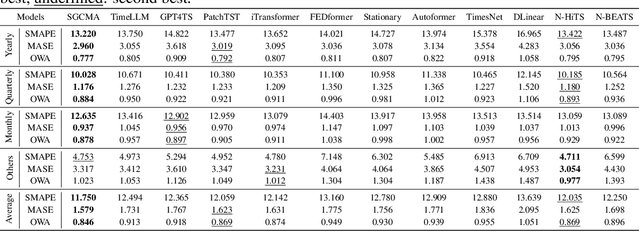
The emerging paradigm of leveraging pretrained large language models (LLMs) for time series forecasting has predominantly employed linguistic-temporal modality alignment strategies through token-level or layer-wise feature mapping. However, these approaches fundamentally neglect a critical insight: the core competency of LLMs resides not merely in processing localized token features but in their inherent capacity to model holistic sequence structures. This paper posits that effective cross-modal alignment necessitates structural consistency at the sequence level. We propose the Structure-Guided Cross-Modal Alignment (SGCMA), a framework that fully exploits and aligns the state-transition graph structures shared by time-series and linguistic data as sequential modalities, thereby endowing time series with language-like properties and delivering stronger generalization after modality alignment. SGCMA consists of two key components, namely Structure Alignment and Semantic Alignment. In Structure Alignment, a state transition matrix is learned from text data through Hidden Markov Models (HMMs), and a shallow transformer-based Maximum Entropy Markov Model (MEMM) receives the hot-start transition matrix and annotates each temporal patch into state probability, ensuring that the temporal representation sequence inherits language-like sequential dynamics. In Semantic Alignment, cross-attention is applied between temporal patches and the top-k tokens within each state, and the ultimate temporal embeddings are derived by the expected value of these embeddings using a weighted average based on state probabilities. Experiments on multiple benchmarks demonstrate that SGCMA achieves state-of-the-art performance, offering a novel approach to cross-modal alignment in time series forecasting.
BiECVC: Gated Diversification of Bidirectional Contexts for Learned Video Compression
May 15, 2025Recent forward prediction-based learned video compression (LVC) methods have achieved impressive results, even surpassing VVC reference software VTM under the Low Delay B (LDB) configuration. In contrast, learned bidirectional video compression (BVC) remains underexplored and still lags behind its forward-only counterparts. This performance gap is mainly due to the limited ability to extract diverse and accurate contexts: most existing BVCs primarily exploit temporal motion while neglecting non-local correlations across frames. Moreover, they lack the adaptability to dynamically suppress harmful contexts arising from fast motion or occlusion. To tackle these challenges, we propose BiECVC, a BVC framework that incorporates diversified local and non-local context modeling along with adaptive context gating. For local context enhancement, BiECVC reuses high-quality features from lower layers and aligns them using decoded motion vectors without introducing extra motion overhead. To model non-local dependencies efficiently, we adopt a linear attention mechanism that balances performance and complexity. To further mitigate the impact of inaccurate context prediction, we introduce Bidirectional Context Gating, inspired by data-dependent decay in recent autoregressive language models, to dynamically filter contextual information based on conditional coding results. Extensive experiments demonstrate that BiECVC achieves state-of-the-art performance, reducing the bit-rate by 13.4% and 15.7% compared to VTM 13.2 under the Random Access (RA) configuration with intra periods of 32 and 64, respectively. To our knowledge, BiECVC is the first learned video codec to surpass VTM 13.2 RA across all standard test datasets. Code will be available at https://github.com/JiangWeibeta/ECVC.
Neural BRDF Importance Sampling by Reparameterization
May 13, 2025Neural bidirectional reflectance distribution functions (BRDFs) have emerged as popular material representations for enhancing realism in physically-based rendering. Yet their importance sampling remains a significant challenge. In this paper, we introduce a reparameterization-based formulation of neural BRDF importance sampling that seamlessly integrates into the standard rendering pipeline with precise generation of BRDF samples. The reparameterization-based formulation transfers the distribution learning task to a problem of identifying BRDF integral substitutions. In contrast to previous methods that rely on invertible networks and multi-step inference to reconstruct BRDF distributions, our model removes these constraints, which offers greater flexibility and efficiency. Our variance and performance analysis demonstrates that our reparameterization method achieves the best variance reduction in neural BRDF renderings while maintaining high inference speeds compared to existing baselines.
Multimodal Deep Learning-Empowered Beam Prediction in Future THz ISAC Systems
May 05, 2025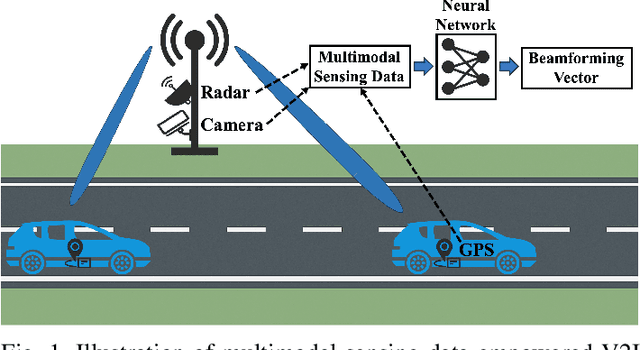
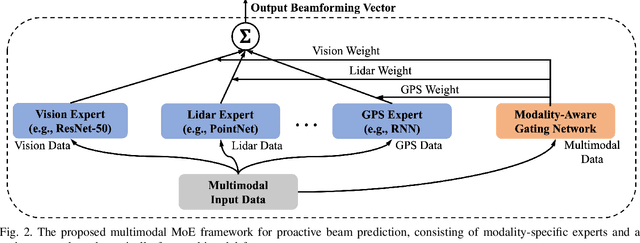
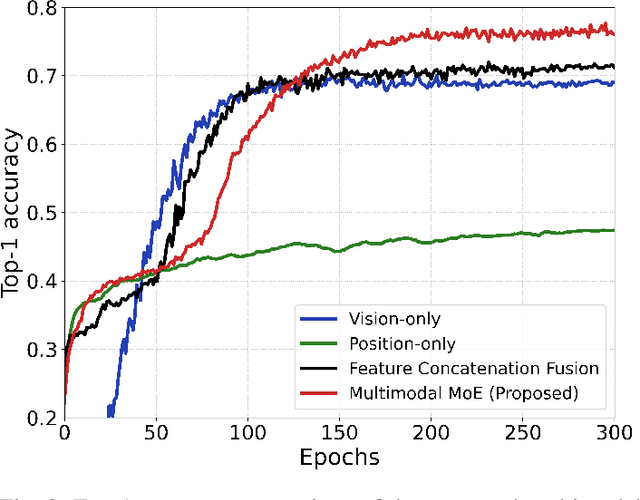
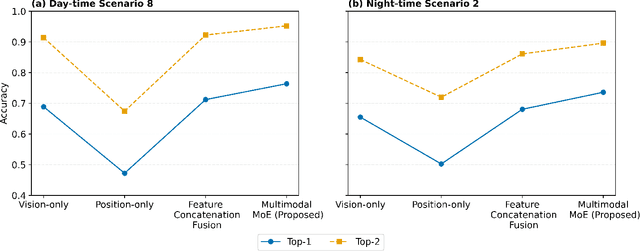
Integrated sensing and communication (ISAC) systems operating at terahertz (THz) bands are envisioned to enable both ultra-high data-rate communication and precise environmental awareness for next-generation wireless networks. However, the narrow width of THz beams makes them prone to misalignment and necessitates frequent beam prediction in dynamic environments. Multimodal sensing, which integrates complementary modalities such as camera images, positional data, and radar measurements, has recently emerged as a promising solution for proactive beam prediction. Nevertheless, existing multimodal approaches typically employ static fusion architectures that cannot adjust to varying modality reliability and contributions, thereby degrading predictive performance and robustness. To address this challenge, we propose a novel and efficient multimodal mixture-of-experts (MoE) deep learning framework for proactive beam prediction in THz ISAC systems. The proposed multimodal MoE framework employs multiple modality-specific expert networks to extract representative features from individual sensing modalities, and dynamically fuses them using adaptive weights generated by a gating network according to the instantaneous reliability of each modality. Simulation results in realistic vehicle-to-infrastructure (V2I) scenarios demonstrate that the proposed MoE framework outperforms traditional static fusion methods and unimodal baselines in terms of prediction accuracy and adaptability, highlighting its potential in practical THz ISAC systems with ultra-massive multiple-input multiple-output (MIMO).
GraphPrompter: Multi-stage Adaptive Prompt Optimization for Graph In-Context Learning
May 04, 2025Graph In-Context Learning, with the ability to adapt pre-trained graph models to novel and diverse downstream graphs without updating any parameters, has gained much attention in the community. The key to graph in-context learning is to perform downstream graphs conditioned on chosen prompt examples. Existing methods randomly select subgraphs or edges as prompts, leading to noisy graph prompts and inferior model performance. Additionally, due to the gap between pre-training and testing graphs, when the number of classes in the testing graphs is much greater than that in the training, the in-context learning ability will also significantly deteriorate. To tackle the aforementioned challenges, we develop a multi-stage adaptive prompt optimization method GraphPrompter, which optimizes the entire process of generating, selecting, and using graph prompts for better in-context learning capabilities. Firstly, Prompt Generator introduces a reconstruction layer to highlight the most informative edges and reduce irrelevant noise for graph prompt construction. Furthermore, in the selection stage, Prompt Selector employs the $k$-nearest neighbors algorithm and pre-trained selection layers to dynamically choose appropriate samples and minimize the influence of irrelevant prompts. Finally, we leverage a Prompt Augmenter with a cache replacement strategy to enhance the generalization capability of the pre-trained model on new datasets. Extensive experiments show that GraphPrompter effectively enhances the in-context learning ability of graph models. On average across all the settings, our approach surpasses the state-of-the-art baselines by over 8%. Our code is released at https://github.com/karin0018/GraphPrompter.
RayZer: A Self-supervised Large View Synthesis Model
May 01, 2025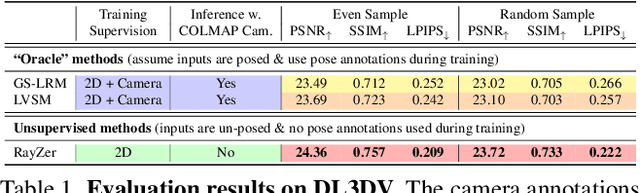
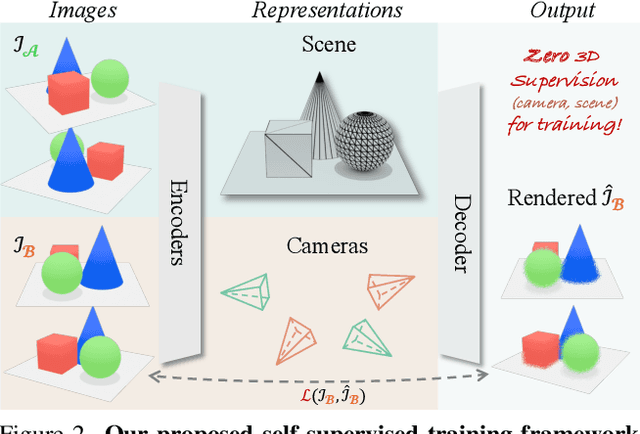
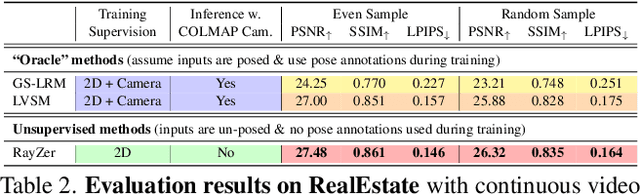
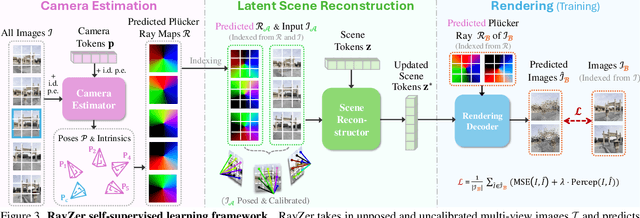
We present RayZer, a self-supervised multi-view 3D Vision model trained without any 3D supervision, i.e., camera poses and scene geometry, while exhibiting emerging 3D awareness. Concretely, RayZer takes unposed and uncalibrated images as input, recovers camera parameters, reconstructs a scene representation, and synthesizes novel views. During training, RayZer relies solely on its self-predicted camera poses to render target views, eliminating the need for any ground-truth camera annotations and allowing RayZer to be trained with 2D image supervision. The emerging 3D awareness of RayZer is attributed to two key factors. First, we design a self-supervised framework, which achieves 3D-aware auto-encoding of input images by disentangling camera and scene representations. Second, we design a transformer-based model in which the only 3D prior is the ray structure, connecting camera, pixel, and scene simultaneously. RayZer demonstrates comparable or even superior novel view synthesis performance than ``oracle'' methods that rely on pose annotations in both training and testing. Project: https://hwjiang1510.github.io/RayZer/
Retrieval Augmented Generation Evaluation in the Era of Large Language Models: A Comprehensive Survey
Apr 21, 2025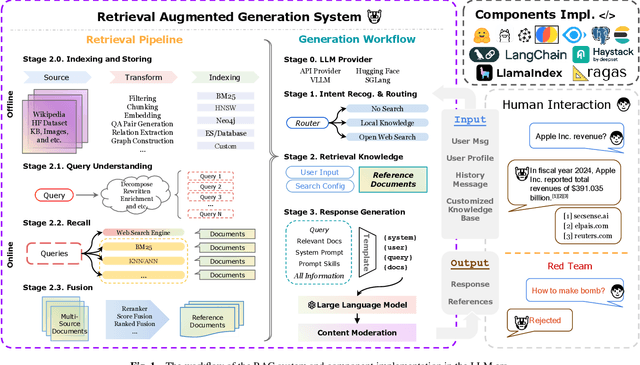
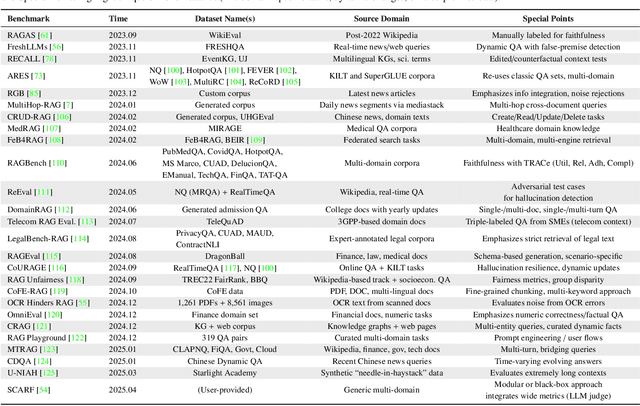
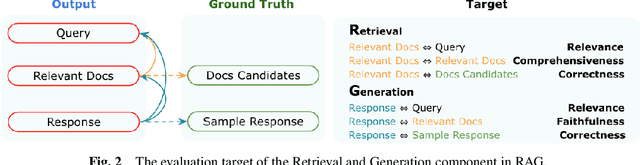
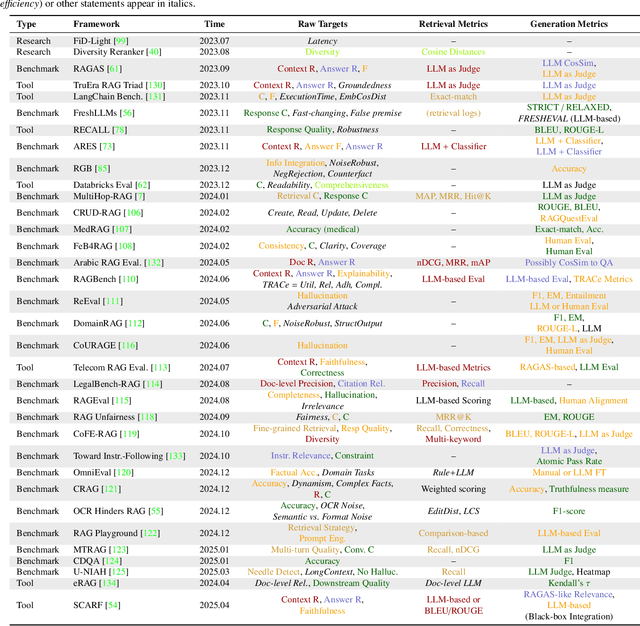
Recent advancements in Retrieval-Augmented Generation (RAG) have revolutionized natural language processing by integrating Large Language Models (LLMs) with external information retrieval, enabling accurate, up-to-date, and verifiable text generation across diverse applications. However, evaluating RAG systems presents unique challenges due to their hybrid architecture that combines retrieval and generation components, as well as their dependence on dynamic knowledge sources in the LLM era. In response, this paper provides a comprehensive survey of RAG evaluation methods and frameworks, systematically reviewing traditional and emerging evaluation approaches, for system performance, factual accuracy, safety, and computational efficiency in the LLM era. We also compile and categorize the RAG-specific datasets and evaluation frameworks, conducting a meta-analysis of evaluation practices in high-impact RAG research. To the best of our knowledge, this work represents the most comprehensive survey for RAG evaluation, bridging traditional and LLM-driven methods, and serves as a critical resource for advancing RAG development.