 Add to Chrome
 Add to Firefox
 Add to Edge
Individual Contributions as Intrinsic Exploration Scaffolds for Multi-agent Reinforcement Learning
May 28, 2024
In multi-agent reinforcement learning (MARL), effective exploration is critical, especially in sparse reward environments. Although introducing global intrinsic rewards can foster exploration in such settings, it often complicates credit assignment among agents. To address this difficulty, we propose Individual Contributions as intrinsic Exploration Scaffolds (ICES), a novel approach to motivate exploration by assessing each agent's contribution from a global view. In particular, ICES constructs exploration scaffolds with Bayesian surprise, leveraging global transition information during centralized training. These scaffolds, used only in training, help to guide individual agents towards actions that significantly impact the global latent state transitions. Additionally, ICES separates exploration policies from exploitation policies, enabling the former to utilize privileged global information during training. Extensive experiments on cooperative benchmark tasks with sparse rewards, including Google Research Football (GRF) and StarCraft Multi-agent Challenge (SMAC), demonstrate that ICES exhibits superior exploration capabilities compared with baselines. The code is publicly available at https://github.com/LXXXXR/ICES.

WirelessLLM: Empowering Large Language Models Towards Wireless Intelligence
May 27, 2024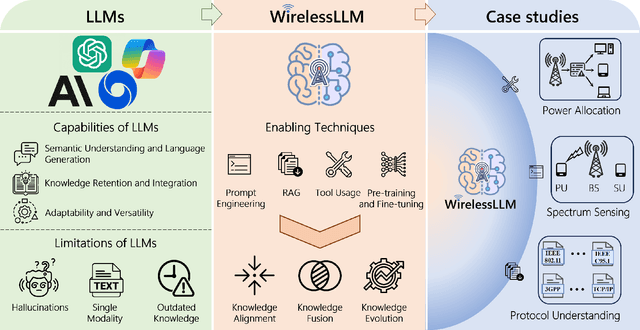
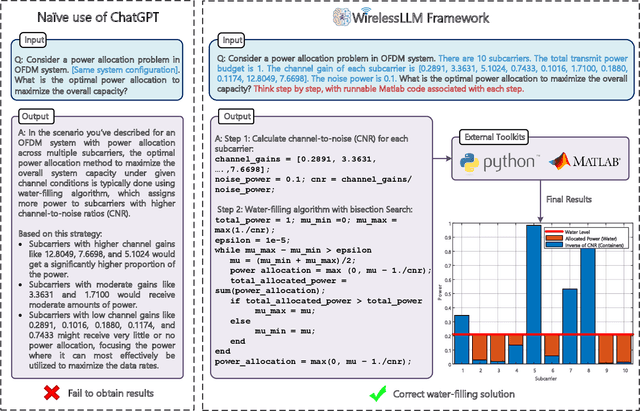
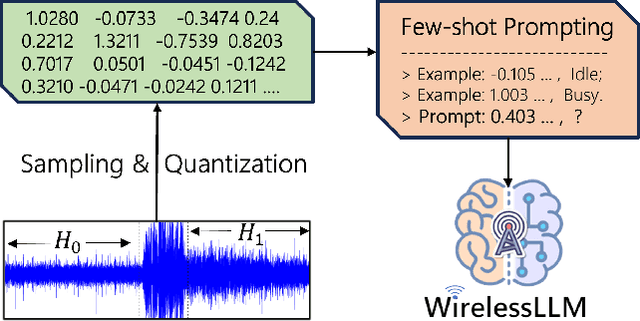
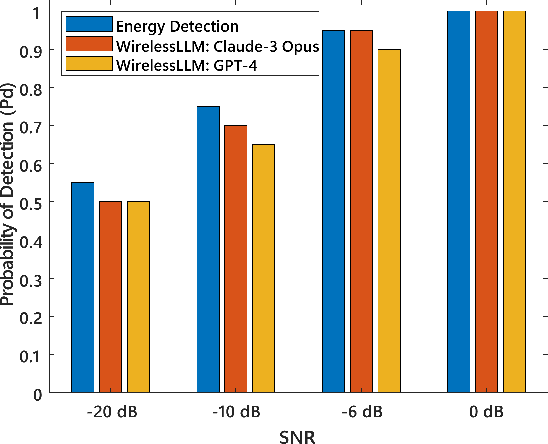
The rapid evolution of wireless technologies and the growing complexity of network infrastructures necessitate a paradigm shift in how communication networks are designed, configured, and managed. Recent advancements in Large Language Models (LLMs) have sparked interest in their potential to revolutionize wireless communication systems. However, existing studies on LLMs for wireless systems are limited to a direct application for telecom language understanding. To empower LLMs with knowledge and expertise in the wireless domain, this paper proposes WirelessLLM, a comprehensive framework for adapting and enhancing LLMs to address the unique challenges and requirements of wireless communication networks. We first identify three foundational principles that underpin WirelessLLM: knowledge alignment, knowledge fusion, and knowledge evolution. Then, we investigate the enabling technologies to build WirelessLLM, including prompt engineering, retrieval augmented generation, tool usage, multi-modal pre-training, and domain-specific fine-tuning. Moreover, we present three case studies to demonstrate the practical applicability and benefits of WirelessLLM for solving typical problems in wireless networks. Finally, we conclude this paper by highlighting key challenges and outlining potential avenues for future research.
Vista: A Generalizable Driving World Model with High Fidelity and Versatile Controllability
May 27, 2024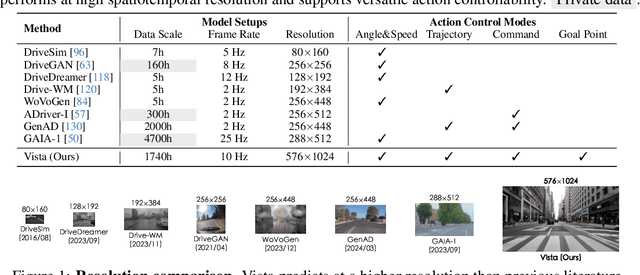
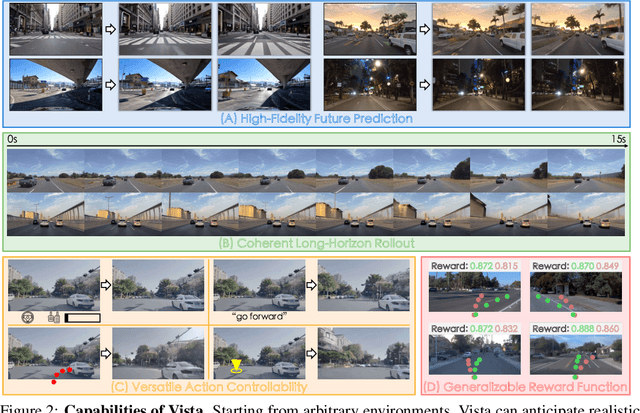


World models can foresee the outcomes of different actions, which is of paramount importance for autonomous driving. Nevertheless, existing driving world models still have limitations in generalization to unseen environments, prediction fidelity of critical details, and action controllability for flexible application. In this paper, we present Vista, a generalizable driving world model with high fidelity and versatile controllability. Based on a systematic diagnosis of existing methods, we introduce several key ingredients to address these limitations. To accurately predict real-world dynamics at high resolution, we propose two novel losses to promote the learning of moving instances and structural information. We also devise an effective latent replacement approach to inject historical frames as priors for coherent long-horizon rollouts. For action controllability, we incorporate a versatile set of controls from high-level intentions (command, goal point) to low-level maneuvers (trajectory, angle, and speed) through an efficient learning strategy. After large-scale training, the capabilities of Vista can seamlessly generalize to different scenarios. Extensive experiments on multiple datasets show that Vista outperforms the most advanced general-purpose video generator in over 70% of comparisons and surpasses the best-performing driving world model by 55% in FID and 27% in FVD. Moreover, for the first time, we utilize the capacity of Vista itself to establish a generalizable reward for real-world action evaluation without accessing the ground truth actions.
Ensembling Diffusion Models via Adaptive Feature Aggregation
May 27, 2024

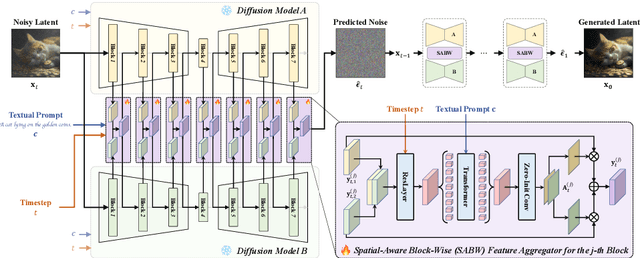
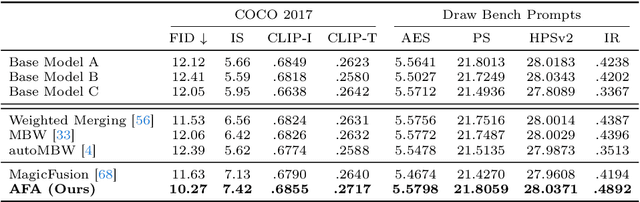
The success of the text-guided diffusion model has inspired the development and release of numerous powerful diffusion models within the open-source community. These models are typically fine-tuned on various expert datasets, showcasing diverse denoising capabilities. Leveraging multiple high-quality models to produce stronger generation ability is valuable, but has not been extensively studied. Existing methods primarily adopt parameter merging strategies to produce a new static model. However, they overlook the fact that the divergent denoising capabilities of the models may dynamically change across different states, such as when experiencing different prompts, initial noises, denoising steps, and spatial locations. In this paper, we propose a novel ensembling method, Adaptive Feature Aggregation (AFA), which dynamically adjusts the contributions of multiple models at the feature level according to various states (i.e., prompts, initial noises, denoising steps, and spatial locations), thereby keeping the advantages of multiple diffusion models, while suppressing their disadvantages. Specifically, we design a lightweight Spatial-Aware Block-Wise (SABW) feature aggregator that adaptive aggregates the block-wise intermediate features from multiple U-Net denoisers into a unified one. The core idea lies in dynamically producing an individual attention map for each model's features by comprehensively considering various states. It is worth noting that only SABW is trainable with about 50 million parameters, while other models are frozen. Both the quantitative and qualitative experiments demonstrate the effectiveness of our proposed Adaptive Feature Aggregation method. The code is available at https://github.com/tenvence/afa/.
Dual-Delayed Asynchronous SGD for Arbitrarily Heterogeneous Data
May 27, 2024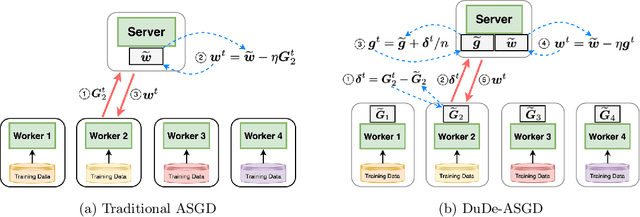
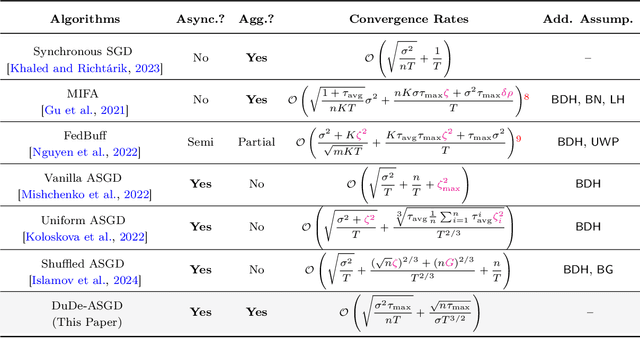
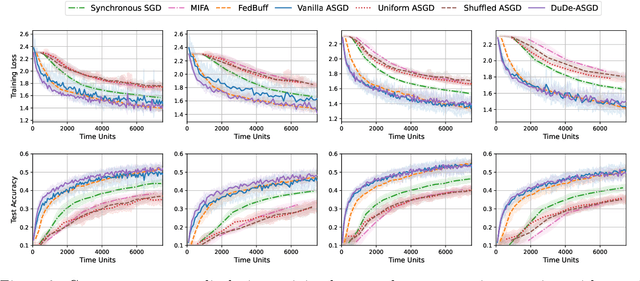
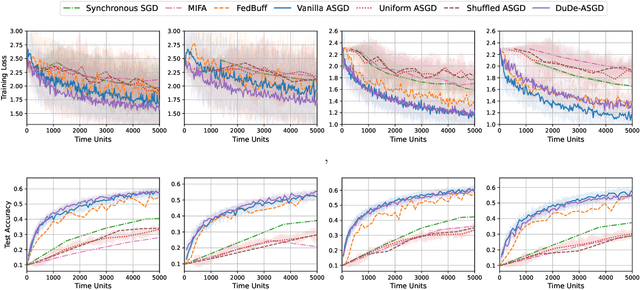
We consider the distributed learning problem with data dispersed across multiple workers under the orchestration of a central server. Asynchronous Stochastic Gradient Descent (SGD) has been widely explored in such a setting to reduce the synchronization overhead associated with parallelization. However, the performance of asynchronous SGD algorithms often depends on a bounded dissimilarity condition among the workers' local data, a condition that can drastically affect their efficiency when the workers' data are highly heterogeneous. To overcome this limitation, we introduce the \textit{dual-delayed asynchronous SGD (DuDe-ASGD)} algorithm designed to neutralize the adverse effects of data heterogeneity. DuDe-ASGD makes full use of stale stochastic gradients from all workers during asynchronous training, leading to two distinct time lags in the model parameters and data samples utilized in the server's iterations. Furthermore, by adopting an incremental aggregation strategy, DuDe-ASGD maintains a per-iteration computational cost that is on par with traditional asynchronous SGD algorithms. Our analysis demonstrates that DuDe-ASGD achieves a near-minimax-optimal convergence rate for smooth nonconvex problems, even when the data across workers are extremely heterogeneous. Numerical experiments indicate that DuDe-ASGD compares favorably with existing asynchronous and synchronous SGD-based algorithms.
The Effect of Quantization in Federated Learning: A Rényi Differential Privacy Perspective
May 16, 2024Federated Learning (FL) is an emerging paradigm that holds great promise for privacy-preserving machine learning using distributed data. To enhance privacy, FL can be combined with Differential Privacy (DP), which involves adding Gaussian noise to the model weights. However, FL faces a significant challenge in terms of large communication overhead when transmitting these model weights. To address this issue, quantization is commonly employed. Nevertheless, the presence of quantized Gaussian noise introduces complexities in understanding privacy protection. This research paper investigates the impact of quantization on privacy in FL systems. We examine the privacy guarantees of quantized Gaussian mechanisms using R\'enyi Differential Privacy (RDP). By deriving the privacy budget of quantized Gaussian mechanisms, we demonstrate that lower quantization bit levels provide improved privacy protection. To validate our theoretical findings, we employ Membership Inference Attacks (MIA), which gauge the accuracy of privacy leakage. The numerical results align with our theoretical analysis, confirming that quantization can indeed enhance privacy protection. This study not only enhances our understanding of the correlation between privacy and communication in FL but also underscores the advantages of quantization in preserving privacy.
Tackling Distribution Shifts in Task-Oriented Communication with Information Bottleneck
May 15, 2024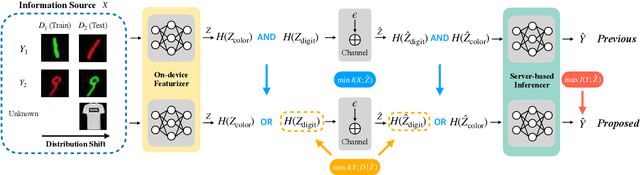
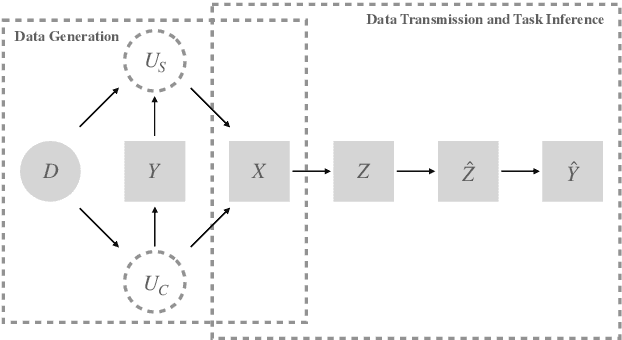
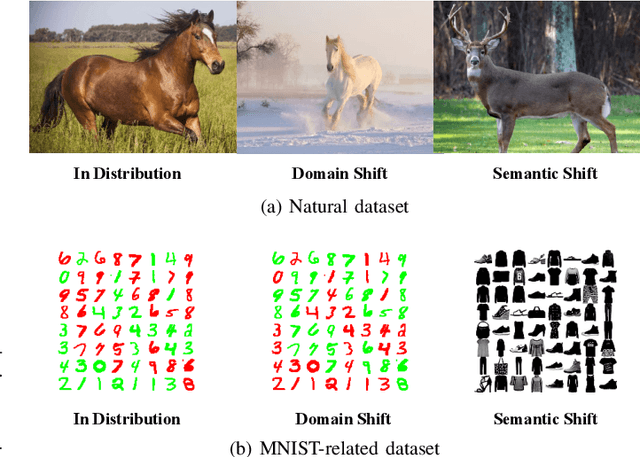
Task-oriented communication aims to extract and transmit task-relevant information to significantly reduce the communication overhead and transmission latency. However, the unpredictable distribution shifts between training and test data, including domain shift and semantic shift, can dramatically undermine the system performance. In order to tackle these challenges, it is crucial to ensure that the encoded features can generalize to domain-shifted data and detect semanticshifted data, while remaining compact for transmission. In this paper, we propose a novel approach based on the information bottleneck (IB) principle and invariant risk minimization (IRM) framework. The proposed method aims to extract compact and informative features that possess high capability for effective domain-shift generalization and accurate semantic-shift detection without any knowledge of the test data during training. Specifically, we propose an invariant feature encoding approach based on the IB principle and IRM framework for domainshift generalization, which aims to find the causal relationship between the input data and task result by minimizing the complexity and domain dependence of the encoded feature. Furthermore, we enhance the task-oriented communication with the label-dependent feature encoding approach for semanticshift detection which achieves joint gains in IB optimization and detection performance. To avoid the intractable computation of the IB-based objective, we leverage variational approximation to derive a tractable upper bound for optimization. Extensive simulation results on image classification tasks demonstrate that the proposed scheme outperforms state-of-the-art approaches and achieves a better rate-distortion tradeoff.
Low-Complexity Joint Azimuth-Range-Velocity Estimation for Integrated Sensing and Communication with OFDM Waveform
May 15, 2024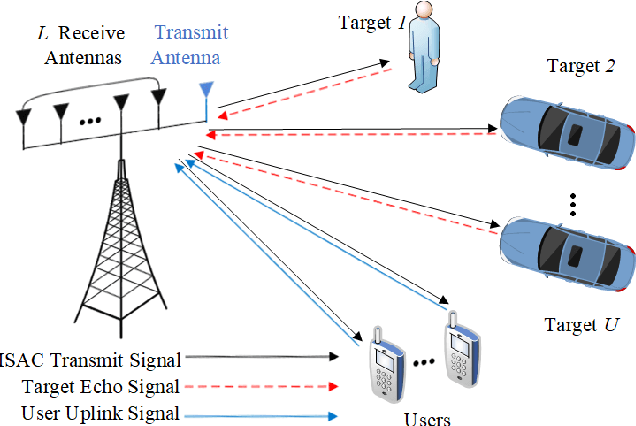
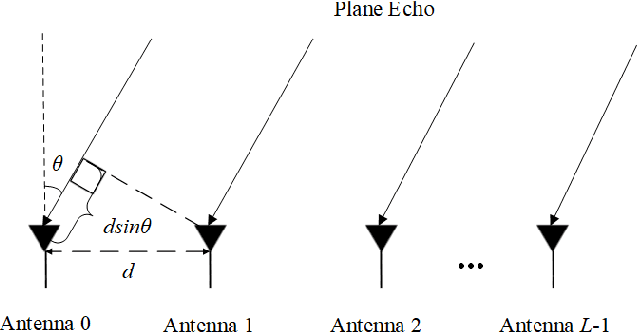
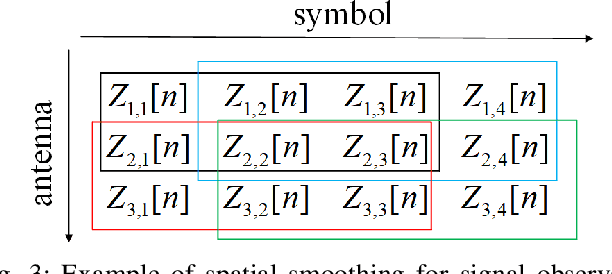
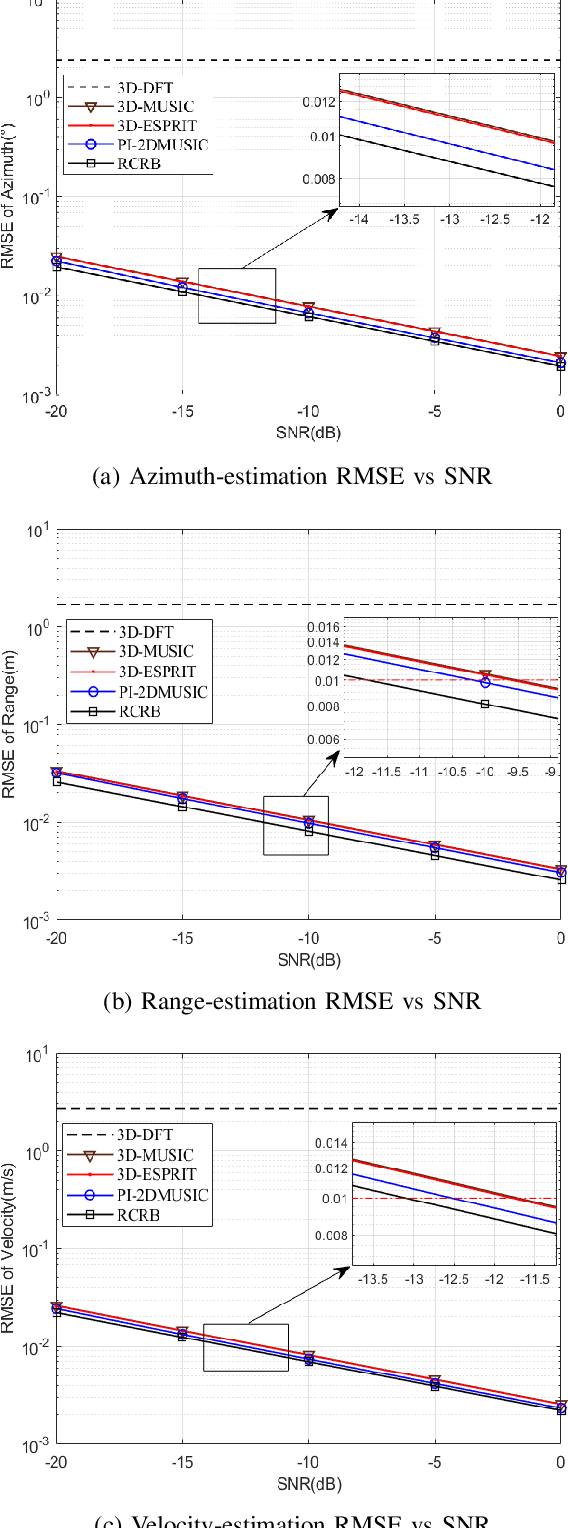
Integrated sensing and communication (ISAC) is a main application scenario of the sixth-generation mobile communication systems. Due to the fast-growing number of antennas and subcarriers in cellular systems, the computational complexity of joint azimuth-range-velocity estimation (JARVE) in ISAC systems is extremely high. This paper studies the JARVE problem for a monostatic ISAC system with orthogonal frequency division multiplexing (OFDM) waveform, in which a base station receives the echos of its transmitted cellular OFDM signals to sense multiple targets. The Cramer-Rao bounds are first derived for JARVE. A low-complexity algorithm is further designed for super-resolution JARVE, which utilizes the proposed iterative subspace update scheme and Levenberg-Marquardt optimization method to replace the exhaustive search of spatial spectrum in multiple-signal-classification (MUSIC) algorithm. Finally, with the practical parameters of 5G New Radio, simulation results verify that the proposed algorithm can reduce the computational complexity by three orders of magnitude and two orders of magnitude compared to the existing three-dimensional MUSIC algorithm and estimation-of-signal-parameters-using-rotational-invariance-techniques (ESPRIT) algorithm, respectively, and also improve the estimation performance.
Benchmarking Classical and Learning-Based Multibeam Point Cloud Registration
May 10, 2024Deep learning has shown promising results for multiple 3D point cloud registration datasets. However, in the underwater domain, most registration of multibeam echo-sounder (MBES) point cloud data are still performed using classical methods in the iterative closest point (ICP) family. In this work, we curate and release DotsonEast Dataset, a semi-synthetic MBES registration dataset constructed from an autonomous underwater vehicle in West Antarctica. Using this dataset, we systematically benchmark the performance of 2 classical and 4 learning-based methods. The experimental results show that the learning-based methods work well for coarse alignment, and are better at recovering rough transforms consistently at high overlap (20-50%). In comparison, GICP (a variant of ICP) performs well for fine alignment and is better across all metrics at extremely low overlap (10%). To the best of our knowledge, this is the first work to benchmark both learning-based and classical registration methods on an AUV-based MBES dataset. To facilitate future research, both the code and data are made available online.
NeuRSS: Enhancing AUV Localization and Bathymetric Mapping with Neural Rendering for Sidescan SLAM
May 09, 2024Implicit neural representations and neural rendering have gained increasing attention for bathymetry estimation from sidescan sonar (SSS). These methods incorporate multiple observations of the same place from SSS data to constrain the elevation estimate, converging to a globally-consistent bathymetric model. However, the quality and precision of the bathymetric estimate are limited by the positioning accuracy of the autonomous underwater vehicle (AUV) equipped with the sonar. The global positioning estimate of the AUV relying on dead reckoning (DR) has an unbounded error due to the absence of a geo-reference system like GPS underwater. To address this challenge, we propose in this letter a modern and scalable framework, NeuRSS, for SSS SLAM based on DR and loop closures (LCs) over large timescales, with an elevation prior provided by the bathymetric estimate using neural rendering from SSS. This framework is an iterative procedure that improves localization and bathymetric mapping. Initially, the bathymetry estimated from SSS using the DR estimate, though crude, can provide an important elevation prior in the nonlinear least-squares (NLS) optimization that estimates the relative pose between two loop-closure vertices in a pose graph. Subsequently, the global pose estimate from the SLAM component improves the positioning estimate of the vehicle, thus improving the bathymetry estimation. We validate our localization and mapping approach on two large surveys collected with a surface vessel and an AUV, respectively. We evaluate their localization results against the ground truth and compare the bathymetry estimation against data collected with multibeam echo sounders (MBES).