 Add to Chrome
 Add to Firefox
 Add to Edge
Understanding GUI Agent Localization Biases through Logit Sharpness
Jun 18, 2025
Multimodal large language models (MLLMs) have enabled GUI agents to interact with operating systems by grounding language into spatial actions. Despite their promising performance, these models frequently exhibit hallucinations-systematic localization errors that compromise reliability. We propose a fine-grained evaluation framework that categorizes model predictions into four distinct types, revealing nuanced failure modes beyond traditional accuracy metrics. To better quantify model uncertainty, we introduce the Peak Sharpness Score (PSS), a metric that evaluates the alignment between semantic continuity and logits distribution in coordinate prediction. Building on this insight, we further propose Context-Aware Cropping, a training-free technique that improves model performance by adaptively refining input context. Extensive experiments demonstrate that our framework and methods provide actionable insights and enhance the interpretability and robustness of GUI agent behavior.

TreeRPO: Tree Relative Policy Optimization
Jun 05, 2025Large Language Models (LLMs) have shown remarkable reasoning capabilities through Reinforcement Learning with Verifiable Rewards (RLVR) methods. However, a key limitation of existing approaches is that rewards defined at the full trajectory level provide insufficient guidance for optimizing the intermediate steps of a reasoning process. To address this, we introduce \textbf{\name}, a novel method that estimates the mathematical expectations of rewards at various reasoning steps using tree sampling. Unlike prior methods that rely on a separate step reward model, \name directly estimates these rewards through this sampling process. Building on the group-relative reward training mechanism of GRPO, \name innovatively computes rewards based on step-level groups generated during tree sampling. This advancement allows \name to produce fine-grained and dense reward signals, significantly enhancing the learning process and overall performance of LLMs. Experimental results demonstrate that our \name algorithm substantially improves the average Pass@1 accuracy of Qwen-2.5-Math on test benchmarks, increasing it from 19.0\% to 35.5\%. Furthermore, \name significantly outperforms GRPO by 2.9\% in performance while simultaneously reducing the average response length by 18.1\%, showcasing its effectiveness and efficiency. Our code will be available at \href{https://github.com/yangzhch6/TreeRPO}{https://github.com/yangzhch6/TreeRPO}.
UniVG-R1: Reasoning Guided Universal Visual Grounding with Reinforcement Learning
May 20, 2025Traditional visual grounding methods primarily focus on single-image scenarios with simple textual references. However, extending these methods to real-world scenarios that involve implicit and complex instructions, particularly in conjunction with multiple images, poses significant challenges, which is mainly due to the lack of advanced reasoning ability across diverse multi-modal contexts. In this work, we aim to address the more practical universal grounding task, and propose UniVG-R1, a reasoning guided multimodal large language model (MLLM) for universal visual grounding, which enhances reasoning capabilities through reinforcement learning (RL) combined with cold-start data. Specifically, we first construct a high-quality Chain-of-Thought (CoT) grounding dataset, annotated with detailed reasoning chains, to guide the model towards correct reasoning paths via supervised fine-tuning. Subsequently, we perform rule-based reinforcement learning to encourage the model to identify correct reasoning chains, thereby incentivizing its reasoning capabilities. In addition, we identify a difficulty bias arising from the prevalence of easy samples as RL training progresses, and we propose a difficulty-aware weight adjustment strategy to further strengthen the performance. Experimental results demonstrate the effectiveness of UniVG-R1, which achieves state-of-the-art performance on MIG-Bench with a 9.1% improvement over the previous method. Furthermore, our model exhibits strong generalizability, achieving an average improvement of 23.4% in zero-shot performance across four image and video reasoning grounding benchmarks. The project page can be accessed at https://amap-ml.github.io/UniVG-R1-page/.
DialogueAgents: A Hybrid Agent-Based Speech Synthesis Framework for Multi-Party Dialogue
Apr 20, 2025Speech synthesis is crucial for human-computer interaction, enabling natural and intuitive communication. However, existing datasets involve high construction costs due to manual annotation and suffer from limited character diversity, contextual scenarios, and emotional expressiveness. To address these issues, we propose DialogueAgents, a novel hybrid agent-based speech synthesis framework, which integrates three specialized agents -- a script writer, a speech synthesizer, and a dialogue critic -- to collaboratively generate dialogues. Grounded in a diverse character pool, the framework iteratively refines dialogue scripts and synthesizes speech based on speech review, boosting emotional expressiveness and paralinguistic features of the synthesized dialogues. Using DialogueAgent, we contribute MultiTalk, a bilingual, multi-party, multi-turn speech dialogue dataset covering diverse topics. Extensive experiments demonstrate the effectiveness of our framework and the high quality of the MultiTalk dataset. We release the dataset and code https://github.com/uirlx/DialogueAgents to facilitate future research on advanced speech synthesis models and customized data generation.
FingER: Content Aware Fine-grained Evaluation with Reasoning for AI-Generated Videos
Apr 14, 2025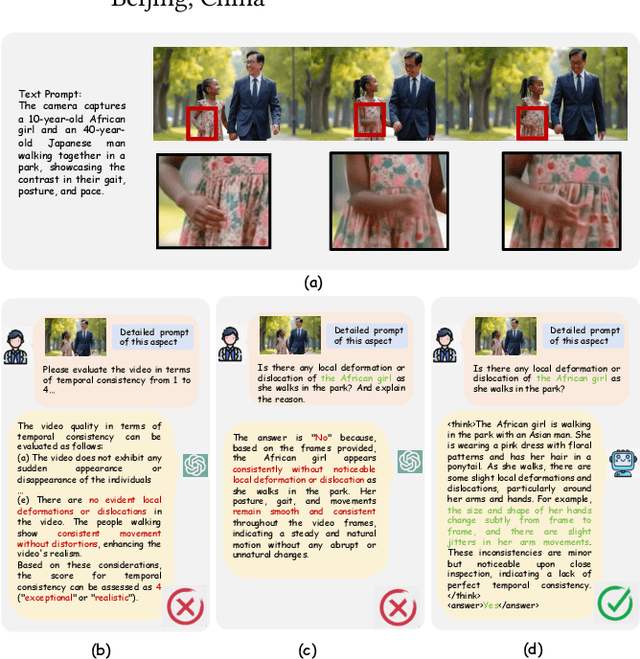

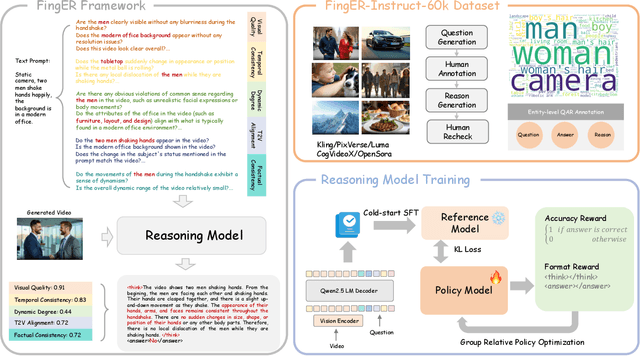
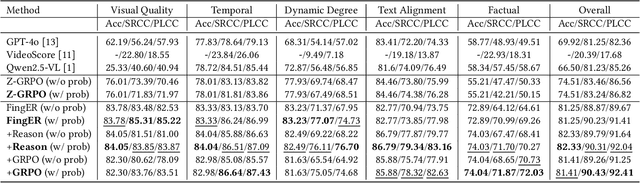
Recent advances in video generation have posed great challenges in the assessment of AI-generated content, particularly with the emergence of increasingly sophisticated models. The various inconsistencies and defects observed in such videos are inherently complex, making overall scoring notoriously difficult. In this paper, we emphasize the critical importance of integrating fine-grained reasoning into video evaluation, and we propose $\textbf{F}$ing$\textbf{ER}$, a novel entity-level reasoning evaluation framework that first automatically generates $\textbf{F}$ine-grained $\textbf{E}$ntity-level questions, and then answers those questions by a $\textbf{R}$easoning model with scores, which can be subsequently weighted summed to an overall score for different applications. Specifically, we leverage LLMs to derive entity-level questions across five distinct perspectives, which (i) often focus on some specific entities of the content, thereby making answering or scoring much easier by MLLMs, and (ii) are more interpretable. Then we construct a FingER dataset, consisting of approximately 3.3k videos and corresponding 60k fine-grained QA annotations, each with detailed reasons. Based on that, we further investigate various training protocols to best incentivize the reasoning capability of MLLMs for correct answer prediction. Extensive experiments demonstrate that a reasoning model trained using Group Relative Policy Optimization (GRPO) with a cold-start strategy achieves the best performance. Notably, our model surpasses existing methods by a relative margin of $11.8\%$ on GenAI-Bench and $5.5\%$ on MonetBench with only 3.3k training videos, which is at most one-tenth of the training samples utilized by other methods. Our code and dataset will be released soon.
MES-RAG: Bringing Multi-modal, Entity-Storage, and Secure Enhancements to RAG
Mar 17, 2025
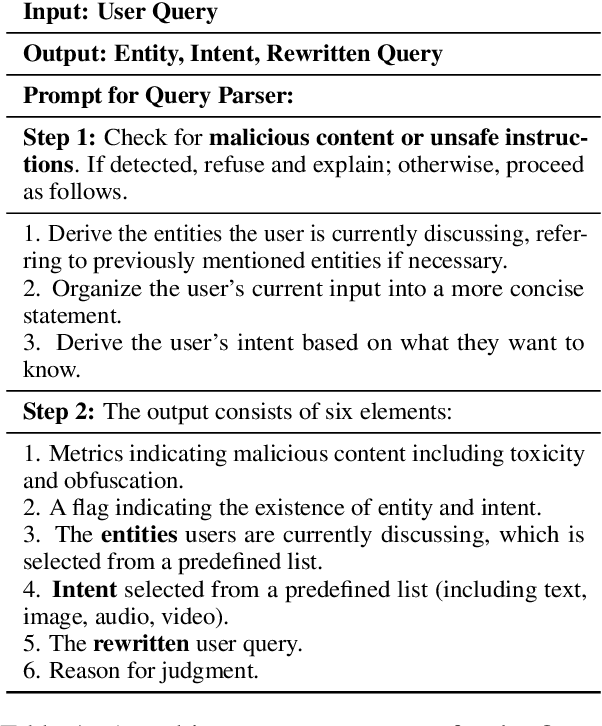
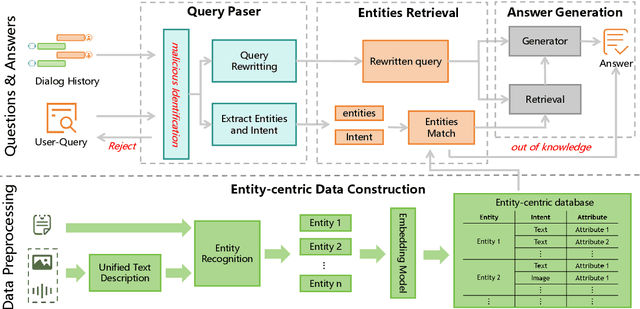
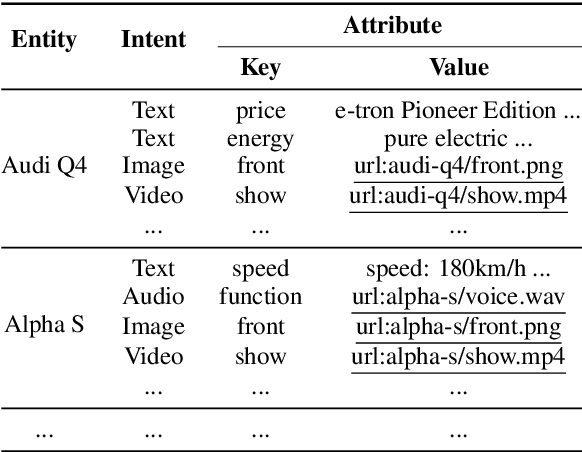
Retrieval-Augmented Generation (RAG) improves Large Language Models (LLMs) by using external knowledge, but it struggles with precise entity information retrieval. In this paper, we proposed MES-RAG framework, which enhances entity-specific query handling and provides accurate, secure, and consistent responses. MES-RAG introduces proactive security measures that ensure system integrity by applying protections prior to data access. Additionally, the system supports real-time multi-modal outputs, including text, images, audio, and video, seamlessly integrating into existing RAG architectures. Experimental results demonstrate that MES-RAG significantly improves both accuracy and recall, highlighting its effectiveness in advancing the security and utility of question-answering, increasing accuracy to 0.83 (+0.25) on targeted task. Our code and data are available at https://github.com/wpydcr/MES-RAG.
Rewards Are Enough for Fast Photo-Realistic Text-to-image Generation
Mar 17, 2025Aligning generated images to complicated text prompts and human preferences is a central challenge in Artificial Intelligence-Generated Content (AIGC). With reward-enhanced diffusion distillation emerging as a promising approach that boosts controllability and fidelity of text-to-image models, we identify a fundamental paradigm shift: as conditions become more specific and reward signals stronger, the rewards themselves become the dominant force in generation. In contrast, the diffusion losses serve as an overly expensive form of regularization. To thoroughly validate our hypothesis, we introduce R0, a novel conditional generation approach via regularized reward maximization. Instead of relying on tricky diffusion distillation losses, R0 proposes a new perspective that treats image generations as an optimization problem in data space which aims to search for valid images that have high compositional rewards. By innovative designs of the generator parameterization and proper regularization techniques, we train state-of-the-art few-step text-to-image generative models with R0 at scales. Our results challenge the conventional wisdom of diffusion post-training and conditional generation by demonstrating that rewards play a dominant role in scenarios with complex conditions. We hope our findings can contribute to further research into human-centric and reward-centric generation paradigms across the broader field of AIGC. Code is available at https://github.com/Luo-Yihong/R0.
Adding Additional Control to One-Step Diffusion with Joint Distribution Matching
Mar 09, 2025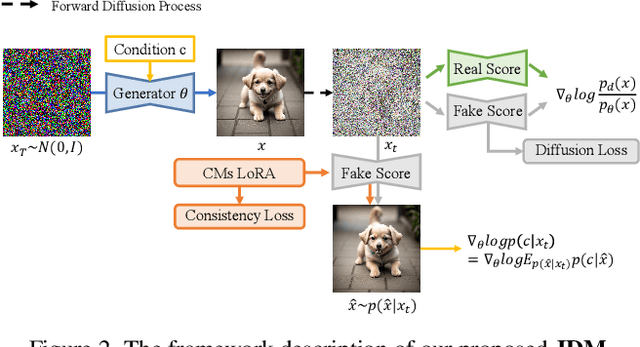
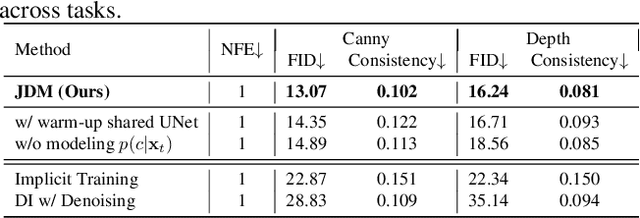
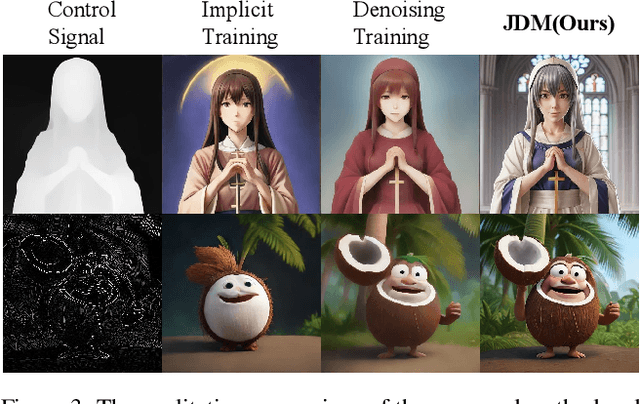
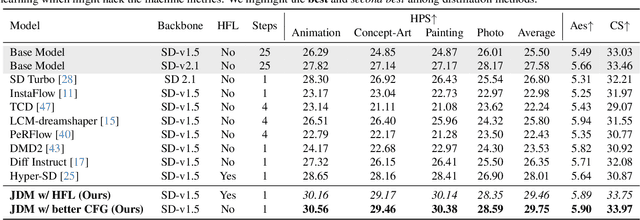
While diffusion distillation has enabled one-step generation through methods like Variational Score Distillation, adapting distilled models to emerging new controls -- such as novel structural constraints or latest user preferences -- remains challenging. Conventional approaches typically requires modifying the base diffusion model and redistilling it -- a process that is both computationally intensive and time-consuming. To address these challenges, we introduce Joint Distribution Matching (JDM), a novel approach that minimizes the reverse KL divergence between image-condition joint distributions. By deriving a tractable upper bound, JDM decouples fidelity learning from condition learning. This asymmetric distillation scheme enables our one-step student to handle controls unknown to the teacher model and facilitates improved classifier-free guidance (CFG) usage and seamless integration of human feedback learning (HFL). Experimental results demonstrate that JDM surpasses baseline methods such as multi-step ControlNet by mere one-step in most cases, while achieving state-of-the-art performance in one-step text-to-image synthesis through improved usage of CFG or HFL integration.
Learning Few-Step Diffusion Models by Trajectory Distribution Matching
Mar 09, 2025Accelerating diffusion model sampling is crucial for efficient AIGC deployment. While diffusion distillation methods -- based on distribution matching and trajectory matching -- reduce sampling to as few as one step, they fall short on complex tasks like text-to-image generation. Few-step generation offers a better balance between speed and quality, but existing approaches face a persistent trade-off: distribution matching lacks flexibility for multi-step sampling, while trajectory matching often yields suboptimal image quality. To bridge this gap, we propose learning few-step diffusion models by Trajectory Distribution Matching (TDM), a unified distillation paradigm that combines the strengths of distribution and trajectory matching. Our method introduces a data-free score distillation objective, aligning the student's trajectory with the teacher's at the distribution level. Further, we develop a sampling-steps-aware objective that decouples learning targets across different steps, enabling more adjustable sampling. This approach supports both deterministic sampling for superior image quality and flexible multi-step adaptation, achieving state-of-the-art performance with remarkable efficiency. Our model, TDM, outperforms existing methods on various backbones, such as SDXL and PixArt-$\alpha$, delivering superior quality and significantly reduced training costs. In particular, our method distills PixArt-$\alpha$ into a 4-step generator that outperforms its teacher on real user preference at 1024 resolution. This is accomplished with 500 iterations and 2 A800 hours -- a mere 0.01% of the teacher's training cost. In addition, our proposed TDM can be extended to accelerate text-to-video diffusion. Notably, TDM can outperform its teacher model (CogVideoX-2B) by using only 4 NFE on VBench, improving the total score from 80.91 to 81.65. Project page: https://tdm-t2x.github.io/
Decoupled Graph Energy-based Model for Node Out-of-Distribution Detection on Heterophilic Graphs
Feb 25, 2025Despite extensive research efforts focused on OOD detection on images, OOD detection on nodes in graph learning remains underexplored. The dependence among graph nodes hinders the trivial adaptation of existing approaches on images that assume inputs to be i.i.d. sampled, since many unique features and challenges specific to graphs are not considered, such as the heterophily issue. Recently, GNNSafe, which considers node dependence, adapted energy-based detection to the graph domain with state-of-the-art performance, however, it has two serious issues: 1) it derives node energy from classification logits without specifically tailored training for modeling data distribution, making it less effective at recognizing OOD data; 2) it highly relies on energy propagation, which is based on homophily assumption and will cause significant performance degradation on heterophilic graphs, where the node tends to have dissimilar distribution with its neighbors. To address the above issues, we suggest training EBMs by MLE to enhance data distribution modeling and remove energy propagation to overcome the heterophily issues. However, training EBMs via MLE requires performing MCMC sampling on both node feature and node neighbors, which is challenging due to the node interdependence and discrete graph topology. To tackle the sampling challenge, we introduce DeGEM, which decomposes the learning process into two parts: a graph encoder that leverages topology information for node representations and an energy head that operates in latent space. Extensive experiments validate that DeGEM, without OOD exposure during training, surpasses previous state-of-the-art methods, achieving an average AUROC improvement of 6.71% on homophilic graphs and 20.29% on heterophilic graphs, and even outperform methods trained with OOD exposure. Our code is available at: https://github.com/draym28/DeGEM.