 Add to Chrome
 Add to Firefox
 Add to Edge
Kimi K3: Open Frontier Intelligence
Jul 27, 2026
We introduce Kimi K3, a 2.8T parameter Mixture-of-Experts model with 104 billion activated parameters, native vision capabilities, and a 1-million-token context window. Kimi K3 is built on Kimi Delta Attention and Attention Residuals, which improve information flow across sequence length and model depth. Together with Stable LatentMoE, which effectively activates 16 of 896 routed experts per token, and refined training and data recipes, these advances yield an approximately 2.5x improvement in overall scaling efficiency over Kimi K2. Post-training highlights reinforcement learning across general, agentic, and coding domains and multiple reasoning-effort levels, enabling compositional generalization and robust long-horizon execution. At 2.8T scale, Kimi K3 is supported by infrastructure advances in multiple areas: algorithm-system co-design for KDA, perfectly balanced expert-parallel training with efficient memory management, million-token agentic RL with persistent rollout and sandbox states, and deployment innovations. Extensive evaluations show that Kimi K3 achieves frontier-level performance across long-horizon coding, agentic, knowledge, reasoning, and vision tasks. While its overall performance still trails the most powerful proprietary models, namely Claude Fable 5 and GPT-5.6 Sol, Kimi K3 consistently outperforms other open and proprietary models evaluated in our suite. We release the full Kimi K3 model weights to facilitate future research and accelerate the broader deployment and adoption of frontier intelligence.

GameCraft-Bench: Can Agents Build Playable Games End-to-End in a Real Game Engine?
Jun 16, 2026Game generation is an emerging application of coding agents, requiring models to transform natural-language specifications into playable interactive systems. Unlike traditional coding tasks, game generation takes place within a game engine, where scripts, scenes, assets, rendering, and runtime interactions must jointly produce coherent gameplay. We formalize end-to-end game generation as the problem of producing a complete game artifact that realizes a specification through observable player-game interaction in a target environment. We argue that evaluating this setting requires three desiderata: Engine Grounding, Artifact Completeness, and Interactive Verification. We propose an interaction-grounded evaluation framework that assesses executable gameplay through replayed demonstrations and rubric-guided multimodal judging. We instantiate this framework as GameCraft-Bench, a benchmark comprising 140 Godot tasks across 15 game families. Evaluations of frontier coding agents show that end-to-end game generation remains highly challenging: the strongest agent achieves only 41.46%, and most agents score below 40%. Further analysis reveals that while agents often implement recognizable mechanics, they struggle to deliver complete games with sufficient content, functional visual feedback, and coherent presentation. See https://tongxuluo.github.io/gamecraft-bench-website for demos, code, and data.
RealMath-Eval: Why SOTA Judges Struggle with Real Human Reasoning
Jun 08, 2026While Large Language Models (LLMs) have achieved near-perfect performance in \emph{solving} high-school mathematics, their ability to \emph{evaluate} the diverse reasoning processes of real human students remains under-examined. To bridge this gap, we introduce \textbf{RealMath-Eval}, a rigorously annotated benchmark of 224 real-world exam responses from high schools. Our initial evaluation reveals that even state-of-the-art LLM judges struggle significantly on this task, exhibiting a high Mean Squared Error ($\sim$2.96) against expert human grading. To probe a plausible explanation, we contrast this performance with a control setting where the same judges evaluate synthetic LLM-generated solutions. We identify a stark ``Evaluation Gap'': judges are considerably more accurate and consistent on synthetic text (MSE $\sim$1.17) but struggle to generalize to authentic student reasoning. Through semantic embedding analysis, we find that synthetic errors suffer from a ``structural collapse'' into predictable, low-dimensional linear subspaces, whereas human errors form a more diverse error space. Furthermore, generative probability probes suggest that human reasoning involves significantly higher information-theoretic surprisal, indicating that student reasoning transitions are more out-of-distribution for current models. Finally, we find that surface-level style transfer fails to close this gap. Our findings suggest that current LLM evaluation pipelines relying heavily on synthetic data may not adequately capture the diversity of authentic student mathematical reasoning.
MSSR: Memory-Aware Adaptive Replay for Continual LLM Fine-Tuning
Mar 10, 2026Continual fine-tuning of large language models (LLMs) is becoming increasingly crucial as these models are deployed in dynamic environments where tasks and data distributions evolve over time. While strong adaptability enables rapid acquisition of new knowledge, it also exposes LLMs to catastrophic forgetting, where previously learned skills degrade during sequential training. Existing replay-based strategies, such as fixed interleaved replay, accuracy-supervised, and loss-driven scheduling, remain limited: some depend on heuristic rules and provide only partial mitigation of forgetting, while others improve performance but incur substantial computational overhead. Motivated by retention dynamics under sequential fine-tuning, we propose Memory-Inspired Sampler and Scheduler Replay (MSSR), an experience replay framework that estimates sample-level memory strength and schedules rehearsal at adaptive intervals to mitigate catastrophic forgetting while maintaining fast adaptation. Extensive experiments across three backbone models and 11 sequential tasks show that MSSR consistently outperforms state-of-the-art replay baselines, with particularly strong gains on reasoning-intensive and multiple-choice benchmarks.
Revisiting Sharpness-Aware Minimization: A More Faithful and Effective Implementation
Mar 09, 2026Sharpness-Aware Minimization (SAM) enhances generalization by minimizing the maximum training loss within a predefined neighborhood around the parameters. However, its practical implementation approximates this as gradient ascent(s) followed by applying the gradient at the ascent point to update the current parameters. This practice can be justified as approximately optimizing the objective by neglecting the (full) derivative of the ascent point with respect to the current parameters. Nevertheless, a direct and intuitive understanding of why using the gradient at the ascent point to update the current parameters works superiorly is still lacking. Our work bridges this gap by proposing a novel and intuitive interpretation. We show that the gradient at the single-step ascent point, \uline{when applied to the current parameters}, provides a better approximation of the direction from the current parameters toward the maximum within the local neighborhood than the local gradient. This improved approximation thereby enables a more direct escape from the maximum within the local neighborhood. Nevertheless, our analysis further reveals two issues. First, the approximation by the gradient at the single-step ascent point is often inaccurate. Second, the approximation quality may degrade as the number of ascent steps increases. To address these limitations, we propose in this paper eXplicit Sharpness-Aware Minimization (XSAM). It tackles the first by explicitly estimating the direction of the maximum during training, while addressing the second by crafting a search space that effectively leverages the gradient information at the multi-step ascent point. XSAM features a unified formulation that applies to both single-step and multi-step settings and only incurs negligible computational overhead. Extensive experiments demonstrate the consistent superiority of XSAM against existing counterparts.
Kimi K2.5: Visual Agentic Intelligence
Feb 02, 2026We introduce Kimi K2.5, an open-source multimodal agentic model designed to advance general agentic intelligence. K2.5 emphasizes the joint optimization of text and vision so that two modalities enhance each other. This includes a series of techniques such as joint text-vision pre-training, zero-vision SFT, and joint text-vision reinforcement learning. Building on this multimodal foundation, K2.5 introduces Agent Swarm, a self-directed parallel agent orchestration framework that dynamically decomposes complex tasks into heterogeneous sub-problems and executes them concurrently. Extensive evaluations show that Kimi K2.5 achieves state-of-the-art results across various domains including coding, vision, reasoning, and agentic tasks. Agent Swarm also reduces latency by up to $4.5\times$ over single-agent baselines. We release the post-trained Kimi K2.5 model checkpoint to facilitate future research and real-world applications of agentic intelligence.
Milestones over Outcome: Unlocking Geometric Reasoning with Sub-Goal Verifiable Reward
Jan 08, 2026Multimodal Large Language Models (MLLMs) struggle with complex geometric reasoning, largely because "black box" outcome-based supervision fails to distinguish between lucky guesses and rigorous deduction. To address this, we introduce a paradigm shift towards subgoal-level evaluation and learning. We first construct GeoGoal, a benchmark synthesized via a rigorous formal verification data engine, which converts abstract proofs into verifiable numeric subgoals. This structure reveals a critical divergence between reasoning quality and outcome accuracy. Leveraging this, we propose the Sub-Goal Verifiable Reward (SGVR) framework, which replaces sparse signals with dense rewards based on the Skeleton Rate. Experiments demonstrate that SGVR not only enhances geometric performance (+9.7%) but also exhibits strong generalization, transferring gains to general math (+8.0%) and other general reasoning tasks (+2.8%), demonstrating broad applicability across diverse domains.
GeoBench: Rethinking Multimodal Geometric Problem-Solving via Hierarchical Evaluation
Dec 30, 2025Geometric problem solving constitutes a critical branch of mathematical reasoning, requiring precise analysis of shapes and spatial relationships. Current evaluations of geometric reasoning in vision-language models (VLMs) face limitations, including the risk of test data contamination from textbook-based benchmarks, overemphasis on final answers over reasoning processes, and insufficient diagnostic granularity. To address these issues, we present GeoBench, a hierarchical benchmark featuring four reasoning levels in geometric problem-solving: Visual Perception, Goal-Oriented Planning, Rigorous Theorem Application, and Self-Reflective Backtracking. Through six formally verified tasks generated via TrustGeoGen, we systematically assess capabilities ranging from attribute extraction to logical error correction. Experiments reveal that while reasoning models like OpenAI-o3 outperform general MLLMs, performance declines significantly with increasing task complexity. Key findings demonstrate that sub-goal decomposition and irrelevant premise filtering critically influence final problem-solving accuracy, whereas Chain-of-Thought prompting unexpectedly degrades performance in some tasks. These findings establish GeoBench as a comprehensive benchmark while offering actionable guidelines for developing geometric problem-solving systems.
Hierarchical Attention Generates Better Proofs
Apr 27, 2025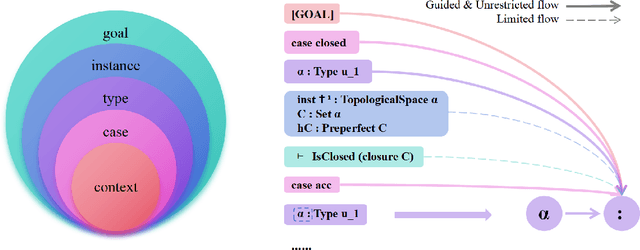
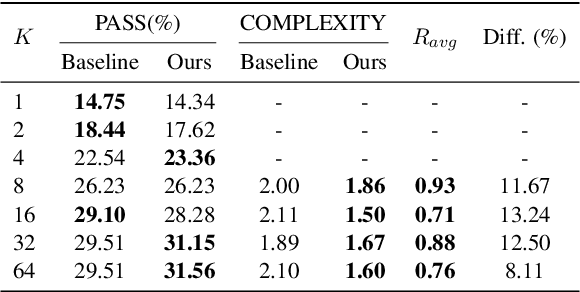
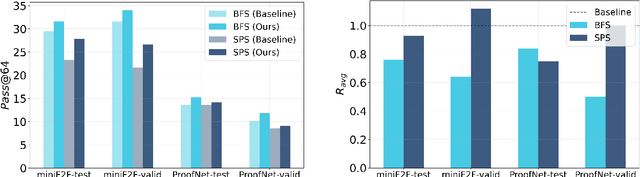
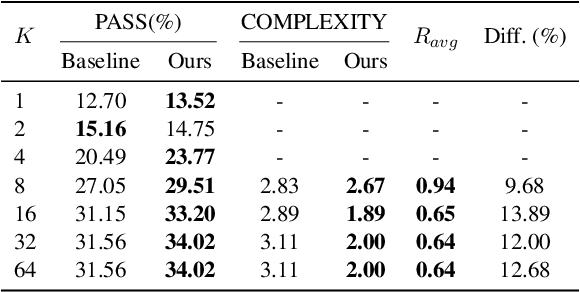
Large language models (LLMs) have shown promise in formal theorem proving, but their token-level processing often fails to capture the inherent hierarchical nature of mathematical proofs. We introduce \textbf{Hierarchical Attention}, a regularization method that aligns LLMs' attention mechanisms with mathematical reasoning structures. Our approach establishes a five-level hierarchy from foundational elements to high-level concepts, ensuring structured information flow in proof generation. Experiments demonstrate that our method improves proof success rates by 2.05\% on miniF2F and 1.69\% on ProofNet while reducing proof complexity by 23.81\% and 16.50\% respectively. The code is available at https://github.com/Car-pe/HAGBP.
Advancing Prompt Recovery in NLP: A Deep Dive into the Integration of Gemma-2b-it and Phi2 Models
Jul 07, 2024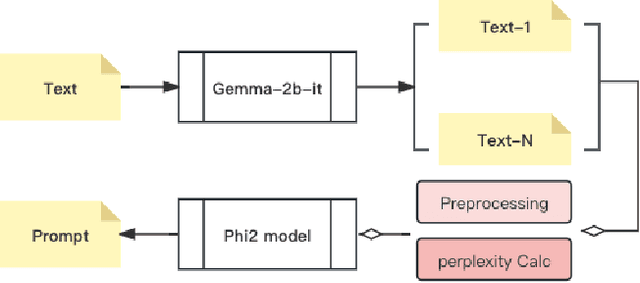
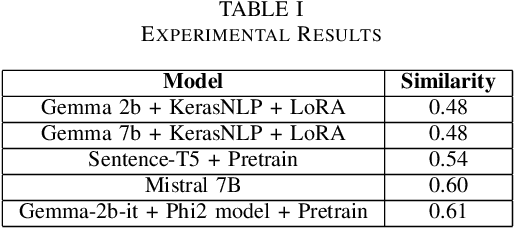
Prompt recovery, a crucial task in natural language processing, entails the reconstruction of prompts or instructions that language models use to convert input text into a specific output. Although pivotal, the design and effectiveness of prompts represent a challenging and relatively untapped field within NLP research. This paper delves into an exhaustive investigation of prompt recovery methodologies, employing a spectrum of pre-trained language models and strategies. Our study is a comparative analysis aimed at gauging the efficacy of various models on a benchmark dataset, with the goal of pinpointing the most proficient approach for prompt recovery. Through meticulous experimentation and detailed analysis, we elucidate the outstanding performance of the Gemma-2b-it + Phi2 model + Pretrain. This model surpasses its counterparts, showcasing its exceptional capability in accurately reconstructing prompts for text transformation tasks. Our findings offer a significant contribution to the existing knowledge on prompt recovery, shedding light on the intricacies of prompt design and offering insightful perspectives for future innovations in text rewriting and the broader field of natural language processing.