 Add to Chrome
 Add to Firefox
 Add to Edge
Ambiguity Function Analysis of Pilot-Embedded Random OFDM Signals
Jul 20, 2026
This paper investigates the statistical ambiguity functions (AFs) of orthogonal frequency division multiplexing (OFDM) waveforms that incorporate deterministic unit-modulus pilot symbols and random data payloads for integrated sensing and communication (ISAC). We derive analytical expressions for the mean squared discrete periodic ambiguity function (DP-AF) and fast-slow-time ambiguity function (FST-AF) of such pilot-embedded OFDM signals. Our analysis demonstrates that, under a fixed signal length and constellation scheme, the mean squared DP-AF depends jointly on the pilot patterns, pilot symbols and number of pilots, while the mean squared FST-AF relies only on the number of pilots. Numerical simulations closely match the theoretical expressions. Furthermore, in numerical results, we show that different pilot patterns correspond to DP-AF with distinct characteristics, offering relevant considerations for pilot design in communication-centric ISAC systems.

Attention Consistent Longitudinal Medical Visual Question Answering Guided by Vision Foundation Models
Jun 03, 2026Longitudinal medical visual question answering (VQA) requires reasoning about anatomical differences between an image of a current time point and an image of a referred time point. We propose an attention-guided encoder-decoder for this task with chest X-rays. Instead of conventional direct contrast, we propose to include a lightweight affine registration module to reduce nuisance motion by co-registering the current image to the reference image with a small registration regularizer. The registered image pair is fed into the image encoder, followed by a frozen DINO-based mask generator and a trainable adaptive mask generator to produce masks applied to the original image pairs. The masked image pairs are again fed into the image encoder and concatenated with text features as the input to a multimodal transformer-based decoder to generate final answers. To facilitate learning stabilization and clarify the change signal, inspired by DINO-v3, we include additional auxiliary objectives, including a mask rebuilding loss, a pairwise Gram-style consistency loss, and a KoLeo uniformity loss, which enhances the geometry of the representation. On the Medical-Diff-VQA benchmark, the model delivers strong BLEU, ROUGE-L, CIDEr, and METEOR scores while offering intrinsic interpretability through the shared saliency mask. These results support saliency-conditioned generation with mild pre-alignment as a principled framework for longitudinal reasoning in medical VQA. Our training strategy also illustrates the potential of a paradigm in utilizing image foundation models in biomedicine: optimizing both supervised and unsupervised learning objectives simultaneously.
* Accepted to CVPR 2026 Workshop PHAROS-AIF-MIH
VLMShield: Efficient and Robust Defense of Vision-Language Models against Malicious Prompts
Apr 07, 2026Vision-Language Models (VLMs) face significant safety vulnerabilities from malicious prompt attacks due to weakened alignment during visual integration. Existing defenses suffer from efficiency and robustness. To address these challenges, we first propose the Multimodal Aggregated Feature Extraction (MAFE) framework that enables CLIP to handle long text and fuse multimodal information into unified representations. Through empirical analysis of MAFE-extracted features, we discover distinct distributional patterns between benign and malicious prompts. Building upon this finding, we develop VLMShield, a lightweight safety detector that efficiently identifies multimodal malicious attacks as a plug-and-play solution. Extensive experiments demonstrate superior performance across multiple dimensions, including robustness, efficiency, and utility. Through our work, we hope to pave the way for more secure multimodal AI deployment. Code is available at [this https URL](https://github.com/pgqihere/VLMShield).
Revis: Sparse Latent Steering to Mitigate Object Hallucination in Large Vision-Language Models
Feb 12, 2026Despite the advanced capabilities of Large Vision-Language Models (LVLMs), they frequently suffer from object hallucination. One reason is that visual features and pretrained textual representations often become intertwined in the deeper network layers. To address this, we propose REVIS, a training-free framework designed to explicitly re-activate this suppressed visual information. Rooted in latent space geometry, REVIS extracts the pure visual information vector via orthogonal projection and employs a calibrated strategy to perform sparse intervention only at the precise depth where suppression occurs. This surgical approach effectively restores visual information with minimal computational cost. Empirical evaluations on standard benchmarks demonstrate that REVIS reduces object hallucination rates by approximately 19% compared to state-of-the-art baselines, while preserving general reasoning capabilities.
Light Alignment Improves LLM Safety via Model Self-Reflection with a Single Neuron
Feb 02, 2026The safety of large language models (LLMs) has increasingly emerged as a fundamental aspect of their development. Existing safety alignment for LLMs is predominantly achieved through post-training methods, which are computationally expensive and often fail to generalize well across different models. A small number of lightweight alignment approaches either rely heavily on prior-computed safety injections or depend excessively on the model's own capabilities, resulting in limited generalization and degraded efficiency and usability during generation. In this work, we propose a safety-aware decoding method that requires only low-cost training of an expert model and employs a single neuron as a gating mechanism. By effectively balancing the model's intrinsic capabilities with external guidance, our approach simultaneously preserves utility and enhances output safety. It demonstrates clear advantages in training overhead and generalization across model scales, offering a new perspective on lightweight alignment for the safe and practical deployment of large language models. Code: https://github.com/Beijing-AISI/NGSD.
From Parameter to Representation: A Closed-Form Approach for Controllable Model Merging
Nov 14, 2025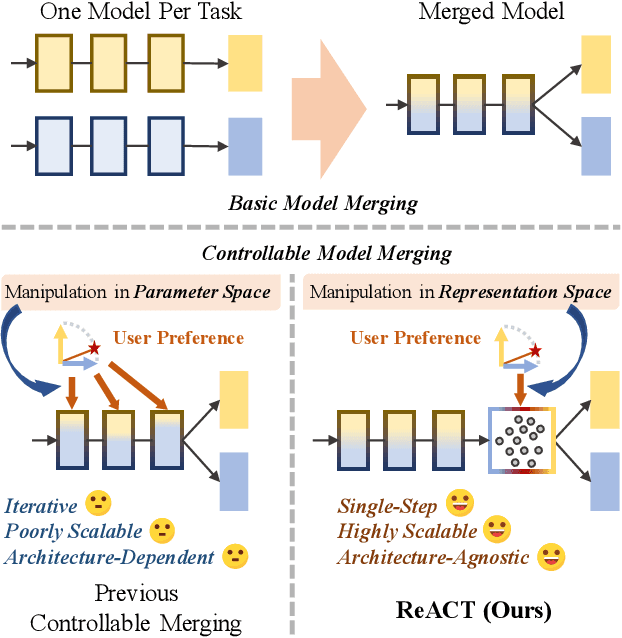
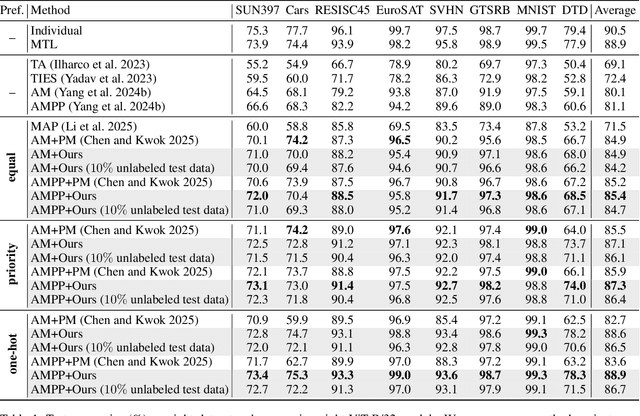
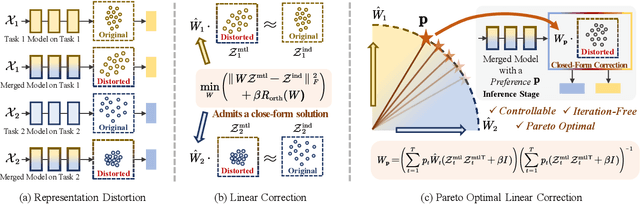
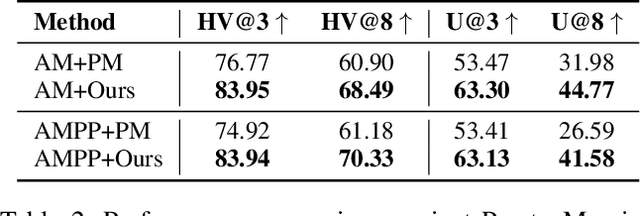
Model merging combines expert models for multitask performance but faces challenges from parameter interference. This has sparked recent interest in controllable model merging, giving users the ability to explicitly balance performance trade-offs. Existing approaches employ a compile-then-query paradigm, performing a costly offline multi-objective optimization to enable fast, preference-aware model generation. This offline stage typically involves iterative search or dedicated training, with complexity that grows exponentially with the number of tasks. To overcome these limitations, we shift the perspective from parameter-space optimization to a direct correction of the model's final representation. Our approach models this correction as an optimal linear transformation, yielding a closed-form solution that replaces the entire offline optimization process with a single-step, architecture-agnostic computation. This solution directly incorporates user preferences, allowing a Pareto-optimal model to be generated on-the-fly with complexity that scales linearly with the number of tasks. Experimental results show our method generates a superior Pareto front with more precise preference alignment and drastically reduced computational cost.
EnchTable: Unified Safety Alignment Transfer in Fine-tuned Large Language Models
Nov 13, 2025Many machine learning models are fine-tuned from large language models (LLMs) to achieve high performance in specialized domains like code generation, biomedical analysis, and mathematical problem solving. However, this fine-tuning process often introduces a critical vulnerability: the systematic degradation of safety alignment, undermining ethical guidelines and increasing the risk of harmful outputs. Addressing this challenge, we introduce EnchTable, a novel framework designed to transfer and maintain safety alignment in downstream LLMs without requiring extensive retraining. EnchTable leverages a Neural Tangent Kernel (NTK)-based safety vector distillation method to decouple safety constraints from task-specific reasoning, ensuring compatibility across diverse model architectures and sizes. Additionally, our interference-aware merging technique effectively balances safety and utility, minimizing performance compromises across various task domains. We implemented a fully functional prototype of EnchTable on three different task domains and three distinct LLM architectures, and evaluated its performance through extensive experiments on eleven diverse datasets, assessing both utility and model safety. Our evaluations include LLMs from different vendors, demonstrating EnchTable's generalization capability. Furthermore, EnchTable exhibits robust resistance to static and dynamic jailbreaking attacks, outperforming vendor-released safety models in mitigating adversarial prompts. Comparative analyses with six parameter modification methods and two inference-time alignment baselines reveal that EnchTable achieves a significantly lower unsafe rate, higher utility score, and universal applicability across different task domains. Additionally, we validate EnchTable can be seamlessly integrated into various deployment pipelines without significant overhead.
Measuring the Measures: Discriminative Capacity of Representational Similarity Metrics Across Model Families
Sep 04, 2025Representational similarity metrics are fundamental tools in neuroscience and AI, yet we lack systematic comparisons of their discriminative power across model families. We introduce a quantitative framework to evaluate representational similarity measures based on their ability to separate model families-across architectures (CNNs, Vision Transformers, Swin Transformers, ConvNeXt) and training regimes (supervised vs. self-supervised). Using three complementary separability measures-dprime from signal detection theory, silhouette coefficients and ROC-AUC, we systematically assess the discriminative capacity of commonly used metrics including RSA, linear predictivity, Procrustes, and soft matching. We show that separability systematically increases as metrics impose more stringent alignment constraints. Among mapping-based approaches, soft-matching achieves the highest separability, followed by Procrustes alignment and linear predictivity. Non-fitting methods such as RSA also yield strong separability across families. These results provide the first systematic comparison of similarity metrics through a separability lens, clarifying their relative sensitivity and guiding metric choice for large-scale model and brain comparisons.
Dual-Priv Pruning : Efficient Differential Private Fine-Tuning in Multimodal Large Language Models
Jun 08, 2025Differential Privacy (DP) is a widely adopted technique, valued for its effectiveness in protecting the privacy of task-specific datasets, making it a critical tool for large language models. However, its effectiveness in Multimodal Large Language Models (MLLMs) remains uncertain. Applying Differential Privacy (DP) inherently introduces substantial computation overhead, a concern particularly relevant for MLLMs which process extensive textual and visual data. Furthermore, a critical challenge of DP is that the injected noise, necessary for privacy, scales with parameter dimensionality, leading to pronounced model degradation; This trade-off between privacy and utility complicates the application of Differential Privacy (DP) to complex architectures like MLLMs. To address these, we propose Dual-Priv Pruning, a framework that employs two complementary pruning mechanisms for DP fine-tuning in MLLMs: (i) visual token pruning to reduce input dimensionality by removing redundant visual information, and (ii) gradient-update pruning during the DP optimization process. This second mechanism selectively prunes parameter updates based on the magnitude of noisy gradients, aiming to mitigate noise impact and improve utility. Experiments demonstrate that our approach achieves competitive results with minimal performance degradation. In terms of computational efficiency, our approach consistently utilizes less memory than standard DP-SGD. While requiring only 1.74% more memory than zeroth-order methods which suffer from severe performance issues on A100 GPUs, our method demonstrates leading memory efficiency on H20 GPUs. To the best of our knowledge, we are the first to explore DP fine-tuning in MLLMs. Our code is coming soon.
Protego: Detecting Adversarial Examples for Vision Transformers via Intrinsic Capabilities
Jan 13, 2025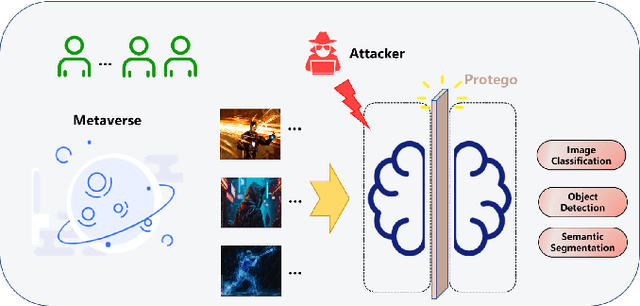
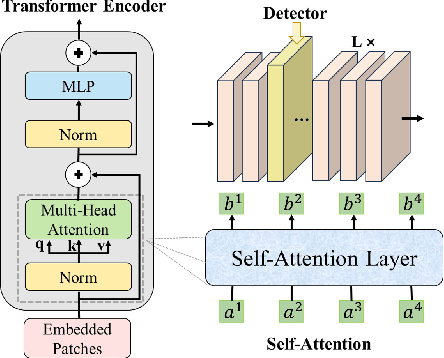
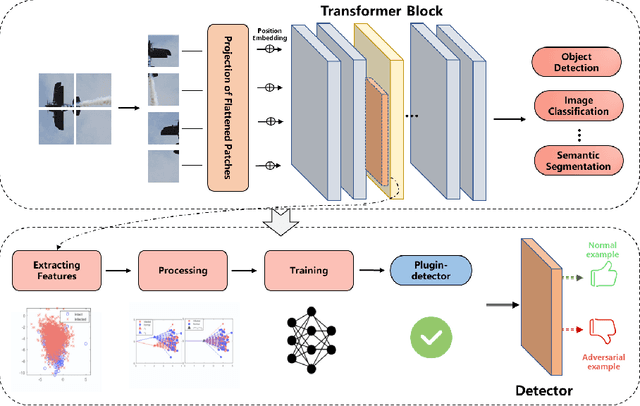
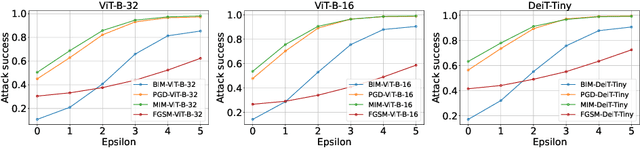
Transformer models have excelled in natural language tasks, prompting the vision community to explore their implementation in computer vision problems. However, these models are still influenced by adversarial examples. In this paper, we investigate the attack capabilities of six common adversarial attacks on three pretrained ViT models to reveal the vulnerability of ViT models. To understand and analyse the bias in neural network decisions when the input is adversarial, we use two visualisation techniques that are attention rollout and grad attention rollout. To prevent ViT models from adversarial attack, we propose Protego, a detection framework that leverages the transformer intrinsic capabilities to detection adversarial examples of ViT models. Nonetheless, this is challenging due to a diversity of attack strategies that may be adopted by adversaries. Inspired by the attention mechanism, we know that the token of prediction contains all the information from the input sample. Additionally, the attention region for adversarial examples differs from that of normal examples. Given these points, we can train a detector that achieves superior performance than existing detection methods to identify adversarial examples. Our experiments have demonstrated the high effectiveness of our detection method. For these six adversarial attack methods, our detector's AUC scores all exceed 0.95. Protego may advance investigations in metaverse security.