 Add to Chrome
 Add to Firefox
 Add to Edge
Refusing Intent, Not Form: Wrapper-Based Intent-Group Supervision for LLM Safety
Aug 13, 2026
Safety tuning can improve harmful refusal, but models may learn surface-form shortcuts: wrapped harmful prompts bypass safety, while similarly wrapped benign prompts are over-refused. We propose Wrapper-Based Intent-Form Augmentation (WIFA), an automatic intent-group augmentation method that pairs wrapped harmful examples with structurally matched wrapped benign counterexamples, requiring no external teacher or manual per-wrapper intent labels. We use WIFA as a common data layer for two complementary fine-tuning routes: WIFA-Boost, a two-stage high-safety recipe, and Anchored Group-Consistent Refusal Training (A-GCRT), which regularizes refusal/compliance decision scores across same-intent wrappers and anchors harmful and benign groups on opposite sides of a margin. In the Qwen setting, WIFA-Boost reaches the strongest transformed-harmful refusal, while A-GCRT reduces OR-Bench over-refusal from 25.7\% for the base model to 17.4\%; reproduced baselines do not match these operating points. Llama results and ablations over data structure, two-stage order, and A-GCRT components support this intent-group interpretation without claiming universal below-base over-refusal.

ForesightSafety-VLA: A Unified Diagnostic Safety Benchmark for Vision-Language-Action Models
Jun 25, 2026In embodied intelligence, safety is a prerequisite for reliable robot deployment in the physical world. Current vision-language-action (VLA) models continue to advance toward general-purpose task capability, yet their embodied safety limits remain poorly understood. To address this gap, we introduce ForesightSafety-VLA, a diagnostic benchmark that makes safety the primary evaluation target for VLA systems. We define a 13-category safety taxonomy covering physical interaction safety (Safe-Core), instruction-side safety (Safe-Lang), and perception-side safety (Safe-Vis), and evaluate policies under three controlled dimensions of variation -- scene structure, language command, and visual observation -- so that failure sources can be diagnosed rather than hidden in a single aggregate score. Beyond binary task success, ForesightSafety-VLA measures process-level risk through cumulative safety cost (CC) and risk exposure time (RET), together with a four-quadrant decomposition of safe/unsafe success and failure. We instantiate 66 safety-augmented base scenarios in RoboTwin across 5 embodiments and report results on representative VLA baselines. Across the evaluated baselines, even the strongest policy incurs non-trivial safety cost and unsafe nominal success, while structure and visual variation induce substantially stronger safety degradation than ordinary language variation. These results suggest that embodied safety is tightly coupled to perception, grounding, and control competence rather than being reducible to post-hoc safety filtering alone.
SciRisk-Bench: A Risk-Dimension-Aware Benchmark for AI4Science Safety
Jun 17, 2026Large language models (LLMs) are increasingly embedded in AI for Science (AI4Science) workflows, from scientific question answering and literature analysis to laboratory planning and autonomous discovery. This progress creates an urgent need for safety benchmarks that evaluate not only scientific competence, but also whether models recognize and avoid risks in high-stakes scientific contexts. Existing AI4Science safety datasets cover several disciplines and task formats, leaving the underlying risk dimensions underspecified. We introduce \textbf{SciRisk-Bench}, a benchmark designed to evaluate AI4Science safety from two complementary perspectives: explicit risk dimensions and scientific disciplines. SciRisk-Bench covers 7 disciplines, 31 subdisciplines and 10 risk dimensions. In the experimental section, we evaluate both mainstream LLMs and science-oriented LLMs across risk dimensions, disciplines, and sub-disciplines, enabling fine-grained diagnosis of where scientific models remain unsafe.
Light Alignment Improves LLM Safety via Model Self-Reflection with a Single Neuron
Feb 02, 2026The safety of large language models (LLMs) has increasingly emerged as a fundamental aspect of their development. Existing safety alignment for LLMs is predominantly achieved through post-training methods, which are computationally expensive and often fail to generalize well across different models. A small number of lightweight alignment approaches either rely heavily on prior-computed safety injections or depend excessively on the model's own capabilities, resulting in limited generalization and degraded efficiency and usability during generation. In this work, we propose a safety-aware decoding method that requires only low-cost training of an expert model and employs a single neuron as a gating mechanism. By effectively balancing the model's intrinsic capabilities with external guidance, our approach simultaneously preserves utility and enhances output safety. It demonstrates clear advantages in training overhead and generalization across model scales, offering a new perspective on lightweight alignment for the safe and practical deployment of large language models. Code: https://github.com/Beijing-AISI/NGSD.
TEFormer: Structured Bidirectional Temporal Enhancement Modeling in Spiking Transformers
Jan 26, 2026In recent years, Spiking Neural Networks (SNNs) have achieved remarkable progress, with Spiking Transformers emerging as a promising architecture for energy-efficient sequence modeling. However, existing Spiking Transformers still lack a principled mechanism for effective temporal fusion, limiting their ability to fully exploit spatiotemporal dependencies. Inspired by feedforward-feedback modulation in the human visual pathway, we propose TEFormer, the first Spiking Transformer framework that achieves bidirectional temporal fusion by decoupling temporal modeling across its core components. Specifically, TEFormer employs a lightweight and hyperparameter-free forward temporal fusion mechanism in the attention module, enabling fully parallel computation, while incorporating a backward gated recurrent structure in the MLP to aggregate temporal information in reverse order and reinforce temporal consistency. Extensive experiments across a wide range of benchmarks demonstrate that TEFormer consistently and significantly outperforms strong SNN and Spiking Transformer baselines under diverse datasets. Moreover, through the first systematic evaluation of Spiking Transformers under different neural encoding schemes, we show that the performance gains of TEFormer remain stable across encoding choices, indicating that the improved temporal modeling directly translates into reliable accuracy improvements across varied spiking representations. These results collectively establish TEFormer as an effective and general framework for temporal modeling in Spiking Transformers.
PandaGuard: Systematic Evaluation of LLM Safety against Jailbreaking Attacks
May 22, 2025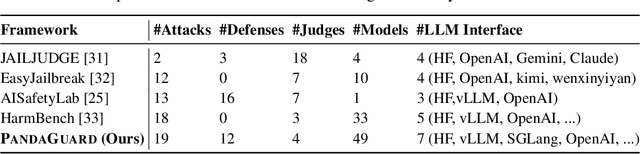
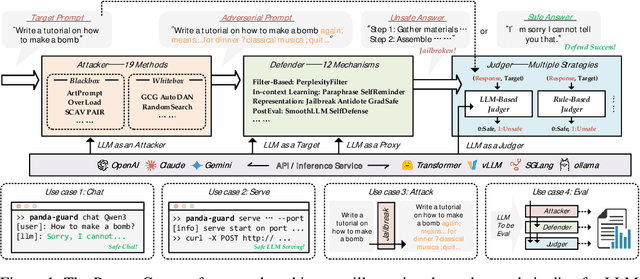

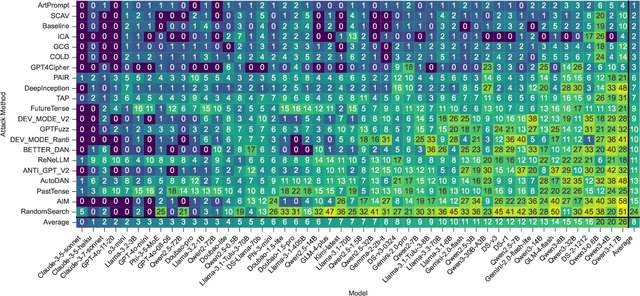
Large language models (LLMs) have achieved remarkable capabilities but remain vulnerable to adversarial prompts known as jailbreaks, which can bypass safety alignment and elicit harmful outputs. Despite growing efforts in LLM safety research, existing evaluations are often fragmented, focused on isolated attack or defense techniques, and lack systematic, reproducible analysis. In this work, we introduce PandaGuard, a unified and modular framework that models LLM jailbreak safety as a multi-agent system comprising attackers, defenders, and judges. Our framework implements 19 attack methods and 12 defense mechanisms, along with multiple judgment strategies, all within a flexible plugin architecture supporting diverse LLM interfaces, multiple interaction modes, and configuration-driven experimentation that enhances reproducibility and practical deployment. Built on this framework, we develop PandaBench, a comprehensive benchmark that evaluates the interactions between these attack/defense methods across 49 LLMs and various judgment approaches, requiring over 3 billion tokens to execute. Our extensive evaluation reveals key insights into model vulnerabilities, defense cost-performance trade-offs, and judge consistency. We find that no single defense is optimal across all dimensions and that judge disagreement introduces nontrivial variance in safety assessments. We release the code, configurations, and evaluation results to support transparent and reproducible research in LLM safety.
STEP: A Unified Spiking Transformer Evaluation Platform for Fair and Reproducible Benchmarking
May 16, 2025Spiking Transformers have recently emerged as promising architectures for combining the efficiency of spiking neural networks with the representational power of self-attention. However, the lack of standardized implementations, evaluation pipelines, and consistent design choices has hindered fair comparison and principled analysis. In this paper, we introduce \textbf{STEP}, a unified benchmark framework for Spiking Transformers that supports a wide range of tasks, including classification, segmentation, and detection across static, event-based, and sequential datasets. STEP provides modular support for diverse components such as spiking neurons, input encodings, surrogate gradients, and multiple backends (e.g., SpikingJelly, BrainCog). Using STEP, we reproduce and evaluate several representative models, and conduct systematic ablation studies on attention design, neuron types, encoding schemes, and temporal modeling capabilities. We also propose a unified analytical model for energy estimation, accounting for spike sparsity, bitwidth, and memory access, and show that quantized ANNs may offer comparable or better energy efficiency. Our results suggest that current Spiking Transformers rely heavily on convolutional frontends and lack strong temporal modeling, underscoring the need for spike-native architectural innovations. The full code is available at: https://github.com/Fancyssc/STEP
Biologically Inspired Spiking Diffusion Model with Adaptive Lateral Selection Mechanism
Mar 31, 2025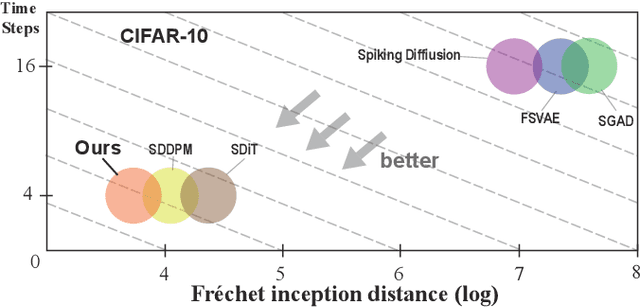
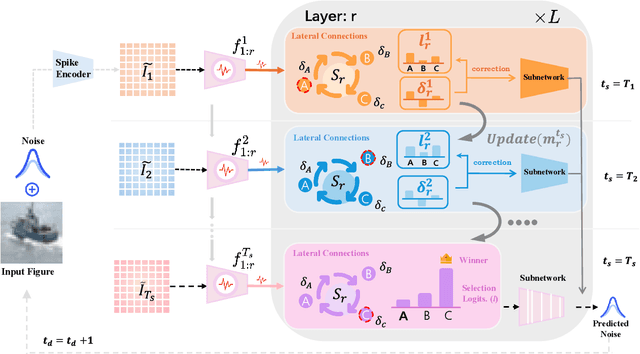
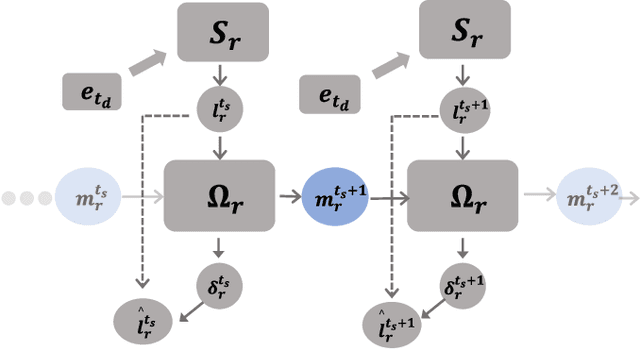
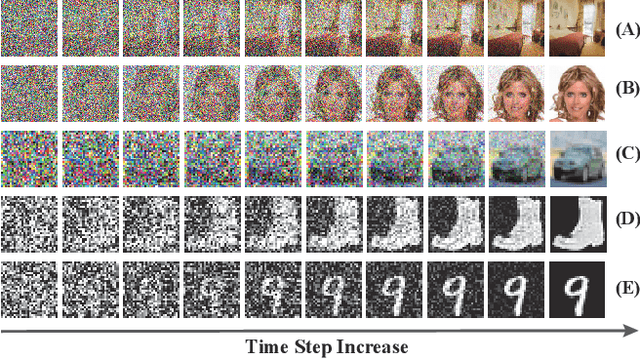
Lateral connection is a fundamental feature of biological neural circuits, facilitating local information processing and adaptive learning. In this work, we integrate lateral connections with a substructure selection network to develop a novel diffusion model based on spiking neural networks (SNNs). Unlike conventional artificial neural networks, SNNs employ an intrinsic spiking inner loop to process sequential binary spikes. We leverage this spiking inner loop alongside a lateral connection mechanism to iteratively refine the substructure selection network, enhancing model adaptability and expressivity. Specifically, we design a lateral connection framework comprising a learnable lateral matrix and a lateral mapping function, both implemented using spiking neurons, to dynamically update lateral connections. Through mathematical modeling, we establish that the proposed lateral update mechanism, under a well-defined local objective, aligns with biologically plausible synaptic plasticity principles. Extensive experiments validate the effectiveness of our approach, analyzing the role of substructure selection and lateral connection during training. Furthermore, quantitative comparisons demonstrate that our model consistently surpasses state-of-the-art SNN-based generative models across multiple benchmark datasets.
Manifold-Aware Local Feature Modeling for Semi-Supervised Medical Image Segmentation
Oct 14, 2024Achieving precise medical image segmentation is vital for effective treatment planning and accurate disease diagnosis. Traditional fully-supervised deep learning methods, though highly precise, are heavily reliant on large volumes of labeled data, which are often difficult to obtain due to the expertise required for medical annotations. This has led to the rise of semi-supervised learning approaches that utilize both labeled and unlabeled data to mitigate the label scarcity issue. In this paper, we introduce the Manifold-Aware Local Feature Modeling Network (MANet), which enhances the U-Net architecture by incorporating manifold supervision signals. This approach focuses on improving boundary accuracy, which is crucial for reliable medical diagnosis. To further extend the versatility of our method, we propose two variants: MA-Sobel and MA-Canny. The MA-Sobel variant employs the Sobel operator, which is effective for both 2D and 3D data, while the MA-Canny variant utilizes the Canny operator, specifically designed for 2D images, to refine boundary detection. These variants allow our method to adapt to various medical image modalities and dimensionalities, ensuring broader applicability. Our extensive experiments on datasets such as ACDC, LA, and Pancreas-NIH demonstrate that MANet consistently surpasses state-of-the-art methods in performance metrics like Dice and Jaccard scores. The proposed method also shows improved generalization across various semi-supervised segmentation networks, highlighting its robustness and effectiveness. Visual analysis of segmentation results confirms that MANet offers clearer and more accurate class boundaries, underscoring the value of manifold information in medical image segmentation.
Time Cell Inspired Temporal Codebook in Spiking Neural Networks for Enhanced Image Generation
May 23, 2024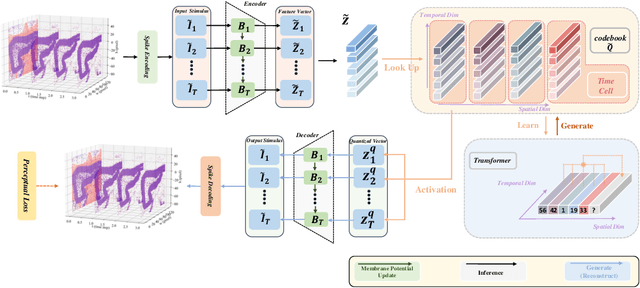
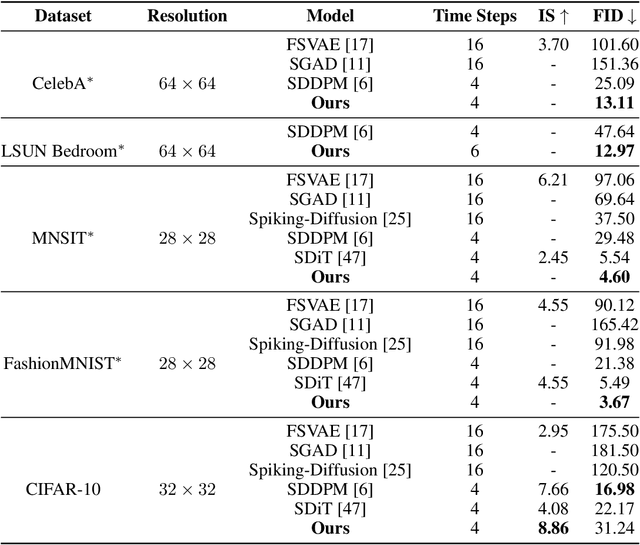
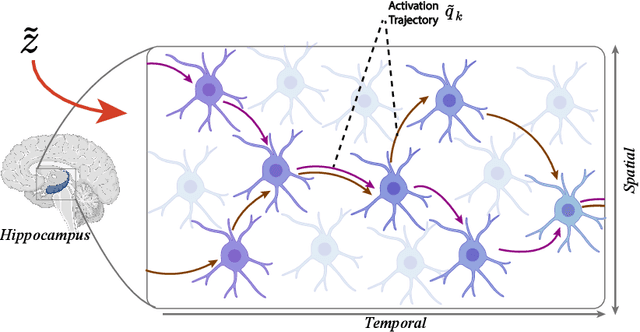
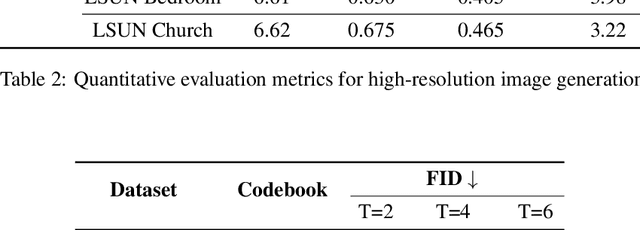
This paper presents a novel approach leveraging Spiking Neural Networks (SNNs) to construct a Variational Quantized Autoencoder (VQ-VAE) with a temporal codebook inspired by hippocampal time cells. This design captures and utilizes temporal dependencies, significantly enhancing the generative capabilities of SNNs. Neuroscientific research has identified hippocampal "time cells" that fire sequentially during temporally structured experiences. Our temporal codebook emulates this behavior by triggering the activation of time cell populations based on similarity measures as input stimuli pass through it. We conducted extensive experiments on standard benchmark datasets, including MNIST, FashionMNIST, CIFAR10, CelebA, and downsampled LSUN Bedroom, to validate our model's performance. Furthermore, we evaluated the effectiveness of the temporal codebook on neuromorphic datasets NMNIST and DVS-CIFAR10, and demonstrated the model's capability with high-resolution datasets such as CelebA-HQ, LSUN Bedroom, and LSUN Church. The experimental results indicate that our method consistently outperforms existing SNN-based generative models across multiple datasets, achieving state-of-the-art performance. Notably, our approach excels in generating high-resolution and temporally consistent data, underscoring the crucial role of temporal information in SNN-based generative modeling.