 Add to Chrome
 Add to Firefox
 Add to Edge
Editing Conceptual Knowledge for Large Language Models
Mar 10, 2024
Recently, there has been a growing interest in knowledge editing for Large Language Models (LLMs). Current approaches and evaluations merely explore the instance-level editing, while whether LLMs possess the capability to modify concepts remains unclear. This paper pioneers the investigation of editing conceptual knowledge for LLMs, by constructing a novel benchmark dataset ConceptEdit and establishing a suite of new metrics for evaluation. The experimental results reveal that, although existing editing methods can efficiently modify concept-level definition to some extent, they also have the potential to distort the related instantial knowledge in LLMs, leading to poor performance. We anticipate this can inspire further progress in better understanding LLMs. Our project homepage is available at https://zjunlp.github.io/project/ConceptEdit.

KnowAgent: Knowledge-Augmented Planning for LLM-Based Agents
Mar 05, 2024
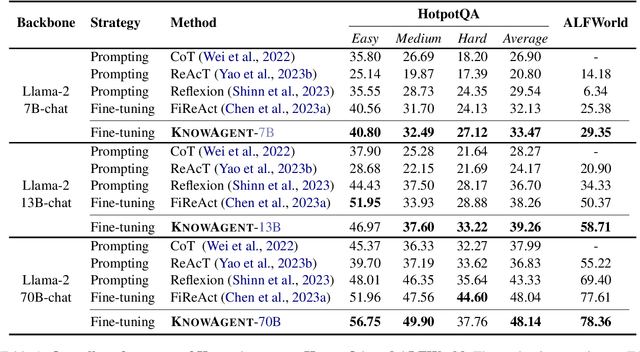
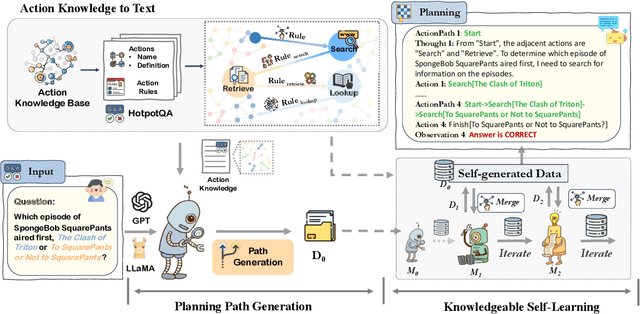
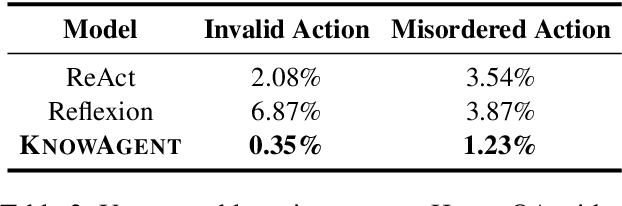
Large Language Models (LLMs) have demonstrated great potential in complex reasoning tasks, yet they fall short when tackling more sophisticated challenges, especially when interacting with environments through generating executable actions. This inadequacy primarily stems from the lack of built-in action knowledge in language agents, which fails to effectively guide the planning trajectories during task solving and results in planning hallucination. To address this issue, we introduce KnowAgent, a novel approach designed to enhance the planning capabilities of LLMs by incorporating explicit action knowledge. Specifically, KnowAgent employs an action knowledge base and a knowledgeable self-learning strategy to constrain the action path during planning, enabling more reasonable trajectory synthesis, and thereby enhancing the planning performance of language agents. Experimental results on HotpotQA and ALFWorld based on various backbone models demonstrate that KnowAgent can achieve comparable or superior performance to existing baselines. Further analysis indicates the effectiveness of KnowAgent in terms of planning hallucinations mitigation. Code is available in https://github.com/zjunlp/KnowAgent.
Knowledge Graphs Meet Multi-Modal Learning: A Comprehensive Survey
Feb 26, 2024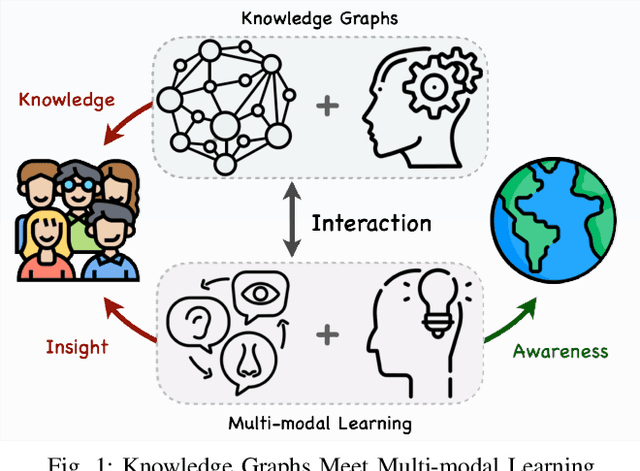
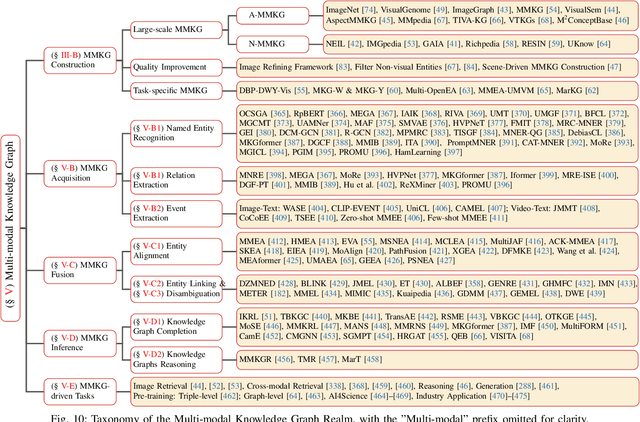
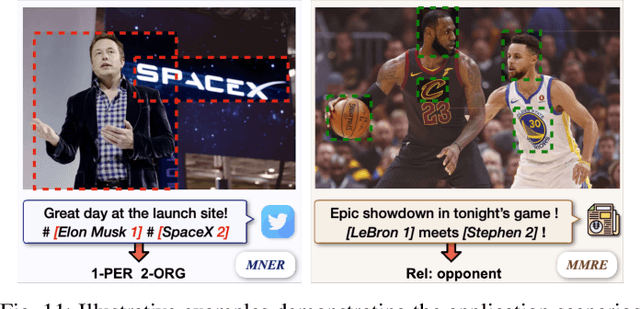
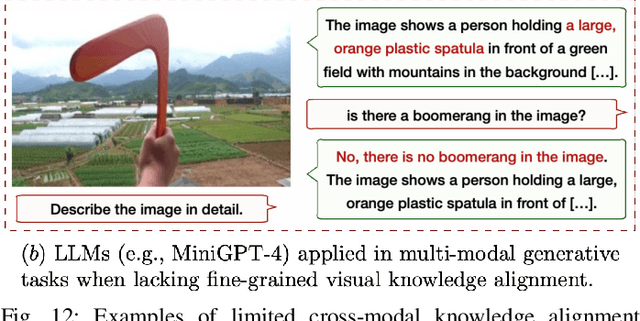
Knowledge Graphs (KGs) play a pivotal role in advancing various AI applications, with the semantic web community's exploration into multi-modal dimensions unlocking new avenues for innovation. In this survey, we carefully review over 300 articles, focusing on KG-aware research in two principal aspects: KG-driven Multi-Modal (KG4MM) learning, where KGs support multi-modal tasks, and Multi-Modal Knowledge Graph (MM4KG), which extends KG studies into the MMKG realm. We begin by defining KGs and MMKGs, then explore their construction progress. Our review includes two primary task categories: KG-aware multi-modal learning tasks, such as Image Classification and Visual Question Answering, and intrinsic MMKG tasks like Multi-modal Knowledge Graph Completion and Entity Alignment, highlighting specific research trajectories. For most of these tasks, we provide definitions, evaluation benchmarks, and additionally outline essential insights for conducting relevant research. Finally, we discuss current challenges and identify emerging trends, such as progress in Large Language Modeling and Multi-modal Pre-training strategies. This survey aims to serve as a comprehensive reference for researchers already involved in or considering delving into KG and multi-modal learning research, offering insights into the evolving landscape of MMKG research and supporting future work.
InstructEdit: Instruction-based Knowledge Editing for Large Language Models
Feb 25, 2024
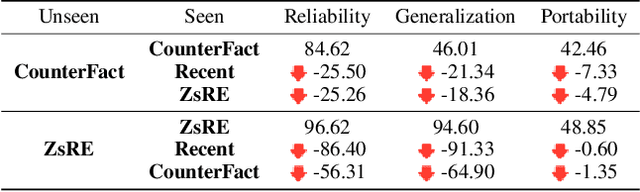
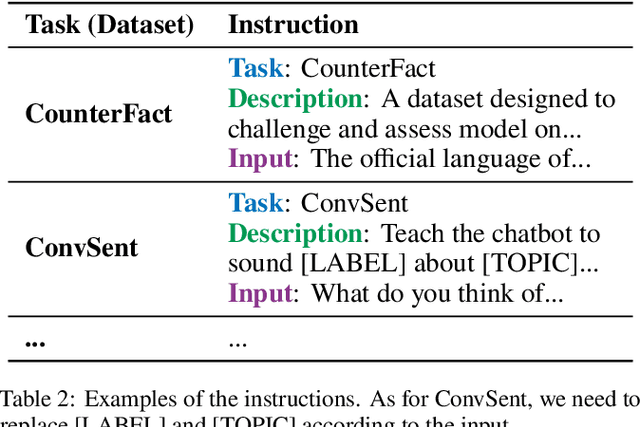
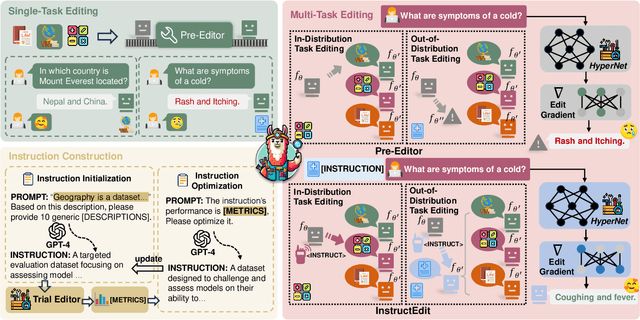
Knowledge editing for large language models can offer an efficient solution to alter a model's behavior without negatively impacting the overall performance. However, the current approach encounters issues with limited generalizability across tasks, necessitating one distinct editor for each task, which significantly hinders the broader applications. To address this, we take the first step to analyze the multi-task generalization issue in knowledge editing. Specifically, we develop an instruction-based editing technique, termed InstructEdit, which facilitates the editor's adaptation to various task performances simultaneously using simple instructions. With only one unified editor for each LLM, we empirically demonstrate that InstructEdit can improve the editor's control, leading to an average 14.86% increase in Reliability in multi-task editing setting. Furthermore, experiments involving holdout unseen task illustrate that InstructEdit consistently surpass previous strong baselines. To further investigate the underlying mechanisms of instruction-based knowledge editing, we analyze the principal components of the editing gradient directions, which unveils that instructions can help control optimization direction with stronger OOD generalization. Code and datasets will be available in https://github.com/zjunlp/EasyEdit.
Unleashing the Power of Imbalanced Modality Information for Multi-modal Knowledge Graph Completion
Feb 22, 2024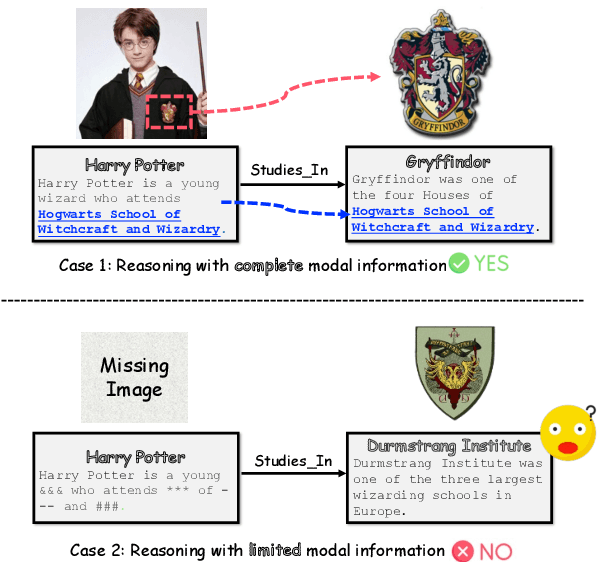
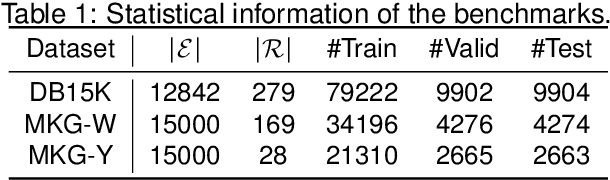
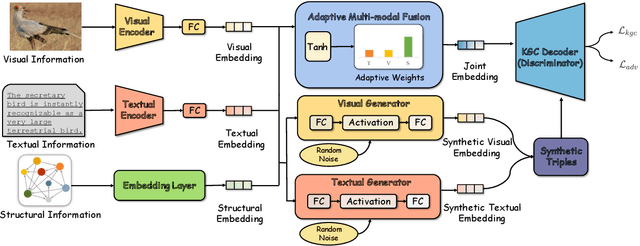
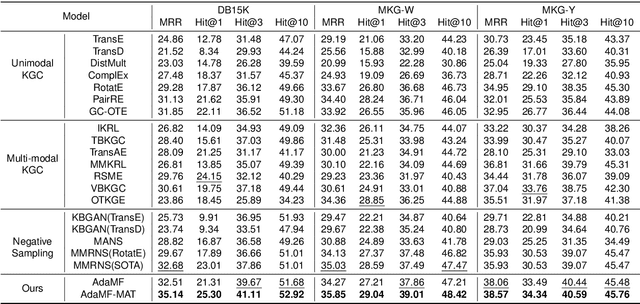
Multi-modal knowledge graph completion (MMKGC) aims to predict the missing triples in the multi-modal knowledge graphs by incorporating structural, visual, and textual information of entities into the discriminant models. The information from different modalities will work together to measure the triple plausibility. Existing MMKGC methods overlook the imbalance problem of modality information among entities, resulting in inadequate modal fusion and inefficient utilization of the raw modality information. To address the mentioned problems, we propose Adaptive Multi-modal Fusion and Modality Adversarial Training (AdaMF-MAT) to unleash the power of imbalanced modality information for MMKGC. AdaMF-MAT achieves multi-modal fusion with adaptive modality weights and further generates adversarial samples by modality-adversarial training to enhance the imbalanced modality information. Our approach is a co-design of the MMKGC model and training strategy which can outperform 19 recent MMKGC methods and achieve new state-of-the-art results on three public MMKGC benchmarks. Our code and data have been released at https://github.com/zjukg/AdaMF-MAT.
IEPile: Unearthing Large-Scale Schema-Based Information Extraction Corpus
Feb 22, 2024
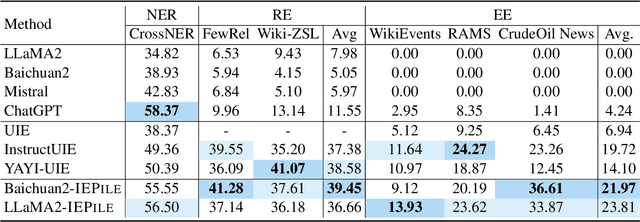

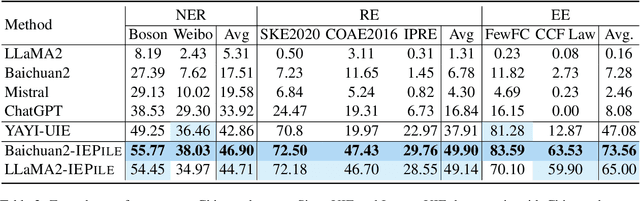
Large Language Models (LLMs) demonstrate remarkable potential across various domains; however, they exhibit a significant performance gap in Information Extraction (IE). Note that high-quality instruction data is the vital key for enhancing the specific capabilities of LLMs, while current IE datasets tend to be small in scale, fragmented, and lack standardized schema. To this end, we introduce IEPile, a comprehensive bilingual (English and Chinese) IE instruction corpus, which contains approximately 0.32B tokens. We construct IEPile by collecting and cleaning 33 existing IE datasets, and introduce schema-based instruction generation to unearth a large-scale corpus. Experimental results on LLaMA and Baichuan demonstrate that using IEPile can enhance the performance of LLMs for IE, especially the zero-shot generalization. We open-source the resource and pre-trained models, hoping to provide valuable support to the NLP community.
ChatCell: Facilitating Single-Cell Analysis with Natural Language
Feb 20, 2024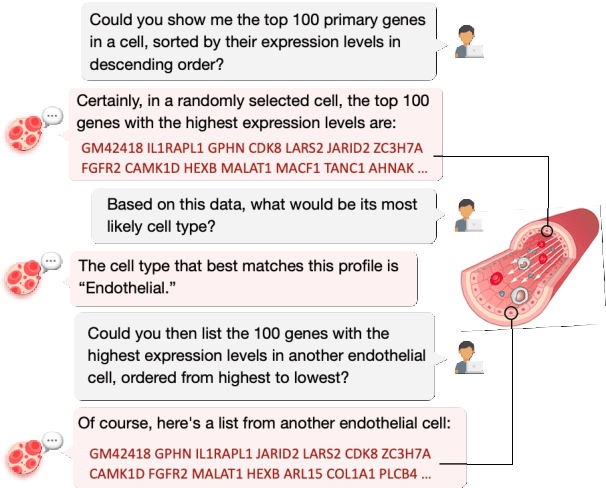
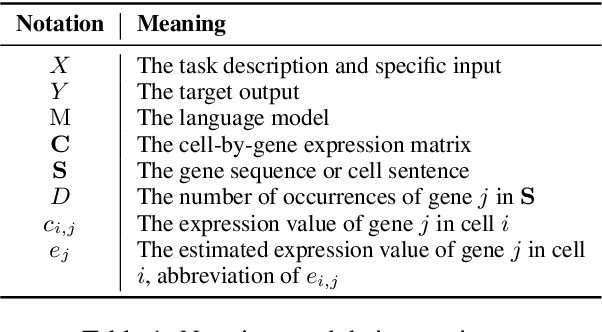
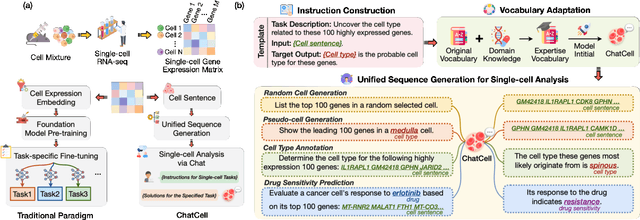

As Large Language Models (LLMs) rapidly evolve, their influence in science is becoming increasingly prominent. The emerging capabilities of LLMs in task generalization and free-form dialogue can significantly advance fields like chemistry and biology. However, the field of single-cell biology, which forms the foundational building blocks of living organisms, still faces several challenges. High knowledge barriers and limited scalability in current methods restrict the full exploitation of LLMs in mastering single-cell data, impeding direct accessibility and rapid iteration. To this end, we introduce ChatCell, which signifies a paradigm shift by facilitating single-cell analysis with natural language. Leveraging vocabulary adaptation and unified sequence generation, ChatCell has acquired profound expertise in single-cell biology and the capability to accommodate a diverse range of analysis tasks. Extensive experiments further demonstrate ChatCell's robust performance and potential to deepen single-cell insights, paving the way for more accessible and intuitive exploration in this pivotal field. Our project homepage is available at https://zjunlp.github.io/project/ChatCell.
Unified Hallucination Detection for Multimodal Large Language Models
Feb 16, 2024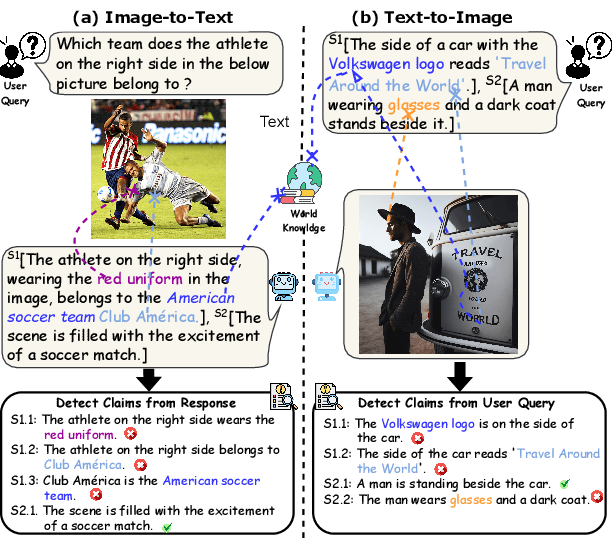
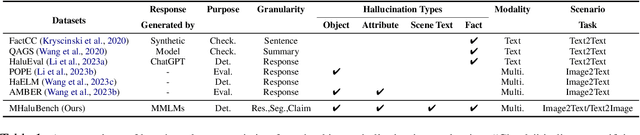
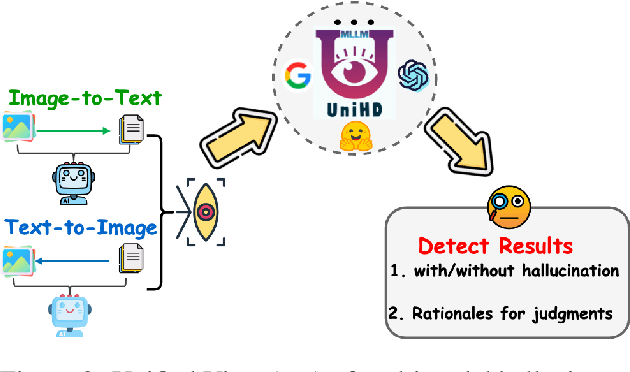
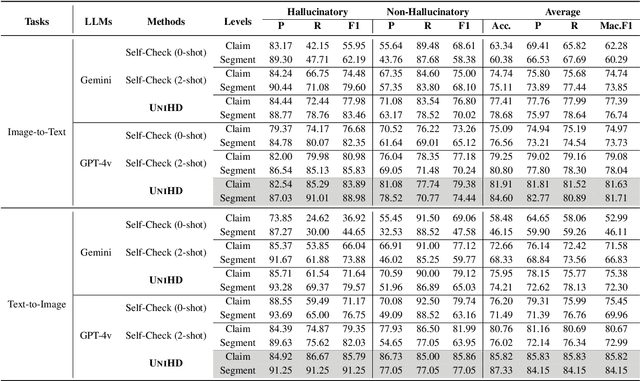
Despite significant strides in multimodal tasks, Multimodal Large Language Models (MLLMs) are plagued by the critical issue of hallucination. The reliable detection of such hallucinations in MLLMs has, therefore, become a vital aspect of model evaluation and the safeguarding of practical application deployment. Prior research in this domain has been constrained by a narrow focus on singular tasks, an inadequate range of hallucination categories addressed, and a lack of detailed granularity. In response to these challenges, our work expands the investigative horizons of hallucination detection. We present a novel meta-evaluation benchmark, MHaluBench, meticulously crafted to facilitate the evaluation of advancements in hallucination detection methods. Additionally, we unveil a novel unified multimodal hallucination detection framework, UNIHD, which leverages a suite of auxiliary tools to validate the occurrence of hallucinations robustly. We demonstrate the effectiveness of UNIHD through meticulous evaluation and comprehensive analysis. We also provide strategic insights on the application of specific tools for addressing various categories of hallucinations.
EasyInstruct: An Easy-to-use Instruction Processing Framework for Large Language Models
Feb 06, 2024


In recent years, instruction tuning has gained increasing attention and emerged as a crucial technique to enhance the capabilities of Large Language Models (LLMs). To construct high-quality instruction datasets, many instruction processing approaches have been proposed, aiming to achieve a delicate balance between data quantity and data quality. Nevertheless, due to inconsistencies that persist among various instruction processing methods, there is no standard open-source instruction processing implementation framework available for the community, which hinders practitioners from further developing and advancing. To facilitate instruction processing research and development, we present EasyInstruct, an easy-to-use instruction processing framework for LLMs, which modularizes instruction generation, selection, and prompting, while also considering their combination and interaction. EasyInstruct is publicly released and actively maintained at https://github.com/zjunlp/EasyInstruct, along with a running demo App at https://huggingface.co/spaces/zjunlp/EasyInstruct for quick-start, calling for broader research centered on instruction data.
Weaver: Foundation Models for Creative Writing
Jan 30, 2024
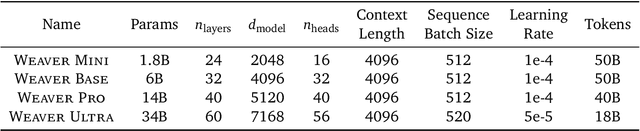
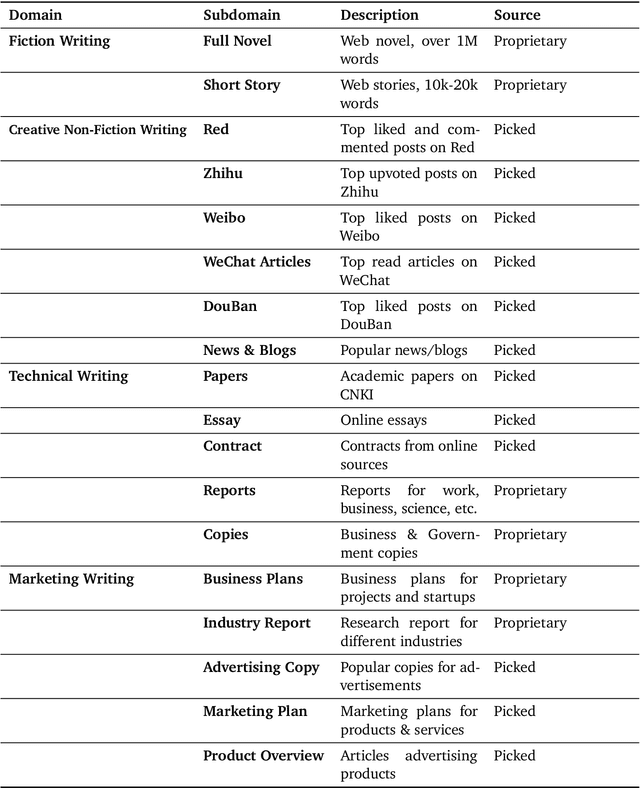
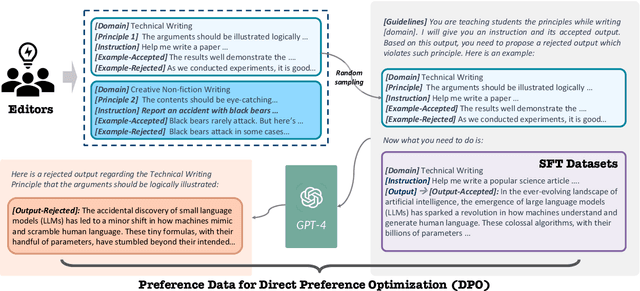
This work introduces Weaver, our first family of large language models (LLMs) dedicated to content creation. Weaver is pre-trained on a carefully selected corpus that focuses on improving the writing capabilities of large language models. We then fine-tune Weaver for creative and professional writing purposes and align it to the preference of professional writers using a suit of novel methods for instruction data synthesis and LLM alignment, making it able to produce more human-like texts and follow more diverse instructions for content creation. The Weaver family consists of models of Weaver Mini (1.8B), Weaver Base (6B), Weaver Pro (14B), and Weaver Ultra (34B) sizes, suitable for different applications and can be dynamically dispatched by a routing agent according to query complexity to balance response quality and computation cost. Evaluation on a carefully curated benchmark for assessing the writing capabilities of LLMs shows Weaver models of all sizes outperform generalist LLMs several times larger than them. Notably, our most-capable Weaver Ultra model surpasses GPT-4, a state-of-the-art generalist LLM, on various writing scenarios, demonstrating the advantage of training specialized LLMs for writing purposes. Moreover, Weaver natively supports retrieval-augmented generation (RAG) and function calling (tool usage). We present various use cases of these abilities for improving AI-assisted writing systems, including integration of external knowledge bases, tools, or APIs, and providing personalized writing assistance. Furthermore, we discuss and summarize a guideline and best practices for pre-training and fine-tuning domain-specific LLMs.