 Add to Chrome
 Add to Firefox
 Add to Edge
DRSLF: Double Regularized Second-Order Low-Rank Representation for Web Service QoS Prediction
May 03, 2025

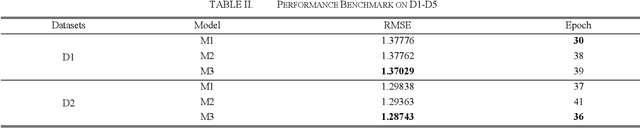
Quality-of-Service (QoS) data plays a crucial role in cloud service selection. Since users cannot access all services, QoS can be represented by a high-dimensional and incomplete (HDI) matrix. Latent factor analysis (LFA) models have been proven effective as low-rank representation techniques for addressing this issue. However, most LFA models rely on first-order optimizers and use L2-norm regularization, which can lead to lower QoS prediction accuracy. To address this issue, this paper proposes a double regularized second-order latent factor (DRSLF) model with two key ideas: a) integrating L1-norm and L2-norm regularization terms to enhance the low-rank representation performance; b) incorporating second-order information by calculating the Hessian-vector product in each conjugate gradient step. Experimental results on two real-world response-time QoS datasets demonstrate that DRSLF has a higher low-rank representation capability than two baselines.

A Double-Norm Aggregated Tensor Latent Factorization Model for Temporal-Aware Traffic Speed Imputation
Apr 24, 2025In intelligent transportation systems (ITS), traffic management departments rely on sensors, cameras, and GPS devices to collect real-time traffic data. Traffic speed data is often incomplete due to sensor failures, data transmission delays, or occlusions, resulting in missing speed data in certain road segments. Currently, tensor decomposition based methods are extensively utilized, they mostly rely on the $L_2$-norm to construct their learning objectives, which leads to reduced robustness in the algorithms. To address this, we propose Temporal-Aware Traffic Speed Imputation (TATSI), which combines the $L_2$-norm and smooth $L_1$ (${SL}_1$)-norm in its loss function, thereby achieving both high accuracy and robust performance in imputing missing time-varying traffic speed data. TATSI adopts a single latent factor-dependent, nonnegative, and multiplicative update (SLF-NMU) approach, which serves as an efficient solver for performing nonnegative latent factor analysis (LFA) on a tensor. Empirical studies on three real-world time-varying traffic speed datasets demonstrate that, compared with state-of-the-art traffic speed predictors, TATSI more precisely captures temporal patterns, thereby yielding the most accurate imputations for missing traffic speed data.
Dynamic QoS Prediction via a Non-Negative Tensor Snowflake Factorization
Apr 24, 2025Dynamic quality of service (QoS) data exhibit rich temporal patterns in user-service interactions, which are crucial for a comprehensive understanding of user behavior and service conditions in Web service. As the number of users and services increases, there is a large amount of unobserved QoS data, which significantly affects users'choice of services. To predict unobserved QoS data, we propose a Non-negative Snowflake Factorization of tensors model. This method designs a snowflake core tensor to enhance the model's learning capability. Additionally, it employs a single latent factor-based, nonnegative multiplication update on tensor (SLF-NMUT) for parameter learning. Empirical results demonstrate that the proposed model more accurately learns dynamic user-service interaction patterns, thereby yielding improved predictions for missing QoS data.
A Comprehensive Survey in LLM(-Agent) Full Stack Safety: Data, Training and Deployment
Apr 22, 2025The remarkable success of Large Language Models (LLMs) has illuminated a promising pathway toward achieving Artificial General Intelligence for both academic and industrial communities, owing to their unprecedented performance across various applications. As LLMs continue to gain prominence in both research and commercial domains, their security and safety implications have become a growing concern, not only for researchers and corporations but also for every nation. Currently, existing surveys on LLM safety primarily focus on specific stages of the LLM lifecycle, e.g., deployment phase or fine-tuning phase, lacking a comprehensive understanding of the entire "lifechain" of LLMs. To address this gap, this paper introduces, for the first time, the concept of "full-stack" safety to systematically consider safety issues throughout the entire process of LLM training, deployment, and eventual commercialization. Compared to the off-the-shelf LLM safety surveys, our work demonstrates several distinctive advantages: (I) Comprehensive Perspective. We define the complete LLM lifecycle as encompassing data preparation, pre-training, post-training, deployment and final commercialization. To our knowledge, this represents the first safety survey to encompass the entire lifecycle of LLMs. (II) Extensive Literature Support. Our research is grounded in an exhaustive review of over 800+ papers, ensuring comprehensive coverage and systematic organization of security issues within a more holistic understanding. (III) Unique Insights. Through systematic literature analysis, we have developed reliable roadmaps and perspectives for each chapter. Our work identifies promising research directions, including safety in data generation, alignment techniques, model editing, and LLM-based agent systems. These insights provide valuable guidance for researchers pursuing future work in this field.
Latent Tensor Factorization with Nonlinear PID Control for Missing Data Recovery in Non-Intrusive Load Monitoring
Apr 18, 2025Non-Intrusive Load Monitoring (NILM) has emerged as a key smart grid technology, identifying electrical device and providing detailed energy consumption data for precise demand response management. Nevertheless, NILM data suffers from missing values due to inescapable factors like sensor failure, leading to inaccuracies in non-intrusive load monitoring. A stochastic gradient descent (SGD)-based latent factorization of tensors model has proven to be effective in estimating missing data, however, it updates a latent factor solely based on the current stochastic gradient, without considering past information, which leads to slow convergence of anLFT model. To address this issue, this paper proposes a Nonlinear Proportional-integral-derivative (PID)-Incorporated Latent factorization of tensors (NPIL) model with two-fold ideas: a) rebuilding the instant learning error according to the principle of a nonlinear PID controller, thus, the past update information is efficiently incorporated into the learning scheme, and b) implementing gain parameter adaptation by utilizing particle swarm optimization (PSO) algorithm, hence, the model computational efficiency is effectively improved. Experimental results on real-world NILM datasets demonstrate that the proposed NPIL model surpasses state-of-the-art models in convergence rate and accuracy when predicting the missing NILM data.
MetaDSE: A Few-shot Meta-learning Framework for Cross-workload CPU Design Space Exploration
Apr 18, 2025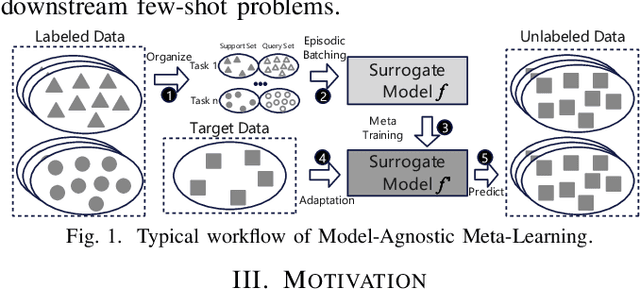
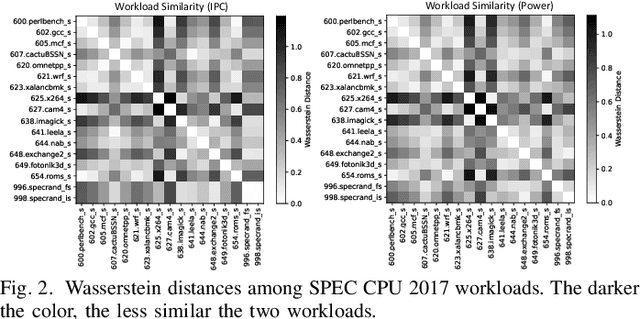
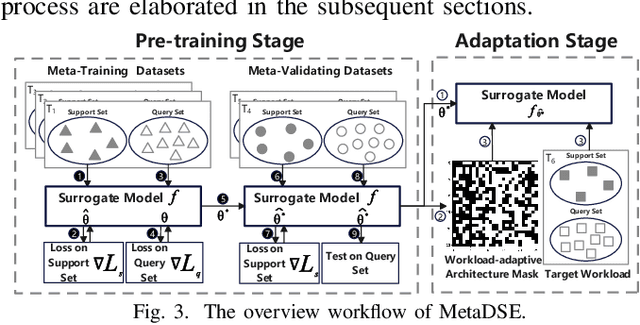
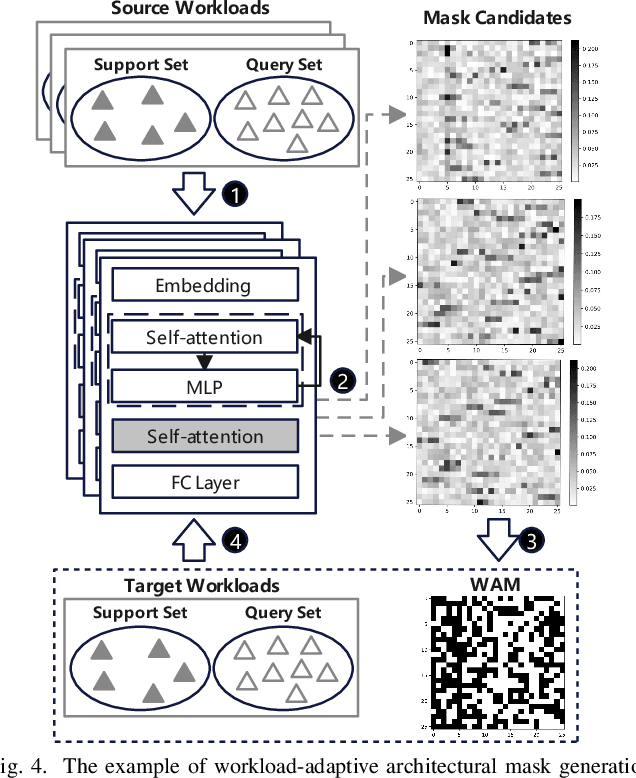
Cross-workload design space exploration (DSE) is crucial in CPU architecture design. Existing DSE methods typically employ the transfer learning technique to leverage knowledge from source workloads, aiming to minimize the requirement of target workload simulation. However, these methods struggle with overfitting, data ambiguity, and workload dissimilarity. To address these challenges, we reframe the cross-workload CPU DSE task as a few-shot meta-learning problem and further introduce MetaDSE. By leveraging model agnostic meta-learning, MetaDSE swiftly adapts to new target workloads, greatly enhancing the efficiency of cross-workload CPU DSE. Additionally, MetaDSE introduces a novel knowledge transfer method called the workload-adaptive architectural mask algorithm, which uncovers the inherent properties of the architecture. Experiments on SPEC CPU 2017 demonstrate that MetaDSE significantly reduces prediction error by 44.3\% compared to the state-of-the-art. MetaDSE is open-sourced and available at this \href{https://anonymous.4open.science/r/Meta_DSE-02F8}{anonymous GitHub.}
NTIRE 2025 Challenge on Cross-Domain Few-Shot Object Detection: Methods and Results
Apr 14, 2025Cross-Domain Few-Shot Object Detection (CD-FSOD) poses significant challenges to existing object detection and few-shot detection models when applied across domains. In conjunction with NTIRE 2025, we organized the 1st CD-FSOD Challenge, aiming to advance the performance of current object detectors on entirely novel target domains with only limited labeled data. The challenge attracted 152 registered participants, received submissions from 42 teams, and concluded with 13 teams making valid final submissions. Participants approached the task from diverse perspectives, proposing novel models that achieved new state-of-the-art (SOTA) results under both open-source and closed-source settings. In this report, we present an overview of the 1st NTIRE 2025 CD-FSOD Challenge, highlighting the proposed solutions and summarizing the results submitted by the participants.
Academic Network Representation via Prediction-Sampling Incorporated Tensor Factorization
Apr 11, 2025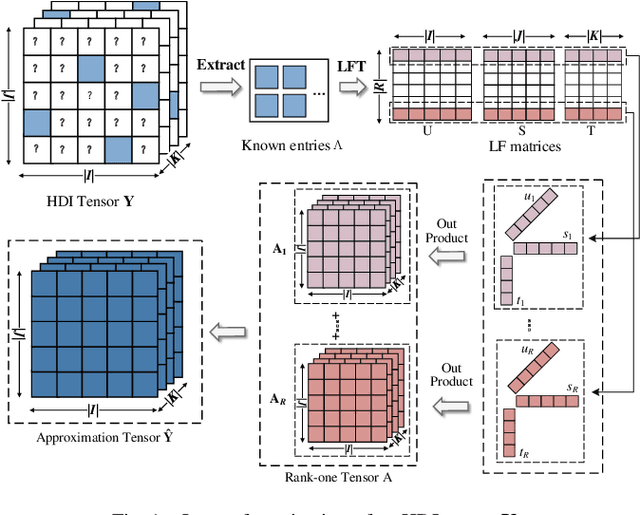
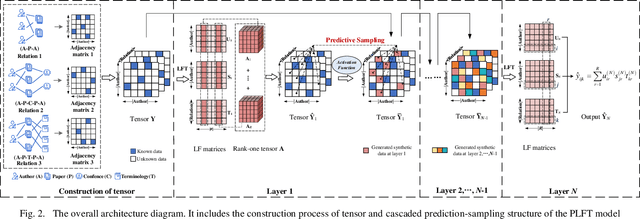
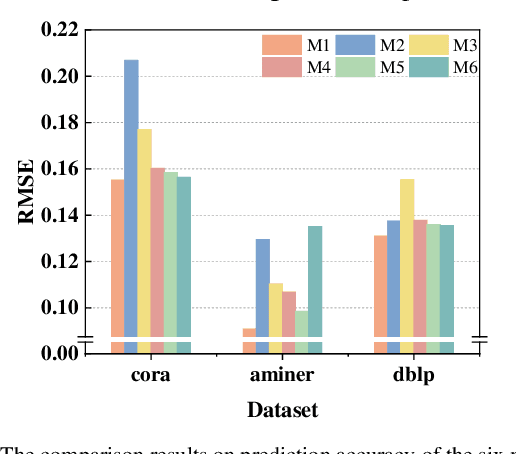
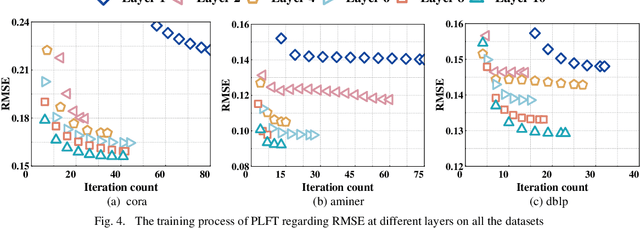
Accurate representation to an academic network is of great significance to academic relationship mining like predicting scientific impact. A Latent Factorization of Tensors (LFT) model is one of the most effective models for learning the representation of a target network. However, an academic network is often High-Dimensional and Incomplete (HDI) because the relationships among numerous network entities are impossible to be fully explored, making it difficult for an LFT model to learn accurate representation of the academic network. To address this issue, this paper proposes a Prediction-sampling-based Latent Factorization of Tensors (PLFT) model with two ideas: 1) constructing a cascade LFT architecture to enhance model representation learning ability via learning academic network hierarchical features, and 2) introducing a nonlinear activation-incorporated predicting-sampling strategy to more accurately learn the network representation via generating new academic network data layer by layer. Experimental results from the three real-world academic network datasets show that the PLFT model outperforms existing models when predicting the unexplored relationships among network entities.
3DBonsai: Structure-Aware Bonsai Modeling Using Conditioned 3D Gaussian Splatting
Apr 02, 2025Recent advancements in text-to-3D generation have shown remarkable results by leveraging 3D priors in combination with 2D diffusion. However, previous methods utilize 3D priors that lack detailed and complex structural information, limiting them to generating simple objects and presenting challenges for creating intricate structures such as bonsai. In this paper, we propose 3DBonsai, a novel text-to-3D framework for generating 3D bonsai with complex structures. Technically, we first design a trainable 3D space colonization algorithm to produce bonsai structures, which are then enhanced through random sampling and point cloud augmentation to serve as the 3D Gaussian priors. We introduce two bonsai generation pipelines with distinct structural levels: fine structure conditioned generation, which initializes 3D Gaussians using a 3D structure prior to produce detailed and complex bonsai, and coarse structure conditioned generation, which employs a multi-view structure consistency module to align 2D and 3D structures. Moreover, we have compiled a unified 2D and 3D Chinese-style bonsai dataset. Our experimental results demonstrate that 3DBonsai significantly outperforms existing methods, providing a new benchmark for structure-aware 3D bonsai generation.
ElimPCL: Eliminating Noise Accumulation with Progressive Curriculum Labeling for Source-Free Domain Adaptation
Mar 31, 2025Source-Free Domain Adaptation (SFDA) aims to train a target model without source data, and the key is to generate pseudo-labels using a pre-trained source model. However, we observe that the source model often produces highly uncertain pseudo-labels for hard samples, particularly those heavily affected by domain shifts, leading to these noisy pseudo-labels being introduced even before adaptation and further reinforced through parameter updates. Additionally, they continuously influence neighbor samples through propagation in the feature space.To eliminate the issue of noise accumulation, we propose a novel Progressive Curriculum Labeling (ElimPCL) method, which iteratively filters trustworthy pseudo-labeled samples based on prototype consistency to exclude high-noise samples from training. Furthermore, a Dual MixUP technique is designed in the feature space to enhance the separability of hard samples, thereby mitigating the interference of noisy samples on their neighbors.Extensive experiments validate the effectiveness of ElimPCL, achieving up to a 3.4% improvement on challenging tasks compared to state-of-the-art methods.