 Add to Chrome
 Add to Firefox
 Add to Edge
Trustworthy Recommendation in the Era of Large Language Models: Opportunities and Challenges
May 30, 2026
The field of recommender systems (RS) is currently undergoing two profound paradigm shifts. From the perspective of objectives, the goal has shifted beyond mere recommendation accuracy to comprehensive trustworthiness, encompassing multiple dimensions such as robustness, fairness, and privacy preservation. From a technical perspective, Large Language Models (LLMs) have been extensively integrated into RS, reshaping the foundations of recommendation through richer semantic understanding, stronger intent reasoning, and more flexible user interactions. The convergence of these two shifts prompts a timely and pivotal question: how does the integration of LLMs reshape the landscape of trustworthy recommendation? In this work, we present a systematic review of trustworthy LLM-empowered recommendation. By comprehensively analyzing over 200 recent studies, we reveal that the introduction of LLMs acts as a double-edged sword. While their advanced mechanisms and user-friendly interfaces offer unprecedented opportunities to enhance trustworthiness, they simultaneously introduce new risks, such as novel forms of bias and hallucination-induced issues. To characterize this dual impact, we systematically identify 13 opportunities and 18 challenges across six fundamental dimensions of trustworthiness, and accordingly organize the existing literature into a novel taxonomy. We also provide a comprehensive review of commonly used datasets and evaluation metrics to facilitate empirical validation. Finally, we identify critical open challenges and outline future directions, hoping to inspire future research on this emerging topic.

Telecom World Models: Unifying Digital Twins, Foundation Models, and Predictive Planning for 6G
Apr 08, 2026The integration of machine learning tools into telecom networks, has led to two prevailing paradigms, namely, language-based systems, such as Large Language Models (LLMs), and physics-based systems, such as Digital Twins (DTs). While LLM-based approaches enable flexible interaction and automation, they lack explicit representations of network dynamics. DTs, in contrast, offer a high-fidelity network simulation, but remain scenario-specific and are not designed for learning or decision-making under uncertainty. This gap becomes critical for 6G systems, where decisions must take into account the evolving network states, uncertainty, and the cascading effects of control actions across multiple layers. In this article, we introduce the {Telecom World Model}~(TWM) concept, an architecture for learned, action-conditioned, uncertainty-aware modeling of telecom system dynamics. We decompose the problem into two interacting worlds, a controllable system world consisting of operator-configurable settings and an external world that captures propagation, mobility, traffic, and failures. We propose a three-layer architecture, comprising a field world model for spatial environment prediction, a control/dynamics world model for action-conditioned Key Performance Indicator (KPI) trajectory prediction, and a telecom foundation model layer for intent translation and orchestration. We showcase a comparative analysis between existing paradigms, which demonstrates that TWM jointly provides telecom state grounding, fast action-conditioned roll-outs, calibrated uncertainty, multi-timescale dynamics, model-based planning, and LLM-integrated guardrails. Furthermore, we present a proof-of-concept on network slicing to validate the proposed architecture, showing that the full three-layer pipeline outperforms single-world baselines and accurately predicts KPI trajectories.
RF-GPT: Teaching AI to See the Wireless World
Feb 16, 2026Large language models (LLMs) and multimodal models have become powerful general-purpose reasoning systems. However, radio-frequency (RF) signals, which underpin wireless systems, are still not natively supported by these models. Existing LLM-based approaches for telecom focus mainly on text and structured data, while conventional RF deep-learning models are built separately for specific signal-processing tasks, highlighting a clear gap between RF perception and high-level reasoning. To bridge this gap, we introduce RF-GPT, a radio-frequency language model (RFLM) that utilizes the visual encoders of multimodal LLMs to process and understand RF spectrograms. In this framework, complex in-phase/quadrature (IQ) waveforms are mapped to time-frequency spectrograms and then passed to pretrained visual encoders. The resulting representations are injected as RF tokens into a decoder-only LLM, which generates RF-grounded answers, explanations, and structured outputs. To train RF-GPT, we perform supervised instruction fine-tuning of a pretrained multimodal LLM using a fully synthetic RF corpus. Standards-compliant waveform generators produce wideband scenes for six wireless technologies, from which we derive time-frequency spectrograms, exact configuration metadata, and dense captions. A text-only LLM then converts these captions into RF-grounded instruction-answer pairs, yielding roughly 12,000 RF scenes and 0.625 million instruction examples without any manual labeling. Across benchmarks for wideband modulation classification, overlap analysis, wireless-technology recognition, WLAN user counting, and 5G NR information extraction, RF-GPT achieves strong multi-task performance, whereas general-purpose VLMs with no RF grounding largely fail.
BEAR: Towards Beam-Search-Aware Optimization for Recommendation with Large Language Models
Jan 30, 2026Recent years have witnessed a rapid surge in research leveraging Large Language Models (LLMs) for recommendation. These methods typically employ supervised fine-tuning (SFT) to adapt LLMs to recommendation scenarios, and utilize beam search during inference to efficiently retrieve $B$ top-ranked recommended items. However, we identify a critical training-inference inconsistency: while SFT optimizes the overall probability of positive items, it does not guarantee that such items will be retrieved by beam search even if they possess high overall probabilities. Due to the greedy pruning mechanism, beam search can prematurely discard a positive item once its prefix probability is insufficient. To address this inconsistency, we propose BEAR (Beam-SEarch-Aware Regularization), a novel fine-tuning objective that explicitly accounts for beam search behavior during training. Rather than directly simulating beam search for each instance during training, which is computationally prohibitive, BEAR enforces a relaxed necessary condition: each token in a positive item must rank within the top-$B$ candidate tokens at each decoding step. This objective effectively mitigates the risk of incorrect pruning while incurring negligible computational overhead compared to standard SFT. Extensive experiments across four real-world datasets demonstrate that BEAR significantly outperforms strong baselines. Code will be released upon acceptance.
Seeing Radio: From Zero RF Priors to Explainable Modulation Recognition with Vision Language Models
Jan 19, 2026The rise of vision language models (VLMs) paves a new path for radio frequency (RF) perception. Rather than designing task-specific neural receivers, we ask if VLMs can learn to recognize modulations when RF waveforms are expressed as images. In this work, we find that they can. In specific, in this paper, we introduce a practical pipeline for converting complex IQ streams into visually interpretable inputs, hence, enabling general-purpose VLMs to classify modulation schemes without changing their underlying design. Building on this, we construct an RF visual question answering (VQA) benchmark framework that covers 57 classes across major families of analog/digital modulations with three complementary image modes, namely, (i) short \emph{time-series} IQ segments represented as real/imaginary traces, (ii) magnitude-only \emph{spectrograms}, and (iii) \emph{joint} representations that pair spectrograms with a synchronized time-series waveforms. We design uniform zero-shot and few-shot prompts for both class-level and family-level evaluations. Our finetuned VLMs with these images achieve competitive accuracy of $90\%$ compared to $10\%$ of the base models. Furthermore, the fine-tuned VLMs show robust performance under noise and demonstrate high generalization performance to unseen modulation types, without relying on RF-domain priors or specialized architectures. The obtained results show that combining RF-to-image conversion with promptable VLMs provides a scalable and practical foundation for RF-aware AI systems in future 6G networks.
Dynamical Multimodal Fusion with Mixture-of-Experts for Localizations
Jul 02, 2025Multimodal fingerprinting is a crucial technique to sub-meter 6G integrated sensing and communications (ISAC) localization, but two hurdles block deployment: (i) the contribution each modality makes to the target position varies with the operating conditions such as carrier frequency, and (ii) spatial and fingerprint ambiguities markedly undermine localization accuracy, especially in non-line-of-sight (NLOS) scenarios. To solve these problems, we introduce SCADF-MoE, a spatial-context aware dynamic fusion network built on a soft mixture-of-experts backbone. SCADF-MoE first clusters neighboring points into short trajectories to inject explicit spatial context. Then, it adaptively fuses channel state information, angle of arrival profile, distance, and gain through its learnable MoE router, so that the most reliable cues dominate at each carrier band. The fused representation is fed to a modality-task MoE that simultaneously regresses the coordinates of every vertex in the trajectory and its centroid, thereby exploiting inter-point correlations. Finally, an auxiliary maximum-mean-discrepancy loss enforces expert diversity and mitigates gradient interference, stabilizing multi-task training. On three real urban layouts and three carrier bands (2.6, 6, 28 GHz), the model delivers consistent sub-meter MSE and halves unseen-NLOS error versus the best prior work. To our knowledge, this is the first work that leverages large-scale multimodal MoE for frequency-robust ISAC localization.
Bridging the Gap: Self-Optimized Fine-Tuning for LLM-based Recommender Systems
May 27, 2025Recent years have witnessed extensive exploration of Large Language Models (LLMs) on the field of Recommender Systems (RS). There are currently two commonly used strategies to enable LLMs to have recommendation capabilities: 1) The "Guidance-Only" strategy uses in-context learning to exploit and amplify the inherent semantic understanding and item recommendation capabilities of LLMs; 2) The "Tuning-Only" strategy uses supervised fine-tuning (SFT) to fine-tune LLMs with the aim of fitting them to real recommendation data. However, neither of these strategies can effectively bridge the gap between the knowledge space of LLMs and recommendation, and their performance do not meet our expectations. To better enable LLMs to learn recommendation knowledge, we combine the advantages of the above two strategies and proposed a novel "Guidance+Tuning" method called Self-Optimized Fine-Tuning (SOFT), which adopts the idea of curriculum learning. It first employs self-distillation to construct an auxiliary easy-to-learn but meaningful dataset from a fine-tuned LLM. Then it further utilizes a self-adaptive curriculum scheduler to enable LLMs to gradually learn from simpler data (self-distilled data) to more challenging data (real RS data). Extensive experiments demonstrate that SOFT significantly enhances the recommendation accuracy (37.59\% on average) of LLM-based methods. The code is available via https://anonymous.4open.science/r/Self-Optimized-Fine-Tuning-264E
MSL: Not All Tokens Are What You Need for Tuning LLM as a Recommender
Apr 05, 2025Large language models (LLMs), known for their comprehension capabilities and extensive knowledge, have been increasingly applied to recommendation systems (RS). Given the fundamental gap between the mechanism of LLMs and the requirement of RS, researchers have focused on fine-tuning LLMs with recommendation-specific data to enhance their performance. Language Modeling Loss (LML), originally designed for language generation tasks, is commonly adopted. However, we identify two critical limitations of LML: 1) it exhibits significant divergence from the recommendation objective; 2) it erroneously treats all fictitious item descriptions as negative samples, introducing misleading training signals. To address these limitations, we propose a novel Masked Softmax Loss (MSL) tailored for fine-tuning LLMs on recommendation. MSL improves LML by identifying and masking invalid tokens that could lead to fictitious item descriptions during loss computation. This strategy can effectively avoid the interference from erroneous negative signals and ensure well alignment with the recommendation objective supported by theoretical guarantees. During implementation, we identify a potential challenge related to gradient vanishing of MSL. To overcome this, we further introduce the temperature coefficient and propose an Adaptive Temperature Strategy (ATS) that adaptively adjusts the temperature without requiring extensive hyperparameter tuning. Extensive experiments conducted on four public datasets further validate the effectiveness of MSL, achieving an average improvement of 42.24% in NDCG@10. The code is available at https://github.com/WANGBohaO-jpg/MSL.
Large-Scale AI in Telecom: Charting the Roadmap for Innovation, Scalability, and Enhanced Digital Experiences
Mar 06, 2025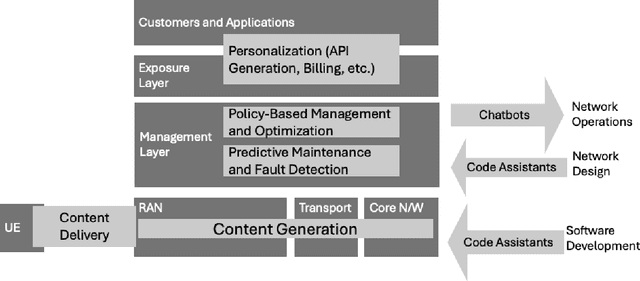
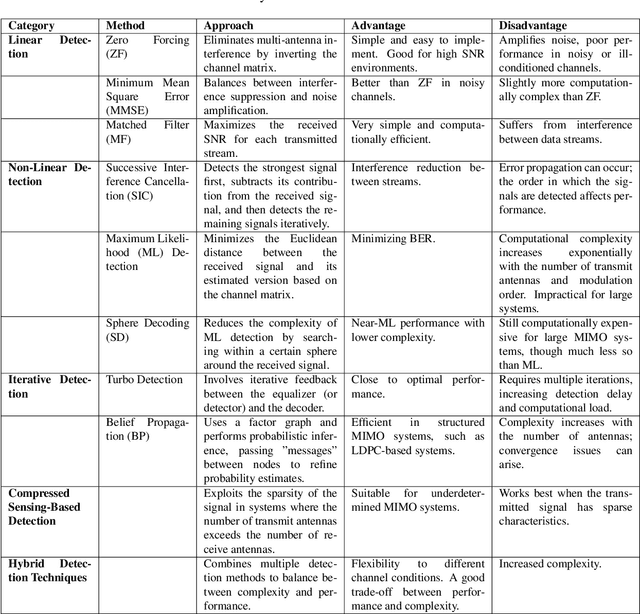
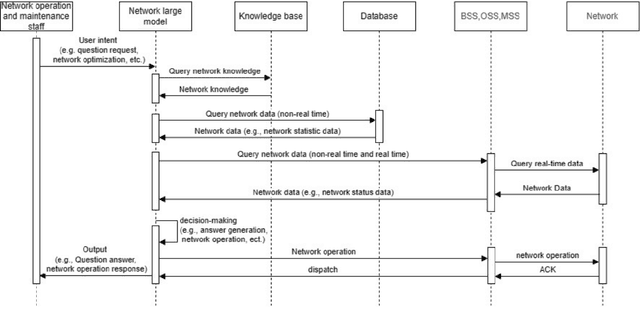
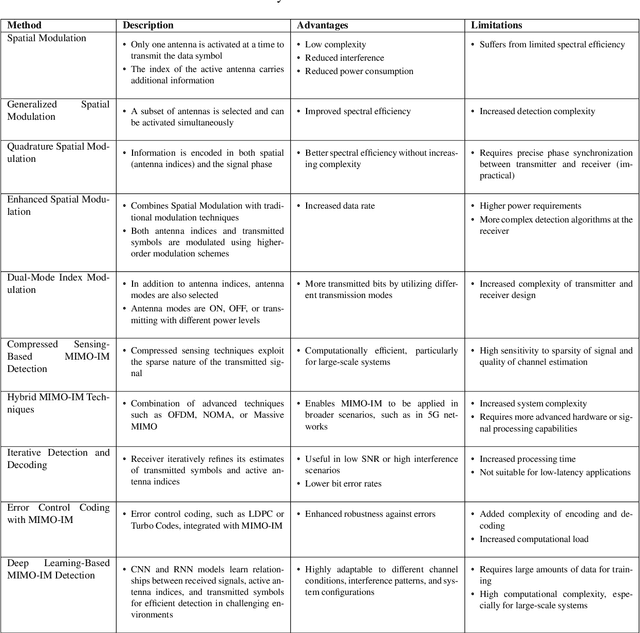
This white paper discusses the role of large-scale AI in the telecommunications industry, with a specific focus on the potential of generative AI to revolutionize network functions and user experiences, especially in the context of 6G systems. It highlights the development and deployment of Large Telecom Models (LTMs), which are tailored AI models designed to address the complex challenges faced by modern telecom networks. The paper covers a wide range of topics, from the architecture and deployment strategies of LTMs to their applications in network management, resource allocation, and optimization. It also explores the regulatory, ethical, and standardization considerations for LTMs, offering insights into their future integration into telecom infrastructure. The goal is to provide a comprehensive roadmap for the adoption of LTMs to enhance scalability, performance, and user-centric innovation in telecom networks.
Multi-Sources Fusion Learning for Multi-Points NLOS Localization in OFDM System
Sep 04, 2024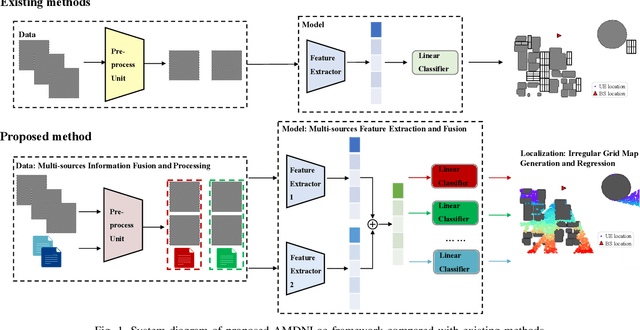
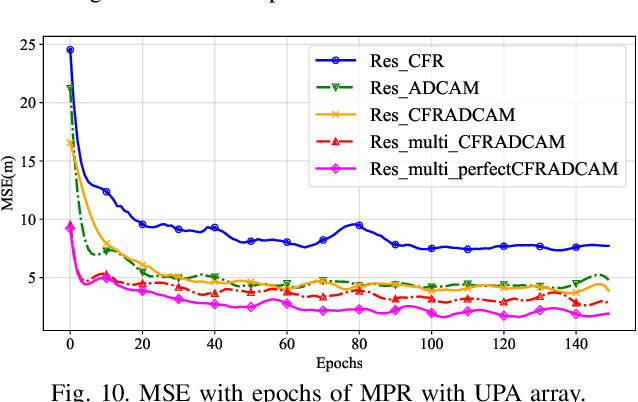
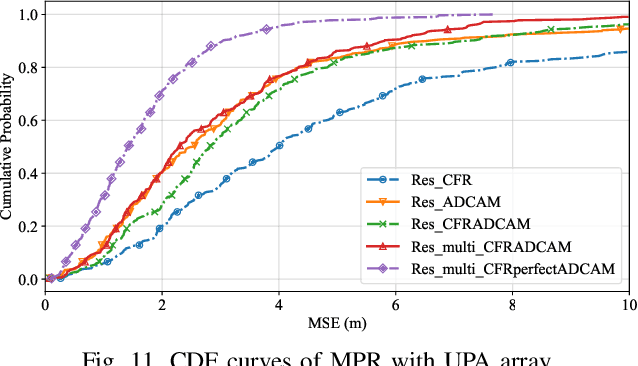
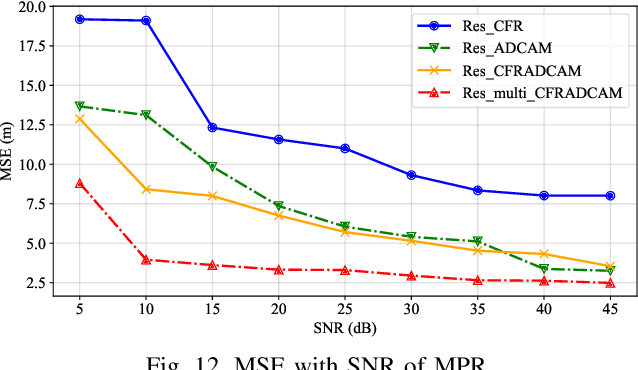
Accurate localization of mobile terminals is a pivotal aspect of integrated sensing and communication systems. Traditional fingerprint-based localization methods, which infer coordinates from channel information within pre-set rectangular areas, often face challenges due to the heterogeneous distribution of fingerprints inherent in non-line-of-sight (NLOS) scenarios, particularly within orthogonal frequency division multiplexing systems. To overcome this limitation, we develop a novel multi-sources information fusion learning framework referred to as the Autosync Multi-Domains NLOS Localization (AMDNLoc). Specifically, AMDNLoc employs a two-stage matched filter fused with a target tracking algorithm and iterative centroid-based clustering to automatically and irregularly segment NLOS regions, ensuring uniform distribution within channel state information across frequency, power, and time-delay domains. Additionally, the framework utilizes a segment-specific linear classifier array, coupled with deep residual network-based feature extraction and fusion, to establish the correlation function between fingerprint features and coordinates within these regions. Simulation results reveal that AMDNLoc achieves an impressive NLOS localization accuracy of 1.46 meters on typical wireless artificial intelligence research datasets and demonstrates significant improvements in interpretability, adaptability, and scalability.