 Add to Chrome
 Add to Firefox
 Add to Edge
Revisiting CNNs for Trajectory Similarity Learning
May 30, 2024



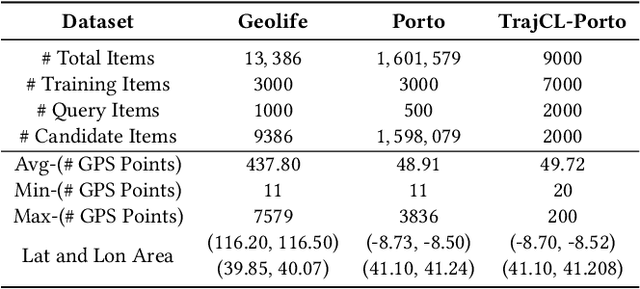
Similarity search is a fundamental but expensive operator in querying trajectory data, due to its quadratic complexity of distance computation. To mitigate the computational burden for long trajectories, neural networks have been widely employed for similarity learning and each trajectory is encoded as a high-dimensional vector for similarity search with linear complexity. Given the sequential nature of trajectory data, previous efforts have been primarily devoted to the utilization of RNNs or Transformers. In this paper, we argue that the common practice of treating trajectory as sequential data results in excessive attention to capturing long-term global dependency between two sequences. Instead, our investigation reveals the pivotal role of local similarity, prompting a revisit of simple CNNs for trajectory similarity learning. We introduce ConvTraj, incorporating both 1D and 2D convolutions to capture sequential and geo-distribution features of trajectories, respectively. In addition, we conduct a series of theoretical analyses to justify the effectiveness of ConvTraj. Experimental results on three real-world large-scale datasets demonstrate that ConvTraj achieves state-of-the-art accuracy in trajectory similarity search. Owing to the simple network structure of ConvTraj, the training and inference speed on the Porto dataset with 1.6 million trajectories are increased by at least $240$x and $2.16$x, respectively. The source code and dataset can be found at \textit{\url{https://github.com/Proudc/ConvTraj}}.

Cycle-YOLO: A Efficient and Robust Framework for Pavement Damage Detection
May 28, 2024
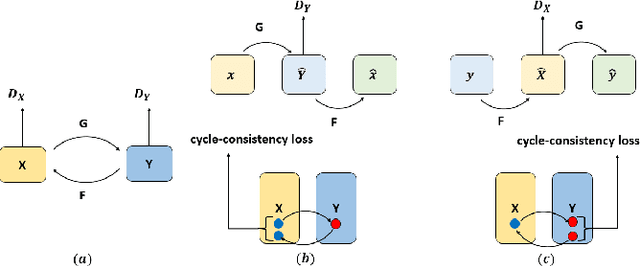
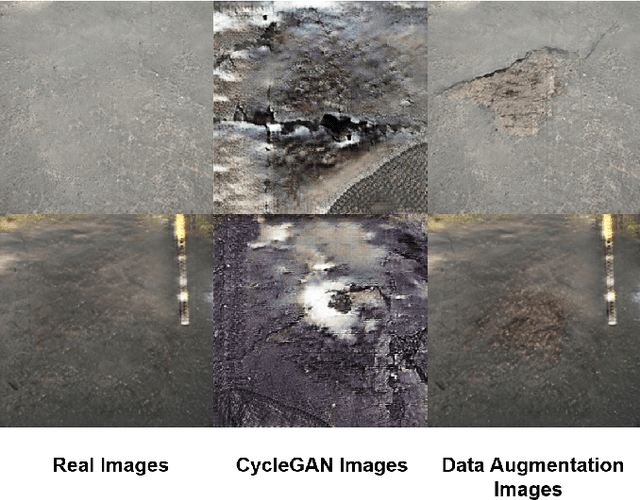

With the development of modern society, traffic volume continues to increase in most countries worldwide, leading to an increase in the rate of pavement damage Therefore, the real-time and highly accurate pavement damage detection and maintenance have become the current need. In this paper, an enhanced pavement damage detection method with CycleGAN and improved YOLOv5 algorithm is presented. We selected 7644 self-collected images of pavement damage samples as the initial dataset and augmented it by CycleGAN. Due to a substantial difference between the images generated by CycleGAN and real road images, we proposed a data enhancement method based on an improved Scharr filter, CycleGAN, and Laplacian pyramid. To improve the target recognition effect on a complex background and solve the problem that the spatial pyramid pooling-fast module in the YOLOv5 network cannot handle multiscale targets, we introduced the convolutional block attention module attention mechanism and proposed the atrous spatial pyramid pooling with squeeze-and-excitation structure. In addition, we optimized the loss function of YOLOv5 by replacing the CIoU with EIoU. The experimental results showed that our algorithm achieved a precision of 0.872, recall of 0.854, and mean average precision@0.5 of 0.882 in detecting three main types of pavement damage: cracks, potholes, and patching. On the GPU, its frames per second reached 68, meeting the requirements for real-time detection. Its overall performance even exceeded the current more advanced YOLOv7 and achieved good results in practical applications, providing a basis for decision-making in pavement damage detection and prevention.
Data Contamination Calibration for Black-box LLMs
May 20, 2024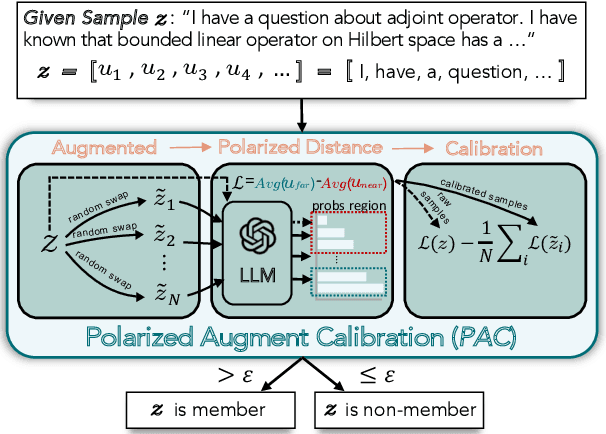
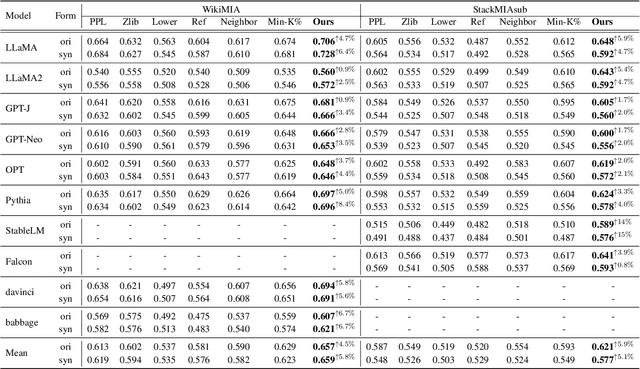
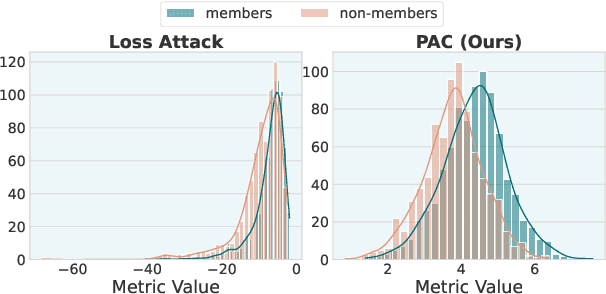
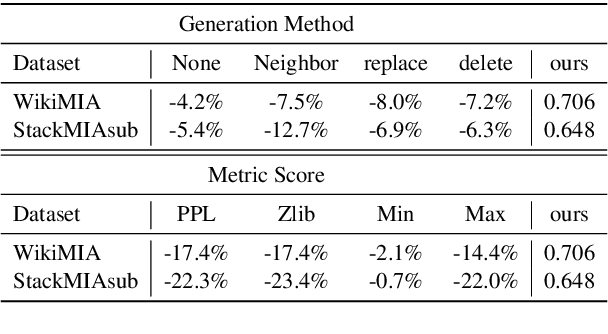
The rapid advancements of Large Language Models (LLMs) tightly associate with the expansion of the training data size. However, the unchecked ultra-large-scale training sets introduce a series of potential risks like data contamination, i.e. the benchmark data is used for training. In this work, we propose a holistic method named Polarized Augment Calibration (PAC) along with a new to-be-released dataset to detect the contaminated data and diminish the contamination effect. PAC extends the popular MIA (Membership Inference Attack) -- from machine learning community -- by forming a more global target at detecting training data to Clarify invisible training data. As a pioneering work, PAC is very much plug-and-play that can be integrated with most (if not all) current white- and black-box LLMs. By extensive experiments, PAC outperforms existing methods by at least 4.5%, towards data contamination detection on more 4 dataset formats, with more than 10 base LLMs. Besides, our application in real-world scenarios highlights the prominent presence of contamination and related issues.
NeurDB: An AI-powered Autonomous Data System
May 07, 2024In the wake of rapid advancements in artificial intelligence (AI), we stand on the brink of a transformative leap in data systems. The imminent fusion of AI and DB (AIxDB) promises a new generation of data systems, which will relieve the burden on end-users across all industry sectors by featuring AI-enhanced functionalities, such as personalized and automated in-database AI-powered analytics, self-driving capabilities for improved system performance, etc. In this paper, we explore the evolution of data systems with a focus on deepening the fusion of AI and DB. We present NeurDB, our next-generation data system designed to fully embrace AI design in each major system component and provide in-database AI-powered analytics. We outline the conceptual and architectural overview of NeurDB, discuss its design choices and key components, and report its current development and future plan.
Powering In-Database Dynamic Model Slicing for Structured Data Analytics
May 01, 2024
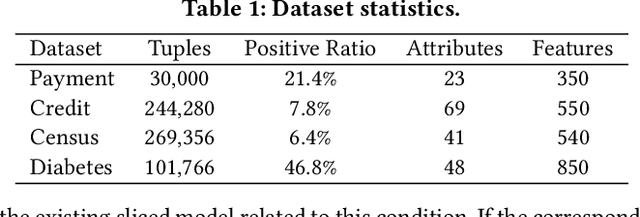
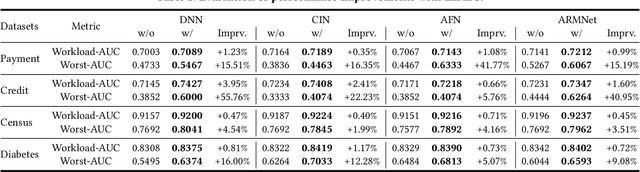

Relational database management systems (RDBMS) are widely used for the storage and retrieval of structured data. To derive insights beyond statistical aggregation, we typically have to extract specific subdatasets from the database using conventional database operations, and then apply deep neural networks (DNN) training and inference on these respective subdatasets in a separate machine learning system. The process can be prohibitively expensive, especially when there are a combinatorial number of subdatasets extracted for different analytical purposes. This calls for efficient in-database support of advanced analytical methods In this paper, we introduce LEADS, a novel SQL-aware dynamic model slicing technique to customize models for subdatasets specified by SQL queries. LEADS improves the predictive modeling of structured data via the mixture of experts (MoE) technique and maintains inference efficiency by a SQL-aware gating network. At the core of LEADS is the construction of a general model with multiple expert sub-models via MoE trained over the entire database. This SQL-aware MoE technique scales up the modeling capacity, enhances effectiveness, and preserves efficiency by activating only necessary experts via the gating network during inference. Additionally, we introduce two regularization terms during the training process of LEADS to strike a balance between effectiveness and efficiency. We also design and build an in-database inference system, called INDICES, to support end-to-end advanced structured data analytics by non-intrusively incorporating LEADS onto PostgreSQL. Our extensive experiments on real-world datasets demonstrate that LEADS consistently outperforms baseline models, and INDICES delivers effective in-database analytics with a considerable reduction in inference latency compared to traditional solutions.
Decentralized Multi-Agent Trajectory Planning in Dynamic Environments with Spatiotemporal Occupancy Grid Maps
Apr 24, 2024This paper proposes a decentralized trajectory planning framework for the collision avoidance problem of multiple micro aerial vehicles (MAVs) in environments with static and dynamic obstacles. The framework utilizes spatiotemporal occupancy grid maps (SOGM), which forecast the occupancy status of neighboring space in the near future, as the environment representation. Based on this representation, we extend the kinodynamic A* and the corridor-constrained trajectory optimization algorithms to efficiently tackle static and dynamic obstacles with arbitrary shapes. Collision avoidance between communicating robots is integrated by sharing planned trajectories and projecting them onto the SOGM. The simulation results show that our method achieves competitive performance against state-of-the-art methods in dynamic environments with different numbers and shapes of obstacles. Finally, the proposed method is validated in real experiments.
Evaluating Dynamic Environment Difficulty for Obstacle Avoidance Benchmarking
Apr 23, 2024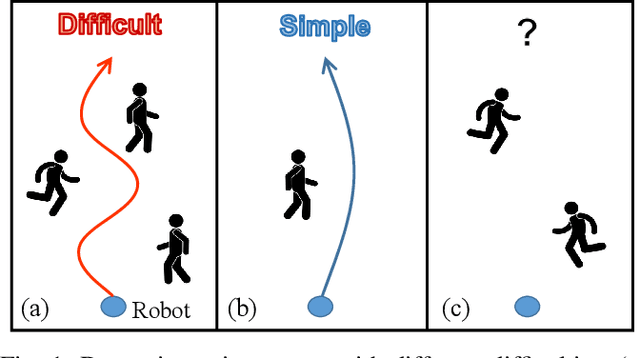
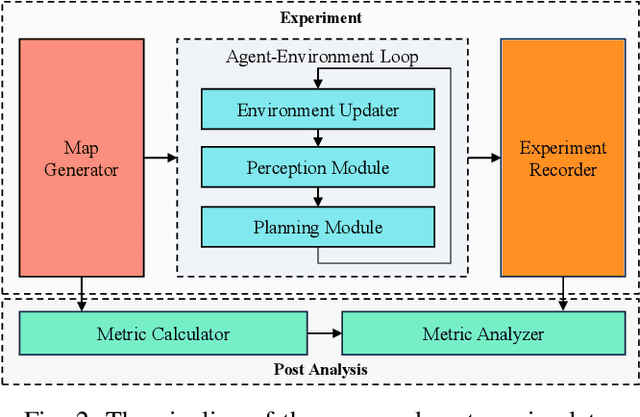
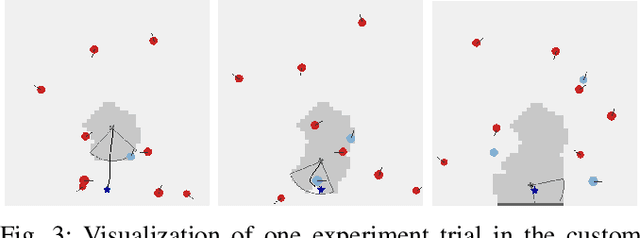
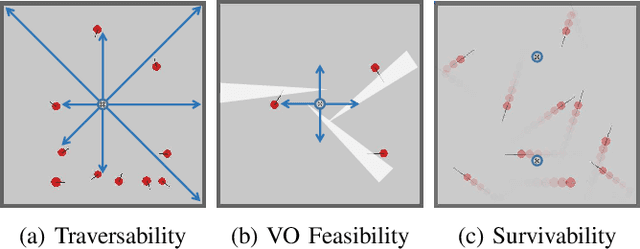
Dynamic obstacle avoidance is a popular research topic for autonomous systems, such as micro aerial vehicles and service robots. Accurately evaluating the performance of dynamic obstacle avoidance methods necessitates the establishment of a metric to quantify the environment's difficulty, a crucial aspect that remains unexplored. In this paper, we propose four metrics to measure the difficulty of dynamic environments. These metrics aim to comprehensively capture the influence of obstacles' number, size, velocity, and other factors on the difficulty. We compare the proposed metrics with existing static environment difficulty metrics and validate them through over 1.5 million trials in a customized simulator. This simulator excludes the effects of perception and control errors and supports different motion and gaze planners for obstacle avoidance. The results indicate that the survivability metric outperforms and establishes a monotonic relationship between the success rate, with a Spearman's Rank Correlation Coefficient (SRCC) of over 0.9. Specifically, for every planner, lower survivability leads to a higher success rate. This metric not only facilitates fair and comprehensive benchmarking but also provides insights for refining collision avoidance methods, thereby furthering the evolution of autonomous systems in dynamic environments.
Physical formula enhanced multi-task learning for pharmacokinetics prediction
Apr 16, 2024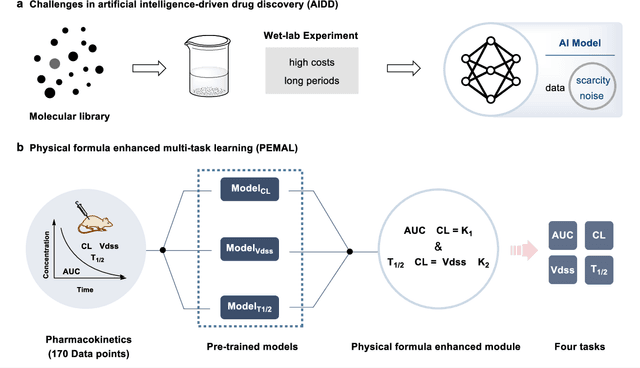

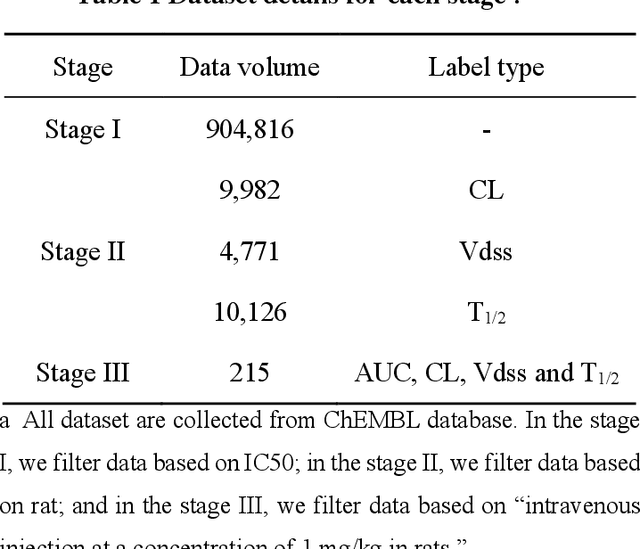

Artificial intelligence (AI) technology has demonstrated remarkable potential in drug dis-covery, where pharmacokinetics plays a crucial role in determining the dosage, safety, and efficacy of new drugs. A major challenge for AI-driven drug discovery (AIDD) is the scarcity of high-quality data, which often requires extensive wet-lab work. A typical example of this is pharmacokinetic experiments. In this work, we develop a physical formula enhanced mul-ti-task learning (PEMAL) method that predicts four key parameters of pharmacokinetics simultaneously. By incorporating physical formulas into the multi-task framework, PEMAL facilitates effective knowledge sharing and target alignment among the pharmacokinetic parameters, thereby enhancing the accuracy of prediction. Our experiments reveal that PEMAL significantly lowers the data demand, compared to typical Graph Neural Networks. Moreover, we demonstrate that PEMAL enhances the robustness to noise, an advantage that conventional Neural Networks do not possess. Another advantage of PEMAL is its high flexibility, which can be potentially applied to other multi-task machine learning scenarios. Overall, our work illustrates the benefits and potential of using PEMAL in AIDD and other scenarios with data scarcity and noise.
Pre-Trained Model Recommendation for Downstream Fine-tuning
Mar 11, 2024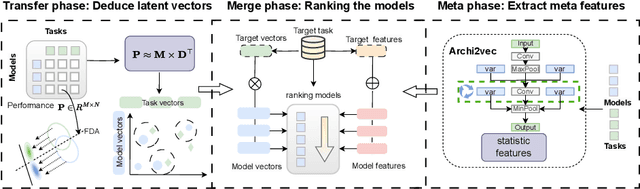
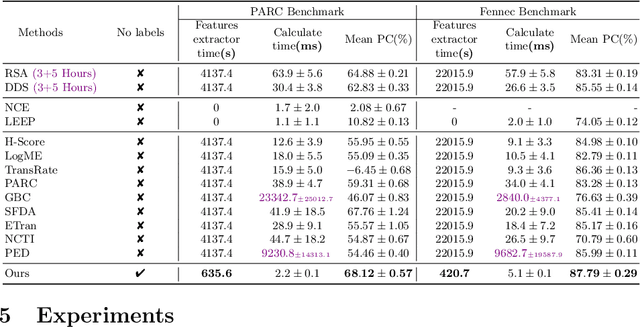
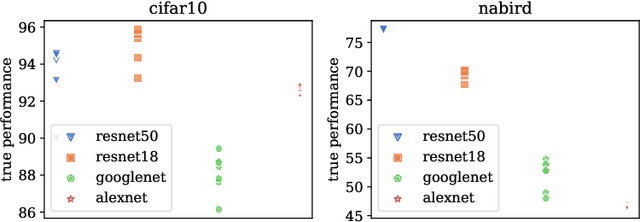
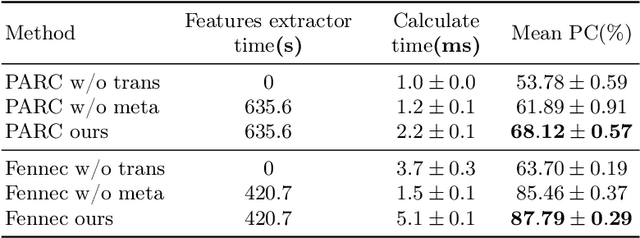
As a fundamental problem in transfer learning, model selection aims to rank off-the-shelf pre-trained models and select the most suitable one for the new target task. Existing model selection techniques are often constrained in their scope and tend to overlook the nuanced relationships between models and tasks. In this paper, we present a pragmatic framework \textbf{Fennec}, delving into a diverse, large-scale model repository while meticulously considering the intricate connections between tasks and models. The key insight is to map all models and historical tasks into a transfer-related subspace, where the distance between model vectors and task vectors represents the magnitude of transferability. A large vision model, as a proxy, infers a new task's representation in the transfer space, thereby circumventing the computational burden of extensive forward passes. We also investigate the impact of the inherent inductive bias of models on transfer results and propose a novel method called \textbf{archi2vec} to encode the intricate structures of models. The transfer score is computed through straightforward vector arithmetic with a time complexity of $\mathcal{O}(1)$. Finally, we make a substantial contribution to the field by releasing a comprehensive benchmark. We validate the effectiveness of our framework through rigorous testing on two benchmarks. The benchmark and the code will be publicly available in the near future.
FL-GUARD: A Holistic Framework for Run-Time Detection and Recovery of Negative Federated Learning
Mar 07, 2024Federated learning (FL) is a promising approach for learning a model from data distributed on massive clients without exposing data privacy. It works effectively in the ideal federation where clients share homogeneous data distribution and learning behavior. However, FL may fail to function appropriately when the federation is not ideal, amid an unhealthy state called Negative Federated Learning (NFL), in which most clients gain no benefit from participating in FL. Many studies have tried to address NFL. However, their solutions either (1) predetermine to prevent NFL in the entire learning life-cycle or (2) tackle NFL in the aftermath of numerous learning rounds. Thus, they either (1) indiscriminately incur extra costs even if FL can perform well without such costs or (2) waste numerous learning rounds. Additionally, none of the previous work takes into account the clients who may be unwilling/unable to follow the proposed NFL solutions when using those solutions to upgrade an FL system in use. This paper introduces FL-GUARD, a holistic framework that can be employed on any FL system for tackling NFL in a run-time paradigm. That is, to dynamically detect NFL at the early stage (tens of rounds) of learning and then to activate recovery measures when necessary. Specifically, we devise a cost-effective NFL detection mechanism, which relies on an estimation of performance gain on clients. Only when NFL is detected, we activate the NFL recovery process, in which each client learns in parallel an adapted model when training the global model. Extensive experiment results confirm the effectiveness of FL-GUARD in detecting NFL and recovering from NFL to a healthy learning state. We also show that FL-GUARD is compatible with previous NFL solutions and robust against clients unwilling/unable to take any recovery measures.