 Add to Chrome
 Add to Firefox
 Add to Edge
The Law of Multi-Model Collaboration: Scaling Limits of Model Ensembling for Large Language Models
Dec 29, 2025
Recent advances in large language models (LLMs) have been largely driven by scaling laws for individual models, which predict performance improvements as model parameters and data volume increase. However, the capabilities of any single LLM are inherently bounded. One solution originates from intricate interactions among multiple LLMs, rendering their collective performance surpasses that of any constituent model. Despite the rapid proliferation of multi-model integration techniques such as model routing and post-hoc ensembling, a unifying theoretical framework of performance scaling for multi-model collaboration remains absent. In this work, we propose the Law of Multi-model Collaboration, a scaling law that predicts the performance limits of LLM ensembles based on their aggregated parameter budget. To quantify the intrinsic upper bound of multi-model collaboration, we adopt a method-agnostic formulation and assume an idealized integration oracle where the total cross-entropy loss of each sample is determined by the minimum loss of any model in the model pool. Experimental results reveal that multi-model systems follow a power-law scaling with respect to the total parameter count, exhibiting a more significant improvement trend and a lower theoretical loss floor compared to single model scaling. Moreover, ensembles of heterogeneous model families achieve better performance scaling than those formed within a single model family, indicating that model diversity is a primary driver of collaboration gains. These findings suggest that model collaboration represents a critical axis for extending the intelligence frontier of LLMs.

Theoretical Foundations of Scaling Law in Familial Models
Dec 29, 2025Neural scaling laws have become foundational for optimizing large language model (LLM) training, yet they typically assume a single dense model output. This limitation effectively overlooks "Familial models, a transformative paradigm essential for realizing ubiquitous intelligence across heterogeneous device-edge-cloud hierarchies. Transcending static architectures, familial models integrate early exits with relay-style inference to spawn G deployable sub-models from a single shared backbone. In this work, we theoretically and empirically extend the scaling law to capture this "one-run, many-models" paradigm by introducing Granularity (G) as a fundamental scaling variable alongside model size (N) and training tokens (D). To rigorously quantify this relationship, we propose a unified functional form L(N, D, G) and parameterize it using large-scale empirical runs. Specifically, we employ a rigorous IsoFLOP experimental design to strictly isolate architectural impact from computational scale. Across fixed budgets, we systematically sweep model sizes (N) and granularities (G) while dynamically adjusting tokens (D). This approach effectively decouples the marginal cost of granularity from the benefits of scale, ensuring high-fidelity parameterization of our unified scaling law. Our results reveal that the granularity penalty follows a multiplicative power law with an extremely small exponent. Theoretically, this bridges fixed-compute training with dynamic architectures. Practically, it validates the "train once, deploy many" paradigm, demonstrating that deployment flexibility is achievable without compromising the compute-optimality of dense baselines.
Parallel Diffusion Solver via Residual Dirichlet Policy Optimization
Dec 28, 2025Diffusion models (DMs) have achieved state-of-the-art generative performance but suffer from high sampling latency due to their sequential denoising nature. Existing solver-based acceleration methods often face significant image quality degradation under a low-latency budget, primarily due to accumulated truncation errors arising from the inability to capture high-curvature trajectory segments. In this paper, we propose the Ensemble Parallel Direction solver (dubbed as EPD-Solver), a novel ODE solver that mitigates these errors by incorporating multiple parallel gradient evaluations in each step. Motivated by the geometric insight that sampling trajectories are largely confined to a low-dimensional manifold, EPD-Solver leverages the Mean Value Theorem for vector-valued functions to approximate the integral solution more accurately. Importantly, since the additional gradient computations are independent, they can be fully parallelized, preserving low-latency sampling nature. We introduce a two-stage optimization framework. Initially, EPD-Solver optimizes a small set of learnable parameters via a distillation-based approach. We further propose a parameter-efficient Reinforcement Learning (RL) fine-tuning scheme that reformulates the solver as a stochastic Dirichlet policy. Unlike traditional methods that fine-tune the massive backbone, our RL approach operates strictly within the low-dimensional solver space, effectively mitigating reward hacking while enhancing performance in complex text-to-image (T2I) generation tasks. In addition, our method is flexible and can serve as a plugin (EPD-Plugin) to improve existing ODE samplers.
Rare Word Recognition and Translation Without Fine-Tuning via Task Vector in Speech Models
Dec 26, 2025Rare words remain a critical bottleneck for speech-to-text systems. While direct fine-tuning improves recognition of target words, it often incurs high cost, catastrophic forgetting, and limited scalability. To address these challenges, we propose a training-free paradigm based on task vectors for rare word recognition and translation. By defining task vectors as parameter differences and introducing word-level task vector arithmetic, our approach enables flexible composition of rare-word capabilities, greatly enhancing scalability and reusability. Extensive experiments across multiple domains show that the proposed method matches or surpasses fine-tuned models on target words, improves general performance by about 5 BLEU, and mitigates catastrophic forgetting.
UniTacHand: Unified Spatio-Tactile Representation for Human to Robotic Hand Skill Transfer
Dec 24, 2025Tactile sensing is crucial for robotic hands to achieve human-level dexterous manipulation, especially in scenarios with visual occlusion. However, its application is often hindered by the difficulty of collecting large-scale real-world robotic tactile data. In this study, we propose to collect low-cost human manipulation data using haptic gloves for tactile-based robotic policy learning. The misalignment between human and robotic tactile data makes it challenging to transfer policies learned from human data to robots. To bridge this gap, we propose UniTacHand, a unified representation to align robotic tactile information captured by dexterous hands with human hand touch obtained from gloves. First, we project tactile signals from both human hands and robotic hands onto a morphologically consistent 2D surface space of the MANO hand model. This unification standardizes the heterogeneous data structures and inherently embeds the tactile signals with spatial context. Then, we introduce a contrastive learning method to align them into a unified latent space, trained on only 10 minutes of paired data from our data collection system. Our approach enables zero-shot tactile-based policy transfer from humans to a real robot, generalizing to objects unseen in the pre-training data. We also demonstrate that co-training on mixed data, including both human and robotic demonstrations via UniTacHand, yields better performance and data efficiency compared with using only robotic data. UniTacHand paves a path toward general, scalable, and data-efficient learning for tactile-based dexterous hands.
Shared Representation Learning for High-Dimensional Multi-Task Forecasting under Resource Contention in Cloud-Native Backends
Dec 24, 2025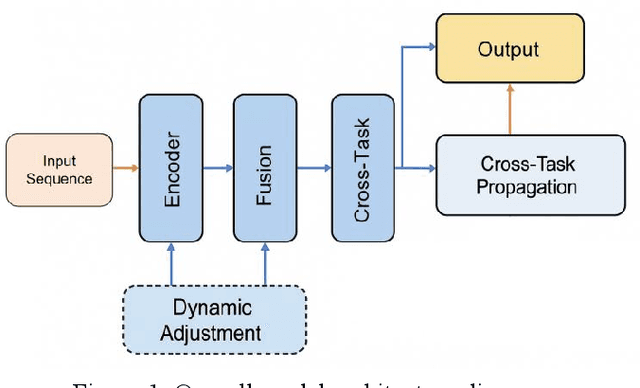
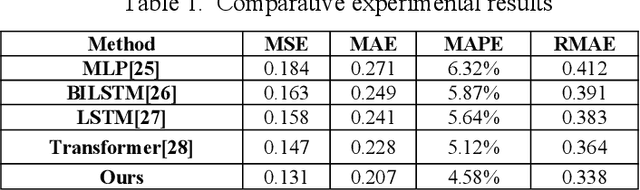
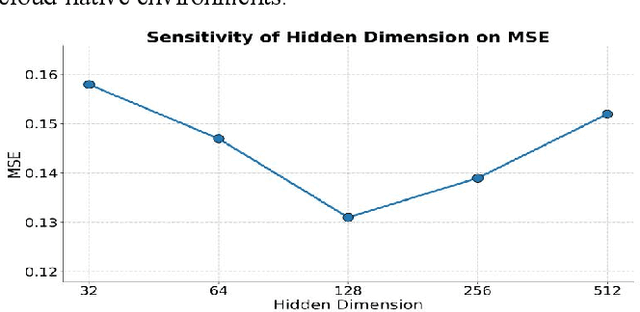
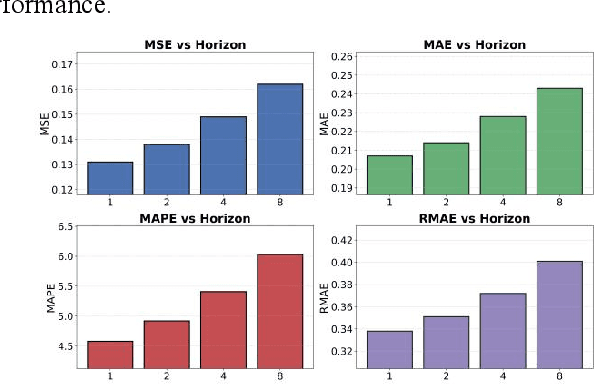
This study proposes a unified forecasting framework for high-dimensional multi-task time series to meet the prediction demands of cloud native backend systems operating under highly dynamic loads, coupled metrics, and parallel tasks. The method builds a shared encoding structure to represent diverse monitoring indicators in a unified manner and employs a state fusion mechanism to capture trend changes and local disturbances across different time scales. A cross-task structural propagation module is introduced to model potential dependencies among nodes, enabling the model to understand complex structural patterns formed by resource contention, link interactions, and changes in service topology. To enhance adaptability to non-stationary behaviors, the framework incorporates a dynamic adjustment mechanism that automatically regulates internal feature flows according to system state changes, ensuring stable predictions in the presence of sudden load shifts, topology drift, and resource jitter. The experimental evaluation compares multiple models across various metrics and verifies the effectiveness of the framework through analyses of hyperparameter sensitivity, environmental sensitivity, and data sensitivity. The results show that the proposed method achieves superior performance on several error metrics and provides more accurate representations of future states under different operating conditions. Overall, the unified forecasting framework offers reliable predictive capability for high-dimensional, multi-task, and strongly dynamic environments in cloud native systems and provides essential technical support for intelligent backend management.
Cost-TrustFL: Cost-Aware Hierarchical Federated Learning with Lightweight Reputation Evaluation across Multi-Cloud
Dec 23, 2025Federated learning across multi-cloud environments faces critical challenges, including non-IID data distributions, malicious participant detection, and substantial cross-cloud communication costs (egress fees). Existing Byzantine-robust methods focus primarily on model accuracy while overlooking the economic implications of data transfer across cloud providers. This paper presents Cost-TrustFL, a hierarchical federated learning framework that jointly optimizes model performance and communication costs while providing robust defense against poisoning attacks. We propose a gradient-based approximate Shapley value computation method that reduces the complexity from exponential to linear, enabling lightweight reputation evaluation. Our cost-aware aggregation strategy prioritizes intra-cloud communication to minimize expensive cross-cloud data transfers. Experiments on CIFAR-10 and FEMNIST datasets demonstrate that Cost-TrustFL achieves 86.7% accuracy under 30% malicious clients while reducing communication costs by 32% compared to baseline methods. The framework maintains stable performance across varying non-IID degrees and attack intensities, making it practical for real-world multi-cloud deployments.
SlicerOrbitSurgerySim: An Open-Source Platform for Virtual Registration and Quantitative Comparison of Preformed Orbital Plates
Dec 22, 2025Poor adaptation of orbital implants remains a major contributor to postoperative complications and revision surgery. Although preformed orbital plates are widely used to reduce cost and operative time compared with customized implants, surgeons currently lack publicly available tools and standardized metrics to quantitatively compare plate fit across vendors, sizes, and patient anatomy. We developed SlicerOrbitSurgerySim, an open-source extension for the 3D Slicer platform that enables interactive virtual registration, evaluation, and comparison of multiple preformed orbital plates in a patient-specific virtual planning environment. The software generates reproducible quantitative plate-to-orbit distance metrics and visualization tools that support both patient-specific planning and population-level statistical analysis of plate adaptability. By facilitating objective comparison of implant designs and placement strategies, this tool aims to improve preoperative decision-making, reduce intraoperative plate modification, and promote collaborative research and surgical education. Pilot studies, sample datasets, and detailed tutorials are provided to support testing, transparency, and reproducibility.
Astraea: A State-Aware Scheduling Engine for LLM-Powered Agents
Dec 16, 2025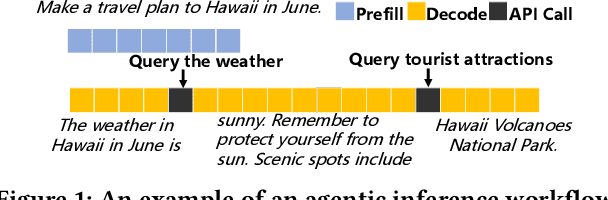
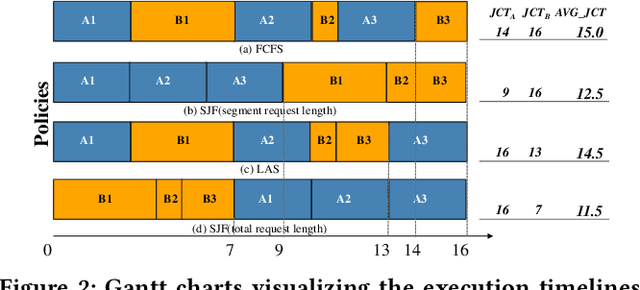
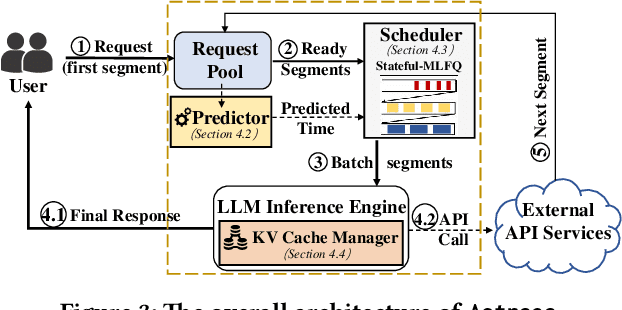
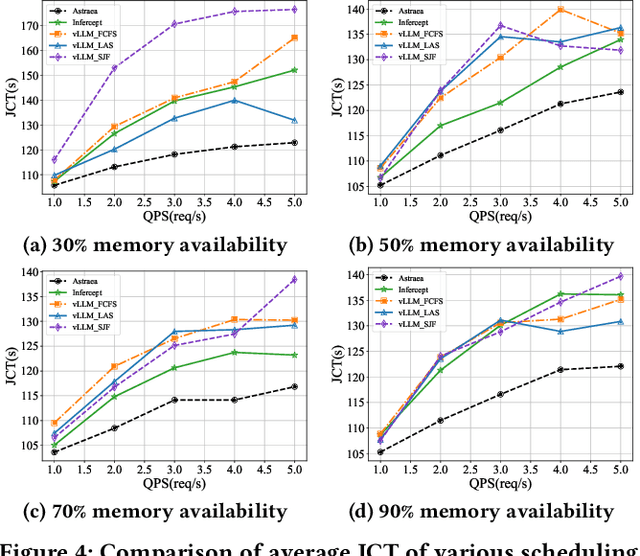
Large Language Models (LLMs) are increasingly being deployed as intelligent agents. Their multi-stage workflows, which alternate between local computation and calls to external network services like Web APIs, introduce a mismatch in their execution pattern and the scheduling granularity of existing inference systems such as vLLM. Existing systems typically focus on per-segment optimization which prevents them from minimizing the end-to-end latency of the complete agentic workflow, i.e., the global Job Completion Time (JCT) over the entire request lifecycle. To address this limitation, we propose Astraea, a service engine designed to shift the optimization from local segments to the global request lifecycle. Astraea employs a state-aware, hierarchical scheduling algorithm that integrates a request's historical state with future predictions. It dynamically classifies requests by their I/O and compute intensive nature and uses an enhanced HRRN policy to balance efficiency and fairness. Astraea also implements an adaptive KV cache manager that intelligently handles the agent state during I/O waits based on the system memory pressure. Extensive experiments show that Astraea reduces average JCT by up to 25.5\% compared to baseline methods. Moreover, our approach demonstrates strong robustness and stability under high load across various model scales.
Uni-Inter: Unifying 3D Human Motion Synthesis Across Diverse Interaction Contexts
Nov 17, 2025We present Uni-Inter, a unified framework for human motion generation that supports a wide range of interaction scenarios: including human-human, human-object, and human-scene-within a single, task-agnostic architecture. In contrast to existing methods that rely on task-specific designs and exhibit limited generalization, Uni-Inter introduces the Unified Interactive Volume (UIV), a volumetric representation that encodes heterogeneous interactive entities into a shared spatial field. This enables consistent relational reasoning and compound interaction modeling. Motion generation is formulated as joint-wise probabilistic prediction over the UIV, allowing the model to capture fine-grained spatial dependencies and produce coherent, context-aware behaviors. Experiments across three representative interaction tasks demonstrate that Uni-Inter achieves competitive performance and generalizes well to novel combinations of entities. These results suggest that unified modeling of compound interactions offers a promising direction for scalable motion synthesis in complex environments.