 Add to Chrome
 Add to Firefox
 Add to Edge
Beyond Global Routing Aggregation: Phase-Aware Expert Merging for MoE Vision-Language Models
Aug 05, 2026
Mixture-of-experts vision-language models (MoE-VLMs) increase model capacity with sparse expert activation, yet deployment requires storing the full expert pool. Training-free expert merging reduces this burden, and many routing-based methods aggregate routing statistics across all tokens to determine merge compatibility. However, MoE-VLM inference is phase-structured: image-context tokens carry visual content, question tokens specify the query, and answer tokens produce the output, with different counts and routing distributions. Because image-context tokens are far more numerous, global aggregation can overemphasize image-context processing and obscure phase-conditioned expert roles, making experts serving different phases appear interchangeable and degrading model performance. We therefore argue that MoE-VLM expert merging should preserve phase-conditioned expert roles, judging compatibility by how experts serve different phases rather than globally aggregated routing statistics. Based on this view, we propose RoleMerge, a training-free method that constructs each expert's Routing Role Profile (RRP) from phase-normalized routing statistics, capturing its relative phase preference. Guided by expert-phase information loss, RoleMerge merges experts with compatible profiles and their corresponding router entries while preserving answer-decoding expert distinctions. Experiments on three models and multiple benchmarks show that RoleMerge preserves more of the full model's performance than alternative expert-merging methods at matched expert-retention ratios, with relative improvements of up to 9.6 percent in six-task macro-average performance. These results validate phase-conditioned expert roles as a more effective basis than global routing aggregation for MoE-VLM expert merging.

DAVET: Denoising-Aware Visual Evidence Trajectory Allocation for Diffusion Vision-Language Models
Aug 03, 2026Diffusion vision-language models (dVLMs) iteratively denoise masked responses while conditioning each denoising step on visual evidence, making visual conditioning a substantial recurring inference cost. Unlike autoregressive decoding, diffusion generation repeatedly revisits the entire response as uncertainty evolves. Our analysis reveals that visual evidence demand is strongly step-dependent, motivating adaptive allocation across denoising steps. Existing inference acceleration methods operate through decoding-side strategies or visual token compression via pruning and merging, but do not explicitly treat visual evidence as a resource whose demand evolves across the diffusion process. Therefore, we present Denoising-Aware Visual Evidence Trajectory Allocation (DAVET), a training-free framework that allocates visual evidence according to the evolving generation state. Starting from a phase-conditioned evidence trajectory, the proposed allocation policy uses operation demand to set an evidence reserve whose allocation at each denoising step is modulated by trajectory risk. DAVET realizes the resulting budgets through a hierarchy of evidence views constructed from a single visual encoding, separating when and how much evidence is needed from how the evidence views are constructed. Evaluated on two representative dVLMs, LLaDA-V and LaViDa, across multiple visual-understanding benchmarks, DAVET achieves an average speedup of 1.55$\times$ with an average relative performance drop of 1.86\%, showing that denoising-aware visual evidence allocation can reduce visual conditioning cost while largely preserving generation quality.
REFLEX: Rethinking MoE Inference as Refinement-Aware Compute Allocation in Diffusion Language Models
Aug 03, 2026Mixture-of-experts (MoE) models increase parameter capacity by activating only a small subset of experts for each token. This conditional-computation paradigm has enabled autoregressive language models to scale model capacity without a proportional increase in per-token computation. In diffusion language models (DLMs), however, each denoising forward jointly revisits all token positions despite their sharply different refinement demands, while the default fixed token-choice routing assigns them a uniform expert budget, creating a mismatch between expert computation and refinement demand. We argue that MoE inference in DLMs should therefore be viewed as refinement-aware compute allocation across heterogeneous token refinement states. We propose REFLEX (\textbf{RE}finement-aware \textbf{FLEX}ible expert allocation), a training-free method that keeps the default router unchanged while reorganizing expert computation around the evolving refinement process. Specifically, REFLEX introduces a coarse-to-fine hierarchy for expert-budget allocation that aligns computation with block-relative refinement roles while using the Frontier-Progress Score to resolve active-block priorities. Across multiple widely used benchmarks on two representative MoE-based DLMs, LLaDA-MoE and LLaDA2.0-mini, REFLEX reduces allocated expert computation by 15\% on average while preserving or even improving generation quality on most benchmarks relative to default routing. Compared with autoregressive-style variable-expert routing methods, REFLEX also yields a more consistent quality--computation trade-off, further supporting the importance of allocating expert computation according to the heterogeneous refinement demands exposed within each denoising forward.
Is Your Model Thinking or Just Stagnating? PUMA: Diagnosing Reasoning Pathology via Phase-Momentum Alignment
Jul 19, 2026Test-time scaling empowers Large Reasoning Models (LRMs) to tackle complex tasks via extensive Chain-of-Thought (CoT). However, this often induces the "overthinking" paradox, where redundant reasoning increases computational overhead without guaranteeing accuracy. Existing test-time efficiency optimization methods primarily fall into two categories: information-theoretic approaches, which are prone to "deceptive convergence" where low uncertainty masks hallucinations, and latent representation analyses, which are often post-hoc, lacking the real-time sensitivity for dynamic reasoning. To bridge this gap, we first posit the Phase-Momentum Alignment Hypothesis, asserting that reasoning correctness hinges on the temporal synchronization between geometric momentum and uncertainty resolution. We then theoretically formulate the Cognitive-Energy Model to characterize these dynamics through two orthogonal dimensions: Geometric Cognitive Effort, quantified by latent velocity and tortuosity, and Entropic Cognitive Uncertainty. To operationalize this, we introduce PUMA (Phase-Uncertainty Momentum Alignment), a training-free framework employing a tiered diagnostic architecture. By coupling lightweight phase monitoring with event-triggered geometric analysis, PUMA effectively distinguishes active exploration from passive stagnation, enabling precise interventions through adaptive truncation or corrective measures. Extensive experiments on LRMs spanning 1.5B to 32B demonstrate that PUMA consistently outperforms state-of-the-art baselines across diverse benchmarks, achieving a superior accuracy-efficiency trade-off and robust cross-domain generalization.
GeoQuery: Geometry-Query Diffusion for Sparse-View Reconstruction
May 12, 20263D Gaussian Splatting (3DGS) has emerged as a prominent paradigm for 3D reconstruction and novel view synthesis. However, it remains vulnerable to severe artifacts when trained under sparse-view constraints. While recent methods attempt to rectify artifacts in rendered views using image diffusion models, they typically rely on multi-view self-attention to retrieve information from reference images. We observe that this mechanism often fails when the rendered novel views output by 3DGS are heavily corrupted: damaged query features lead to erroneous cross-view retrieval, resulting in inconsistent rendering refinement. To address this, we propose GeoQuery, a geometry-guided diffusion framework that integrates generative priors with explicit geometric cues via a novel Geometry-guided Cross-view Attention (GCA) mechanism. First, by leveraging predicted depth maps and camera poses, we construct a geometry-induced correspondence field to sample reference features, forming a geometry-aligned proxy query that replaces the corrupted rendering features. Furthermore, we design a new cross-view feature aggregation pipeline, in which we restrict the cross-view attention to a local window around each proxy query to effectively retrieve useful features while suppressing spurious matches. GeoQuery can be seamlessly integrated into existing diffusion-based pipelines, enabling robust reconstruction even under extreme view sparsity. Extensive experiments on sparse-view novel view synthesis and rendering artifact removal demonstrate the effectiveness of our approach.
Let Your Image Move with Your Motion! -- Implicit Multi-Object Multi-Motion Transfer
Mar 01, 2026Motion transfer has emerged as a promising direction for controllable video generation, yet existing methods largely focus on single-object scenarios and struggle when multiple objects require distinct motion patterns. In this work, we present FlexiMMT, the first implicit image-to-video (I2V) motion transfer framework that explicitly enables multi-object, multi-motion transfer. Given a static multi-object image and multiple reference videos, FlexiMMT independently extracts motion representations and accurately assigns them to different objects, supporting flexible recombination and arbitrary motion-to-object mappings. To address the core challenge of cross-object motion entanglement, we introduce a Motion Decoupled Mask Attention Mechanism that uses object-specific masks to constrain attention, ensuring that motion and text tokens only influence their designated regions. We further propose a Differentiated Mask Propagation Mechanism that derives object-specific masks directly from diffusion attention and progressively propagates them across frames efficiently. Extensive experiments demonstrate that FlexiMMT achieves precise, compositional, and state-of-the-art performance in I2V-based multi-object multi-motion transfer.
LCDB 1.1: A Database Illustrating Learning Curves Are More Ill-Behaved Than Previously Thought
May 21, 2025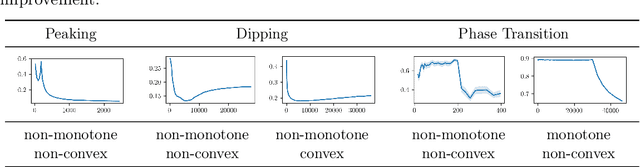
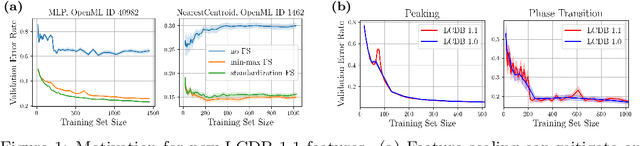

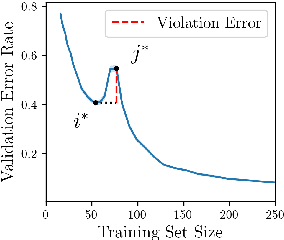
Sample-wise learning curves plot performance versus training set size. They are useful for studying scaling laws and speeding up hyperparameter tuning and model selection. Learning curves are often assumed to be well-behaved: monotone (i.e. improving with more data) and convex. By constructing the Learning Curves Database 1.1 (LCDB 1.1), a large-scale database with high-resolution learning curves, we show that learning curves are less often well-behaved than previously thought. Using statistically rigorous methods, we observe significant ill-behavior in approximately 14% of the learning curves, almost twice as much as in previous estimates. We also identify which learners are to blame and show that specific learners are more ill-behaved than others. Additionally, we demonstrate that different feature scalings rarely resolve ill-behavior. We evaluate the impact of ill-behavior on downstream tasks, such as learning curve fitting and model selection, and find it poses significant challenges, underscoring the relevance and potential of LCDB 1.1 as a challenging benchmark for future research.
ROS-SAM: High-Quality Interactive Segmentation for Remote Sensing Moving Object
Mar 15, 2025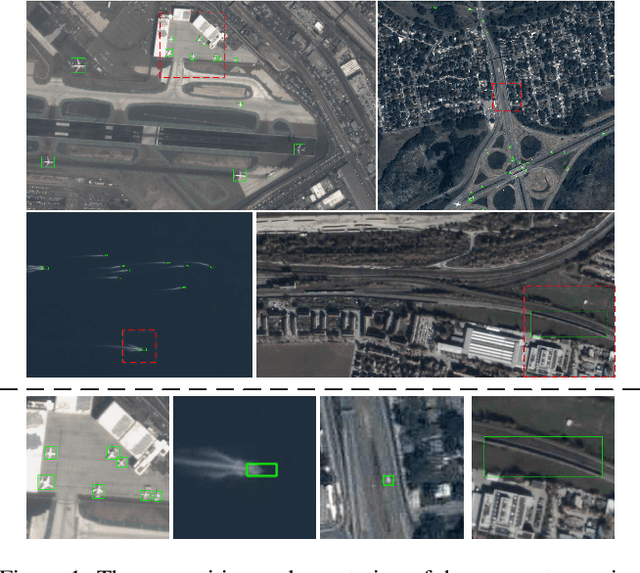
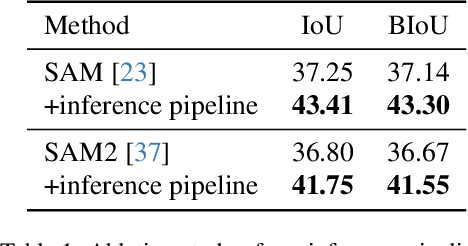
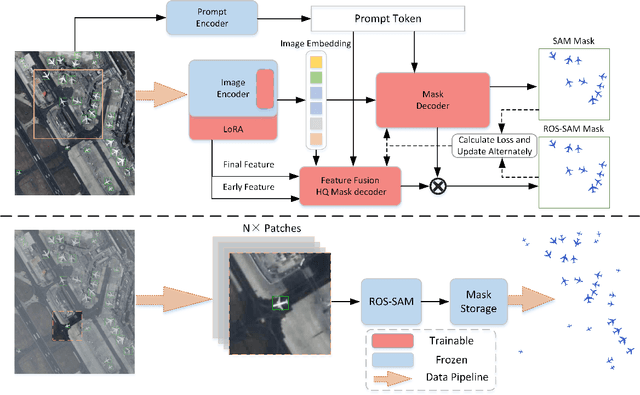
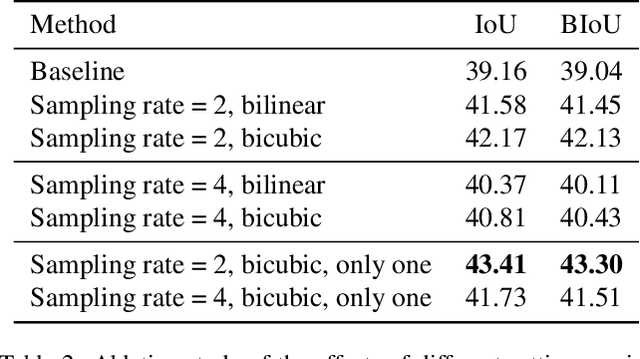
The availability of large-scale remote sensing video data underscores the importance of high-quality interactive segmentation. However, challenges such as small object sizes, ambiguous features, and limited generalization make it difficult for current methods to achieve this goal. In this work, we propose ROS-SAM, a method designed to achieve high-quality interactive segmentation while preserving generalization across diverse remote sensing data. The ROS-SAM is built upon three key innovations: 1) LoRA-based fine-tuning, which enables efficient domain adaptation while maintaining SAM's generalization ability, 2) Enhancement of deep network layers to improve the discriminability of extracted features, thereby reducing misclassifications, and 3) Integration of global context with local boundary details in the mask decoder to generate high-quality segmentation masks. Additionally, we design the data pipeline to ensure the model learns to better handle objects at varying scales during training while focusing on high-quality predictions during inference. Experiments on remote sensing video datasets show that the redesigned data pipeline boosts the IoU by 6%, while ROS-SAM increases the IoU by 13%. Finally, when evaluated on existing remote sensing object tracking datasets, ROS-SAM demonstrates impressive zero-shot capabilities, generating masks that closely resemble manual annotations. These results confirm ROS-SAM as a powerful tool for fine-grained segmentation in remote sensing applications. Code is available at https://github.com/ShanZard/ROS-SAM.
Dual-Modal Prototype Joint Learning for Compositional Zero-Shot Learning
Jan 23, 2025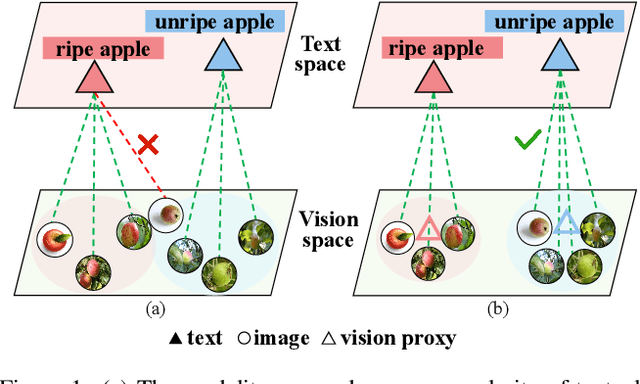
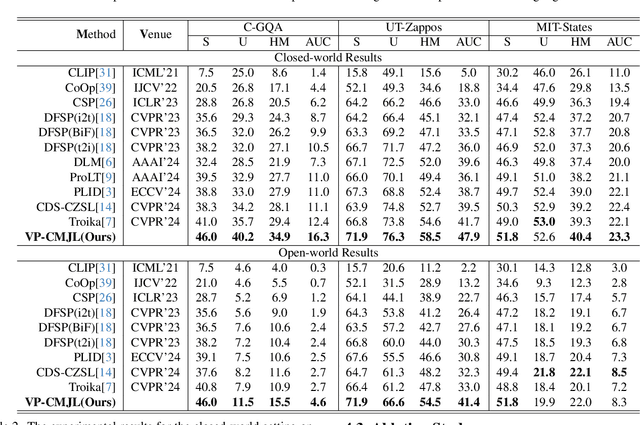
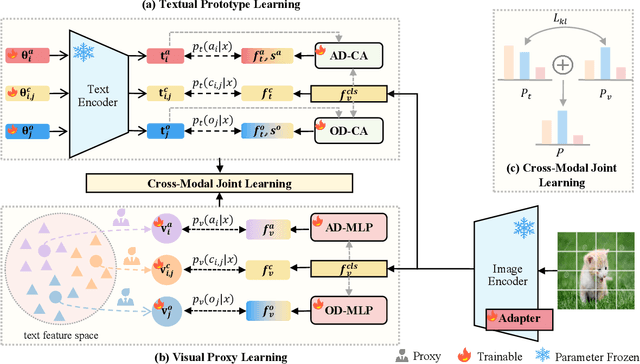
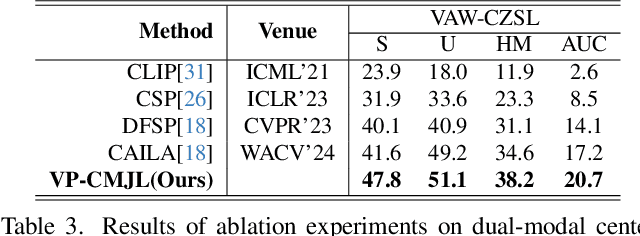
Compositional Zero-Shot Learning (CZSL) aims to recognize novel compositions of attributes and objects by leveraging knowledge learned from seen compositions. Recent approaches have explored the use of Vision-Language Models (VLMs) to align textual and visual modalities. These methods typically employ prompt engineering, parameter-tuning, and modality fusion to generate rich textual prototypes that serve as class prototypes for CZSL. However, the modality gap results in textual prototypes being unable to fully capture the optimal representations of all class prototypes, particularly those with fine-grained features, which can be directly obtained from the visual modality. In this paper, we propose a novel Dual-Modal Prototype Joint Learning framework for the CZSL task. Our approach, based on VLMs, introduces prototypes in both the textual and visual modalities. The textual prototype is optimized to capture broad conceptual information, aiding the model's generalization across unseen compositions. Meanwhile, the visual prototype is used to mitigate the classification errors caused by the modality gap and capture fine-grained details to distinguish images with similar appearances. To effectively optimize these prototypes, we design specialized decomposition modules and a joint learning strategy that enrich the features from both modalities. These prototypes not only capture key category information during training but also serve as crucial reference targets during inference. Experimental results demonstrate that our approach achieves state-of-the-art performance in the closed-world setting and competitive performance in the open-world setting across three publicly available CZSL benchmarks. These findings validate the effectiveness of our method in advancing compositional generalization.
A New Action Recognition Framework for Video Highlights Summarization in Sporting Events
Dec 01, 2020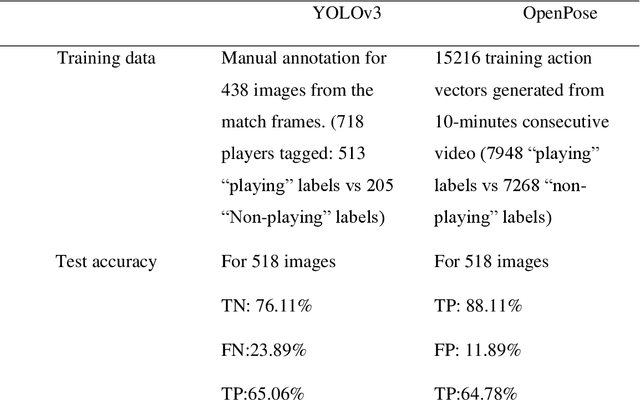
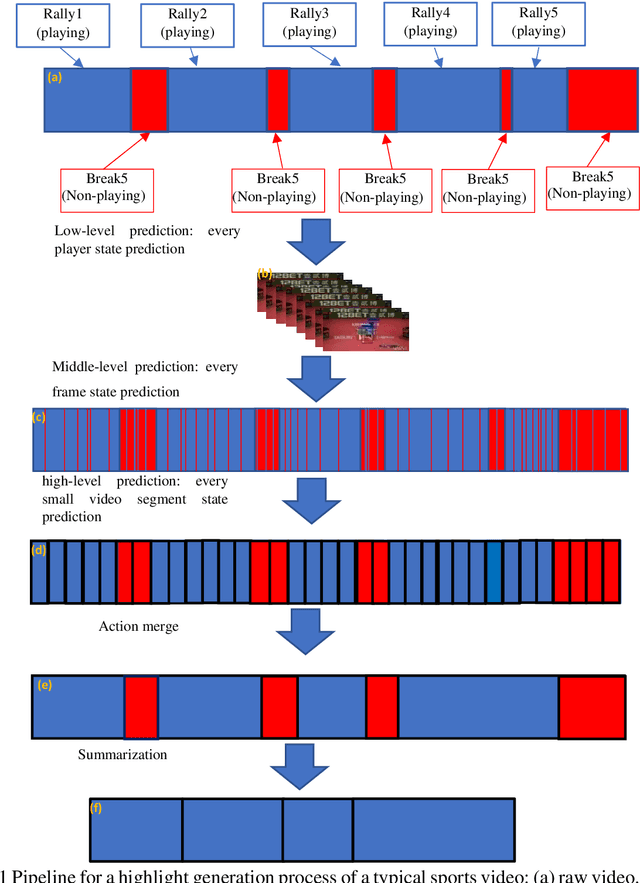
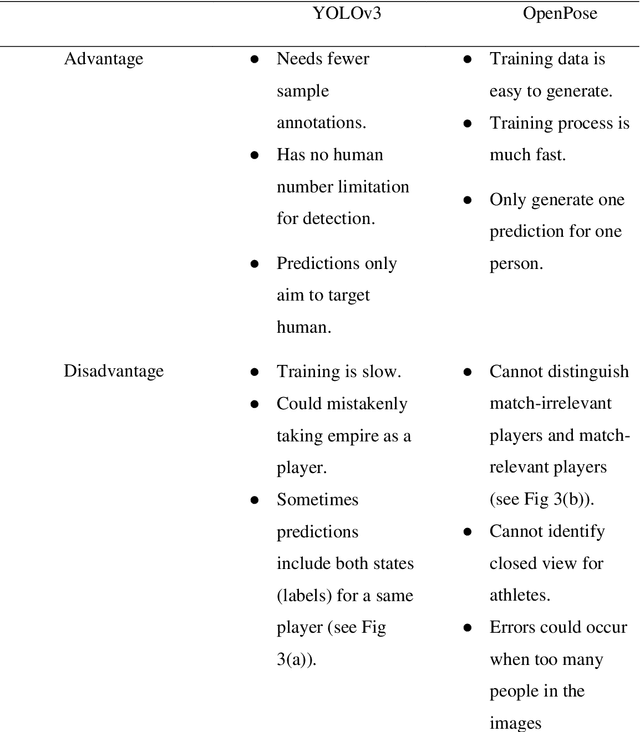
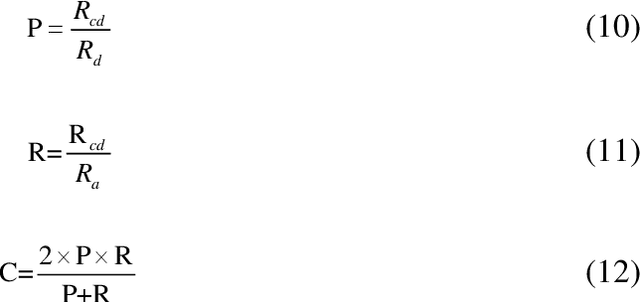
To date, machine learning for human action recognition in video has been widely implemented in sports activities. Although some studies have been successful in the past, precision is still the most significant concern. In this study, we present a high-accuracy framework to automatically clip the sports video stream by using a three-level prediction algorithm based on two classical open-source structures, i.e., YOLO-v3 and OpenPose. It is found that by using a modest amount of sports video training data, our methodology can perform sports activity highlights clipping accurately. Comparing with the previous systems, our methodology shows some advantages in accuracy. This study may serve as a new clipping system to extend the potential applications of the video summarization in sports field, as well as facilitates the development of match analysis system.