 Add to Chrome
 Add to Firefox
 Add to Edge
GeoFlow: Efficient Driving Video Generation via Geometry-Aligned Priors
Aug 12, 2026
Generative models like Diffusion Models and Flow Matching have demonstrated remarkable capabilities in synthesizing high-fidelity driving videos, but are severely constrained by high inference latency due to the requirement of extensive sampling steps. We argue that this inefficiency stems from the prevailing reliance on a standard Gaussian source distribution, where consecutive frames are initialized as independent Gaussian noise. This paradigm disregards the rich spatiotemporal correlations inherent in driving videos, compelling the model to regenerate deterministic scene structures existing in previous frames from noise, which is both computationally redundant and prone to geometric inconsistency. To address this problem, we propose GeoFlow, a novel framework designed to achieve efficient driving video generation by harnessing explicit geometric priors. Instead of sampling from standard Gaussian noise, we leverage multi-view geometry and spatially-adaptive noise injection to construct a Geometry-Aligned Prior (GAP) distribution as starting point. This initialization bridges the gap between source distribution and data distribution, yielding a significantly straighter and shorter sampling trajectory. Extensive experiments demonstrate that GeoFlow can achieve remarkable efficiency of both training and inference: merely several hours of fine-tuning on baseline models can significantly boost few-step generation quality, while fully converged training drastically reduces number of inference steps required for state-of-the-art video generation.

NeuroRefiner: Morphology-Aware Multi-Agent Refinement for 3D Fluorescence Microscopy Neuron Segmentation
Aug 10, 2026Accurate 3D neuron segmentation in fluorescence microscopy is critical for neuroscience. However, the sparse and elongated morphology of neurons poses significant challenges to existing segmentation methods. These methods struggle to preserve both local details and global topology, leading to fragmented results. To address this, we propose NeuroRefiner, a multi-agent system that formalizes the human expert workflow involving iterative global observation and local editing. Specifically, NeuroRefiner comprises three collaborative agents dedicated to diagnosing topological errors, generating correction instructions, and validating refinement quality. To facilitate agent instruction-guided segmentation refinement, we propose TopoRefineNet, a dedicated 3D U-Net-based tool that leverages cross-modality feature fusion to generate refined masks. Through multi-round agent reasoning and voxel-level editing, NeuroRefiner produces topologically more accurate segmentations with enhanced interpretability. Experiments on the BigNeuron, CWMBS, and ZBFWB datasets demonstrate that NeuroRefiner outperforms state-of-the-art methods, notably achieving a 3.02% improvement in F1 score on the challenging ZBFWB dataset.
REFLEX: Rethinking MoE Inference as Refinement-Aware Compute Allocation in Diffusion Language Models
Aug 03, 2026Mixture-of-experts (MoE) models increase parameter capacity by activating only a small subset of experts for each token. This conditional-computation paradigm has enabled autoregressive language models to scale model capacity without a proportional increase in per-token computation. In diffusion language models (DLMs), however, each denoising forward jointly revisits all token positions despite their sharply different refinement demands, while the default fixed token-choice routing assigns them a uniform expert budget, creating a mismatch between expert computation and refinement demand. We argue that MoE inference in DLMs should therefore be viewed as refinement-aware compute allocation across heterogeneous token refinement states. We propose REFLEX (\textbf{RE}finement-aware \textbf{FLEX}ible expert allocation), a training-free method that keeps the default router unchanged while reorganizing expert computation around the evolving refinement process. Specifically, REFLEX introduces a coarse-to-fine hierarchy for expert-budget allocation that aligns computation with block-relative refinement roles while using the Frontier-Progress Score to resolve active-block priorities. Across multiple widely used benchmarks on two representative MoE-based DLMs, LLaDA-MoE and LLaDA2.0-mini, REFLEX reduces allocated expert computation by 15\% on average while preserving or even improving generation quality on most benchmarks relative to default routing. Compared with autoregressive-style variable-expert routing methods, REFLEX also yields a more consistent quality--computation trade-off, further supporting the importance of allocating expert computation according to the heterogeneous refinement demands exposed within each denoising forward.
NeuroMamba: Multi-Perspective Feature Interaction with Visual Mamba for Neuron Segmentation
Jan 22, 2026Neuron segmentation is the cornerstone of reconstructing comprehensive neuronal connectomes, which is essential for deciphering the functional organization of the brain. The irregular morphology and densely intertwined structures of neurons make this task particularly challenging. Prevailing CNN-based methods often fail to resolve ambiguous boundaries due to the lack of long-range context, whereas Transformer-based methods suffer from boundary imprecision caused by the loss of voxel-level details during patch partitioning. To address these limitations, we propose NeuroMamba, a multi-perspective framework that exploits the linear complexity of Mamba to enable patch-free global modeling and synergizes this with complementary local feature modeling, thereby efficiently capturing long-range dependencies while meticulously preserving fine-grained voxel details. Specifically, we design a channel-gated Boundary Discriminative Feature Extractor (BDFE) to enhance local morphological cues. Complementing this, we introduce the Spatial Continuous Feature Extractor (SCFE), which integrates a resolution-aware scanning mechanism into the Visual Mamba architecture to adaptively model global dependencies across varying data resolutions. Finally, a cross-modulation mechanism synergistically fuses these multi-perspective features. Our method demonstrates state-of-the-art performance across four public EM datasets, validating its exceptional adaptability to both anisotropic and isotropic resolutions. The source code will be made publicly available.
Taking Notes Brings Focus? Towards Multi-Turn Multimodal Dialogue Learning
Mar 10, 2025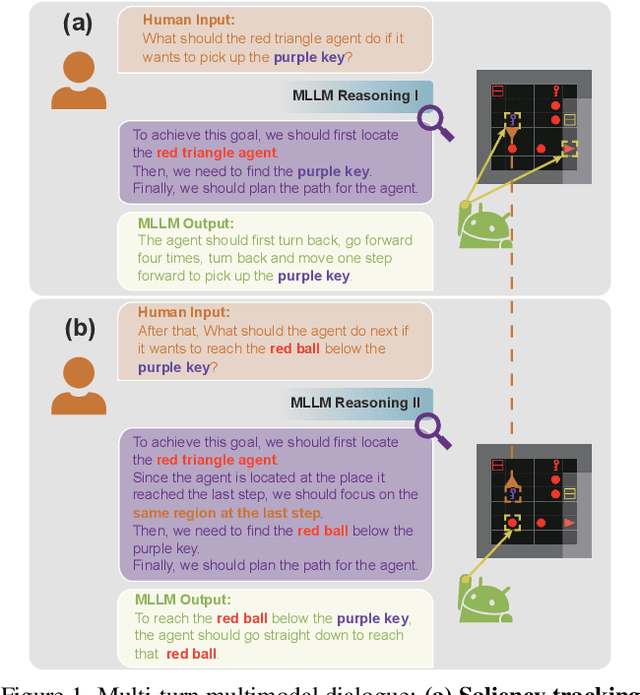
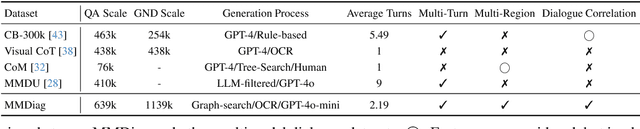
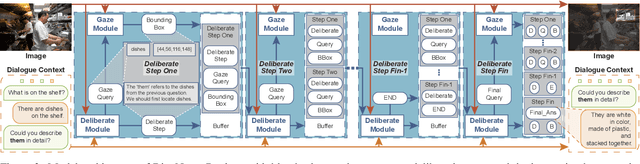
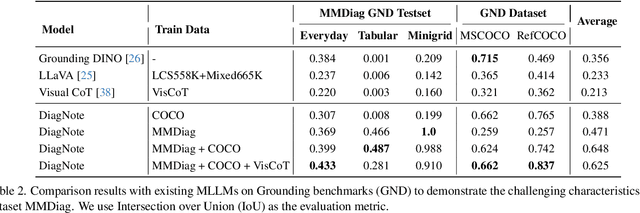
Multimodal large language models (MLLMs), built on large-scale pre-trained vision towers and language models, have shown great capabilities in multimodal understanding. However, most existing MLLMs are trained on single-turn vision question-answering tasks, which do not accurately reflect real-world human conversations. In this paper, we introduce MMDiag, a multi-turn multimodal dialogue dataset. This dataset is collaboratively generated through deliberately designed rules and GPT assistance, featuring strong correlations between questions, between questions and images, and among different image regions; thus aligning more closely with real-world scenarios. MMDiag serves as a strong benchmark for multi-turn multimodal dialogue learning and brings more challenges to the grounding and reasoning capabilities of MLLMs. Further, inspired by human vision processing, we present DiagNote, an MLLM equipped with multimodal grounding and reasoning capabilities. DiagNote consists of two modules (Deliberate and Gaze) interacting with each other to perform Chain-of-Thought and annotations respectively, throughout multi-turn dialogues. We empirically demonstrate the advantages of DiagNote in both grounding and jointly processing and reasoning with vision and language information over existing MLLMs.
Steve-Eye: Equipping LLM-based Embodied Agents with Visual Perception in Open Worlds
Oct 20, 2023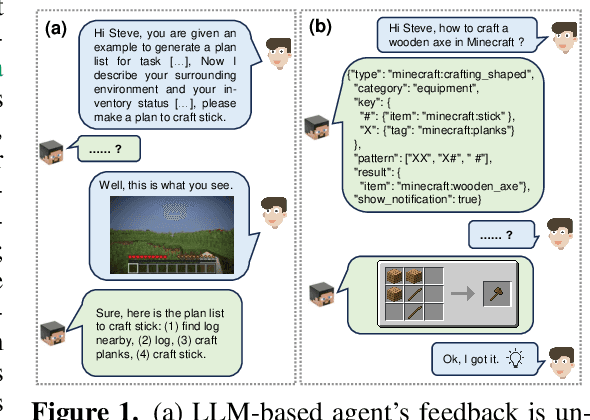
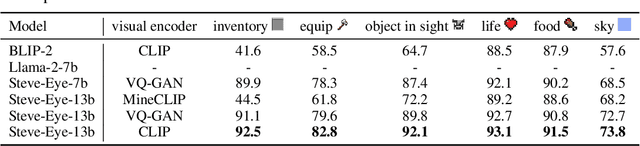
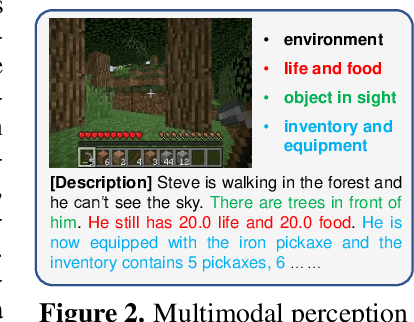

Recent studies have presented compelling evidence that large language models (LLMs) can equip embodied agents with the self-driven capability to interact with the world, which marks an initial step toward versatile robotics. However, these efforts tend to overlook the visual richness of open worlds, rendering the entire interactive process akin to "a blindfolded text-based game." Consequently, LLM-based agents frequently encounter challenges in intuitively comprehending their surroundings and producing responses that are easy to understand. In this paper, we propose Steve-Eye, an end-to-end trained large multimodal model designed to address this limitation. Steve-Eye integrates the LLM with a visual encoder which enables it to process visual-text inputs and generate multimodal feedback. In addition, we use a semi-automatic strategy to collect an extensive dataset comprising 850K open-world instruction pairs, empowering our model to encompass three essential functions for an agent: multimodal perception, foundational knowledge base, and skill prediction and planning. Lastly, we develop three open-world evaluation benchmarks, then carry out extensive experiments from a wide range of perspectives to validate our model's capability to strategically act and plan. Codes and datasets will be released.
LLaMA Rider: Spurring Large Language Models to Explore the Open World
Oct 13, 2023
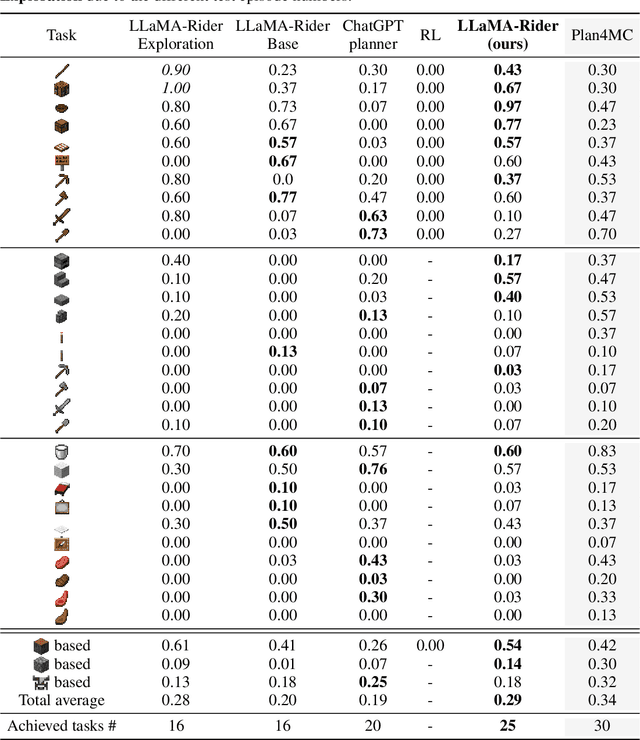


Recently, various studies have leveraged Large Language Models (LLMs) to help decision-making and planning in environments, and try to align the LLMs' knowledge with the world conditions. Nonetheless, the capacity of LLMs to continuously acquire environmental knowledge and adapt in an open world remains uncertain. In this paper, we propose an approach to spur LLMs to explore the open world, gather experiences, and learn to improve their task-solving capabilities. In this approach, a multi-round feedback-revision mechanism is utilized to encourage LLMs to actively select appropriate revision actions guided by feedback information from the environment. This facilitates exploration and enhances the model's performance. Besides, we integrate sub-task relabeling to assist LLMs in maintaining consistency in sub-task planning and help the model learn the combinatorial nature between tasks, enabling it to complete a wider range of tasks through training based on the acquired exploration experiences. By evaluation in Minecraft, an open-ended sandbox world, we demonstrate that our approach LLaMA-Rider enhances the efficiency of the LLM in exploring the environment, and effectively improves the LLM's ability to accomplish more tasks through fine-tuning with merely 1.3k instances of collected data, showing minimal training costs compared to the baseline using reinforcement learning.
Blind2Sound: Self-Supervised Image Denoising without Residual Noise
Mar 14, 2023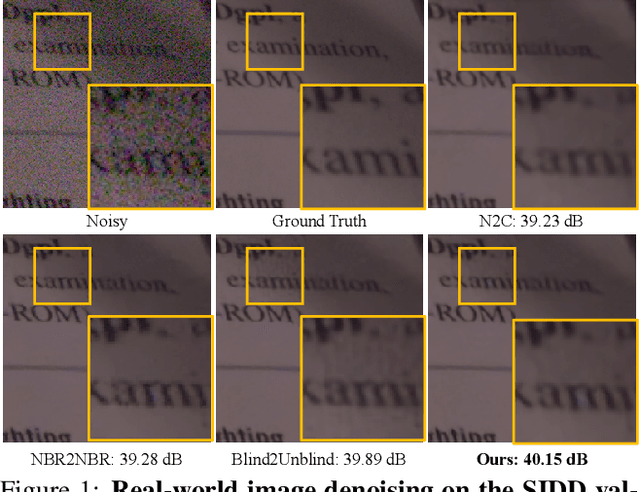
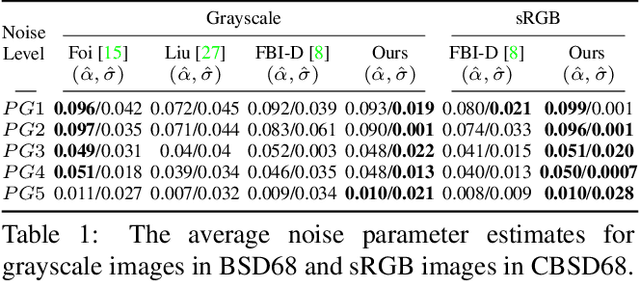
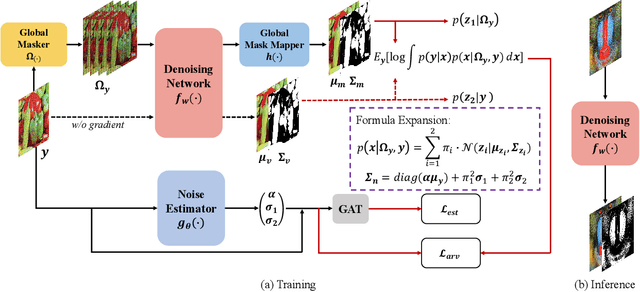
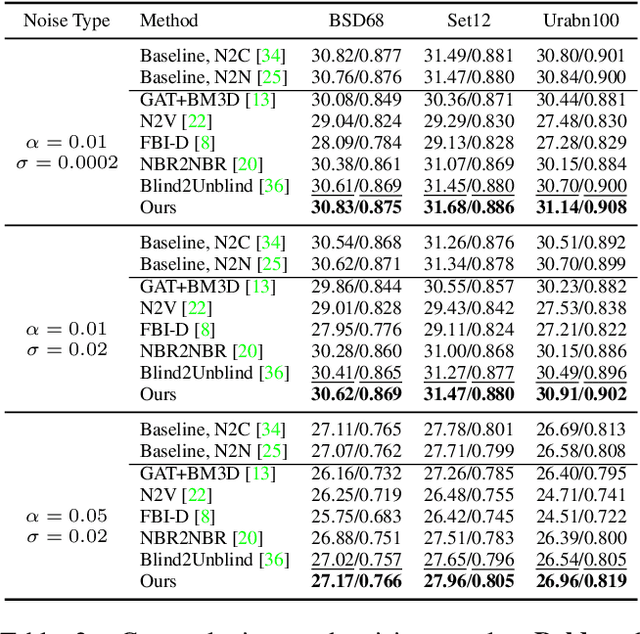
Self-supervised blind denoising for Poisson-Gaussian noise remains a challenging task. Pseudo-supervised pairs constructed from single noisy images re-corrupt the signal and degrade the performance. The visible blindspots solve the information loss in masked inputs. However, without explicitly noise sensing, mean square error as an objective function cannot adjust denoising intensities for dynamic noise levels, leading to noticeable residual noise. In this paper, we propose Blind2Sound, a simple yet effective approach to overcome residual noise in denoised images. The proposed adaptive re-visible loss senses noise levels and performs personalized denoising without noise residues while retaining the signal lossless. The theoretical analysis of intermediate medium gradients guarantees stable training, while the Cramer Gaussian loss acts as a regularization to facilitate the accurate perception of noise levels and improve the performance of the denoiser. Experiments on synthetic and real-world datasets show the superior performance of our method, especially for single-channel images.
Blind2Unblind: Self-Supervised Image Denoising with Visible Blind Spots
Mar 15, 2022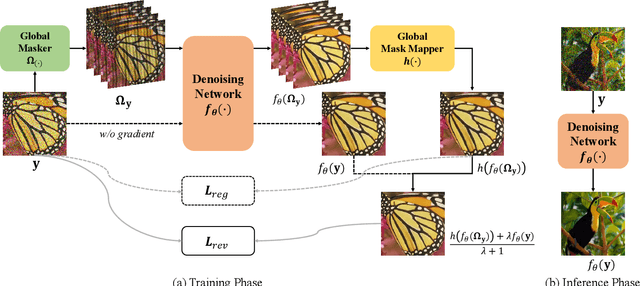
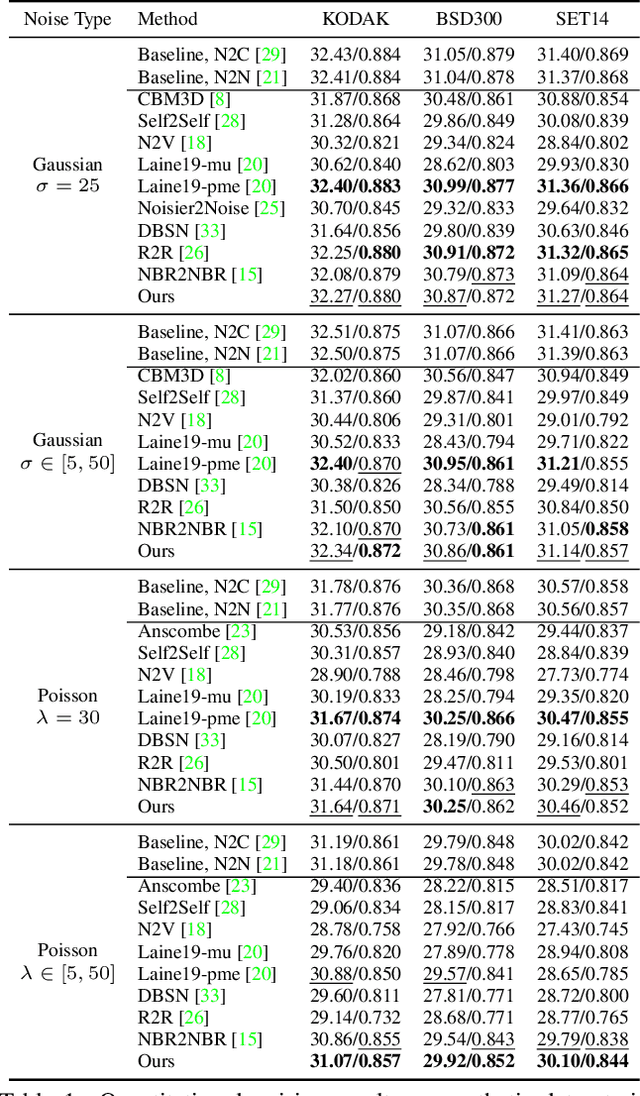
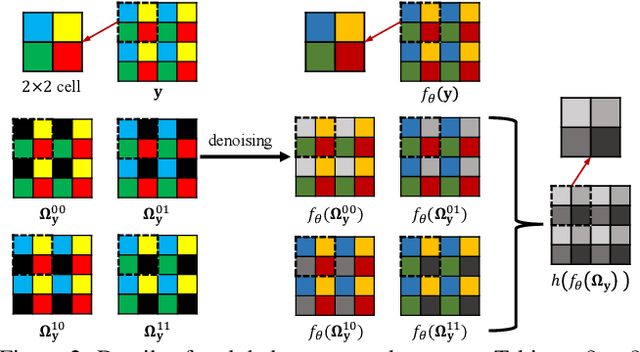
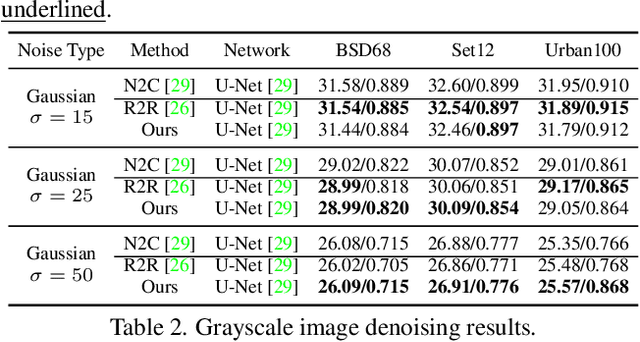
Real noisy-clean pairs on a large scale are costly and difficult to obtain. Meanwhile, supervised denoisers trained on synthetic data perform poorly in practice. Self-supervised denoisers, which learn only from single noisy images, solve the data collection problem. However, self-supervised denoising methods, especially blindspot-driven ones, suffer sizable information loss during input or network design. The absence of valuable information dramatically reduces the upper bound of denoising performance. In this paper, we propose a simple yet efficient approach called Blind2Unblind to overcome the information loss in blindspot-driven denoising methods. First, we introduce a global-aware mask mapper that enables global perception and accelerates training. The mask mapper samples all pixels at blind spots on denoised volumes and maps them to the same channel, allowing the loss function to optimize all blind spots at once. Second, we propose a re-visible loss to train the denoising network and make blind spots visible. The denoiser can learn directly from raw noise images without losing information or being trapped in identity mapping. We also theoretically analyze the convergence of the re-visible loss. Extensive experiments on synthetic and real-world datasets demonstrate the superior performance of our approach compared to previous work. Code is available at https://github.com/demonsjin/Blind2Unblind.