 Add to Chrome
 Add to Firefox
 Add to Edge
Beyond Global Routing Aggregation: Phase-Aware Expert Merging for MoE Vision-Language Models
Aug 05, 2026
Mixture-of-experts vision-language models (MoE-VLMs) increase model capacity with sparse expert activation, yet deployment requires storing the full expert pool. Training-free expert merging reduces this burden, and many routing-based methods aggregate routing statistics across all tokens to determine merge compatibility. However, MoE-VLM inference is phase-structured: image-context tokens carry visual content, question tokens specify the query, and answer tokens produce the output, with different counts and routing distributions. Because image-context tokens are far more numerous, global aggregation can overemphasize image-context processing and obscure phase-conditioned expert roles, making experts serving different phases appear interchangeable and degrading model performance. We therefore argue that MoE-VLM expert merging should preserve phase-conditioned expert roles, judging compatibility by how experts serve different phases rather than globally aggregated routing statistics. Based on this view, we propose RoleMerge, a training-free method that constructs each expert's Routing Role Profile (RRP) from phase-normalized routing statistics, capturing its relative phase preference. Guided by expert-phase information loss, RoleMerge merges experts with compatible profiles and their corresponding router entries while preserving answer-decoding expert distinctions. Experiments on three models and multiple benchmarks show that RoleMerge preserves more of the full model's performance than alternative expert-merging methods at matched expert-retention ratios, with relative improvements of up to 9.6 percent in six-task macro-average performance. These results validate phase-conditioned expert roles as a more effective basis than global routing aggregation for MoE-VLM expert merging.

REFLEX: Rethinking MoE Inference as Refinement-Aware Compute Allocation in Diffusion Language Models
Aug 03, 2026Mixture-of-experts (MoE) models increase parameter capacity by activating only a small subset of experts for each token. This conditional-computation paradigm has enabled autoregressive language models to scale model capacity without a proportional increase in per-token computation. In diffusion language models (DLMs), however, each denoising forward jointly revisits all token positions despite their sharply different refinement demands, while the default fixed token-choice routing assigns them a uniform expert budget, creating a mismatch between expert computation and refinement demand. We argue that MoE inference in DLMs should therefore be viewed as refinement-aware compute allocation across heterogeneous token refinement states. We propose REFLEX (\textbf{RE}finement-aware \textbf{FLEX}ible expert allocation), a training-free method that keeps the default router unchanged while reorganizing expert computation around the evolving refinement process. Specifically, REFLEX introduces a coarse-to-fine hierarchy for expert-budget allocation that aligns computation with block-relative refinement roles while using the Frontier-Progress Score to resolve active-block priorities. Across multiple widely used benchmarks on two representative MoE-based DLMs, LLaDA-MoE and LLaDA2.0-mini, REFLEX reduces allocated expert computation by 15\% on average while preserving or even improving generation quality on most benchmarks relative to default routing. Compared with autoregressive-style variable-expert routing methods, REFLEX also yields a more consistent quality--computation trade-off, further supporting the importance of allocating expert computation according to the heterogeneous refinement demands exposed within each denoising forward.
DAVET: Denoising-Aware Visual Evidence Trajectory Allocation for Diffusion Vision-Language Models
Aug 03, 2026Diffusion vision-language models (dVLMs) iteratively denoise masked responses while conditioning each denoising step on visual evidence, making visual conditioning a substantial recurring inference cost. Unlike autoregressive decoding, diffusion generation repeatedly revisits the entire response as uncertainty evolves. Our analysis reveals that visual evidence demand is strongly step-dependent, motivating adaptive allocation across denoising steps. Existing inference acceleration methods operate through decoding-side strategies or visual token compression via pruning and merging, but do not explicitly treat visual evidence as a resource whose demand evolves across the diffusion process. Therefore, we present Denoising-Aware Visual Evidence Trajectory Allocation (DAVET), a training-free framework that allocates visual evidence according to the evolving generation state. Starting from a phase-conditioned evidence trajectory, the proposed allocation policy uses operation demand to set an evidence reserve whose allocation at each denoising step is modulated by trajectory risk. DAVET realizes the resulting budgets through a hierarchy of evidence views constructed from a single visual encoding, separating when and how much evidence is needed from how the evidence views are constructed. Evaluated on two representative dVLMs, LLaDA-V and LaViDa, across multiple visual-understanding benchmarks, DAVET achieves an average speedup of 1.55$\times$ with an average relative performance drop of 1.86\%, showing that denoising-aware visual evidence allocation can reduce visual conditioning cost while largely preserving generation quality.
Is Your Model Thinking or Just Stagnating? PUMA: Diagnosing Reasoning Pathology via Phase-Momentum Alignment
Jul 19, 2026Test-time scaling empowers Large Reasoning Models (LRMs) to tackle complex tasks via extensive Chain-of-Thought (CoT). However, this often induces the "overthinking" paradox, where redundant reasoning increases computational overhead without guaranteeing accuracy. Existing test-time efficiency optimization methods primarily fall into two categories: information-theoretic approaches, which are prone to "deceptive convergence" where low uncertainty masks hallucinations, and latent representation analyses, which are often post-hoc, lacking the real-time sensitivity for dynamic reasoning. To bridge this gap, we first posit the Phase-Momentum Alignment Hypothesis, asserting that reasoning correctness hinges on the temporal synchronization between geometric momentum and uncertainty resolution. We then theoretically formulate the Cognitive-Energy Model to characterize these dynamics through two orthogonal dimensions: Geometric Cognitive Effort, quantified by latent velocity and tortuosity, and Entropic Cognitive Uncertainty. To operationalize this, we introduce PUMA (Phase-Uncertainty Momentum Alignment), a training-free framework employing a tiered diagnostic architecture. By coupling lightweight phase monitoring with event-triggered geometric analysis, PUMA effectively distinguishes active exploration from passive stagnation, enabling precise interventions through adaptive truncation or corrective measures. Extensive experiments on LRMs spanning 1.5B to 32B demonstrate that PUMA consistently outperforms state-of-the-art baselines across diverse benchmarks, achieving a superior accuracy-efficiency trade-off and robust cross-domain generalization.
Diversity-Driven Offline Multi-Objective Optimization via Nested Pareto Set Learning
Jun 13, 2026Multi-objective optimization (MOO) has emerged as a powerful approach to solving complex optimization problems involving multiple objectives. In many practical scenarios, function evaluations are unavailable or prohibitively expensive, necessitating optimization solely based on a fixed offline dataset. In this setting, known as offline MOO, the goal is to find out the Pareto set without access to the true objective functions. This setting suffers from the out-of-distribution (OOD) issue, where the surrogate model is not accurate for unseen designs. Due to the OOD issue, surrogate errors may cause the optimizer to select solutions that do not lie on the true Pareto front and are biased toward its extremes. To address this, this paper proposes Diversity-driven Offline Multi-Objective Optimization (DOMOO), which aims to find out a diverse and high-quality set of solutions. First, DOMOO incorporates an accumulative risk control module that estimates the potential risk of candidate solutions and alleviates the OOD issue between the training data and the generated solutions. In addition, a nested Pareto set learning (PSL) strategy is proposed to jointly learn preference and PSL parameters, then optimize them, enabling adaptation to diverse Pareto front geometries. To further enhance solution quality, we design a diversity-driven selection strategy that extracts a representative and well-distributed set of final solutions. To achieve this diversity-driven selection strategy, we propose $\text{IGD}_\text{offline}$, a tailored indicator for the offline setting that considers both diversity and convergence, and avoids the bias of hypervolume indicator. Extensive experiments on synthetic and real-world benchmarks show that DOMOO achieves the best average rank across tasks in both convergence and diversity among the compared methods.
Automated Random Embedding for Practical Bayesian Optimization with Unknown Effective Dimension
May 25, 2026Bayesian optimization is widely employed for optimizing complex black-box functions but struggles with the curse of dimensionality. Random embedding, as a dimension reduction strategy, simplifies tasks that possess the effective dimension by optimizing within a low-dimensional subspace. However, determining the effective dimension of a task in advance remains a significant challenge, which influences the selection of the subspace dimensionality and the optimization performance. Traditional methods use fixed subspace dimensions provided by experts or rely on trial and error to estimate subspace dimensions with resources consumed. To this end, this paper proposes an automated random embedding for high-dimensional Bayesian optimization with unknown effective dimension, called Dynamic Shared Embedding Bayesian Optimization (DSEBO). DSEBO starts with a low dimension and switches to a higher subspace if the solutions in the current subspace show preliminary convergence. DSEBO dynamically determines the dimension of the next subspace based on the quality of the solutions in different subspaces and shares the queried solutions with the new subspace for a better initialization. Theoretically, we derive a regret bound for DSEBO and demonstrate that DSEBO can better balance approximation and optimization errors. Extensive experiments on functions with dimensionality of varying magnitudes and real-world tasks with unknown effective dimensions reveal that, compared with state-of-the-art methods, alternating optimization across different subspaces results in significant improvements in high-dimensional optimization, both in terms of optimization regret and time.
Surg-R1: A Hierarchical Reasoning Foundation Model for Scalable and Interpretable Surgical Decision Support with Multi-Center Clinical Validation
Mar 12, 2026Surgical scene understanding demands not only accurate predictions but also interpretable reasoning that surgeons can verify against clinical expertise. However, existing surgical vision-language models generate predictions without reasoning chains, and general-purpose reasoning models fail on compositional surgical tasks without domain-specific knowledge. We present Surg-R1, a surgical Vision-Language Model that addresses this gap through hierarchical reasoning trained via a four-stage pipeline. Our approach introduces three key contributions: (1) a three-level reasoning hierarchy decomposing surgical interpretation into perceptual grounding, relational understanding, and contextual reasoning; (2) the largest surgical chain-of-thought dataset with 320,000 reasoning pairs; and (3) a four-stage training pipeline progressing from supervised fine-tuning to group relative policy optimization and iterative self-improvement. Evaluation on SurgBench, comprising six public benchmarks and six multi-center external validation datasets from five institutions, demonstrates that Surg-R1 achieves the highest Arena Score (64.9%) on public benchmarks versus Gemini 3.0 Pro (46.1%) and GPT-5.1 (37.9%), outperforming both proprietary reasoning models and specialized surgical VLMs on the majority of tasks spanning instrument localization, triplet recognition, phase recognition, action recognition, and critical view of safety assessment, with a 15.2 percentage point improvement over the strongest surgical baseline on external validation.
USTC-KXDIGIT System Description for ASVspoof5 Challenge
Sep 03, 2024
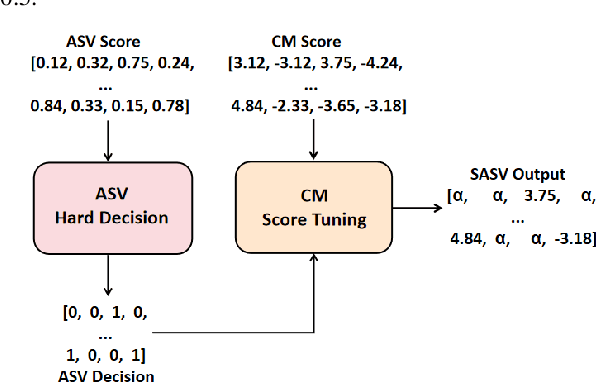
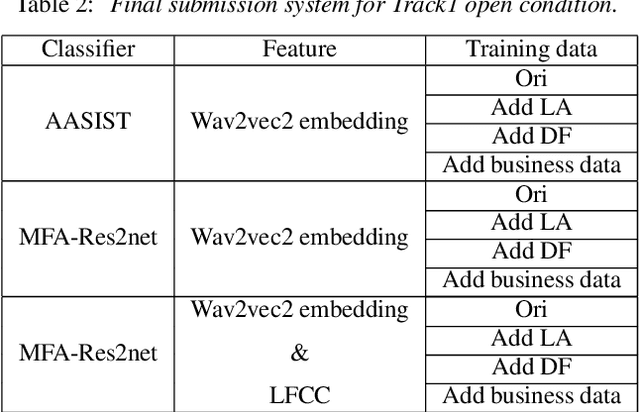
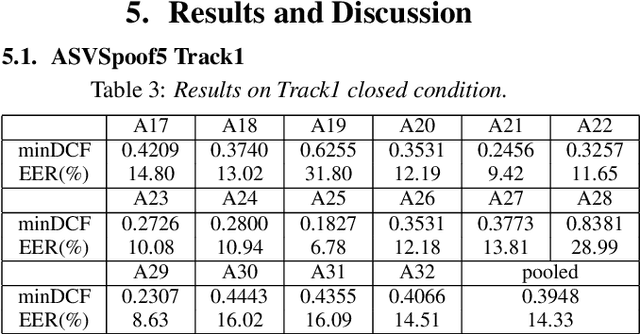
This paper describes the USTC-KXDIGIT system submitted to the ASVspoof5 Challenge for Track 1 (speech deepfake detection) and Track 2 (spoofing-robust automatic speaker verification, SASV). Track 1 showcases a diverse range of technical qualities from potential processing algorithms and includes both open and closed conditions. For these conditions, our system consists of a cascade of a frontend feature extractor and a back-end classifier. We focus on extensive embedding engineering and enhancing the generalization of the back-end classifier model. Specifically, the embedding engineering is based on hand-crafted features and speech representations from a self-supervised model, used for closed and open conditions, respectively. To detect spoof attacks under various adversarial conditions, we trained multiple systems on an augmented training set. Additionally, we used voice conversion technology to synthesize fake audio from genuine audio in the training set to enrich the synthesis algorithms. To leverage the complementary information learned by different model architectures, we employed activation ensemble and fused scores from different systems to obtain the final decision score for spoof detection. During the evaluation phase, the proposed methods achieved 0.3948 minDCF and 14.33% EER in the close condition, and 0.0750 minDCF and 2.59% EER in the open condition, demonstrating the robustness of our submitted systems under adversarial conditions. In Track 2, we continued using the CM system from Track 1 and fused it with a CNN-based ASV system. This approach achieved 0.2814 min-aDCF in the closed condition and 0.0756 min-aDCF in the open condition, showcasing superior performance in the SASV system.