 Add to Chrome
 Add to Firefox
 Add to Edge
Open3DVQA: A Benchmark for Comprehensive Spatial Reasoning with Multimodal Large Language Model in Open Space
Mar 14, 2025
Spatial reasoning is a fundamental capability of embodied agents and has garnered widespread attention in the field of multimodal large language models (MLLMs). In this work, we propose a novel benchmark, Open3DVQA, to comprehensively evaluate the spatial reasoning capacities of current state-of-the-art (SOTA) foundation models in open 3D space. Open3DVQA consists of 9k VQA samples, collected using an efficient semi-automated tool in a high-fidelity urban simulator. We evaluate several SOTA MLLMs across various aspects of spatial reasoning, such as relative and absolute spatial relationships, situational reasoning, and object-centric spatial attributes. Our results reveal that: 1) MLLMs perform better at answering questions regarding relative spatial relationships than absolute spatial relationships, 2) MLLMs demonstrate similar spatial reasoning abilities for both egocentric and allocentric perspectives, and 3) Fine-tuning large models significantly improves their performance across different spatial reasoning tasks. We believe that our open-source data collection tools and in-depth analyses will inspire further research on MLLM spatial reasoning capabilities. The benchmark is available at https://github.com/WeichenZh/Open3DVQA.

UrbanVideo-Bench: Benchmarking Vision-Language Models on Embodied Intelligence with Video Data in Urban Spaces
Mar 08, 2025Large multimodal models exhibit remarkable intelligence, yet their embodied cognitive abilities during motion in open-ended urban 3D space remain to be explored. We introduce a benchmark to evaluate whether video-large language models (Video-LLMs) can naturally process continuous first-person visual observations like humans, enabling recall, perception, reasoning, and navigation. We have manually control drones to collect 3D embodied motion video data from real-world cities and simulated environments, resulting in 1.5k video clips. Then we design a pipeline to generate 5.2k multiple-choice questions. Evaluations of 17 widely-used Video-LLMs reveal current limitations in urban embodied cognition. Correlation analysis provides insight into the relationships between different tasks, showing that causal reasoning has a strong correlation with recall, perception, and navigation, while the abilities for counterfactual and associative reasoning exhibit lower correlation with other tasks. We also validate the potential for Sim-to-Real transfer in urban embodiment through fine-tuning.
A Survey of Large Language Model Empowered Agents for Recommendation and Search: Towards Next-Generation Information Retrieval
Mar 07, 2025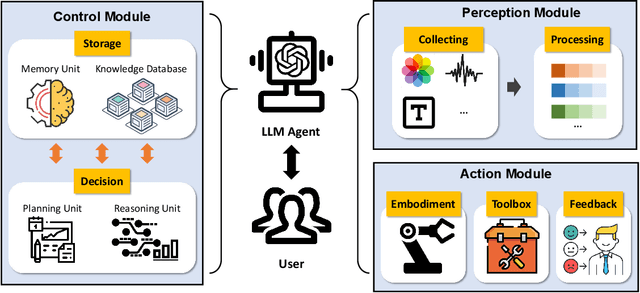
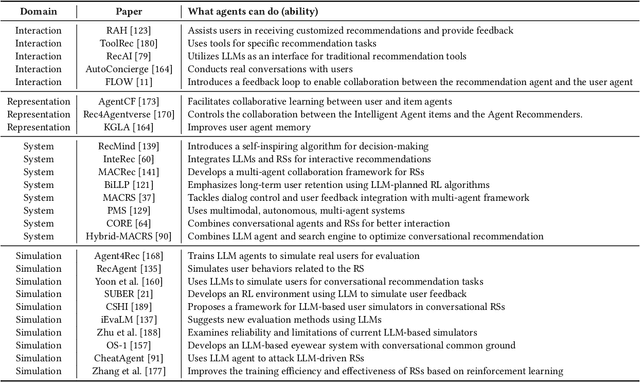
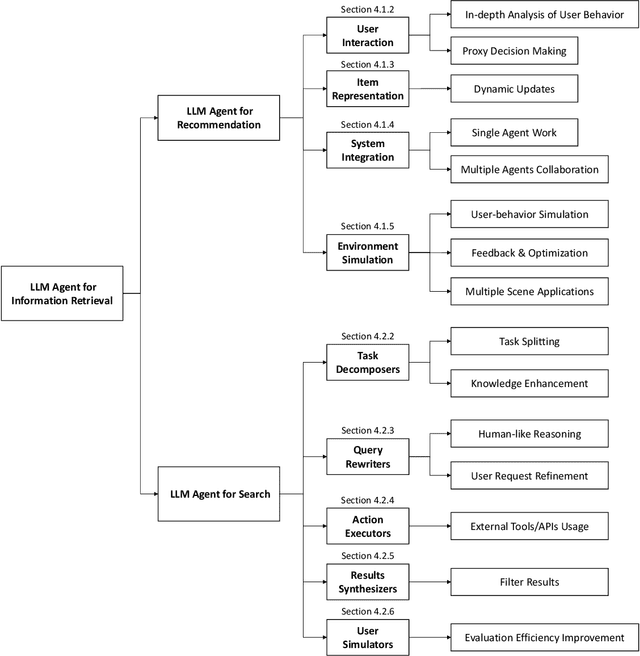
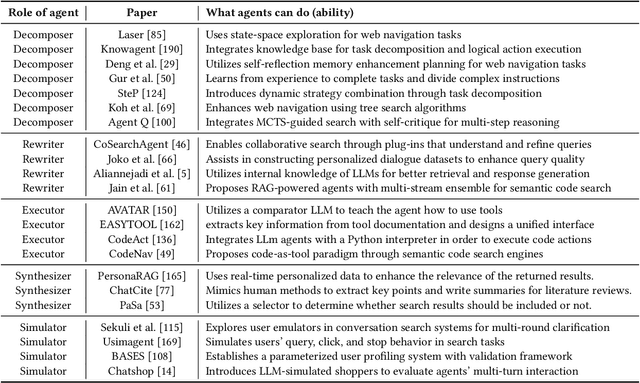
Information technology has profoundly altered the way humans interact with information. The vast amount of content created, shared, and disseminated online has made it increasingly difficult to access relevant information. Over the past two decades, search and recommendation systems (collectively referred to as information retrieval systems) have evolved significantly to address these challenges. Recent advances in large language models (LLMs) have demonstrated capabilities that surpass human performance in various language-related tasks and exhibit general understanding, reasoning, and decision-making abilities. This paper explores the transformative potential of large language model agents in enhancing search and recommendation systems. We discuss the motivations and roles of LLM agents, and establish a classification framework to elaborate on the existing research. We highlight the immense potential of LLM agents in addressing current challenges in search and recommendation, providing insights into future research directions. This paper is the first to systematically review and classify the research on LLM agents in these domains, offering a novel perspective on leveraging this advanced AI technology for information retrieval. To help understand the existing works, we list the existing papers on agent-based simulation with large language models at this link: https://github.com/tsinghua-fib-lab/LLM-Agent-for-Recommendation-and-Search.
Defining and Evaluating Visual Language Models' Basic Spatial Abilities: A Perspective from Psychometrics
Feb 20, 2025The Theory of Multiple Intelligences underscores the hierarchical nature of cognitive capabilities. To advance Spatial Artificial Intelligence, we pioneer a psychometric framework defining five Basic Spatial Abilities (BSAs) in Visual Language Models (VLMs): Spatial Perception, Spatial Relation, Spatial Orientation, Mental Rotation, and Spatial Visualization. Benchmarking 13 mainstream VLMs through nine validated psychometric experiments reveals significant gaps versus humans (average score 24.95 vs. 68.38), with three key findings: 1) VLMs mirror human hierarchies (strongest in 2D orientation, weakest in 3D rotation) with independent BSAs (Pearson's r<0.4); 2) Smaller models such as Qwen2-VL-7B surpass larger counterparts, with Qwen leading (30.82) and InternVL2 lagging (19.6); 3) Interventions like chain-of-thought (0.100 accuracy gain) and 5-shot training (0.259 improvement) show limits from architectural constraints. Identified barriers include weak geometry encoding and missing dynamic simulation. By linking psychometric BSAs to VLM capabilities, we provide a diagnostic toolkit for spatial intelligence evaluation, methodological foundations for embodied AI development, and a cognitive science-informed roadmap for achieving human-like spatial intelligence.
CityEQA: A Hierarchical LLM Agent on Embodied Question Answering Benchmark in City Space
Feb 20, 2025Embodied Question Answering (EQA) has primarily focused on indoor environments, leaving the complexities of urban settings - spanning environment, action, and perception - largely unexplored. To bridge this gap, we introduce CityEQA, a new task where an embodied agent answers open-vocabulary questions through active exploration in dynamic city spaces. To support this task, we present CityEQA-EC, the first benchmark dataset featuring 1,412 human-annotated tasks across six categories, grounded in a realistic 3D urban simulator. Moreover, we propose Planner-Manager-Actor (PMA), a novel agent tailored for CityEQA. PMA enables long-horizon planning and hierarchical task execution: the Planner breaks down the question answering into sub-tasks, the Manager maintains an object-centric cognitive map for spatial reasoning during the process control, and the specialized Actors handle navigation, exploration, and collection sub-tasks. Experiments demonstrate that PMA achieves 60.7% of human-level answering accuracy, significantly outperforming frontier-based baselines. While promising, the performance gap compared to humans highlights the need for enhanced visual reasoning in CityEQA. This work paves the way for future advancements in urban spatial intelligence. Dataset and code are available at https://github.com/BiluYong/CityEQA.git.
PLPHP: Per-Layer Per-Head Vision Token Pruning for Efficient Large Vision-Language Models
Feb 20, 2025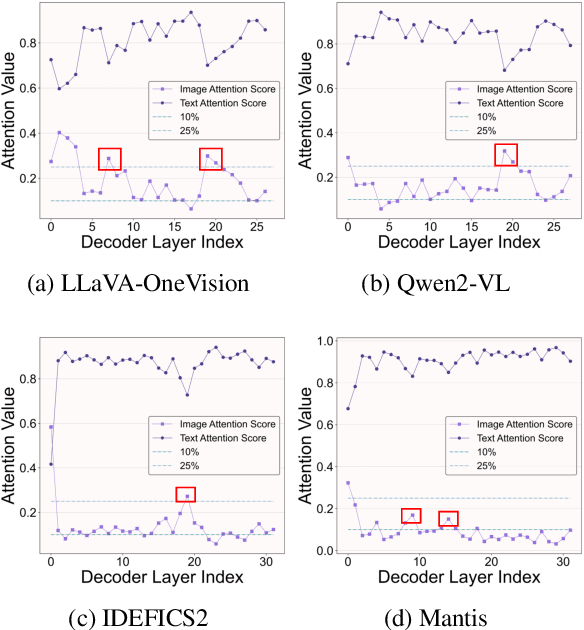
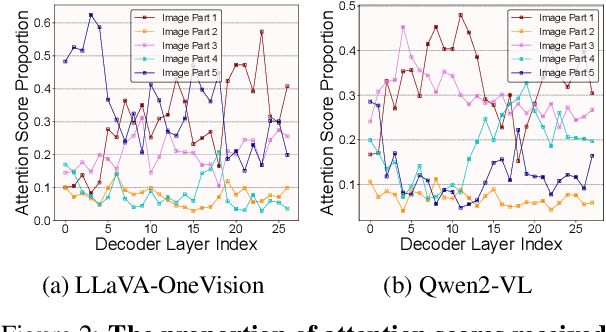
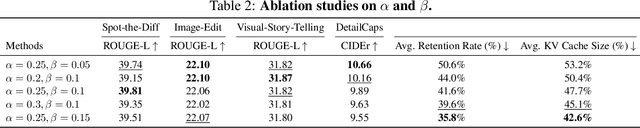
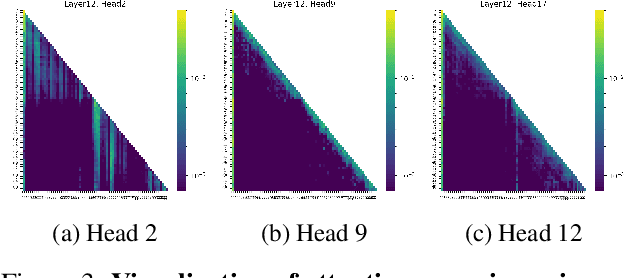
Large Vision-Language Models (LVLMs) have demonstrated remarkable capabilities across a range of multimodal tasks. However, their inference efficiency is constrained by the large number of visual tokens processed during decoding. To address this challenge, we propose Per-Layer Per-Head Vision Token Pruning (PLPHP), a two-level fine-grained pruning method including Layer-Level Retention Rate Allocation and Head-Level Vision Token Pruning. Motivated by the Vision Token Re-attention phenomenon across decoder layers, we dynamically adjust token retention rates layer by layer. Layers that exhibit stronger attention to visual information preserve more vision tokens, while layers with lower vision attention are aggressively pruned. Furthermore, PLPHP applies pruning at the attention head level, enabling different heads within the same layer to independently retain critical context. Experiments on multiple benchmarks demonstrate that PLPHP delivers an 18% faster decoding speed and reduces the Key-Value Cache (KV Cache) size by over 50%, all at the cost of 0.46% average performance drop, while also achieving notable performance improvements in multi-image tasks. These results highlight the effectiveness of fine-grained token pruning and contribute to advancing the efficiency and scalability of LVLMs. Our source code will be made publicly available.
Understanding and Evaluating Hallucinations in 3D Visual Language Models
Feb 18, 2025Recently, 3D-LLMs, which combine point-cloud encoders with large models, have been proposed to tackle complex tasks in embodied intelligence and scene understanding. In addition to showing promising results on 3D tasks, we found that they are significantly affected by hallucinations. For instance, they may generate objects that do not exist in the scene or produce incorrect relationships between objects. To investigate this issue, this work presents the first systematic study of hallucinations in 3D-LLMs. We begin by quickly evaluating hallucinations in several representative 3D-LLMs and reveal that they are all significantly affected by hallucinations. We then define hallucinations in 3D scenes and, through a detailed analysis of datasets, uncover the underlying causes of these hallucinations. We find three main causes: (1) Uneven frequency distribution of objects in the dataset. (2) Strong correlations between objects. (3) Limited diversity in object attributes. Additionally, we propose new evaluation metrics for hallucinations, including Random Point Cloud Pair and Opposite Question Evaluations, to assess whether the model generates responses based on visual information and aligns it with the text's meaning.
AgentSociety: Large-Scale Simulation of LLM-Driven Generative Agents Advances Understanding of Human Behaviors and Society
Feb 12, 2025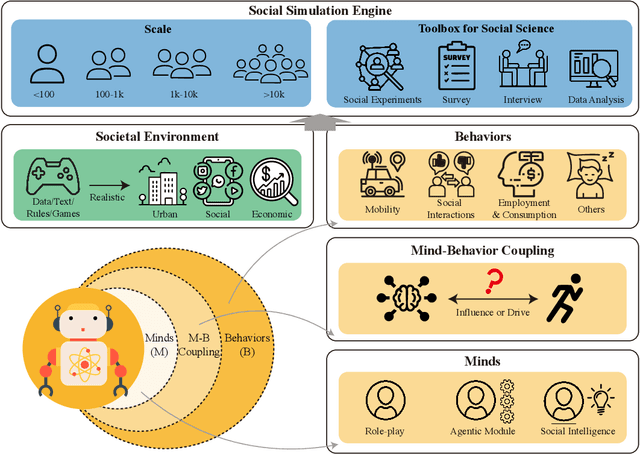
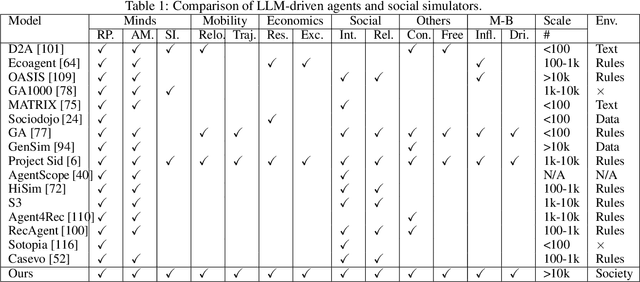
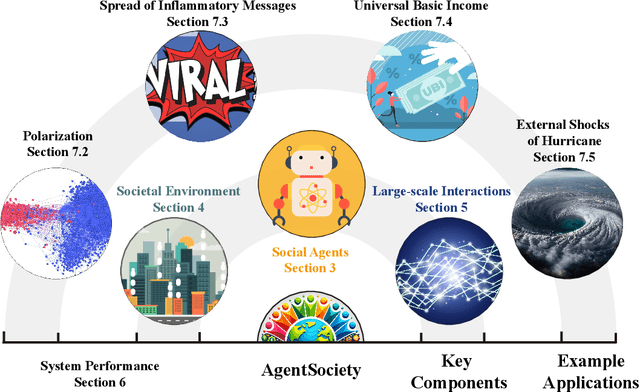
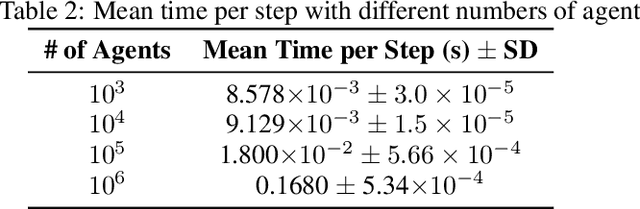
Understanding human behavior and society is a central focus in social sciences, with the rise of generative social science marking a significant paradigmatic shift. By leveraging bottom-up simulations, it replaces costly and logistically challenging traditional experiments with scalable, replicable, and systematic computational approaches for studying complex social dynamics. Recent advances in large language models (LLMs) have further transformed this research paradigm, enabling the creation of human-like generative social agents and realistic simulacra of society. In this paper, we propose AgentSociety, a large-scale social simulator that integrates LLM-driven agents, a realistic societal environment, and a powerful large-scale simulation engine. Based on the proposed simulator, we generate social lives for over 10k agents, simulating their 5 million interactions both among agents and between agents and their environment. Furthermore, we explore the potential of AgentSociety as a testbed for computational social experiments, focusing on four key social issues: polarization, the spread of inflammatory messages, the effects of universal basic income policies, and the impact of external shocks such as hurricanes. These four issues serve as valuable cases for assessing AgentSociety's support for typical research methods -- such as surveys, interviews, and interventions -- as well as for investigating the patterns, causes, and underlying mechanisms of social issues. The alignment between AgentSociety's outcomes and real-world experimental results not only demonstrates its ability to capture human behaviors and their underlying mechanisms, but also underscores its potential as an important platform for social scientists and policymakers.
Towards Large Reasoning Models: A Survey on Scaling LLM Reasoning Capabilities
Jan 17, 2025

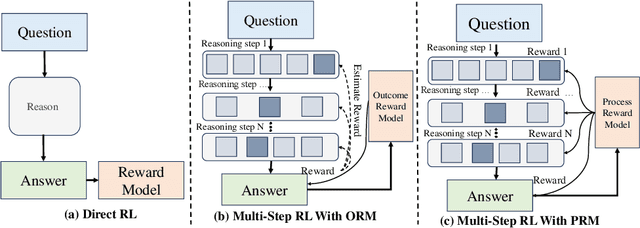

Language has long been conceived as an essential tool for human reasoning. The breakthrough of Large Language Models (LLMs) has sparked significant research interest in leveraging these models to tackle complex reasoning tasks. Researchers have moved beyond simple autoregressive token generation by introducing the concept of "thought" -- a sequence of tokens representing intermediate steps in the reasoning process. This innovative paradigm enables LLMs' to mimic complex human reasoning processes, such as tree search and reflective thinking. Recently, an emerging trend of learning to reason has applied reinforcement learning (RL) to train LLMs to master reasoning processes. This approach enables the automatic generation of high-quality reasoning trajectories through trial-and-error search algorithms, significantly expanding LLMs' reasoning capacity by providing substantially more training data. Furthermore, recent studies demonstrate that encouraging LLMs to "think" with more tokens during test-time inference can further significantly boost reasoning accuracy. Therefore, the train-time and test-time scaling combined to show a new research frontier -- a path toward Large Reasoning Model. The introduction of OpenAI's o1 series marks a significant milestone in this research direction. In this survey, we present a comprehensive review of recent progress in LLM reasoning. We begin by introducing the foundational background of LLMs and then explore the key technical components driving the development of large reasoning models, with a focus on automated data construction, learning-to-reason techniques, and test-time scaling. We also analyze popular open-source projects at building large reasoning models, and conclude with open challenges and future research directions.
A Survey on Responsible LLMs: Inherent Risk, Malicious Use, and Mitigation Strategy
Jan 16, 2025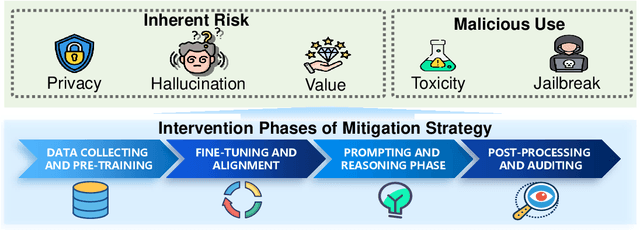
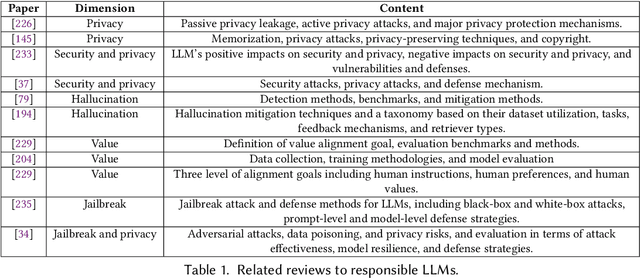
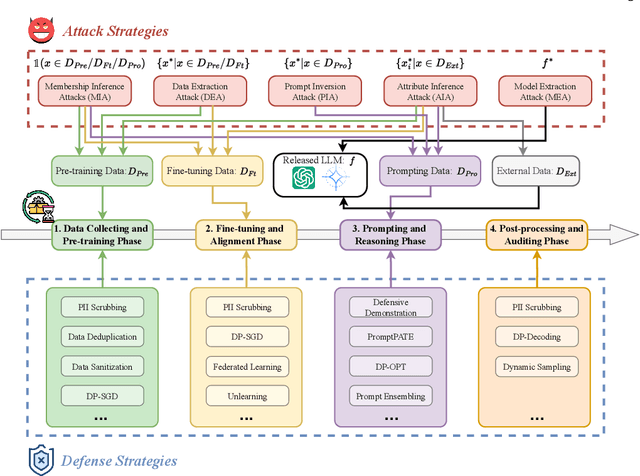
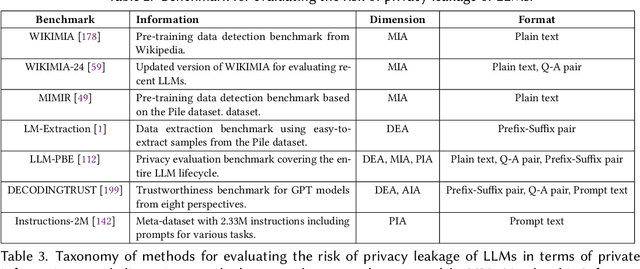
While large language models (LLMs) present significant potential for supporting numerous real-world applications and delivering positive social impacts, they still face significant challenges in terms of the inherent risk of privacy leakage, hallucinated outputs, and value misalignment, and can be maliciously used for generating toxic content and unethical purposes after been jailbroken. Therefore, in this survey, we present a comprehensive review of recent advancements aimed at mitigating these issues, organized across the four phases of LLM development and usage: data collecting and pre-training, fine-tuning and alignment, prompting and reasoning, and post-processing and auditing. We elaborate on the recent advances for enhancing the performance of LLMs in terms of privacy protection, hallucination reduction, value alignment, toxicity elimination, and jailbreak defenses. In contrast to previous surveys that focus on a single dimension of responsible LLMs, this survey presents a unified framework that encompasses these diverse dimensions, providing a comprehensive view of enhancing LLMs to better serve real-world applications.