 Add to Chrome
 Add to Firefox
 Add to Edge
The Model's Tell: Measuring Context-Leakage Attack Signals with Behavior Gauges
Aug 18, 2026
LLMs increasingly rely on external contexts, such as pre-defined system prompts or retrieved documents, to improve generation quality. However, processing these contexts alongside user queries creates an attack surface: adversarial inputs can induce models to disclose them. Prior probing studies suggest that leakage-related signals emerge in hidden states, yet the need to extract these states poses additional deployment challenges. In this paper, we explore whether this internal signal leaves a more accessible ``tell'' before decoding. We propose LeakGauge, which probes this response by appending a suffix that gauges leakage behavior and mapping its prefill token probabilities to an attack-risk score. While a direct gauge uses the initial tokens of confidential content, we find that a content-agnostic one that verbalizes leakage behavior yields more robust signals. Across 11 LLMs, including GLM-5.2 (753B) and Kimi-K3 (2.8T), LeakGauge reaches an AUROC range of 0.944--0.996 on unseen attacks. The signal remains stable when the content changes language or the attack shifts from verbatim to semantic disclosure. By activation-steering interventions, we further show that the risk score is sensitive to an internal leakage-related direction, relating the observable signal to the model's internal representation. In addition, LeakGauge enables an input detector with fewer than 0.5K extra parameters and added latency of 10.34 ms. Code: \href{https://github.com/yeasen-z/LeakGauge}.

Your Agentic LLMs Secretly Encode Latent Signals of Indirect Prompt-Injection Exposure
Aug 01, 2026Agentic LLMs are vulnerable to indirect prompt injection (IPI) attacks, e.g., malicious side-tasks hidden in external tool results. While many efforts have sought to address the threats, little is known about the internals of agentic LLMs when they are exposed to IPI attacks, a condition which we call IPI exposure. In this paper, we study this problem in depth from three aspects. (1) Probing: Across six models, including the giant 753B-parameter GLM-5.2, simple linear probes trained on pre-generation hidden states can predict LLMs' IPI exposure. These probes achieve 90%+ AUROC on unseen attacks, agent instructions, and task suites; they exhibit high robustness under adaptive attacks and in cross-lingual settings. (2) Defense: Our CoT measurement reveals a recognition--action gap: though models encode such signals, they often fail to translate them into safe actions. We then introduce AGRI, a probe-gated reasoning-based defense that prepends anti-injection reasoning on demand. On difficult AgentDojo settings, AGRI substantially reduces attack success rate, e.g., from 34.6% to 0% on Qwen3.5-27B, while largely maintaining clean-task utility. (3) Explanation: We introduce an analysis framework that identifies natural-language explanations most strongly correlated with probe-captured signals. The resulting profiles differ across models: latent signals can align with either direct IPI-exposure claims or indirect operational cues. Code is available: https://github.com/jianshuod/IPI-exposure-signal.
ICME 2026 Grand Challenge on Cross-Scenario Defect Detection and Fine-Grained Severity Grading for High-Precision Manufacturing
Jul 06, 2026This paper presents the IEEE International Conference on Multimedia and Expo (ICME) 2026 Grand Challenge on Cross-Scenario Defect Detection and Fine-Grained Severity Grading for High-Precision Manufacturing. The challenge is motivated by two key limitations of existing industrial defect inspection systems: (1) current deep learning-based methods often suffer significant performance degradation when deployed in unseen production scenarios, and (2) most benchmarks neglect severity-aware assessment, which is critical for risk control and yield optimization. To address these limitations, we design two complementary tracks: Track 1 (Cross-Scenario Defect Detection) targets accurate defect detection, localization, and classification across diverse unseen production environments; Track 2 (Fine-Grained Severity Grading) requires assigning each detected defect an industry-standard severity level, including Acceptable, Marginal NG, NG, and Gross NG. We construct a large-scale industrial dataset of high-resolution microscopic images spanning seven representative defect categories, comprising over 3,800 images with pixel-level instance annotations for Track 1 and over 2,600 images with severity-grade labels for Track 2. The challenge attracted 86 registered participants with 130 submissions; during the final testing phase, 21 teams submitted results and 12 teams provided models with technical reports. The resulting benchmark, together with the diverse and effective solutions contributed by participating teams, sets a new standard for industrial defect analysis research.
LeakDojo: Decoding the Leakage Threats of RAG Systems
May 07, 2026Retrieval-Augmented Generation (RAG) enables large language models (LLMs) to leverage external knowledge, but also exposes valuable RAG databases to leakage attacks. As RAG systems grow more complex and LLMs exhibit stronger instruction-following capabilities, existing studies fall short of systematically assessing RAG leakage risks. We present LeakDojo, a configurable framework for controlled evaluation of RAG leakage. Using LeakDojo, we benchmark six existing attacks across fourteen LLMs, four datasets, and diverse RAG systems. Our study reveals that (1) query generation and adversarial instructions contribute independently to leakage, with overall leakage well approximated by their product; (2) stronger instruction-following capability correlates with higher leakage risk; and (3) improvements in RAG faithfulness can introduce increased leakage risk. These findings provide actionable insights for understanding and mitigating RAG leakage in practice. Our codebase is available at https://github.com/yeasen-z/LeakDojo.
Wavelet-guided Misalignment-aware Network for Visible-Infrared Object Detection
Jul 27, 2025Visible-infrared object detection aims to enhance the detection robustness by exploiting the complementary information of visible and infrared image pairs. However, its performance is often limited by frequent misalignments caused by resolution disparities, spatial displacements, and modality inconsistencies. To address this issue, we propose the Wavelet-guided Misalignment-aware Network (WMNet), a unified framework designed to adaptively address different cross-modal misalignment patterns. WMNet incorporates wavelet-based multi-frequency analysis and modality-aware fusion mechanisms to improve the alignment and integration of cross-modal features. By jointly exploiting low and high-frequency information and introducing adaptive guidance across modalities, WMNet alleviates the adverse effects of noise, illumination variation, and spatial misalignment. Furthermore, it enhances the representation of salient target features while suppressing spurious or misleading information, thereby promoting more accurate and robust detection. Extensive evaluations on the DVTOD, DroneVehicle, and M3FD datasets demonstrate that WMNet achieves state-of-the-art performance on misaligned cross-modal object detection tasks, confirming its effectiveness and practical applicability.
PLPHP: Per-Layer Per-Head Vision Token Pruning for Efficient Large Vision-Language Models
Feb 20, 2025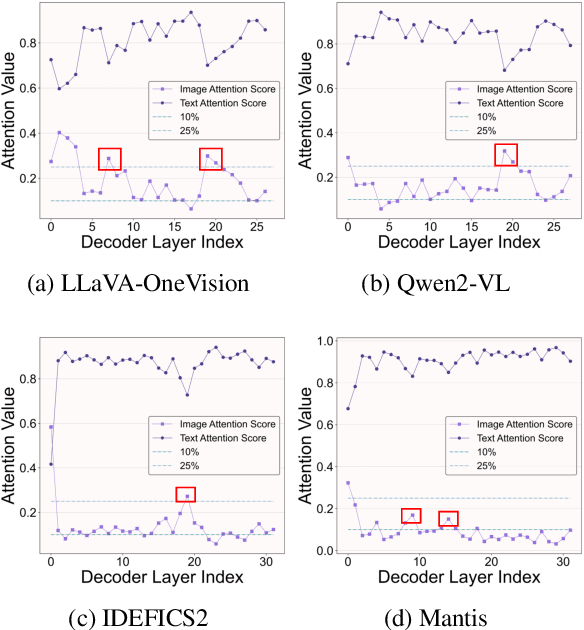
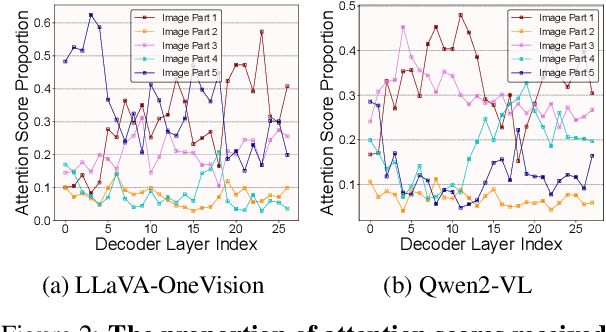
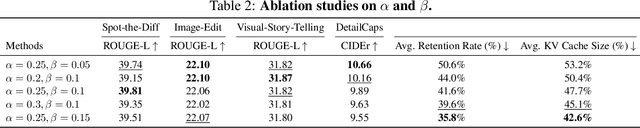
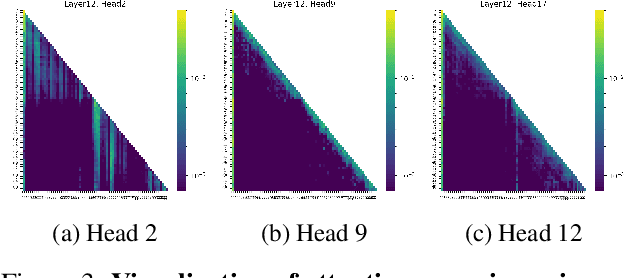
Large Vision-Language Models (LVLMs) have demonstrated remarkable capabilities across a range of multimodal tasks. However, their inference efficiency is constrained by the large number of visual tokens processed during decoding. To address this challenge, we propose Per-Layer Per-Head Vision Token Pruning (PLPHP), a two-level fine-grained pruning method including Layer-Level Retention Rate Allocation and Head-Level Vision Token Pruning. Motivated by the Vision Token Re-attention phenomenon across decoder layers, we dynamically adjust token retention rates layer by layer. Layers that exhibit stronger attention to visual information preserve more vision tokens, while layers with lower vision attention are aggressively pruned. Furthermore, PLPHP applies pruning at the attention head level, enabling different heads within the same layer to independently retain critical context. Experiments on multiple benchmarks demonstrate that PLPHP delivers an 18% faster decoding speed and reduces the Key-Value Cache (KV Cache) size by over 50%, all at the cost of 0.46% average performance drop, while also achieving notable performance improvements in multi-image tasks. These results highlight the effectiveness of fine-grained token pruning and contribute to advancing the efficiency and scalability of LVLMs. Our source code will be made publicly available.
Human-Robot Cooperative Piano Playing with Learning-Based Real-Time Music Accompaniment
Sep 18, 2024Recent advances in machine learning have paved the way for the development of musical and entertainment robots. However, human-robot cooperative instrument playing remains a challenge, particularly due to the intricate motor coordination and temporal synchronization. In this paper, we propose a theoretical framework for human-robot cooperative piano playing based on non-verbal cues. First, we present a music improvisation model that employs a recurrent neural network (RNN) to predict appropriate chord progressions based on the human's melodic input. Second, we propose a behavior-adaptive controller to facilitate seamless temporal synchronization, allowing the cobot to generate harmonious acoustics. The collaboration takes into account the bidirectional information flow between the human and robot. We have developed an entropy-based system to assess the quality of cooperation by analyzing the impact of different communication modalities during human-robot collaboration. Experiments demonstrate that our RNN-based improvisation can achieve a 93\% accuracy rate. Meanwhile, with the MPC adaptive controller, the robot could respond to the human teammate in homophony performances with real-time accompaniment. Our designed framework has been validated to be effective in allowing humans and robots to work collaboratively in the artistic piano-playing task.
Pi-ViMo: Physiology-inspired Robust Vital Sign Monitoring using mmWave Radars
Mar 24, 2023


Continuous monitoring of human vital signs using non-contact mmWave radars is attractive due to their ability to penetrate garments and operate under different lighting conditions. Unfortunately, most prior research requires subjects to stay at a fixed distance from radar sensors and to remain still during monitoring. These restrictions limit the applications of radar vital sign monitoring in real life scenarios. In this paper, we address these limitations and present "Pi-ViMo", a non-contact Physiology-inspired Robust Vital Sign Monitoring system, using mmWave radars. We first derive a multi-scattering point model for the human body, and introduce a coherent combining of multiple scatterings to enhance the quality of estimated chest-wall movements. It enables vital sign estimations of subjects at any location in a radar's field of view. We then propose a template matching method to extract human vital signs by adopting physical models of respiration and cardiac activities. The proposed method is capable to separate respiration and heartbeat in the presence of micro-level random body movements (RBM) when a subject is at any location within the field of view of a radar. Experiments in a radar testbed show average respiration rate errors of 6% and heart rate errors of 11.9% for the stationary subjects and average errors of 13.5% for respiration rate and 13.6% for heart rate for subjects under different RBMs.
Audio-Visual Quality Assessment for User Generated Content: Database and Method
Mar 04, 2023With the explosive increase of User Generated Content (UGC), UGC video quality assessment (VQA) becomes more and more important for improving users' Quality of Experience (QoE). However, most existing UGC VQA studies only focus on the visual distortions of videos, ignoring that the user's QoE also depends on the accompanying audio signals. In this paper, we conduct the first study to address the problem of UGC audio and video quality assessment (AVQA). Specifically, we construct the first UGC AVQA database named the SJTU-UAV database, which includes 520 in-the-wild UGC audio and video (A/V) sequences, and conduct a user study to obtain the mean opinion scores of the A/V sequences. The content of the SJTU-UAV database is then analyzed from both the audio and video aspects to show the database characteristics. We also design a family of AVQA models, which fuse the popular VQA methods and audio features via support vector regressor (SVR). We validate the effectiveness of the proposed models on the three databases. The experimental results show that with the help of audio signals, the VQA models can evaluate the perceptual quality more accurately. The database will be released to facilitate further research.
Learning Green's Functions of Linear Reaction-Diffusion Equations with Application to Fast Numerical Solver
May 23, 2021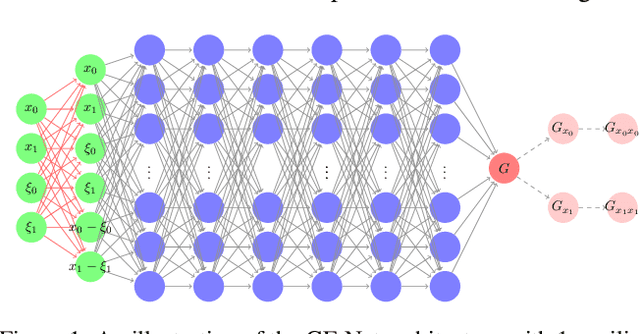
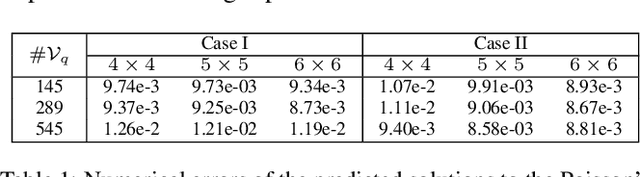
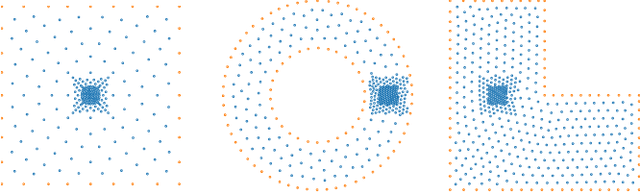
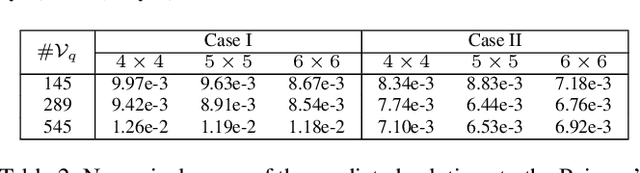
Partial differential equations are often used to model various physical phenomena, such as heat diffusion, wave propagation, fluid dynamics, elasticity, electrodynamics and image processing, and many analytic approaches or traditional numerical methods have been developed and widely used for their solutions. Inspired by rapidly growing impact of deep learning on scientific and engineering research, in this paper we propose a novel neural network, GF-Net, for learning the Green's functions of linear reaction-diffusion equations in an unsupervised fashion. The proposed method overcomes the challenges for finding the Green's functions of the equations on arbitrary domains by utilizing physics-informed approach and the symmetry of the Green's function. As a consequence, it particularly leads to an efficient way for solving the target equations under different boundary conditions and sources. We also demonstrate the effectiveness of the proposed approach by experiments in square, annular and L-shape domains.