 Add to Chrome
 Add to Firefox
 Add to Edge
O-Mamba: O-shape State-Space Model for Underwater Image Enhancement
Aug 23, 2024
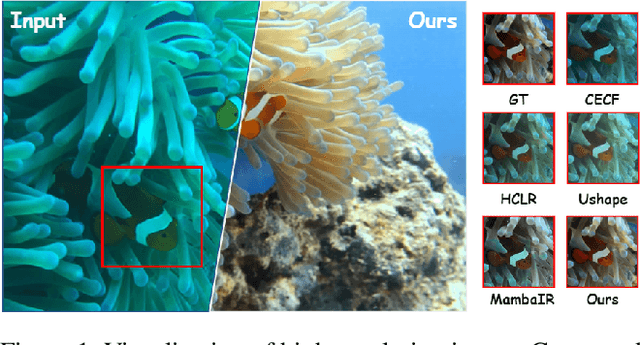


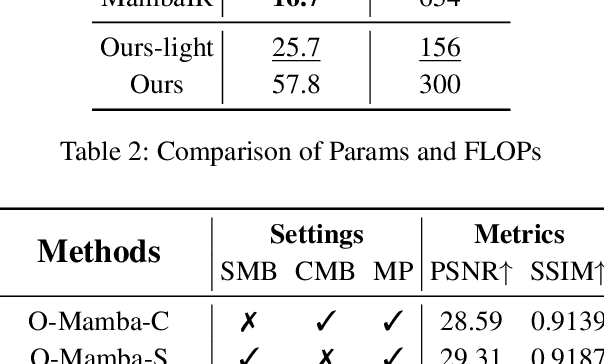
Underwater image enhancement (UIE) face significant challenges due to complex underwater lighting conditions. Recently, mamba-based methods have achieved promising results in image enhancement tasks. However, these methods commonly rely on Vmamba, which focuses only on spatial information modeling and struggles to deal with the cross-color channel dependency problem in underwater images caused by the differential attenuation of light wavelengths, limiting the effective use of deep networks. In this paper, we propose a novel UIE framework called O-mamba. O-mamba employs an O-shaped dual-branch network to separately model spatial and cross-channel information, utilizing the efficient global receptive field of state-space models optimized for underwater images. To enhance information interaction between the two branches and effectively utilize multi-scale information, we design a Multi-scale Bi-mutual Promotion Module. This branch includes MS-MoE for fusing multi-scale information within branches, Mutual Promotion module for interaction between spatial and channel information across branches, and Cyclic Multi-scale optimization strategy to maximize the use of multi-scale information. Extensive experiments demonstrate that our method achieves state-of-the-art (SOTA) results.The code is available at https://github.com/chenydong/O-Mamba.

Angle of Arrival Estimation with Transformer: A Sparse and Gridless Method with Zero-Shot Capability
Aug 18, 2024Automotive Multiple-Input Multiple-Output (MIMO) radars have gained significant traction in Advanced Driver Assistance Systems (ADAS) and Autonomous Vehicles (AV) due to their cost-effectiveness, resilience to challenging operating conditions, and extended detection range. To fully leverage the advantages of MIMO radars, it is crucial to develop an Angle of Arrival (AOA) algorithm that delivers high performance with reasonable computational workload. This work introduces AAETR (Angle of Arrival Estimation with TRansformer) for high performance gridless AOA estimation. Comprehensive evaluations across various signal-to-noise ratios (SNRs) and multi-target scenarios demonstrate AAETR's superior performance compared to super resolution AOA algorithms such as Iterative Adaptive Approach (IAA). The proposed architecture features efficient, scalable, sparse and gridless angle-finding capability, overcoming the issues of high computational cost and straddling loss in SNR associated with grid-based IAA. AAETR requires fewer tunable hyper-parameters and is end-to-end trainable in a deep learning radar perception pipeline. When trained on large-scale simulated datasets then evaluated on real dataset, AAETR exhibits remarkable zero-shot sim-to-real transferability and emergent sidelobe suppression capability. This highlights the effectiveness of the proposed approach and its potential as a drop-in module in practical systems.
DiffSG: A Generative Solver for Network Optimization with Diffusion Model
Aug 13, 2024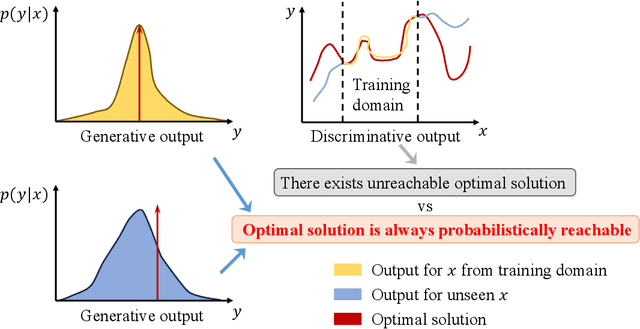


Diffusion generative models, famous for their performance in image generation, are popular in various cross-domain applications. However, their use in the communication community has been mostly limited to auxiliary tasks like data modeling and feature extraction. These models hold greater promise for fundamental problems in network optimization compared to traditional machine learning methods. Discriminative deep learning often falls short due to its single-step input-output mapping and lack of global awareness of the solution space, especially given the complexity of network optimization's objective functions. In contrast, diffusion generative models can consider a broader range of solutions and exhibit stronger generalization by learning parameters that describe the distribution of the underlying solution space, with higher probabilities assigned to better solutions. We propose a new framework Diffusion Model-based Solution Generation (DiffSG), which leverages the intrinsic distribution learning capabilities of diffusion generative models to learn high-quality solution distributions based on given inputs. The optimal solution within this distribution is highly probable, allowing it to be effectively reached through repeated sampling. We validate the performance of DiffSG on several typical network optimization problems, including mixed-integer non-linear programming, convex optimization, and hierarchical non-convex optimization. Our results show that DiffSG outperforms existing baselines. In summary, we demonstrate the potential of diffusion generative models in tackling complex network optimization problems and outline a promising path for their broader application in the communication community.
OSN: Infinite Representations of Dynamic 3D Scenes from Monocular Videos
Jul 08, 2024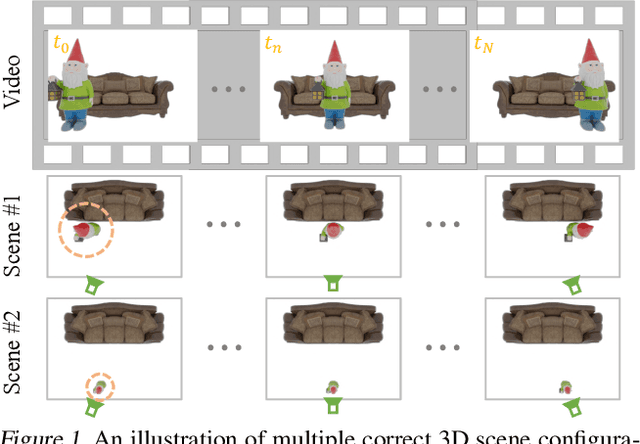
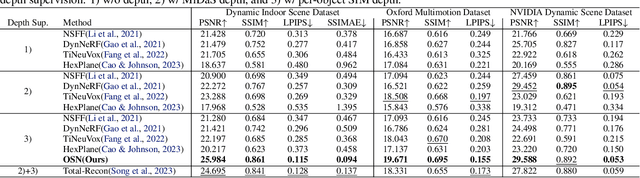
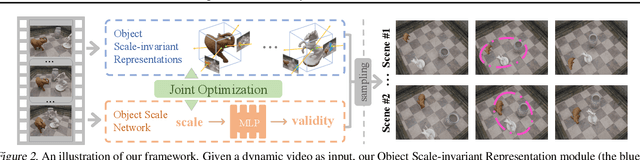
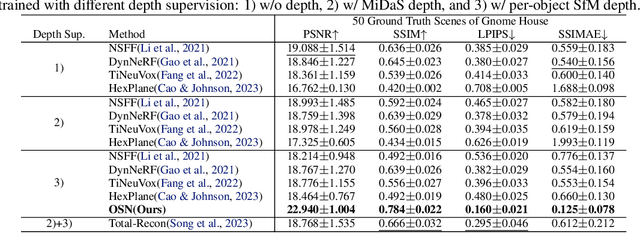
It has long been challenging to recover the underlying dynamic 3D scene representations from a monocular RGB video. Existing works formulate this problem into finding a single most plausible solution by adding various constraints such as depth priors and strong geometry constraints, ignoring the fact that there could be infinitely many 3D scene representations corresponding to a single dynamic video. In this paper, we aim to learn all plausible 3D scene configurations that match the input video, instead of just inferring a specific one. To achieve this ambitious goal, we introduce a new framework, called OSN. The key to our approach is a simple yet innovative object scale network together with a joint optimization module to learn an accurate scale range for every dynamic 3D object. This allows us to sample as many faithful 3D scene configurations as possible. Extensive experiments show that our method surpasses all baselines and achieves superior accuracy in dynamic novel view synthesis on multiple synthetic and real-world datasets. Most notably, our method demonstrates a clear advantage in learning fine-grained 3D scene geometry. Our code and data are available at https://github.com/vLAR-group/OSN
Filtering Reconfigurable Intelligent Computational Surface for RF Spectrum Purification
Jun 26, 2024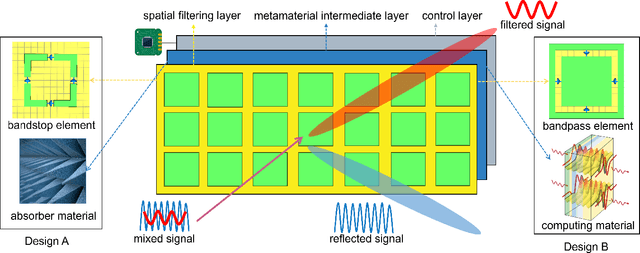
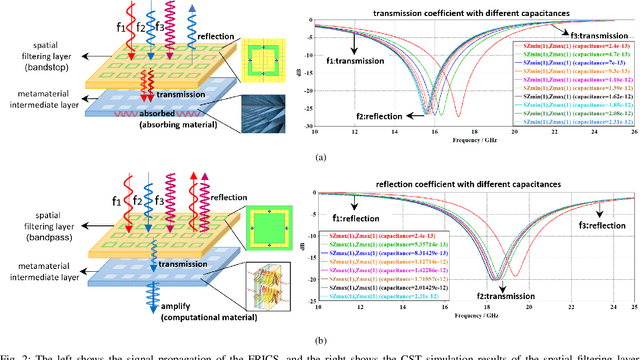
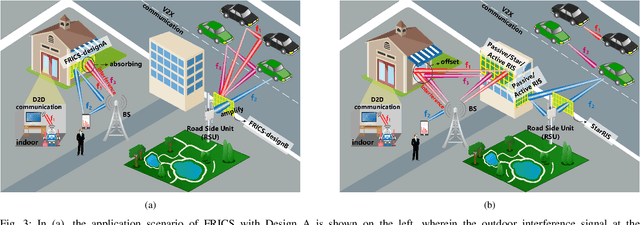
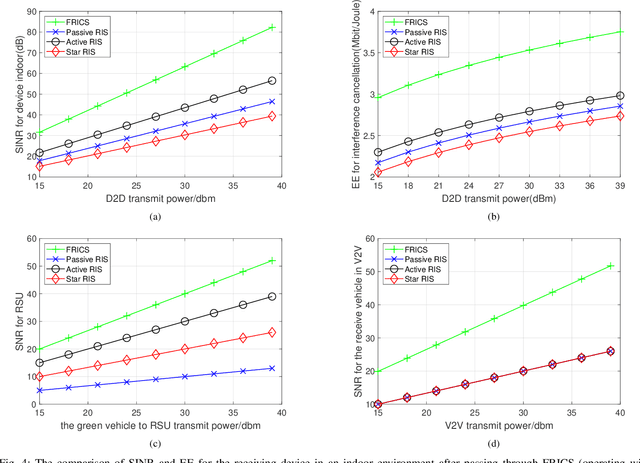
The increasing demand for communication is degrading the electromagnetic (EM) transmission environment due to severe EM interference, significantly reducing the efficiency of the radio frequency (RF) spectrum. Metasurfaces, a promising technology for controlling desired EM waves, have recently received significant attention from both academia and industry. However, the potential impact of out-of-band signals has been largely overlooked, leading to RF spectrum pollution and degradation of wireless transmissions. To address this issue, we propose a novel surface structure called the Filtering Reconfigurable Intelligent Computational Surface (FRICS). We introduce two types of FRICS structures: one that dynamically reflects resonance band signals through a tunable spatial filter while absorbing out-of-band signals using metamaterials and the other one that dynamically amplifies in-band signals using computational metamaterials while reflecting out-of-band signals. To evaluate the performance of FRICS, we implement it in device-to-device (D2D) communication and vehicular-to-everything (V2X) scenarios. The experiments demonstrate the superiority of FRICS in signal-to-interference-noise ratio (SINR) and energy efficiency (EE). Finally, we discuss the critical challenges faced and promising techniques for implementing FRICS in future wireless systems.
AI-Empowered Multiple Access for 6G: A Survey of Spectrum Sensing, Protocol Designs, and Optimizations
Jun 19, 2024With the rapidly increasing number of bandwidth-intensive terminals capable of intelligent computing and communication, such as smart devices equipped with shallow neural network models, the complexity of multiple access for these intelligent terminals is increasing due to the dynamic network environment and ubiquitous connectivity in 6G systems. Traditional multiple access (MA) design and optimization methods are gradually losing ground to artificial intelligence (AI) techniques that have proven their superiority in handling complexity. AI-empowered MA and its optimization strategies aimed at achieving high Quality-of-Service (QoS) are attracting more attention, especially in the area of latency-sensitive applications in 6G systems. In this work, we aim to: 1) present the development and comparative evaluation of AI-enabled MA; 2) provide a timely survey focusing on spectrum sensing, protocol design, and optimization for AI-empowered MA; and 3) explore the potential use cases of AI-empowered MA in the typical application scenarios within 6G systems. Specifically, we first present a unified framework of AI-empowered MA for 6G systems by incorporating various promising machine learning techniques in spectrum sensing, resource allocation, MA protocol design, and optimization. We then introduce AI-empowered MA spectrum sensing related to spectrum sharing and spectrum interference management. Next, we discuss the AI-empowered MA protocol designs and implementation methods by reviewing and comparing the state-of-the-art, and we further explore the optimization algorithms related to dynamic resource management, parameter adjustment, and access scheme switching. Finally, we discuss the current challenges, point out open issues, and outline potential future research directions in this field.
GigaSpeech 2: An Evolving, Large-Scale and Multi-domain ASR Corpus for Low-Resource Languages with Automated Crawling, Transcription and Refinement
Jun 17, 2024The evolution of speech technology has been spurred by the rapid increase in dataset sizes. Traditional speech models generally depend on a large amount of labeled training data, which is scarce for low-resource languages. This paper presents GigaSpeech 2, a large-scale, multi-domain, multilingual speech recognition corpus. It is designed for low-resource languages and does not rely on paired speech and text data. GigaSpeech 2 comprises about 30,000 hours of automatically transcribed speech, including Thai, Indonesian, and Vietnamese, gathered from unlabeled YouTube videos. We also introduce an automated pipeline for data crawling, transcription, and label refinement. Specifically, this pipeline uses Whisper for initial transcription and TorchAudio for forced alignment, combined with multi-dimensional filtering for data quality assurance. A modified Noisy Student Training is developed to further refine flawed pseudo labels iteratively, thus enhancing model performance. Experimental results on our manually transcribed evaluation set and two public test sets from Common Voice and FLEURS confirm our corpus's high quality and broad applicability. Notably, ASR models trained on GigaSpeech 2 can reduce the word error rate for Thai, Indonesian, and Vietnamese on our challenging and realistic YouTube test set by 25% to 40% compared to the Whisper large-v3 model, with merely 10% model parameters. Furthermore, our ASR models trained on Gigaspeech 2 yield superior performance compared to commercial services. We believe that our newly introduced corpus and pipeline will open a new avenue for low-resource speech recognition and significantly facilitate research in this area.
Survey for Landing Generative AI in Social and E-commerce Recsys -- the Industry Perspectives
Jun 10, 2024Recently, generative AI (GAI), with their emerging capabilities, have presented unique opportunities for augmenting and revolutionizing industrial recommender systems (Recsys). Despite growing research efforts at the intersection of these fields, the integration of GAI into industrial Recsys remains in its infancy, largely due to the intricate nature of modern industrial Recsys infrastructure, operations, and product sophistication. Drawing upon our experiences in successfully integrating GAI into several major social and e-commerce platforms, this survey aims to comprehensively examine the underlying system and AI foundations, solution frameworks, connections to key research advancements, as well as summarize the practical insights and challenges encountered in the endeavor to integrate GAI into industrial Recsys. As pioneering work in this domain, we hope outline the representative developments of relevant fields, shed lights on practical GAI adoptions in the industry, and motivate future research.
Joint Association, Beamforming, and Resource Allocation for Multi-IRS Enabled MU-MISO Systems With RSMA
Jun 05, 2024
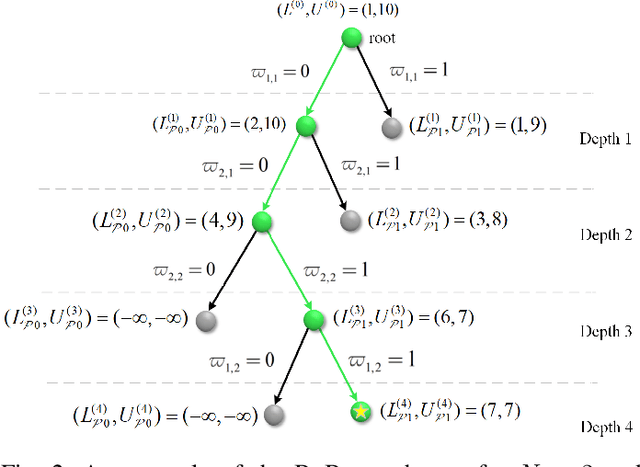


Intelligent reflecting surface (IRS) and rate-splitting multiple access (RSMA) technologies are at the forefront of enhancing spectrum and energy efficiency in the next generation multi-antenna communication systems. This paper explores a RSMA system with multiple IRSs, and proposes two purpose-driven scheduling schemes, i.e., the exhaustive IRS-aided (EIA) and opportunistic IRS-aided (OIA) schemes. The aim is to optimize the system weighted energy efficiency (EE) under the above two schemes, respectively. Specifically, the Dinkelbach, branch and bound, successive convex approximation, and the semidefinite relaxation methods are exploited within the alternating optimization framework to obtain effective solutions to the considered problems. The numerical findings indicate that the EIA scheme exhibits better performance compared to the OIA scheme in diverse scenarios when considering the weighted EE, and the proposed algorithm demonstrates superior performance in comparison to the baseline algorithms.
In-Context Decision Transformer: Reinforcement Learning via Hierarchical Chain-of-Thought
May 31, 2024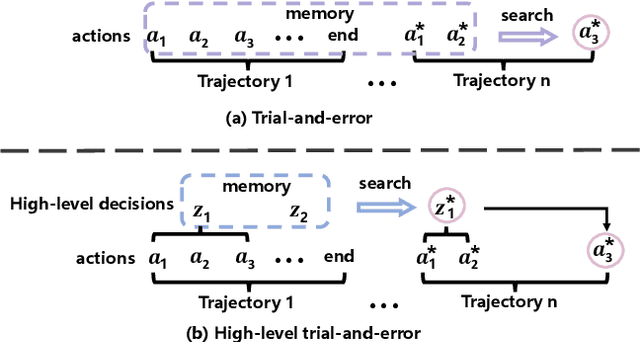
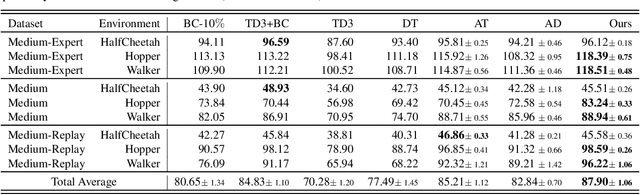
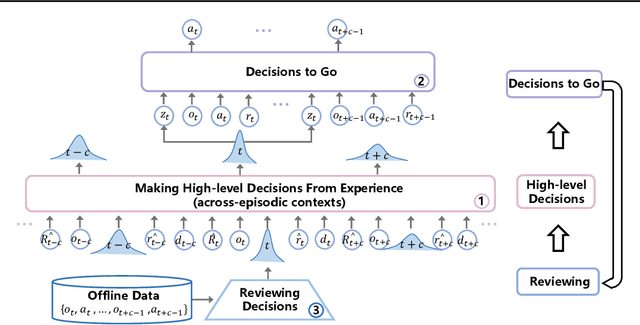
In-context learning is a promising approach for offline reinforcement learning (RL) to handle online tasks, which can be achieved by providing task prompts. Recent works demonstrated that in-context RL could emerge with self-improvement in a trial-and-error manner when treating RL tasks as an across-episodic sequential prediction problem. Despite the self-improvement not requiring gradient updates, current works still suffer from high computational costs when the across-episodic sequence increases with task horizons. To this end, we propose an In-context Decision Transformer (IDT) to achieve self-improvement in a high-level trial-and-error manner. Specifically, IDT is inspired by the efficient hierarchical structure of human decision-making and thus reconstructs the sequence to consist of high-level decisions instead of low-level actions that interact with environments. As one high-level decision can guide multi-step low-level actions, IDT naturally avoids excessively long sequences and solves online tasks more efficiently. Experimental results show that IDT achieves state-of-the-art in long-horizon tasks over current in-context RL methods. In particular, the online evaluation time of our IDT is \textbf{36$\times$} times faster than baselines in the D4RL benchmark and \textbf{27$\times$} times faster in the Grid World benchmark.