 Add to Chrome
 Add to Firefox
 Add to Edge
Generalizable CT-Free PET Attenuation and Scatter Correction for Pediatric Patients
Apr 24, 2026
Computed tomography (CT)-based attenuation and scatter correction improves quantitative PET but adds radiation exposure that is particularly undesirable in pediatric imaging. Existing CT-free methods are commonly trained in homogeneous settings and often degrade under scanner or radiotracer shifts, which limits their clinical utility. We propose the Generalizable PET Correction Network (GPCN), a dual-domain network for domain-robust CT-free PET attenuation and scatter correction. GPCN combines a multi-band contextual refinement module, which models pediatric anatomical variability through wavelet-based multiscale decomposition and long-range spatial context modeling, with a frequency-aware spectral decoupling module, which performs coordinate-conditioned amplitude/phase refinement in the Fourier domain. By synergizing multi-band spatial contextual modeling with asymmetric frequency-spectrum decoupling, the network explicitly separates invariant topological structures from domain-specific noise, thereby achieving precise quantitative recovery of both anatomical organs and focal lesions. This design aims to separate anatomy-dominant structures from domain-sensitive spectral residuals and to improve robustness across heterogeneous imaging conditions. We train and evaluate the method on 1085 pediatric whole-body PET scans acquired with two scanners and five radiotracers. In both joint training and zero-shot cross-domain evaluation, GPCN outperforms representative baselines and maintains stable quantitative accuracy on unseen scanner-tracer combinations. The method is further supported by ablation, region-wise quantitative analysis, and downstream segmentation experiments. In our cohort, the CT component of the conventional protocol corresponded to an average effective dose of 10.8 mSv, indicating the potential clinical value of reliable CT-free correction for pediatric PET.

Survey for Landing Generative AI in Social and E-commerce Recsys -- the Industry Perspectives
Jun 10, 2024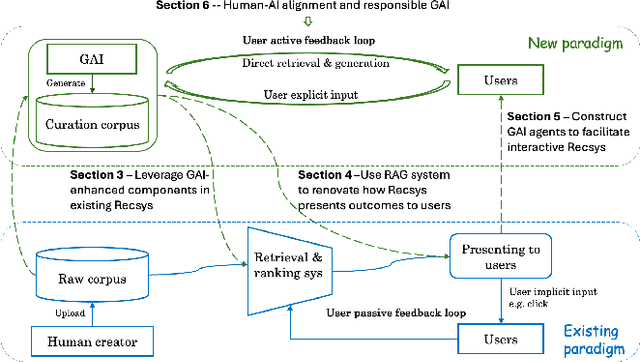
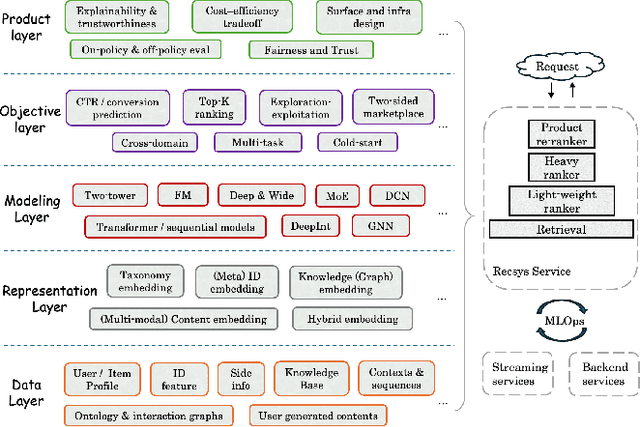
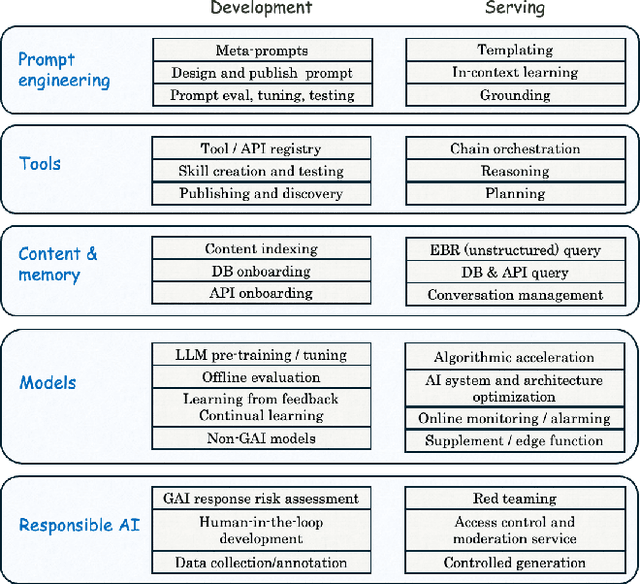
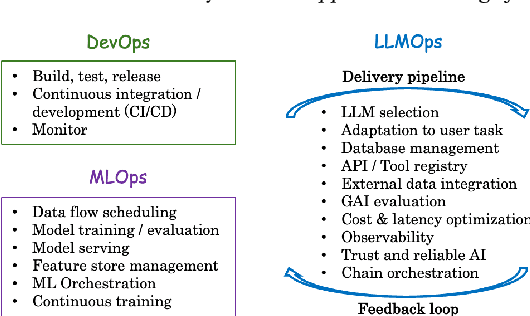
Recently, generative AI (GAI), with their emerging capabilities, have presented unique opportunities for augmenting and revolutionizing industrial recommender systems (Recsys). Despite growing research efforts at the intersection of these fields, the integration of GAI into industrial Recsys remains in its infancy, largely due to the intricate nature of modern industrial Recsys infrastructure, operations, and product sophistication. Drawing upon our experiences in successfully integrating GAI into several major social and e-commerce platforms, this survey aims to comprehensively examine the underlying system and AI foundations, solution frameworks, connections to key research advancements, as well as summarize the practical insights and challenges encountered in the endeavor to integrate GAI into industrial Recsys. As pioneering work in this domain, we hope outline the representative developments of relevant fields, shed lights on practical GAI adoptions in the industry, and motivate future research.