 Add to Chrome
 Add to Firefox
 Add to Edge
Validating Climate Models with Spherical Convolutional Wasserstein Distance
Jan 26, 2024


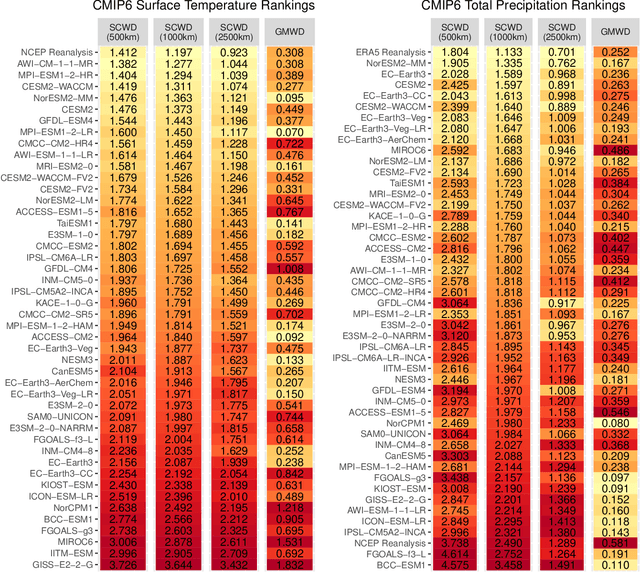
The validation of global climate models is crucial to ensure the accuracy and efficacy of model output. We introduce the spherical convolutional Wasserstein distance to more comprehensively measure differences between climate models and reanalysis data. This new similarity measure accounts for spatial variability using convolutional projections and quantifies local differences in the distribution of climate variables. We apply this method to evaluate the historical model outputs of the Coupled Model Intercomparison Project (CMIP) members by comparing them to observational and reanalysis data products. Additionally, we investigate the progression from CMIP phase 5 to phase 6 and find modest improvements in the phase 6 models regarding their ability to produce realistic climatologies.

Benchmarking Large Multimodal Models against Common Corruptions
Jan 22, 2024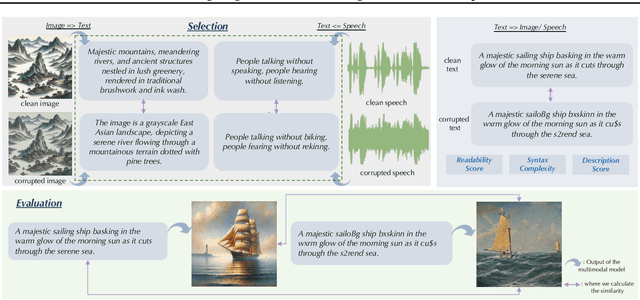
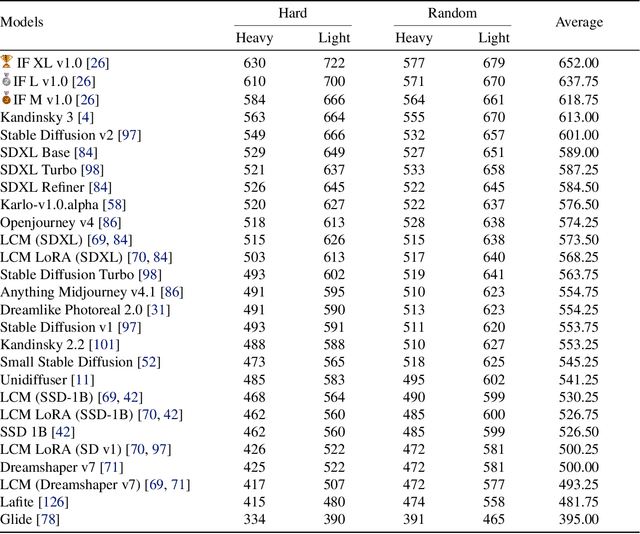
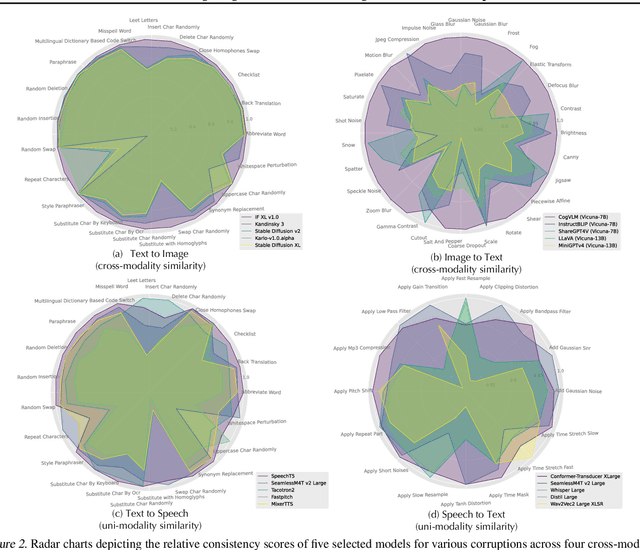
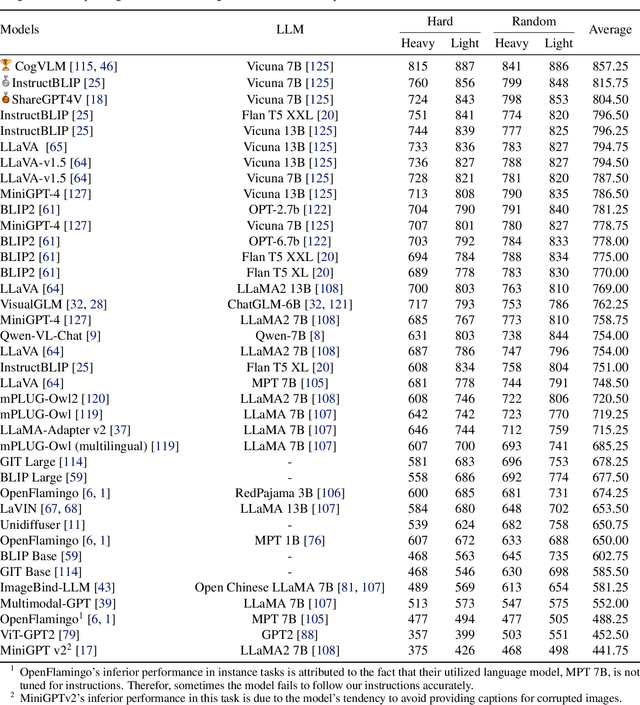
This technical report aims to fill a deficiency in the assessment of large multimodal models (LMMs) by specifically examining the self-consistency of their outputs when subjected to common corruptions. We investigate the cross-modal interactions between text, image, and speech, encompassing four essential generation tasks: text-to-image, image-to-text, text-to-speech, and speech-to-text. We create a comprehensive benchmark, named MMCBench, that covers more than 100 popular LMMs (totally over 150 model checkpoints). A thorough evaluation under common corruptions is critical for practical deployment and facilitates a better understanding of the reliability of cutting-edge LMMs. The benchmarking code is available at https://github.com/sail-sg/MMCBench
BadChain: Backdoor Chain-of-Thought Prompting for Large Language Models
Jan 20, 2024Large language models (LLMs) are shown to benefit from chain-of-thought (COT) prompting, particularly when tackling tasks that require systematic reasoning processes. On the other hand, COT prompting also poses new vulnerabilities in the form of backdoor attacks, wherein the model will output unintended malicious content under specific backdoor-triggered conditions during inference. Traditional methods for launching backdoor attacks involve either contaminating the training dataset with backdoored instances or directly manipulating the model parameters during deployment. However, these approaches are not practical for commercial LLMs that typically operate via API access. In this paper, we propose BadChain, the first backdoor attack against LLMs employing COT prompting, which does not require access to the training dataset or model parameters and imposes low computational overhead. BadChain leverages the inherent reasoning capabilities of LLMs by inserting a backdoor reasoning step into the sequence of reasoning steps of the model output, thereby altering the final response when a backdoor trigger exists in the query prompt. Empirically, we show the effectiveness of BadChain for two COT strategies across four LLMs (Llama2, GPT-3.5, PaLM2, and GPT-4) and six complex benchmark tasks encompassing arithmetic, commonsense, and symbolic reasoning. Moreover, we show that LLMs endowed with stronger reasoning capabilities exhibit higher susceptibility to BadChain, exemplified by a high average attack success rate of 97.0% across the six benchmark tasks on GPT-4. Finally, we propose two defenses based on shuffling and demonstrate their overall ineffectiveness against BadChain. Therefore, BadChain remains a severe threat to LLMs, underscoring the urgency for the development of robust and effective future defenses.
Efficient Adapter Finetuning for Tail Languages in Streaming Multilingual ASR
Jan 17, 2024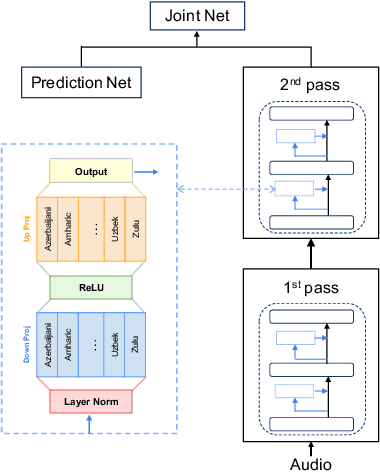
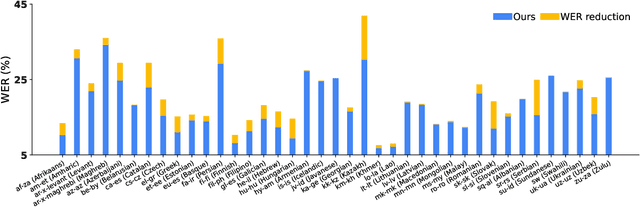
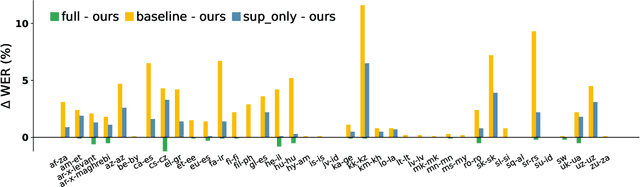
The end-to-end ASR model is often desired in the streaming multilingual scenario since it is easier to deploy and can benefit from pre-trained speech models such as powerful foundation models. Meanwhile, the heterogeneous nature and imbalanced data abundance of different languages may cause performance degradation, leading to asynchronous peak performance for different languages during training, especially on tail ones. Sometimes even the data itself may become unavailable as a result of the enhanced privacy protection. Existing work tend to significantly increase the model size or learn language-specific decoders to accommodate each language separately. In this study, we explore simple yet effective Language-Dependent Adapter (LDA) finetuning under a cascaded Conformer transducer framework enhanced by teacher pseudo-labeling for tail languages in the streaming multilingual ASR. The adapter only accounts for 0.4% of the full model per language. It is plugged into the frozen foundation model and is the only trainable module during the finetuning process with noisy student training. The final model merges the adapter parameters from different checkpoints for different languages. The model performance is validated on a challenging multilingual dictation dataset, which includes 39 tail languages across Latin, Greek, Arabic, etc. Our proposed method brings 12.2% word error rate reduction on average and up to 37.5% on a single locale. Furthermore, we show that our parameter-efficient LDA can match the quality of the full model finetuning, thus greatly alleviating the asynchronous peak performance issue.
VOT: Revolutionizing Speaker Verification with Memory and Attention Mechanisms
Jan 17, 2024Speaker verification is to judge the similarity of two unknown voices in an open set, where the ideal speaker embedding should be able to condense discriminant information into a compact utterance-level representation that has small intra-speaker distances and large inter-speaker distances.We propose a novel model named Voice Transformer(VOT) for speaker verification. The model consists of multiple parallel Transformers, and the outputs of these Transformers are adaptively combined. Deeply-Fused Semantic Memory Network(DFSMN)is integrated into the attention parts of these Transformers to capture long-distance information and enhance the local dependencies. Statistical pooling layers are incorporated to enhance overall performance without significantly increasing the number of parameters. We propose a new loss function called Additive Angular Margin Focal Loss(AAMF) to address the hard sample mining issue.We evaluate the proposed approach on the VoxCeleb1 and CN-Celeb2 datasets. The experimental results demonstrate that VOT achieves state-of-the-art results, outperforming nearly all existing models. The code is available on GitHub.
Crafter: Facial Feature Crafting against Inversion-based Identity Theft on Deep Models
Jan 14, 2024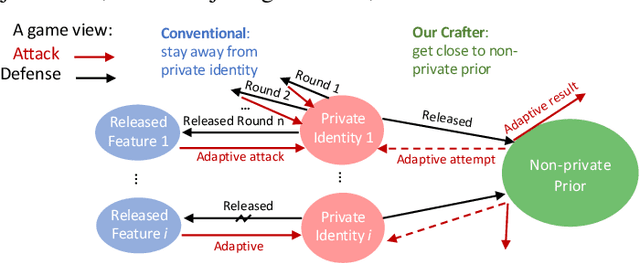


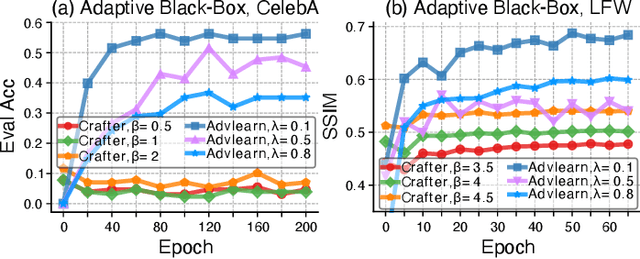
With the increased capabilities at the edge (e.g., mobile device) and more stringent privacy requirement, it becomes a recent trend for deep learning-enabled applications to pre-process sensitive raw data at the edge and transmit the features to the backend cloud for further processing. A typical application is to run machine learning (ML) services on facial images collected from different individuals. To prevent identity theft, conventional methods commonly rely on an adversarial game-based approach to shed the identity information from the feature. However, such methods can not defend against adaptive attacks, in which an attacker takes a countermove against a known defence strategy. We propose Crafter, a feature crafting mechanism deployed at the edge, to protect the identity information from adaptive model inversion attacks while ensuring the ML tasks are properly carried out in the cloud. The key defence strategy is to mislead the attacker to a non-private prior from which the attacker gains little about the private identity. In this case, the crafted features act like poison training samples for attackers with adaptive model updates. Experimental results indicate that Crafter successfully defends both basic and possible adaptive attacks, which can not be achieved by state-of-the-art adversarial game-based methods.
Convolutional Neural Network Ensemble Learning for Hyperspectral Imaging-based Blackberry Fruit Ripeness Detection in Uncontrolled Farm Environment
Jan 09, 2024

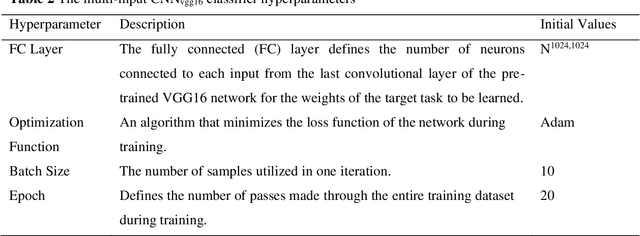

Fruit ripeness estimation models have for decades depended on spectral index features or colour-based features, such as mean, standard deviation, skewness, colour moments, and/or histograms for learning traits of fruit ripeness. Recently, few studies have explored the use of deep learning techniques to extract features from images of fruits with visible ripeness cues. However, the blackberry (Rubus fruticosus) fruit does not show obvious and reliable visible traits of ripeness when mature and therefore poses great difficulty to fruit pickers. The mature blackberry, to the human eye, is black before, during, and post-ripening. To address this engineering application challenge, this paper proposes a novel multi-input convolutional neural network (CNN) ensemble classifier for detecting subtle traits of ripeness in blackberry fruits. The multi-input CNN was created from a pre-trained visual geometry group 16-layer deep convolutional network (VGG16) model trained on the ImageNet dataset. The fully connected layers were optimized for learning traits of ripeness of mature blackberry fruits. The resulting model served as the base for building homogeneous ensemble learners that were ensemble using the stack generalization ensemble (SGE) framework. The input to the network is images acquired with a stereo sensor using visible and near-infrared (VIS-NIR) spectral filters at wavelengths of 700 nm and 770 nm. Through experiments, the proposed model achieved 95.1% accuracy on unseen sets and 90.2% accuracy with in-field conditions. Further experiments reveal that machine sensory is highly and positively correlated to human sensory over blackberry fruit skin texture.
CaMML: Context-Aware Multimodal Learner for Large Models
Jan 06, 2024In this work, we introduce Context-Aware MultiModal Learner (CaMML), for tuning large multimodal models (LMMs). CaMML, a lightweight module, is crafted to seamlessly integrate multimodal contextual samples into large models, thereby empowering the model to derive knowledge from analogous, domain-specific, up-to-date information and make grounded inferences. Importantly, CaMML is highly scalable and can efficiently handle lengthy multimodal context examples owing to its hierarchical design. Based on CaMML, we have developed two multimodal models, CaMML-7B and CaMML-13B, that have shown exceptional performance across an array of benchmark datasets for multimodal tasks. Remarkably, CaMML-13B achieves the state-of-the-art performance on over ten widely recognized multimodal benchmark datasets, surpassing LLaVA-1.5 (13B) with a noticeable margin, without integration of any external resources. Moreover, we have conducted extensive ablative studies to inspect the inner workings of CaMML and performed qualitative analyses to showcase its effectiveness in handling real-world challenging cases.
USM-Lite: Quantization and Sparsity Aware Fine-tuning for Speech Recognition with Universal Speech Models
Jan 03, 2024End-to-end automatic speech recognition (ASR) models have seen revolutionary quality gains with the recent development of large-scale universal speech models (USM). However, deploying these massive USMs is extremely expensive due to the enormous memory usage and computational cost. Therefore, model compression is an important research topic to fit USM-based ASR under budget in real-world scenarios. In this study, we propose a USM fine-tuning approach for ASR, with a low-bit quantization and N:M structured sparsity aware paradigm on the model weights, reducing the model complexity from parameter precision and matrix topology perspectives. We conducted extensive experiments with a 2-billion parameter USM on a large-scale voice search dataset to evaluate our proposed method. A series of ablation studies validate the effectiveness of up to int4 quantization and 2:4 sparsity. However, a single compression technique fails to recover the performance well under extreme setups including int2 quantization and 1:4 sparsity. By contrast, our proposed method can compress the model to have 9.4% of the size, at the cost of only 7.3% relative word error rate (WER) regressions. We also provided in-depth analyses on the results and discussions on the limitations and potential solutions, which would be valuable for future studies.
Labels Need Prompts Too: Mask Matching for Natural Language Understanding Tasks
Dec 16, 2023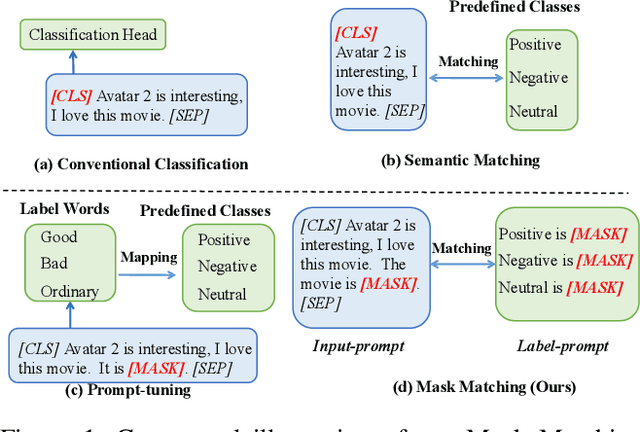
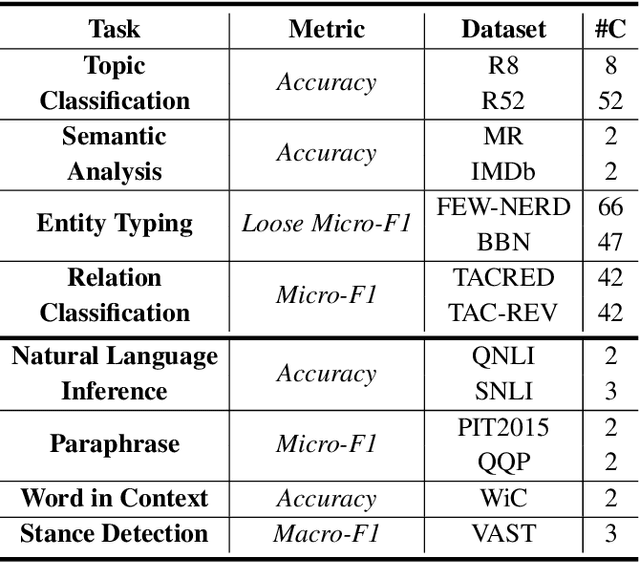
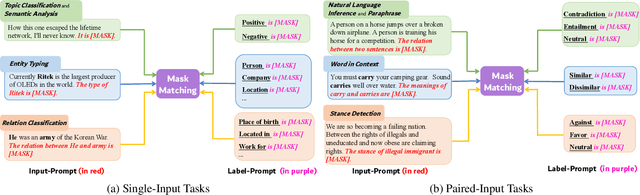
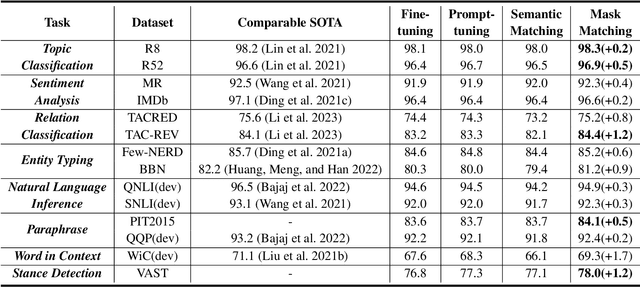
Textual label names (descriptions) are typically semantically rich in many natural language understanding (NLU) tasks. In this paper, we incorporate the prompting methodology, which is widely used to enrich model input, into the label side for the first time. Specifically, we propose a Mask Matching method, which equips an input with a prompt and its label with another, and then makes predictions by matching their mask representations. We evaluate our method extensively on 8 NLU tasks with 14 datasets. The experimental results show that Mask Matching significantly outperforms its counterparts of fine-tuning and conventional prompt-tuning, setting up state-of-the-art performances in several datasets. Mask Matching is particularly good at handling NLU tasks with large label counts and informative label names. As pioneering efforts that investigate the label-side prompt, we also discuss open issues for future study.