 Add to Chrome
 Add to Firefox
 Add to Edge
Aff Wild2
Papers and Code
Solution for 8th Competition on Affective & Behavior Analysis in-the-wild
Mar 14, 2025
In this report, we present our solution for the Action Unit (AU) Detection Challenge, in 8th Competition on Affective Behavior Analysis in-the-wild. In order to achieve robust and accurate classification of facial action unit in the wild environment, we introduce an innovative method that leverages audio-visual multimodal data. Our method employs ConvNeXt as the image encoder and uses Whisper to extract Mel spectrogram features. For these features, we utilize a Transformer encoder-based feature fusion module to integrate the affective information embedded in audio and image features. This ensures the provision of rich high-dimensional feature representations for the subsequent multilayer perceptron (MLP) trained on the Aff-Wild2 dataset, enhancing the accuracy of AU detection.

V-NAW: Video-based Noise-aware Adaptive Weighting for Facial Expression Recognition
Mar 20, 2025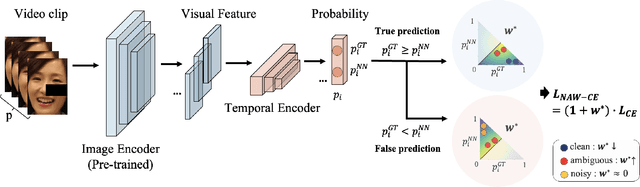


Facial Expression Recognition (FER) plays a crucial role in human affective analysis and has been widely applied in computer vision tasks such as human-computer interaction and psychological assessment. The 8th Affective Behavior Analysis in-the-Wild (ABAW) Challenge aims to assess human emotions using the video-based Aff-Wild2 dataset. This challenge includes various tasks, including the video-based EXPR recognition track, which is our primary focus. In this paper, we demonstrate that addressing label ambiguity and class imbalance, which are known to cause performance degradation, can lead to meaningful performance improvements. Specifically, we propose Video-based Noise-aware Adaptive Weighting (V-NAW), which adaptively assigns importance to each frame in a clip to address label ambiguity and effectively capture temporal variations in facial expressions. Furthermore, we introduce a simple and effective augmentation strategy to reduce redundancy between consecutive frames, which is a primary cause of overfitting. Through extensive experiments, we validate the effectiveness of our approach, demonstrating significant improvements in video-based FER performance.
Interactive Multimodal Fusion with Temporal Modeling
Mar 13, 2025This paper presents our method for the estimation of valence-arousal (VA) in the 8th Affective Behavior Analysis in-the-Wild (ABAW) competition. Our approach integrates visual and audio information through a multimodal framework. The visual branch uses a pre-trained ResNet model to extract spatial features from facial images. The audio branches employ pre-trained VGG models to extract VGGish and LogMel features from speech signals. These features undergo temporal modeling using Temporal Convolutional Networks (TCNs). We then apply cross-modal attention mechanisms, where visual features interact with audio features through query-key-value attention structures. Finally, the features are concatenated and passed through a regression layer to predict valence and arousal. Our method achieves competitive performance on the Aff-Wild2 dataset, demonstrating effective multimodal fusion for VA estimation in-the-wild.
Emotion Recognition with CLIP and Sequential Learning
Mar 13, 2025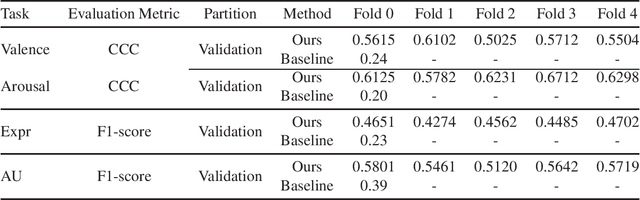
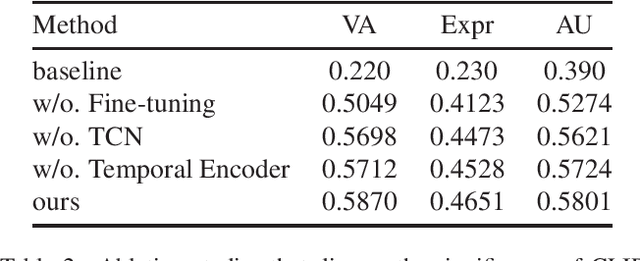
Human emotion recognition plays a crucial role in facilitating seamless interactions between humans and computers. In this paper, we present our innovative methodology for tackling the Valence-Arousal (VA) Estimation Challenge, the Expression Recognition Challenge, and the Action Unit (AU) Detection Challenge, all within the framework of the 8th Workshop and Competition on Affective Behavior Analysis in-the-wild (ABAW). Our approach introduces a novel framework aimed at enhancing continuous emotion recognition. This is achieved by fine-tuning the CLIP model with the aff-wild2 dataset, which provides annotated expression labels. The result is a fine-tuned model that serves as an efficient visual feature extractor, significantly improving its robustness. To further boost the performance of continuous emotion recognition, we incorporate Temporal Convolutional Network (TCN) modules alongside Transformer Encoder modules into our system architecture. The integration of these advanced components allows our model to outperform baseline performance, demonstrating its ability to recognize human emotions with greater accuracy and efficiency.
MAVEN: Multi-modal Attention for Valence-Arousal Emotion Network
Mar 16, 2025This paper introduces MAVEN (Multi-modal Attention for Valence-Arousal Emotion Network), a novel architecture for dynamic emotion recognition through dimensional modeling of affect. The model uniquely integrates visual, audio, and textual modalities via a bi-directional cross-modal attention mechanism with six distinct attention pathways, enabling comprehensive interactions between all modality pairs. Our proposed approach employs modality-specific encoders to extract rich feature representations from synchronized video frames, audio segments, and transcripts. The architecture's novelty lies in its cross-modal enhancement strategy, where each modality representation is refined through weighted attention from other modalities, followed by self-attention refinement through modality-specific encoders. Rather than directly predicting valence-arousal values, MAVEN predicts emotions in a polar coordinate form, aligning with psychological models of the emotion circumplex. Experimental evaluation on the Aff-Wild2 dataset demonstrates the effectiveness of our approach, with performance measured using Concordance Correlation Coefficient (CCC). The multi-stage architecture demonstrates superior ability to capture the complex, nuanced nature of emotional expressions in conversational videos, advancing the state-of-the-art (SOTA) in continuous emotion recognition in-the-wild. Code can be found at: https://github.com/Vrushank-Ahire/MAVEN_8th_ABAW.
Facial Action Unit Detection by Adaptively Constraining Self-Attention and Causally Deconfounding Sample
Oct 02, 2024Facial action unit (AU) detection remains a challenging task, due to the subtlety, dynamics, and diversity of AUs. Recently, the prevailing techniques of self-attention and causal inference have been introduced to AU detection. However, most existing methods directly learn self-attention guided by AU detection, or employ common patterns for all AUs during causal intervention. The former often captures irrelevant information in a global range, and the latter ignores the specific causal characteristic of each AU. In this paper, we propose a novel AU detection framework called AC2D by adaptively constraining self-attention weight distribution and causally deconfounding the sample confounder. Specifically, we explore the mechanism of self-attention weight distribution, in which the self-attention weight distribution of each AU is regarded as spatial distribution and is adaptively learned under the constraint of location-predefined attention and the guidance of AU detection. Moreover, we propose a causal intervention module for each AU, in which the bias caused by training samples and the interference from irrelevant AUs are both suppressed. Extensive experiments show that our method achieves competitive performance compared to state-of-the-art AU detection approaches on challenging benchmarks, including BP4D, DISFA, GFT, and BP4D+ in constrained scenarios and Aff-Wild2 in unconstrained scenarios. The code is available at https://github.com/ZhiwenShao/AC2D.
Descriptor: Face Detection Dataset for Programmable Threshold-Based Sparse-Vision
Oct 01, 2024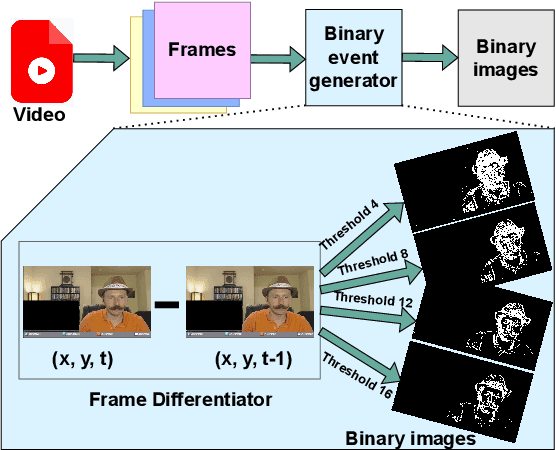
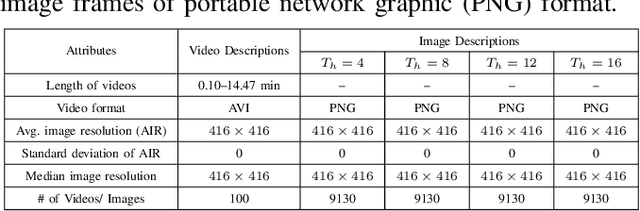
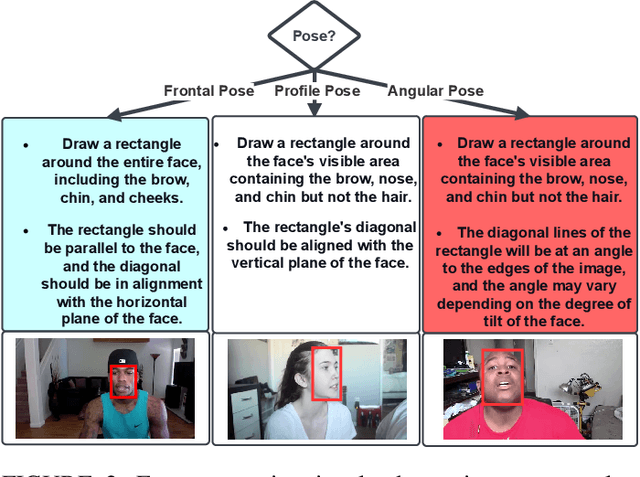

Smart focal-plane and in-chip image processing has emerged as a crucial technology for vision-enabled embedded systems with energy efficiency and privacy. However, the lack of special datasets providing examples of the data that these neuromorphic sensors compute to convey visual information has hindered the adoption of these promising technologies. Neuromorphic imager variants, including event-based sensors, produce various representations such as streams of pixel addresses representing time and locations of intensity changes in the focal plane, temporal-difference data, data sifted/thresholded by temporal differences, image data after applying spatial transformations, optical flow data, and/or statistical representations. To address the critical barrier to entry, we provide an annotated, temporal-threshold-based vision dataset specifically designed for face detection tasks derived from the same videos used for Aff-Wild2. By offering multiple threshold levels (e.g., 4, 8, 12, and 16), this dataset allows for comprehensive evaluation and optimization of state-of-the-art neural architectures under varying conditions and settings compared to traditional methods. The accompanying tool flow for generating event data from raw videos further enhances accessibility and usability. We anticipate that this resource will significantly support the development of robust vision systems based on smart sensors that can process based on temporal-difference thresholds, enabling more accurate and efficient object detection and localization and ultimately promoting the broader adoption of low-power, neuromorphic imaging technologies. To support further research, we publicly released the dataset at \url{https://dx.doi.org/10.21227/bw2e-dj78}.
GANmut: Generating and Modifying Facial Expressions
Jun 16, 2024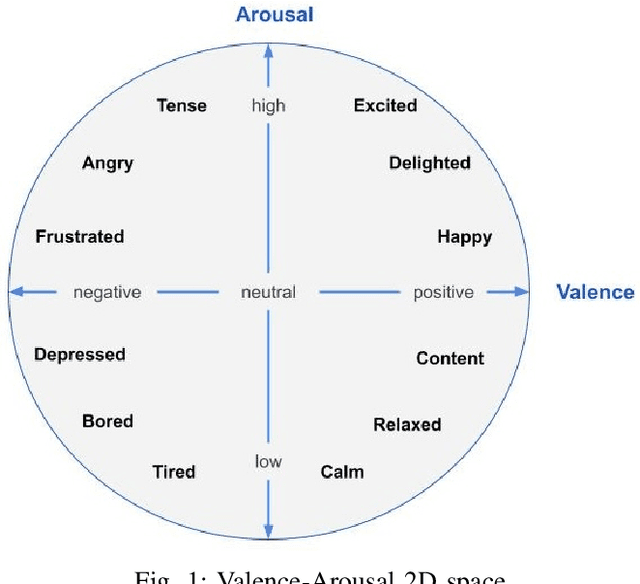
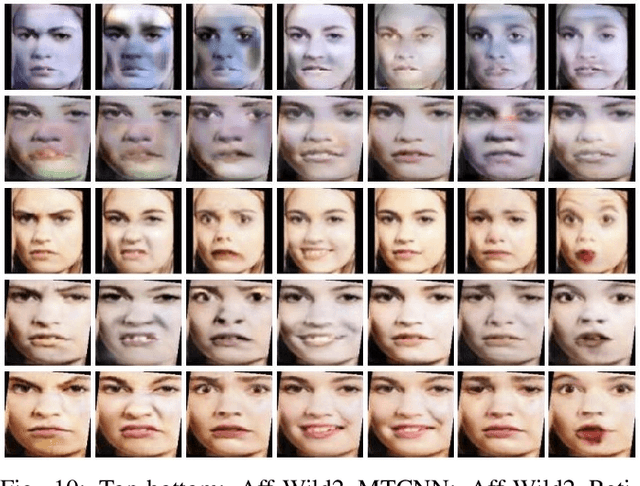
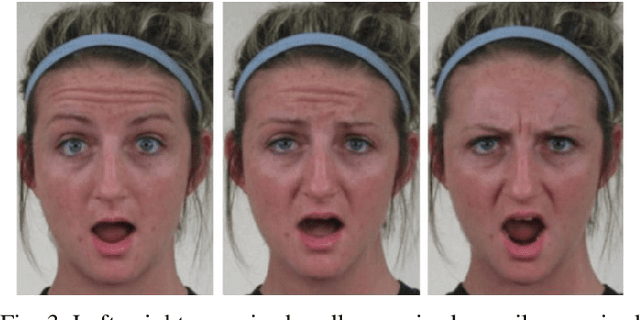
In the realm of emotion synthesis, the ability to create authentic and nuanced facial expressions continues to gain importance. The GANmut study discusses a recently introduced advanced GAN framework that, instead of relying on predefined labels, learns a dynamic and interpretable emotion space. This methodology maps each discrete emotion as vectors starting from a neutral state, their magnitude reflecting the emotion's intensity. The current project aims to extend the study of this framework by benchmarking across various datasets, image resolutions, and facial detection methodologies. This will involve conducting a series of experiments using two emotional datasets: Aff-Wild2 and AffNet. Aff-Wild2 contains videos captured in uncontrolled environments, which include diverse camera angles, head positions, and lighting conditions, providing a real-world challenge. AffNet offers images with labelled emotions, improving the diversity of emotional expressions available for training. The first two experiments will focus on training GANmut using the Aff-Wild2 dataset, processed with either RetinaFace or MTCNN, both of which are high-performance deep learning face detectors. This setup will help determine how well GANmut can learn to synthesise emotions under challenging conditions and assess the comparative effectiveness of these face detection technologies. The subsequent two experiments will merge the Aff-Wild2 and AffNet datasets, combining the real world variability of Aff-Wild2 with the diverse emotional labels of AffNet. The same face detectors, RetinaFace and MTCNN, will be employed to evaluate whether the enhanced diversity of the combined datasets improves GANmut's performance and to compare the impact of each face detection method in this hybrid setup.
7th ABAW Competition: Multi-Task Learning and Compound Expression Recognition
Jul 04, 2024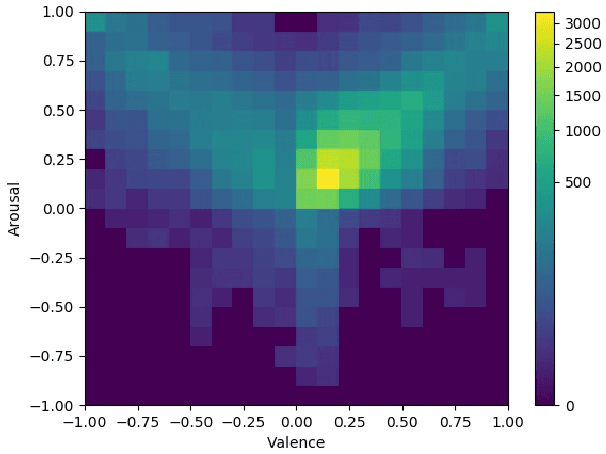



This paper describes the 7th Affective Behavior Analysis in-the-wild (ABAW) Competition, which is part of the respective Workshop held in conjunction with ECCV 2024. The 7th ABAW Competition addresses novel challenges in understanding human expressions and behaviors, crucial for the development of human-centered technologies. The Competition comprises of two sub-challenges: i) Multi-Task Learning (the goal is to learn at the same time, in a multi-task learning setting, to estimate two continuous affect dimensions, valence and arousal, to recognise between the mutually exclusive classes of the 7 basic expressions and 'other'), and to detect 12 Action Units); and ii) Compound Expression Recognition (the target is to recognise between the 7 mutually exclusive compound expression classes). s-Aff-Wild2, which is a static version of the A/V Aff-Wild2 database and contains annotations for valence-arousal, expressions and Action Units, is utilized for the purposes of the Multi-Task Learning Challenge; a part of C-EXPR-DB, which is an A/V in-the-wild database with compound expression annotations, is utilized for the purposes of the Compound Expression Recognition Challenge. In this paper, we introduce the two challenges, detailing their datasets and the protocols followed for each. We also outline the evaluation metrics, and highlight the baseline systems and their results. Additional information about the competition can be found at \url{https://affective-behavior-analysis-in-the-wild.github.io/7th}.
Affective Behaviour Analysis via Progressive Learning
Jul 26, 2024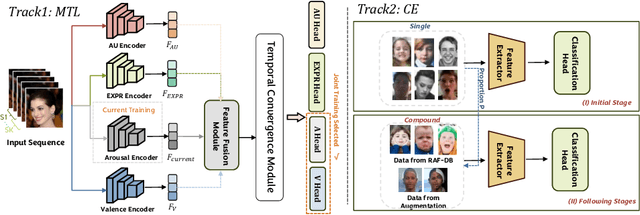

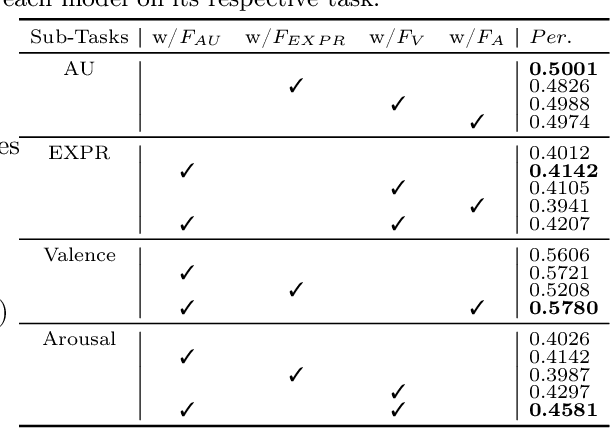

Affective Behavior Analysis aims to develop emotionally intelligent technology that can recognize and respond to human emotions. To advance this, the 7th Affective Behavior Analysis in-the-wild (ABAW) competition establishes two tracks: i.e., the Multi-task Learning (MTL) Challenge and the Compound Expression (CE) challenge based on Aff-Wild2 and C-EXPR-DB datasets. In this paper, we present our methods and experimental results for the two competition tracks. Specifically, it can be summarized in the following four aspects: 1) To attain high-quality facial features, we train a Masked-Auto Encoder in a self-supervised manner. 2) We devise a temporal convergence module to capture the temporal information between video frames and explore the impact of window size and sequence length on each sub-task. 3) To facilitate the joint optimization of various sub-tasks, we explore the impact of sub-task joint training and feature fusion from individual tasks on each task performance improvement. 4) We utilize curriculum learning to transition the model from recognizing single expressions to recognizing compound expressions, thereby improving the accuracy of compound expression recognition. Extensive experiments demonstrate the superiority of our designs.