 Add to Chrome
 Add to Firefox
 Add to Edge
ControlRadio: Prompt-Driven Controllable Diffusion for Cross-Modal Radio Map Generation
Aug 10, 2026
Radio maps describe how wireless signals propagate across space and are essential for wireless communication, sensing, and network planning. However, constructing accurate radio maps traditionally requires either dense measurements or computationally expensive physical simulations, which limits scalability and real-time deployment. Recent advances in generative artificial intelligence offer a promising alternative, but existing approaches lack fine-grained control and physical consistency when applied to real-world wireless environments. Here we present \textbf{ControlRadio}, a controllable generative framework that produces radio maps from natural-language descriptions and environmental layouts, including building structures and transmitter locations. Joint semantic and spatial conditioning enables interpretable, propagation-plausible generation, while a controlled latent prior and layout-aware conditioning improve stability and structural consistency. Extensive experiments demonstrate that ControlRadio achieves state-of-the-art accuracy and strong generalization across diverse urban scenarios, while reducing computation time by more than four orders of magnitude compared with conventional simulation-based methods. Such results suggest a new paradigm for scalable and controllable wireless environment modeling, with broad implications for next-generation communication systems and data-driven radio sensing.

MODE-RAG: Manifold Outlier Diagnosis and Energy-based Retrieval-Augmented Generation Evaluation
Jun 16, 2026While Multimodal Retrieval-Augmented Generation (M-RAG) enhances Large Vision-Language Models, it remains highly susceptible to cross-modal hallucinations, causal fabrications, and sycophancy. Furthermore, existing mitigation pipelines often face an intervention paradox: static rules tend to unnecessarily disrupt accurate generations, whereas leaving the multi-modal reasoning completely unguided allows existing mismatches to cascade into severe logical fabrications. To quantify and mitigate these hallucinations, we propose a Multi-Agent system, MODE-RAG, driven by Variational Free Energy (VFE) and internal attention states to dynamically gate interventions. High-risk queries are routed to five stage-specific agents, integrating Monte Carlo Tree Search (MCTS) for rigorous causal derivation and logit perturbations to penalize sycophancy. Dedicated Correction and Overseer agents ensure formatting stability and perform post-hoc factual verification. To objectively evaluate our approach, we introduce ModeVent, a challenging subset derived from the MultiVent dataset. Extensive experiments indicate that our system effectively reduces hallucination rates and logical fabrication, significantly improving the robustness of M-RAG systems.
Findings of the MAGMaR 2026 Shared Task
Jun 10, 2026This overview paper presents the results of the shared task for the second workshop on Multimodal Augmented Generation via Multimodal Retrieval (MAGMaR). In this shared task participants submitted systems focused on either (i) video retrieval or (ii) grounded generation of articles given retrieved videos. Teams could submit to either task. For the retrieval task, we had 2 participating teams that submitted a total of 17 systems -- all of which beat a baseline derived from the winner of last year's shared task. On the generation side, we had 4 teams submit 16 systems. All teams had at least one generated report that was labeled the best by a human annotator.
Decoupling Semantics and Logic: A Training-Free Coarse-to-Fine Pipeline for Video Retrieval-Augmented Generation
Jun 06, 2026This paper presents our system description for the 2nd Workshop on Multimodal Augmented Generation via MultimodAl Retrieval (MAGMaR). Addressing the critical challenges of cross-lingual long-video comprehension, strict persona adherence, and zero-hallucination temporal grounding, we propose a fully training-free, two-stage cascaded Video RAG pipeline. Our architecture strategically decouples semantic retrieval from cognitive logical reasoning through a modality-aware division of labor. In the first stage, a high-recall semantic pre-fetching module employs dense retrieval using only high-fidelity visual summaries and global text descriptions, explicitly isolating noisy modalities (e.g., OCR and ASR) to maintain a pristine vector space. In the second stage, an Adaptive, Iterative, and Reasoning-based (A.I.R.) filtering agent, powered by a commercial Large Language Model (LLM), performs fine-grained cognitive reranking. The agent re-incorporates full multimodal contexts to enforce strict logical alignment with user personas, effectively pruning semantically similar but logically irrelevant candidates. Finally, a Prompt Sculpting mechanism constrains the generator to synthesize the distilled subset into strictly formatted JSON responses with exact chunk-level citations. Evaluated on the RAG track, our resource-aware approach shows exceptional precision in both information retrieval and persona-conditioned generation.
FeDMRA: Federated Incremental Learning with Dynamic Memory Replay Allocation
Mar 30, 2026In federated healthcare systems, Federated Class-Incremental Learning (FCIL) has emerged as a key paradigm, enabling continuous adaptive model learning among distributed clients while safeguarding data privacy. However, in practical applications, data across agent nodes within the distributed framework often exhibits non-independent and identically distributed (non-IID) characteristics, rendering traditional continual learning methods inapplicable. To address these challenges, this paper covers more comprehensive incremental task scenarios and proposes a dynamic memory allocation strategy for exemplar storage based on the data replay mechanism. This strategy fully taps into the inherent potential of data heterogeneity, while taking into account the performance fairness of all participating clients, thereby establishing a balanced and adaptive solution to mitigate catastrophic forgetting. Unlike the fixed allocation of client exemplar memory, the proposed scheme emphasizes the rational allocation of limited storage resources among clients to improve model performance. Furthermore, extensive experiments are conducted on three medical image datasets, and the results demonstrate significant performance improvements compared to existing baseline models.
OpenHAIV: A Framework Towards Practical Open-World Learning
Aug 10, 2025Substantial progress has been made in various techniques for open-world recognition. Out-of-distribution (OOD) detection methods can effectively distinguish between known and unknown classes in the data, while incremental learning enables continuous model knowledge updates. However, in open-world scenarios, these approaches still face limitations. Relying solely on OOD detection does not facilitate knowledge updates in the model, and incremental fine-tuning typically requires supervised conditions, which significantly deviate from open-world settings. To address these challenges, this paper proposes OpenHAIV, a novel framework that integrates OOD detection, new class discovery, and incremental continual fine-tuning into a unified pipeline. This framework allows models to autonomously acquire and update knowledge in open-world environments. The proposed framework is available at https://haiv-lab.github.io/openhaiv .
OpenEarthSensing: Large-Scale Fine-Grained Benchmark for Open-World Remote Sensing
Feb 28, 2025
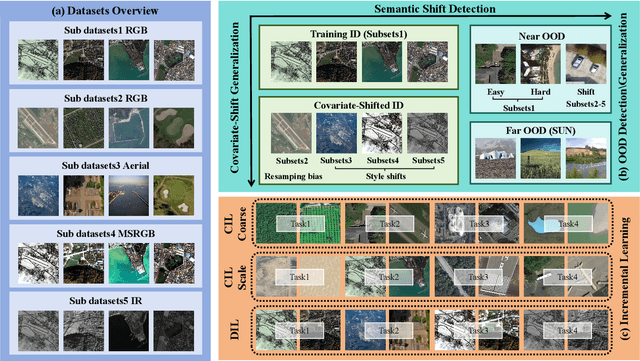
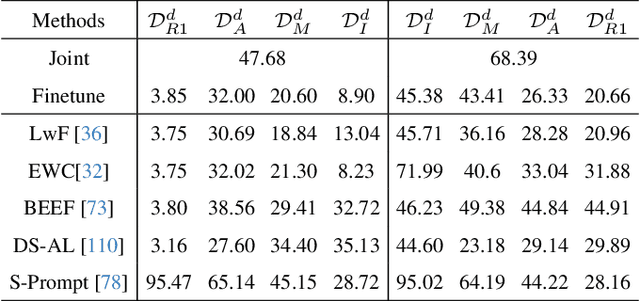
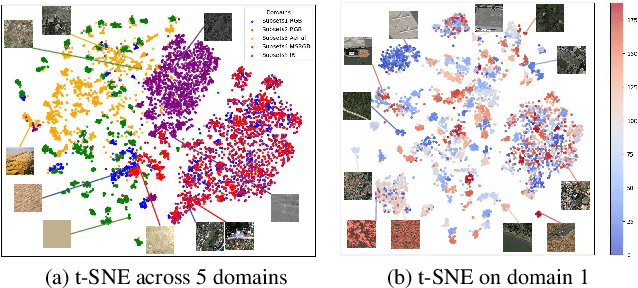
In open-world remote sensing, deployed models must continuously adapt to a steady influx of new data, which often exhibits various shifts compared to what the model encountered during the training phase. To effectively handle the new data, models are required to detect semantic shifts, adapt to covariate shifts, and continuously update themselves. These challenges give rise to a variety of open-world tasks. However, existing open-world remote sensing studies typically train and test within a single dataset to simulate open-world conditions. Currently, there is a lack of large-scale benchmarks capable of evaluating multiple open-world tasks. In this paper, we introduce OpenEarthSensing, a large-scale fine-grained benchmark for open-world remote sensing. OpenEarthSensing includes 189 scene and objects categories, covering the vast majority of potential semantic shifts that may occur in the real world. Additionally, OpenEarthSensing encompasses five data domains with significant covariate shifts, including two RGB satellite domians, one RGB aerial domian, one MS RGB domian, and one infrared domian. The various domains provide a more comprehensive testbed for evaluating the generalization performance of open-world models. We conduct the baseline evaluation of current mainstream open-world tasks and methods on OpenEarthSensing, demonstrating that it serves as a challenging benchmark for open-world remote sensing.
Facial Action Unit Detection by Adaptively Constraining Self-Attention and Causally Deconfounding Sample
Oct 02, 2024Facial action unit (AU) detection remains a challenging task, due to the subtlety, dynamics, and diversity of AUs. Recently, the prevailing techniques of self-attention and causal inference have been introduced to AU detection. However, most existing methods directly learn self-attention guided by AU detection, or employ common patterns for all AUs during causal intervention. The former often captures irrelevant information in a global range, and the latter ignores the specific causal characteristic of each AU. In this paper, we propose a novel AU detection framework called AC2D by adaptively constraining self-attention weight distribution and causally deconfounding the sample confounder. Specifically, we explore the mechanism of self-attention weight distribution, in which the self-attention weight distribution of each AU is regarded as spatial distribution and is adaptively learned under the constraint of location-predefined attention and the guidance of AU detection. Moreover, we propose a causal intervention module for each AU, in which the bias caused by training samples and the interference from irrelevant AUs are both suppressed. Extensive experiments show that our method achieves competitive performance compared to state-of-the-art AU detection approaches on challenging benchmarks, including BP4D, DISFA, GFT, and BP4D+ in constrained scenarios and Aff-Wild2 in unconstrained scenarios. The code is available at https://github.com/ZhiwenShao/AC2D.
AI WALKUP: A Computer-Vision Approach to Quantifying MDS-UPDRS in Parkinson's Disease
Apr 02, 2024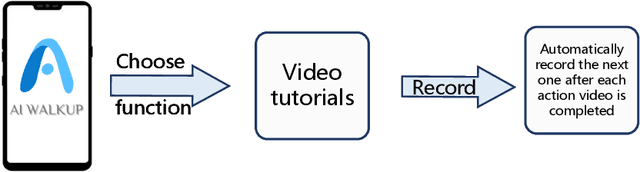
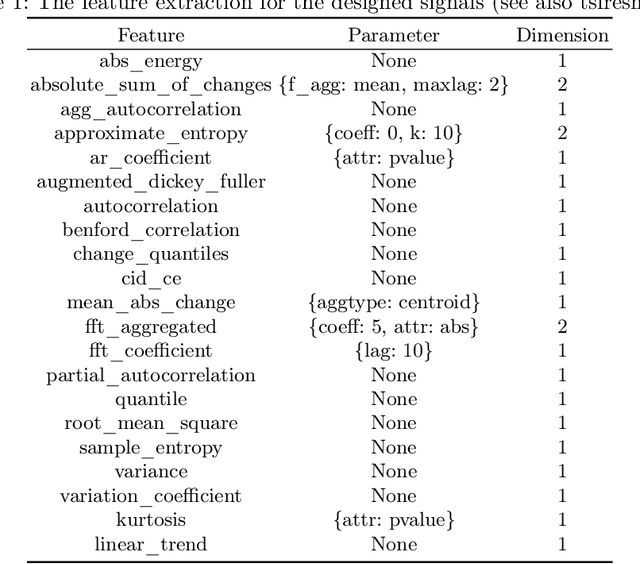
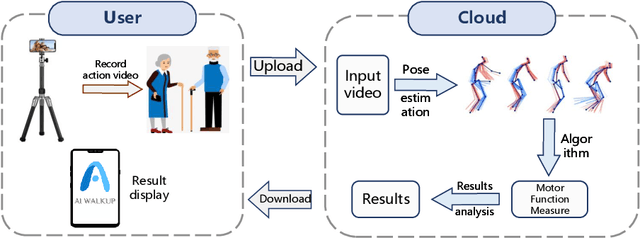
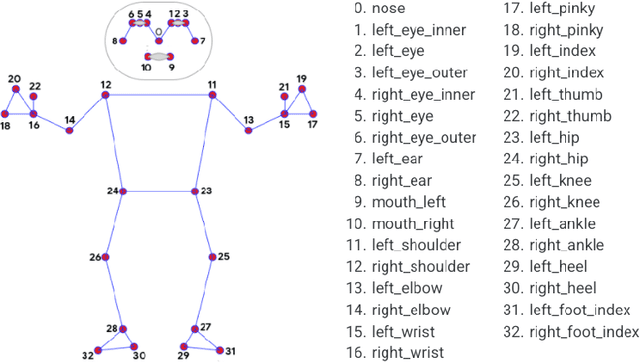
Parkinson's Disease (PD) is the second most common neurodegenerative disorder. The existing assessment method for PD is usually the Movement Disorder Society - Unified Parkinson's Disease Rating Scale (MDS-UPDRS) to assess the severity of various types of motor symptoms and disease progression. However, manual assessment suffers from high subjectivity, lack of consistency, and high cost and low efficiency of manual communication. We want to use a computer vision based solution to capture human pose images based on a camera, reconstruct and perform motion analysis using algorithms, and extract the features of the amount of motion through feature engineering. The proposed approach can be deployed on different smartphones, and the video recording and artificial intelligence analysis can be done quickly and easily through our APP.
YOLOOC: YOLO-based Open-Class Incremental Object Detection with Novel Class Discovery
Mar 30, 2024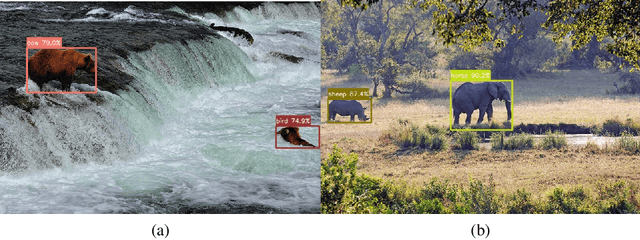
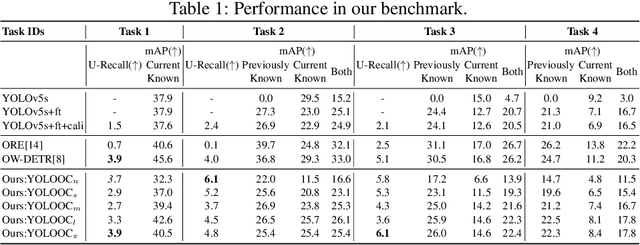
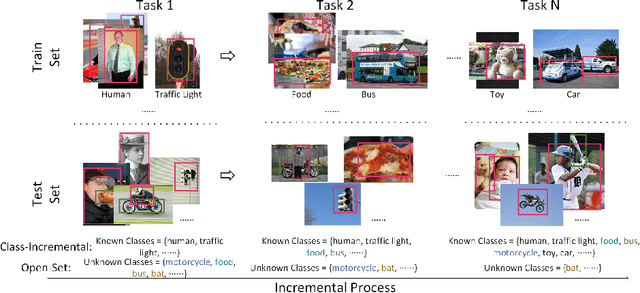
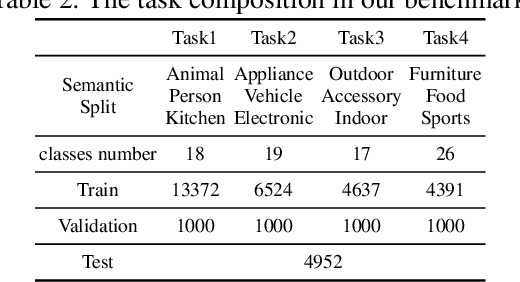
Because of its use in practice, open-world object detection (OWOD) has gotten a lot of attention recently. The challenge is how can a model detect novel classes and then incrementally learn them without forgetting previously known classes. Previous approaches hinge on strongly-supervised or weakly-supervised novel-class data for novel-class detection, which may not apply to real applications. We construct a new benchmark that novel classes are only encountered at the inference stage. And we propose a new OWOD detector YOLOOC, based on the YOLO architecture yet for the Open-Class setup. We introduce label smoothing to prevent the detector from over-confidently mapping novel classes to known classes and to discover novel classes. Extensive experiments conducted on our more realistic setup demonstrate the effectiveness of our method for discovering novel classes in our new benchmark.