 Add to Chrome
 Add to Firefox
 Add to Edge
DGSNA: prompt-based Dynamic Generative Scene-based Noise Addition method
Nov 19, 2024
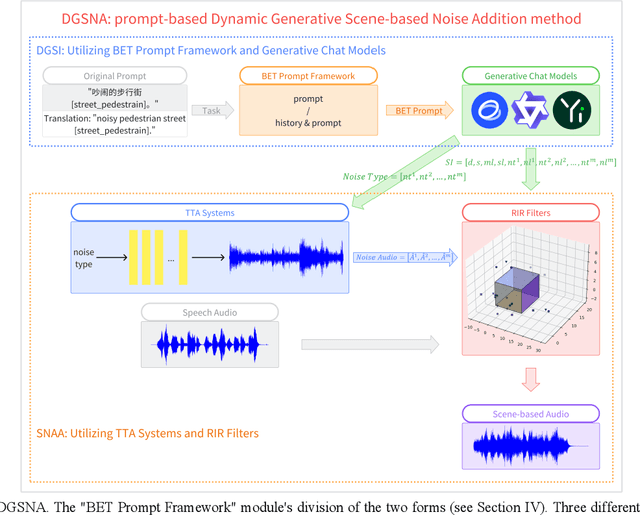


This paper addresses the challenges of accurately enumerating and describing scenes and the labor-intensive process required to replicate acoustic environments using non-generative methods. We introduce the prompt-based Dynamic Generative Sce-ne-based Noise Addition method (DGSNA), which innovatively combines the Dynamic Generation of Scene Information (DGSI) with Scene-based Noise Addition for Audio (SNAA). Employing generative chat models structured within the Back-ground-Examples-Task (BET) prompt framework, DGSI com-ponent facilitates the dynamic synthesis of tailored Scene Infor-mation (SI) for specific acoustic environments. Additionally, the SNAA component leverages Room Impulse Response (RIR) fil-ters and Text-To-Audio (TTA) systems to generate realistic, scene-based noise that can be adapted for both indoor and out-door environments. Through comprehensive experiments, the adaptability of DGSNA across different generative chat models was demonstrated. The results, assessed through both objective and subjective evaluations, show that DGSNA provides robust performance in dynamically generating precise SI and effectively enhancing scene-based noise addition capabilities, thus offering significant improvements over traditional methods in acoustic scene simulation. Our implementation and demos are available at https://dgsna.github.io.

ColorEdit: Training-free Image-Guided Color editing with diffusion model
Nov 15, 2024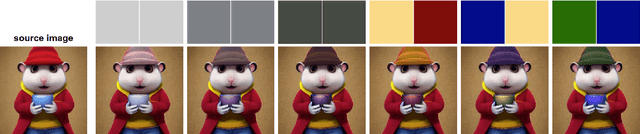

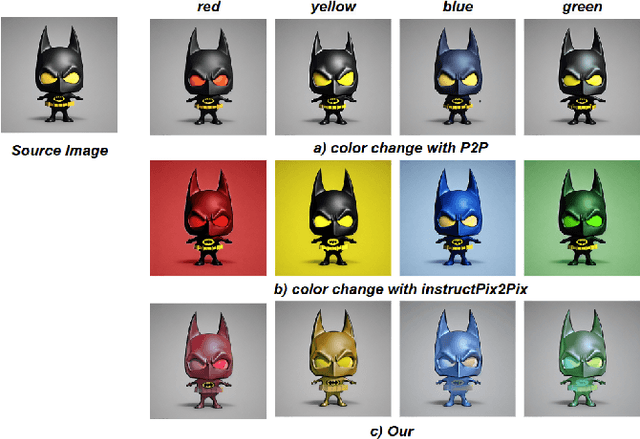

Text-to-image (T2I) diffusion models, with their impressive generative capabilities, have been adopted for image editing tasks, demonstrating remarkable efficacy. However, due to attention leakage and collision between the cross-attention map of the object and the new color attribute from the text prompt, text-guided image editing methods may fail to change the color of an object, resulting in a misalignment between the resulting image and the text prompt. In this paper, we conduct an in-depth analysis on the process of text-guided image synthesizing and what semantic information different cross-attention blocks have learned. We observe that the visual representation of an object is determined in the up-block of the diffusion model in the early stage of the denoising process, and color adjustment can be achieved through value matrices alignment in the cross-attention layer. Based on our findings, we propose a straightforward, yet stable, and effective image-guided method to modify the color of an object without requiring any additional fine-tuning or training. Lastly, we present a benchmark dataset called COLORBENCH, the first benchmark to evaluate the performance of color change methods. Extensive experiments validate the effectiveness of our method in object-level color editing and surpass the performance of popular text-guided image editing approaches in both synthesized and real images.
VCBench: A Controllable Benchmark for Symbolic and Abstract Challenges in Video Cognition
Nov 14, 2024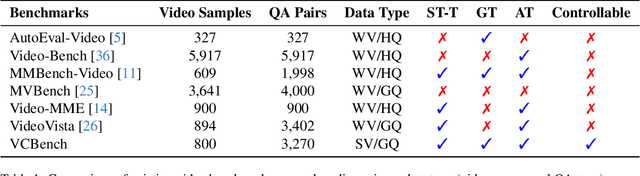


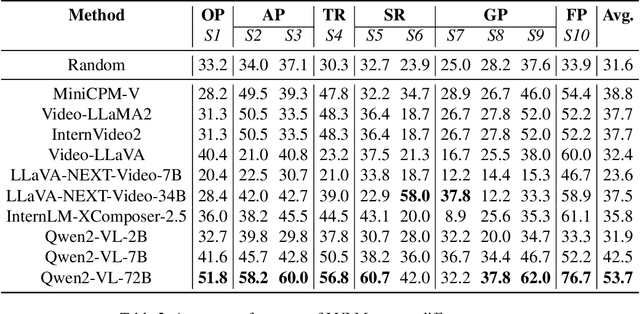
Recent advancements in Large Video-Language Models (LVLMs) have driven the development of benchmarks designed to assess cognitive abilities in video-based tasks. However, most existing benchmarks heavily rely on web-collected videos paired with human annotations or model-generated questions, which limit control over the video content and fall short in evaluating advanced cognitive abilities involving symbolic elements and abstract concepts. To address these limitations, we introduce VCBench, a controllable benchmark to assess LVLMs' cognitive abilities, involving symbolic and abstract concepts at varying difficulty levels. By generating video data with the Python-based engine, VCBench allows for precise control over the video content, creating dynamic, task-oriented videos that feature complex scenes and abstract concepts. Each task pairs with tailored question templates that target specific cognitive challenges, providing a rigorous evaluation test. Our evaluation reveals that even state-of-the-art (SOTA) models, such as Qwen2-VL-72B, struggle with simple video cognition tasks involving abstract concepts, with performance sharply dropping by 19% as video complexity rises. These findings reveal the current limitations of LVLMs in advanced cognitive tasks and highlight the critical role of VCBench in driving research toward more robust LVLMs for complex video cognition challenges.
Decoding Report Generators: A Cyclic Vision-Language Adapter for Counterfactual Explanations
Nov 08, 2024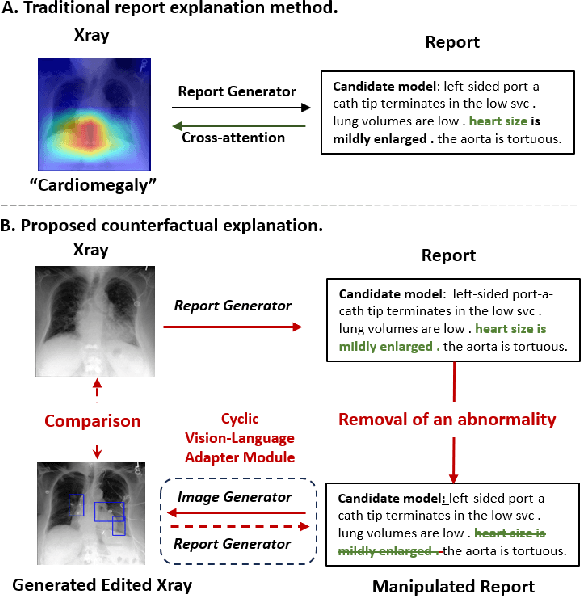
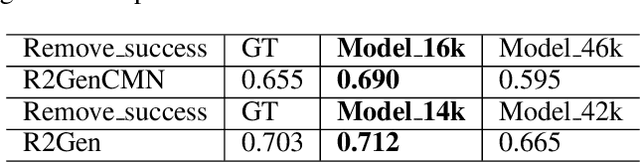
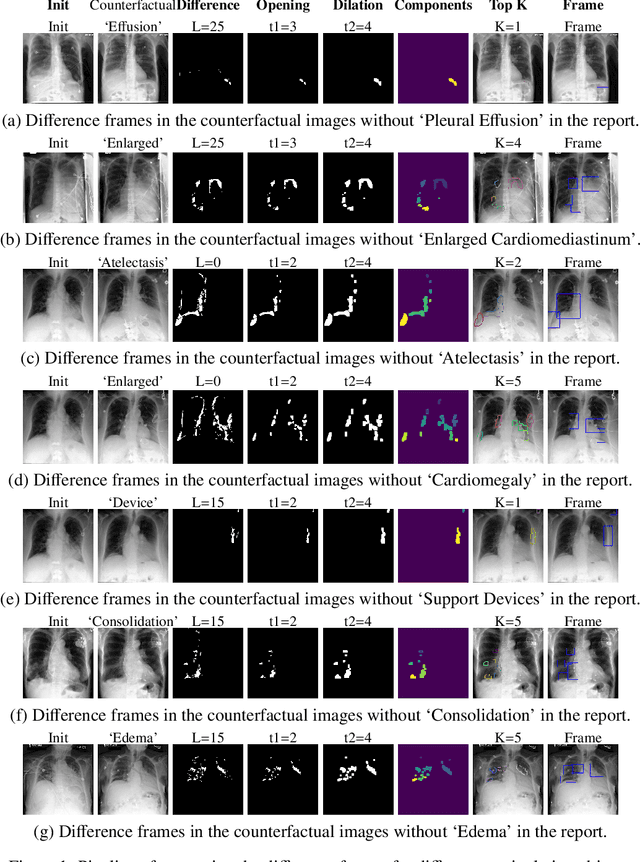
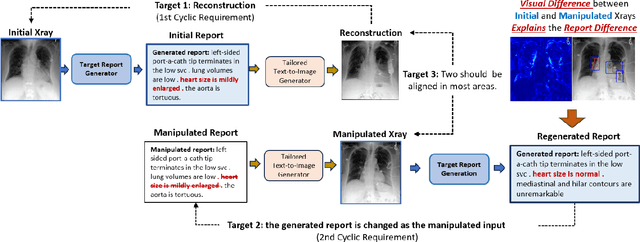
Despite significant advancements in report generation methods, a critical limitation remains: the lack of interpretability in the generated text. This paper introduces an innovative approach to enhance the explainability of text generated by report generation models. Our method employs cyclic text manipulation and visual comparison to identify and elucidate the features in the original content that influence the generated text. By manipulating the generated reports and producing corresponding images, we create a comparative framework that highlights key attributes and their impact on the text generation process. This approach not only identifies the image features aligned to the generated text but also improves transparency but also provides deeper insights into the decision-making mechanisms of the report generation models. Our findings demonstrate the potential of this method to significantly enhance the interpretability and transparency of AI-generated reports.
DisenTS: Disentangled Channel Evolving Pattern Modeling for Multivariate Time Series Forecasting
Oct 30, 2024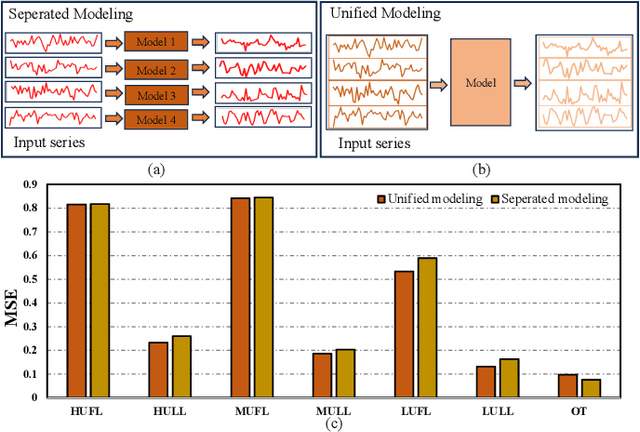
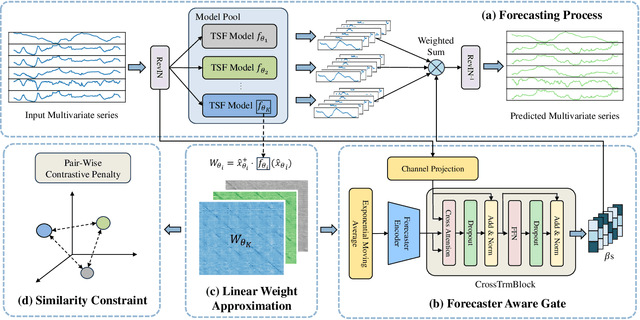

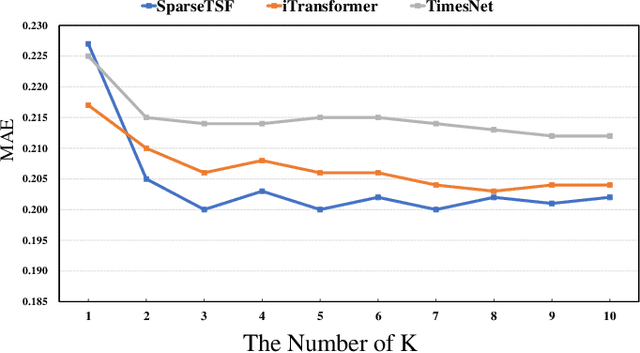
Multivariate time series forecasting plays a crucial role in various real-world applications. Significant efforts have been made to integrate advanced network architectures and training strategies that enhance the capture of temporal dependencies, thereby improving forecasting accuracy. On the other hand, mainstream approaches typically utilize a single unified model with simplistic channel-mixing embedding or cross-channel attention operations to account for the critical intricate inter-channel dependencies. Moreover, some methods even trade capacity for robust prediction based on the channel-independent assumption. Nonetheless, as time series data may display distinct evolving patterns due to the unique characteristics of each channel (including multiple strong seasonalities and trend changes), the unified modeling methods could yield suboptimal results. To this end, we propose DisenTS, a tailored framework for modeling disentangled channel evolving patterns in general multivariate time series forecasting. The central idea of DisenTS is to model the potential diverse patterns within the multivariate time series data in a decoupled manner. Technically, the framework employs multiple distinct forecasting models, each tasked with uncovering a unique evolving pattern. To guide the learning process without supervision of pattern partition, we introduce a novel Forecaster Aware Gate (FAG) module that generates the routing signals adaptively according to both the forecasters' states and input series' characteristics. The forecasters' states are derived from the Linear Weight Approximation (LWA) strategy, which quantizes the complex deep neural networks into compact matrices. Additionally, the Similarity Constraint (SC) is further proposed to guide each model to specialize in an underlying pattern by minimizing the mutual information between the representations.
Optimizing Instruction Synthesis: Effective Exploration of Evolutionary Space with Tree Search
Oct 14, 2024
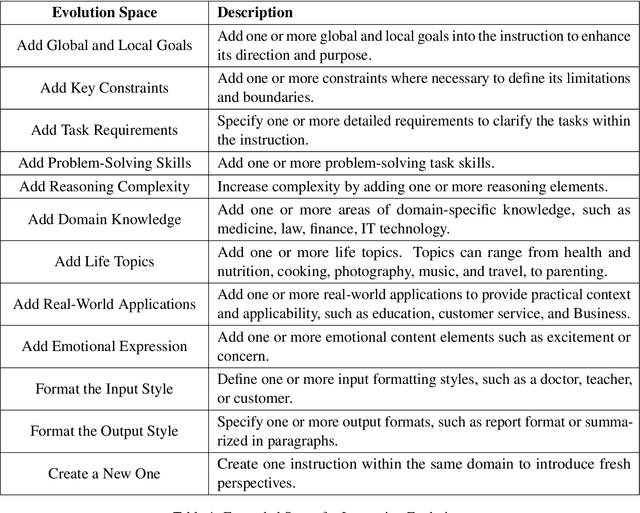
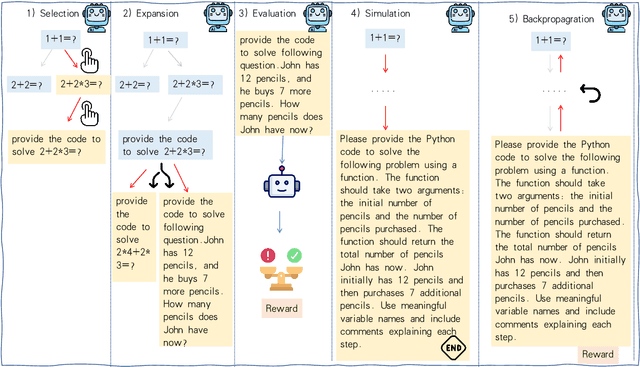
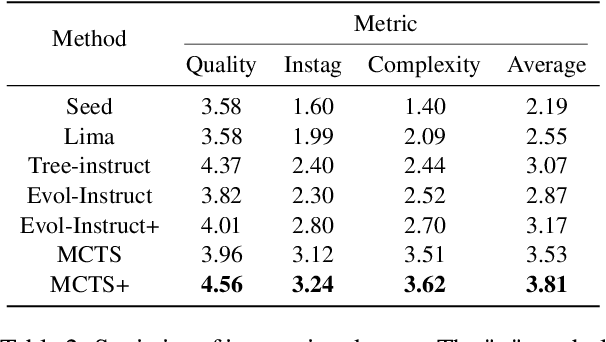
Instruction tuning is a crucial technique for aligning language models with humans' actual goals in the real world. Extensive research has highlighted the quality of instruction data is essential for the success of this alignment. However, creating high-quality data manually is labor-intensive and time-consuming, which leads researchers to explore using LLMs to synthesize data. Recent studies have focused on using a stronger LLM to iteratively enhance existing instruction data, showing promising results. Nevertheless, previous work often lacks control over the evolution direction, resulting in high uncertainty in the data synthesis process and low-quality instructions. In this paper, we introduce a general and scalable framework, IDEA-MCTS (Instruction Data Enhancement using Monte Carlo Tree Search), a scalable framework for efficiently synthesizing instructions. With tree search and evaluation models, it can efficiently guide each instruction to evolve into a high-quality form, aiding in instruction fine-tuning. Experimental results show that IDEA-MCTS significantly enhances the seed instruction data, raising the average evaluation scores of quality, diversity, and complexity from 2.19 to 3.81. Furthermore, in open-domain benchmarks, experimental results show that IDEA-MCTS improves the accuracy of real-world instruction-following skills in LLMs by an average of 5\% in low-resource settings.
KnowPC: Knowledge-Driven Programmatic Reinforcement Learning for Zero-shot Coordination
Aug 08, 2024Zero-shot coordination (ZSC) remains a major challenge in the cooperative AI field, which aims to learn an agent to cooperate with an unseen partner in training environments or even novel environments. In recent years, a popular ZSC solution paradigm has been deep reinforcement learning (DRL) combined with advanced self-play or population-based methods to enhance the neural policy's ability to handle unseen partners. Despite some success, these approaches usually rely on black-box neural networks as the policy function. However, neural networks typically lack interpretability and logic, making the learned policies difficult for partners (e.g., humans) to understand and limiting their generalization ability. These shortcomings hinder the application of reinforcement learning methods in diverse cooperative scenarios.We suggest to represent the agent's policy with an interpretable program. Unlike neural networks, programs contain stable logic, but they are non-differentiable and difficult to optimize.To automatically learn such programs, we introduce Knowledge-driven Programmatic reinforcement learning for zero-shot Coordination (KnowPC). We first define a foundational Domain-Specific Language (DSL), including program structures, conditional primitives, and action primitives. A significant challenge is the vast program search space, making it difficult to find high-performing programs efficiently. To address this, KnowPC integrates an extractor and an reasoner. The extractor discovers environmental transition knowledge from multi-agent interaction trajectories, while the reasoner deduces the preconditions of each action primitive based on the transition knowledge.
Leveraging Inter-Chunk Interactions for Enhanced Retrieval in Large Language Model-Based Question Answering
Aug 06, 2024

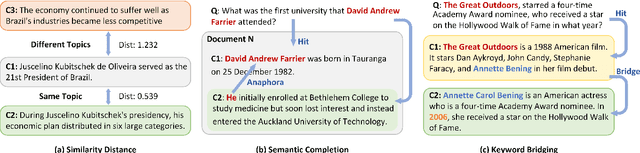
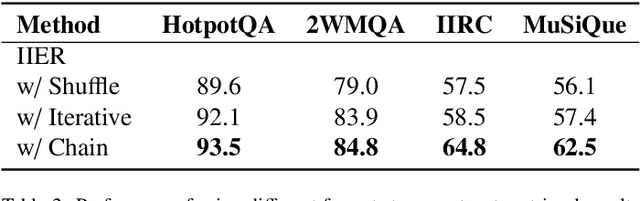
Retrieving external knowledge and prompting large language models with relevant information is an effective paradigm to enhance the performance of question-answering tasks. Previous research typically handles paragraphs from external documents in isolation, resulting in a lack of context and ambiguous references, particularly in multi-document and complex tasks. To overcome these challenges, we propose a new retrieval framework IIER, that leverages Inter-chunk Interactions to Enhance Retrieval. This framework captures the internal connections between document chunks by considering three types of interactions: structural, keyword, and semantic. We then construct a unified Chunk-Interaction Graph to represent all external documents comprehensively. Additionally, we design a graph-based evidence chain retriever that utilizes previous paths and chunk interactions to guide the retrieval process. It identifies multiple seed nodes based on the target question and iteratively searches for relevant chunks to gather supporting evidence. This retrieval process refines the context and reasoning chain, aiding the large language model in reasoning and answer generation. Extensive experiments demonstrate that IIER outperforms strong baselines across four datasets, highlighting its effectiveness in improving retrieval and reasoning capabilities.
Improving Faithfulness of Large Language Models in Summarization via Sliding Generation and Self-Consistency
Jul 31, 2024
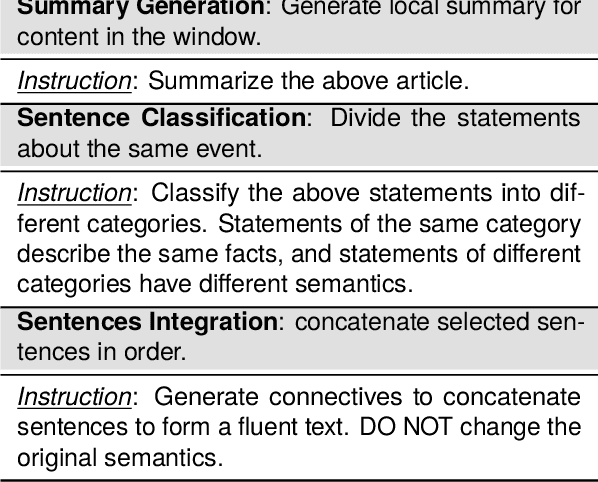
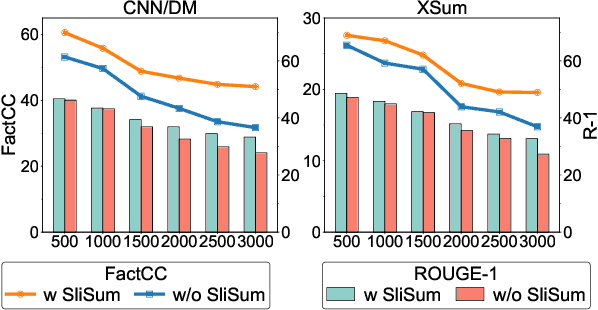
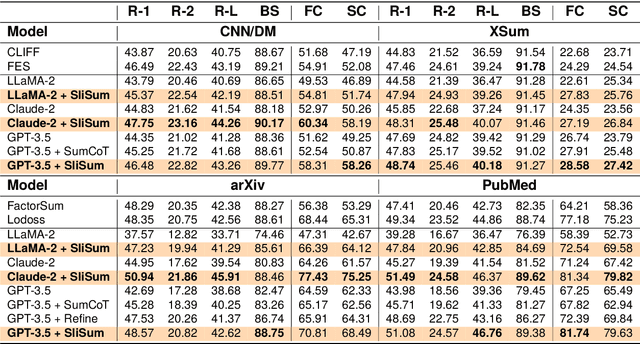
Despite large language models (LLMs) have demonstrated impressive performance in various tasks, they are still suffering from the factual inconsistency problem called hallucinations. For instance, LLMs occasionally generate content that diverges from source article, and prefer to extract information that appears at the beginning and end of the context, especially in long document summarization. Inspired by these findings, we propose to improve the faithfulness of LLMs in summarization by impelling them to process the entire article more fairly and faithfully. We present a novel summary generation strategy, namely SliSum, which exploits the ideas of sliding windows and self-consistency. Specifically, SliSum divides the source article into overlapping windows, and utilizes LLM to generate local summaries for the content in the windows. Finally, SliSum aggregates all local summaries using clustering and majority voting algorithm to produce more faithful summary of entire article. Extensive experiments demonstrate that SliSum significantly improves the faithfulness of diverse LLMs including LLaMA-2, Claude-2 and GPT-3.5 in both short and long text summarization, while maintaining their fluency and informativeness and without additional fine-tuning and resources. We further conduct qualitative and quantitative studies to investigate why SliSum works and impacts of hyperparameters in SliSum on performance.
Sign Language Recognition Based On Facial Expression and Hand Skeleton
Jul 02, 2024Sign language is a visual language used by the deaf and dumb community to communicate. However, for most recognition methods based on monocular cameras, the recognition accuracy is low and the robustness is poor. Even if the effect is good on some data, it may perform poorly in other data with different interference due to the inability to extract effective features. To solve these problems, we propose a sign language recognition network that integrates skeleton features of hands and facial expression. Among this, we propose a hand skeleton feature extraction based on coordinate transformation to describe the shape of the hand more accurately. Moreover, by incorporating facial expression information, the accuracy and robustness of sign language recognition are finally improved, which was verified on A Dataset for Argentinian Sign Language and SEU's Chinese Sign Language Recognition Database (SEUCSLRD).