 Add to Chrome
 Add to Firefox
 Add to Edge
Empowering Large Language Model for Continual Video Question Answering with Collaborative Prompting
Oct 01, 2024
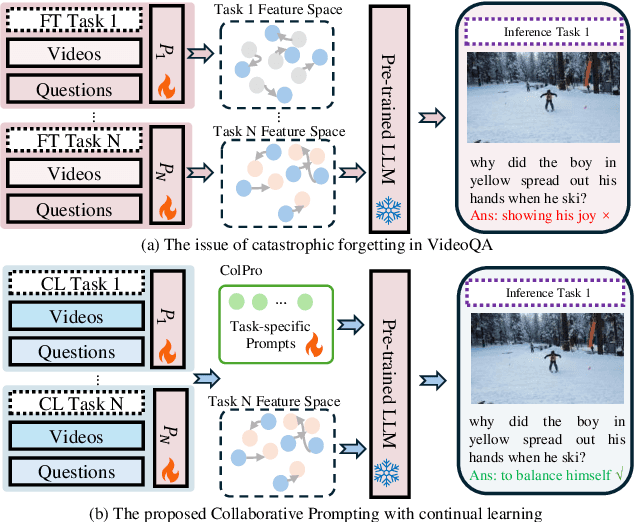
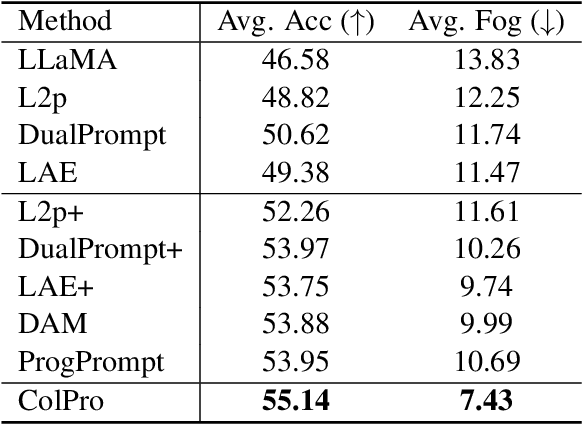

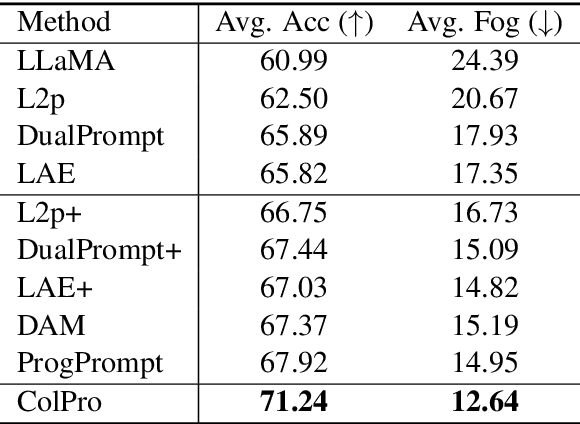
In recent years, the rapid increase in online video content has underscored the limitations of static Video Question Answering (VideoQA) models trained on fixed datasets, as they struggle to adapt to new questions or tasks posed by newly available content. In this paper, we explore the novel challenge of VideoQA within a continual learning framework, and empirically identify a critical issue: fine-tuning a large language model (LLM) for a sequence of tasks often results in catastrophic forgetting. To address this, we propose Collaborative Prompting (ColPro), which integrates specific question constraint prompting, knowledge acquisition prompting, and visual temporal awareness prompting. These prompts aim to capture textual question context, visual content, and video temporal dynamics in VideoQA, a perspective underexplored in prior research. Experimental results on the NExT-QA and DramaQA datasets show that ColPro achieves superior performance compared to existing approaches, achieving 55.14\% accuracy on NExT-QA and 71.24\% accuracy on DramaQA, highlighting its practical relevance and effectiveness.

Devil is in Details: Locality-Aware 3D Abdominal CT Volume Generation for Self-Supervised Organ Segmentation
Sep 30, 2024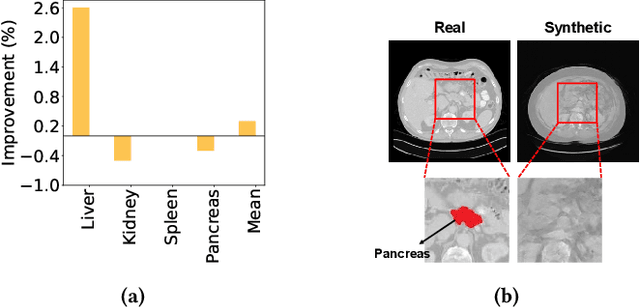

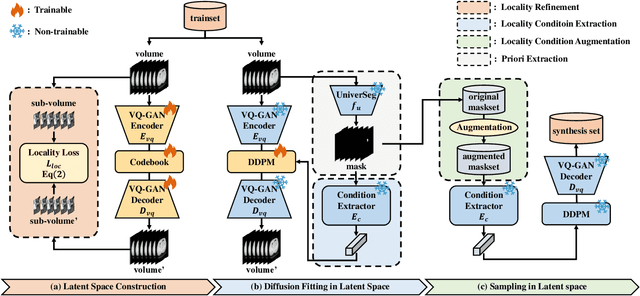
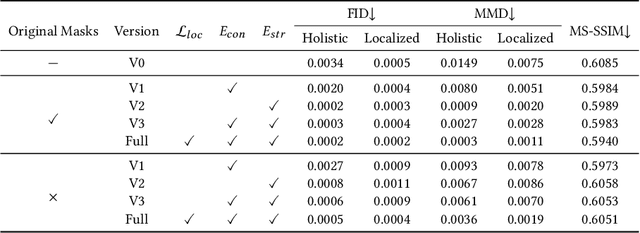
In the realm of medical image analysis, self-supervised learning (SSL) techniques have emerged to alleviate labeling demands, while still facing the challenge of training data scarcity owing to escalating resource requirements and privacy constraints. Numerous efforts employ generative models to generate high-fidelity, unlabeled 3D volumes across diverse modalities and anatomical regions. However, the intricate and indistinguishable anatomical structures within the abdomen pose a unique challenge to abdominal CT volume generation compared to other anatomical regions. To address the overlooked challenge, we introduce the Locality-Aware Diffusion (Lad), a novel method tailored for exquisite 3D abdominal CT volume generation. We design a locality loss to refine crucial anatomical regions and devise a condition extractor to integrate abdominal priori into generation, thereby enabling the generation of large quantities of high-quality abdominal CT volumes essential for SSL tasks without the need for additional data such as labels or radiology reports. Volumes generated through our method demonstrate remarkable fidelity in reproducing abdominal structures, achieving a decrease in FID score from 0.0034 to 0.0002 on AbdomenCT-1K dataset, closely mirroring authentic data and surpassing current methods. Extensive experiments demonstrate the effectiveness of our method in self-supervised organ segmentation tasks, resulting in an improvement in mean Dice scores on two abdominal datasets effectively. These results underscore the potential of synthetic data to advance self-supervised learning in medical image analysis.
Crafting Personalized Agents through Retrieval-Augmented Generation on Editable Memory Graphs
Sep 28, 2024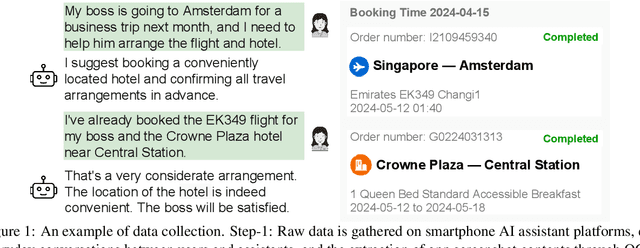
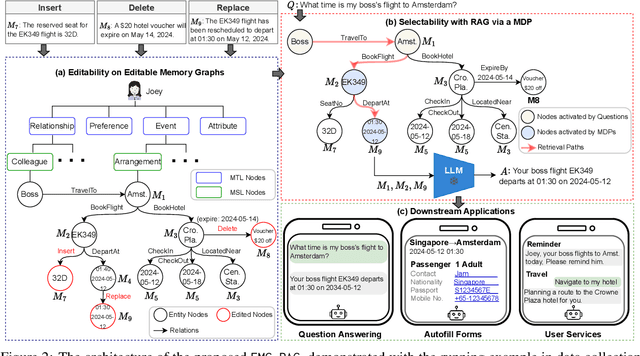
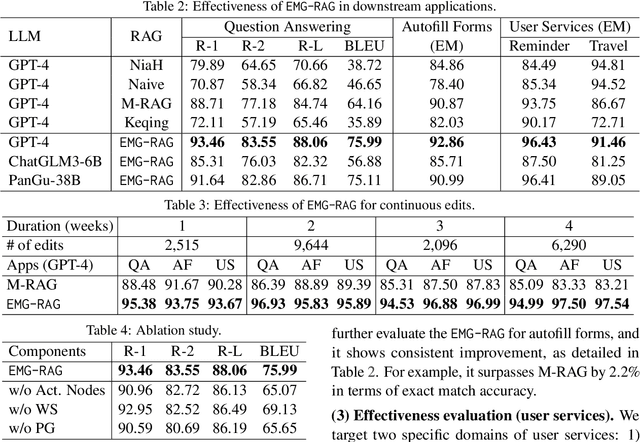
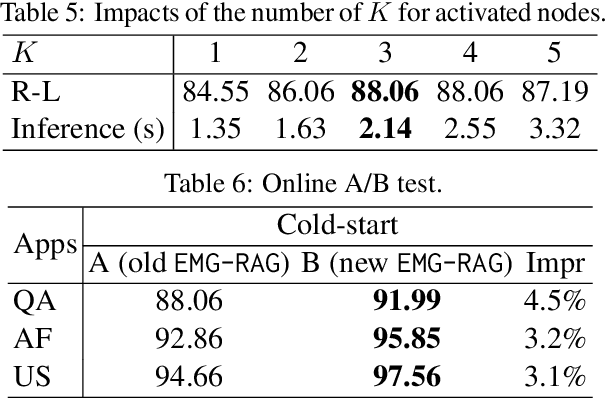
In the age of mobile internet, user data, often referred to as memories, is continuously generated on personal devices. Effectively managing and utilizing this data to deliver services to users is a compelling research topic. In this paper, we introduce a novel task of crafting personalized agents powered by large language models (LLMs), which utilize a user's smartphone memories to enhance downstream applications with advanced LLM capabilities. To achieve this goal, we introduce EMG-RAG, a solution that combines Retrieval-Augmented Generation (RAG) techniques with an Editable Memory Graph (EMG). This approach is further optimized using Reinforcement Learning to address three distinct challenges: data collection, editability, and selectability. Extensive experiments on a real-world dataset validate the effectiveness of EMG-RAG, achieving an improvement of approximately 10% over the best existing approach. Additionally, the personalized agents have been transferred into a real smartphone AI assistant, which leads to enhanced usability.
GalleryGPT: Analyzing Paintings with Large Multimodal Models
Aug 01, 2024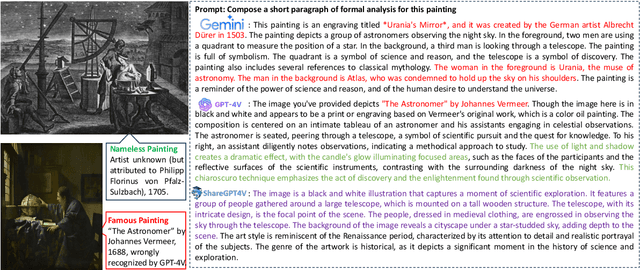
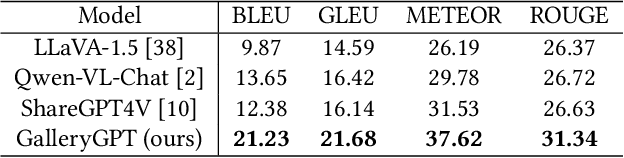
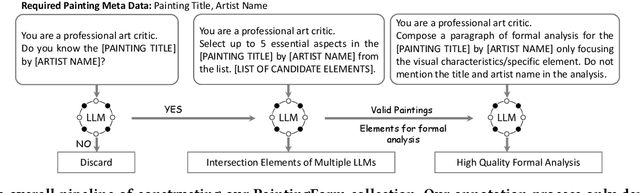
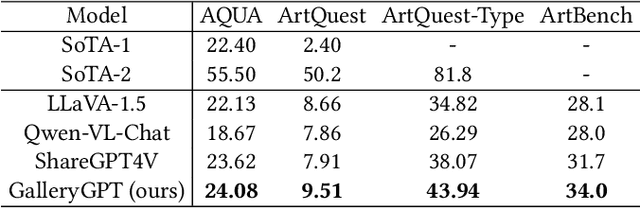
Artwork analysis is important and fundamental skill for art appreciation, which could enrich personal aesthetic sensibility and facilitate the critical thinking ability. Understanding artworks is challenging due to its subjective nature, diverse interpretations, and complex visual elements, requiring expertise in art history, cultural background, and aesthetic theory. However, limited by the data collection and model ability, previous works for automatically analyzing artworks mainly focus on classification, retrieval, and other simple tasks, which is far from the goal of AI. To facilitate the research progress, in this paper, we step further to compose comprehensive analysis inspired by the remarkable perception and generation ability of large multimodal models. Specifically, we first propose a task of composing paragraph analysis for artworks, i.e., painting in this paper, only focusing on visual characteristics to formulate more comprehensive understanding of artworks. To support the research on formal analysis, we collect a large dataset PaintingForm, with about 19k painting images and 50k analysis paragraphs. We further introduce a superior large multimodal model for painting analysis composing, dubbed GalleryGPT, which is slightly modified and fine-tuned based on LLaVA architecture leveraging our collected data. We conduct formal analysis generation and zero-shot experiments across several datasets to assess the capacity of our model. The results show remarkable performance improvements comparing with powerful baseline LMMs, demonstrating its superb ability of art analysis and generalization. \textcolor{blue}{The codes and model are available at: https://github.com/steven640pixel/GalleryGPT.
rLLM: Relational Table Learning with LLMs
Jul 29, 2024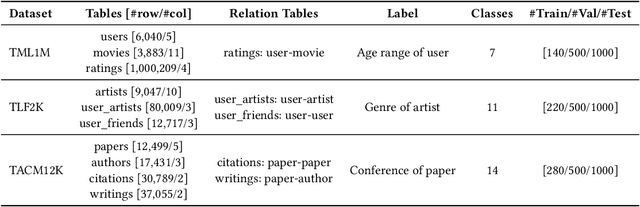
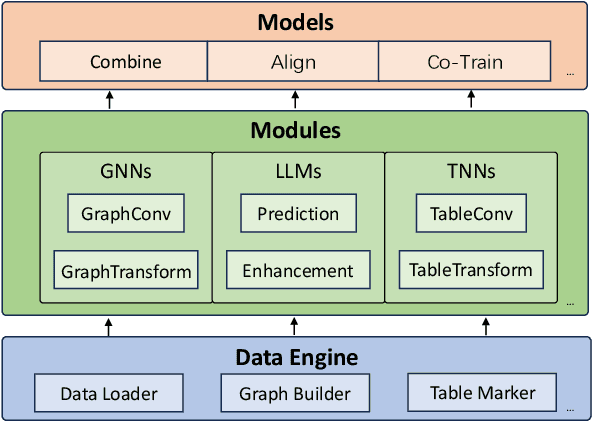
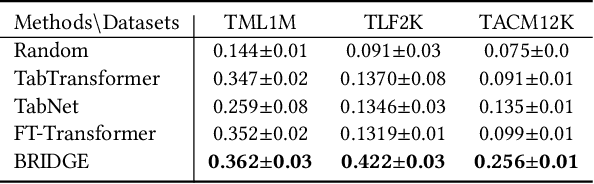
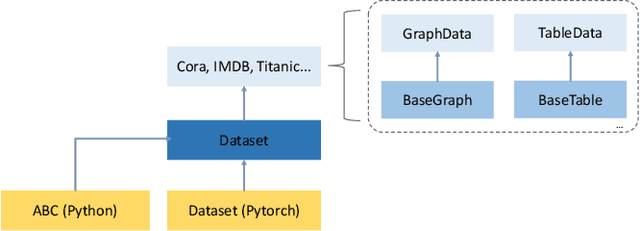
We introduce rLLM (relationLLM), a PyTorch library designed for Relational Table Learning (RTL) with Large Language Models (LLMs). The core idea is to decompose state-of-the-art Graph Neural Networks, LLMs, and Table Neural Networks into standardized modules, to enable the fast construction of novel RTL-type models in a simple "combine, align, and co-train" manner. To illustrate the usage of rLLM, we introduce a simple RTL method named \textbf{BRIDGE}. Additionally, we present three novel relational tabular datasets (TML1M, TLF2K, and TACM12K) by enhancing classic datasets. We hope rLLM can serve as a useful and easy-to-use development framework for RTL-related tasks. Our code is available at: https://github.com/rllm-project/rllm.
360VFI: A Dataset and Benchmark for Omnidirectional Video Frame Interpolation
Jul 19, 2024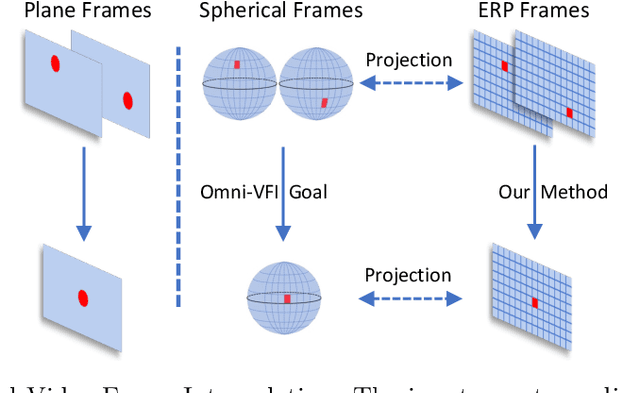


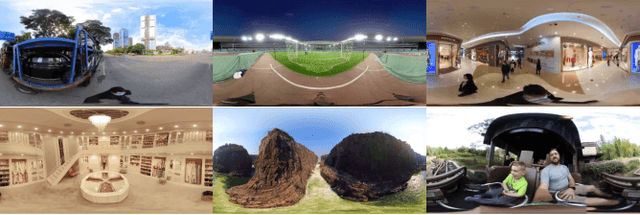
With the development of VR-related techniques, viewers can enjoy a realistic and immersive experience through a head-mounted display, while omnidirectional video with a low frame rate can lead to user dizziness. However, the prevailing plane frame interpolation methodologies are unsuitable for Omnidirectional Video Interpolation, chiefly due to the lack of models tailored to such videos with strong distortion, compounded by the scarcity of valuable datasets for Omnidirectional Video Frame Interpolation. In this paper, we introduce the benchmark dataset, 360VFI, for Omnidirectional Video Frame Interpolation. We present a practical implementation that introduces a distortion prior from omnidirectional video into the network to modulate distortions. We especially propose a pyramid distortion-sensitive feature extractor that uses the unique characteristics of equirectangular projection (ERP) format as prior information. Moreover, we devise a decoder that uses an affine transformation to facilitate the synthesis of intermediate frames further. 360VFI is the first dataset and benchmark that explores the challenge of Omnidirectional Video Frame Interpolation. Through our benchmark analysis, we presented four different distortion conditions scenes in the proposed 360VFI dataset to evaluate the challenge triggered by distortion during interpolation. Besides, experimental results demonstrate that Omnidirectional Video Interpolation can be effectively improved by modeling for omnidirectional distortion.
A3S: A General Active Clustering Method with Pairwise Constraints
Jul 14, 2024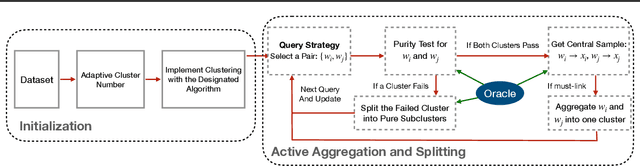
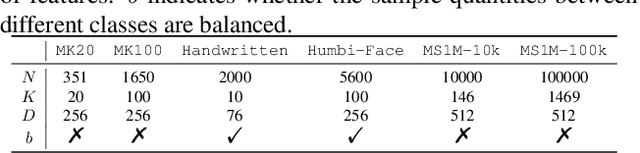
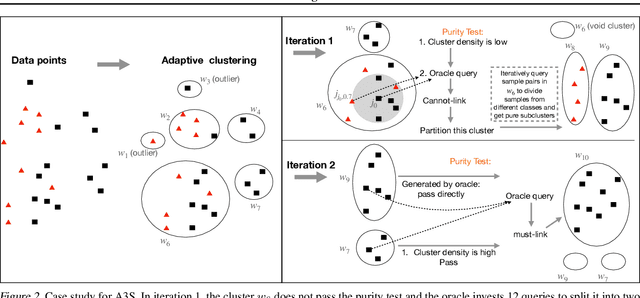
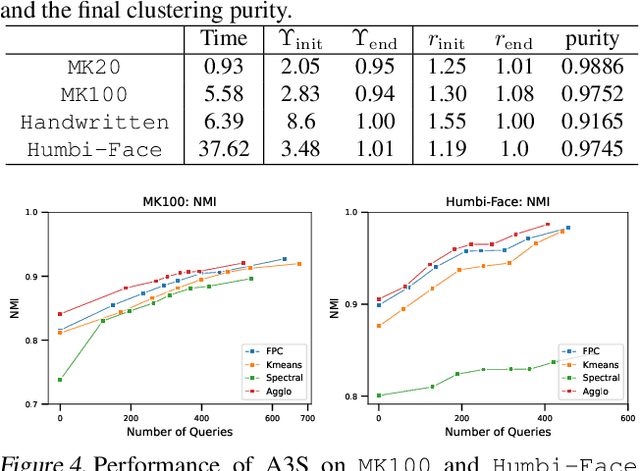
Active clustering aims to boost the clustering performance by integrating human-annotated pairwise constraints through strategic querying. Conventional approaches with semi-supervised clustering schemes encounter high query costs when applied to large datasets with numerous classes. To address these limitations, we propose a novel Adaptive Active Aggregation and Splitting (A3S) framework, falling within the cluster-adjustment scheme in active clustering. A3S features strategic active clustering adjustment on the initial cluster result, which is obtained by an adaptive clustering algorithm. In particular, our cluster adjustment is inspired by the quantitative analysis of Normalized mutual information gain under the information theory framework and can provably improve the clustering quality. The proposed A3S framework significantly elevates the performance and scalability of active clustering. In extensive experiments across diverse real-world datasets, A3S achieves desired results with significantly fewer human queries compared with existing methods.
Model Tells You Where to Merge: Adaptive KV Cache Merging for LLMs on Long-Context Tasks
Jul 11, 2024How to efficiently serve Large Language Models (LLMs) has become a pressing issue because of their huge computational cost in their autoregressive generation process. To mitigate computational costs, LLMs often employ the KV Cache technique to improve the generation speed. While improving the computational efficiency, the storage requirements of the KV cache are substantial, particularly in long-context scenarios, leading to significant memory consumption. Existing KV cache eviction methods often degrade the performance of LLMs in long-context scenarios due to the information loss introduced by eviction. In this paper, we propose a novel KV cache merging approach, called KVMerger, to achieve adaptive KV cache compression for long-context tasks without significant performance degradation under constrained memory budgets. Our approach is inspired by the intriguing observation that key states exhibit high similarity at the token level within a single sequence. To facilitate merging, we develop an effective yet straightforward merging set identification algorithm to identify suitable KV states for merging. Our merging set identification algorithm stimulates the second observation that KV cache sparsity, from similarity perspective, is independent of the dataset and remains persistent at the model level. Subsequently, we propose a Gaussian kernel weighted merging algorithm to selectively merge all states within each merging set. We conduct extensive experiments to demonstrate the effectiveness of KVMerger for long-context tasks under constrained memory budgets, applying it to models including Llama2-7B-chat and Llama2-13B-chat. Using the LongBench and ZeroScroll benchmarks, we compare our method with other KV cache compression techniques, including H2O and CaM, showing that our method achieves superior performance across tasks with both 50% and 35% KV cache budgets.
Zero-shot Object Counting with Good Exemplars
Jul 09, 2024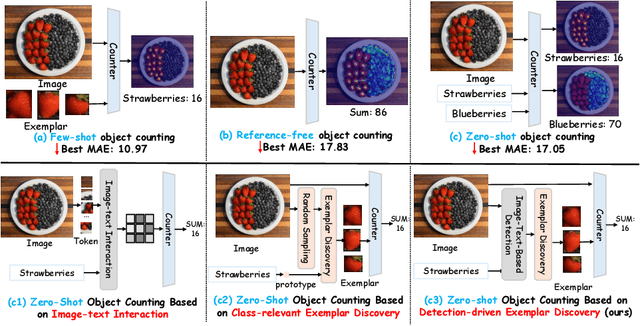

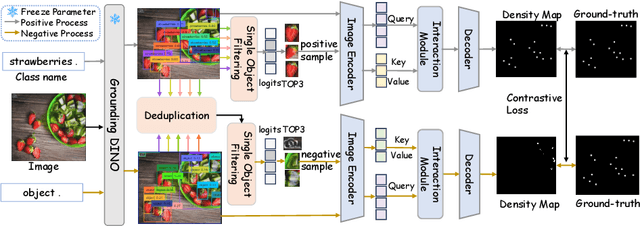
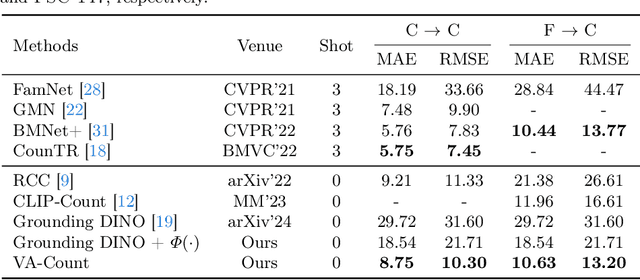
Zero-shot object counting (ZOC) aims to enumerate objects in images using only the names of object classes during testing, without the need for manual annotations. However, a critical challenge in current ZOC methods lies in their inability to identify high-quality exemplars effectively. This deficiency hampers scalability across diverse classes and undermines the development of strong visual associations between the identified classes and image content. To this end, we propose the Visual Association-based Zero-shot Object Counting (VA-Count) framework. VA-Count consists of an Exemplar Enhancement Module (EEM) and a Noise Suppression Module (NSM) that synergistically refine the process of class exemplar identification while minimizing the consequences of incorrect object identification. The EEM utilizes advanced vision-language pretaining models to discover potential exemplars, ensuring the framework's adaptability to various classes. Meanwhile, the NSM employs contrastive learning to differentiate between optimal and suboptimal exemplar pairs, reducing the negative effects of erroneous exemplars. VA-Count demonstrates its effectiveness and scalability in zero-shot contexts with superior performance on two object counting datasets.
Unveiling and Harnessing Hidden Attention Sinks: Enhancing Large Language Models without Training through Attention Calibration
Jun 22, 2024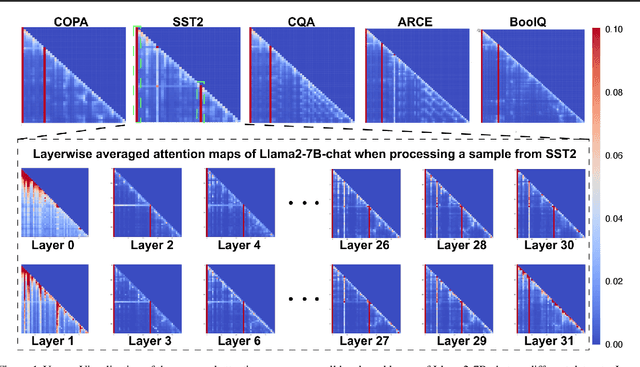


Attention is a fundamental component behind the remarkable achievements of large language models (LLMs). However, our current understanding of the attention mechanism, especially regarding how attention distributions are established, remains limited. Inspired by recent studies that explore the presence of attention sink in the initial token, which receives disproportionately large attention scores despite their lack of semantic importance, this work delves deeper into this phenomenon. We aim to provide a more profound understanding of the existence of attention sinks within LLMs and to uncover ways to enhance the achievable accuracy of LLMs by directly optimizing the attention distributions, without the need for weight finetuning. Specifically, this work begins with comprehensive visualizations of the attention distributions in LLMs during inference across various inputs and tasks. Based on these visualizations, to the best of our knowledge, we are the first to discover that (1) attention sinks occur not only at the start of sequences but also within later tokens of the input, and (2) not all attention sinks have a positive impact on the achievable accuracy of LLMs. Building upon our findings, we propose a training-free Attention Calibration Technique (ACT) that automatically optimizes the attention distributions on the fly during inference in an input-adaptive manner. Extensive experiments validate that ACT consistently enhances the accuracy of various LLMs across different applications. Specifically, ACT achieves an average improvement of up to 7.30% in accuracy across different datasets when applied to Llama-30B. Our code is available at https://github.com/GATECH-EIC/ACT.