 Add to Chrome
 Add to Firefox
 Add to Edge
QFCQT: A Chaotically Gated Quantformer Framework for Volatile Time-Series Forecasting
Aug 07, 2026
Forecasting non-stationary time series remains difficult due to long-range dependencies, local volatility bursts, structural shifts, and nonlinear oscillatory behaviors. Although Transformer-based forecasters are effective for modeling long-term temporal dependencies, their feed-forward blocks typically rely on smooth static activations that are insufficiently sensitive to abrupt regime changes. Motivated by quantitative Transformer designs and oscillator-based nonlinear activations, we propose QFCQT, short for Quantum-Fractal-inspired Chaotically Gated Quantformer, for robust forecasting under complex volatile dynamics. Here, "quantum-fractal-inspired" denotes a computational analogy based on soft oscillator superposition and multi-scale nonlinear responses, rather than a formal quantum-mechanical or fractal-theoretic derivation. QFCQT consists of three main components: (1) a Quantformer-style numerical encoder that directly processes multivariate inputs via linear embedding; (2) a learnable Lee-oscillator activation module that maps scalar pre-activations to dynamic oscillatory responses and summarizes them through Max-over-Time pooling; and (3) a smooth-chaotic gated fusion mechanism that adaptively balances conventional smooth activations and chaos-sensitive responses. Furthermore, instead of using a single fixed oscillator, QFCQT employs a soft superposition of eight parameterized Lee oscillator families to adaptively capture different nonlinear response patterns across regimes. Experiments on ETTh1, ETTh2, and A-share Stock Index benchmarks show that QFCQT consistently outperforms strong baselines, including Informer, LogTrans, LSTMa, HAT, and COTN.

COTN: A Chaotic Oscillatory Transformer Network for Complex Volatile Systems under Extreme Conditions
Nov 09, 2025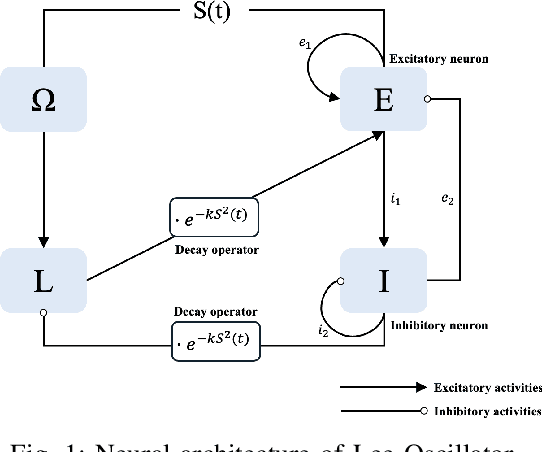
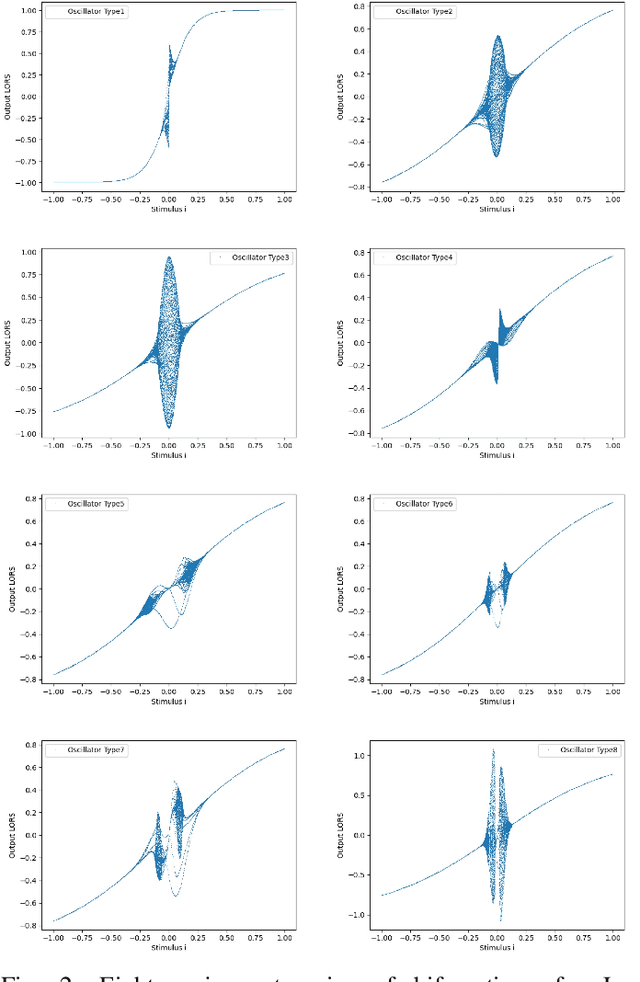
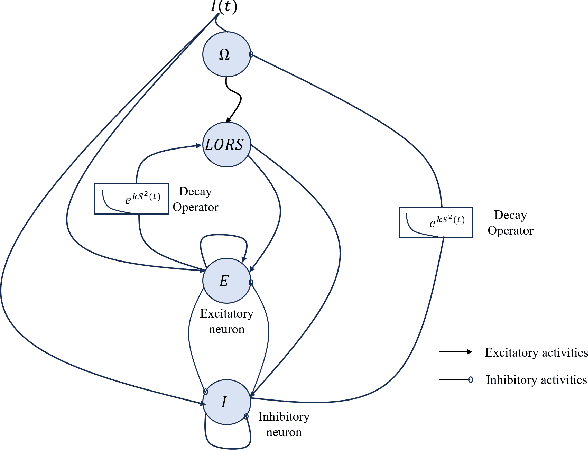
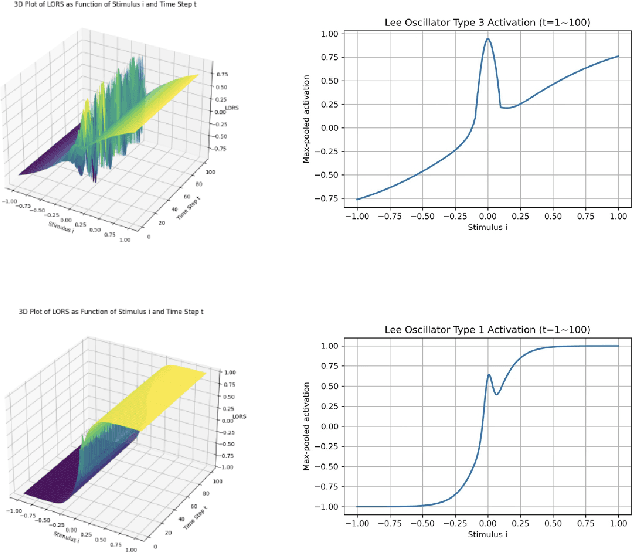
Accurate prediction of financial and electricity markets, especially under extreme conditions, remains a significant challenge due to their intrinsic nonlinearity, rapid fluctuations, and chaotic patterns. To address these limitations, we propose the Chaotic Oscillatory Transformer Network (COTN). COTN innovatively combines a Transformer architecture with a novel Lee Oscillator activation function, processed through Max-over-Time pooling and a lambda-gating mechanism. This design is specifically tailored to effectively capture chaotic dynamics and improve responsiveness during periods of heightened volatility, where conventional activation functions (e.g., ReLU, GELU) tend to saturate. Furthermore, COTN incorporates an Autoencoder Self-Regressive (ASR) module to detect and isolate abnormal market patterns, such as sudden price spikes or crashes, thereby preventing corruption of the core prediction process and enhancing robustness. Extensive experiments across electricity spot markets and financial markets demonstrate the practical applicability and resilience of COTN. Our approach outperforms state-of-the-art deep learning models like Informer by up to 17% and traditional statistical methods like GARCH by as much as 40%. These results underscore COTN's effectiveness in navigating real-world market uncertainty and complexity, offering a powerful tool for forecasting highly volatile systems under duress.
Co-Learning: Code Learning for Multi-Agent Reinforcement Collaborative Framework with Conversational Natural Language Interfaces
Sep 02, 2024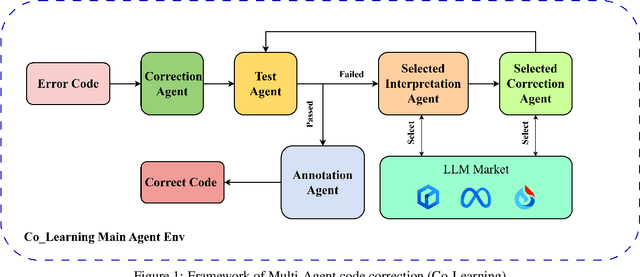

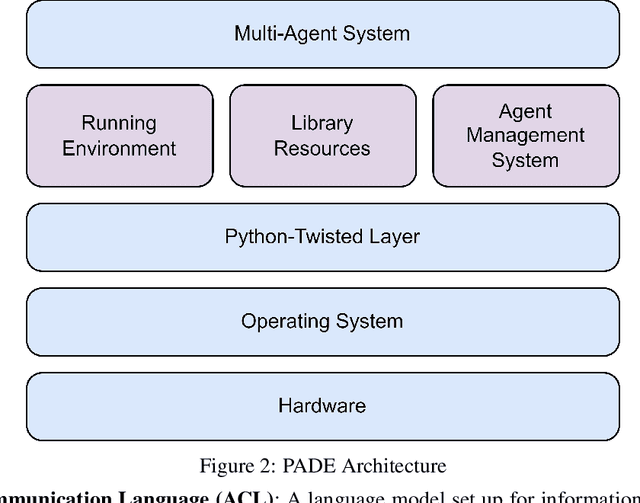
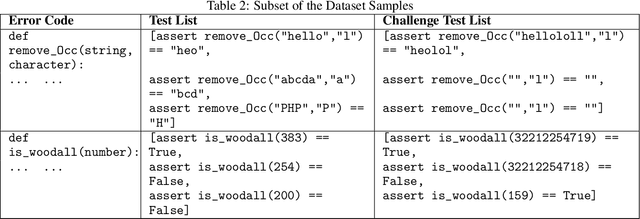
Online question-and-answer (Q\&A) systems based on the Large Language Model (LLM) have progressively diverged from recreational to professional use. This paper proposed a Multi-Agent framework with environmentally reinforcement learning (E-RL) for code correction called Code Learning (Co-Learning) community, assisting beginners to correct code errors independently. It evaluates the performance of multiple LLMs from an original dataset with 702 error codes, uses it as a reward or punishment criterion for E-RL; Analyzes input error codes by the current agent; selects the appropriate LLM-based agent to achieve optimal error correction accuracy and reduce correction time. Experiment results showed that 3\% improvement in Precision score and 15\% improvement in time cost as compared with no E-RL method respectively. Our source code is available at: https://github.com/yuqian2003/Co_Learning
The design and implementation of Language Learning Chatbot with XAI using Ontology and Transfer Learning
Sep 29, 2020
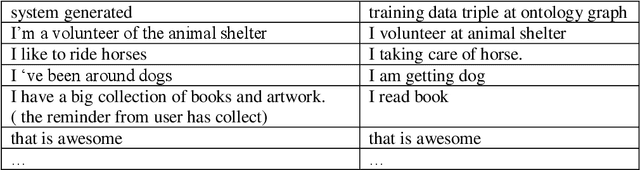
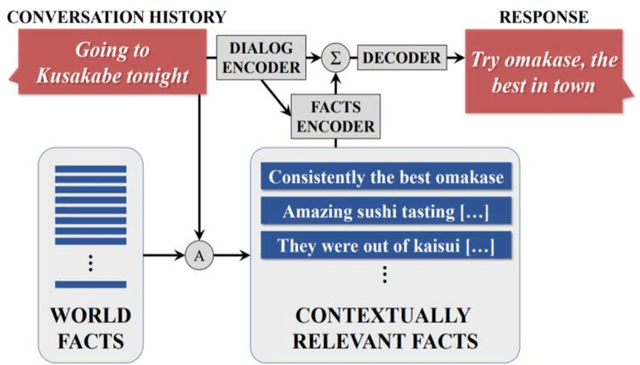
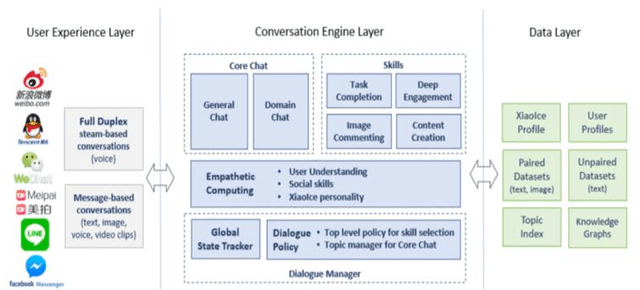
In this paper, we proposed a transfer learning-based English language learning chatbot, whose output generated by GPT-2 can be explained by corresponding ontology graph rooted by fine-tuning dataset. We design three levels for systematically English learning, including phonetics level for speech recognition and pronunciation correction, semantic level for specific domain conversation, and the simulation of free-style conversation in English - the highest level of language chatbot communication as free-style conversation agent. For academic contribution, we implement the ontology graph to explain the performance of free-style conversation, following the concept of XAI (Explainable Artificial Intelligence) to visualize the connections of neural network in bionics, and explain the output sentence from language model. From implementation perspective, our Language Learning agent integrated the mini-program in WeChat as front-end, and fine-tuned GPT-2 model of transfer learning as back-end to interpret the responses by ontology graph.
* 19 pages, 20 figures, published paper in International Conference on NLP & Big Data (NLPD 2020)