 Add to Chrome
 Add to Firefox
 Add to Edge
Research on Edge Detection of LiDAR Images Based on Artificial Intelligence Technology
Jun 14, 2024


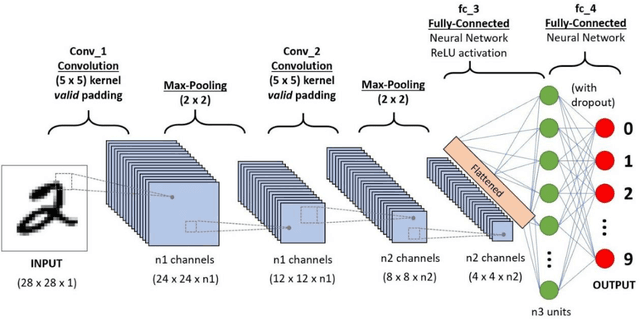
With the widespread application of Light Detection and Ranging (LiDAR) technology in fields such as autonomous driving, robot navigation, and terrain mapping, the importance of edge detection in LiDAR images has become increasingly prominent. Traditional edge detection methods often face challenges in accuracy and computational complexity when processing LiDAR images. To address these issues, this study proposes an edge detection method for LiDAR images based on artificial intelligence technology. This paper first reviews the current state of research on LiDAR technology and image edge detection, introducing common edge detection algorithms and their applications in LiDAR image processing. Subsequently, a deep learning-based edge detection model is designed and implemented, optimizing the model training process through preprocessing and enhancement of the LiDAR image dataset. Experimental results indicate that the proposed method outperforms traditional methods in terms of detection accuracy and computational efficiency, showing significant practical application value. Finally, improvement strategies are proposed for the current method's shortcomings, and the improvements are validated through experiments.

Living in the Moment: Can Large Language Models Grasp Co-Temporal Reasoning?
Jun 13, 2024Temporal reasoning is fundamental for large language models (LLMs) to comprehend the world. Current temporal reasoning datasets are limited to questions about single or isolated events, falling short in mirroring the realistic temporal characteristics involving concurrent nature and intricate temporal interconnections. In this paper, we introduce CoTempQA, a comprehensive co-temporal Question Answering (QA) benchmark containing four co-temporal scenarios (Equal, Overlap, During, Mix) with 4,748 samples for evaluating the co-temporal comprehension and reasoning abilities of LLMs. Our extensive experiments reveal a significant gap between the performance of current LLMs and human-level reasoning on CoTempQA tasks. Even when enhanced with Chain of Thought (CoT) methodologies, models consistently struggle with our task. In our preliminary exploration, we discovered that mathematical reasoning plays a significant role in handling co-temporal events and proposed a strategy to boost LLMs' co-temporal reasoning from a mathematical perspective. We hope that our CoTempQA datasets will encourage further advancements in improving the co-temporal reasoning capabilities of LLMs. Our code is available at https://github.com/zhaochen0110/Cotempqa.
Examining Post-Training Quantization for Mixture-of-Experts: A Benchmark
Jun 12, 2024Large Language Models~(LLMs) have become foundational in the realm of natural language processing, demonstrating performance improvements as model sizes increase. The Mixture-of-Experts~(MoE) approach offers a promising way to scale LLMs more efficiently by using fewer computational FLOPs through sparse activation. However, it suffers from significant memory overheads, necessitating model compression techniques. Post-training quantization, a popular method for model compression, proves less effective when directly applied to MoE models due to MoE's overlooked inherent sparsity. This paper explores several MoE structure-aware quantization heuristics, ranging from coarse to fine granularity, from MoE block to individual linear weight. Our investigations reveal critical principles: different MoE structures (i.e., blocks, experts, linear layers) require varying numbers of weight bits for effective and efficient quantization. Conclusions are supported by extensive benchmarking across two representative MoE models and six tasks. We further introduce novel enhancements to more accurately identify the most critical weights in MoE quantization that necessitate higher bit allocations, including the linear weight outlier scorer and MoE block scorer. Additionally, subsequent experiments validate our findings in the context of both weight and activation quantization.
Mitigating Boundary Ambiguity and Inherent Bias for Text Classification in the Era of Large Language Models
Jun 11, 2024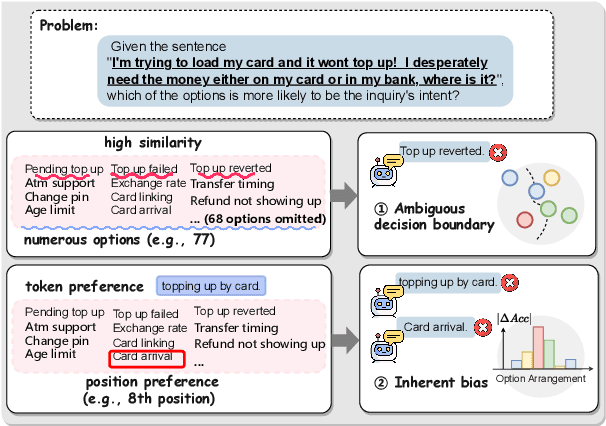
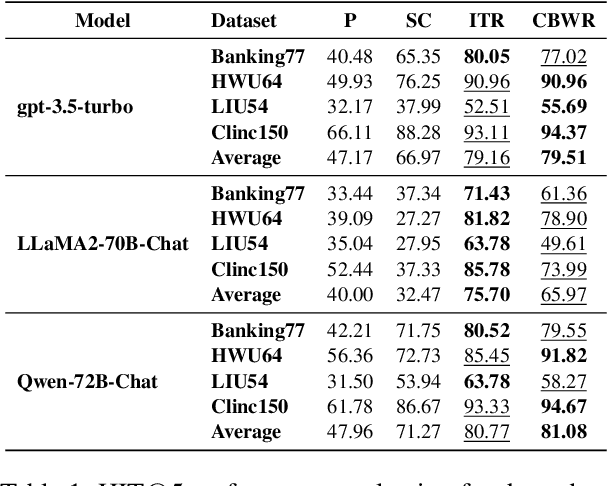

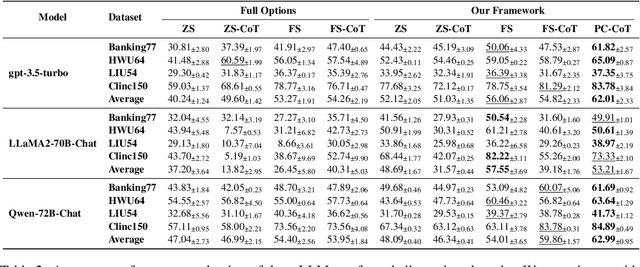
Text classification is a crucial task encountered frequently in practical scenarios, yet it is still under-explored in the era of large language models (LLMs). This study shows that LLMs are vulnerable to changes in the number and arrangement of options in text classification. Our extensive empirical analyses reveal that the key bottleneck arises from ambiguous decision boundaries and inherent biases towards specific tokens and positions. To mitigate these issues, we make the first attempt and propose a novel two-stage classification framework for LLMs. Our approach is grounded in the empirical observation that pairwise comparisons can effectively alleviate boundary ambiguity and inherent bias. Specifically, we begin with a self-reduction technique to efficiently narrow down numerous options, which contributes to reduced decision space and a faster comparison process. Subsequently, pairwise contrastive comparisons are employed in a chain-of-thought manner to draw out nuances and distinguish confusable options, thus refining the ambiguous decision boundary. Extensive experiments on four datasets (Banking77, HWU64, LIU54, and Clinic150) verify the effectiveness of our framework. Furthermore, benefitting from our framework, various LLMs can achieve consistent improvements. Our code and data are available in \url{https://github.com/Chuge0335/PC-CoT}.
Fragile Model Watermarking: A Comprehensive Survey of Evolution, Characteristics, and Classification
Jun 07, 2024Model fragile watermarking, inspired by both the field of adversarial attacks on neural networks and traditional multimedia fragile watermarking, has gradually emerged as a potent tool for detecting tampering, and has witnessed rapid development in recent years. Unlike robust watermarks, which are widely used for identifying model copyrights, fragile watermarks for models are designed to identify whether models have been subjected to unexpected alterations such as backdoors, poisoning, compression, among others. These alterations can pose unknown risks to model users, such as misidentifying stop signs as speed limit signs in classic autonomous driving scenarios. This paper provides an overview of the relevant work in the field of model fragile watermarking since its inception, categorizing them and revealing the developmental trajectory of the field, thus offering a comprehensive survey for future endeavors in model fragile watermarking.
Efficient User Sequence Learning for Online Services via Compressed Graph Neural Networks
Jun 05, 2024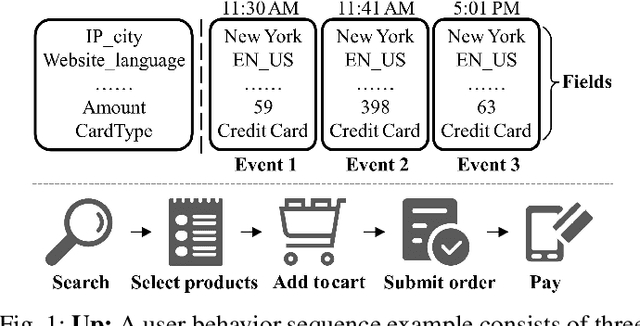
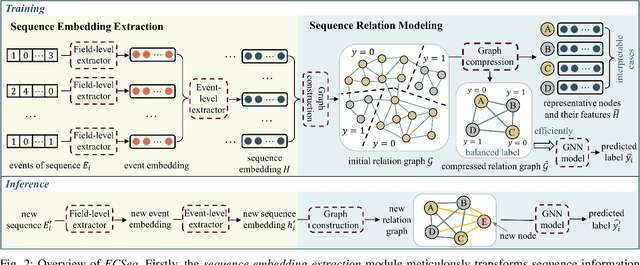
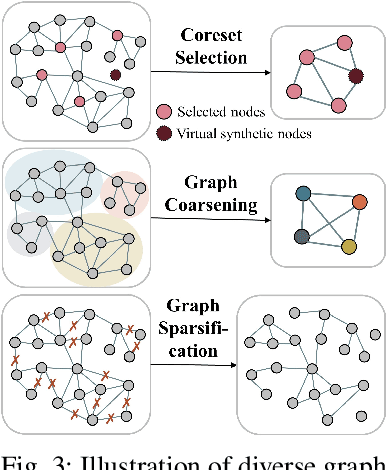
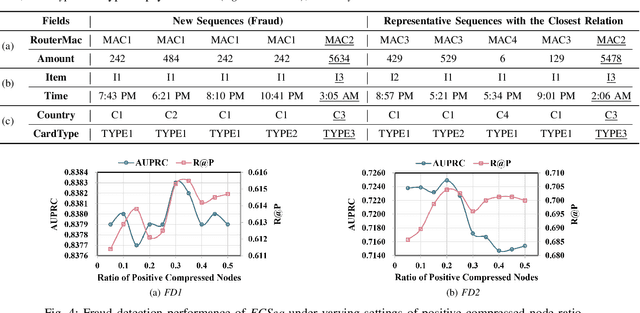
Learning representations of user behavior sequences is crucial for various online services, such as online fraudulent transaction detection mechanisms. Graph Neural Networks (GNNs) have been extensively applied to model sequence relationships, and extract information from similar sequences. While user behavior sequence data volume is usually huge for online applications, directly applying GNN models may lead to substantial computational overhead during both the training and inference stages and make it challenging to meet real-time requirements for online services. In this paper, we leverage graph compression techniques to alleviate the efficiency issue. Specifically, we propose a novel unified framework called ECSeq, to introduce graph compression techniques into relation modeling for user sequence representation learning. The key module of ECSeq is sequence relation modeling, which explores relationships among sequences to enhance sequence representation learning, and employs graph compression algorithms to achieve high efficiency and scalability. ECSeq also exhibits plug-and-play characteristics, seamlessly augmenting pre-trained sequence representation models without modifications. Empirical experiments on both sequence classification and regression tasks demonstrate the effectiveness of ECSeq. Specifically, with an additional training time of tens of seconds in total on 100,000+ sequences and inference time preserved within $10^{-4}$ seconds/sample, ECSeq improves the prediction R@P$_{0.9}$ of the widely used LSTM by $\sim 5\%$.
LIDAO: Towards Limited Interventions for Debiasing (Large) Language Models
Jun 01, 2024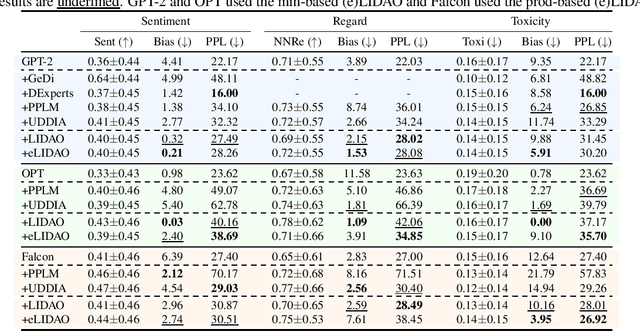
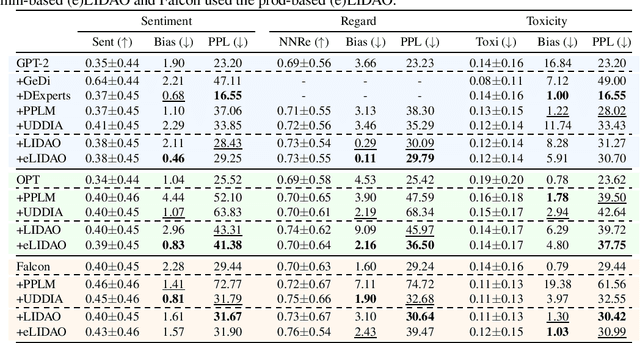
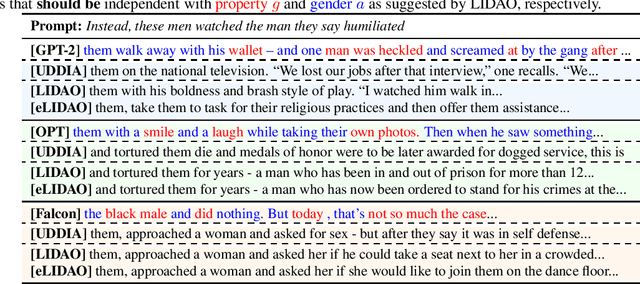
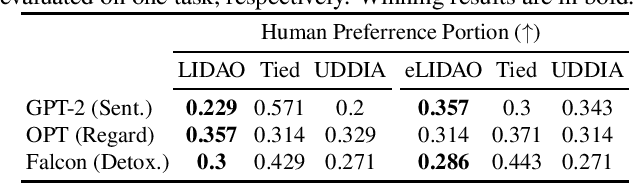
Large language models (LLMs) have achieved impressive performance on various natural language generation tasks. Nonetheless, they suffer from generating negative and harmful contents that are biased against certain demographic groups (e.g., female), raising severe fairness concerns. As remedies, prior works intervened the generation by removing attitude or demographic information, inevitably degrading the generation quality and resulting in notable \textit{fairness-fluency} trade-offs. However, it is still under-explored to what extent the fluency \textit{has to} be affected in order to achieve a desired level of fairness. In this work, we conduct the first formal study from an information-theoretic perspective. We show that previous approaches are excessive for debiasing and propose LIDAO, a general framework to debias a (L)LM at a better fluency provably. We further robustify LIDAO in adversarial scenarios, where a carefully-crafted prompt may stimulate LLMs exhibiting instruction-following abilities to generate texts with fairness issue appears only when the prompt is also taken into account. Experiments on three LMs ranging from 0.7B to 7B parameters demonstrate the superiority of our method.
Advancing Financial Risk Prediction Through Optimized LSTM Model Performance and Comparative Analysis
May 31, 2024This paper focuses on the application and optimization of LSTM model in financial risk prediction. The study starts with an overview of the architecture and algorithm foundation of LSTM, and then details the model training process and hyperparameter tuning strategy, and adjusts network parameters through experiments to improve performance. Comparative experiments show that the optimized LSTM model shows significant advantages in AUC index compared with random forest, BP neural network and XGBoost, which verifies its efficiency and practicability in the field of financial risk prediction, especially its ability to deal with complex time series data, which lays a solid foundation for the application of the model in the actual production environment.
Optimization of Worker Scheduling at Logistics Depots Using Genetic Algorithms and Simulated Annealing
May 20, 2024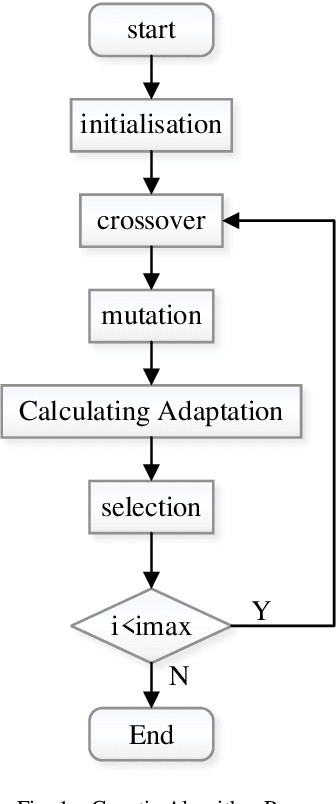
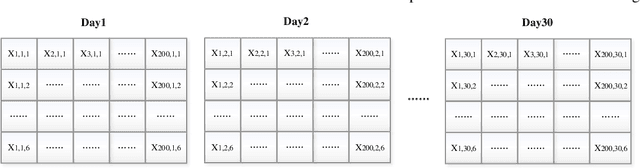
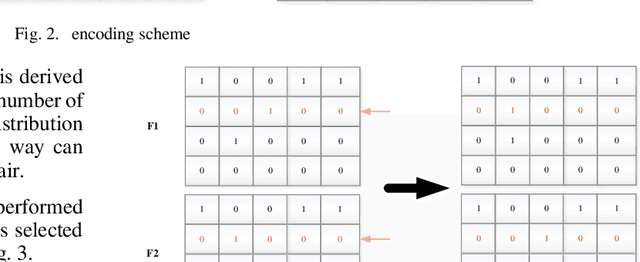
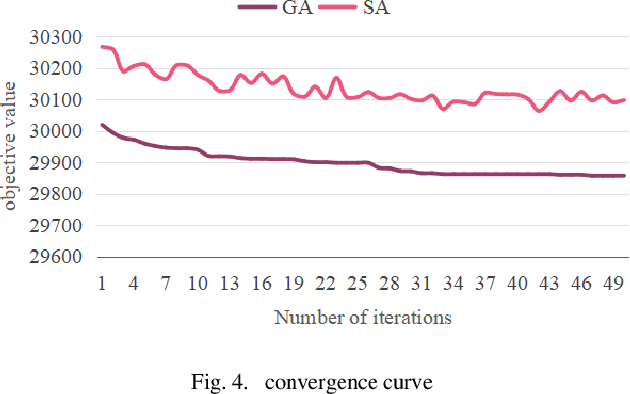
This paper addresses the optimization of scheduling for workers at a logistics depot using a combination of genetic algorithm and simulated annealing algorithm. The efficient scheduling of permanent and temporary workers is crucial for optimizing the efficiency of the logistics depot while minimizing labor usage. The study begins by establishing a 0-1 integer linear programming model, with decision variables determining the scheduling of permanent and temporary workers for each time slot on a given day. The objective function aims to minimize person-days, while constraints ensure fulfillment of hourly labor requirements, limit workers to one time slot per day, cap consecutive working days for permanent workers, and maintain non-negativity and integer constraints. The model is then solved using genetic algorithms and simulated annealing. Results indicate that, for this problem, genetic algorithms outperform simulated annealing in terms of solution quality. The optimal solution reveals a minimum of 29857 person-days.
Research on Credit Risk Early Warning Model of Commercial Banks Based on Neural Network Algorithm
May 17, 2024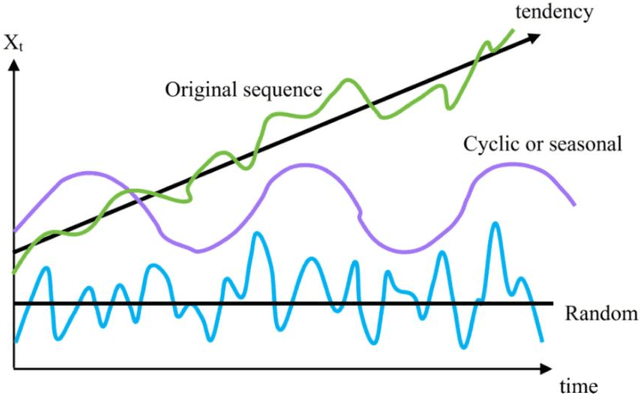
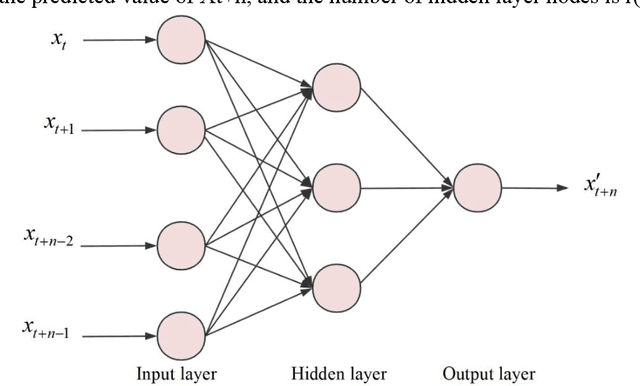
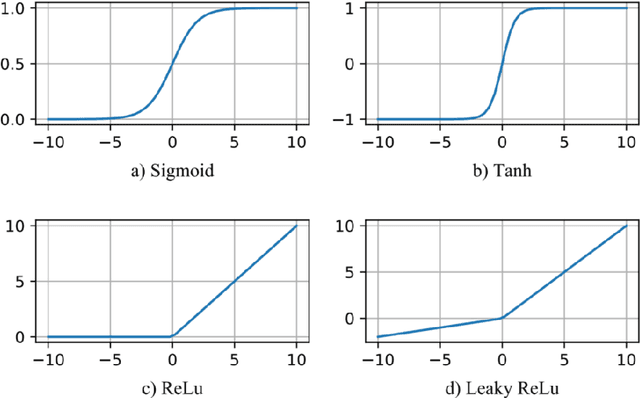
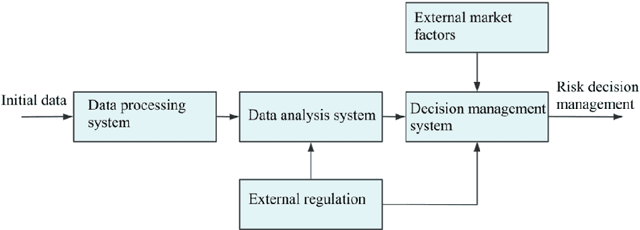
In the realm of globalized financial markets, commercial banks are confronted with an escalating magnitude of credit risk, thereby imposing heightened requisites upon the security of bank assets and financial stability. This study harnesses advanced neural network techniques, notably the Backpropagation (BP) neural network, to pioneer a novel model for preempting credit risk in commercial banks. The discourse initially scrutinizes conventional financial risk preemptive models, such as ARMA, ARCH, and Logistic regression models, critically analyzing their real-world applications. Subsequently, the exposition elaborates on the construction process of the BP neural network model, encompassing network architecture design, activation function selection, parameter initialization, and objective function construction. Through comparative analysis, the superiority of neural network models in preempting credit risk in commercial banks is elucidated. The experimental segment selects specific bank data, validating the model's predictive accuracy and practicality. Research findings evince that this model efficaciously enhances the foresight and precision of credit risk management.