 Add to Chrome
 Add to Firefox
 Add to Edge
Reason-to-Recommend: Using Interaction-of-Thought Reasoning to Enhance LLM Recommendation
Jun 05, 2025
Driven by advances in Large Language Models (LLMs), integrating them into recommendation tasks has gained interest due to their strong semantic understanding and prompt flexibility. Prior work encoded user-item interactions or metadata into prompts for recommendations. In parallel, LLM reasoning, boosted by test-time scaling and reinforcement learning, has excelled in fields like mathematics and code, where reasoning traces and correctness signals are clear, enabling high performance and interpretability. However, directly applying these reasoning methods to recommendation is ineffective because user feedback is implicit and lacks reasoning supervision. To address this, we propose $\textbf{R2Rec}$, a reasoning-enhanced recommendation framework that samples interaction chains from the user-item graph and converts them into structured interaction-of-thoughts via a progressive masked prompting strategy, with each thought representing stepwise reasoning grounded in interaction context. This allows LLMs to simulate step-by-step decision-making based on implicit patterns. We design a two-stage training pipeline: supervised fine-tuning teaches basic reasoning from high-quality traces, and reinforcement learning refines reasoning via reward signals, alleviating sparse explicit supervision. Experiments on three real-world datasets show R2Rec outperforms classical and LLM-based baselines with an average $\textbf{10.48%}$ improvement in HitRatio@1 and $\textbf{131.81%}$ gain over the original LLM. Furthermore, the explicit reasoning chains enhance interpretability by revealing the decision process. Our code is available at: https://anonymous.4open.science/r/R2Rec-7C5D.

KEVER^2: Knowledge-Enhanced Visual Emotion Reasoning and Retrieval
May 30, 2025Understanding what emotions images evoke in their viewers is a foundational goal in human-centric visual computing. While recent advances in vision-language models (VLMs) have shown promise for visual emotion analysis (VEA), several key challenges remain unresolved. Emotional cues in images are often abstract, overlapping, and entangled, making them difficult to model and interpret. Moreover, VLMs struggle to align these complex visual patterns with emotional semantics due to limited supervision and sparse emotional grounding. Finally, existing approaches lack structured affective knowledge to resolve ambiguity and ensure consistent emotional reasoning across diverse visual domains. To address these limitations, we propose \textbf{K-EVER\textsuperscript{2}}, a knowledge-enhanced framework for emotion reasoning and retrieval. Our approach introduces a semantically structured formulation of visual emotion cues and integrates external affective knowledge through multimodal alignment. Without relying on handcrafted labels or direct emotion supervision, K-EVER\textsuperscript{2} achieves robust and interpretable emotion predictions across heterogeneous image types. We validate our framework on three representative benchmarks, Emotion6, EmoSet, and M-Disaster, covering social media imagery, human-centric scenes, and disaster contexts. K-EVER\textsuperscript{2} consistently outperforms strong CNN and VLM baselines, achieving up to a \textbf{19\% accuracy gain} for specific emotions and a \textbf{12.3\% average accuracy gain} across all emotion categories. Our results demonstrate a scalable and generalizable solution for advancing emotional understanding of visual content.
Context-Aware Sentiment Forecasting via LLM-based Multi-Perspective Role-Playing Agents
May 30, 2025User sentiment on social media reveals the underlying social trends, crises, and needs. Researchers have analyzed users' past messages to trace the evolution of sentiments and reconstruct sentiment dynamics. However, predicting the imminent sentiment of an ongoing event is rarely studied. In this paper, we address the problem of \textbf{sentiment forecasting} on social media to predict the user's future sentiment in response to the development of the event. We extract sentiment-related features to enhance the modeling skill and propose a multi-perspective role-playing framework to simulate the process of human response. Our preliminary results show significant improvement in sentiment forecasting on both microscopic and macroscopic levels.
Mamba Integrated with Physics Principles Masters Long-term Chaotic System Forecasting
May 29, 2025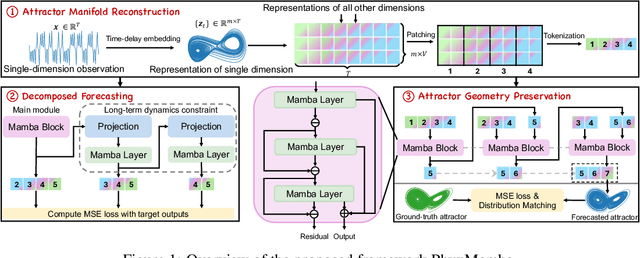
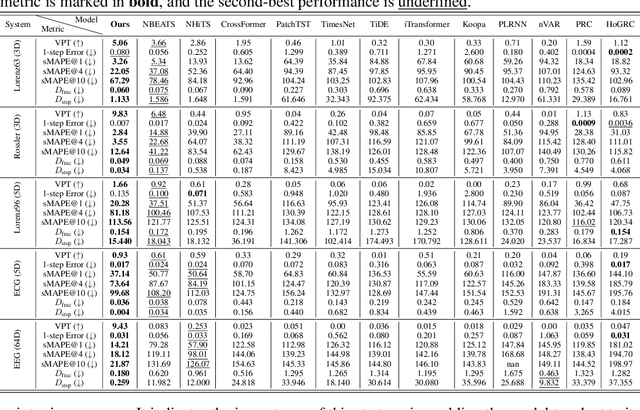
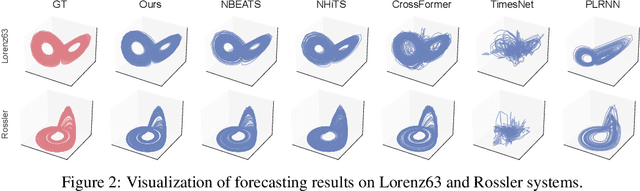
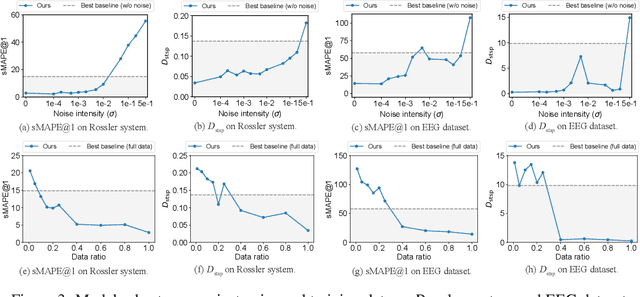
Long-term forecasting of chaotic systems from short-term observations remains a fundamental and underexplored challenge due to the intrinsic sensitivity to initial conditions and the complex geometry of strange attractors. Existing approaches often rely on long-term training data or focus on short-term sequence correlations, struggling to maintain predictive stability and dynamical coherence over extended horizons. We propose PhyxMamba, a novel framework that integrates a Mamba-based state-space model with physics-informed principles to capture the underlying dynamics of chaotic systems. By reconstructing the attractor manifold from brief observations using time-delay embeddings, PhyxMamba extracts global dynamical features essential for accurate forecasting. Our generative training scheme enables Mamba to replicate the physical process, augmented by multi-token prediction and attractor geometry regularization for physical constraints, enhancing prediction accuracy and preserving key statistical invariants. Extensive evaluations on diverse simulated and real-world chaotic systems demonstrate that PhyxMamba delivers superior long-term forecasting and faithfully captures essential dynamical invariants from short-term data. This framework opens new avenues for reliably predicting chaotic systems under observation-scarce conditions, with broad implications across climate science, neuroscience, epidemiology, and beyond. Our code is open-source at https://github.com/tsinghua-fib-lab/PhyxMamba.
Balanced Token Pruning: Accelerating Vision Language Models Beyond Local Optimization
May 28, 2025Large Vision-Language Models (LVLMs) have shown impressive performance across multi-modal tasks by encoding images into thousands of tokens. However, the large number of image tokens results in significant computational overhead, and the use of dynamic high-resolution inputs further increases this burden. Previous approaches have attempted to reduce the number of image tokens through token pruning, typically by selecting tokens based on attention scores or image token diversity. Through empirical studies, we observe that existing methods often overlook the joint impact of pruning on both the current layer's output (local) and the outputs of subsequent layers (global), leading to suboptimal pruning decisions. To address this challenge, we propose Balanced Token Pruning (BTP), a plug-and-play method for pruning vision tokens. Specifically, our method utilizes a small calibration set to divide the pruning process into multiple stages. In the early stages, our method emphasizes the impact of pruning on subsequent layers, whereas in the deeper stages, the focus shifts toward preserving the consistency of local outputs. Extensive experiments across various LVLMs demonstrate the broad effectiveness of our approach on multiple benchmarks. Our method achieves a 78% compression rate while preserving 96.7% of the original models' performance on average.
Skrull: Towards Efficient Long Context Fine-tuning through Dynamic Data Scheduling
May 26, 2025Long-context supervised fine-tuning (Long-SFT) plays a vital role in enhancing the performance of large language models (LLMs) on long-context tasks. To smoothly adapt LLMs to long-context scenarios, this process typically entails training on mixed datasets containing both long and short sequences. However, this heterogeneous sequence length distribution poses significant challenges for existing training systems, as they fail to simultaneously achieve high training efficiency for both long and short sequences, resulting in sub-optimal end-to-end system performance in Long-SFT. In this paper, we present a novel perspective on data scheduling to address the challenges posed by the heterogeneous data distributions in Long-SFT. We propose Skrull, a dynamic data scheduler specifically designed for efficient long-SFT. Through dynamic data scheduling, Skrull balances the computation requirements of long and short sequences, improving overall training efficiency. Furthermore, we formulate the scheduling process as a joint optimization problem and thoroughly analyze the trade-offs involved. Based on those analysis, Skrull employs a lightweight scheduling algorithm to achieve near-zero cost online scheduling in Long-SFT. Finally, we implement Skrull upon DeepSpeed, a state-of-the-art distributed training system for LLMs. Experimental results demonstrate that Skrull outperforms DeepSpeed by 3.76x on average (up to 7.54x) in real-world long-SFT scenarios.
Aggregated Structural Representation with Large Language Models for Human-Centric Layout Generation
May 26, 2025Time consumption and the complexity of manual layout design make automated layout generation a critical task, especially for multiple applications across different mobile devices. Existing graph-based layout generation approaches suffer from limited generative capability, often resulting in unreasonable and incompatible outputs. Meanwhile, vision based generative models tend to overlook the original structural information, leading to component intersections and overlaps. To address these challenges, we propose an Aggregation Structural Representation (ASR) module that integrates graph networks with large language models (LLMs) to preserve structural information while enhancing generative capability. This novel pipeline utilizes graph features as hierarchical prior knowledge, replacing the traditional Vision Transformer (ViT) module in multimodal large language models (MLLM) to predict full layout information for the first time. Moreover, the intermediate graph matrix used as input for the LLM is human editable, enabling progressive, human centric design generation. A comprehensive evaluation on the RICO dataset demonstrates the strong performance of ASR, both quantitatively using mean Intersection over Union (mIoU), and qualitatively through a crowdsourced user study. Additionally, sampling on relational features ensures diverse layout generation, further enhancing the adaptability and creativity of the proposed approach.
AgentRecBench: Benchmarking LLM Agent-based Personalized Recommender Systems
May 26, 2025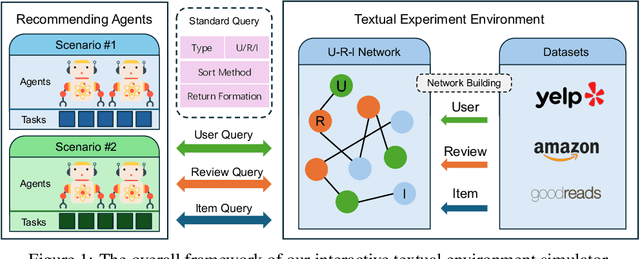

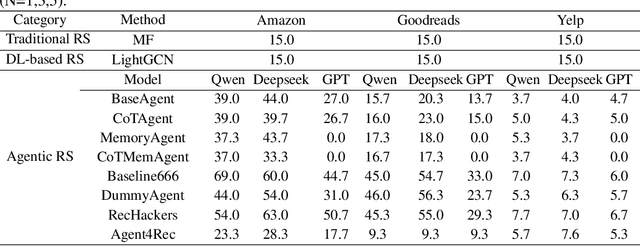
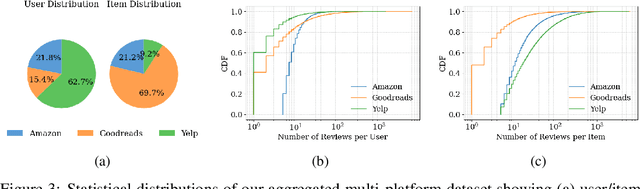
The emergence of agentic recommender systems powered by Large Language Models (LLMs) represents a paradigm shift in personalized recommendations, leveraging LLMs' advanced reasoning and role-playing capabilities to enable autonomous, adaptive decision-making. Unlike traditional recommendation approaches, agentic recommender systems can dynamically gather and interpret user-item interactions from complex environments, generating robust recommendation strategies that generalize across diverse scenarios. However, the field currently lacks standardized evaluation protocols to systematically assess these methods. To address this critical gap, we propose: (1) an interactive textual recommendation simulator incorporating rich user and item metadata and three typical evaluation scenarios (classic, evolving-interest, and cold-start recommendation tasks); (2) a unified modular framework for developing and studying agentic recommender systems; and (3) the first comprehensive benchmark comparing 10 classical and agentic recommendation methods. Our findings demonstrate the superiority of agentic systems and establish actionable design guidelines for their core components. The benchmark environment has been rigorously validated through an open challenge and remains publicly available with a continuously maintained leaderboard~\footnote[2]{https://tsinghua-fib-lab.github.io/AgentSocietyChallenge/pages/overview.html}, fostering ongoing community engagement and reproducible research. The benchmark is available at: \hyperlink{https://huggingface.co/datasets/SGJQovo/AgentRecBench}{https://huggingface.co/datasets/SGJQovo/AgentRecBench}.
TrajMoE: Spatially-Aware Mixture of Experts for Unified Human Mobility Modeling
May 24, 2025Modeling human mobility across diverse cities is essential for applications such as urban planning, transportation optimization, and personalized services. However, generalization remains challenging due to heterogeneous spatial representations and mobility patterns across cities. Existing methods typically rely on numerical coordinates or require training city-specific models, limiting their scalability and transferability. We propose TrajMoE, a unified and scalable model for cross-city human mobility modeling. TrajMoE addresses two key challenges: (1) inconsistent spatial semantics across cities, and (2) diverse urban mobility patterns. To tackle these, we begin by designing a spatial semantic encoder that learns transferable location representations from POI-based functional semantics and visit patterns. Furthermore, we design a Spatially-Aware Mixture-of-Experts (SAMoE) Transformer that injects structured priors into experts specialized in distinct mobility semantics, along with a shared expert to capture city-invariant patterns and enable adaptive cross-city generalization. Extensive experiments demonstrate that TrajMoE achieves up to 27% relative improvement over competitive mobility foundation models after only one epoch of fine-tuning, and consistently outperforms full-data baselines using merely 5% of target city data. These results establish TrajMoE as a significant step toward realizing a truly generalizable, transferable, and pretrainable foundation model for human mobility.
Large language model as user daily behavior data generator: balancing population diversity and individual personality
May 23, 2025Predicting human daily behavior is challenging due to the complexity of routine patterns and short-term fluctuations. While data-driven models have improved behavior prediction by leveraging empirical data from various platforms and devices, the reliance on sensitive, large-scale user data raises privacy concerns and limits data availability. Synthetic data generation has emerged as a promising solution, though existing methods are often limited to specific applications. In this work, we introduce BehaviorGen, a framework that uses large language models (LLMs) to generate high-quality synthetic behavior data. By simulating user behavior based on profiles and real events, BehaviorGen supports data augmentation and replacement in behavior prediction models. We evaluate its performance in scenarios such as pertaining augmentation, fine-tuning replacement, and fine-tuning augmentation, achieving significant improvements in human mobility and smartphone usage predictions, with gains of up to 18.9%. Our results demonstrate the potential of BehaviorGen to enhance user behavior modeling through flexible and privacy-preserving synthetic data generation.