 Add to Chrome
 Add to Firefox
 Add to Edge
Multi-Granularity Sentiment Integration for LLM-Based Multimodal Sentiment Analysis
Aug 17, 2026
Multimodal sentiment analysis (MSA) aims to predict sentiment polarity and intensity from heterogeneous inputs such as text, audio, and vision. While large language models (LLMs) offer strong semantic priors for MSA, effectively incorporating audio and visual signals effectively remains challenging. A key challenge is that audio and visual sentiment cues evolve over different temporal scales, yet many LLM-based methods compress these signals through shallow projection or coarse pooling before fusing them with text, which can weaken cross-modal alignment and erase fine-grained affective information. We propose MGSI, a multi-granularity sentiment integration framework for LLM-based MSA. MGSI first encodes audio and visual streams at short-, medium-, and long-range temporal scales, preserving both local variations and global affective trends. It then refines non-text features through text-guided alignment, and applies polarity- and intensity-aware enhancement to better handle ambiguous and near-neutral samples. The resulting multimodal representation is finally compressed into a small set of pseudo-tokens for efficient conditioning of a frozen LLM. Experiments on four public benchmarks show that MGSI substantially outperforms frozen-LLM baselines and remains competitive with strong multimodal methods. Further ablation and sensitivity analyses support the effectiveness of multi-granularity temporal modeling, text-guided refinement, and adaptive sentiment calibration.

MIThinker: A Plug-and-Play Policy-Optimized Thinker For Motivational Interviewing Counseling
Jun 28, 2026Reasoning large language models (LLMs) have recently made much progress in complex problem-solving, leveraging internal reasoning (or thought) to guide their solution generation. However, existing LLM-based counseling agents, including those using Motivational Interviewing (MI), generate responses without explicitly aligning thoughts with counseling techniques, limiting their effectiveness. We propose MIThinker, a lightweight thinking model that generates therapeutic thoughts to guide MI counseling agents in strategy selection and response generation. To overcome the lack of annotated thought data, we introduce AugR1-MI, an automated pipeline that reverse-engineers counselor's thoughts from observed responses. Through two-stage training combining supervised fine-tuning and reinforcement learning, MIThinker demonstrates improved theory-of-mind assessment and strategy alignment. Comprehensive evaluations show that MindfulMI, our agent leveraging MIThinker, achieves MI competency comparable to state-of-the-art systems with an order of magnitude less computation.
Diverse Thinking Schemata Elicit Better Reasoning in Large Language Models
Jun 08, 2026Large reasoning models (LRMs) have attracted increasing attention for their ability to solve complex mathematical problems by generating extended reasoning chains. In this work, we focus on two critical yet underexplored aspects of the reasoning process: reasoning transitions capturing the distinct transitions between reasoning steps and answer candidates reflecting the variety of solution paths produced by the model. We collectively define these two aspects as thinking schemata. We observe a correlation between the diversity of thinking schemata and model performance, which motivates us to enhance diversity as a means to further improve reasoning potential. To this end, we propose Diverse Schemata Policy Optimization (DiScO), a framework that first endows the model with schemata awareness, then encourages diversity through reinforcement learning, and further promotes diverse reasoning at inference time. Experiments on multiple mathematical reasoning benchmarks demonstrate that DiScO consistently outperforms standard group relative policy optimization. Beyond accuracy, human-annotated analyses show that DiScO substantially improves the model's ability to recover from erroneous initial attempts. Overall, our work suggests the important role that diversity of the thinking schemata plays and points to scaling along the diversity dimension as a promising research direction.
How Far Are We? Systematic Evaluation of LLMs vs. Human Experts in Mathematical Contest in Modeling
Apr 06, 2026Large language models (LLMs) have achieved strong performance on reasoning benchmarks, yet their ability to solve real-world problems requiring end-to-end workflows remains unclear. Mathematical modeling competitions provide a stringent testbed for evaluating such end-to-end problem-solving capability. We propose a problem-oriented, stage-wise evaluation framework that assesses LLM performance across modeling stages using expert-verified criteria. We validate the framework's reliability by comparing automatic scores with independent human expert judgments on problems from the China Postgraduate Mathematical Contest in Modeling, demonstrating substantially stronger alignment than existing evaluation schemes. Using this framework, we reveal a comprehension-execution gap in state-of-the-art LLMs: while they perform well in early stages such as problem identification and formulation, they exhibit persistent deficiencies in execution-oriented stages including model solving, code implementation, and result analysis. These gaps persist even with increased model scale. We further trace these failures to insufficient specification, missing verification, and lack of validation, with errors propagating across stages without correction. Our findings suggest that bridging this gap requires approaches beyond model scaling, offering insights for applying LLMs to complex real-world problem solving.
CAMI: A Counselor Agent Supporting Motivational Interviewing through State Inference and Topic Exploration
Feb 05, 2025Conversational counselor agents have become essential tools for addressing the rising demand for scalable and accessible mental health support. This paper introduces CAMI, a novel automated counselor agent grounded in Motivational Interviewing (MI) -- a client-centered counseling approach designed to address ambivalence and facilitate behavior change. CAMI employs a novel STAR framework, consisting of client's state inference, motivation topic exploration, and response generation modules, leveraging large language models (LLMs). These components work together to evoke change talk, aligning with MI principles and improving counseling outcomes for clients from diverse backgrounds. We evaluate CAMI's performance through both automated and manual evaluations, utilizing simulated clients to assess MI skill competency, client's state inference accuracy, topic exploration proficiency, and overall counseling success. Results show that CAMI not only outperforms several state-of-the-art methods but also shows more realistic counselor-like behavior. Additionally, our ablation study underscores the critical roles of state inference and topic exploration in achieving this performance.
Consistent Client Simulation for Motivational Interviewing-based Counseling
Feb 05, 2025Simulating human clients in mental health counseling is crucial for training and evaluating counselors (both human or simulated) in a scalable manner. Nevertheless, past research on client simulation did not focus on complex conversation tasks such as mental health counseling. In these tasks, the challenge is to ensure that the client's actions (i.e., interactions with the counselor) are consistent with with its stipulated profiles and negative behavior settings. In this paper, we propose a novel framework that supports consistent client simulation for mental health counseling. Our framework tracks the mental state of a simulated client, controls its state transitions, and generates for each state behaviors consistent with the client's motivation, beliefs, preferred plan to change, and receptivity. By varying the client profile and receptivity, we demonstrate that consistent simulated clients for different counseling scenarios can be effectively created. Both our automatic and expert evaluations on the generated counseling sessions also show that our client simulation method achieves higher consistency than previous methods.
EvoWiki: Evaluating LLMs on Evolving Knowledge
Dec 18, 2024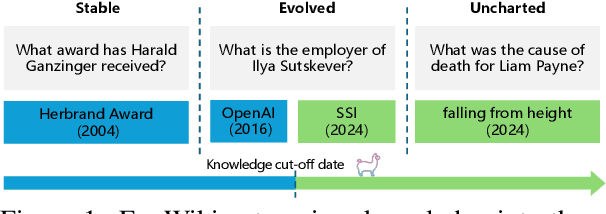
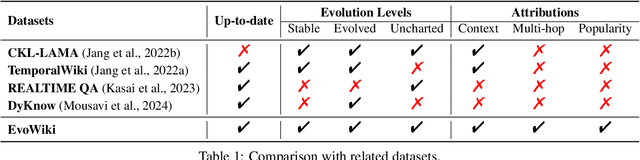
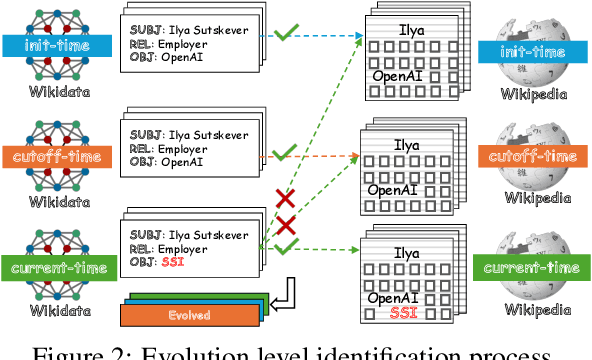
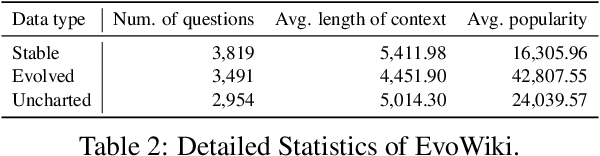
Knowledge utilization is a critical aspect of LLMs, and understanding how they adapt to evolving knowledge is essential for their effective deployment. However, existing benchmarks are predominantly static, failing to capture the evolving nature of LLMs and knowledge, leading to inaccuracies and vulnerabilities such as contamination. In this paper, we introduce EvoWiki, an evolving dataset designed to reflect knowledge evolution by categorizing information into stable, evolved, and uncharted states. EvoWiki is fully auto-updatable, enabling precise evaluation of continuously changing knowledge and newly released LLMs. Through experiments with Retrieval-Augmented Generation (RAG) and Contunual Learning (CL), we evaluate how effectively LLMs adapt to evolving knowledge. Our results indicate that current models often struggle with evolved knowledge, frequently providing outdated or incorrect responses. Moreover, the dataset highlights a synergistic effect between RAG and CL, demonstrating their potential to better adapt to evolving knowledge. EvoWiki provides a robust benchmark for advancing future research on the knowledge evolution capabilities of large language models.
PSPO*: An Effective Process-supervised Policy Optimization for Reasoning Alignment
Nov 18, 2024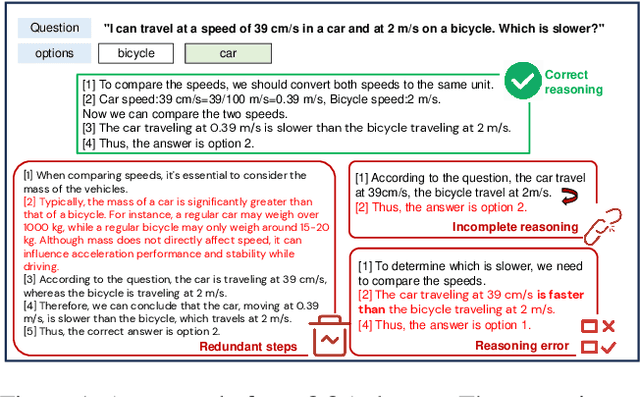
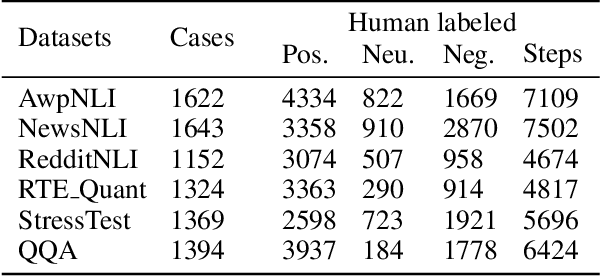

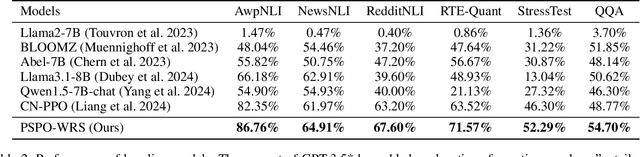
Process supervision enhances the performance of large language models in reasoning tasks by providing feedback at each step of chain-of-thought reasoning. However, due to the lack of effective process supervision methods, even advanced large language models are prone to logical errors and redundant reasoning. We claim that the effectiveness of process supervision significantly depends on both the accuracy and the length of reasoning chains. Moreover, we identify that these factors exhibit a nonlinear relationship with the overall reward score of the reasoning process. Inspired by these insights, we propose a novel process supervision paradigm, PSPO*, which systematically outlines the workflow from reward model training to policy optimization, and highlights the importance of nonlinear rewards in process supervision. Based on PSPO*, we develop the PSPO-WRS, which considers the number of reasoning steps in determining reward scores and utilizes an adjusted Weibull distribution for nonlinear reward shaping. Experimental results on six mathematical reasoning datasets demonstrate that PSPO-WRS consistently outperforms current mainstream models.
Speaker Verification in Agent-Generated Conversations
May 16, 2024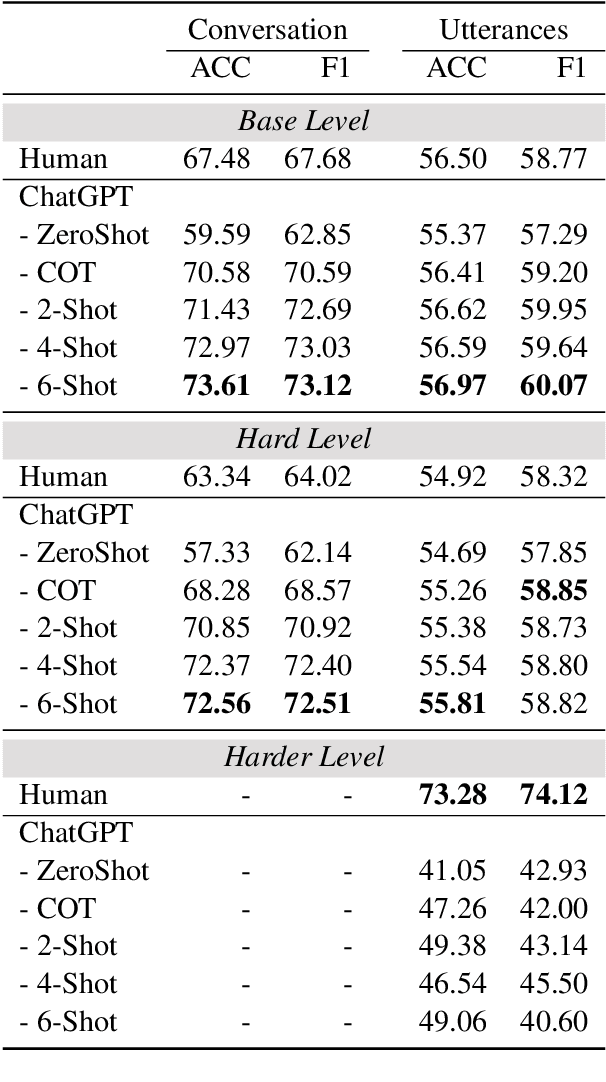
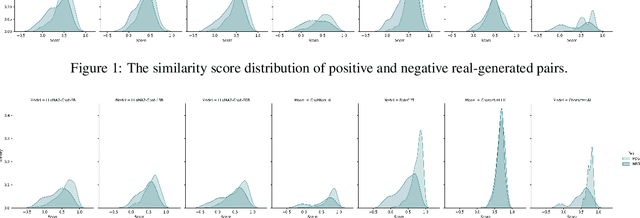
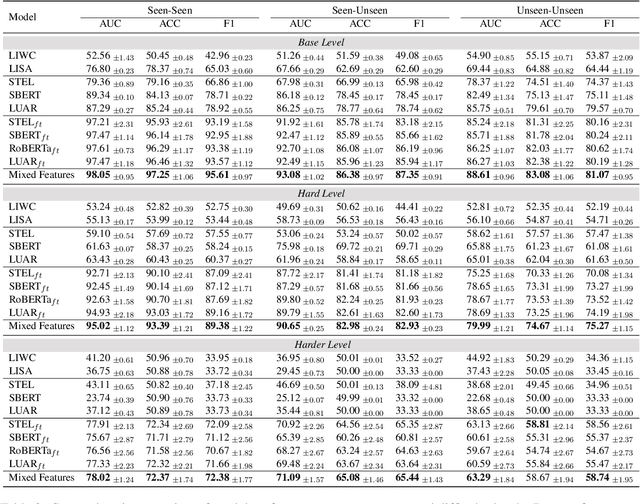
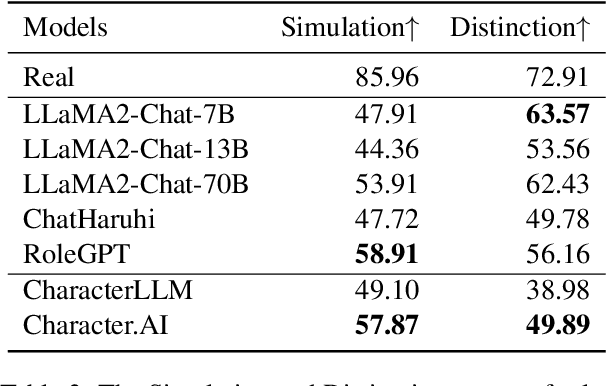
The recent success of large language models (LLMs) has attracted widespread interest to develop role-playing conversational agents personalized to the characteristics and styles of different speakers to enhance their abilities to perform both general and special purpose dialogue tasks. However, the ability to personalize the generated utterances to speakers, whether conducted by human or LLM, has not been well studied. To bridge this gap, our study introduces a novel evaluation challenge: speaker verification in agent-generated conversations, which aimed to verify whether two sets of utterances originate from the same speaker. To this end, we assemble a large dataset collection encompassing thousands of speakers and their utterances. We also develop and evaluate speaker verification models under experiment setups. We further utilize the speaker verification models to evaluate the personalization abilities of LLM-based role-playing models. Comprehensive experiments suggest that the current role-playing models fail in accurately mimicking speakers, primarily due to their inherent linguistic characteristics.
Have Seen Me Before? Automating Dataset Updates Towards Reliable and Timely Evaluation
Feb 28, 2024


Due to the expanding capabilities and pre-training data, Large Language Models (LLMs) are facing increasingly serious evaluation challenges. On one hand, the data leakage issue cause over-estimation on existing benchmarks. On the other hand, periodically curating datasets manually is costly. In this paper, we propose to automate dataset updates for reliable and timely evaluation. The basic idea is to generate unseen and high-quality testing samples based on existing ones to mitigate leakage issues. In specific, we propose two strategies with systematically verification. First, the mimicking strategy employs LLMs to create new samples resembling existing ones, to the maximum extent preserving the stylistic of the original dataset. Our experiments demonstrate its evaluation stability across multiple instantiations and its effectiveness in dealing with data leakage issues in most cases. Second, for the cases that mimicking dataset works poorly, we design an extending strategy that adjusts the difficulty of the generated samples according to varying cognitive levels. This not only makes our evaluation more systematic, but also, with a balanced difficulty, even discern model capabilities better at fine-grained levels.