 Add to Chrome
 Add to Firefox
 Add to Edge
PCA-Relax: Deep-learning-based groupwise registration for motion correction of cardiac $T_1$ mapping
Jun 18, 2024
Quantitative MRI (qMRI) is an increasingly important tool for clinical assessment of cardiovascular diseases. Quantitative maps are derived by fitting a known signal model to a series of baseline images, while the quality of the map can be deteriorated by involuntary respiratory and cardiac motion. To correct motion, a template image is often needed to register all baseline images, but the choice of template is nontrivial, leading to inconsistent performance sensitive to image contrast. In this work, we propose a novel deep-learning-based groupwise registration framework, which omits the need for a template, and registers all baseline images simultaneously. We design two groupwise losses for this registration framework: the first is a linear principal component analysis (PCA) loss that enforces alignment of baseline images irrespective of the intensity variation, and the second is an auxiliary relaxometry loss that enforces adherence of intensity profile to the signal model. We extensively evaluated our method, termed ``PCA-Relax'', and other baseline methods on an in-house cardiac MRI dataset including both pre- and post-contrast $T_1$ sequences. All methods were evaluated under three distinct training-and-evaluation strategies, namely, standard, one-shot, and test-time-adaptation. The proposed PCA-Relax showed further improved performance of registration and mapping over well-established baselines. The proposed groupwise framework is generic and can be adapted to applications involving multiple images.

MDCR: A Dataset for Multi-Document Conditional Reasoning
Jun 17, 2024The same real-life questions posed to different individuals may lead to different answers based on their unique situations. For instance, whether a student is eligible for a scholarship depends on eligibility conditions, such as major or degree required. ConditionalQA was proposed to evaluate models' capability of reading a document and answering eligibility questions, considering unmentioned conditions. However, it is limited to questions on single documents, neglecting harder cases that may require cross-document reasoning and optimization, for example, "What is the maximum number of scholarships attainable?" Such questions over multiple documents are not only more challenging due to more context having to understand, but also because the model has to (1) explore all possible combinations of unmentioned conditions and (2) understand the relationship between conditions across documents, to reason about the optimal outcome. To evaluate models' capability of answering such questions, we propose a new dataset MDCR, which can reflect real-world challenges and serve as a new test bed for complex conditional reasoning that requires optimization. We evaluate this dataset using the most recent LLMs and demonstrate their limitations in solving this task. We believe this dataset will facilitate future research in answering optimization questions with unknown conditions.
TourRank: Utilizing Large Language Models for Documents Ranking with a Tournament-Inspired Strategy
Jun 17, 2024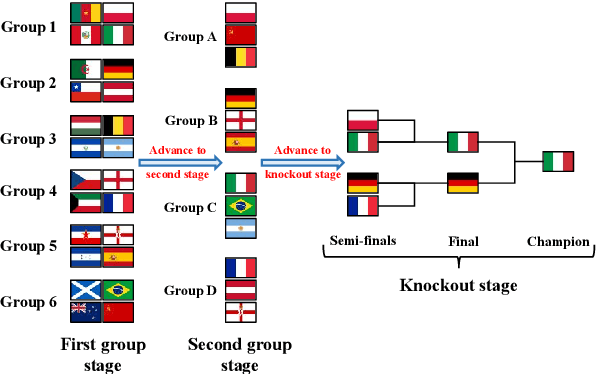
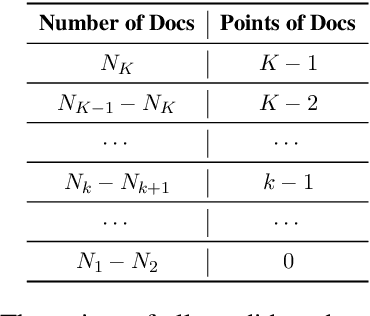
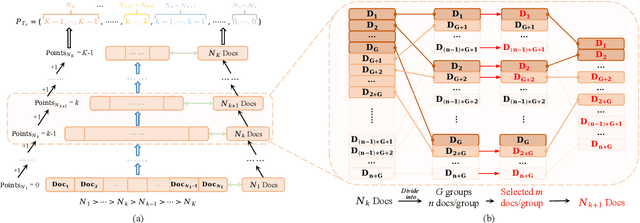
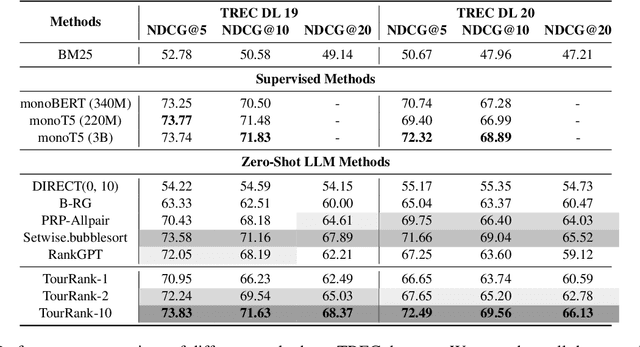
Large Language Models (LLMs) are increasingly employed in zero-shot documents ranking, yielding commendable results. However, several significant challenges still persist in LLMs for ranking: (1) LLMs are constrained by limited input length, precluding them from processing a large number of documents simultaneously; (2) The output document sequence is influenced by the input order of documents, resulting in inconsistent ranking outcomes; (3) Achieving a balance between cost and ranking performance is quite challenging. To tackle these issues, we introduce a novel documents ranking method called TourRank, which is inspired by the tournament mechanism. This approach alleviates the impact of LLM's limited input length through intelligent grouping, while the tournament-like points system ensures robust ranking, mitigating the influence of the document input sequence. We test TourRank with different LLMs on the TREC DL datasets and the BEIR benchmark. Experimental results show that TourRank achieves state-of-the-art performance at a reasonable cost.
DIRECT-3D: Learning Direct Text-to-3D Generation on Massive Noisy 3D Data
Jun 07, 2024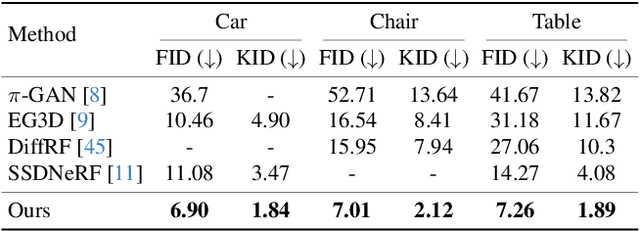
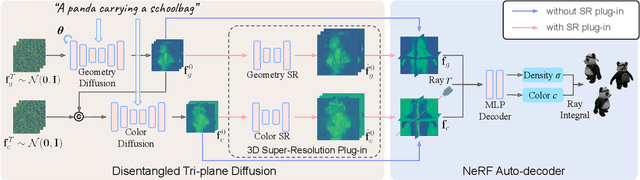
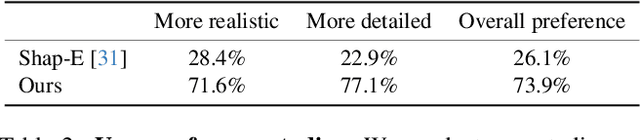
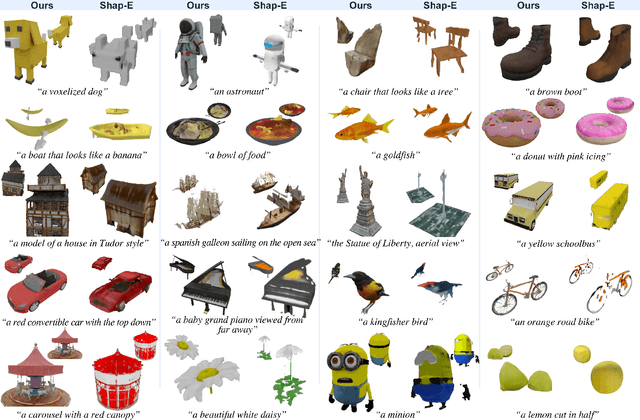
We present DIRECT-3D, a diffusion-based 3D generative model for creating high-quality 3D assets (represented by Neural Radiance Fields) from text prompts. Unlike recent 3D generative models that rely on clean and well-aligned 3D data, limiting them to single or few-class generation, our model is directly trained on extensive noisy and unaligned `in-the-wild' 3D assets, mitigating the key challenge (i.e., data scarcity) in large-scale 3D generation. In particular, DIRECT-3D is a tri-plane diffusion model that integrates two innovations: 1) A novel learning framework where noisy data are filtered and aligned automatically during the training process. Specifically, after an initial warm-up phase using a small set of clean data, an iterative optimization is introduced in the diffusion process to explicitly estimate the 3D pose of objects and select beneficial data based on conditional density. 2) An efficient 3D representation that is achieved by disentangling object geometry and color features with two separate conditional diffusion models that are optimized hierarchically. Given a prompt input, our model generates high-quality, high-resolution, realistic, and complex 3D objects with accurate geometric details in seconds. We achieve state-of-the-art performance in both single-class generation and text-to-3D generation. We also demonstrate that DIRECT-3D can serve as a useful 3D geometric prior of objects, for example to alleviate the well-known Janus problem in 2D-lifting methods such as DreamFusion. The code and models are available for research purposes at: https://github.com/qihao067/direct3d.
StatBot.Swiss: Bilingual Open Data Exploration in Natural Language
Jun 06, 2024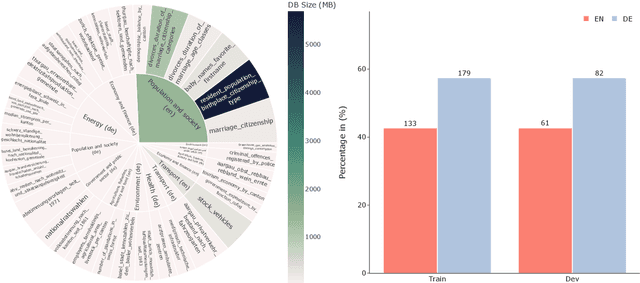

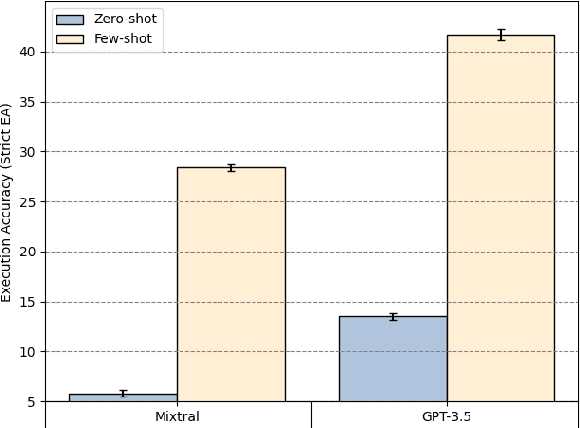

The potential for improvements brought by Large Language Models (LLMs) in Text-to-SQL systems is mostly assessed on monolingual English datasets. However, LLMs' performance for other languages remains vastly unexplored. In this work, we release the StatBot.Swiss dataset, the first bilingual benchmark for evaluating Text-to-SQL systems based on real-world applications. The StatBot.Swiss dataset contains 455 natural language/SQL-pairs over 35 big databases with varying level of complexity for both English and German. We evaluate the performance of state-of-the-art LLMs such as GPT-3.5-Turbo and mixtral-8x7b-instruct for the Text-to-SQL translation task using an in-context learning approach. Our experimental analysis illustrates that current LLMs struggle to generalize well in generating SQL queries on our novel bilingual dataset.
Dynamically Expanding Capacity of Autonomous Driving with Near-Miss Focused Training Framework
Jun 05, 2024The long-tail distribution of real driving data poses challenges for training and testing autonomous vehicles (AV), where rare yet crucial safety-critical scenarios are infrequent. And virtual simulation offers a low-cost and efficient solution. This paper proposes a near-miss focused training framework for AV. Utilizing the driving scenario information provided by sensors in the simulator, we design novel reward functions, which enable background vehicles (BV) to generate near-miss scenarios and ensure gradients exist not only in collision-free scenes but also in collision scenarios. And then leveraging the Robust Adversarial Reinforcement Learning (RARL) framework for simultaneous training of AV and BV to gradually enhance AV and BV capabilities, as well as generating near-miss scenarios tailored to different levels of AV capabilities. Results from three testing strategies indicate that the proposed method generates scenarios closer to near-miss, thus enhancing the capabilities of both AVs and BVs throughout training.
Textual Inversion and Self-supervised Refinement for Radiology Report Generation
May 31, 2024Existing mainstream approaches follow the encoder-decoder paradigm for generating radiology reports. They focus on improving the network structure of encoders and decoders, which leads to two shortcomings: overlooking the modality gap and ignoring report content constraints. In this paper, we proposed Textual Inversion and Self-supervised Refinement (TISR) to address the above two issues. Specifically, textual inversion can project text and image into the same space by representing images as pseudo words to eliminate the cross-modeling gap. Subsequently, self-supervised refinement refines these pseudo words through contrastive loss computation between images and texts, enhancing the fidelity of generated reports to images. Notably, TISR is orthogonal to most existing methods, plug-and-play. We conduct experiments on two widely-used public datasets and achieve significant improvements on various baselines, which demonstrates the effectiveness and generalization of TISR. The code will be available soon.
A re-calibration method for object detection with multi-modal alignment bias in autonomous driving
May 27, 2024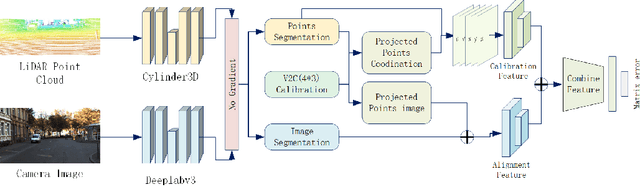


Multi-modal object detection in autonomous driving has achieved great breakthroughs due to the usage of fusing complementary information from different sensors. The calibration in fusion between sensors such as LiDAR and camera is always supposed to be precise in previous work. However, in reality, calibration matrices are fixed when the vehicles leave the factory, but vibration, bumps, and data lags may cause calibration bias. As the research on the calibration influence on fusion detection performance is relatively few, flexible calibration dependency multi-sensor detection method has always been attractive. In this paper, we conducted experiments on SOTA detection method EPNet++ and proved slight bias on calibration can reduce the performance seriously. We also proposed a re-calibration model based on semantic segmentation which can be combined with a detection algorithm to improve the performance and robustness of multi-modal calibration bias.
Reverse Transition Kernel: A Flexible Framework to Accelerate Diffusion Inference
May 26, 2024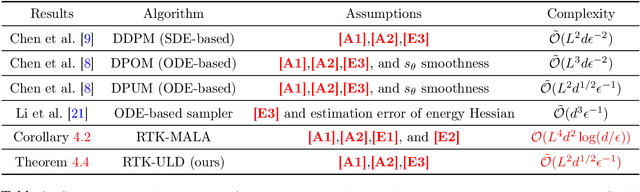

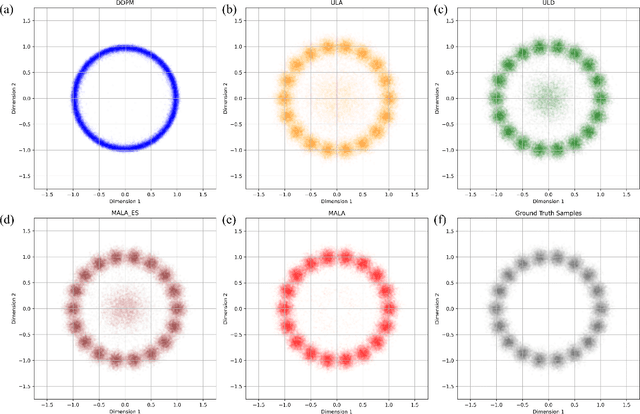
To generate data from trained diffusion models, most inference algorithms, such as DDPM, DDIM, and other variants, rely on discretizing the reverse SDEs or their equivalent ODEs. In this paper, we view such approaches as decomposing the entire denoising diffusion process into several segments, each corresponding to a reverse transition kernel (RTK) sampling subproblem. Specifically, DDPM uses a Gaussian approximation for the RTK, resulting in low per-subproblem complexity but requiring a large number of segments (i.e., subproblems), which is conjectured to be inefficient. To address this, we develop a general RTK framework that enables a more balanced subproblem decomposition, resulting in $\tilde O(1)$ subproblems, each with strongly log-concave targets. We then propose leveraging two fast sampling algorithms, the Metropolis-Adjusted Langevin Algorithm (MALA) and Underdamped Langevin Dynamics (ULD), for solving these strongly log-concave subproblems. This gives rise to the RTK-MALA and RTK-ULD algorithms for diffusion inference. In theory, we further develop the convergence guarantees for RTK-MALA and RTK-ULD in total variation (TV) distance: RTK-ULD can achieve $\epsilon$ target error within $\tilde{\mathcal O}(d^{1/2}\epsilon^{-1})$ under mild conditions, and RTK-MALA enjoys a $\mathcal{O}(d^{2}\log(d/\epsilon))$ convergence rate under slightly stricter conditions. These theoretical results surpass the state-of-the-art convergence rates for diffusion inference and are well supported by numerical experiments.
Small Language Models for Application Interactions: A Case Study
May 23, 2024
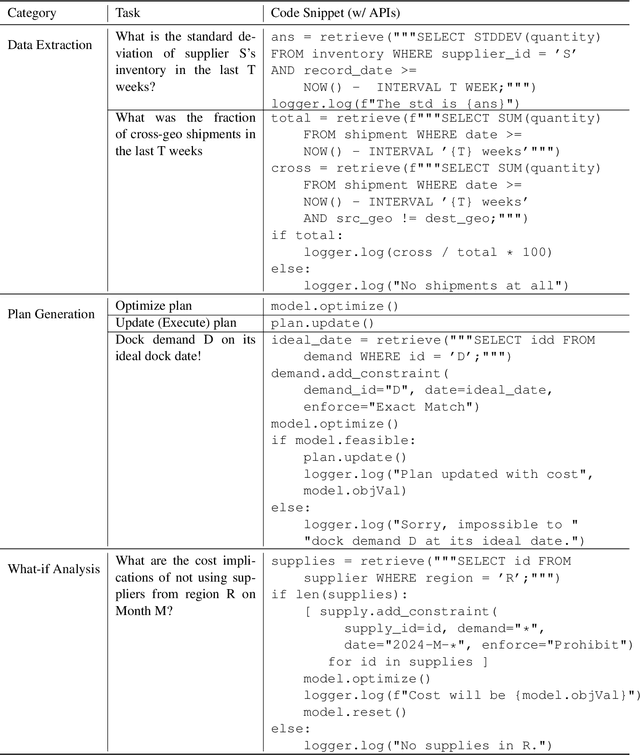
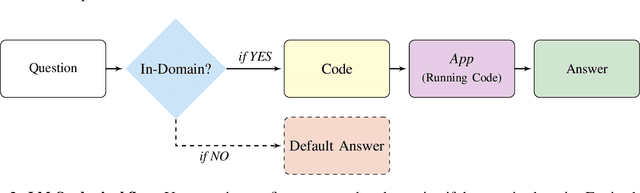

We study the efficacy of Small Language Models (SLMs) in facilitating application usage through natural language interactions. Our focus here is on a particular internal application used in Microsoft for cloud supply chain fulfilment. Our experiments show that small models can outperform much larger ones in terms of both accuracy and running time, even when fine-tuned on small datasets. Alongside these results, we also highlight SLM-based system design considerations.