 Add to Chrome
 Add to Firefox
 Add to Edge
Artificial intelligence-driven improvement of hospital logistics management resilience: a practical exploration based on H Hospital
Mar 14, 2026
Hospital logistics management faces growing pressure from internal operations and external emergencies, with artificial intelligence (AI) holding untapped potential to boost its resilience. This study explores AI's role in enhancing logistics resilience via a mixed-methods case study of H Hospital, combining 12 key informant interviews and a full survey of 151 logistics staff, with the PDCA cycle as the analytical framework. Thematic and quantitative analyses (hierarchical regression, structural equation modeling) were adopted for data analysis. Results showed 94.7% staff perceived AI application, with the strongest improvements in equipment maintenance (41.1%) and resource allocation (33.1%), but limited effects in emergency response (18.54%) and risk management (15.23%). AI integration positively correlated with logistics resilience (\b{eta}=0.642, p<0.001), with management system adaptability as a positive moderator (\b{eta}=0.208, p<0.01). The PDCA cycle fully mediated the AI-resilience relationship. We conclude AI effectively enhances logistics resilience, dependent on adaptive management systems and structured continuous improvement mechanisms. Targeted strategies are proposed to form an AI-driven closed-loop resilience mechanism, offering empirical guidance for AI-hospital logistics integration and resilient health system construction.

Efficient endometrial carcinoma screening via cross-modal synthesis and gradient distillation
Feb 23, 2026Early detection of myometrial invasion is critical for the staging and life-saving management of endometrial carcinoma (EC), a prevalent global malignancy. Transvaginal ultrasound serves as the primary, accessible screening modality in resource-constrained primary care settings; however, its diagnostic reliability is severely hindered by low tissue contrast, high operator dependence, and a pronounced scarcity of positive pathological samples. Existing artificial intelligence solutions struggle to overcome this severe class imbalance and the subtle imaging features of invasion, particularly under the strict computational limits of primary care clinics. Here we present an automated, highly efficient two-stage deep learning framework that resolves both data and computational bottlenecks in EC screening. To mitigate pathological data scarcity, we develop a structure-guided cross-modal generation network that synthesizes diverse, high-fidelity ultrasound images from unpaired magnetic resonance imaging (MRI) data, strictly preserving clinically essential anatomical junctions. Furthermore, we introduce a lightweight screening network utilizing gradient distillation, which transfers discriminative knowledge from a high-capacity teacher model to dynamically guide sparse attention towards task-critical regions. Evaluated on a large, multicenter cohort of 7,951 participants, our model achieves a sensitivity of 99.5\%, a specificity of 97.2\%, and an area under the curve of 0.987 at a minimal computational cost (0.289 GFLOPs), substantially outperforming the average diagnostic accuracy of expert sonographers. Our approach demonstrates that combining cross-modal synthetic augmentation with knowledge-driven efficient modeling can democratize expert-level, real-time cancer screening for resource-constrained primary care settings.
Attention2Probability: Attention-Driven Terminology Probability Estimation for Robust Speech-to-Text System
Aug 26, 2025Recent advances in speech large language models (SLMs) have improved speech recognition and translation in general domains, but accurately generating domain-specific terms or neologisms remains challenging. To address this, we propose Attention2Probability: attention-driven terminology probability estimation for robust speech-to-text system, which is lightweight, flexible, and accurate. Attention2Probability converts cross-attention weights between speech and terminology into presence probabilities, and it further employs curriculum learning to enhance retrieval accuracy. Furthermore, to tackle the lack of data for speech-to-text tasks with terminology intervention, we create and release a new speech dataset with terminology to support future research in this area. Experimental results show that Attention2Probability significantly outperforms the VectorDB method on our test set. Specifically, its maximum recall rates reach 92.57% for Chinese and 86.83% for English. This high recall is achieved with a latency of only 8.71ms per query. Intervening in SLMs' recognition and translation tasks using Attention2Probability-retrieved terms improves terminology accuracy by 6-17%, while revealing that the current utilization of terminology by SLMs has limitations.
A GAN-Enhanced Deep Learning Framework for Rooftop Detection from Historical Aerial Imagery
Mar 29, 2025Accurate rooftop detection from historical aerial imagery is vital for examining long-term urban development and human settlement patterns. However, black-and-white analog photographs pose significant challenges for modern object detection frameworks due to their limited spatial resolution, lack of color information, and archival degradation. To address these limitations, this study introduces a two-stage image enhancement pipeline based on Generative Adversarial Networks (GANs): image colorization using DeOldify, followed by super-resolution enhancement with Real-ESRGAN. The enhanced images were then used to train and evaluate rooftop detection models, including Faster R-CNN, DETReg, and YOLOv11n. Results show that combining colorization with super-resolution substantially improves detection performance, with YOLOv11n achieving a mean Average Precision (mAP) exceeding 85%. This reflects an improvement of approximately 40% over original black-and-white images and 20% over images enhanced through colorization alone. The proposed method effectively bridges the gap between archival imagery and contemporary deep learning techniques, enabling more reliable extraction of building footprints from historical aerial photographs.
Classifier Clustering and Feature Alignment for Federated Learning under Distributed Concept Drift
Oct 24, 2024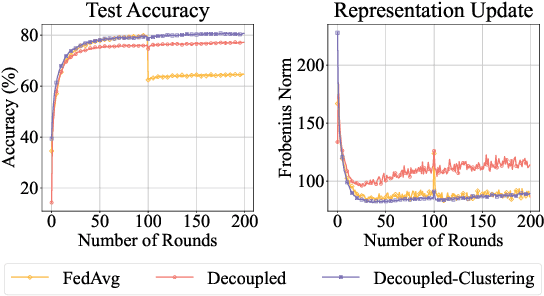
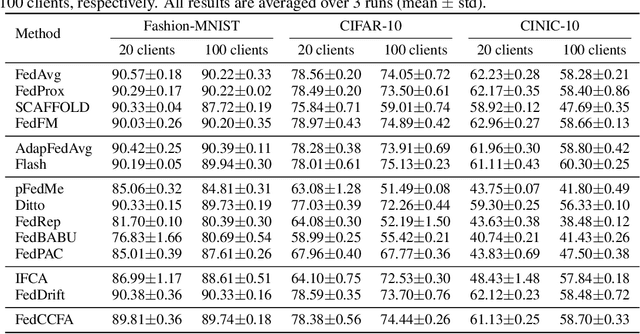
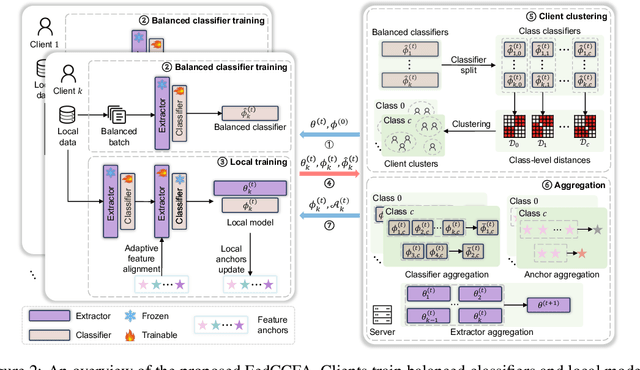
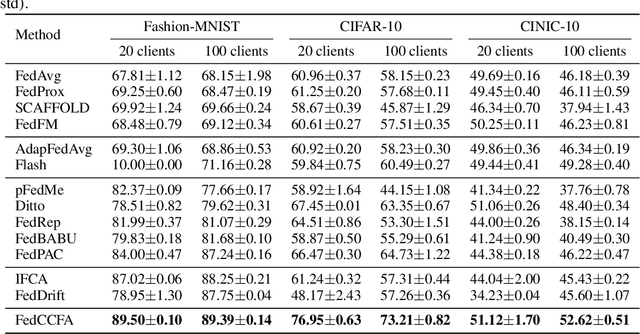
Data heterogeneity is one of the key challenges in federated learning, and many efforts have been devoted to tackling this problem. However, distributed concept drift with data heterogeneity, where clients may additionally experience different concept drifts, is a largely unexplored area. In this work, we focus on real drift, where the conditional distribution $P(Y|X)$ changes. We first study how distributed concept drift affects the model training and find that local classifier plays a critical role in drift adaptation. Moreover, to address data heterogeneity, we study the feature alignment under distributed concept drift, and find two factors that are crucial for feature alignment: the conditional distribution $P(Y|X)$ and the degree of data heterogeneity. Motivated by the above findings, we propose FedCCFA, a federated learning framework with classifier clustering and feature alignment. To enhance collaboration under distributed concept drift, FedCCFA clusters local classifiers at class-level and generates clustered feature anchors according to the clustering results. Assisted by these anchors, FedCCFA adaptively aligns clients' feature spaces based on the entropy of label distribution $P(Y)$, alleviating the inconsistency in feature space. Our results demonstrate that FedCCFA significantly outperforms existing methods under various concept drift settings. Code is available at https://github.com/Chen-Junbao/FedCCFA.
Asymptotically Optimal Lazy Lifelong Sampling-based Algorithm for Efficient Motion Planning in Dynamic Environments
Sep 10, 2024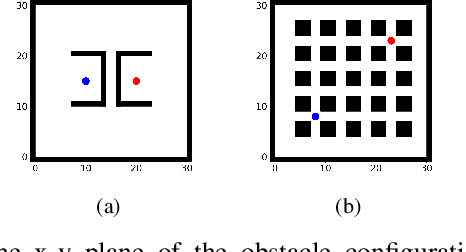

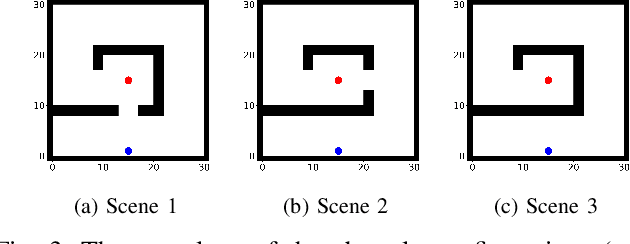
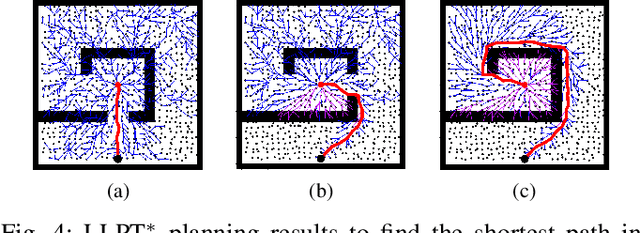
The paper introduces an asymptotically optimal lifelong sampling-based path planning algorithm that combines the merits of lifelong planning algorithms and lazy search algorithms for rapid replanning in dynamic environments where edge evaluation is expensive. By evaluating only sub-path candidates for the optimal solution, the algorithm saves considerable evaluation time and thereby reduces the overall planning cost. It employs a novel informed rewiring cascade to efficiently repair the search tree when the underlying search graph changes. Simulation results demonstrate that the algorithm outperforms various state-of-the-art sampling-based planners in addressing both static and dynamic motion planning problems.
Seed-ASR: Understanding Diverse Speech and Contexts with LLM-based Speech Recognition
Jul 05, 2024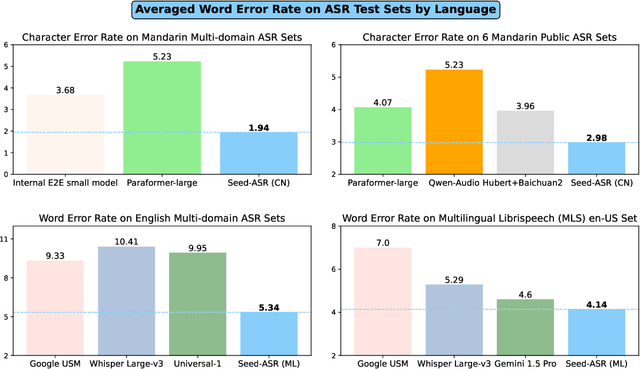
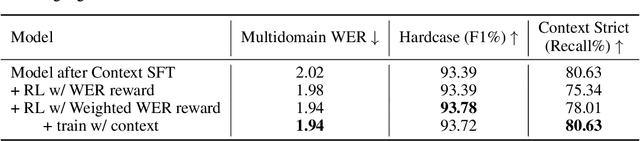
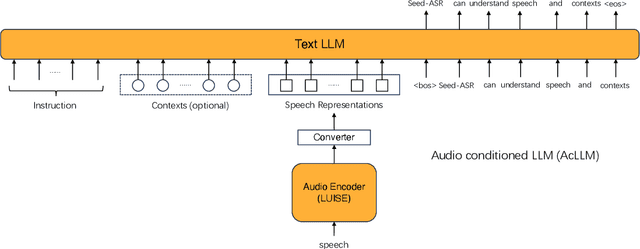

Modern automatic speech recognition (ASR) model is required to accurately transcribe diverse speech signals (from different domains, languages, accents, etc) given the specific contextual information in various application scenarios. Classic end-to-end models fused with extra language models perform well, but mainly in data matching scenarios and are gradually approaching a bottleneck. In this work, we introduce Seed-ASR, a large language model (LLM) based speech recognition model. Seed-ASR is developed based on the framework of audio conditioned LLM (AcLLM), leveraging the capabilities of LLMs by inputting continuous speech representations together with contextual information into the LLM. Through stage-wise large-scale training and the elicitation of context-aware capabilities in LLM, Seed-ASR demonstrates significant improvement over end-to-end models on comprehensive evaluation sets, including multiple domains, accents/dialects and languages. Additionally, Seed-ASR can be further deployed to support specific needs in various scenarios without requiring extra language models. Compared to recently released large ASR models, Seed-ASR achieves 10%-40% reduction in word (or character, for Chinese) error rates on Chinese and English public test sets, further demonstrating its powerful performance.
Deep-learning-based groupwise registration for motion correction of cardiac $T_1$ mapping
Jun 21, 2024Quantitative $T_1$ mapping by MRI is an increasingly important tool for clinical assessment of cardiovascular diseases. The cardiac $T_1$ map is derived by fitting a known signal model to a series of baseline images, while the quality of this map can be deteriorated by involuntary respiratory and cardiac motion. To correct motion, a template image is often needed to register all baseline images, but the choice of template is nontrivial, leading to inconsistent performance sensitive to image contrast. In this work, we propose a novel deep-learning-based groupwise registration framework, which omits the need for a template, and registers all baseline images simultaneously. We design two groupwise losses for this registration framework: the first is a linear principal component analysis (PCA) loss that enforces alignment of baseline images irrespective of the intensity variation, and the second is an auxiliary relaxometry loss that enforces adherence of intensity profile to the signal model. We extensively evaluated our method, termed ``PCA-Relax'', and other baseline methods on an in-house cardiac MRI dataset including both pre- and post-contrast $T_1$ sequences. All methods were evaluated under three distinct training-and-evaluation strategies, namely, standard, one-shot, and test-time-adaptation. The proposed PCA-Relax showed further improved performance of registration and mapping over well-established baselines. The proposed groupwise framework is generic and can be adapted to applications involving multiple images.
PCA-Relax: Deep-learning-based groupwise registration for motion correction of cardiac $T_1$ mapping
Jun 18, 2024Quantitative MRI (qMRI) is an increasingly important tool for clinical assessment of cardiovascular diseases. Quantitative maps are derived by fitting a known signal model to a series of baseline images, while the quality of the map can be deteriorated by involuntary respiratory and cardiac motion. To correct motion, a template image is often needed to register all baseline images, but the choice of template is nontrivial, leading to inconsistent performance sensitive to image contrast. In this work, we propose a novel deep-learning-based groupwise registration framework, which omits the need for a template, and registers all baseline images simultaneously. We design two groupwise losses for this registration framework: the first is a linear principal component analysis (PCA) loss that enforces alignment of baseline images irrespective of the intensity variation, and the second is an auxiliary relaxometry loss that enforces adherence of intensity profile to the signal model. We extensively evaluated our method, termed ``PCA-Relax'', and other baseline methods on an in-house cardiac MRI dataset including both pre- and post-contrast $T_1$ sequences. All methods were evaluated under three distinct training-and-evaluation strategies, namely, standard, one-shot, and test-time-adaptation. The proposed PCA-Relax showed further improved performance of registration and mapping over well-established baselines. The proposed groupwise framework is generic and can be adapted to applications involving multiple images.
Improving Large-scale Deep Biasing with Phoneme Features and Text-only Data in Streaming Transducer
Nov 15, 2023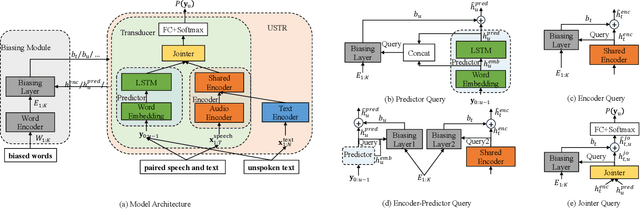
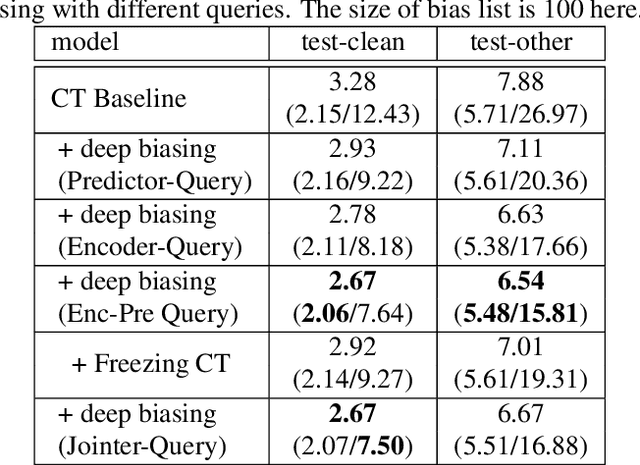
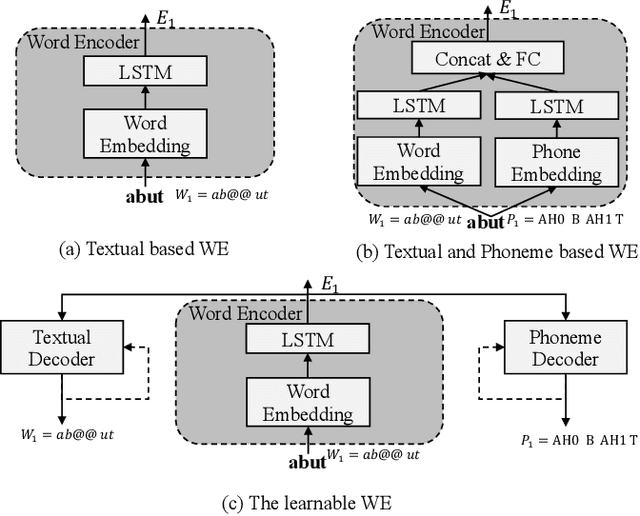
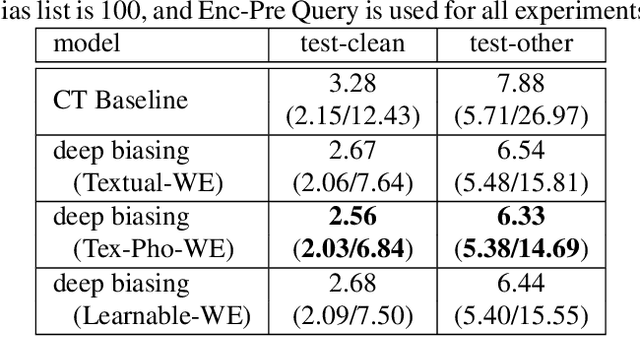
Deep biasing for the Transducer can improve the recognition performance of rare words or contextual entities, which is essential in practical applications, especially for streaming Automatic Speech Recognition (ASR). However, deep biasing with large-scale rare words remains challenging, as the performance drops significantly when more distractors exist and there are words with similar grapheme sequences in the bias list. In this paper, we combine the phoneme and textual information of rare words in Transducers to distinguish words with similar pronunciation or spelling. Moreover, the introduction of training with text-only data containing more rare words benefits large-scale deep biasing. The experiments on the LibriSpeech corpus demonstrate that the proposed method achieves state-of-the-art performance on rare word error rate for different scales and levels of bias lists.