 Add to Chrome
 Add to Firefox
 Add to Edge
GenieBlue: Integrating both Linguistic and Multimodal Capabilities for Large Language Models on Mobile Devices
Mar 08, 2025
Recent advancements in Multimodal Large Language Models (MLLMs) have enabled their deployment on mobile devices. However, challenges persist in maintaining strong language capabilities and ensuring hardware compatibility, both of which are crucial for user experience and practical deployment efficiency. In our deployment process, we observe that existing MLLMs often face performance degradation on pure language tasks, and the current NPU platforms on smartphones do not support the MoE architecture, which is commonly used to preserve pure language capabilities during multimodal training. To address these issues, we systematically analyze methods to maintain pure language capabilities during the training of MLLMs, focusing on both training data and model architecture aspects. Based on these analyses, we propose GenieBlue, an efficient MLLM structural design that integrates both linguistic and multimodal capabilities for LLMs on mobile devices. GenieBlue freezes the original LLM parameters during MLLM training to maintain pure language capabilities. It acquires multimodal capabilities by duplicating specific transformer blocks for full fine-tuning and integrating lightweight LoRA modules. This approach preserves language capabilities while achieving comparable multimodal performance through extensive training. Deployed on smartphone NPUs, GenieBlue demonstrates efficiency and practicality for applications on mobile devices.

NoT: Federated Unlearning via Weight Negation
Mar 07, 2025Federated unlearning (FU) aims to remove a participant's data contributions from a trained federated learning (FL) model, ensuring privacy and regulatory compliance. Traditional FU methods often depend on auxiliary storage on either the client or server side or require direct access to the data targeted for removal-a dependency that may not be feasible if the data is no longer available. To overcome these limitations, we propose NoT, a novel and efficient FU algorithm based on weight negation (multiplying by -1), which circumvents the need for additional storage and access to the target data. We argue that effective and efficient unlearning can be achieved by perturbing model parameters away from the set of optimal parameters, yet being well-positioned for quick re-optimization. This technique, though seemingly contradictory, is theoretically grounded: we prove that the weight negation perturbation effectively disrupts inter-layer co-adaptation, inducing unlearning while preserving an approximate optimality property, thereby enabling rapid recovery. Experimental results across three datasets and three model architectures demonstrate that NoT significantly outperforms existing baselines in unlearning efficacy as well as in communication and computational efficiency.
Effective LLM Knowledge Learning via Model Generalization
Mar 05, 2025Large language models (LLMs) are trained on enormous documents that contain extensive world knowledge. However, it is still not well-understood how knowledge is acquired via autoregressive pre-training. This lack of understanding greatly hinders effective knowledge learning, especially for continued pretraining on up-to-date information, as this evolving information often lacks diverse repetitions like foundational knowledge. In this paper, we focus on understanding and improving LLM knowledge learning. We found and verified that knowledge learning for LLMs can be deemed as an implicit supervised task hidden in the autoregressive pre-training objective. Our findings suggest that knowledge learning for LLMs would benefit from methods designed to improve generalization ability for supervised tasks. Based on our analysis, we propose the formatting-based data augmentation to grow in-distribution samples, which does not present the risk of altering the facts embedded in documents as text paraphrasing. We also introduce sharpness-aware minimization as an effective optimization algorithm to better improve generalization. Moreover, our analysis and method can be readily extended to instruction tuning. Extensive experiment results validate our findings and demonstrate our methods' effectiveness in both continued pre-training and instruction tuning. This paper offers new perspectives and insights to interpret and design effective strategies for LLM knowledge learning.
Generative assimilation and prediction for weather and climate
Mar 04, 2025Machine learning models have shown great success in predicting weather up to two weeks ahead, outperforming process-based benchmarks. However, existing approaches mostly focus on the prediction task, and do not incorporate the necessary data assimilation. Moreover, these models suffer from error accumulation in long roll-outs, limiting their applicability to seasonal predictions or climate projections. Here, we introduce Generative Assimilation and Prediction (GAP), a unified deep generative framework for assimilation and prediction of both weather and climate. By learning to quantify the probabilistic distribution of atmospheric states under observational, predictive, and external forcing constraints, GAP excels in a broad range of weather-climate related tasks, including data assimilation, seamless prediction, and climate simulation. In particular, GAP is competitive with state-of-the-art ensemble assimilation, probabilistic weather forecast and seasonal prediction, yields stable millennial simulations, and reproduces climate variability from daily to decadal time scales.
Pragmatic Inference Chain (PIC) Improving LLMs' Reasoning of Authentic Implicit Toxic Language
Mar 03, 2025The rapid development of large language models (LLMs) gives rise to ethical concerns about their performance, while opening new avenues for developing toxic language detection techniques. However, LLMs' unethical output and their capability of detecting toxicity have primarily been tested on language data that do not demand complex meaning inference, such as the biased associations of 'he' with programmer and 'she' with household. Nowadays toxic language adopts a much more creative range of implicit forms, thanks to advanced censorship. In this study, we collect authentic toxic interactions that evade online censorship and that are verified by human annotators as inference intensive. To evaluate and improve LLMs' reasoning of the authentic implicit toxic language, we propose a new prompting method, Pragmatic Inference Chain (PIC), drawn on interdisciplinary findings from cognitive science and linguistics. The PIC prompting significantly improves the success rate of GPT-4o, Llama-3.1-70B-Instruct, and DeepSeek-v2.5 in identifying implicit toxic language, compared to both direct prompting and Chain-of-Thought. In addition, it also facilitates the models to produce more explicit and coherent reasoning processes, hence can potentially be generalized to other inference-intensive tasks, e.g., understanding humour and metaphors.
Metering Error Estimation of Fast-Charging Stations Using Charging Data Analytics
Mar 03, 2025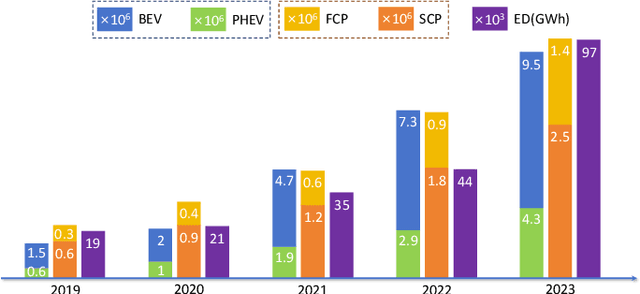
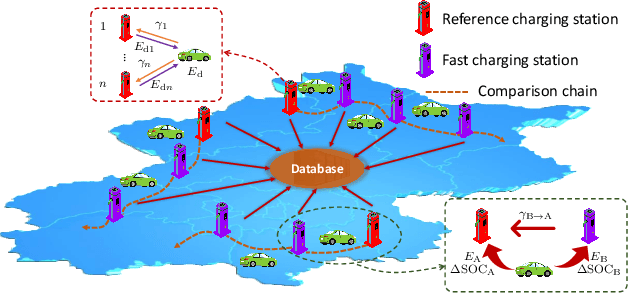
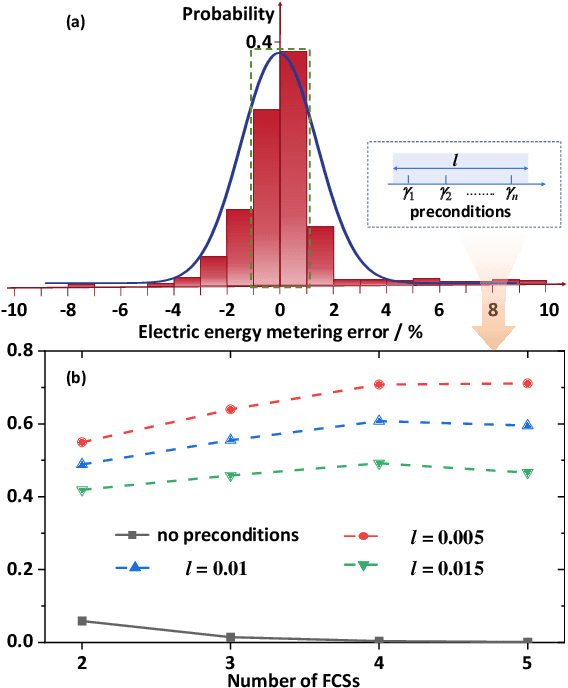
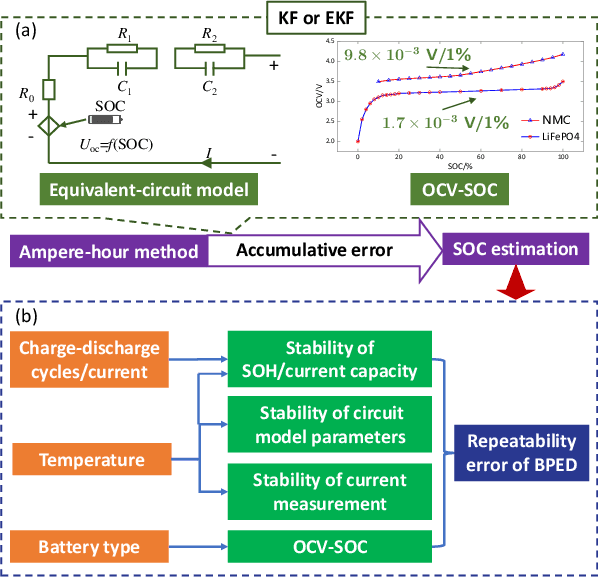
Accurate electric energy metering (EEM) of fast charging stations (FCSs), serving as critical infrastructure in the electric vehicle (EV) industry and as significant carriers of vehicle-to-grid (V2G) technology, is the cornerstone for ensuring fair electric energy transactions. Traditional on-site verification methods, constrained by their high costs and low efficiency, struggle to keep pace with the rapid global expansion of FCSs. In response, this paper adopts a data-driven approach and proposes the measuring performance comparison (MPC) method. By utilizing the estimation value of state-of-charge (SOC) as a medium, MPC establishes comparison chains of EEM performance of multiple FCSs. Therefore, the estimation of EEM errors for FCSs with high efficiency is enabled. Moreover, this paper summarizes the interfering factors of estimation results and establishes corresponding error models and uncertainty models. Also, a method for discriminating whether there are EEM performance defects in FCSs is proposed. Finally, the feasibility of MPC method is validated, with results indicating that for FCSs with an accuracy grade of 2\%, the discriminative accuracy exceeds 95\%. The MPC provides a viable approach for the online monitoring of EEM performance for FCSs, laying a foundation for a fair and just electricity trading market.
LMHLD: A Large-scale Multi-source High-resolution Landslide Dataset for Landslide Detection based on Deep Learning
Feb 27, 2025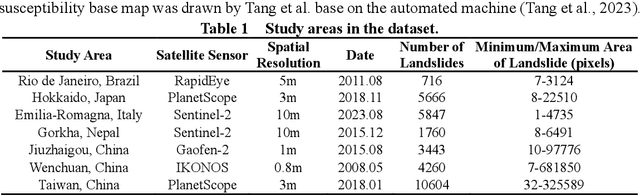
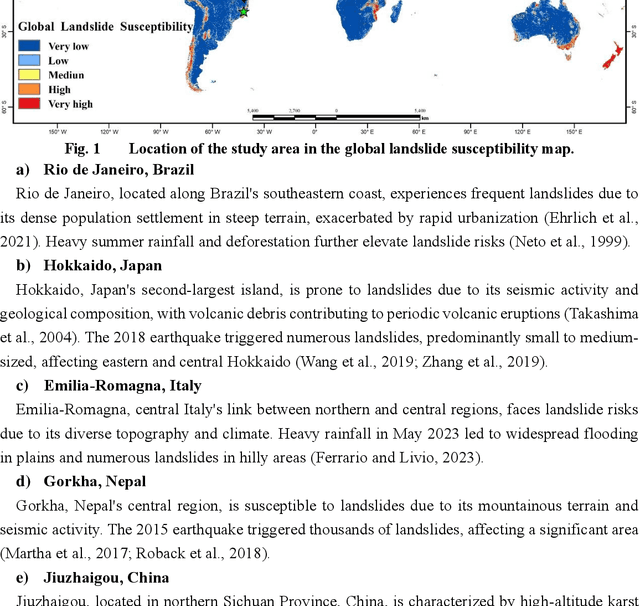
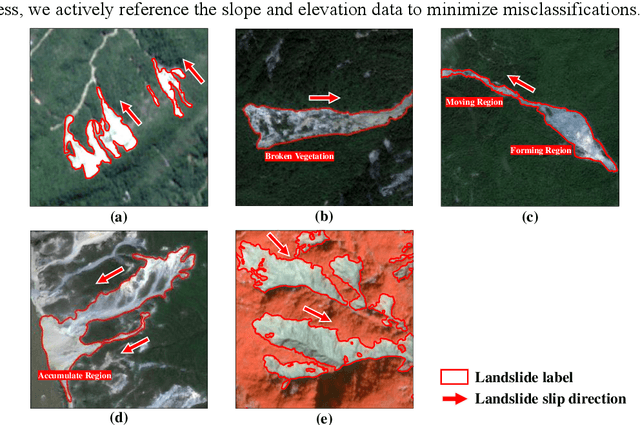
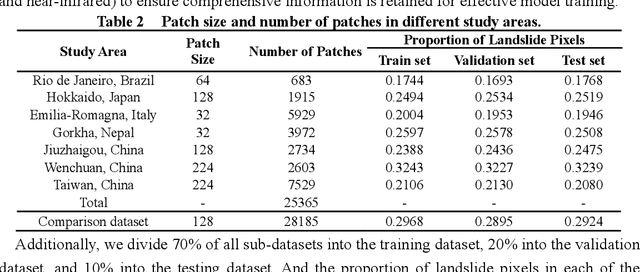
Landslides are among the most common natural disasters globally, posing significant threats to human society. Deep learning (DL) has proven to be an effective method for rapidly generating landslide inventories in large-scale disaster areas. However, DL models rely heavily on high-quality labeled landslide data for strong feature extraction capabilities. And landslide detection using DL urgently needs a benchmark dataset to evaluate the generalization ability of the latest models. To solve the above problems, we construct a Large-scale Multi-source High-resolution Landslide Dataset (LMHLD) for Landslide Detection based on DL. LMHLD collects remote sensing images from five different satellite sensors across seven study areas worldwide: Wenchuan, China (2008); Rio de Janeiro, Brazil (2011); Gorkha, Nepal (2015); Jiuzhaigou, China (2015); Taiwan, China (2018); Hokkaido, Japan (2018); Emilia-Romagna, Italy (2023). The dataset includes a total of 25,365 patches, with different patch sizes to accommodate different landslide scales. Additionally, a training module, LMHLDpart, is designed to accommodate landslide detection tasks at varying scales and to alleviate the issue of catastrophic forgetting in multi-task learning. Furthermore, the models trained by LMHLD is applied in other datasets to highlight the robustness of LMHLD. Five dataset quality evaluation experiments designed by using seven DL models from the U-Net family demonstrate that LMHLD has the potential to become a benchmark dataset for landslide detection. LMHLD is open access and can be accessed through the link: https://doi.org/10.5281/zenodo.11424988. This dataset provides a strong foundation for DL models, accelerates the development of DL in landslide detection, and serves as a valuable resource for landslide prevention and mitigation efforts.
Composable Strategy Framework with Integrated Video-Text based Large Language Models for Heart Failure Assessment
Feb 23, 2025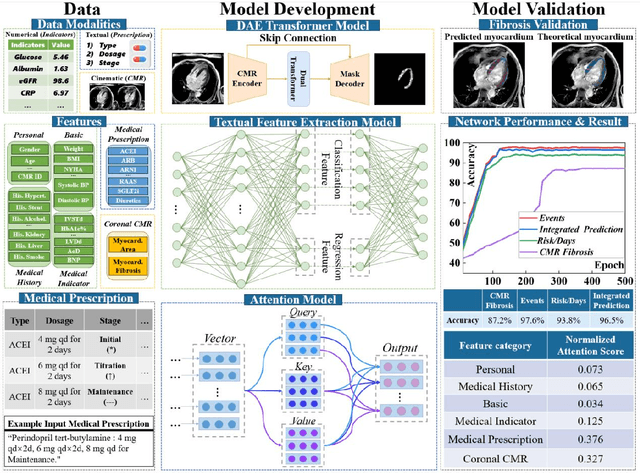
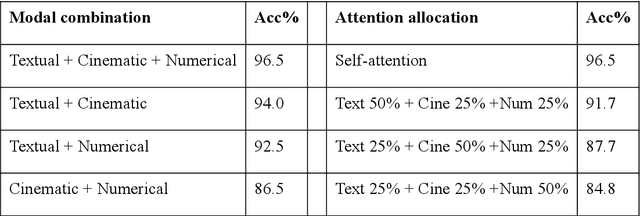
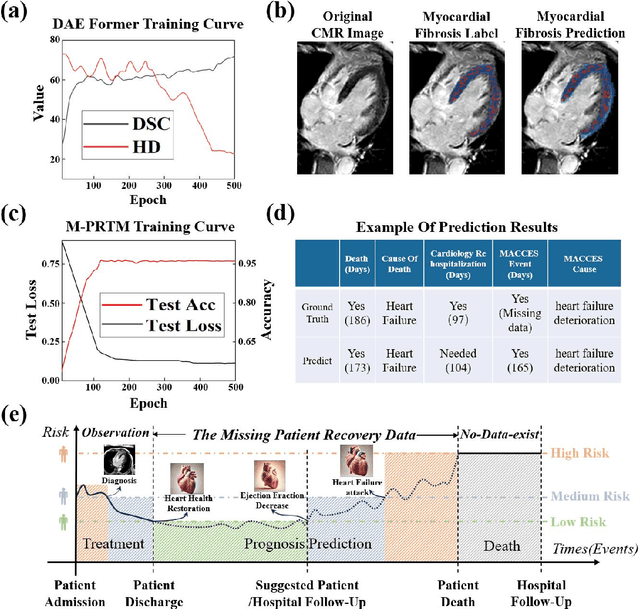
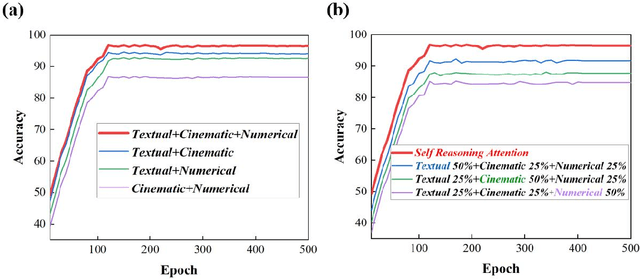
Heart failure is one of the leading causes of death worldwide, with millons of deaths each year, according to data from the World Health Organization (WHO) and other public health agencies. While significant progress has been made in the field of heart failure, leading to improved survival rates and improvement of ejection fraction, there remains substantial unmet needs, due to the complexity and multifactorial characteristics. Therefore, we propose a composable strategy framework for assessment and treatment optimization in heart failure. This framework simulates the doctor-patient consultation process and leverages multi-modal algorithms to analyze a range of data, including video, physical examination, text results as well as medical history. By integrating these various data sources, our framework offers a more holistic evaluation and optimized treatment plan for patients. Our results demonstrate that this multi-modal approach outperforms single-modal artificial intelligence (AI) algorithms in terms of accuracy in heart failure (HF) prognosis prediction. Through this method, we can further evaluate the impact of various pathological indicators on HF prognosis,providing a more comprehensive evaluation.
Monotonicity Testing of High-Dimensional Distributions with Subcube Conditioning
Feb 22, 2025We study monotonicity testing of high-dimensional distributions on $\{-1,1\}^n$ in the model of subcube conditioning, suggested and studied by Canonne, Ron, and Servedio~\cite{CRS15} and Bhattacharyya and Chakraborty~\cite{BC18}. Previous work shows that the \emph{sample complexity} of monotonicity testing must be exponential in $n$ (Rubinfeld, Vasilian~\cite{RV20}, and Aliakbarpour, Gouleakis, Peebles, Rubinfeld, Yodpinyanee~\cite{AGPRY19}). We show that the subcube \emph{query complexity} is $\tilde{\Theta}(n/\varepsilon^2)$, by proving nearly matching upper and lower bounds. Our work is the first to use directed isoperimetric inequalities (developed for function monotonicity testing) for analyzing a distribution testing algorithm. Along the way, we generalize an inequality of Khot, Minzer, and Safra~\cite{KMS18} to real-valued functions on $\{-1,1\}^n$. We also study uniformity testing of distributions that are promised to be monotone, a problem introduced by Rubinfeld, Servedio~\cite{RS09} , using subcube conditioning. We show that the query complexity is $\tilde{\Theta}(\sqrt{n}/\varepsilon^2)$. Our work proves the lower bound, which matches (up to poly-logarithmic factors) the uniformity testing upper bound for general distributions (Canonne, Chen, Kamath, Levi, Waingarten~\cite{CCKLW21}). Hence, we show that monotonicity does not help, beyond logarithmic factors, in testing uniformity of distributions with subcube conditional queries.
HopRAG: Multi-Hop Reasoning for Logic-Aware Retrieval-Augmented Generation
Feb 18, 2025Retrieval-Augmented Generation (RAG) systems often struggle with imperfect retrieval, as traditional retrievers focus on lexical or semantic similarity rather than logical relevance. To address this, we propose HopRAG, a novel RAG framework that augments retrieval with logical reasoning through graph-structured knowledge exploration. During indexing, HopRAG constructs a passage graph, with text chunks as vertices and logical connections established via LLM-generated pseudo-queries as edges. During retrieval, it employs a retrieve-reason-prune mechanism: starting with lexically or semantically similar passages, the system explores multi-hop neighbors guided by pseudo-queries and LLM reasoning to identify truly relevant ones. Extensive experiments demonstrate HopRAG's superiority, achieving 76.78\% higher answer accuracy and 65.07\% improved retrieval F1 score compared to conventional methods. The repository is available at https://github.com/LIU-Hao-2002/HopRAG.