 Add to Chrome
 Add to Firefox
 Add to Edge
From Test-Time Scaling to Reusable Memory: Measuring Crystallization in Text-to-SQL
Aug 07, 2026
Test-time scaling can correct difficult text-to-SQL queries, but the extra computation is normally discarded after each answer. Systems increasingly retain verified repair episodes, yet evaluations still report one end-to-end score. It cannot distinguish replay on recurring questions from help on unseen questions, or identify the responsible memory choice. We call measuring this future value the crystallization problem. Our controlled evaluation holds the single-shot solver fixed and varies one memory choice at a time. We separately measure replay, cross-question retention, and held-out same-database transfer. On BIRD, storing verified corrected queries improves held-out first-attempt accuracy by 4.34 percentage points. This gain captures 44.4% of the accuracy headroom provided by on-demand repair on the same questions. Controlled interventions identify database-specific content as the main operating ingredient. Reliable verification and broader retrieval coverage yield supported gains; richer formats and elaborate retrievers do not. Open-source code, evaluation artifacts, and reproduction instructions are available at https://github.com/ai-jiaqian/text-to-sql-memory-crystallization.

Claim-Level Rubric Rewards for Video Caption Reinforcement Learning
Jul 06, 2026In this paper, we introduce Claim-Level Rubric Rewards (CuRe), a structured reward framework designed to address the reward-design bottleneck in reinforcement learning for dense video captioning. Existing reward designs generally fall into two categories: holistic response-level judgment across heterogeneous criteria, or alignment-based evaluation against reference captions. However, both paradigms suffer from fundamental limitations. Holistic rewards struggle to ensure factual accuracy and are prone to stylistic reward hacking, while reference-based rewards overly rely on rigid textual alignment, failing to preserve the completeness and diversity inherent to open-ended generation tasks. To address these challenges, CuRe reformulates reward modeling as fine-grained claim-level verification. Specifically, CuRe decomposes captions into category-aware atomic claims through a structured rubric, converting holistic evaluation into simpler and more reliable claim-level verification.
Uni-OPD: Unifying On-Policy Distillation with a Dual-Perspective Recipe
May 05, 2026On-policy distillation (OPD) has recently emerged as an effective post-training paradigm for consolidating the capabilities of specialized expert models into a single student model. Despite its empirical success, the conditions under which OPD yields reliable improvement remain poorly understood. In this work, we identify two fundamental bottlenecks that limit effective OPD: insufficient exploration of informative states and unreliable teacher supervision for student rollouts. Building on this insight, we propose Uni-OPD, a unified OPD framework that generalizes across Large Language Models (LLMs) and Multimodal Large Language Models (MLLMs), centered on a dual-perspective optimization strategy. Specifically, from the student's perspective, we adopt two data balancing strategies to promote exploration of informative student-generated states during training. From the teacher's perspective, we show that reliable supervision hinges on whether aggregated token-level guidance remains order-consistent with the outcome reward. To this end, we develop an outcome-guided margin calibration mechanism to restore order consistency between correct and incorrect trajectories. We conduct extensive experiments on 5 domains and 16 benchmarks covering diverse settings, including single-teacher and multi-teacher distillation across LLMs and MLLMs, strong-to-weak distillation, and cross-modal distillation. Our results verify the effectiveness and versatility of Uni-OPD and provide practical insights into reliable OPD.
Deepfake Detection Generalization with Diffusion Noise
Apr 16, 2026Deepfake detectors face growing challenges in generalization as new image synthesis techniques emerge. In particular, deepfakes generated by diffusion models are highly photorealistic and often evade detectors trained on GAN-based forgeries. This paper addresses the generalization problem in deepfake detection by leveraging diffusion noise characteristics. We propose an Attention-guided Noise Learning (ANL) framework that integrates a pre-trained diffusion model into the deepfake detection pipeline to guide the learning of more robust features. Specifically, our method uses the diffusion model's denoising process to expose subtle artifacts: the detector is trained to predict the noise contained in an input image at a given diffusion step, forcing it to capture discrepancies between real and synthetic images, while an attention-guided mechanism derived from the predicted noise is introduced to encourage the model to focus on globally distributed discrepancies rather than local patterns. By harnessing the frozen diffusion model's learned distribution of natural images, the ANL method acts as a form of regularization, improving the detector's generalization to unseen forgery types. Extensive experiments demonstrate that ANL significantly outperforms existing methods on multiple benchmarks, achieving state-of-the-art accuracy in detecting diffusion-generated deepfakes. Notably, the proposed framework boosts generalization performance (e.g., improving ACC/AP by a substantial margin on unseen models) without introducing additional overhead during inference. Our results highlight that diffusion noise provides a powerful signal for generalizable deepfake detection.
Incentivizing Generative Zero-Shot Learning via Outcome-Reward Reinforcement Learning with Visual Cues
Mar 22, 2026Recent advances in zero-shot learning (ZSL) have demonstrated the potential of generative models. Typically, generative ZSL synthesizes visual features conditioned on semantic prototypes to model the data distribution of unseen classes, followed by training a classifier on the synthesized data. However, the synthesized features often remain task-agnostic, leading to degraded performance. Moreover, inferring a faithful distribution from semantic prototypes alone is insufficient for classes that are semantically similar but visually distinct. To address these and advance ZSL, we propose RLVC, an outcome-reward reinforcement learning RL framework with visual cues for generative ZSL. At its core, RL empowers the generative model to self-evolve, implicitly enhancing its generation capability. In particular, RLVC updates the generative model using an outcome-based reward, encouraging the synthesis of task-relevant features. Furthermore, we introduce class-wise visual cues that (i) align synthesized features with visual prototypes and (ii) stabilize the RL training updates. For the training process, we present a novel cold-start strategy. Comprehensive experiments and analyses on three prevalent ZSL benchmarks demonstrate that RLVC achieves state-of-the-art results with a 4.7% gain.
Seeing Is Believing? A Benchmark for Multimodal Large Language Models on Visual Illusions and Anomalies
Feb 02, 2026Multimodal Large Language Models (MLLMs) have shown remarkable proficiency on general-purpose vision-language benchmarks, reaching or even exceeding human-level performance. However, these evaluations typically rely on standard in-distribution data, leaving the robustness of MLLMs largely unexamined when faced with scenarios that defy common-sense priors. To address this gap, we introduce VIA-Bench, a challenging benchmark designed to probe model performance on visual illusions and anomalies. It includes six core categories: color illusions, motion illusions, gestalt illusions, geometric and spatial illusions, general visual illusions, and visual anomalies. Through careful human-in-the-loop review, we construct over 1K high-quality question-answer pairs that require nuanced visual reasoning. Extensive evaluation of over 20 state-of-the-art MLLMs, including proprietary, open-source, and reasoning-enhanced models, uncovers significant vulnerabilities. Notably, we find that Chain-of-Thought (CoT) reasoning offers negligible robustness, often yielding ``brittle mirages'' where the model's logic collapses under illusory stimuli. Our findings reveal a fundamental divergence between machine and human perception, suggesting that resolving such perceptual bottlenecks is critical for the advancement of artificial general intelligence. The benchmark data and code will be released.
Prompt-Aware Controllable Shadow Removal
Jan 25, 2025


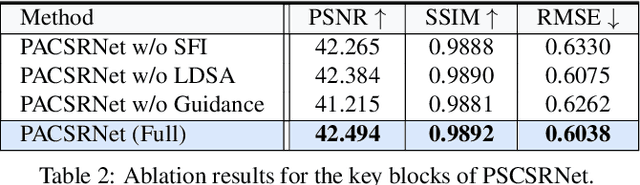
Shadow removal aims to restore the image content in shadowed regions. While deep learning-based methods have shown promising results, they still face key challenges: 1) uncontrolled removal of all shadows, or 2) controllable removal but heavily relies on precise shadow region masks.To address these issues, we introduce a novel paradigm: prompt-aware controllable shadow removal. Unlike existing approaches, our paradigm allows for targeted shadow removal from specific subjects based on user prompts (e.g., dots, lines, or subject masks). This approach eliminates the need for shadow annotations and offers flexible, user-controlled shadow removal.Specifically, we propose an end-to-end learnable model, the \emph{\textbf{P}}rompt-\emph{\textbf{A}}ware \emph{\textbf{C}}ntrollable \emph{\textbf{S}}hadow \emph{\textbf{R}}emoval \emph{\textbf{Net}}work (PACSRNet). PACSRNet consists of two key modules: a prompt-aware module that generates shadow masks for the specified subject based on the user prompt, and a shadow removal module that uses the shadow prior from the first module to restore the content in the shadowed regions.Additionally, we enhance the shadow removal module by incorporating feature information from the prompt-aware module through a linear operation, providing prompt-guided support for shadow removal.Recognizing that existing shadow removal datasets lack diverse user prompts, we contribute a new dataset specifically designed for prompt-based controllable shadow removal.Extensive experimental results demonstrate the effectiveness and superiority of PACSRNet.
Discriminative Image Generation with Diffusion Models for Zero-Shot Learning
Dec 23, 2024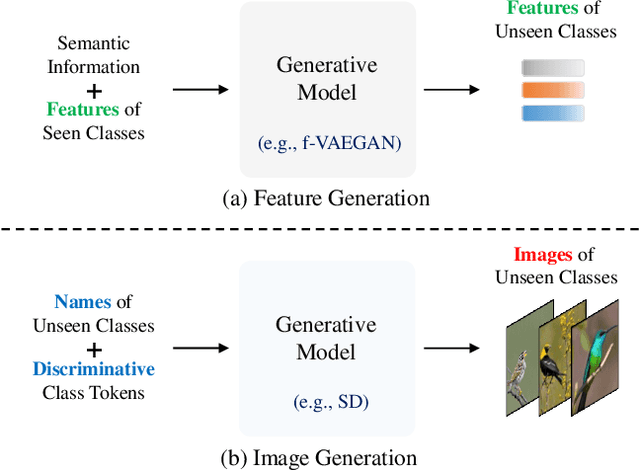


Generative Zero-Shot Learning (ZSL) methods synthesize class-related features based on predefined class semantic prototypes, showcasing superior performance. However, this feature generation paradigm falls short of providing interpretable insights. In addition, existing approaches rely on semantic prototypes annotated by human experts, which exhibit a significant limitation in their scalability to generalized scenes. To overcome these deficiencies, a natural solution is to generate images for unseen classes using text prompts. To this end, We present DIG-ZSL, a novel Discriminative Image Generation framework for Zero-Shot Learning. Specifically, to ensure the generation of discriminative images for training an effective ZSL classifier, we learn a discriminative class token (DCT) for each unseen class under the guidance of a pre-trained category discrimination model (CDM). Harnessing DCTs, we can generate diverse and high-quality images, which serve as informative unseen samples for ZSL tasks. In this paper, the extensive experiments and visualizations on four datasets show that our DIG-ZSL: (1) generates diverse and high-quality images, (2) outperforms previous state-of-the-art nonhuman-annotated semantic prototype-based methods by a large margin, and (3) achieves comparable or better performance than baselines that leverage human-annotated semantic prototypes. The codes will be made available upon acceptance of the paper.
ZeroMamba: Exploring Visual State Space Model for Zero-Shot Learning
Aug 27, 2024Zero-shot learning (ZSL) aims to recognize unseen classes by transferring semantic knowledge from seen classes to unseen ones, guided by semantic information. To this end, existing works have demonstrated remarkable performance by utilizing global visual features from Convolutional Neural Networks (CNNs) or Vision Transformers (ViTs) for visual-semantic interactions. Due to the limited receptive fields of CNNs and the quadratic complexity of ViTs, however, these visual backbones achieve suboptimal visual-semantic interactions. In this paper, motivated by the visual state space model (i.e., Vision Mamba), which is capable of capturing long-range dependencies and modeling complex visual dynamics, we propose a parameter-efficient ZSL framework called ZeroMamba to advance ZSL. Our ZeroMamba comprises three key components: Semantic-aware Local Projection (SLP), Global Representation Learning (GRL), and Semantic Fusion (SeF). Specifically, SLP integrates semantic embeddings to map visual features to local semantic-related representations, while GRL encourages the model to learn global semantic representations. SeF combines these two semantic representations to enhance the discriminability of semantic features. We incorporate these designs into Vision Mamba, forming an end-to-end ZSL framework. As a result, the learned semantic representations are better suited for classification. Through extensive experiments on four prominent ZSL benchmarks, ZeroMamba demonstrates superior performance, significantly outperforming the state-of-the-art (i.e., CNN-based and ViT-based) methods under both conventional ZSL (CZSL) and generalized ZSL (GZSL) settings. Code is available at: https://anonymous.4open.science/r/ZeroMamba.
What Happens Without Background? Constructing Foreground-Only Data for Fine-Grained Tasks
Aug 04, 2024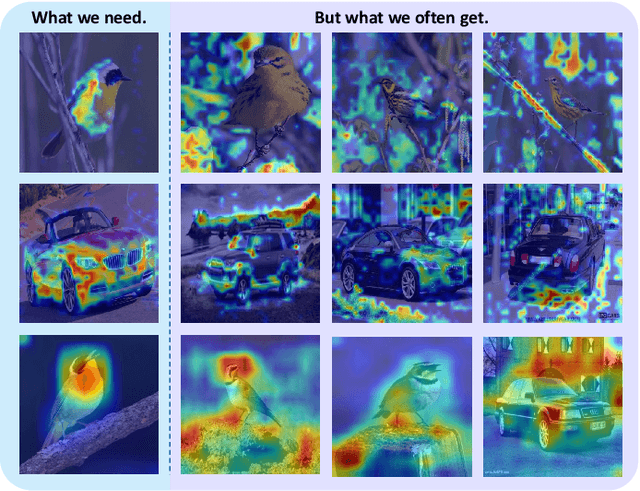
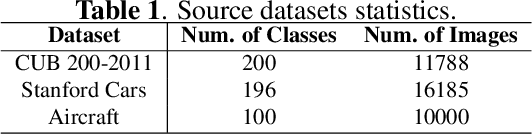
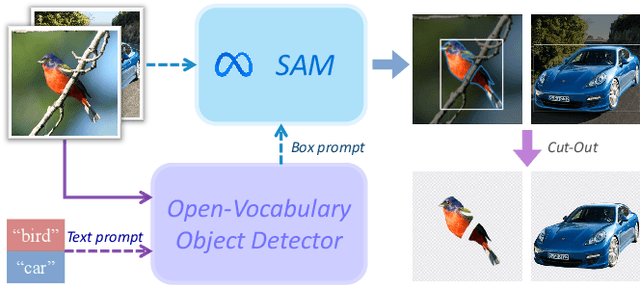
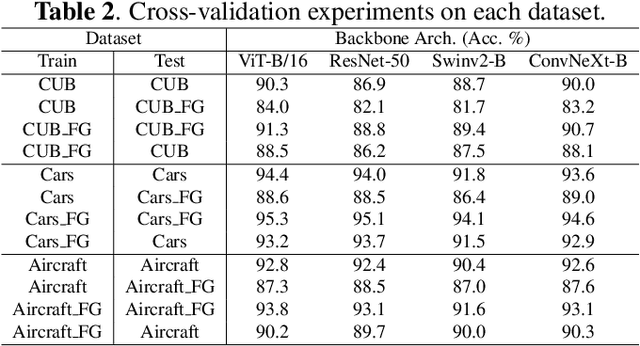
Fine-grained recognition, a pivotal task in visual signal processing, aims to distinguish between similar subclasses based on discriminative information present in samples. However, prevailing methods often erroneously focus on background areas, neglecting the capture of genuinely effective discriminative information from the subject, thus impeding practical application. To facilitate research into the impact of background noise on models and enhance their ability to concentrate on the subject's discriminative features, we propose an engineered pipeline that leverages the capabilities of SAM and Detic to create fine-grained datasets with only foreground subjects, devoid of background. Extensive cross-experiments validate this approach as a preprocessing step prior to training, enhancing algorithmic performance and holding potential for further modal expansion of the data.