 Add to Chrome
 Add to Firefox
 Add to Edge
PhoneHarness: Harnessing Phone-Use Agents through Mixed GUI, CLI, and Tool Actions
Jun 12, 2026
Phone agents are increasingly expected to complete real mobile workflows rather than merely predict the next screen action. However, much of the current mobile-agent literature still evaluates agents primarily as GUI controllers that observe a screen, emit taps and swipes, and are scored by target app state. Real phone-use tasks are broader: they require deciding when to use app GUIs, device-side commands, or structured tools, while leaving evidence that the intended side effect actually occurred. We introduce PhoneHarness, a mixed-action benchmark and execution harness for studying phone-use agents on verifiable mobile workflows. PhoneHarness runs a device-side agent loop over GUI, CLI, and host-side tool actions, combining deterministic action routing with bounded GUI delegation and auditable execution traces. Its benchmark, PhoneHarness Bench, evaluates whether agents complete tasks with observable side effects, not only whether they produce plausible final answers. On the annotated evaluation split, PhoneHarness reaches a 75.0% pass rate, outperforming the strongest non-PhoneHarness settings by 12.9 percentage points. PhoneHarness and PhoneHarness Bench therefore play distinct but mutually dependent roles: the harness makes mixed phone workflows executable, while the benchmark measures whether agents can use that harness reliably and safely. Our findings suggest that reliable phone automation depends on action-surface routing and verifiable execution, not only visual GUI control.

PhoneWorld: Scaling Phone-Use Agent Environments
May 28, 2026A central bottleneck for phone-use agents is that controllable, reproducible environments covering real mobile behavior are hard to build at scale. Existing mobile-agent benchmarks have made important progress on evaluation, but they do not by themselves provide a scalable way to construct many new phone-use environments. We present PhoneWorld, a reusable pipeline that converts real GUI trajectories and screenshots into controllable phone-use environments, executable tasks, automatic verifiers, and training rollouts. Rather than hand-building one mobile benchmark at a time, PhoneWorld uses real trajectories to recover which screens matter, how screens connect, which interactions must change environment state, and which user goals admit automatic verification. From these signals, it builds runnable mock Android apps backed by read-only app content and mutable state, then derives executable tasks, rule-based verifiers, and training rollouts from the same environments. In its current instantiation, PhoneWorld covers 34 apps across 16 domains, spanning common consumer mobile behaviors such as search, browsing, shopping, booking, media, and social interaction. Under a fixed training budget, replacing 10K steps from an auxiliary AndroidWorld corpus in an AndroidWorld-based baseline with broad PhoneWorld supervision improves all four evaluation benchmarks at once, raising HYMobileBench by 17.7 points, AndroidControl by 6.0 points, AndroidWorld by 14.7 points, and PhoneWorld by 52.5 points. We then study two additional scaling questions: increasing the amount of PhoneWorld supervision strongly improves PhoneWorld performance, and under a fixed PhoneWorld budget, expanding app coverage yields even larger gains. Overall, PhoneWorld shifts the focus from building one mobile benchmark at a time to scaling the supply of phone-use environments themselves.
Uni-OPD: Unifying On-Policy Distillation with a Dual-Perspective Recipe
May 05, 2026On-policy distillation (OPD) has recently emerged as an effective post-training paradigm for consolidating the capabilities of specialized expert models into a single student model. Despite its empirical success, the conditions under which OPD yields reliable improvement remain poorly understood. In this work, we identify two fundamental bottlenecks that limit effective OPD: insufficient exploration of informative states and unreliable teacher supervision for student rollouts. Building on this insight, we propose Uni-OPD, a unified OPD framework that generalizes across Large Language Models (LLMs) and Multimodal Large Language Models (MLLMs), centered on a dual-perspective optimization strategy. Specifically, from the student's perspective, we adopt two data balancing strategies to promote exploration of informative student-generated states during training. From the teacher's perspective, we show that reliable supervision hinges on whether aggregated token-level guidance remains order-consistent with the outcome reward. To this end, we develop an outcome-guided margin calibration mechanism to restore order consistency between correct and incorrect trajectories. We conduct extensive experiments on 5 domains and 16 benchmarks covering diverse settings, including single-teacher and multi-teacher distillation across LLMs and MLLMs, strong-to-weak distillation, and cross-modal distillation. Our results verify the effectiveness and versatility of Uni-OPD and provide practical insights into reliable OPD.
Technical Report for Soccernet 2023 -- Dense Video Captioning
Oct 31, 2024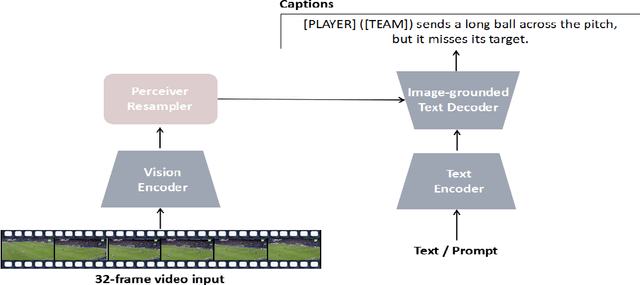
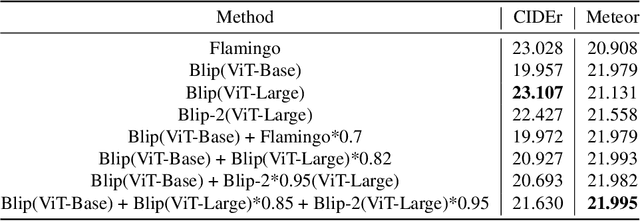
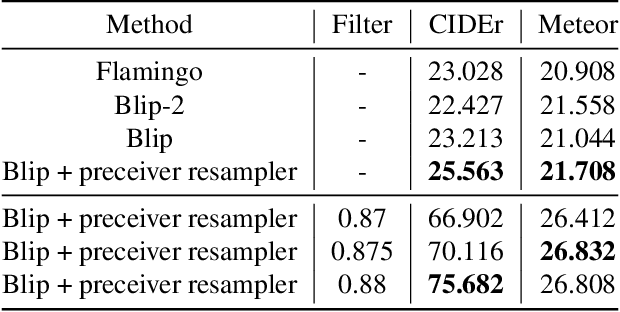
In the task of dense video captioning of Soccernet dataset, we propose to generate a video caption of each soccer action and locate the timestamp of the caption. Firstly, we apply Blip as our video caption framework to generate video captions. Then we locate the timestamp by using (1) multi-size sliding windows (2) temporal proposal generation and (3) proposal classification.
SoccerNet 2023 Challenges Results
Sep 12, 2023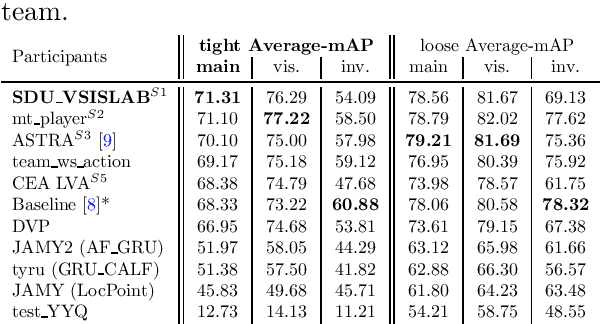
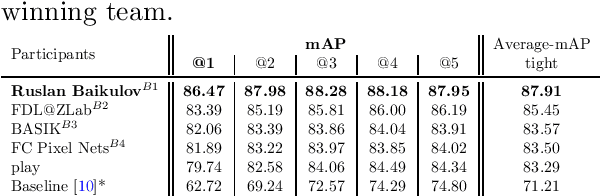
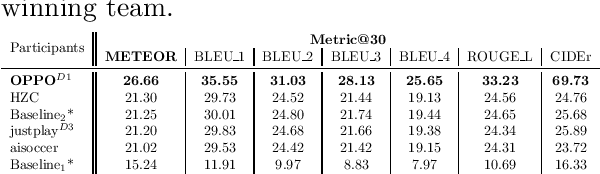
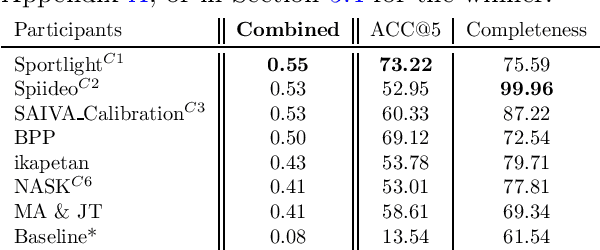
The SoccerNet 2023 challenges were the third annual video understanding challenges organized by the SoccerNet team. For this third edition, the challenges were composed of seven vision-based tasks split into three main themes. The first theme, broadcast video understanding, is composed of three high-level tasks related to describing events occurring in the video broadcasts: (1) action spotting, focusing on retrieving all timestamps related to global actions in soccer, (2) ball action spotting, focusing on retrieving all timestamps related to the soccer ball change of state, and (3) dense video captioning, focusing on describing the broadcast with natural language and anchored timestamps. The second theme, field understanding, relates to the single task of (4) camera calibration, focusing on retrieving the intrinsic and extrinsic camera parameters from images. The third and last theme, player understanding, is composed of three low-level tasks related to extracting information about the players: (5) re-identification, focusing on retrieving the same players across multiple views, (6) multiple object tracking, focusing on tracking players and the ball through unedited video streams, and (7) jersey number recognition, focusing on recognizing the jersey number of players from tracklets. Compared to the previous editions of the SoccerNet challenges, tasks (2-3-7) are novel, including new annotations and data, task (4) was enhanced with more data and annotations, and task (6) now focuses on end-to-end approaches. More information on the tasks, challenges, and leaderboards are available on https://www.soccer-net.org. Baselines and development kits can be found on https://github.com/SoccerNet.