 Add to Chrome
 Add to Firefox
 Add to Edge
ADSNet: Cross-Domain LTV Prediction with an Adaptive Siamese Network in Advertising
Jun 15, 2024
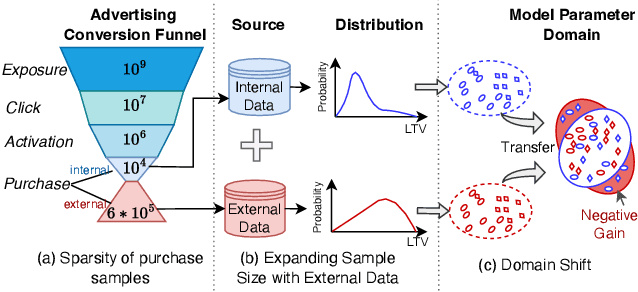
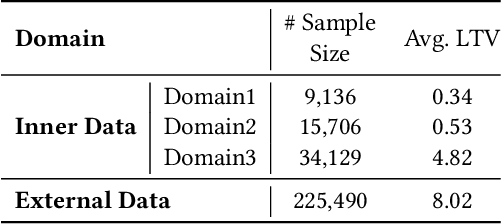
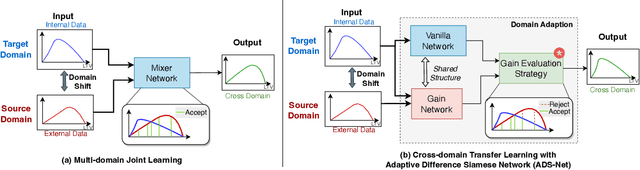
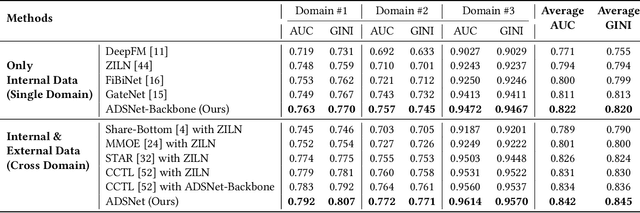
Advertising platforms have evolved in estimating Lifetime Value (LTV) to better align with advertisers' true performance metric. However, the sparsity of real-world LTV data presents a significant challenge to LTV predictive model(i.e., pLTV), severely limiting the their capabilities. Therefore, we propose to utilize external data, in addition to the internal data of advertising platform, to expand the size of purchase samples and enhance the LTV prediction model of the advertising platform. To tackle the issue of data distribution shift between internal and external platforms, we introduce an Adaptive Difference Siamese Network (ADSNet), which employs cross-domain transfer learning to prevent negative transfer. Specifically, ADSNet is designed to learn information that is beneficial to the target domain. We introduce a gain evaluation strategy to calculate information gain, aiding the model in learning helpful information for the target domain and providing the ability to reject noisy samples, thus avoiding negative transfer. Additionally, we also design a Domain Adaptation Module as a bridge to connect different domains, reduce the distribution distance between them, and enhance the consistency of representation space distribution. We conduct extensive offline experiments and online A/B tests on a real advertising platform. Our proposed ADSNet method outperforms other methods, improving GINI by 2$\%$. The ablation study highlights the importance of the gain evaluation strategy in negative gain sample rejection and improving model performance. Additionally, ADSNet significantly improves long-tail prediction. The online A/B tests confirm ADSNet's efficacy, increasing online LTV by 3.47$\%$ and GMV by 3.89$\%$.

CUDRT: Benchmarking the Detection of Human vs. Large Language Models Generated Texts
Jun 13, 2024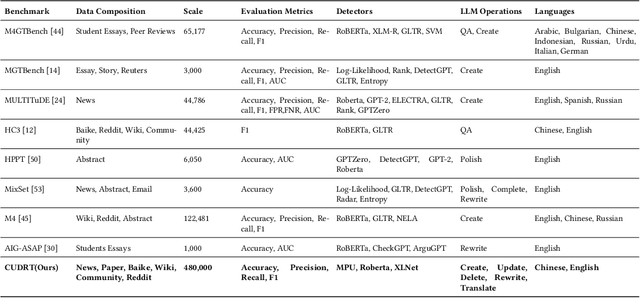
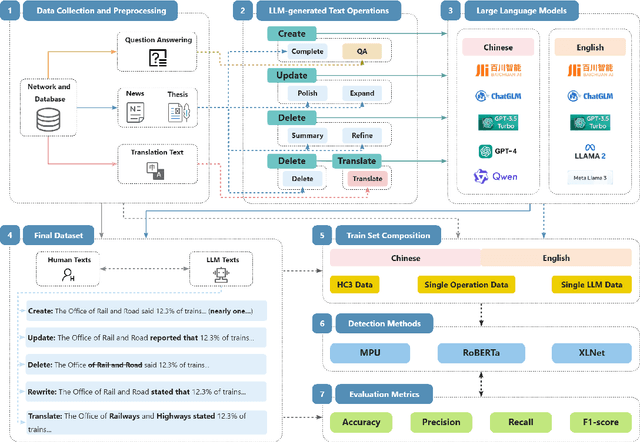
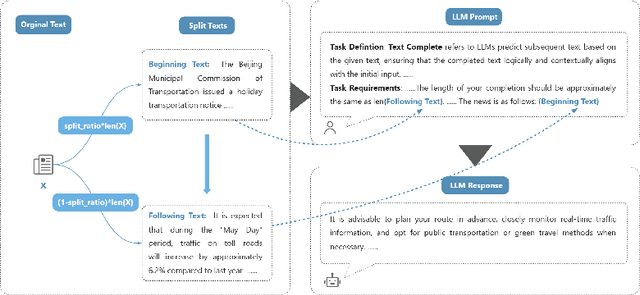
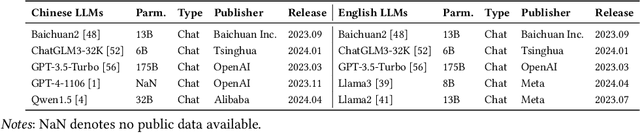
The proliferation of large language models (LLMs) has significantly enhanced text generation capabilities across various industries. However, these models' ability to generate human-like text poses substantial challenges in discerning between human and AI authorship. Despite the effectiveness of existing AI-generated text detectors, their development is hindered by the lack of comprehensive, publicly available benchmarks. Current benchmarks are limited to specific scenarios, such as question answering and text polishing, and predominantly focus on English texts, failing to capture the diverse applications and linguistic nuances of LLMs. To address these limitations, this paper constructs a comprehensive bilingual benchmark in both Chinese and English to evaluate mainstream AI-generated text detectors. We categorize LLM text generation into five distinct operations: Create, Update, Delete, Rewrite, and Translate (CUDRT), encompassing all current LLMs activities. We also establish a robust benchmark evaluation framework to support scalable and reproducible experiments. For each CUDRT category, we have developed extensive datasets to thoroughly assess detector performance. By employing the latest mainstream LLMs specific to each language, our datasets provide a thorough evaluation environment. Extensive experimental results offer critical insights for optimizing AI-generated text detectors and suggest future research directions to improve detection accuracy and generalizability across various scenarios.
MSE-Based Training and Transmission Optimization for MIMO ISAC Systems
Jun 06, 2024

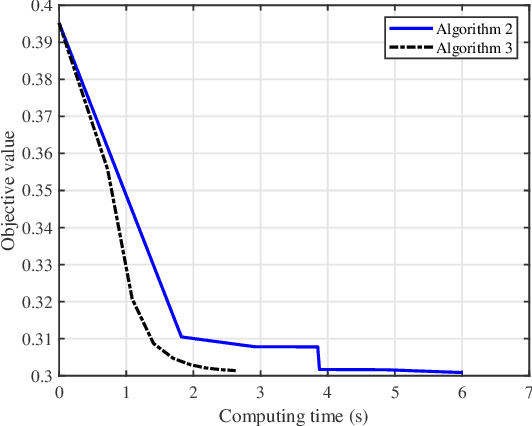
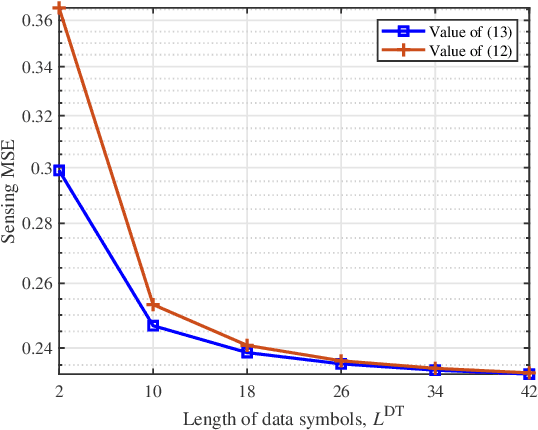
In this paper, we investigate a multiple-input multiple-output (MIMO) integrated sensing and communication (ISAC) system under typical block-fading channels. As a non-trivial extension to most existing works on ISAC, both the training and transmission signals sent by the ISAC transmitter are exploited for sensing. Specifically, we develop two training and transmission design schemes to minimize a weighted sum of the mean-squared errors (MSEs) of data transmission and radar target response matrix (TRM) estimation. For the former, we first optimize the training signal for simultaneous communication channel and radar TRM estimation. Then, based on the estimated instantaneous channel state information (CSI), we propose an efficient majorization-minimization (MM)-based robust ISAC transmission design, where a semi-closed form solution is obtained in each iteration. For the second scheme, the ISAC transmitter is assumed to have statistical CSI only for reducing the feedback overhead. With CSI statistics available, we integrate the training and transmission design into one single problem and propose an MM-based alternating algorithm to find a high-quality solution. In addition, we provide alternative structured and low-complexity solutions for both schemes under certain special cases. Finally, simulation results demonstrate that the radar performance is significantly improved compared to the existing scheme that integrates sensing into the transmission stage only. Moreover, it is verified that the investigated two schemes have advantages in terms of communication and sensing performances, respectively.
A deep-learning-based MAC for integrating channel access, rate adaptation and channel switch
Jun 04, 2024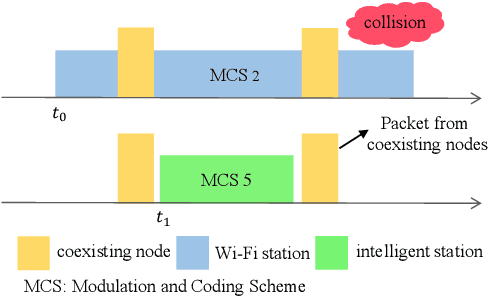
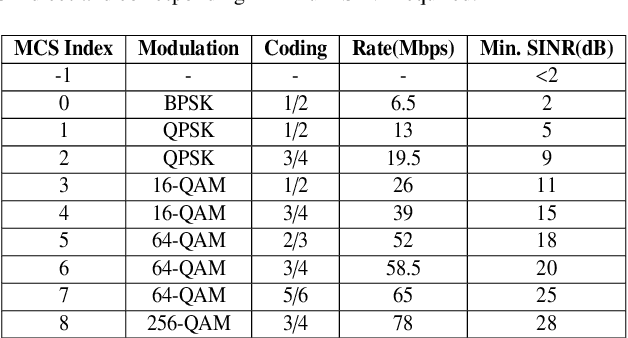


With increasing density and heterogeneity in unlicensed wireless networks, traditional MAC protocols, such as carrier-sense multiple access with collision avoidance (CSMA/CA) in Wi-Fi networks, are experiencing performance degradation. This is manifested in increased collisions and extended backoff times, leading to diminished spectrum efficiency and protocol coordination. Addressing these issues, this paper proposes a deep-learning-based MAC paradigm, dubbed DL-MAC, which leverages spectrum sensing data readily available from energy detection modules in wireless devices to achieve the MAC functionalities of channel access, rate adaptation and channel switch. First, we utilize DL-MAC to realize a joint design of channel access and rate adaptation. Subsequently, we integrate the capability of channel switch into DL-MAC, enhancing its functionality from single-channel to multi-channel operation. Specifically, the DL-MAC protocol incorporates a deep neural network (DNN) for channel selection and a recurrent neural network (RNN) for the joint design of channel access and rate adaptation. We conducted real-world data collection within the 2.4 GHz frequency band to validate the effectiveness of DL-MAC, and our experiments reveal that DL-MAC exhibits superior performance over traditional algorithms in both single and multi-channel environments and also outperforms single-function approaches in terms of overall performance. Additionally, the performance of DL-MAC remains robust, unaffected by channel switch overhead within the evaluated range.
FuRL: Visual-Language Models as Fuzzy Rewards for Reinforcement Learning
Jun 02, 2024
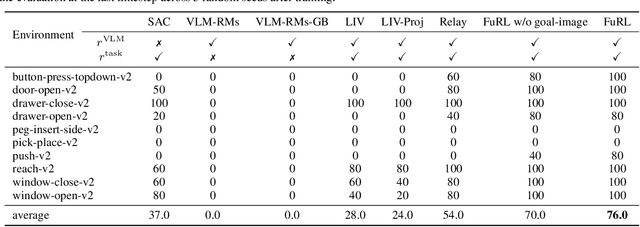
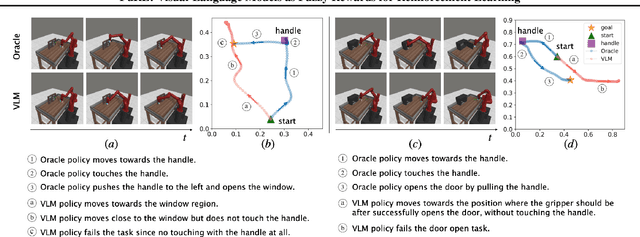
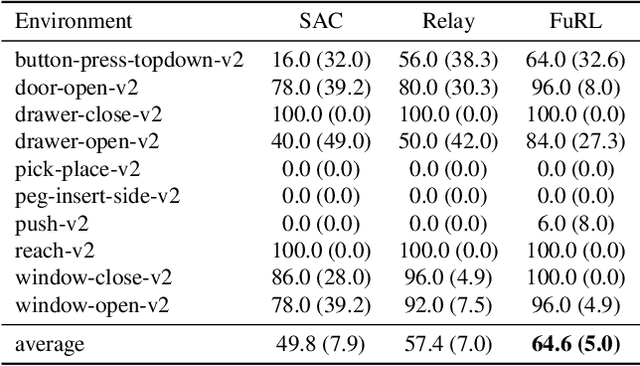
In this work, we investigate how to leverage pre-trained visual-language models (VLM) for online Reinforcement Learning (RL). In particular, we focus on sparse reward tasks with pre-defined textual task descriptions. We first identify the problem of reward misalignment when applying VLM as a reward in RL tasks. To address this issue, we introduce a lightweight fine-tuning method, named Fuzzy VLM reward-aided RL (FuRL), based on reward alignment and relay RL. Specifically, we enhance the performance of SAC/DrQ baseline agents on sparse reward tasks by fine-tuning VLM representations and using relay RL to avoid local minima. Extensive experiments on the Meta-world benchmark tasks demonstrate the efficacy of the proposed method. Code is available at: {\footnotesize\url{https://github.com/fuyw/FuRL}}.
Preemptive Answer "Attacks" on Chain-of-Thought Reasoning
May 31, 2024Large language models (LLMs) showcase impressive reasoning capabilities when coupled with Chain-of-Thought (CoT) prompting. However, the robustness of this approach warrants further investigation. In this paper, we introduce a novel scenario termed preemptive answers, where the LLM obtains an answer before engaging in reasoning. This situation can arise inadvertently or induced by malicious users by prompt injection attacks. Experiments reveal that preemptive answers significantly impair the model's reasoning capability across various CoT methods and a broad spectrum of datasets. To bolster the robustness of reasoning, we propose two measures aimed at mitigating this issue to some extent.
Joint MIMO Transceiver and Reflector Design for Reconfigurable Intelligent Surface-Assisted Communication
May 27, 2024


In this paper, we consider a reconfigurable intelligent surface (RIS)-assisted multiple-input multiple-output communication system with multiple antennas at both the base station (BS) and the user. We plan to maximize the achievable rate through jointly optimizing the transmit precoding matrix, the receive combining matrix, and the RIS reflection matrix under the constraints of the transmit power at the BS and the unit-modulus reflection at the RIS. Regarding the non-trivial problem form, we initially reformulate it into an considerable problem to make it tractable by utilizing the relationship between the achievable rate and the weighted minimum mean squared error. Next, the transmit precoding matrix, the receive combining matrix, and the RIS reflection matrix are alternately optimized. In particular, the optimal transmit precoding matrix and receive combining matrix are obtained in closed forms. Furthermore, a pair of computationally efficient methods are proposed for the RIS reflection matrix, namely the semi-definite relaxation (SDR) method and the successive closed form (SCF) method. We theoretically prove that both methods are ensured to converge, and the SCF-based algorithm is able to converges to a Karush-Kuhn-Tucker point of the problem.
GPT-4 Jailbreaks Itself with Near-Perfect Success Using Self-Explanation
May 21, 2024Research on jailbreaking has been valuable for testing and understanding the safety and security issues of large language models (LLMs). In this paper, we introduce Iterative Refinement Induced Self-Jailbreak (IRIS), a novel approach that leverages the reflective capabilities of LLMs for jailbreaking with only black-box access. Unlike previous methods, IRIS simplifies the jailbreaking process by using a single model as both the attacker and target. This method first iteratively refines adversarial prompts through self-explanation, which is crucial for ensuring that even well-aligned LLMs obey adversarial instructions. IRIS then rates and enhances the output given the refined prompt to increase its harmfulness. We find IRIS achieves jailbreak success rates of 98% on GPT-4 and 92% on GPT-4 Turbo in under 7 queries. It significantly outperforms prior approaches in automatic, black-box and interpretable jailbreaking, while requiring substantially fewer queries, thereby establishing a new standard for interpretable jailbreaking methods.
MedReadMe: A Systematic Study for Fine-grained Sentence Readability in Medical Domain
May 03, 2024Medical texts are notoriously challenging to read. Properly measuring their readability is the first step towards making them more accessible. In this paper, we present a systematic study on fine-grained readability measurements in the medical domain at both sentence-level and span-level. We introduce a new dataset MedReadMe, which consists of manually annotated readability ratings and fine-grained complex span annotation for 4,520 sentences, featuring two novel "Google-Easy" and "Google-Hard" categories. It supports our quantitative analysis, which covers 650 linguistic features and automatic complex word and jargon identification. Enabled by our high-quality annotation, we benchmark and improve several state-of-the-art sentence-level readability metrics for the medical domain specifically, which include unsupervised, supervised, and prompting-based methods using recently developed large language models (LLMs). Informed by our fine-grained complex span annotation, we find that adding a single feature, capturing the number of jargon spans, into existing readability formulas can significantly improve their correlation with human judgments. We will publicly release the dataset and code.
Text Sentiment Analysis and Classification Based on Bidirectional Gated Recurrent Units (GRUs) Model
Apr 26, 2024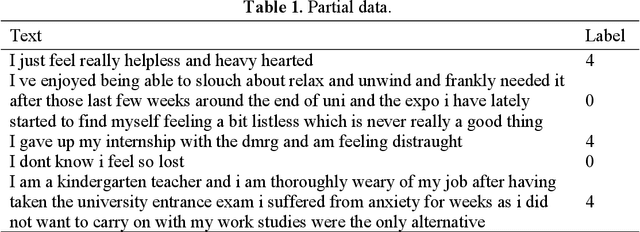
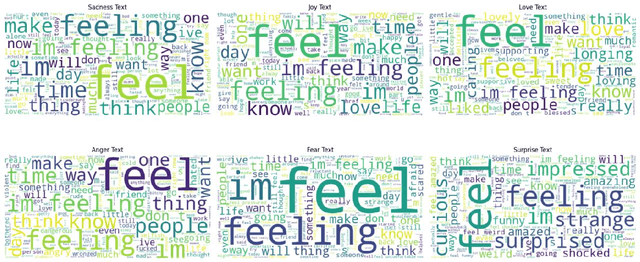
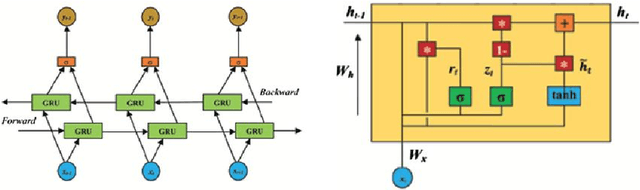
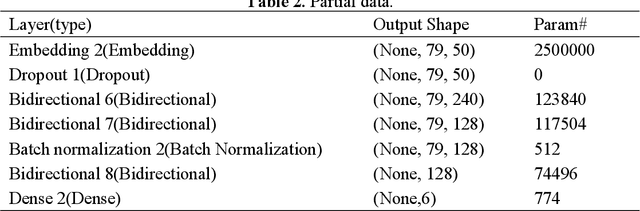
This paper explores the importance of text sentiment analysis and classification in the field of natural language processing, and proposes a new approach to sentiment analysis and classification based on the bidirectional gated recurrent units (GRUs) model. The study firstly analyses the word cloud model of the text with six sentiment labels, and then carries out data preprocessing, including the steps of removing special symbols, punctuation marks, numbers, stop words and non-alphabetic parts. Subsequently, the data set is divided into training set and test set, and through model training and testing, it is found that the accuracy of the validation set is increased from 85% to 93% with training, which is an increase of 8%; at the same time, the loss value of the validation set decreases from 0.7 to 0.1 and tends to be stable, and the model is gradually close to the actual value, which can effectively classify the text emotions. The confusion matrix shows that the accuracy of the model on the test set reaches 94.8%, the precision is 95.9%, the recall is 99.1%, and the F1 score is 97.4%, which proves that the model has good generalisation ability and classification effect. Overall, the study demonstrated an effective method for text sentiment analysis and classification with satisfactory results.