 Add to Chrome
 Add to Firefox
 Add to Edge
SoK: From Generation to Consumption of Privacy Documents in Software Systems
Aug 12, 2026
Privacy documents (e.g., privacy policies) are a central mechanism through which digital services disclose data practices and seek user consent. Over the past decades, research on privacy documents has expanded significantly, encompassing not only traditional privacy policies but also short notices (e.g., privacy labels) and interface-level transparency mechanisms. As this research area continues to grow, it has become increasingly difficult to obtain a coherent view of how privacy documents are created, analyzed, evaluated, and maintained across their lifecycle. This SoK provides a unified, lifecycle-oriented view of privacy documents from a software engineering perspective. We systematically review and analyze 290 papers published between 2010 and 2025, organizing them around five research questions that examine how privacy documents are (1) defined and scoped, (2) generated, (3) analyzed and extracted, (4) checked for inconsistencies and noncompliance, and (5) evaluated and improved for usability. Building on our findings, we identify 15 key research trends and 21 open opportunities. We further chart four broader research directions that highlight (i) emerging challenges in AI-centric platforms, (ii) the need for diverse and up-to-date data foundations, (iii) LLM-based unified policy-code analysis, and (iv) dual usability for end-users and developers. We hope this SoK provides a shared foundation for future research on privacy policies and privacy documents.

Fishing Out Free Riders: Shapley-Based Reward Attribution for Parallel Reasoning via Reinforcement Learning
Jul 21, 2026Large Language Models (LLMs) excel at multi-step reasoning, yet current parallel reasoning approaches often fail to distinguish the contributions of individual reasoning paths. Many paths may be redundant, misleading, or even detrimental, but outcome-level rewards assign uniform reward, leading to ambiguous learning signals and unstable training. We propose Parallel Shapley, a reinforcement learning framework that attributes fine-grained, path-level contributions in multi-path reasoning. Treating each path as a player in a cooperative game, we leverage Shapley values to quantify marginal contributions, using a generative reward model to evaluate path utilities and Monte Carlo sampling for efficient approximation. Experiments on mathematical reasoning benchmarks show that Parallel Shapley outperforms existing baselines while providing more stable and interpretable training. Our framework effectively "fishes out the free riders," assigning reward proportionally and improving multi-path reasoning in LLMs.
MemConflict: Evaluating Long-Term Memory Systems Under Memory Conflicts
May 20, 2026Long-term memory systems enable conversational agents based on large language models (LLMs) to retain, retrieve, and apply user-specific information across multi-session interactions. However, existing evaluations mainly assess outcome-level performance or temporal updating, providing limited insight into how systems retrieve and rank temporally valid, factually correct, and contextually applicable memory evidence under conflicting alternatives. To address this gap, we propose MemConflict, a diagnostic framework that treats memory validity as a query-conditioned fitness-for-use problem. MemConflict formalizes dynamic, static, and conditional conflicts over temporal validity, factual correctness, and contextual applicability. It simulates controlled long-horizon histories from structured user profiles, introduces cross-session conflicts, and injects semantically similar distractors to create competition among memory candidates. The resulting multi-session dialogue benchmark supports black-box evaluation of final answers and white-box analysis of supporting-memory retrieval and ranking. Experiments on six representative long-term memory systems show uneven strengths across conflict types, with answer correctness often diverging from memory retrieval and ranking. Sensitivity analyses reveal that longer histories, distractors, implicit queries, and larger conflict distances degrade performance. Diagnostics show failures from missing supporting memories and ineffective use of retrieved memories. Collectively, MemConflict advances principled long-term memory governance through retrieval-aware, conflict-aware reliability assessment.
SAGER: Self-Evolving User Policy Skills for Recommendation Agent
Apr 16, 2026Large language model (LLM) based recommendation agents personalize what they know through evolving per-user semantic memory, yet how they reason remains a universal, static system prompt shared identically across all users. This asymmetry is a fundamental bottleneck: when a recommendation fails, the agent updates its memory of user preferences but never interrogates the decision logic that produced the failure, leaving its reasoning process structurally unchanged regardless of how many mistakes it accumulates. To address this bottleneck, we propose SAGER (Self-Evolving Agent for Personalized Recommendation), the first recommendation agent framework in which each user is equipped with a dedicated policy skill, a structured natural-language document encoding personalized decision principles that evolves continuously through interaction. SAGER introduces a two-representation skill architecture that decouples a rich evolution substrate from a minimal inference-time injection, an incremental contrastive chain-of-thought engine that diagnoses reasoning flaws by contrasting accepted against unchosen items while preserving accumulated priors, and skill-augmented listwise reasoning that creates fine-grained decision boundaries where the evolved skill provides genuine discriminative value. Experiments on four public benchmarks demonstrate that SAGER achieves state-of-the-art performance, with gains orthogonal to memory accumulation, confirming that personalizing the reasoning process itself is a qualitatively distinct source of recommendation improvement.
MemEmo: Evaluating Emotion in Memory Systems of Agents
Feb 27, 2026Memory systems address the challenge of context loss in Large Language Model during prolonged interactions. However, compared to human cognition, the efficacy of these systems in processing emotion-related information remains inconclusive. To address this gap, we propose an emotion-enhanced memory evaluation benchmark to assess the performance of mainstream and state-of-the-art memory systems in handling affective information. We developed the \textbf{H}uman-\textbf{L}ike \textbf{M}emory \textbf{E}motion (\textbf{HLME}) dataset, which evaluates memory systems across three dimensions: emotional information extraction, emotional memory updating, and emotional memory question answering. Experimental results indicate that none of the evaluated systems achieve robust performance across all three tasks. Our findings provide an objective perspective on the current deficiencies of memory systems in processing emotional memories and suggest a new trajectory for future research and system optimization.
Task-Aware Retrieval Augmentation for Dynamic Recommendation
Nov 16, 2025Dynamic recommendation systems aim to provide personalized suggestions by modeling temporal user-item interactions across time-series behavioral data. Recent studies have leveraged pre-trained dynamic graph neural networks (GNNs) to learn user-item representations over temporal snapshot graphs. However, fine-tuning GNNs on these graphs often results in generalization issues due to temporal discrepancies between pre-training and fine-tuning stages, limiting the model's ability to capture evolving user preferences. To address this, we propose TarDGR, a task-aware retrieval-augmented framework designed to enhance generalization capability by incorporating task-aware model and retrieval-augmentation. Specifically, TarDGR introduces a Task-Aware Evaluation Mechanism to identify semantically relevant historical subgraphs, enabling the construction of task-specific datasets without manual labeling. It also presents a Graph Transformer-based Task-Aware Model that integrates semantic and structural encodings to assess subgraph relevance. During inference, TarDGR retrieves and fuses task-aware subgraphs with the query subgraph, enriching its representation and mitigating temporal generalization issues. Experiments on multiple large-scale dynamic graph datasets demonstrate that TarDGR consistently outperforms state-of-the-art methods, with extensive empirical evidence underscoring its superior accuracy and generalization capabilities.
Learning Accurate, Efficient, and Interpretable MLPs on Multiplex Graphs via Node-wise Multi-View Ensemble Distillation
Feb 09, 2025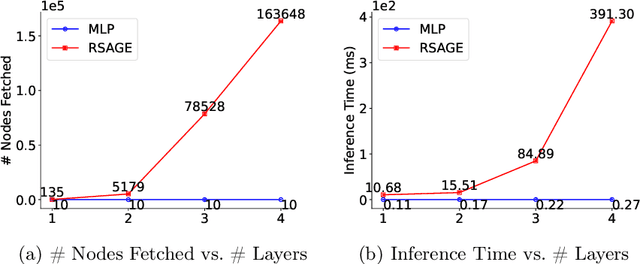
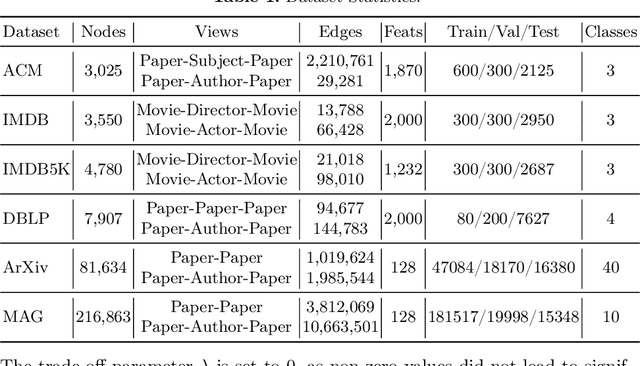
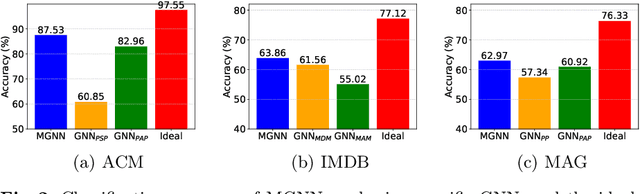
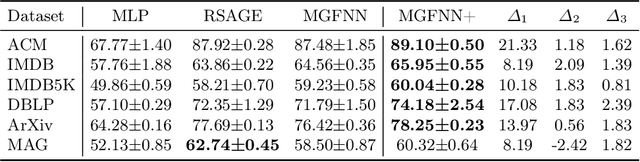
Multiplex graphs, with multiple edge types (graph views) among common nodes, provide richer structural semantics and better modeling capabilities. Multiplex Graph Neural Networks (MGNNs), typically comprising view-specific GNNs and a multi-view integration layer, have achieved advanced performance in various downstream tasks. However, their reliance on neighborhood aggregation poses challenges for deployment in latency-sensitive applications. Motivated by recent GNN-to-MLP knowledge distillation frameworks, we propose Multiplex Graph-Free Neural Networks (MGFNN and MGFNN+) to combine MGNNs' superior performance and MLPs' efficient inference via knowledge distillation. MGFNN directly trains student MLPs with node features as input and soft labels from teacher MGNNs as targets. MGFNN+ further employs a low-rank approximation-based reparameterization to learn node-wise coefficients, enabling adaptive knowledge ensemble from each view-specific GNN. This node-wise multi-view ensemble distillation strategy allows student MLPs to learn more informative multiplex semantic knowledge for different nodes. Experiments show that MGFNNs achieve average accuracy improvements of about 10% over vanilla MLPs and perform comparably or even better to teacher MGNNs (accurate); MGFNNs achieve a 35.40$\times$-89.14$\times$ speedup in inference over MGNNs (efficient); MGFNN+ adaptively assigns different coefficients for multi-view ensemble distillation regarding different nodes (interpretable).
Norm Augmented Graph AutoEncoders for Link Prediction
Feb 09, 2025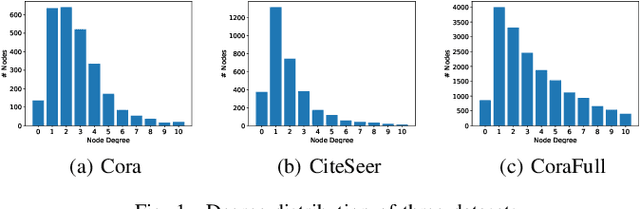
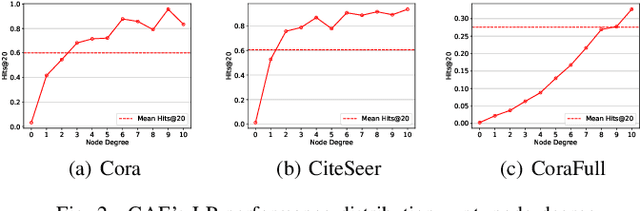
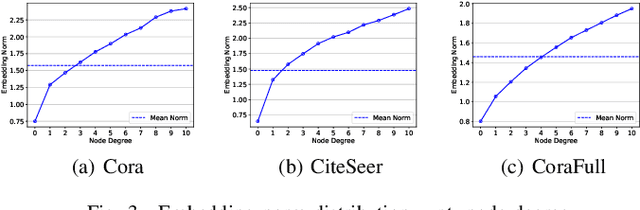
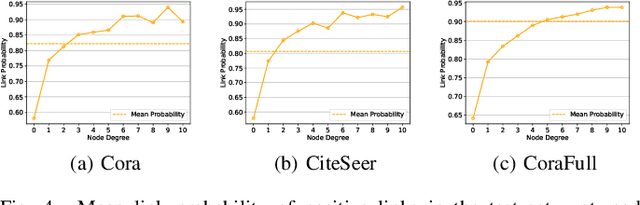
Link Prediction (LP) is a crucial problem in graph-structured data. Graph Neural Networks (GNNs) have gained prominence in LP, with Graph AutoEncoders (GAEs) being a notable representation. However, our empirical findings reveal that GAEs' LP performance suffers heavily from the long-tailed node degree distribution, i.e., low-degree nodes tend to exhibit inferior LP performance compared to high-degree nodes. \emph{What causes this degree-related bias, and how can it be mitigated?} In this study, we demonstrate that the norm of node embeddings learned by GAEs exhibits variation among nodes with different degrees, underscoring its central significance in influencing the final performance of LP. Specifically, embeddings with larger norms tend to guide the decoder towards predicting higher scores for positive links and lower scores for negative links, thereby contributing to superior performance. This observation motivates us to improve GAEs' LP performance on low-degree nodes by increasing their embedding norms, which can be implemented simply yet effectively by introducing additional self-loops into the training objective for low-degree nodes. This norm augmentation strategy can be seamlessly integrated into existing GAE methods with light computational cost. Extensive experiments on various datasets and GAE methods show the superior performance of norm-augmented GAEs.
Unveiling Large Language Models Generated Texts: A Multi-Level Fine-Grained Detection Framework
Oct 18, 2024

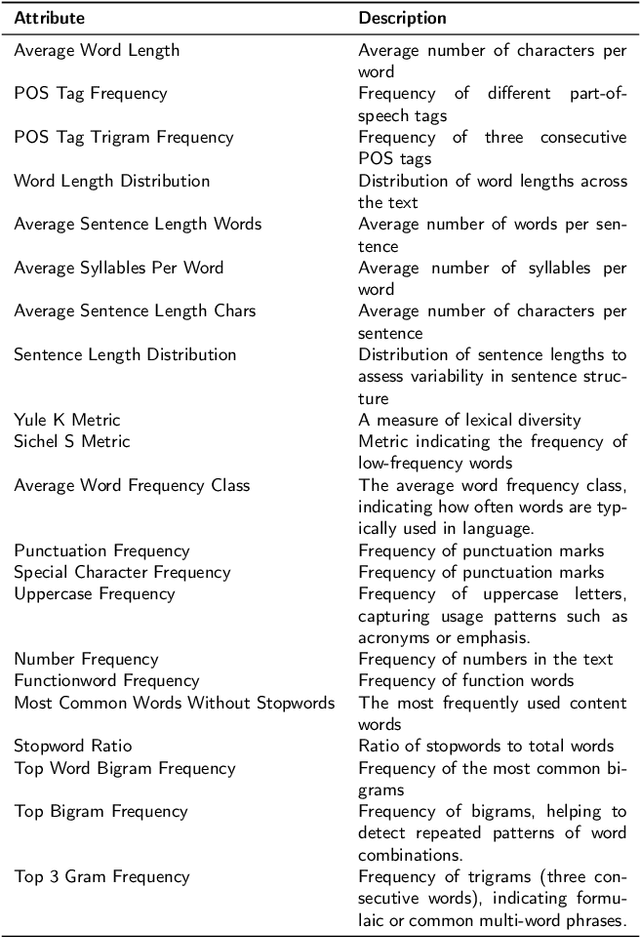

Large language models (LLMs) have transformed human writing by enhancing grammar correction, content expansion, and stylistic refinement. However, their widespread use raises concerns about authorship, originality, and ethics, even potentially threatening scholarly integrity. Existing detection methods, which mainly rely on single-feature analysis and binary classification, often fail to effectively identify LLM-generated text in academic contexts. To address these challenges, we propose a novel Multi-level Fine-grained Detection (MFD) framework that detects LLM-generated text by integrating low-level structural, high-level semantic, and deep-level linguistic features, while conducting sentence-level evaluations of lexicon, grammar, and syntax for comprehensive analysis. To improve detection of subtle differences in LLM-generated text and enhance robustness against paraphrasing, we apply two mainstream evasion techniques to rewrite the text. These variations, along with original texts, are used to train a text encoder via contrastive learning, extracting high-level semantic features of sentence to boost detection generalization. Furthermore, we leverage advanced LLM to analyze the entire text and extract deep-level linguistic features, enhancing the model's ability to capture complex patterns and nuances while effectively incorporating contextual information. Extensive experiments on public datasets show that the MFD model outperforms existing methods, achieving an MAE of 0.1346 and an accuracy of 88.56%. Our research provides institutions and publishers with an effective mechanism to detect LLM-generated text, mitigating risks of compromised authorship. Educators and editors can use the model's predictions to refine verification and plagiarism prevention protocols, ensuring adherence to standards.
CUDRT: Benchmarking the Detection of Human vs. Large Language Models Generated Texts
Jun 13, 2024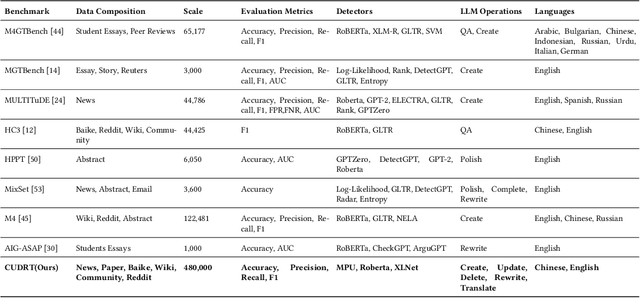
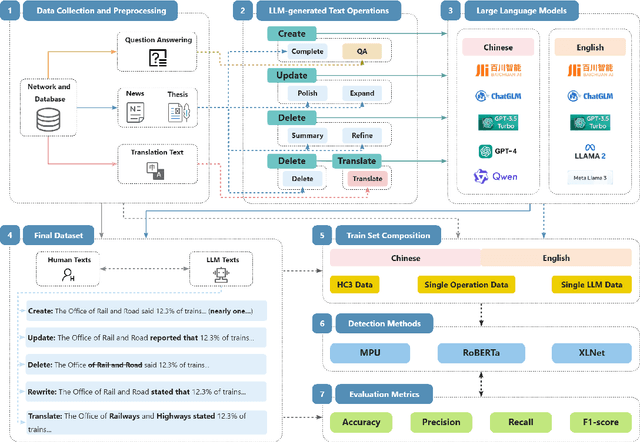
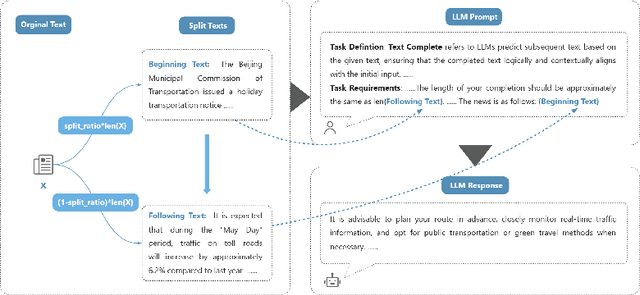
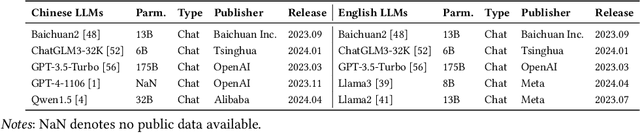
The proliferation of large language models (LLMs) has significantly enhanced text generation capabilities across various industries. However, these models' ability to generate human-like text poses substantial challenges in discerning between human and AI authorship. Despite the effectiveness of existing AI-generated text detectors, their development is hindered by the lack of comprehensive, publicly available benchmarks. Current benchmarks are limited to specific scenarios, such as question answering and text polishing, and predominantly focus on English texts, failing to capture the diverse applications and linguistic nuances of LLMs. To address these limitations, this paper constructs a comprehensive bilingual benchmark in both Chinese and English to evaluate mainstream AI-generated text detectors. We categorize LLM text generation into five distinct operations: Create, Update, Delete, Rewrite, and Translate (CUDRT), encompassing all current LLMs activities. We also establish a robust benchmark evaluation framework to support scalable and reproducible experiments. For each CUDRT category, we have developed extensive datasets to thoroughly assess detector performance. By employing the latest mainstream LLMs specific to each language, our datasets provide a thorough evaluation environment. Extensive experimental results offer critical insights for optimizing AI-generated text detectors and suggest future research directions to improve detection accuracy and generalizability across various scenarios.