 Add to Chrome
 Add to Firefox
 Add to Edge
Dual-Level Boost Network for Long-Tail Prohibited Items Detection in X-ray Security Inspection
Nov 27, 2024
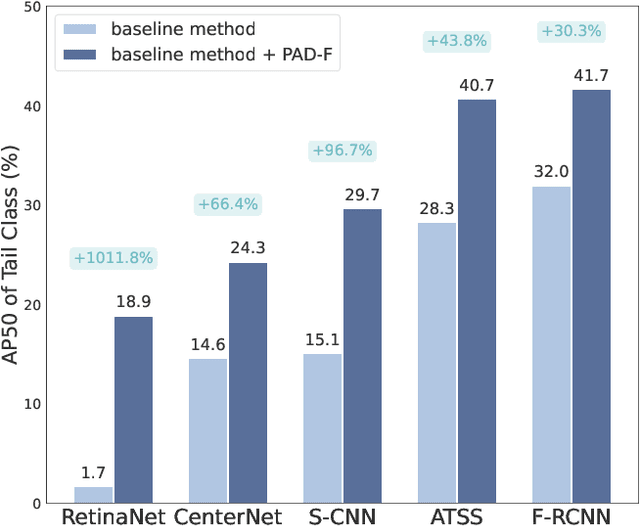
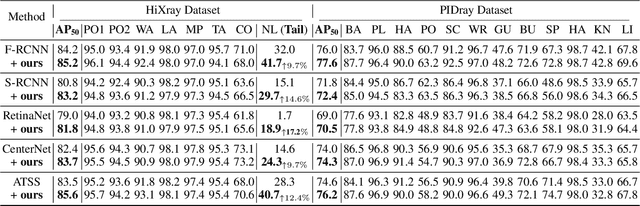
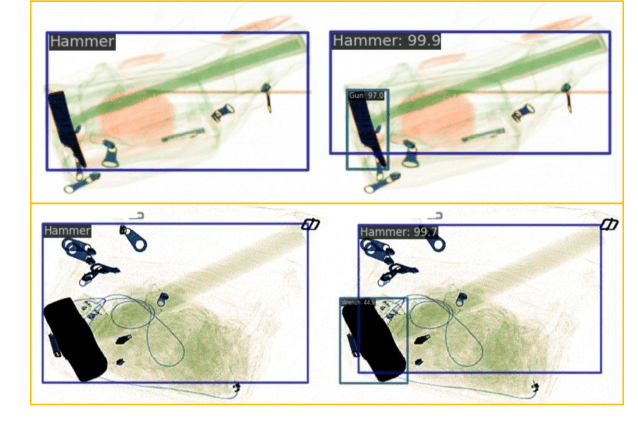
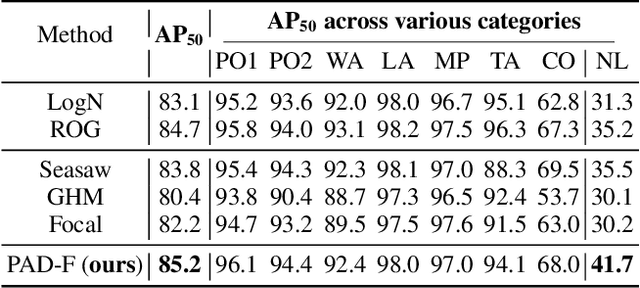
The detection of prohibited items in X-ray security inspections is vital for ensuring public safety. However, the long-tail distribution of item categories, where certain prohibited items are far less common, poses a big challenge for detection models, as rare categories often lack sufficient training data. Existing methods struggle to classify these rare items accurately due to this imbalance. In this paper, we propose a Dual-level Boost Network (DBNet) specifically designed to overcome these challenges in X-ray security screening. Our approach introduces two key innovations: (1) a specific data augmentation strategy employing Poisson blending, inspired by the characteristics of X-ray images, to generate realistic synthetic instances of rare items which can effectively mitigate data imbalance; and (2) a context-aware feature enhancement module that captures the spatial and semantic interactions between objects and their surroundings, enhancing classification accuracy for underrepresented categories. Extensive experimental results demonstrate that DBNet improves detection performance for tail categories, outperforming sota methods in X-ray security inspection scenarios by a large margin 17.2%, thereby ensuring enhanced public safety.

Bundle Adjusted Gaussian Avatars Deblurring
Nov 24, 2024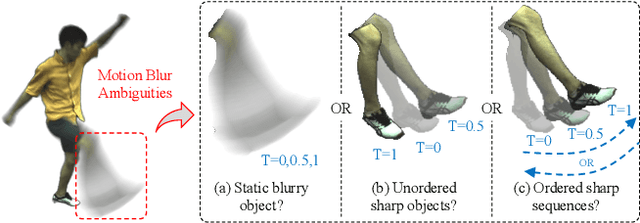
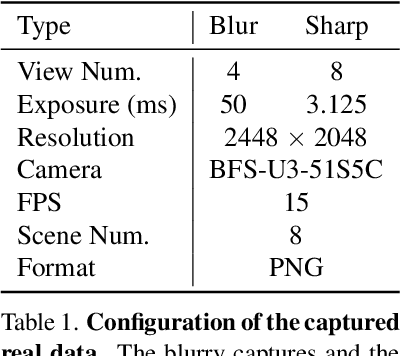
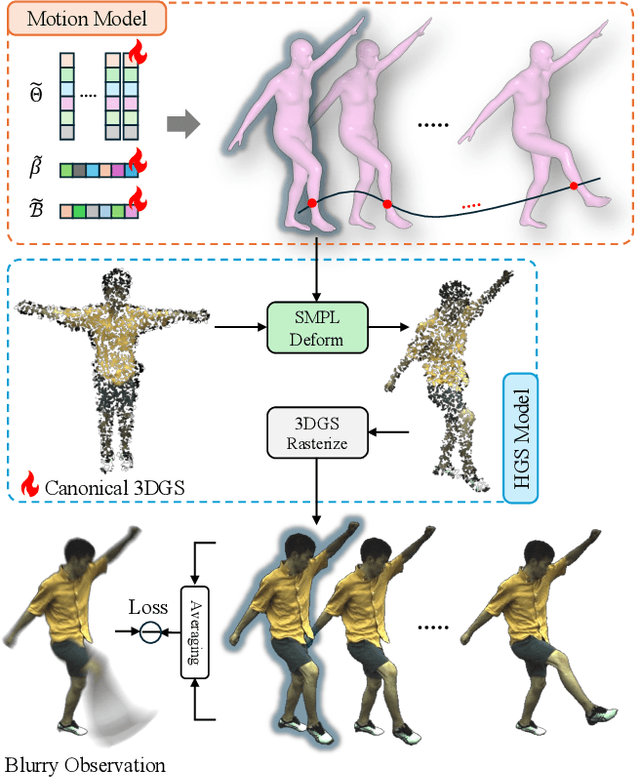
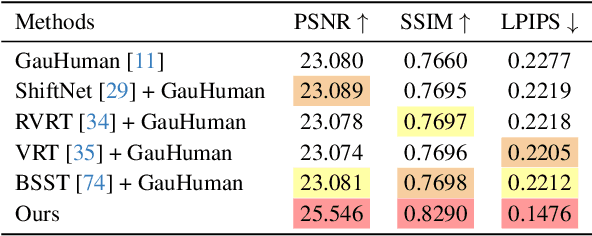
The development of 3D human avatars from multi-view videos represents a significant yet challenging task in the field. Recent advancements, including 3D Gaussian Splattings (3DGS), have markedly progressed this domain. Nonetheless, existing techniques necessitate the use of high-quality sharp images, which are often impractical to obtain in real-world settings due to variations in human motion speed and intensity. In this study, we attempt to explore deriving sharp intrinsic 3D human Gaussian avatars from blurry video footage in an end-to-end manner. Our approach encompasses a 3D-aware, physics-oriented model of blur formation attributable to human movement, coupled with a 3D human motion model to clarify ambiguities found in motion-induced blurry images. This methodology facilitates the concurrent learning of avatar model parameters and the refinement of sub-frame motion parameters from a coarse initialization. We have established benchmarks for this task through a synthetic dataset derived from existing multi-view captures, alongside a real-captured dataset acquired through a 360-degree synchronous hybrid-exposure camera system. Comprehensive evaluations demonstrate that our model surpasses existing baselines.
Chanel-Orderer: A Channel-Ordering Predictor for Tri-Channel Natural Images
Nov 20, 2024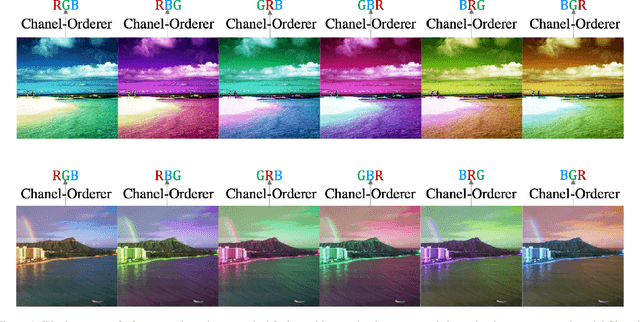

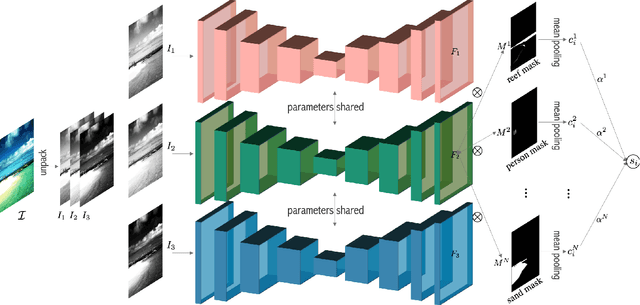
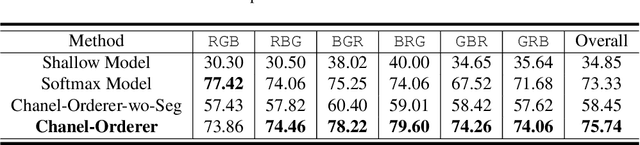
This paper shows a proof-of-concept that, given a typical 3-channel images but in a randomly permuted channel order, a model (termed as Chanel-Orderer) with ad-hoc inductive biases in terms of both architecture and loss functions can accurately predict the channel ordering and knows how to make it right. Specifically, Chanel-Orderer learns to score each of the three channels with the priors of object semantics and uses the resulting scores to predict the channel ordering. This brings up benefits into a typical scenario where an \texttt{RGB} image is often mis-displayed in the \texttt{BGR} format and needs to be corrected into the right order. Furthermore, as a byproduct, the resulting model Chanel-Orderer is able to tell whether a given image is a near-gray-scale image (near-monochromatic) or not (polychromatic). Our research suggests that Chanel-Orderer mimics human visual coloring of our physical natural world.
Harnessing Scale and Physics: A Multi-Graph Neural Operator Framework for PDEs on Arbitrary Geometries
Nov 18, 2024

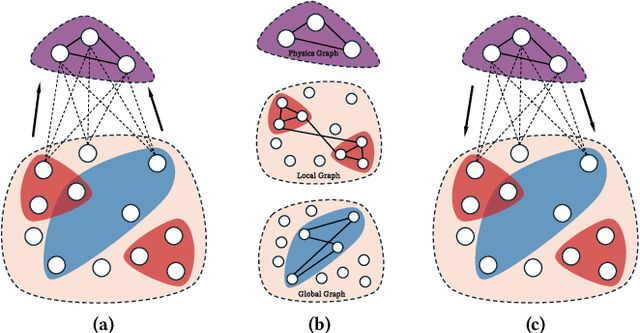

Partial Differential Equations (PDEs) underpin many scientific phenomena, yet traditional computational approaches often struggle with complex, nonlinear systems and irregular geometries. This paper introduces the \textbf{AMG} method, a \textbf{M}ulti-\textbf{G}raph neural operator approach designed for efficiently solving PDEs on \textbf{A}rbitrary geometries. AMG leverages advanced graph-based techniques and dynamic attention mechanisms within a novel GraphFormer architecture, enabling precise management of diverse spatial domains and complex data interdependencies. By constructing multi-scale graphs to handle variable feature frequencies and a physics graph to encapsulate inherent physical properties, AMG significantly outperforms previous methods, which are typically limited to uniform grids. We present a comprehensive evaluation of AMG across six benchmarks, demonstrating its consistent superiority over existing state-of-the-art models. Our findings highlight the transformative potential of tailored graph neural operators in surmounting the challenges faced by conventional PDE solvers. Our code and datasets are available on \url{https://github.com/lizhihao2022/AMG}.
Advancing Fine-Grained Visual Understanding with Multi-Scale Alignment in Multi-Modal Models
Nov 14, 2024


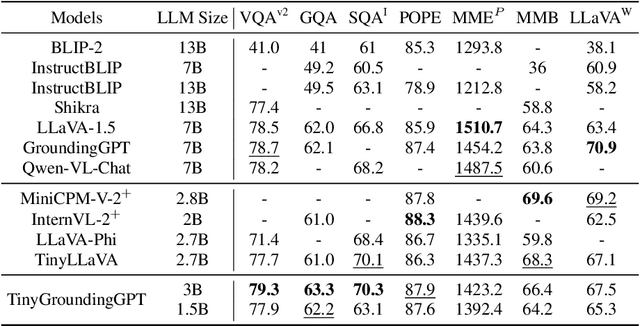
Multi-modal large language models (MLLMs) have achieved remarkable success in fine-grained visual understanding across a range of tasks. However, they often encounter significant challenges due to inadequate alignment for fine-grained knowledge, which restricts their ability to accurately capture local details and attain a comprehensive global perception. While recent advancements have focused on aligning object expressions with grounding information, they typically lack explicit integration of object images, which contain affluent information beyond mere texts or coordinates. To bridge this gap, we introduce a novel fine-grained visual knowledge alignment method that effectively aligns and integrates multi-scale knowledge of objects, including texts, coordinates, and images. This innovative method is underpinned by our multi-scale fine-grained enhancement data synthesis pipeline, which provides over 300K essential training data to enhance alignment and improve overall performance. Furthermore, we present TinyGroundingGPT, a series of compact models optimized for high-level alignments. With a scale of approximately 3B parameters, TinyGroundingGPT achieves outstanding results in grounding tasks while delivering performance comparable to larger MLLMs in complex visual scenarios.
A Fuzzy Reinforcement LSTM-based Long-term Prediction Model for Fault Conditions in Nuclear Power Plants
Nov 13, 2024

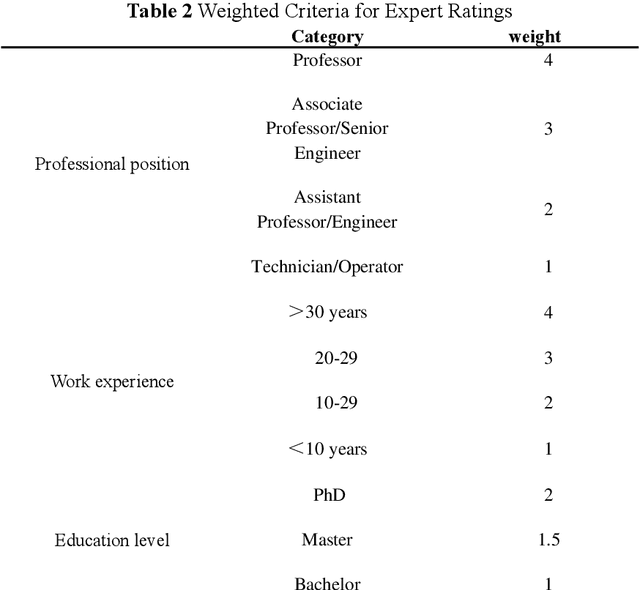

Early fault detection and timely maintenance scheduling can significantly mitigate operational risks in NPPs and enhance the reliability of operator decision-making. Therefore, it is necessary to develop an efficient Prognostics and Health Management (PHM) multi-step prediction model for predicting of system health status and prompt execution of maintenance operations. In this study, we propose a novel predictive model that integrates reinforcement learning with Long Short-Term Memory (LSTM) neural networks and the Expert Fuzzy Evaluation Method. The model is validated using parameter data for 20 different breach sizes in the Main Steam Line Break (MSLB) accident condition of the CPR1000 pressurized water reactor simulation model and it demonstrates a remarkable capability in accurately forecasting NPP parameter changes up to 128 steps ahead (with a time interval of 10 seconds per step, i.e., 1280 seconds), thereby satisfying the temporal advance requirement for fault prognostics in NPPs. Furthermore, this method provides an effective reference solution for PHM applications such as anomaly detection and remaining useful life prediction.
IDF-MFL: Infrastructure-free and Drift-free Magnetic Field Localization for Mobile Robot
Nov 09, 2024In recent years, infrastructure-based localization methods have achieved significant progress thanks to their reliable and drift-free localization capability. However, the pre-installed infrastructures suffer from inflexibilities and high maintenance costs. This poses an interesting problem of how to develop a drift-free localization system without using the pre-installed infrastructures. In this paper, an infrastructure-free and drift-free localization system is proposed using the ambient magnetic field (MF) information, namely IDF-MFL. IDF-MFL is infrastructure-free thanks to the high distinctiveness of the ambient MF information produced by inherent ferromagnetic objects in the environment, such as steel and reinforced concrete structures of buildings, and underground pipelines. The MF-based localization problem is defined as a stochastic optimization problem with the consideration of the non-Gaussian heavy-tailed noise introduced by MF measurement outliers (caused by dynamic ferromagnetic objects), and an outlier-robust state estimation algorithm is derived to find the optimal distribution of robot state that makes the expectation of MF matching cost achieves its lower bound. The proposed method is evaluated in multiple scenarios, including experiments on high-fidelity simulation, and real-world environments. The results demonstrate that the proposed method can achieve high-accuracy, reliable, and real-time localization without any pre-installed infrastructures.
Relative Pose Estimation for Nonholonomic Robot Formation with UWB-IO Measurements
Nov 08, 2024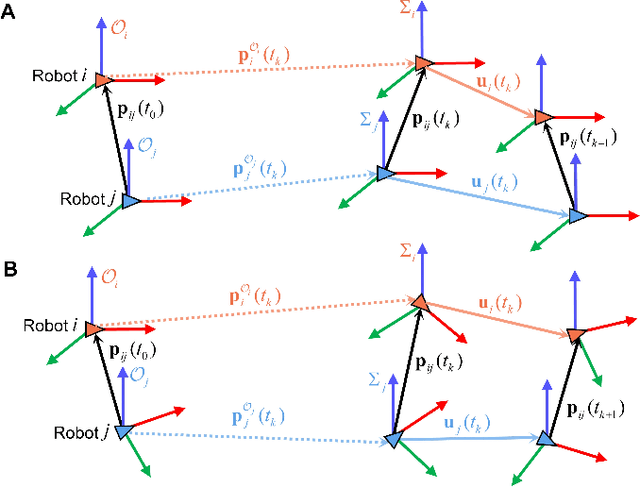
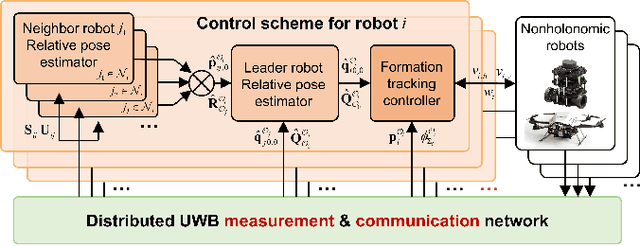
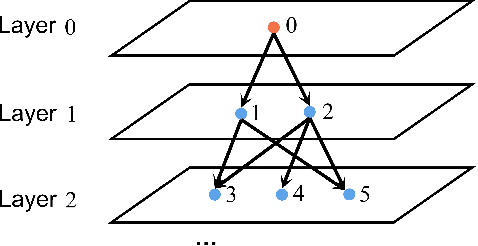
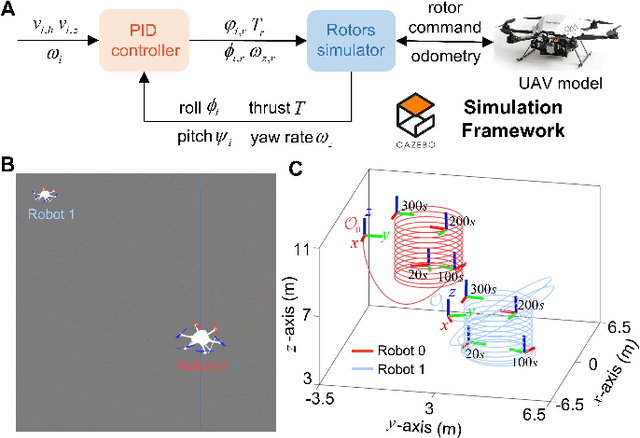
This article studies the problem of distributed formation control for multiple robots by using onboard ultra wide band (UWB) ranging and inertial odometer (IO) measurements. Although this problem has been widely studied, a fundamental limitation of most works is that they require each robot's pose and sensor measurements are expressed in a common reference frame. However, it is inapplicable for nonholonomic robot formations due to the practical difficulty of aligning IO measurements of individual robot in a common frame. To address this problem, firstly, a concurrent-learning based estimator is firstly proposed to achieve relative localization between neighboring robots in a local frame. Different from most relative localization methods in a global frame, both relative position and orientation in a local frame are estimated with only UWB ranging and IO measurements. Secondly, to deal with information loss caused by directed communication topology, a cooperative localization algorithm is introduced to estimate the relative pose to the leader robot. Thirdly, based on the theoretical results on relative pose estimation, a distributed formation tracking controller is proposed for nonholonomic robots. Both gazebo physical simulation and real-world experiments conducted on networked TurtleBot3 nonholonomic robots are provided to demonstrate the effectiveness of the proposed method.
The Limits of Differential Privacy in Online Learning
Nov 08, 2024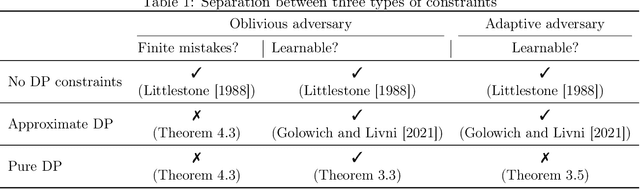
Differential privacy (DP) is a formal notion that restricts the privacy leakage of an algorithm when running on sensitive data, in which privacy-utility trade-off is one of the central problems in private data analysis. In this work, we investigate the fundamental limits of differential privacy in online learning algorithms and present evidence that separates three types of constraints: no DP, pure DP, and approximate DP. We first describe a hypothesis class that is online learnable under approximate DP but not online learnable under pure DP under the adaptive adversarial setting. This indicates that approximate DP must be adopted when dealing with adaptive adversaries. We then prove that any private online learner must make an infinite number of mistakes for almost all hypothesis classes. This essentially generalizes previous results and shows a strong separation between private and non-private settings since a finite mistake bound is always attainable (as long as the class is online learnable) when there is no privacy requirement.
Non-Euclidean Mixture Model for Social Network Embedding
Nov 07, 2024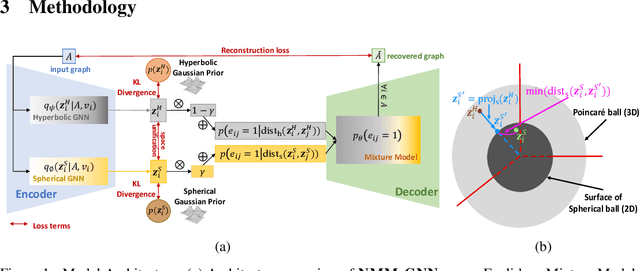
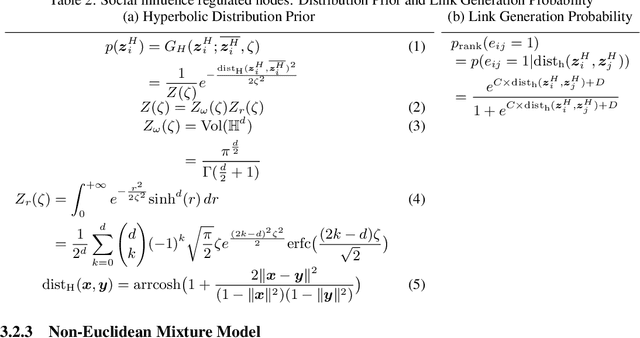
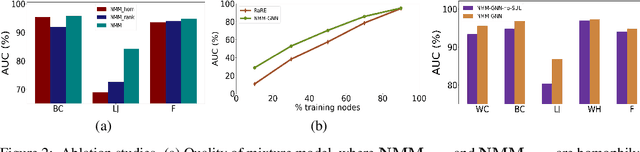
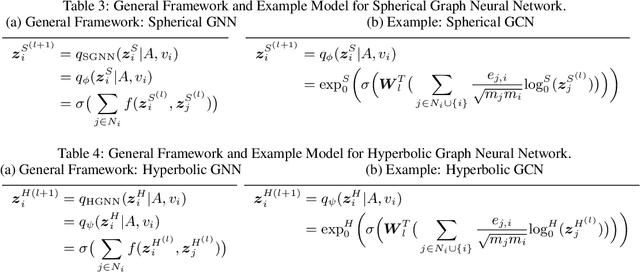
It is largely agreed that social network links are formed due to either homophily or social influence. Inspired by this, we aim at understanding the generation of links via providing a novel embedding-based graph formation model. Different from existing graph representation learning, where link generation probabilities are defined as a simple function of the corresponding node embeddings, we model the link generation as a mixture model of the two factors. In addition, we model the homophily factor in spherical space and the influence factor in hyperbolic space to accommodate the fact that (1) homophily results in cycles and (2) influence results in hierarchies in networks. We also design a special projection to align these two spaces. We call this model Non-Euclidean Mixture Model, i.e., NMM. We further integrate NMM with our non-Euclidean graph variational autoencoder (VAE) framework, NMM-GNN. NMM-GNN learns embeddings through a unified framework which uses non-Euclidean GNN encoders, non-Euclidean Gaussian priors, a non-Euclidean decoder, and a novel space unification loss component to unify distinct non-Euclidean geometric spaces. Experiments on public datasets show NMM-GNN significantly outperforms state-of-the-art baselines on social network generation and classification tasks, demonstrating its ability to better explain how the social network is formed.