 Add to Chrome
 Add to Firefox
 Add to Edge
Recursive Synthesis for Long-Horizon Terminal Tasks
Aug 07, 2026
High-quality long-horizon training data for terminal agents is expensive to produce, often costing hundreds to thousands of dollars per task, because each task must keep the instruction, environment, reference solution, and verifier mutually consistent. Human authoring does not scale, and direct generation with large language models (LLMs) often breaks these dependencies. We present Recursive Synthetic Terminal Tasks (RST), a recursive verified synthesis framework for constructing long-horizon terminal-agent tasks at scale. Starting from verified seed tasks, RST extends the reference solution, realigns the verifier and instruction to the new workflow, validates the result in a fresh sandbox, and reuses accepted tasks as seeds for subsequent rounds. Across fifteen recursive rounds, RST produces 37,484 synthesized terminal-agent tasks at roughly $0.05 per task. Task difficulty increases substantially over rounds: the median reference solution grows from 67 to 374 lines, the median number of executed commands grows from 40 to 244, and DeepSeek-V4-Pro pass@4 drops from 90% at R1 to 2.5% at R15. To demonstrate training utility, we collect rejection-sampled Qwen3.5 trajectories on the synthesized tasks and use them for supervised fine-tuning. Fine-tuning on these trajectories improves Qwen3.5-27B and Qwen3.5-122B-A10B by up to 10 points on Terminal-Bench 2, Terminal-Bench Hard, and Long-Horizon Terminal Bench, while agentic PPO lifts Qwen3.5-27B to 49.44%, 32.00%, and 22.07% on the three benchmarks, corresponding to relative gains of 20.0%, 41.2%, and 21.9% over the base model. Moreover, after 15 rounds, the recursion shows no ceiling: synthesis yield and validation rates remain stable as difficulty keeps climbing, indicating that the process can continue well beyond the scale reported here.

Stale but Stable: Staleness-Adaptive Trust Regions for Stabilizing Asynchronous Reinforcement Learning
Jul 21, 2026Asynchronous reinforcement learning improves throughput by decoupling rollout generation from optimization, but staleness is an inevitable byproduct compounded by policy lag, engine delays, and mixture-of-experts routing. From a trust-region perspective, this mismatch is critical: training-inference divergence governs approximation error in finite-horizon bounds, whereas PPO clipping only gates sampled outward updates, acting as a sampled surrogate rather than a full-policy constraint. As a result, high-staleness updates remain weakly controlled in the asynchronous regime where stale rollouts matter most. We introduce the Staleness-Adaptive Trust Region (SAT), which uses the detached sampled log-ratio as a practical staleness proxy, identifies high-mismatch tails within each batch via staleness-based kernel scaling, and contracts only the sign-selected endpoint of the nominal PPO interval. This preserves baseline behavior on ordinary tokens while enforcing more conservative updates on newly intercepted outward bands. We prove local interval containment and pointwise pessimism relative to PPO, showing how the adaptive rule reshapes update geometry under heterogeneous staleness. We evaluate SAT in a decoupled asynchronous RL setup built on Qwen3-30B-A3B-Base, using SGLang as the inference engine and Megatron for training. In this setting, SAT-GSPO w/ R3 achieves the best observed AIME24 avg@8, reaching 35.83 at lag 1 and 34.79 at lag 8, while SAT-GSPO reaches 34.17 at lag 1. Adaptive clipping and routing replay act as complementary stabilizers targeting mismatch tails and routing inconsistency, respectively. Overall, aligning clip intervals with staleness heterogeneity effectively stabilizes asynchronous RL.
Harness Handbook: Making Evolving Agent Harnesses Readable,Navigable, and Editable
Jul 14, 2026The capability of a modern AI agent depends not only on its foundation model but also on its harness, which constructs prompts, manages state, invokes tools, and coordinates execution. As models, APIs, environments, and requirements evolve, the harness must be continually modified. Before such a change can be made, a developer or coding agent must identify all code locations that implement the target behavior. This is difficult because production harnesses are large, tightly coupled, and behaviorally distributed, while modification requests describe what the system should do and repositories are organized by files and modules. Code search, repository indexing, and long-context processing ease inspection, but still leave this behavior-to-code mapping to be recovered by hand. Behavior localization is therefore a central bottleneck in harness evolution. We introduce the Harness Handbook, a behavior-centric representation synthesized automatically from a harness codebase via static analysis and LLM-assisted structuring, linking each behavior to its corresponding source. We also introduce Behavior-Guided Progressive Disclosure (BGPD), which guides agents from high-level behaviors to relevant implementation details and verifies candidate locations against the current source. On diverse modification requests from two open-source harnesses, Handbook-Assisted planning improves behavior localization and edit-plan quality while using fewer planner tokens, with the largest gains on scattered sites, rarely executed paths, and cross-module interactions. Evolving complex agentic systems thus depends not only on generating edits, but also on determining where those edits should be made.
Long-Horizon-Terminal-Bench: Testing the Limits of Agents on Long-Horizon Terminal Tasks with Dense Reward-Based Grading
Jul 13, 2026AI agents have become capable of autonomously completing short, well-specified tasks. However, existing terminal benchmarks largely focus on simple problems that finish within minutes and are evaluated only by their final outcome. This setup overlooks intermediate progress and partial solutions, yielding sparse reward signals and an incomplete picture of agent capability. We introduce Long-Horizon-Terminal-Bench, a terminal benchmark of 46 long-horizon tasks spanning nine categories, including experiment reproduction, software engineering, multimodal analysis, interactive games, and scientific computing. Each task follows a Terminal-Bench-style setup with a reference solution or simulation engine, but is further decomposed into fine-grained graded subtasks. This design enables dense intermediate rewards and partial credit, allowing evaluation to capture not only whether an agent reaches the final goal, but also how far it progresses on open-ended workflows. Tasks in Long-Horizon-Terminal-Bench typically require hundreds of episodes and minutes to hours of execution, stressing long-horizon planning, long-context management, and iterative debugging rather than one-shot problem solving. We evaluate 15 frontier models and find that agents consume on average 9.9M tokens per task, with roughly 231 episodes and 85.3 minutes of execution time per run, making Long-Horizon-Terminal-Bench more demanding than prior terminal-based benchmarks. Even the strongest tested model achieves 15.2% pass@1 at a partial-reward threshold of 0.95 and 10.9% at a perfect-reward threshold of 1.0, while the mean pass rate across models is 4.3% and 1.7% under the two thresholds, respectively. These results reveal headroom for improvement. We further analyze failure modes and error patterns, and release Long-Horizon-Terminal-Bench to support future progress on long-horizon terminal agents.
FERA: Uncertainty-Aware Federated Reasoning for Large Language Models
May 11, 2026Large language models (LLMs) exhibit strong reasoning capabilities when guided by high-quality demonstrations, yet such data is often distributed across organizations that cannot centralize it due to regulatory, proprietary, or institutional constraints. We study federated reasoning, where a server improves multi-step reasoning by coordinating with heterogeneous clients holding private demonstrations, without centralized training or raw data sharing. The key challenge is that client reliability is query-dependent, while the server cannot inspect client data to determine which contributions are trustworthy. To address this, we propose Uncertainty-Aware Federated Reasoning (FERA), a training-free framework based on iterative server-client co-refinement. Across communication rounds, clients generate reasoning traces with lightweight uncertainty estimates, and the server synthesizes them into improved reasoning that is redistributed as context for the next round, progressively improving both server outputs and client-side reasoning. Within each round, Uncertainty-Aware Self-Critique Aggregation (UA-SCA) resolves conflicts among heterogeneous client traces through query-dependent trust weighting and structured cross-client verification. Rather than simply discarding low-quality traces, UA-SCA revises flawed reasoning steps to recover useful information. We provide theoretical guarantees showing that the proposed iterative protocol converges and that uncertainty-aware weighting accelerates convergence. Experiments on multiple reasoning benchmarks show that FERA consistently outperforms both federated training and training-free baselines, achieving progressively higher accuracy across rounds while maintaining communication and computational efficiency.
How to Provably Improve Return Conditioned Supervised Learning?
Jun 10, 2025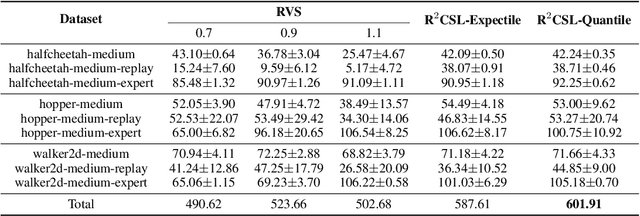
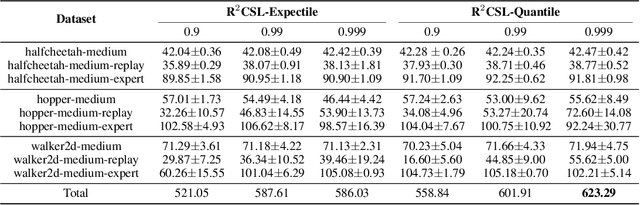
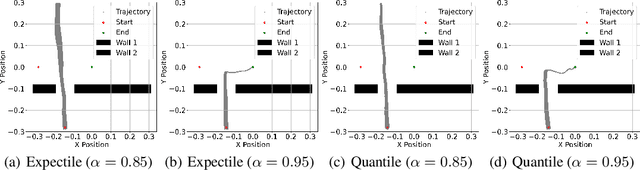
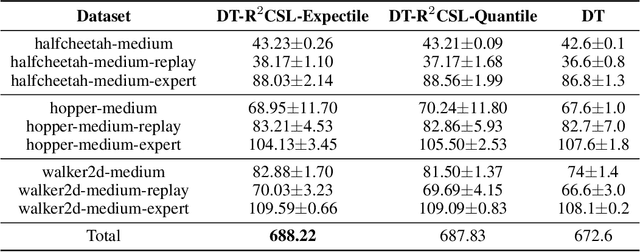
In sequential decision-making problems, Return-Conditioned Supervised Learning (RCSL) has gained increasing recognition for its simplicity and stability in modern decision-making tasks. Unlike traditional offline reinforcement learning (RL) algorithms, RCSL frames policy learning as a supervised learning problem by taking both the state and return as input. This approach eliminates the instability often associated with temporal difference (TD) learning in offline RL. However, RCSL has been criticized for lacking the stitching property, meaning its performance is inherently limited by the quality of the policy used to generate the offline dataset. To address this limitation, we propose a principled and simple framework called Reinforced RCSL. The key innovation of our framework is the introduction of a concept we call the in-distribution optimal return-to-go. This mechanism leverages our policy to identify the best achievable in-dataset future return based on the current state, avoiding the need for complex return augmentation techniques. Our theoretical analysis demonstrates that Reinforced RCSL can consistently outperform the standard RCSL approach. Empirical results further validate our claims, showing significant performance improvements across a range of benchmarks.
Federated In-Context Learning: Iterative Refinement for Improved Answer Quality
Jun 09, 2025For question-answering (QA) tasks, in-context learning (ICL) enables language models to generate responses without modifying their parameters by leveraging examples provided in the input. However, the effectiveness of ICL heavily depends on the availability of high-quality examples, which are often scarce due to data privacy constraints, annotation costs, and distribution disparities. A natural solution is to utilize examples stored on client devices, but existing approaches either require transmitting model parameters - incurring significant communication overhead - or fail to fully exploit local datasets, limiting their effectiveness. To address these challenges, we propose Federated In-Context Learning (Fed-ICL), a general framework that enhances ICL through an iterative, collaborative process. Fed-ICL progressively refines responses by leveraging multi-round interactions between clients and a central server, improving answer quality without the need to transmit model parameters. We establish theoretical guarantees for the convergence of Fed-ICL and conduct extensive experiments on standard QA benchmarks, demonstrating that our proposed approach achieves strong performance while maintaining low communication costs.
Towards Agentic Recommender Systems in the Era of Multimodal Large Language Models
Mar 20, 2025Recent breakthroughs in Large Language Models (LLMs) have led to the emergence of agentic AI systems that extend beyond the capabilities of standalone models. By empowering LLMs to perceive external environments, integrate multimodal information, and interact with various tools, these agentic systems exhibit greater autonomy and adaptability across complex tasks. This evolution brings new opportunities to recommender systems (RS): LLM-based Agentic RS (LLM-ARS) can offer more interactive, context-aware, and proactive recommendations, potentially reshaping the user experience and broadening the application scope of RS. Despite promising early results, fundamental challenges remain, including how to effectively incorporate external knowledge, balance autonomy with controllability, and evaluate performance in dynamic, multimodal settings. In this perspective paper, we first present a systematic analysis of LLM-ARS: (1) clarifying core concepts and architectures; (2) highlighting how agentic capabilities -- such as planning, memory, and multimodal reasoning -- can enhance recommendation quality; and (3) outlining key research questions in areas such as safety, efficiency, and lifelong personalization. We also discuss open problems and future directions, arguing that LLM-ARS will drive the next wave of RS innovation. Ultimately, we foresee a paradigm shift toward intelligent, autonomous, and collaborative recommendation experiences that more closely align with users' evolving needs and complex decision-making processes.
Quantum Diffusion Models for Few-Shot Learning
Nov 06, 2024
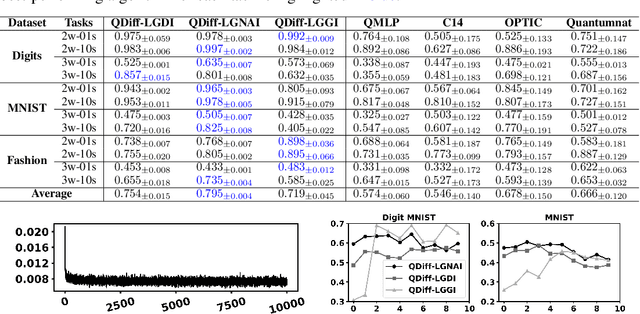

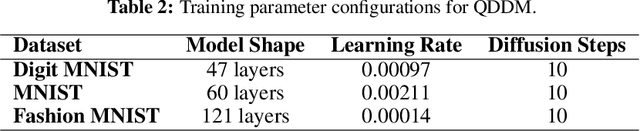
Modern quantum machine learning (QML) methods involve the variational optimization of parameterized quantum circuits on training datasets, followed by predictions on testing datasets. Most state-of-the-art QML algorithms currently lack practical advantages due to their limited learning capabilities, especially in few-shot learning tasks. In this work, we propose three new frameworks employing quantum diffusion model (QDM) as a solution for the few-shot learning: label-guided generation inference (LGGI); label-guided denoising inference (LGDI); and label-guided noise addition inference (LGNAI). Experimental results demonstrate that our proposed algorithms significantly outperform existing methods.
Return Augmented Decision Transformer for Off-Dynamics Reinforcement Learning
Oct 30, 2024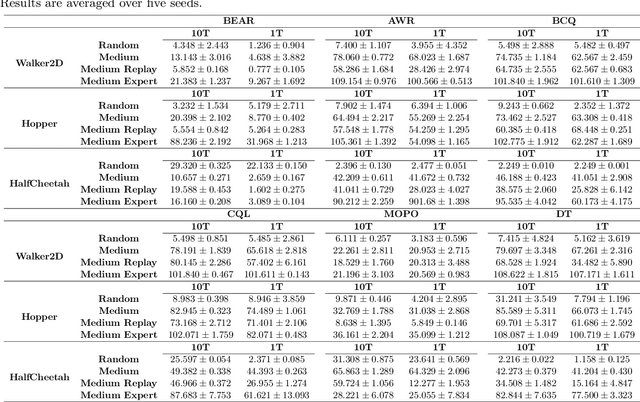
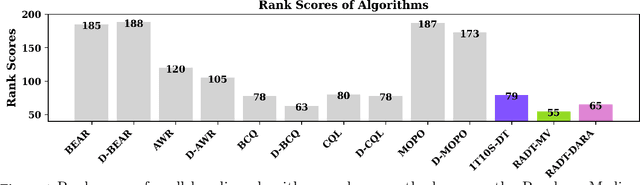

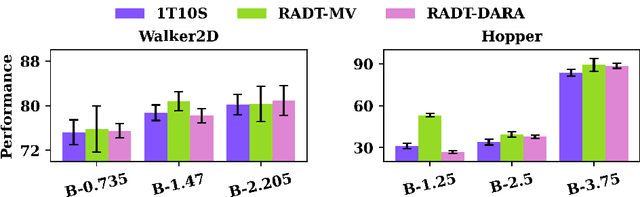
We study offline off-dynamics reinforcement learning (RL) to utilize data from an easily accessible source domain to enhance policy learning in a target domain with limited data. Our approach centers on return-conditioned supervised learning (RCSL), particularly focusing on the decision transformer (DT), which can predict actions conditioned on desired return guidance and complete trajectory history. Previous works tackle the dynamics shift problem by augmenting the reward in the trajectory from the source domain to match the optimal trajectory in the target domain. However, this strategy can not be directly applicable in RCSL owing to (1) the unique form of the RCSL policy class, which explicitly depends on the return, and (2) the absence of a straightforward representation of the optimal trajectory distribution. We propose the Return Augmented Decision Transformer (RADT) method, where we augment the return in the source domain by aligning its distribution with that in the target domain. We provide the theoretical analysis demonstrating that the RCSL policy learned from RADT achieves the same level of suboptimality as would be obtained without a dynamics shift. We introduce two practical implementations RADT-DARA and RADT-MV respectively. Extensive experiments conducted on D4RL datasets reveal that our methods generally outperform dynamic programming based methods in off-dynamics RL scenarios.