 Add to Chrome
 Add to Firefox
 Add to Edge
Intern-S2-Preview: Scientific Agentic Foundation Model
Aug 13, 2026
Scientific discovery increasingly requires AI systems that can reason over scientific evidence of heterogeneous modalities, interact with scientific tools and environments, and sustain progress across long task horizons. We present Intern-S2-Preview, a series of scientific agentic foundation models designed to support multimodal scientific understanding, reasoning, generation, and long-horizon tasks. The training pipeline begins with scientific multimodal pre-training over rendered scientific documents, interleaved image-text data, and diverse scientific corpora. Starting from the pretrained checkpoint, we apply a unified post-training pipeline consisting of supervised fine-tuning, scalable multi-task reinforcement learning (RL), black- and white-box agentic RL, and on-policy distillation. This pipeline is supported by practical techniques that improve rollout and training stability and efficiency, including partial rollout with off-policy correction, adaptive length regularization, online speculative decoding, robust multi-task optimization, and trace-aware experience assembly for agentic tasks. At the architecture level, Intern-S2-Preview-397B extends time series modelling from efficient long-sequence understanding to numerical forecasting, while Memory Decoder is studied as a separate memory-augmented path for rapid scientific specialization without modifying the frozen 397B backbone. Evaluations across scientific, multimodal, agentic, and general-purpose benchmarks show that Intern-S2-Preview-397B achieves competitive or leading results in multiple settings. The time series modules improve scientific signal understanding and forecasting on SciTS, while the separate Intern-MemDec-4B extension improves the Biology-Instructions average score from 56.92 to 60.32 without modifying the frozen 397B backbone.

Video-DeepResearch: Towards the Next-Generation Multimodal Deepresearch Agent
Aug 04, 2026We introduce Video-DeepResearch (Video-DR), extending multimodal agents from static images to continuous video streams, a setting that demands dense spatiotemporal grounding coupled with open-web exploration. Preliminary evaluations reveal two critical bottlenecks in current models: (1) modality bias, where agents bypass visual tools in favor of textual search, and (2) parametric knowledge leakage, where models rely on internal memory rather than genuine tool-augmented execution. To address these challenges, we propose Video-DR, featuring a decoupled perception-exploration pipeline with stage-wise tool unlocking that compels exhaustive cross-frame visual grounding prior to web retrieval. Our framework adopts a two-stage training recipe: supervised fine-tuning followed by Group Relative Policy Optimization (GRPO), enabling autonomous exploration that breaks the imitation-learning ceiling. Furthermore, we curate Video-DR-Bench, a human-AI collaborative benchmark comprising 200 complex, multi-hop VQA instances. Empirical results demonstrate that our Video-DeepResearch-35B-A3B establishes a new state-of-the-art of 64.0% average accuracy, surpassing proprietary Claude-4.5-Sonnet (59.0%) by 5.0 points and significantly outperforming GPT-5 (52.5%) and Gemini 2.5 Pro (57.5%). The 30B-A3B variant achieves 59.3%, competitive with Claude-4.5-Sonnet and demonstrating the effectiveness of our training paradigm even at compact scale. Code: https://github.com/Osilly/Vision-DeepResearch.
ACC: Compiling Agent Trajectories for Long-Context Training
May 21, 2026Recent development of agents has renewed demand for long-context reasoning capacity of LLMs. However, training LLMs for this capacity requires costly long-document curation or heuristic context synthesis. We observe that agents produce massive trajectories when solving problems, invoking tools and receiving environment observations across many turns. The evidence needed to answer the original question is thus scattered throughout these turns, requiring integration of distant context segments. Nevertheless, standard agent SFT masks tool responses and only trains turn-level tool selection, creating a supervision blind spot where these scattered signals go unused. We propose Agent Context Compilation (ACC), which converts trajectories from search, software engineering, and database querying agents into long-context QA pairs that combine the original question with tool responses and environment observations gathered across multiple turns, training the model to answer directly without tool use. This makes the dependencies between the question and the evidence explicit, enabling direct supervision of long-context reasoning over distant segments without additional annotation. ACC is a simple but effective approach that can be combined with any existing long-context extension or training method, providing scalable supervised fine-tuning data. We validate ACC on long-range dependency modeling tasks through MRCR and GraphWalks, challenging benchmarks requiring cross-turn coreference resolution and graph traversal over extended contexts. Training Qwen3-30B-A3B with ACC achieves 68.3 on MRCR (+18.1) and 77.5 on GraphWalks (+7.6), results comparable to Qwen3-235B-A22B, while preserving general capabilities on GPQA, MMLU-Pro, AIME, and IFEval. Further mechanism analysis reveals that the ACC-trained model exhibits task-adaptive attention restructuring and expert specialization.
FlowInOne:Unifying Multimodal Generation as Image-in, Image-out Flow Matching
Apr 08, 2026Multimodal generation has long been dominated by text-driven pipelines where language dictates vision but cannot reason or create within it. We challenge this paradigm by asking whether all modalities, including textual descriptions, spatial layouts, and editing instructions, can be unified into a single visual representation. We present FlowInOne, a framework that reformulates multimodal generation as a purely visual flow, converting all inputs into visual prompts and enabling a clean image-in, image-out pipeline governed by a single flow matching model. This vision-centric formulation naturally eliminates cross-modal alignment bottlenecks, noise scheduling, and task-specific architectural branches, unifying text-to-image generation, layout-guided editing, and visual instruction following under one coherent paradigm. To support this, we introduce VisPrompt-5M, a large-scale dataset of 5 million visual prompt pairs spanning diverse tasks including physics-aware force dynamics and trajectory prediction, alongside VP-Bench, a rigorously curated benchmark assessing instruction faithfulness, spatial precision, visual realism, and content consistency. Extensive experiments demonstrate that FlowInOne achieves state-of-the-art performance across all unified generation tasks, surpassing both open-source models and competitive commercial systems, establishing a new foundation for fully vision-centric generative modeling where perception and creation coexist within a single continuous visual space.
Intern-S1-Pro: Scientific Multimodal Foundation Model at Trillion Scale
Mar 26, 2026We introduce Intern-S1-Pro, the first one-trillion-parameter scientific multimodal foundation model. Scaling to this unprecedented size, the model delivers a comprehensive enhancement across both general and scientific domains. Beyond stronger reasoning and image-text understanding capabilities, its intelligence is augmented with advanced agent capabilities. Simultaneously, its scientific expertise has been vastly expanded to master over 100 specialized tasks across critical science fields, including chemistry, materials, life sciences, and earth sciences. Achieving this massive scale is made possible by the robust infrastructure support of XTuner and LMDeploy, which facilitates highly efficient Reinforcement Learning (RL) training at the 1-trillion parameter level while ensuring strict precision consistency between training and inference. By seamlessly integrating these advancements, Intern-S1-Pro further fortifies the fusion of general and specialized intelligence, working as a Specializable Generalist, demonstrating its position in the top tier of open-source models for general capabilities, while outperforming proprietary models in the depth of specialized scientific tasks.
Internalizing Meta-Experience into Memory for Guided Reinforcement Learning in Large Language Models
Feb 10, 2026Reinforcement Learning with Verifiable Rewards (RLVR) has emerged as an effective approach for enhancing the reasoning capabilities of Large Language Models (LLMs). Despite its efficacy, RLVR faces a meta-learning bottleneck: it lacks mechanisms for error attribution and experience internalization intrinsic to the human learning cycle beyond practice and verification, thereby limiting fine-grained credit assignment and reusable knowledge formation. We term such reusable knowledge representations derived from past errors as meta-experience. Based on this insight, we propose Meta-Experience Learning (MEL), a novel framework that incorporates self-distilled meta-experience into the model's parametric memory. Building upon standard RLVR, we introduce an additional design that leverages the LLM's self-verification capability to conduct contrastive analysis on paired correct and incorrect trajectories, identify the precise bifurcation points where reasoning errors arise, and summarize them into generalizable meta-experience. The meta-experience is further internalized into the LLM's parametric memory by minimizing the negative log-likelihood, which induces a language-modeled reward signal that bridges correct and incorrect reasoning trajectories and facilitates effective knowledge reuse. Experimental results demonstrate that MEL achieves consistent improvements on benchmarks, yielding 3.92%--4.73% Pass@1 gains across varying model sizes.
ISACL: Internal State Analyzer for Copyrighted Training Data Leakage
Aug 25, 2025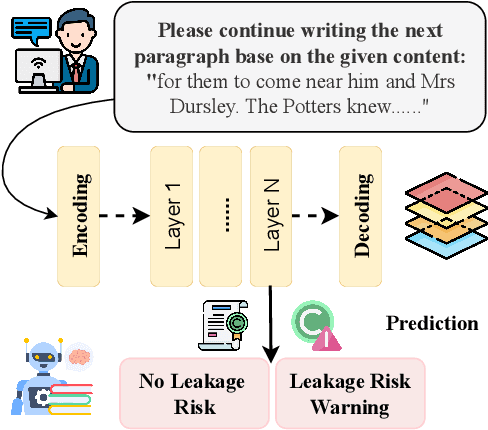
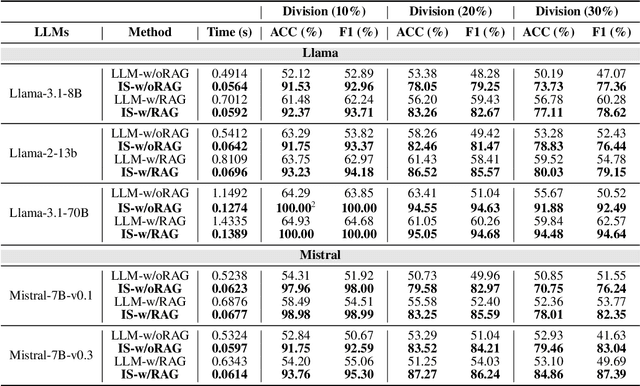

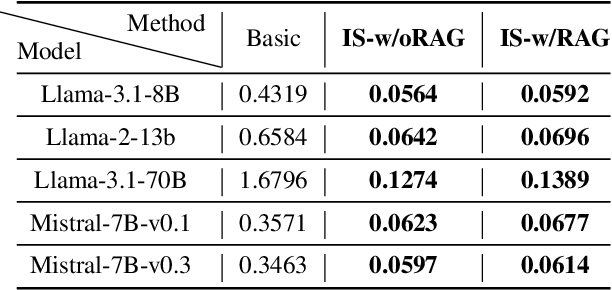
Large Language Models (LLMs) have revolutionized Natural Language Processing (NLP) but pose risks of inadvertently exposing copyrighted or proprietary data, especially when such data is used for training but not intended for distribution. Traditional methods address these leaks only after content is generated, which can lead to the exposure of sensitive information. This study introduces a proactive approach: examining LLMs' internal states before text generation to detect potential leaks. By using a curated dataset of copyrighted materials, we trained a neural network classifier to identify risks, allowing for early intervention by stopping the generation process or altering outputs to prevent disclosure. Integrated with a Retrieval-Augmented Generation (RAG) system, this framework ensures adherence to copyright and licensing requirements while enhancing data privacy and ethical standards. Our results show that analyzing internal states effectively mitigates the risk of copyrighted data leakage, offering a scalable solution that fits smoothly into AI workflows, ensuring compliance with copyright regulations while maintaining high-quality text generation. The implementation is available on GitHub.\footnote{https://github.com/changhu73/Internal_states_leakage}
Large Action Models: From Inception to Implementation
Dec 13, 2024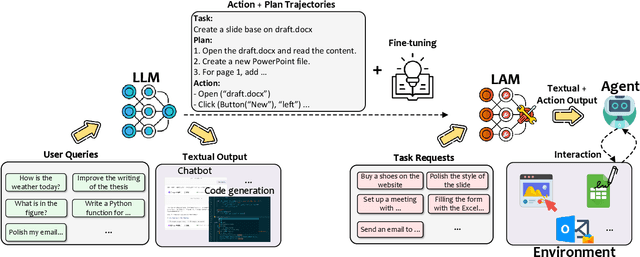

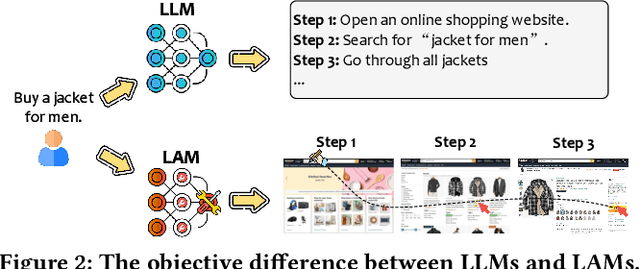

As AI continues to advance, there is a growing demand for systems that go beyond language-based assistance and move toward intelligent agents capable of performing real-world actions. This evolution requires the transition from traditional Large Language Models (LLMs), which excel at generating textual responses, to Large Action Models (LAMs), designed for action generation and execution within dynamic environments. Enabled by agent systems, LAMs hold the potential to transform AI from passive language understanding to active task completion, marking a significant milestone in the progression toward artificial general intelligence. In this paper, we present a comprehensive framework for developing LAMs, offering a systematic approach to their creation, from inception to deployment. We begin with an overview of LAMs, highlighting their unique characteristics and delineating their differences from LLMs. Using a Windows OS-based agent as a case study, we provide a detailed, step-by-step guide on the key stages of LAM development, including data collection, model training, environment integration, grounding, and evaluation. This generalizable workflow can serve as a blueprint for creating functional LAMs in various application domains. We conclude by identifying the current limitations of LAMs and discussing directions for future research and industrial deployment, emphasizing the challenges and opportunities that lie ahead in realizing the full potential of LAMs in real-world applications. The code for the data collection process utilized in this paper is publicly available at: https://github.com/microsoft/UFO/tree/main/dataflow, and comprehensive documentation can be found at https://microsoft.github.io/UFO/dataflow/overview/.