 Add to Chrome
 Add to Firefox
 Add to Edge
Finding Koopman Invariant Subspaces via Personalized PageRank
May 27, 2026
Selecting a finite dictionary of observables whose span is Koopman-invariant is a central challenge in data-driven Koopman operator approximation. We address this problem by exploiting zero-block structure in Extended Dynamic Mode Decomposition (EDMD) matrices. We show that any sub-dictionary whose span is Koopman-invariant induces an exact zero block in the EDMD matrix, even for finite data. We then show that such blocks can be detected by applying PageRank to a row-normalized EDMD matrix constructed from a large initial dictionary. The theory extends to approximately invariant subspaces and yields stronger guarantees for personalized PageRank (PPR) when the seed observables lie inside the target block and reach all observables in that block. Combining EDMD concentration bounds with PageRank perturbation theory gives end-to-end detection guarantees with $O(1/\sqrt{M})$ finite-sample scaling and explicit constants. More generally, without assuming an invariant subspace exists, high PPR mass on a sub-dictionary controls discounted multi-step leakage from the seed observables. Numerical experiments on the Duffing oscillator, Van der Pol oscillator, Lorenz system, and a three-well Ramachandran potential suggest that the method identifies compact, interpretable dictionaries with accurate predictions.

Provable imitation learning for control of instability in partially-observed Vlasov--Poisson equations
May 06, 2026We consider the stabilization of Vlasov--Poisson plasma dynamics, a central control problem in nuclear fusion. Our focus is the gap between what an ideal controller would use and what experiments can actually observe: while optimal policy may rely on the full phase-space state, practical feedback is typically limited to sparse macroscopic diagnostics. We therefore study imitation learning methods that distill a fully observed expert policy into controllers operating only on macroscopic measurements. We show the stability guarantees of the learned policy, where the error floor depends on the minimal behavior cloning loss achievable under the observation constraints. We further characterize this minimal loss in terms of a notion of entropy that quantifies the complexity of the initial distribution. Our results demonstrates the theoretical feasibility of learning stabilizing feedback policies for kinetic plasma dynamics from macroscopic observations, and exhibits the adaptivity of the learning approach to low-complexity structures. Through extensive numerical experiments, we validate our theory and show that the learned policies can stabilize the system using only macroscopic observations, within a significantly longer time horizon than non-adaptive baseline controllers.
Random Coordinate Descent on the Wasserstein Space of Probability Measures
Apr 02, 2026Optimization over the space of probability measures endowed with the Wasserstein-2 geometry is central to modern machine learning and mean-field modeling. However, traditional methods relying on full Wasserstein gradients often suffer from high computational overhead in high-dimensional or ill-conditioned settings. We propose a randomized coordinate descent framework specifically designed for the Wasserstein manifold, introducing both Random Wasserstein Coordinate Descent (RWCD) and Random Wasserstein Coordinate Proximal{-Gradient} (RWCP) for composite objectives. By exploiting coordinate-wise structures, our methods adapt to anisotropic objective landscapes where full-gradient approaches typically struggle. We provide a rigorous convergence analysis across various landscape geometries, establishing guarantees under non-convex, Polyak-Łojasiewicz, and geodesically convex conditions. Our theoretical results mirror the classic convergence properties found in Euclidean space, revealing a compelling symmetry between coordinate descent on vectors and on probability measures. The developed techniques are inherently adaptive to the Wasserstein geometry and offer a robust analytical template that can be extended to other optimization solvers within the space of measures. Numerical experiments on ill-conditioned energies demonstrate that our framework offers significant speedups over conventional full-gradient methods.
Mitigating Object Hallucinations in LVLMs via Attention Imbalance Rectification
Mar 25, 2026Object hallucination in Large Vision-Language Models (LVLMs) severely compromises their reliability in real-world applications, posing a critical barrier to their deployment in high-stakes scenarios such as autonomous driving and medical image analysis. Through systematic empirical investigation, we identify that the imbalanced attention allocation, both across modalities (i.e., vision and language) and within modalities (among individual tokens), exhibits a strong causal correlation with the occurrence of object hallucination. Leveraging this insight, we introduce a novel concept termed attention imbalance, which not only quantifies the degree of attention disparity but also visually delineates the underlying patterns (e.g., over-attentiveness to irrelevant language tokens or under-attentiveness to discriminative visual features) that drive object hallucination. To mitigate object hallucination, we further propose Attention Imbalance Rectification (AIR), a lightweight decoding-time intervention method that reallocates attention weights and adjusts attention distributions to rectify modality-wise and token-wise imbalances. Extensive evaluations on four mainstream LVLMs and three benchmarks (CHAIR, POPE, and MM-Vet) with seven baselines demonstrate that AIR consistently reduces object hallucination rates, achieving up to a 35.1% reduction compared to the baselines, while improving up to 15.9% of LVLMs' general capability across diverse vision-language tasks.
BRIGHT: A Collaborative Generalist-Specialist Foundation Model for Breast Pathology
Mar 03, 2026Generalist pathology foundation models (PFMs), pretrained on large-scale multi-organ datasets, have demonstrated remarkable predictive capabilities across diverse clinical applications. However, their proficiency on the full spectrum of clinically essential tasks within a specific organ system remains an open question due to the lack of large-scale validation cohorts for a single organ as well as the absence of a tailored training paradigm that can effectively translate broad histomorphological knowledge into the organ-specific expertise required for specialist-level interpretation. In this study, we propose BRIGHT, the first PFM specifically designed for breast pathology, trained on approximately 210 million histopathology tiles from over 51,000 breast whole-slide images derived from a cohort of over 40,000 patients across 19 hospitals. BRIGHT employs a collaborative generalist-specialist framework to capture both universal and organ-specific features. To comprehensively evaluate the performance of PFMs on breast oncology, we curate the largest multi-institutional cohorts to date for downstream task development and evaluation, comprising over 25,000 WSIs across 10 hospitals. The validation cohorts cover the full spectrum of breast pathology across 24 distinct clinical tasks spanning diagnosis, biomarker prediction, treatment response and survival prediction. Extensive experiments demonstrate that BRIGHT outperforms three leading generalist PFMs, achieving state-of-the-art (SOTA) performance in 21 of 24 internal validation tasks and in 5 of 10 external validation tasks with excellent heatmap interpretability. By evaluating on large-scale validation cohorts, this study not only demonstrates BRIGHT's clinical utility in breast oncology but also validates a collaborative generalist-specialist paradigm, providing a scalable template for developing PFMs on a specific organ system.
Safe and Stylized Trajectory Planning for Autonomous Driving via Diffusion Model
Feb 04, 2026Achieving safe and stylized trajectory planning in complex real-world scenarios remains a critical challenge for autonomous driving systems. This paper proposes the SDD Planner, a diffusion-based framework designed to effectively reconcile safety constraints with driving styles in real time. The framework integrates two core modules: a Multi-Source Style-Aware Encoder, which employs distance-sensitive attention to fuse dynamic agent data and environmental contexts for heterogeneous safety-style perception; and a Style-Guided Dynamic Trajectory Generator, which adaptively modulates priority weights within the diffusion denoising process to generate user-preferred yet safe trajectories. Extensive experiments demonstrate that SDD Planner achieves state-of-the-art performance. On the StyleDrive benchmark, it improves the SM-PDMS metric by 3.9% over WoTE, the strongest baseline. Furthermore, on the NuPlan Test14 and Test14-hard benchmarks, SDD Planner ranks first with overall scores of 91.76 and 80.32, respectively, outperforming leading methods such as PLUTO. Real-vehicle closed-loop tests further confirm that SDD Planner maintains high safety standards while aligning with preset driving styles, validating its practical applicability for real-world deployment.
A Deep Learning Model of Mental Rotation Informed by Interactive VR Experiments
Dec 15, 2025Mental rotation -- the ability to compare objects seen from different viewpoints -- is a fundamental example of mental simulation and spatial world modelling in humans. Here we propose a mechanistic model of human mental rotation, leveraging advances in deep, equivariant, and neuro-symbolic learning. Our model consists of three stacked components: (1) an equivariant neural encoder, taking images as input and producing 3D spatial representations of objects, (2) a neuro-symbolic object encoder, deriving symbolic descriptions of objects from these spatial representations, and (3) a neural decision agent, comparing these symbolic descriptions to prescribe rotation simulations in 3D latent space via a recurrent pathway. Our model design is guided by the abundant experimental literature on mental rotation, which we complemented with experiments in VR where participants could at times manipulate the objects to compare, providing us with additional insights into the cognitive process of mental rotation. Our model captures well the performance, response times and behavior of participants in our and others' experiments. The necessity of each model component is shown through systematic ablations. Our work adds to a recent collection of deep neural models of human spatial reasoning, further demonstrating the potency of integrating deep, equivariant, and symbolic representations to model the human mind.
DEVAL: A Framework for Evaluating and Improving the Derivation Capability of Large Language Models
Nov 18, 2025Assessing the reasoning ability of Large Language Models (LLMs) over data remains an open and pressing research question. Compared with LLMs, human reasoning can derive corresponding modifications to the output based on certain kinds of changes to the input. This reasoning pattern, which relies on abstract rules that govern relationships between changes of data, has not been comprehensively described or evaluated in LLMs. In this paper, we formally define this reasoning pattern as the Derivation Relation (DR) and introduce the concept of Derivation Capability (DC), i.e. applying DR by making the corresponding modification to the output whenever the input takes certain changes. To assess DC, a systematically constructed evaluation framework named DEVAL is proposed and used to evaluate five popular LLMs and one Large Reasoning Model in seven mainstream tasks. The evaluation results show that mainstream LLMs, such as GPT-4o and Claude3.5, exhibit moderate DR recognition capabilities but reveal significant drop-offs on applying DR effectively in problem-solving scenarios. To improve this, we propose a novel prompt engineering approach called Derivation Prompting (DP). It achieves an average improvement of 15.2% in DC for all tested LLMs, outperforming commonly used prompt engineering techniques.
Consistent Assistant Domains Transformer for Source-free Domain Adaptation
Oct 02, 2025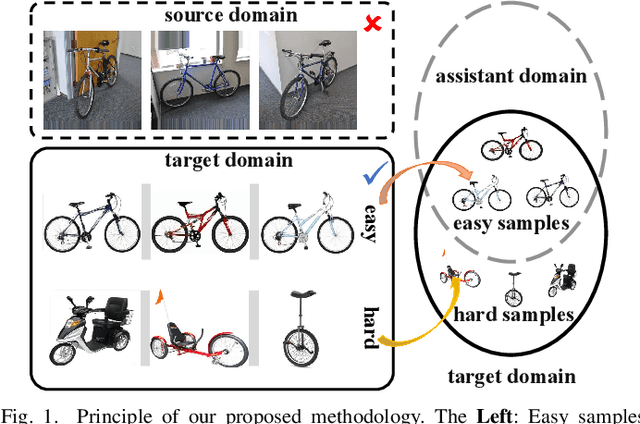
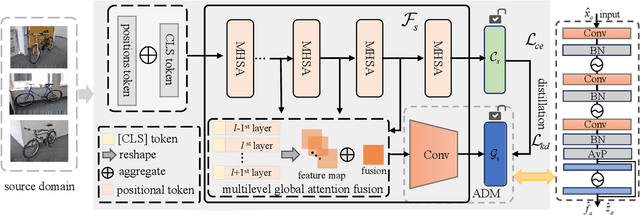
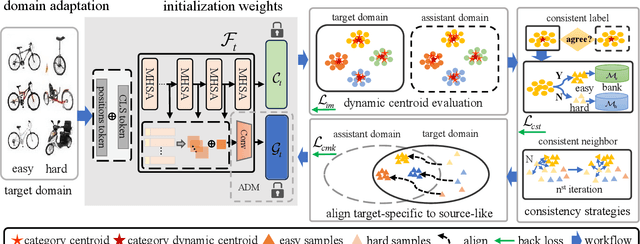
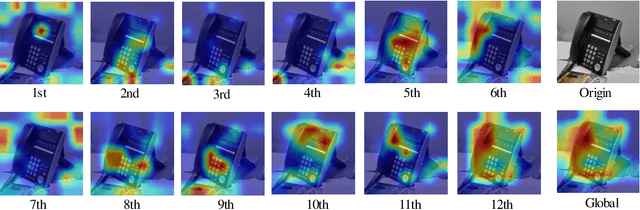
Source-free domain adaptation (SFDA) aims to address the challenge of adapting to a target domain without accessing the source domain directly. However, due to the inaccessibility of source domain data, deterministic invariable features cannot be obtained. Current mainstream methods primarily focus on evaluating invariant features in the target domain that closely resemble those in the source domain, subsequently aligning the target domain with the source domain. However, these methods are susceptible to hard samples and influenced by domain bias. In this paper, we propose a Consistent Assistant Domains Transformer for SFDA, abbreviated as CADTrans, which solves the issue by constructing invariable feature representations of domain consistency. Concretely, we develop an assistant domain module for CADTrans to obtain diversified representations from the intermediate aggregated global attentions, which addresses the limitation of existing methods in adequately representing diversity. Based on assistant and target domains, invariable feature representations are obtained by multiple consistent strategies, which can be used to distinguish easy and hard samples. Finally, to align the hard samples to the corresponding easy samples, we construct a conditional multi-kernel max mean discrepancy (CMK-MMD) strategy to distinguish between samples of the same category and those of different categories. Extensive experiments are conducted on various benchmarks such as Office-31, Office-Home, VISDA-C, and DomainNet-126, proving the significant performance improvements achieved by our proposed approaches. Code is available at https://github.com/RoryShao/CADTrans.git.
Reconstruction of Solar EUV Irradiance Using CaII K Images and SOHO/SEM Data with Bayesian Deep Learning and Uncertainty Quantification
Aug 09, 2025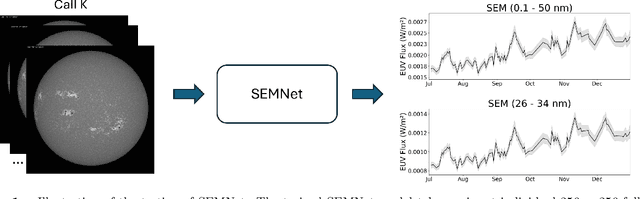
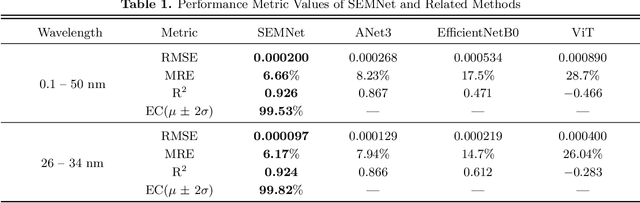
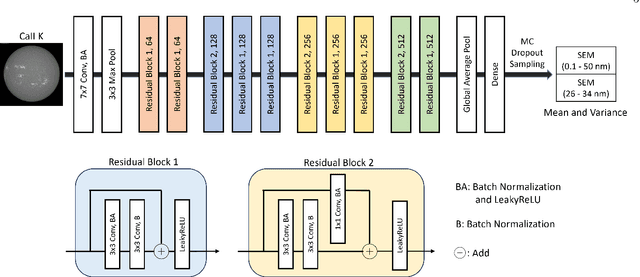
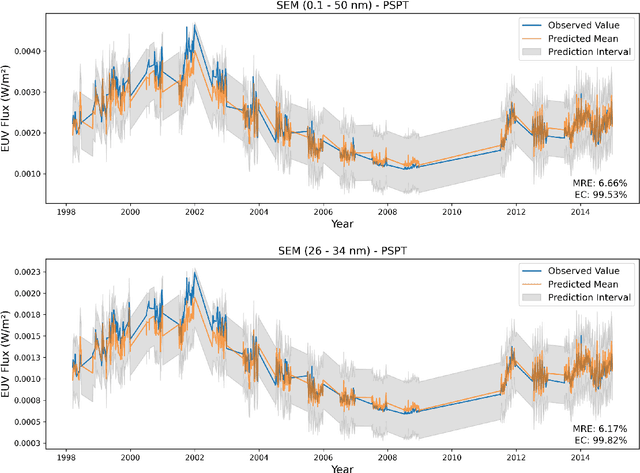
Solar extreme ultraviolet (EUV) irradiance plays a crucial role in heating the Earth's ionosphere, thermosphere, and mesosphere, affecting atmospheric dynamics over varying time scales. Although significant effort has been spent studying short-term EUV variations from solar transient events, there is little work to explore the long-term evolution of the EUV flux over multiple solar cycles. Continuous EUV flux measurements have only been available since 1995, leaving significant gaps in earlier data. In this study, we propose a Bayesian deep learning model, named SEMNet, to fill the gaps. We validate our approach by applying SEMNet to construct SOHO/SEM EUV flux measurements in the period between 1998 and 2014 using CaII K images from the Precision Solar Photometric Telescope. We then extend SEMNet through transfer learning to reconstruct solar EUV irradiance in the period between 1950 and 1960 using CaII K images from the Kodaikanal Solar Observatory. Experimental results show that SEMNet provides reliable predictions along with uncertainty bounds, demonstrating the feasibility of CaII K images as a robust proxy for long-term EUV fluxes. These findings contribute to a better understanding of solar influences on Earth's climate over extended periods.