 Add to Chrome
 Add to Firefox
 Add to Edge
Test-Time Training for Semantic Segmentation with Output Contrastive Loss
Nov 14, 2023

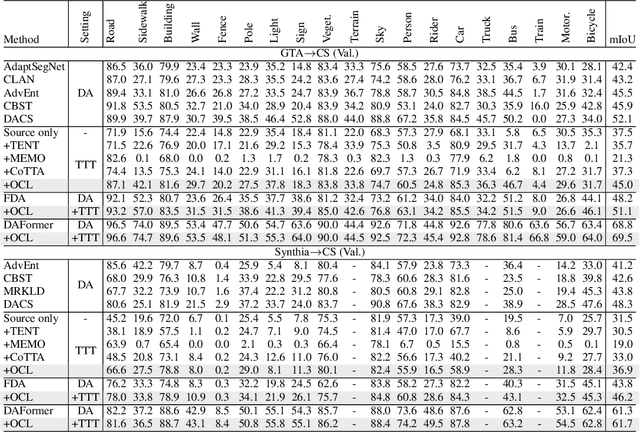


Although deep learning-based segmentation models have achieved impressive performance on public benchmarks, generalizing well to unseen environments remains a major challenge. To improve the model's generalization ability to the new domain during evaluation, the test-time training (TTT) is a challenging paradigm that adapts the source-pretrained model in an online fashion. Early efforts on TTT mainly focus on the image classification task. Directly extending these methods to semantic segmentation easily experiences unstable adaption due to segmentation's inherent characteristics, such as extreme class imbalance and complex decision spaces. To stabilize the adaptation process, we introduce contrastive loss (CL), known for its capability to learn robust and generalized representations. Nevertheless, the traditional CL operates in the representation space and cannot directly enhance predictions. In this paper, we resolve this limitation by adapting the CL to the output space, employing a high temperature, and simplifying the formulation, resulting in a straightforward yet effective loss function called Output Contrastive Loss (OCL). Our comprehensive experiments validate the efficacy of our approach across diverse evaluation scenarios. Notably, our method excels even when applied to models initially pre-trained using domain adaptation methods on test domain data, showcasing its resilience and adaptability.\footnote{Code and more information could be found at~ \url{https://github.com/dazhangyu123/OCL}}

Attention-Challenging Multiple Instance Learning for Whole Slide Image Classification
Nov 13, 2023Overfitting remains a significant challenge in the application of Multiple Instance Learning (MIL) methods for Whole Slide Image (WSI) analysis. Visualizing heatmaps reveals that current MIL methods focus on a subset of predictive instances, hindering effective model generalization. To tackle this, we propose Attention-Challenging MIL (ACMIL), aimed at forcing the attention mechanism to capture more challenging predictive instances. ACMIL incorporates two techniques, Multiple Branch Attention (MBA) to capture richer predictive instances and Stochastic Top-K Instance Masking (STKIM) to suppress simple predictive instances. Evaluation on three WSI datasets outperforms state-of-the-art methods. Additionally, through heatmap visualization, UMAP visualization, and attention value statistics, this paper comprehensively illustrates ACMIL's effectiveness in overcoming the overfitting challenge. The source code is available at \url{https://github.com/dazhangyu123/ACMIL}.
Efficient Robust Bayesian Optimization for Arbitrary Uncertain Inputs
Nov 03, 2023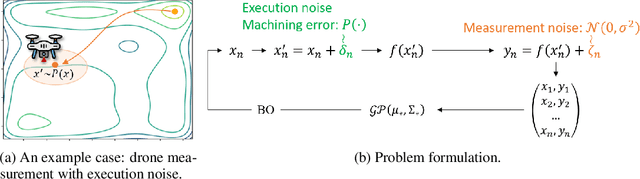
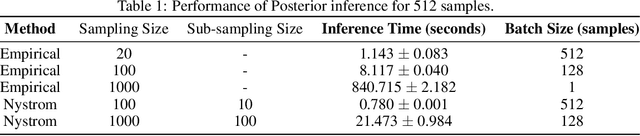
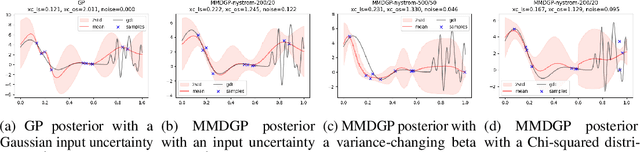
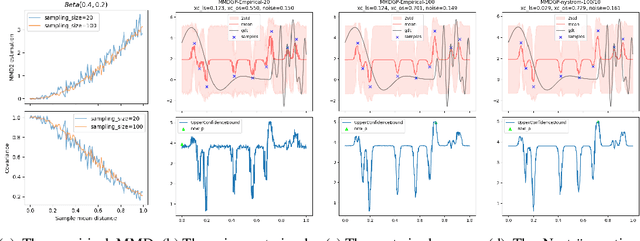
Bayesian Optimization (BO) is a sample-efficient optimization algorithm widely employed across various applications. In some challenging BO tasks, input uncertainty arises due to the inevitable randomness in the optimization process, such as machining errors, execution noise, or contextual variability. This uncertainty deviates the input from the intended value before evaluation, resulting in significant performance fluctuations in the final result. In this paper, we introduce a novel robust Bayesian Optimization algorithm, AIRBO, which can effectively identify a robust optimum that performs consistently well under arbitrary input uncertainty. Our method directly models the uncertain inputs of arbitrary distributions by empowering the Gaussian Process with the Maximum Mean Discrepancy (MMD) and further accelerates the posterior inference via Nystrom approximation. Rigorous theoretical regret bound is established under MMD estimation error and extensive experiments on synthetic functions and real problems demonstrate that our approach can handle various input uncertainties and achieve state-of-the-art performance.
Try with Simpler -- An Evaluation of Improved Principal Component Analysis in Log-based Anomaly Detection
Aug 24, 2023The rapid growth of deep learning (DL) has spurred interest in enhancing log-based anomaly detection. This approach aims to extract meaning from log events (log message templates) and develop advanced DL models for anomaly detection. However, these DL methods face challenges like heavy reliance on training data, labels, and computational resources due to model complexity. In contrast, traditional machine learning and data mining techniques are less data-dependent and more efficient but less effective than DL. To make log-based anomaly detection more practical, the goal is to enhance traditional techniques to match DL's effectiveness. Previous research in a different domain (linking questions on Stack Overflow) suggests that optimized traditional techniques can rival state-of-the-art DL methods. Drawing inspiration from this concept, we conducted an empirical study. We optimized the unsupervised PCA (Principal Component Analysis), a traditional technique, by incorporating lightweight semantic-based log representation. This addresses the issue of unseen log events in training data, enhancing log representation. Our study compared seven log-based anomaly detection methods, including four DL-based, two traditional, and the optimized PCA technique, using public and industrial datasets. Results indicate that the optimized unsupervised PCA technique achieves similar effectiveness to advanced supervised/semi-supervised DL methods while being more stable with limited training data and resource-efficient. This demonstrates the adaptability and strength of traditional techniques through small yet impactful adaptations.
Exploring Unsupervised Cell Recognition with Prior Self-activation Maps
Aug 22, 2023

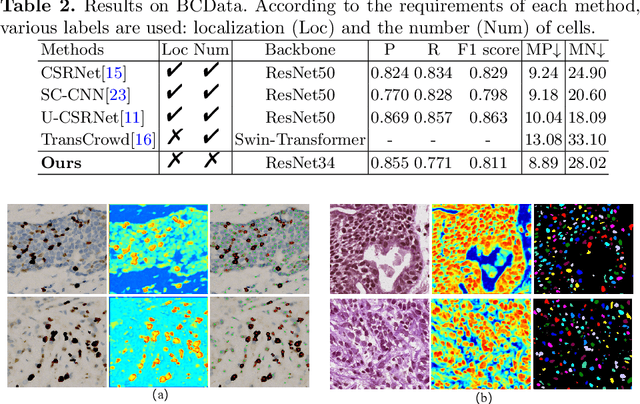

The success of supervised deep learning models on cell recognition tasks relies on detailed annotations. Many previous works have managed to reduce the dependency on labels. However, considering the large number of cells contained in a patch, costly and inefficient labeling is still inevitable. To this end, we explored label-free methods for cell recognition. Prior self-activation maps (PSM) are proposed to generate pseudo masks as training targets. To be specific, an activation network is trained with self-supervised learning. The gradient information in the shallow layers of the network is aggregated to generate prior self-activation maps. Afterward, a semantic clustering module is then introduced as a pipeline to transform PSMs to pixel-level semantic pseudo masks for downstream tasks. We evaluated our method on two histological datasets: MoNuSeg (cell segmentation) and BCData (multi-class cell detection). Compared with other fully-supervised and weakly-supervised methods, our method can achieve competitive performance without any manual annotations. Our simple but effective framework can also achieve multi-class cell detection which can not be done by existing unsupervised methods. The results show the potential of PSMs that might inspire other research to deal with the hunger for labels in medical area.
AttMOT: Improving Multiple-Object Tracking by Introducing Auxiliary Pedestrian Attributes
Aug 15, 2023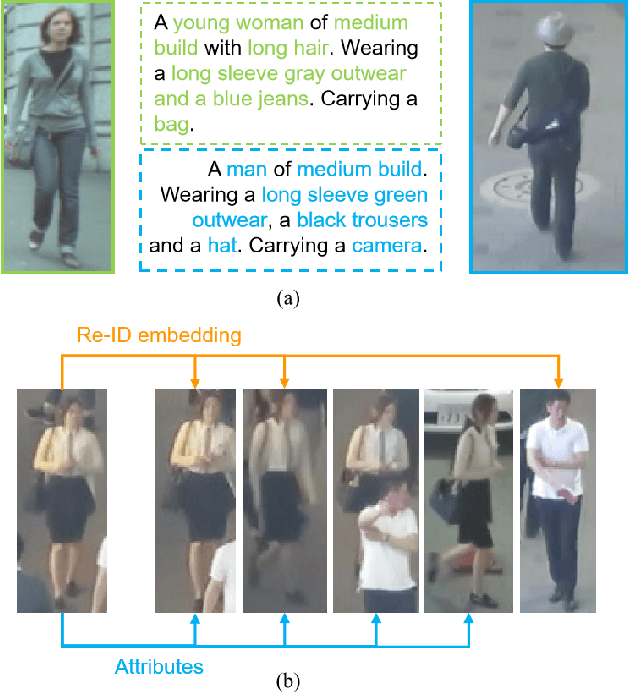

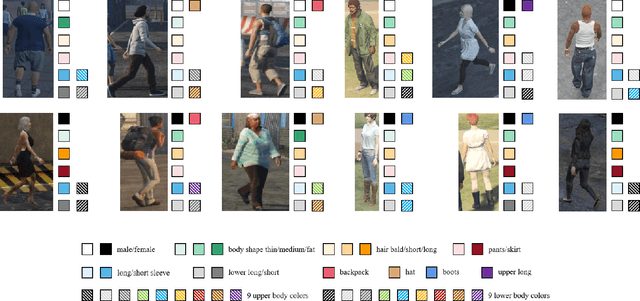
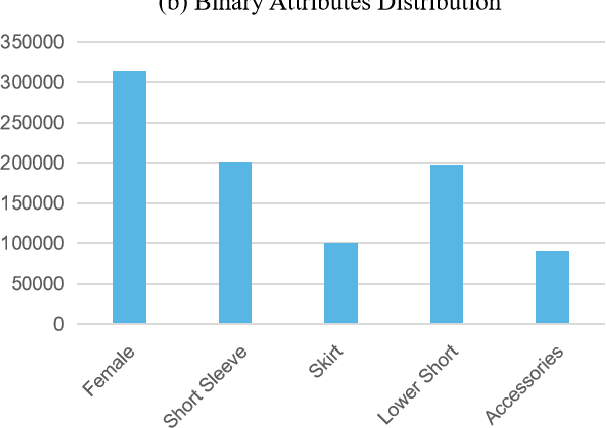
Multi-object tracking (MOT) is a fundamental problem in computer vision with numerous applications, such as intelligent surveillance and automated driving. Despite the significant progress made in MOT, pedestrian attributes, such as gender, hairstyle, body shape, and clothing features, which contain rich and high-level information, have been less explored. To address this gap, we propose a simple, effective, and generic method to predict pedestrian attributes to support general Re-ID embedding. We first introduce AttMOT, a large, highly enriched synthetic dataset for pedestrian tracking, containing over 80k frames and 6 million pedestrian IDs with different time, weather conditions, and scenarios. To the best of our knowledge, AttMOT is the first MOT dataset with semantic attributes. Subsequently, we explore different approaches to fuse Re-ID embedding and pedestrian attributes, including attention mechanisms, which we hope will stimulate the development of attribute-assisted MOT. The proposed method AAM demonstrates its effectiveness and generality on several representative pedestrian multi-object tracking benchmarks, including MOT17 and MOT20, through experiments on the AttMOT dataset. When applied to state-of-the-art trackers, AAM achieves consistent improvements in MOTA, HOTA, AssA, IDs, and IDF1 scores. For instance, on MOT17, the proposed method yields a +1.1 MOTA, +1.7 HOTA, and +1.8 IDF1 improvement when used with FairMOT. To encourage further research on attribute-assisted MOT, we will release the AttMOT dataset.
Cooperative Multi-agent Bandits: Distributed Algorithms with Optimal Individual Regret and Constant Communication Costs
Aug 08, 2023Recently, there has been extensive study of cooperative multi-agent multi-armed bandits where a set of distributed agents cooperatively play the same multi-armed bandit game. The goal is to develop bandit algorithms with the optimal group and individual regrets and low communication between agents. The prior work tackled this problem using two paradigms: leader-follower and fully distributed algorithms. Prior algorithms in both paradigms achieve the optimal group regret. The leader-follower algorithms achieve constant communication costs but fail to achieve optimal individual regrets. The state-of-the-art fully distributed algorithms achieve optimal individual regrets but fail to achieve constant communication costs. This paper presents a simple yet effective communication policy and integrates it into a learning algorithm for cooperative bandits. Our algorithm achieves the best of both paradigms: optimal individual regret and constant communication costs.
ELIXR: Towards a general purpose X-ray artificial intelligence system through alignment of large language models and radiology vision encoders
Aug 02, 2023Our approach, which we call Embeddings for Language/Image-aligned X-Rays, or ELIXR, leverages a language-aligned image encoder combined or grafted onto a fixed LLM, PaLM 2, to perform a broad range of tasks. We train this lightweight adapter architecture using images paired with corresponding free-text radiology reports from the MIMIC-CXR dataset. ELIXR achieved state-of-the-art performance on zero-shot chest X-ray (CXR) classification (mean AUC of 0.850 across 13 findings), data-efficient CXR classification (mean AUCs of 0.893 and 0.898 across five findings (atelectasis, cardiomegaly, consolidation, pleural effusion, and pulmonary edema) for 1% (~2,200 images) and 10% (~22,000 images) training data), and semantic search (0.76 normalized discounted cumulative gain (NDCG) across nineteen queries, including perfect retrieval on twelve of them). Compared to existing data-efficient methods including supervised contrastive learning (SupCon), ELIXR required two orders of magnitude less data to reach similar performance. ELIXR also showed promise on CXR vision-language tasks, demonstrating overall accuracies of 58.7% and 62.5% on visual question answering and report quality assurance tasks, respectively. These results suggest that ELIXR is a robust and versatile approach to CXR AI.
Legal Decision-making for Highway Automated Driving
Jul 10, 2023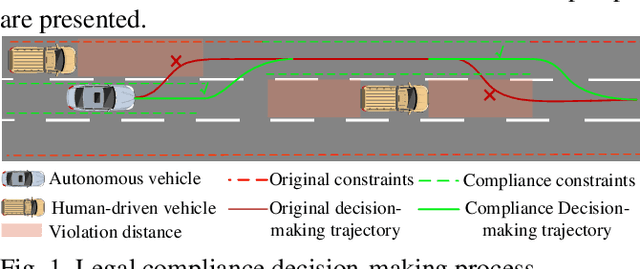
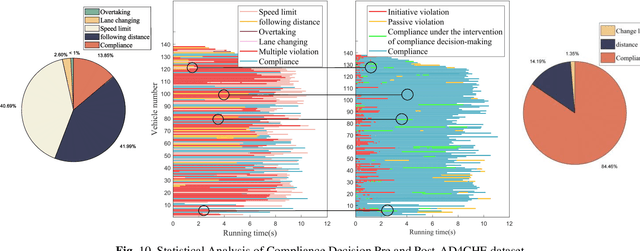
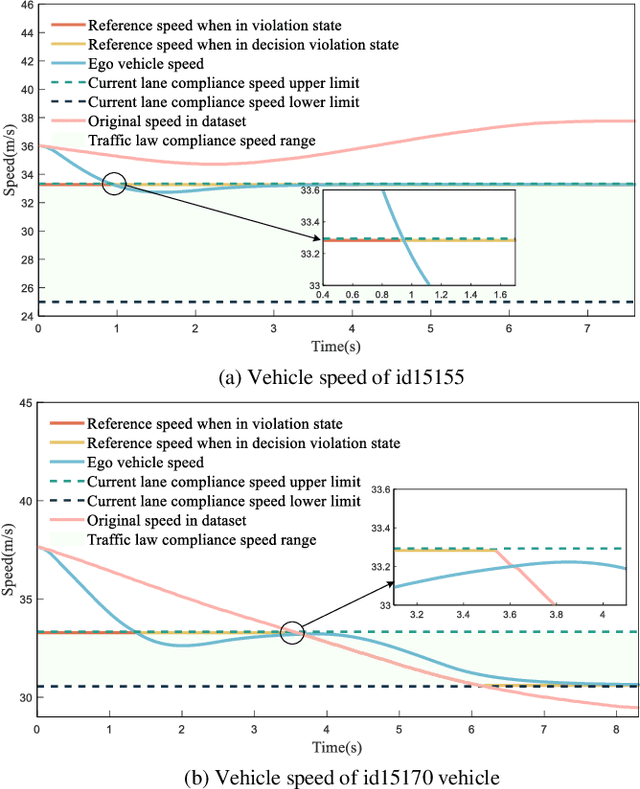
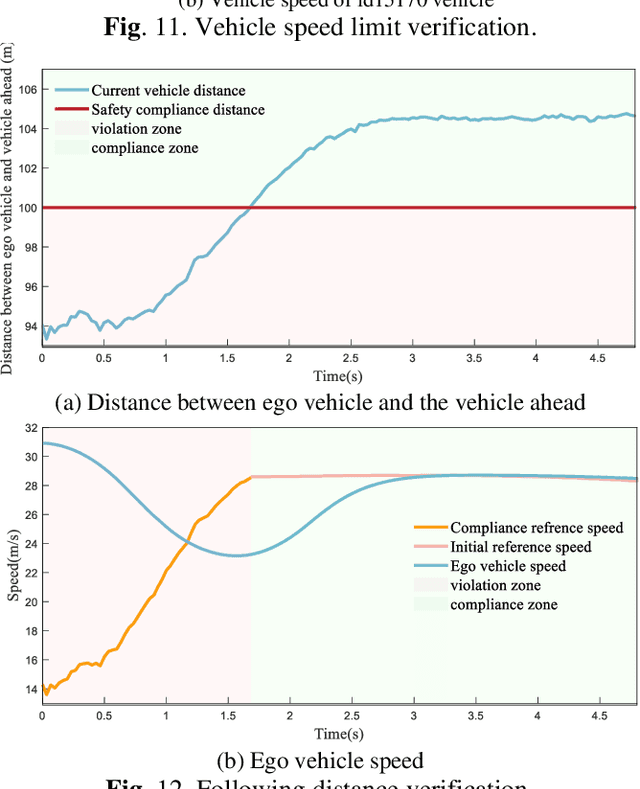
Compliance with traffic laws is a fundamental requirement for human drivers on the road, and autonomous vehicles must adhere to traffic laws as well. However, current autonomous vehicles prioritize safety and collision avoidance primarily in their decision-making and planning, which will lead to misunderstandings and distrust from human drivers and may even result in accidents in mixed traffic flow. Therefore, ensuring the compliance of the autonomous driving decision-making system is essential for ensuring the safety of autonomous driving and promoting the widespread adoption of autonomous driving technology. To this end, the paper proposes a trigger-based layered compliance decision-making framework. This framework utilizes the decision intent at the highest level as a signal to activate an online violation monitor that identifies the type of violation committed by the vehicle. Then, a four-layer architecture for compliance decision-making is employed to generate compliantly trajectories. Using this system, autonomous vehicles can detect and correct potential violations in real-time, thereby enhancing safety and building public confidence in autonomous driving technology. Finally, the proposed method is evaluated on the DJI AD4CHE highway dataset under four typical highway scenarios: speed limit, following distance, overtaking, and lane-changing. The results indicate that the proposed method increases the vehicle's overall compliance rate from 13.85% to 84.46%, while reducing the proportion of active violations to 0%, demonstrating its effectiveness.
Masked conditional variational autoencoders for chromosome straightening
Jun 25, 2023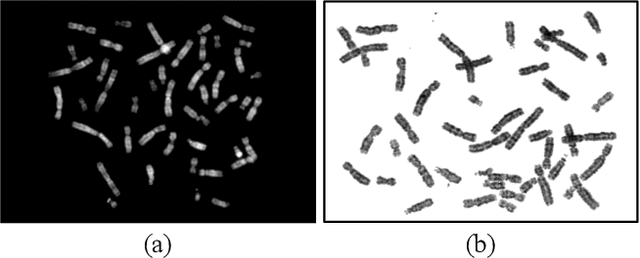
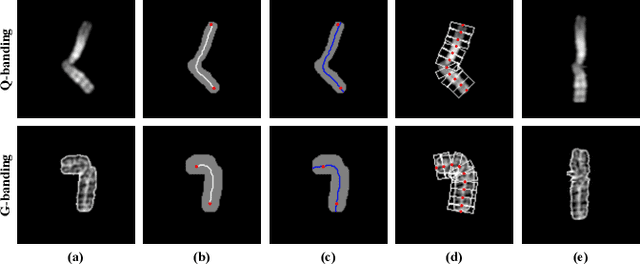
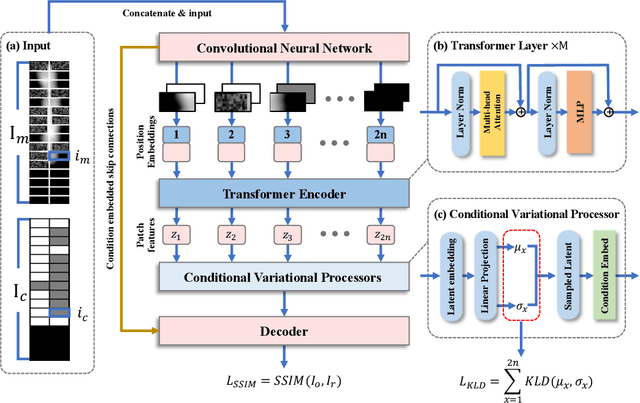
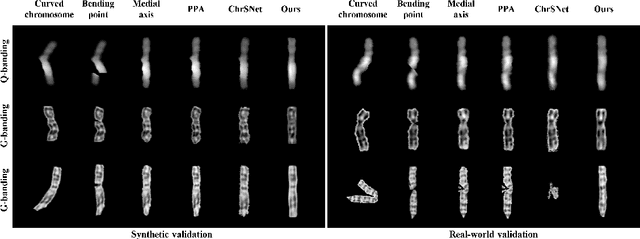
Karyotyping is of importance for detecting chromosomal aberrations in human disease. However, chromosomes easily appear curved in microscopic images, which prevents cytogeneticists from analyzing chromosome types. To address this issue, we propose a framework for chromosome straightening, which comprises a preliminary processing algorithm and a generative model called masked conditional variational autoencoders (MC-VAE). The processing method utilizes patch rearrangement to address the difficulty in erasing low degrees of curvature, providing reasonable preliminary results for the MC-VAE. The MC-VAE further straightens the results by leveraging chromosome patches conditioned on their curvatures to learn the mapping between banding patterns and conditions. During model training, we apply a masking strategy with a high masking ratio to train the MC-VAE with eliminated redundancy. This yields a non-trivial reconstruction task, allowing the model to effectively preserve chromosome banding patterns and structure details in the reconstructed results. Extensive experiments on three public datasets with two stain styles show that our framework surpasses the performance of state-of-the-art methods in retaining banding patterns and structure details. Compared to using real-world bent chromosomes, the use of high-quality straightened chromosomes generated by our proposed method can improve the performance of various deep learning models for chromosome classification by a large margin. Such a straightening approach has the potential to be combined with other karyotyping systems to assist cytogeneticists in chromosome analysis.