 Add to Chrome
 Add to Firefox
 Add to Edge
QV-PIC: Query-Aware Visual Position-Independent Caching for Efficient RAG Serving
Aug 12, 2026
Retrieval-Augmented Generation (RAG) repeatedly prefills identical text chunks across queries, incurring redundant computations. Position-Independent Caching (PIC) mitigates it by reusing precomputed Key-Value (KV) across positions, but its efficiency is constrained by the large volume of text tokens. Rendering text chunks as images can compress the text into fewer visual tokens, but the rendered-image PIC suffers more severe quality degradation than the text PIC. This representation-specific gap primarily arises from contextual mismatches across independently compiled caches and the loss of fine-grained textual evidence during visual compression. Existing PIC repair methods mainly address the former through selective recomputation, but they incur online computation and cannot recover lost textual details. We propose QV-PIC, a query-aware dual-resolution PIC reuse framework guided by model-native templates. Offline, QV-PIC compiles visual caches under the model's native chat-template prefix, improving PIC quality without online recomputation. Online, it preserves global context with low resolution and restores fine-grained textual evidence within a high-resolution budget by cumulative query relevance scores, retaining the efficiency benefit of visual compression. Across six tasks, QV-PIC improves average F1 by 21.6 points over vanilla rendered-image PIC, closes the gap to vanilla text PIC, and surpasses optimized text PIC by 2.58 F1 while reducing TTFT by 17.2\%. Relative to full prefill, it cuts TTFT by 83.8%.

UrbanAgent: A Tool-Augmented Agent for Cross-System Urban Tasks
Aug 04, 2026Modern cities rely on an increasing number of digital services to operate, but residents' daily needs are still difficult to meet. Services are fragmented and have little interoperability, placing a heavy operational burden on users. Existing digital platforms, urban foundation models, and intelligent assistants each address only isolated aspects of an urban task. But they struggle to reliably convert complex natural-language requests into executable cross-system workflows. We propose Urban-Agent, a tool-augmented agent framework for cross-system urban tasks. It couples the cognitive and reasoning capabilities of a large language model with a tool-set supporting code execution, API calls, and Model Context Protocol. Through one adaptive closed loop, it clarifies missing information before acting, grounds tool use in live observations, and aligns the final response with observed evidence and task constraints. To address the evaluation gap, we introduce Urban-Eval, a benchmark specifically designed for cross-system urban request. Unlike prior benchmarks that assess either general tool use or urban knowledge and reasoning, Urban-Eval evaluates both task results and execution quality, including required tool coverage, dependency validity, and evidence traceability. Experimental results indicate that Urban-Agent reaches a 71% task success rate, 10 points above the strongest baseline. This lead holds across GPT-5-mini, Gemini-2.5-flash, DeepSeek-V4-flash, and Qwen3-235B-A22B.
Beyond Position Bias: Shifting Context Compression from Position-Driven to Semantic-Driven
May 10, 2026Large Language Models (LLMs) have demonstrated exceptional performance across diverse tasks. However, their deployment in long-context scenarios faces high computational overhead and information redundancy. While soft prompt compression has emerged as a promising way to mitigate these costs by compressing sequences into compact embeddings, existing paradigms remain fundamentally constrained by position bias: they primarily rely on learnable tokens insertion at fixed positions or group tokens according to their physical token layout, thereby inducing performance instability and semantic fragmentation. To overcome this bottleneck, we propose Semantic Consistency Context Compression (SeCo), a method that shifts context compression from position-driven to semantic-driven. Rather than constraint by physical token layout, SeCo dynamically anchors compression directly in the semantic space by selecting query-relevant tokens as semantic centers and aggregating remaining tokens via consistency-weighted merging. This design inherently preserves semantic consistency while eliminating position bias. Extensive experiments on 14 benchmarks across two backbone models demonstrate that SeCo consistently shows superiority in downstream tasks, inference latency, and out-of-domain robustness. The code is available at https://anonymous.4open.science/r/seco-EE5E.
FactReview: Evidence-Grounded Reviews with Literature Positioning and Execution-Based Claim Verification
Apr 07, 2026Peer review in machine learning is under growing pressure from rising submission volume and limited reviewer time. Most LLM-based reviewing systems read only the manuscript and generate comments from the paper's own narrative. This makes their outputs sensitive to presentation quality and leaves them weak when the evidence needed for review lies in related work or released code. We present FactReview, an evidence-grounded reviewing system that combines claim extraction, literature positioning, and execution-based claim verification. Given a submission, FactReview identifies major claims and reported results, retrieves nearby work to clarify the paper's technical position, and, when code is available, executes the released repository under bounded budgets to test central empirical claims. It then produces a concise review and an evidence report that assigns each major claim one of five labels: Supported, Supported by the paper, Partially supported, In conflict, or Inconclusive. In a case study on CompGCN, FactReview reproduces results that closely match those reported for link prediction and node classification, yet also shows that the paper's broader performance claim across tasks is not fully sustained: on MUTAG graph classification, the reproduced result is 88.4%, whereas the strongest baseline reported in the paper remains 92.6%. The claim is therefore only partially supported. More broadly, this case suggests that AI is most useful in peer review not as a final decision-maker, but as a tool for gathering evidence and helping reviewers produce more evidence-grounded assessments. The code is public at https://github.com/DEFENSE-SEU/Review-Assistant.
DA-RAG: Dynamic Attributed Community Search for Retrieval-Augmented Generation
Feb 09, 2026Owing to their unprecedented comprehension capabilities, large language models (LLMs) have become indispensable components of modern web search engines. From a technical perspective, this integration represents retrieval-augmented generation (RAG), which enhances LLMs by grounding them in external knowledge bases. A prevalent technical approach in this context is graph-based RAG (G-RAG). However, current G-RAG methodologies frequently underutilize graph topology, predominantly focusing on low-order structures or pre-computed static communities. This limitation affects their effectiveness in addressing dynamic and complex queries. Thus, we propose DA-RAG, which leverages attributed community search (ACS) to extract relevant subgraphs based on the queried question dynamically. DA-RAG captures high-order graph structures, allowing for the retrieval of self-complementary knowledge. Furthermore, DA-RAG is equipped with a chunk-layer oriented graph index, which facilitates efficient multi-granularity retrieval while significantly reducing both computational and economic costs. We evaluate DA-RAG on multiple datasets, demonstrating that it outperforms existing RAG methods by up to 40% in head-to-head comparisons across four metrics while reducing index construction time and token overhead by up to 37% and 41%, respectively.
CytoCrowd: A Multi-Annotator Benchmark Dataset for Cytology Image Analysis
Feb 06, 2026High-quality annotated datasets are crucial for advancing machine learning in medical image analysis. However, a critical gap exists: most datasets either offer a single, clean ground truth, which hides real-world expert disagreement, or they provide multiple annotations without a separate gold standard for objective evaluation. To bridge this gap, we introduce CytoCrowd, a new public benchmark for cytology analysis. The dataset features 446 high-resolution images, each with two key components: (1) raw, conflicting annotations from four independent pathologists, and (2) a separate, high-quality gold-standard ground truth established by a senior expert. This dual structure makes CytoCrowd a versatile resource. It serves as a benchmark for standard computer vision tasks, such as object detection and classification, using the ground truth. Simultaneously, it provides a realistic testbed for evaluating annotation aggregation algorithms that must resolve expert disagreements. We provide comprehensive baseline results for both tasks. Our experiments demonstrate the challenges presented by CytoCrowd and establish its value as a resource for developing the next generation of models for medical image analysis.
COMI: Coarse-to-fine Context Compression via Marginal Information Gain
Feb 02, 2026Large Language Models (LLMs) have demonstrated exceptional capabilities across diverse tasks. However, their deployment in long context scenarios remains hindered by computational inefficiency and information redundancy. Context compression methods address these challenges by significantly reducing input length and eliminating redundancy. We propose COMI, a coarse-to-fine adaptive context compression framework that jointly optimizes for semantic relevance and diversity under high compression rates. We introduce Marginal Information Gain (MIG), a metric defined as the relevance of a unit to the input query minus its semantic redundancy with other units, guiding the compression process to prioritize information that is both relevant and low redundant. The framework operates in two stages: (1) Coarse-Grained Group Reallocation, where the context is partitioned into groups and dynamically assigned compression rates based on inter-group MIG, ensuring compression budgets align with information value distribution; and (2) Fine-Grained Token Merging, where tokens within each group are fused via an intra-group MIG-based weighting mechanism, thereby preserving key semantics while avoiding the accumulation of redundancy. Extensive experiments across question-answering (e.g., NaturalQuestions, 2WikiMQA, HotpotQA and NarrativeQA), summarization (e.g., MultiNews) with various backbones (e.g., LLaMA-2-7B, Qwen2-7B) show that COMI outperforms existing baselines by a large margin, e.g., approximately 25-point Exact Match (EM) improvement under 32x compression constraint with Qwen2-7B on NaturalQuestions.
CoS: Towards Optimal Event Scheduling via Chain-of-Scheduling
Nov 17, 2025Recommending event schedules is a key issue in Event-based Social Networks (EBSNs) in order to maintain user activity. An effective recommendation is required to maximize the user's preference, subjecting to both time and geographical constraints. Existing methods face an inherent trade-off among efficiency, effectiveness, and generalization, due to the NP-hard nature of the problem. This paper proposes the Chain-of-Scheduling (CoS) framework, which activates the event scheduling capability of Large Language Models (LLMs) through a guided, efficient scheduling process. CoS enhances LLM by formulating the schedule task into three atomic stages, i.e., exploration, verification and integration. Then we enable the LLMs to generate CoS autonomously via Knowledge Distillation (KD). Experimental results show that CoS achieves near-theoretical optimal effectiveness with high efficiency on three real-world datasets in a interpretable manner. Moreover, it demonstrates strong zero-shot learning ability on out-of-domain data.
A Pilot Empirical Study on When and How to Use Knowledge Graphs as Retrieval Augmented Generation
Feb 28, 2025The integration of Knowledge Graphs (KGs) into the Retrieval Augmented Generation (RAG) framework has attracted significant interest, with early studies showing promise in mitigating hallucinations and improving model accuracy. However, a systematic understanding and comparative analysis of the rapidly emerging KG-RAG methods are still lacking. This paper seeks to lay the foundation for systematically answering the question of when and how to use KG-RAG by analyzing their performance in various application scenarios associated with different technical configurations. After outlining the mind map using KG-RAG framework and summarizing its popular pipeline, we conduct a pilot empirical study of KG-RAG works to reimplement and evaluate 6 KG-RAG methods across 7 datasets in diverse scenarios, analyzing the impact of 9 KG-RAG configurations in combination with 17 LLMs. Our results underscore the critical role of appropriate application conditions and optimal configurations of KG-RAG components.
Cross-domain-aware Worker Selection with Training for Crowdsourced Annotation
Jun 11, 2024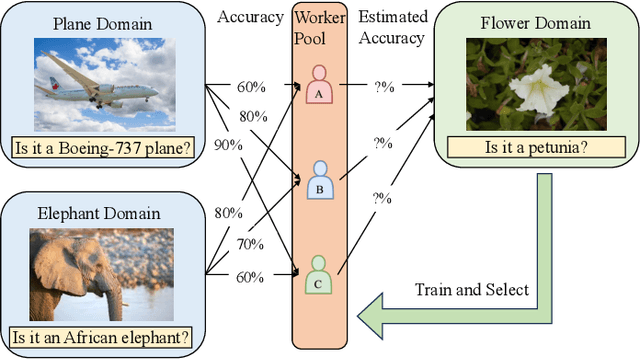
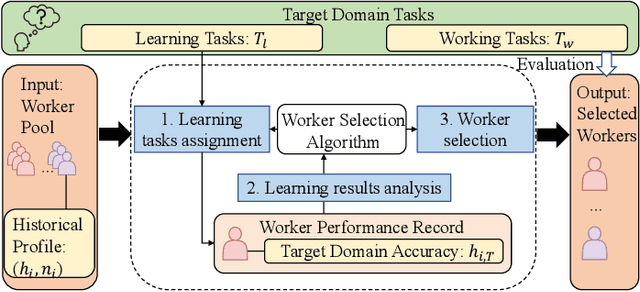

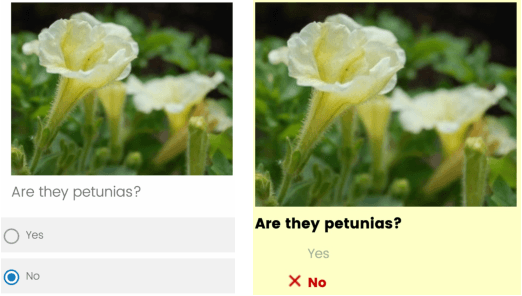
Annotation through crowdsourcing draws incremental attention, which relies on an effective selection scheme given a pool of workers. Existing methods propose to select workers based on their performance on tasks with ground truth, while two important points are missed. 1) The historical performances of workers in other tasks. In real-world scenarios, workers need to solve a new task whose correlation with previous tasks is not well-known before the training, which is called cross-domain. 2) The dynamic worker performance as workers will learn from the ground truth. In this paper, we consider both factors in designing an allocation scheme named cross-domain-aware worker selection with training approach. Our approach proposes two estimation modules to both statistically analyze the cross-domain correlation and simulate the learning gain of workers dynamically. A framework with a theoretical analysis of the worker elimination process is given. To validate the effectiveness of our methods, we collect two novel real-world datasets and generate synthetic datasets. The experiment results show that our method outperforms the baselines on both real-world and synthetic datasets.