 Add to Chrome
 Add to Firefox
 Add to Edge
UrbanAgent: A Tool-Augmented Agent for Cross-System Urban Tasks
Aug 04, 2026
Modern cities rely on an increasing number of digital services to operate, but residents' daily needs are still difficult to meet. Services are fragmented and have little interoperability, placing a heavy operational burden on users. Existing digital platforms, urban foundation models, and intelligent assistants each address only isolated aspects of an urban task. But they struggle to reliably convert complex natural-language requests into executable cross-system workflows. We propose Urban-Agent, a tool-augmented agent framework for cross-system urban tasks. It couples the cognitive and reasoning capabilities of a large language model with a tool-set supporting code execution, API calls, and Model Context Protocol. Through one adaptive closed loop, it clarifies missing information before acting, grounds tool use in live observations, and aligns the final response with observed evidence and task constraints. To address the evaluation gap, we introduce Urban-Eval, a benchmark specifically designed for cross-system urban request. Unlike prior benchmarks that assess either general tool use or urban knowledge and reasoning, Urban-Eval evaluates both task results and execution quality, including required tool coverage, dependency validity, and evidence traceability. Experimental results indicate that Urban-Agent reaches a 71% task success rate, 10 points above the strongest baseline. This lead holds across GPT-5-mini, Gemini-2.5-flash, DeepSeek-V4-flash, and Qwen3-235B-A22B.

Identify Apple Leaf Diseases Using Deep Learning Algorithm
Jul 27, 2021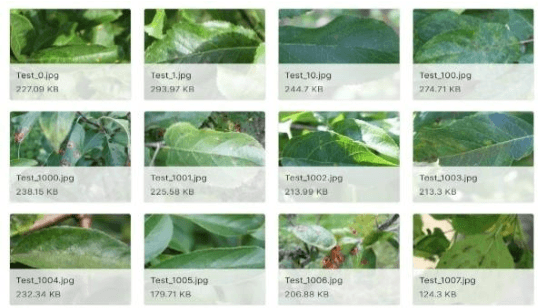
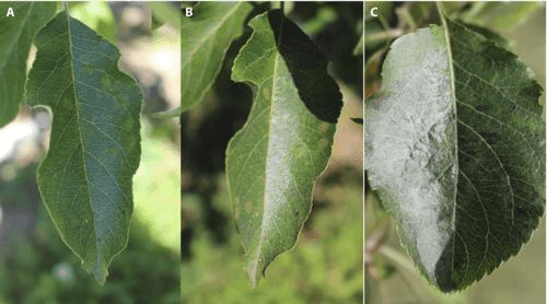
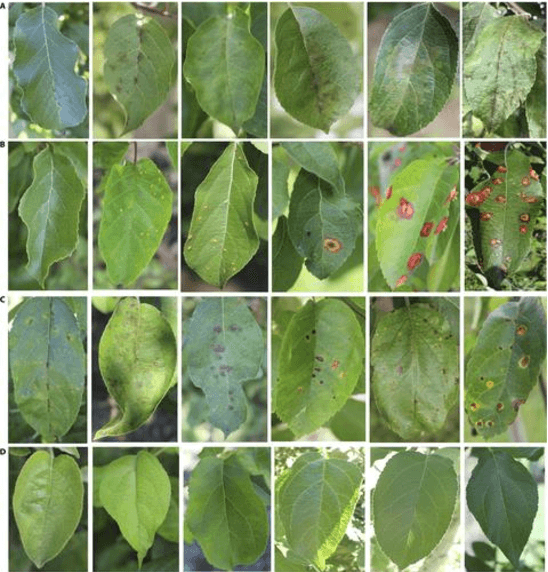
Agriculture is an essential industry in the both society and economy of a country. However, the pests and diseases cause a great amount of reduction in agricultural production while there is not sufficient guidance for farmers to avoid this disaster. To address this problem, we apply CNNs to plant disease recognition by building a classification model. Within the dataset of 3,642 images of apple leaves, We use a pre-trained image classification model Restnet34 based on a Convolutional neural network (CNN) with the Fastai framework in order to save the training time. Overall, the accuracy of classification is 93.765%.