 Add to Chrome
 Add to Firefox
 Add to Edge
Solving General Natural-Language-Description Optimization Problems with Large Language Models
Jul 09, 2024
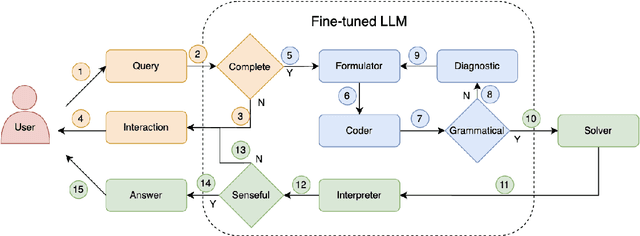
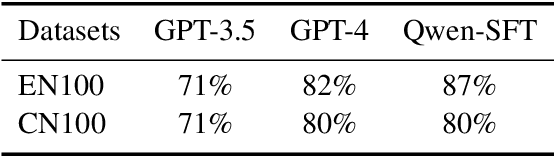

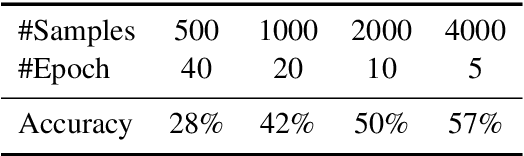
Optimization problems seek to find the best solution to an objective under a set of constraints, and have been widely investigated in real-world applications. Modeling and solving optimization problems in a specific domain typically require a combination of domain knowledge, mathematical skills, and programming ability, making it difficult for general users and even domain professionals. In this paper, we propose a novel framework called OptLLM that augments LLMs with external solvers. Specifically, OptLLM accepts user queries in natural language, convert them into mathematical formulations and programming codes, and calls the solvers to calculate the results for decision-making. In addition, OptLLM supports multi-round dialogues to gradually refine the modeling and solving of optimization problems. To illustrate the effectiveness of OptLLM, we provide tutorials on three typical optimization applications and conduct experiments on both prompt-based GPT models and a fine-tuned Qwen model using a large-scale selfdeveloped optimization dataset. Experimental results show that OptLLM works with various LLMs, and the fine-tuned model achieves an accuracy boost compared to the promptbased models. Some features of OptLLM framework have been available for trial since June 2023 (https://opt.alibabacloud.com/chat or https://opt.aliyun.com/chat).

Coordinated RSMA for Integrated Sensing and Communication in Emergency UAV Systems
Jun 27, 2024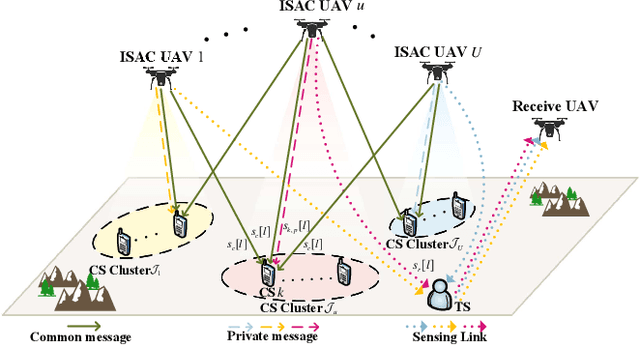
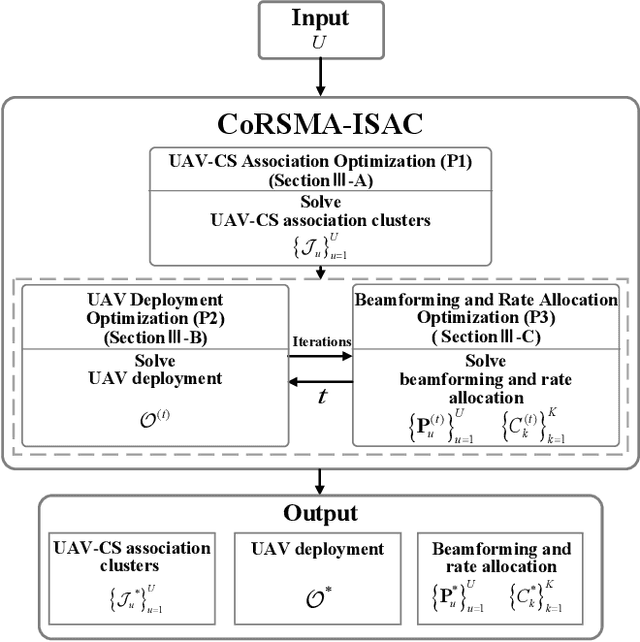
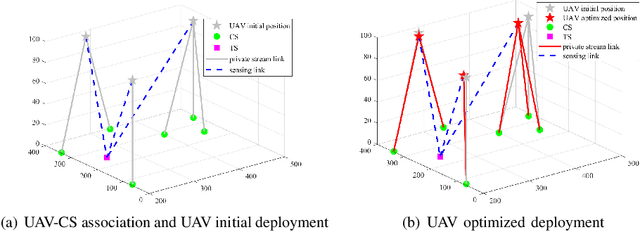
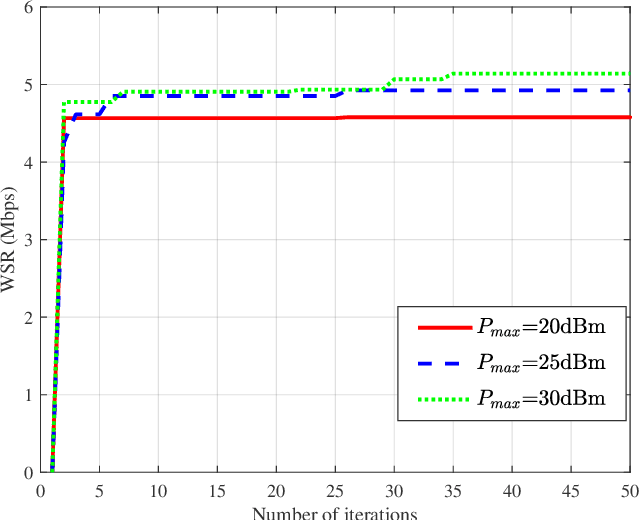
Recently, unmanned aerial vehicle (UAV)-enabled integrated sensing and communication (ISAC) is emerging as a promising technique for achieving robust and rapid emergency response capabilities. Such a novel framework offers high-quality and cost-efficient C\&S services due to the intrinsic flexibility and mobility of UAVs. In parallel, rate-splitting multiple access (RSMA) is able to achieve a tailor-made communication by splitting the messages into private and common parts with adjustable rates, making it suitable for on-demand data transmission in disaster scenarios. In this paper, we propose a coordinated RSMA for integrated sensing and communication (CoRSMA-ISAC) scheme in emergency UAV system to facilitate search and rescue operations, where a number of ISAC UAVs simultaneously communicate with multiple communication survivors (CSs) and detect a potentially trapped survivor (TS) in a coordinated manner. Towards this end, an optimization problem is formulated to maximize the weighted sum rate (WSR) of the system, subject to the sensing signal-to-noise ratio (SNR) requirement. In order to solve the formulated non-convex problem, we first decompose it into three subproblems, i.e., UAV-CS association, UAV deployment, as well as beamforming optimization and rate allocation. Subsequently, we introduce an iterative optimization approach leveraging K-Means, successive convex approximation (SCA), and semi-definite relaxation (SDR) algorithms to reframe the subproblems into a more tractable form and efficiently solve them. Simulation results demonstrate that the proposed CoRSMA-ISAC scheme is superior to conventional space division multiple access (SDMA), non-orthogonal multiple access (NOMA), and orthogonal multiple access (OMA) in terms of both communication and sensing performance.
Failure-Resilient Distributed Inference with Model Compression over Heterogeneous Edge Devices
Jun 20, 2024
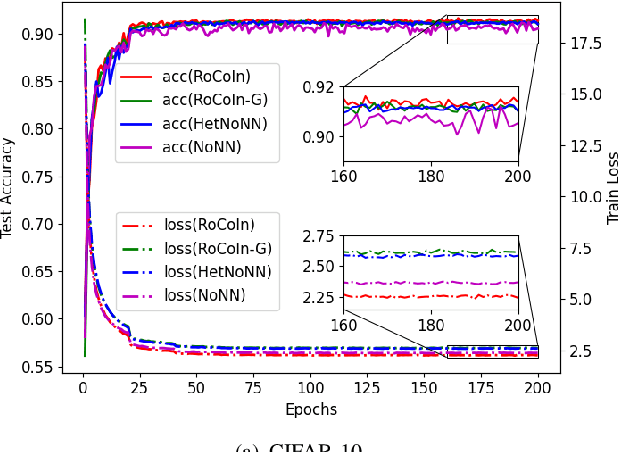
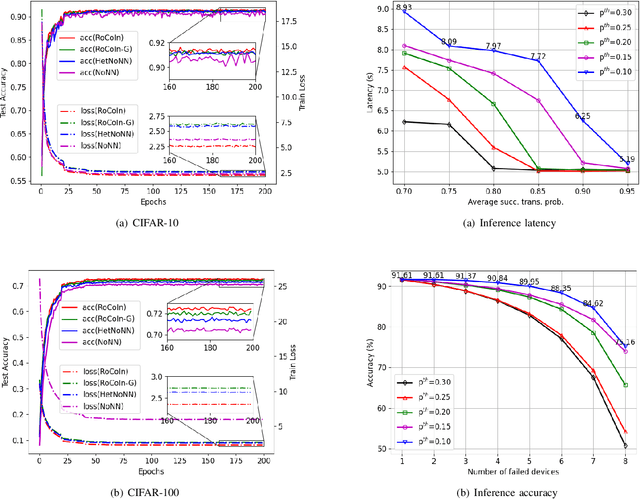
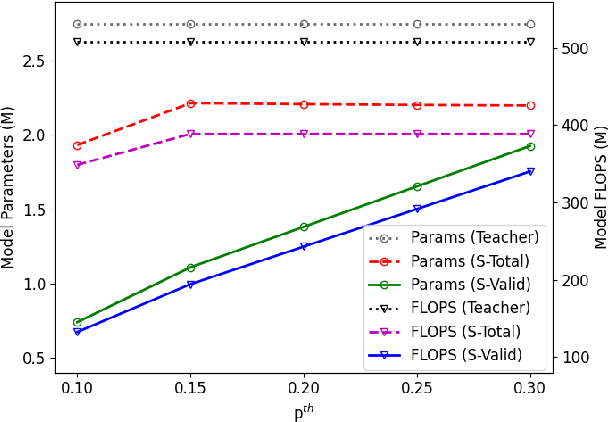
The distributed inference paradigm enables the computation workload to be distributed across multiple devices, facilitating the implementations of deep learning based intelligent services on extremely resource-constrained Internet of Things (IoT) scenarios. Yet it raises great challenges to perform complicated inference tasks relying on a cluster of IoT devices that are heterogeneous in their computing/communication capacity and prone to crash or timeout failures. In this paper, we present RoCoIn, a robust cooperative inference mechanism for locally distributed execution of deep neural network-based inference tasks over heterogeneous edge devices. It creates a set of independent and compact student models that are learned from a large model using knowledge distillation for distributed deployment. In particular, the devices are strategically grouped to redundantly deploy and execute the same student model such that the inference process is resilient to any local failures, while a joint knowledge partition and student model assignment scheme are designed to minimize the response latency of the distributed inference system in the presence of devices with diverse capacities. Extensive simulations are conducted to corroborate the superior performance of our RoCoIn for distributed inference compared to several baselines, and the results demonstrate its efficacy in timely inference and failure resiliency.
Short-Long Convolutions Help Hardware-Efficient Linear Attention to Focus on Long Sequences
Jun 12, 2024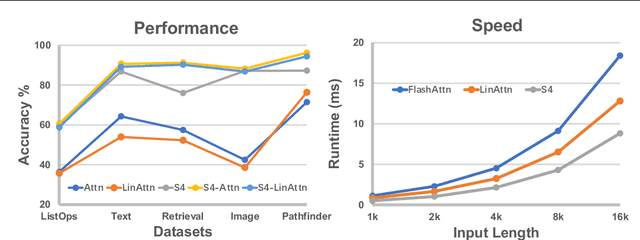

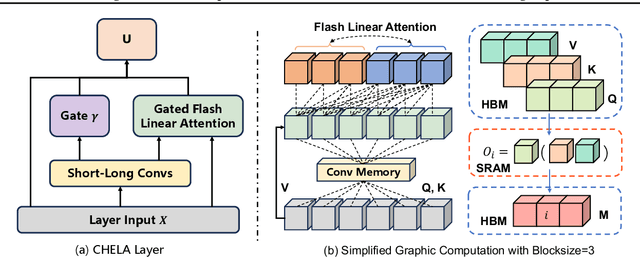
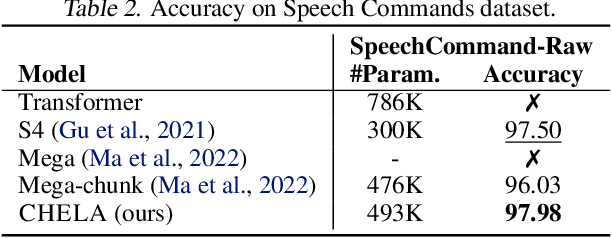
To mitigate the computational complexity in the self-attention mechanism on long sequences, linear attention utilizes computation tricks to achieve linear complexity, while state space models (SSMs) popularize a favorable practice of using non-data-dependent memory pattern, i.e., emphasize the near and neglect the distant, to processing sequences. Recent studies have shown the priorities by combining them as one. However, the efficiency of linear attention remains only at the theoretical level in a causal setting, and SSMs require various designed constraints to operate effectively on specific data. Therefore, in order to unveil the true power of the hybrid design, the following two issues need to be addressed: (1) hardware-efficient implementation for linear attention and (2) stabilization of SSMs. To achieve this, we leverage the thought of tiling and hierarchy to propose CHELA (short-long Convolutions with Hardware-Efficient Linear Attention), which replaces SSMs with short-long convolutions and implements linear attention in a divide-and-conquer manner. This approach enjoys global abstraction and data-dependent selection from stable SSM and linear attention while maintaining real linear complexity. Our comprehensive experiments on the Long Range Arena benchmark and language modeling tasks demonstrate the effectiveness of the proposed method.
MoFormer: Multi-objective Antimicrobial Peptide Generation Based on Conditional Transformer Joint Multi-modal Fusion Descriptor
Jun 03, 2024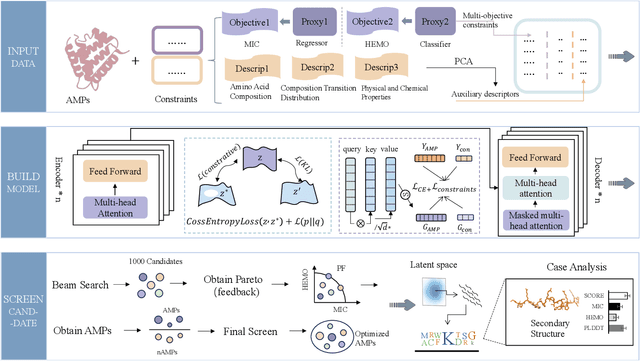


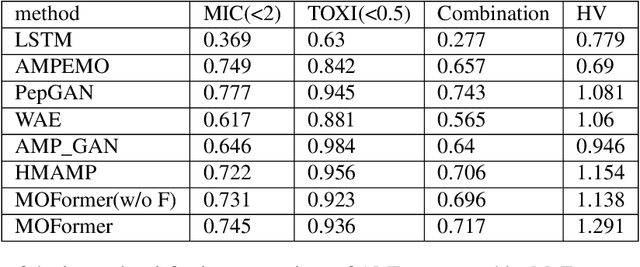
Deep learning holds a big promise for optimizing existing peptides with more desirable properties, a critical step towards accelerating new drug discovery. Despite the recent emergence of several optimized Antimicrobial peptides(AMP) generation methods, multi-objective optimizations remain still quite challenging for the idealism-realism tradeoff. Here, we establish a multi-objective AMP synthesis pipeline (MoFormer) for the simultaneous optimization of multi-attributes of AMPs. MoFormer improves the desired attributes of AMP sequences in a highly structured latent space, guided by conditional constraints and fine-grained multi-descriptor.We show that MoFormer outperforms existing methods in the generation task of enhanced antimicrobial activity and minimal hemolysis. We also utilize a Pareto-based non-dominated sorting algorithm and proxies based on large model fine-tuning to hierarchically rank the candidates. We demonstrate substantial property improvement using MoFormer from two perspectives: (1) employing molecular simulations and scoring interactions among amino acids to decipher the structure and functionality of AMPs; (2) visualizing latent space to examine the qualities and distribution features, verifying an effective means to facilitate multi-objective optimization AMPs with design constraints
ContrastAlign: Toward Robust BEV Feature Alignment via Contrastive Learning for Multi-Modal 3D Object Detection
May 27, 2024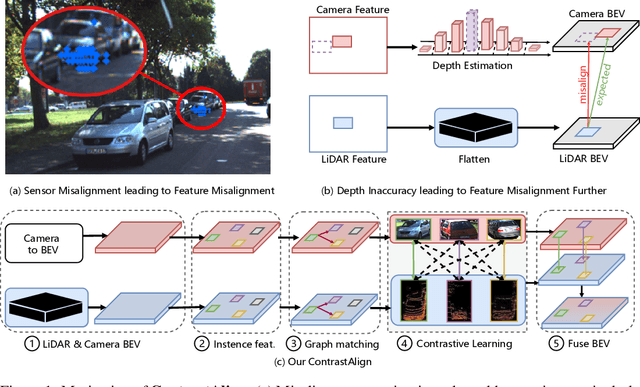
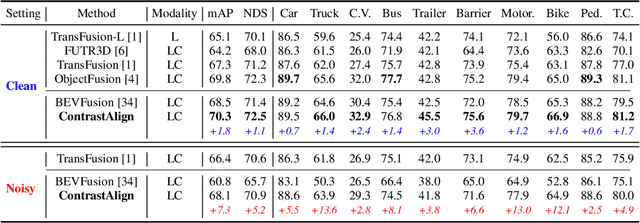
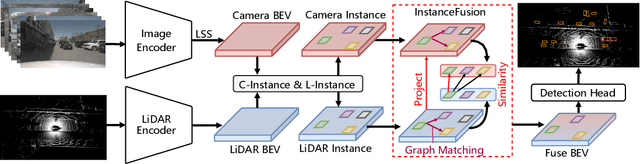
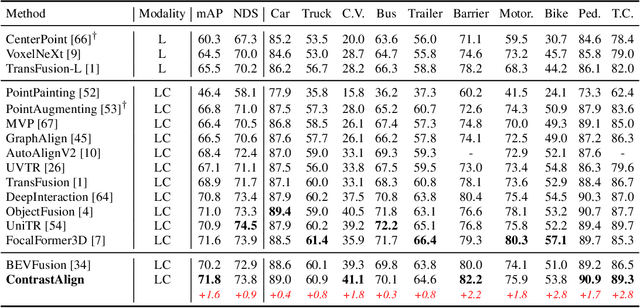
In the field of 3D object detection tasks, fusing heterogeneous features from LiDAR and camera sensors into a unified Bird's Eye View (BEV) representation is a widely adopted paradigm. However, existing methods are often compromised by imprecise sensor calibration, resulting in feature misalignment in LiDAR-camera BEV fusion. Moreover, such inaccuracies result in errors in depth estimation for the camera branch, ultimately causing misalignment between LiDAR and camera BEV features. In this work, we propose a novel ContrastAlign approach that utilizes contrastive learning to enhance the alignment of heterogeneous modalities, thereby improving the robustness of the fusion process. Specifically, our approach includes the L-Instance module, which directly outputs LiDAR instance features within LiDAR BEV features. Then, we introduce the C-Instance module, which predicts camera instance features through RoI (Region of Interest) pooling on the camera BEV features. We propose the InstanceFusion module, which utilizes contrastive learning to generate similar instance features across heterogeneous modalities. We then use graph matching to calculate the similarity between the neighboring camera instance features and the similarity instance features to complete the alignment of instance features. Our method achieves state-of-the-art performance, with an mAP of 70.3%, surpassing BEVFusion by 1.8% on the nuScenes validation set. Importantly, our method outperforms BEVFusion by 7.3% under conditions with misalignment noise.
Multimodal Collaboration Networks for Geospatial Vehicle Detection in Dense, Occluded, and Large-Scale Events
May 14, 2024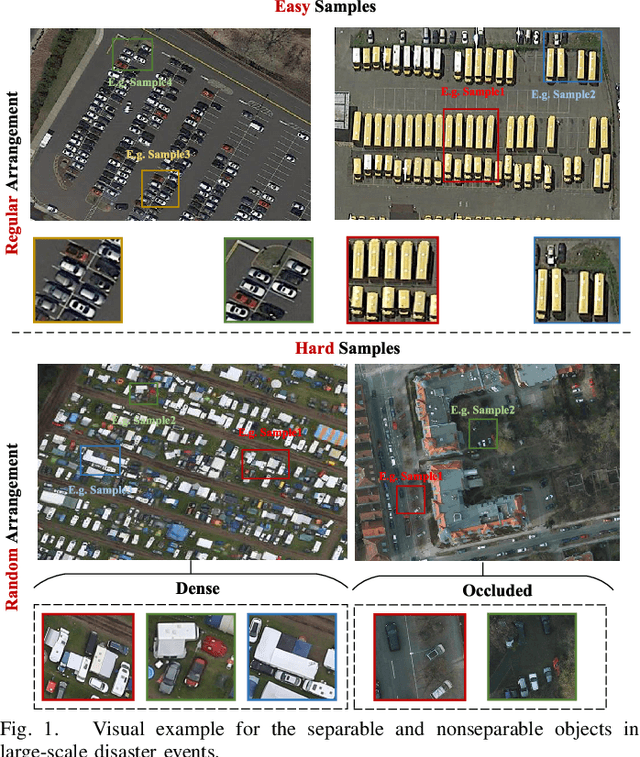
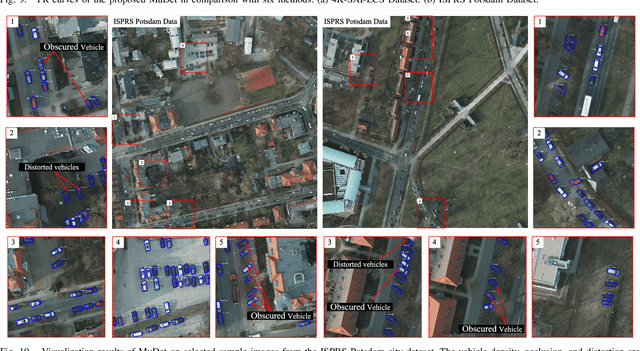
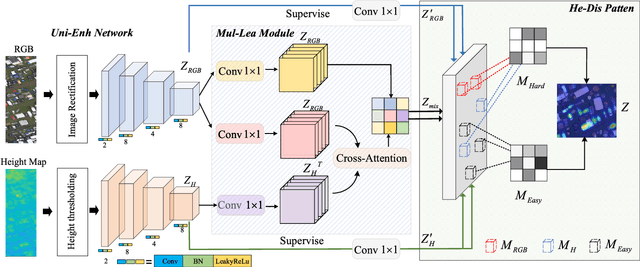
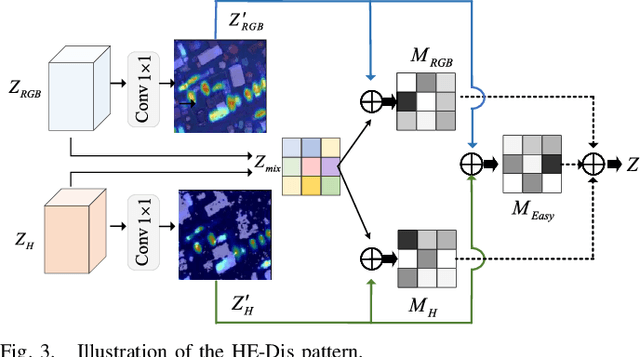
In large-scale disaster events, the planning of optimal rescue routes depends on the object detection ability at the disaster scene, with one of the main challenges being the presence of dense and occluded objects. Existing methods, which are typically based on the RGB modality, struggle to distinguish targets with similar colors and textures in crowded environments and are unable to identify obscured objects. To this end, we first construct two multimodal dense and occlusion vehicle detection datasets for large-scale events, utilizing RGB and height map modalities. Based on these datasets, we propose a multimodal collaboration network for dense and occluded vehicle detection, MuDet for short. MuDet hierarchically enhances the completeness of discriminable information within and across modalities and differentiates between simple and complex samples. MuDet includes three main modules: Unimodal Feature Hierarchical Enhancement (Uni-Enh), Multimodal Cross Learning (Mul-Lea), and Hard-easy Discriminative (He-Dis) Pattern. Uni-Enh and Mul-Lea enhance the features within each modality and facilitate the cross-integration of features from two heterogeneous modalities. He-Dis effectively separates densely occluded vehicle targets with significant intra-class differences and minimal inter-class differences by defining and thresholding confidence values, thereby suppressing the complex background. Experimental results on two re-labeled multimodal benchmark datasets, the 4K-SAI-LCS dataset, and the ISPRS Potsdam dataset, demonstrate the robustness and generalization of the MuDet. The codes of this work are available openly at \url{https://github.com/Shank2358/MuDet}.
A score-based particle method for homogeneous Landau equation
May 08, 2024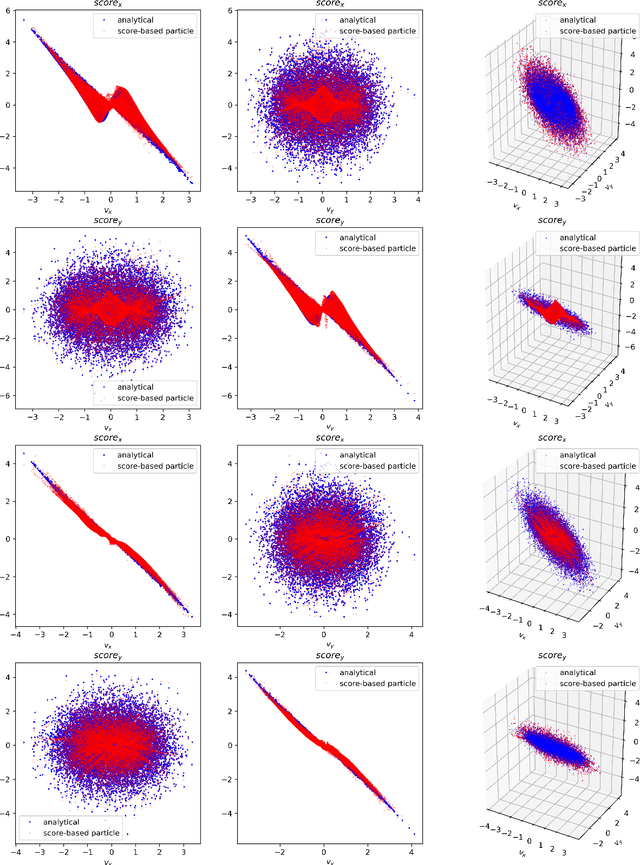
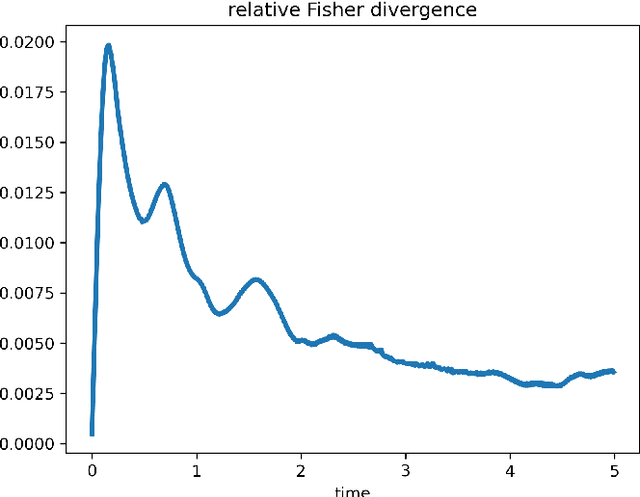
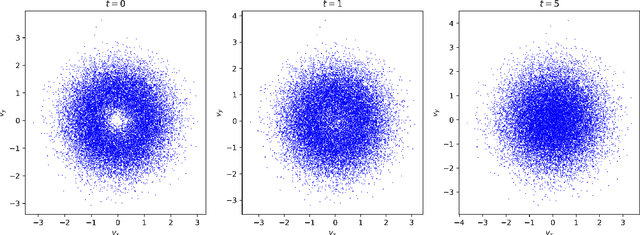
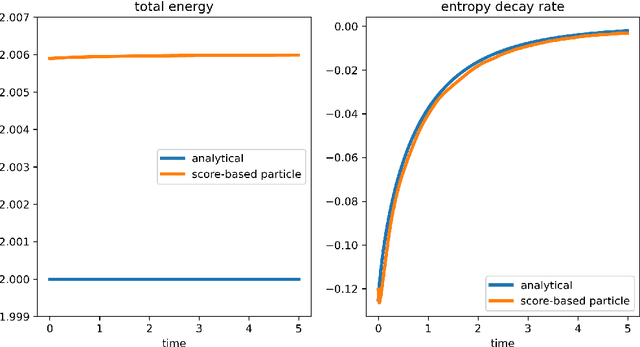
We propose a novel score-based particle method for solving the Landau equation in plasmas, that seamlessly integrates learning with structure-preserving particle methods [arXiv:1910.03080]. Building upon the Lagrangian viewpoint of the Landau equation, a central challenge stems from the nonlinear dependence of the velocity field on the density. Our primary innovation lies in recognizing that this nonlinearity is in the form of the score function, which can be approximated dynamically via techniques from score-matching. The resulting method inherits the conservation properties of the deterministic particle method while sidestepping the necessity for kernel density estimation in [arXiv:1910.03080]. This streamlines computation and enhances scalability with dimensionality. Furthermore, we provide a theoretical estimate by demonstrating that the KL divergence between our approximation and the true solution can be effectively controlled by the score-matching loss. Additionally, by adopting the flow map viewpoint, we derive an update formula for exact density computation. Extensive examples have been provided to show the efficiency of the method, including a physically relevant case of Coulomb interaction.
On-site scale factor linearity calibration of MEMS triaxial gyroscopes
May 06, 2024


The calibration of MEMS triaxial gyroscopes is crucial for achieving precise attitude estimation for various wearable health monitoring applications. However, gyroscope calibration poses greater challenges compared to accelerometers and magnetometers. This paper introduces an efficient method for calibrating MEMS triaxial gyroscopes via only a servo motor, making it well-suited for field environments. The core strategy of the method involves utilizing the fact that the dot product of the measured gravity and the rotational speed in a fixed frame remains constant. To eliminate the influence of rotating centrifugal force on the accelerometer, the accelerometer data is measured while stationary. The proposed calibration experiment scheme, which allows gyroscopic measurements when operating each axis at a specific rotation speed, making it easier to evaluate the linearity across a related speed range constituted by a series of rotation speeds. Moreover, solely the classical least squares algorithm proves adequate for estimating the scale factor, notably streamlining the analysis of the calibration process. Extensive numerical simulations were conducted to analyze the proposed method's performance in calibrating a triaxial gyroscope model. Experimental validation was also carried out using a commercially available MEMS inertial measurement unit (LSM9DS1 from Arduino nano 33 BLE SENSE) and a servo motor capable of controlling precise speed. The experimental results effectively demonstrate the efficacy of the proposed calibration approach.
HMAMP: Hypervolume-Driven Multi-Objective Antimicrobial Peptides Design
May 01, 2024Antimicrobial peptides (AMPs) have exhibited unprecedented potential as biomaterials in combating multidrug-resistant bacteria. Despite the increasing adoption of artificial intelligence for novel AMP design, challenges pertaining to conflicting attributes such as activity, hemolysis, and toxicity have significantly impeded the progress of researchers. This paper introduces a paradigm shift by considering multiple attributes in AMP design. Presented herein is a novel approach termed Hypervolume-driven Multi-objective Antimicrobial Peptide Design (HMAMP), which prioritizes the simultaneous optimization of multiple attributes of AMPs. By synergizing reinforcement learning and a gradient descent algorithm rooted in the hypervolume maximization concept, HMAMP effectively expands exploration space and mitigates the issue of pattern collapse. This method generates a wide array of prospective AMP candidates that strike a balance among diverse attributes. Furthermore, we pinpoint knee points along the Pareto front of these candidate AMPs. Empirical results across five benchmark models substantiate that HMAMP-designed AMPs exhibit competitive performance and heightened diversity. A detailed analysis of the helical structures and molecular dynamics simulations for ten potential candidate AMPs validates the superiority of HMAMP in the realm of multi-objective AMP design. The ability of HMAMP to systematically craft AMPs considering multiple attributes marks a pioneering milestone, establishing a universal computational framework for the multi-objective design of AMPs.