 Add to Chrome
 Add to Firefox
 Add to Edge
Uncertainty Quantification for Forward and Inverse Problems of PDEs via Latent Global Evolution
Feb 13, 2024
Deep learning-based surrogate models have demonstrated remarkable advantages over classical solvers in terms of speed, often achieving speedups of 10 to 1000 times over traditional partial differential equation (PDE) solvers. However, a significant challenge hindering their widespread adoption in both scientific and industrial domains is the lack of understanding about their prediction uncertainties, particularly in scenarios that involve critical decision making. To address this limitation, we propose a method that integrates efficient and precise uncertainty quantification into a deep learning-based surrogate model. Our method, termed Latent Evolution of PDEs with Uncertainty Quantification (LE-PDE-UQ), endows deep learning-based surrogate models with robust and efficient uncertainty quantification capabilities for both forward and inverse problems. LE-PDE-UQ leverages latent vectors within a latent space to evolve both the system's state and its corresponding uncertainty estimation. The latent vectors are decoded to provide predictions for the system's state as well as estimates of its uncertainty. In extensive experiments, we demonstrate the accurate uncertainty quantification performance of our approach, surpassing that of strong baselines including deep ensembles, Bayesian neural network layers, and dropout. Our method excels at propagating uncertainty over extended auto-regressive rollouts, making it suitable for scenarios involving long-term predictions. Our code is available at: https://github.com/AI4Science-WestlakeU/le-pde-uq.

Compositional Generative Inverse Design
Jan 24, 2024
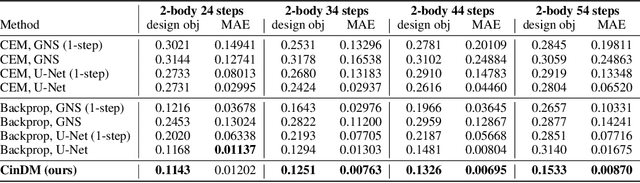

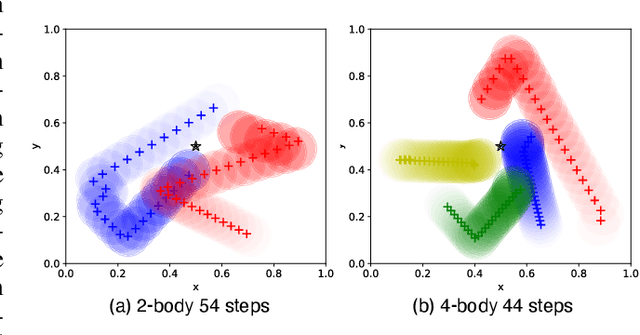
Inverse design, where we seek to design input variables in order to optimize an underlying objective function, is an important problem that arises across fields such as mechanical engineering to aerospace engineering. Inverse design is typically formulated as an optimization problem, with recent works leveraging optimization across learned dynamics models. However, as models are optimized they tend to fall into adversarial modes, preventing effective sampling. We illustrate that by instead optimizing over the learned energy function captured by the diffusion model, we can avoid such adversarial examples and significantly improve design performance. We further illustrate how such a design system is compositional, enabling us to combine multiple different diffusion models representing subcomponents of our desired system to design systems with every specified component. In an N-body interaction task and a challenging 2D multi-airfoil design task, we demonstrate that by composing the learned diffusion model at test time, our method allows us to design initial states and boundary shapes that are more complex than those in the training data. Our method outperforms state-of-the-art neural inverse design method by an average of 41.5% in prediction MAE and 14.3% in design objective for the N-body dataset and discovers formation flying to minimize drag in the multi-airfoil design task. Project website and code can be found at https://github.com/AI4Science-WestlakeU/cindm.
Equivariant Graph Neural Operator for Modeling 3D Dynamics
Jan 19, 2024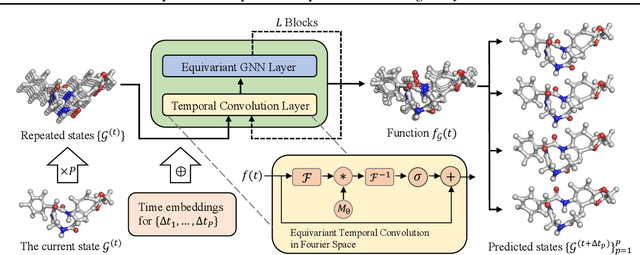
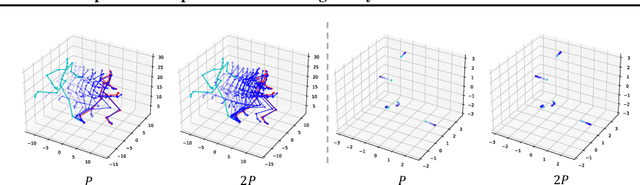
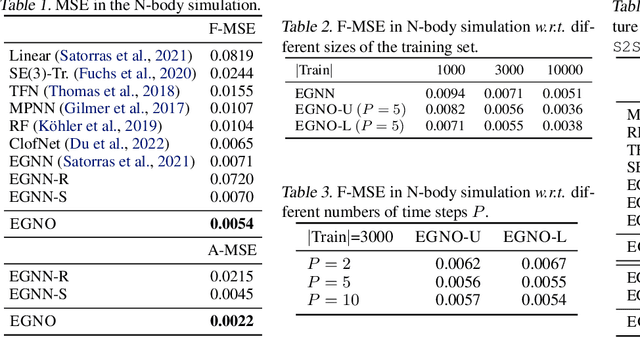
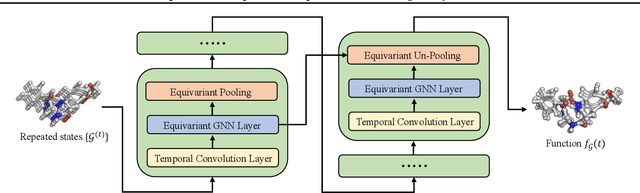
Modeling the complex three-dimensional (3D) dynamics of relational systems is an important problem in the natural sciences, with applications ranging from molecular simulations to particle mechanics. Machine learning methods have achieved good success by learning graph neural networks to model spatial interactions. However, these approaches do not faithfully capture temporal correlations since they only model next-step predictions. In this work, we propose Equivariant Graph Neural Operator (EGNO), a novel and principled method that directly models dynamics as trajectories instead of just next-step prediction. Different from existing methods, EGNO explicitly learns the temporal evolution of 3D dynamics where we formulate the dynamics as a function over time and learn neural operators to approximate it. To capture the temporal correlations while keeping the intrinsic SE(3)-equivariance, we develop equivariant temporal convolutions parameterized in the Fourier space and build EGNO by stacking the Fourier layers over equivariant networks. EGNO is the first operator learning framework that is capable of modeling solution dynamics functions over time while retaining 3D equivariance. Comprehensive experiments in multiple domains, including particle simulations, human motion capture, and molecular dynamics, demonstrate the significantly superior performance of EGNO against existing methods, thanks to the equivariant temporal modeling.
TimeGraphs: Graph-based Temporal Reasoning
Jan 06, 2024Many real-world systems exhibit temporal, dynamic behaviors, which are captured as time series of complex agent interactions. To perform temporal reasoning, current methods primarily encode temporal dynamics through simple sequence-based models. However, in general these models fail to efficiently capture the full spectrum of rich dynamics in the input, since the dynamics is not uniformly distributed. In particular, relevant information might be harder to extract and computing power is wasted for processing all individual timesteps, even if they contain no significant changes or no new information. Here we propose TimeGraphs, a novel approach that characterizes dynamic interactions as a hierarchical temporal graph, diverging from traditional sequential representations. Our approach models the interactions using a compact graph-based representation, enabling adaptive reasoning across diverse time scales. Adopting a self-supervised method, TimeGraphs constructs a multi-level event hierarchy from a temporal input, which is then used to efficiently reason about the unevenly distributed dynamics. This construction process is scalable and incremental to accommodate streaming data. We evaluate TimeGraphs on multiple datasets with complex, dynamic agent interactions, including a football simulator, the Resistance game, and the MOMA human activity dataset. The results demonstrate both robustness and efficiency of TimeGraphs on a range of temporal reasoning tasks. Our approach obtains state-of-the-art performance and leads to a performance increase of up to 12.2% on event prediction and recognition tasks over current approaches. Our experiments further demonstrate a wide array of capabilities including zero-shot generalization, robustness in case of data sparsity, and adaptability to streaming data flow.
Relational Deep Learning: Graph Representation Learning on Relational Databases
Dec 07, 2023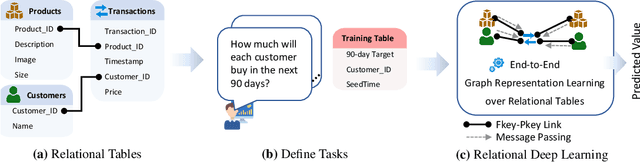
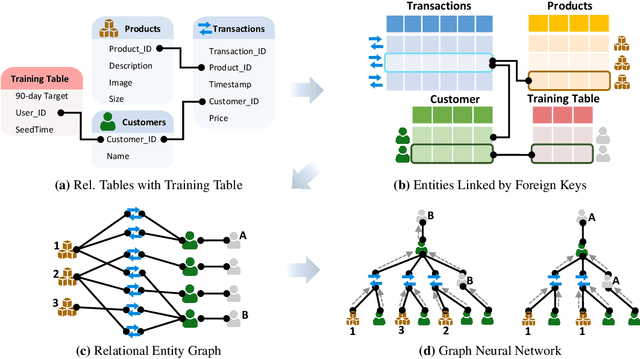
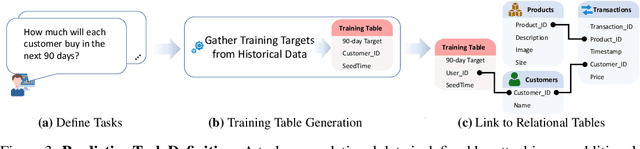
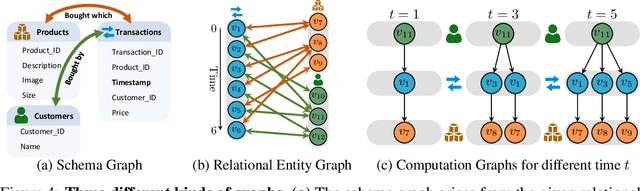
Much of the world's most valued data is stored in relational databases and data warehouses, where the data is organized into many tables connected by primary-foreign key relations. However, building machine learning models using this data is both challenging and time consuming. The core problem is that no machine learning method is capable of learning on multiple tables interconnected by primary-foreign key relations. Current methods can only learn from a single table, so the data must first be manually joined and aggregated into a single training table, the process known as feature engineering. Feature engineering is slow, error prone and leads to suboptimal models. Here we introduce an end-to-end deep representation learning approach to directly learn on data laid out across multiple tables. We name our approach Relational Deep Learning (RDL). The core idea is to view relational databases as a temporal, heterogeneous graph, with a node for each row in each table, and edges specified by primary-foreign key links. Message Passing Graph Neural Networks can then automatically learn across the graph to extract representations that leverage all input data, without any manual feature engineering. Relational Deep Learning leads to more accurate models that can be built much faster. To facilitate research in this area, we develop RelBench, a set of benchmark datasets and an implementation of Relational Deep Learning. The data covers a wide spectrum, from discussions on Stack Exchange to book reviews on the Amazon Product Catalog. Overall, we define a new research area that generalizes graph machine learning and broadens its applicability to a wide set of AI use cases.
GraphMETRO: Mitigating Complex Distribution Shifts in GNNs via Mixture of Aligned Experts
Dec 07, 2023
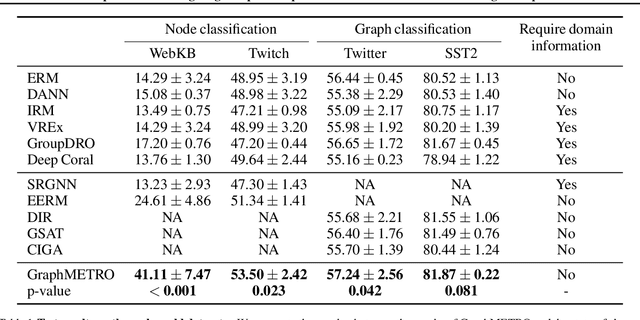
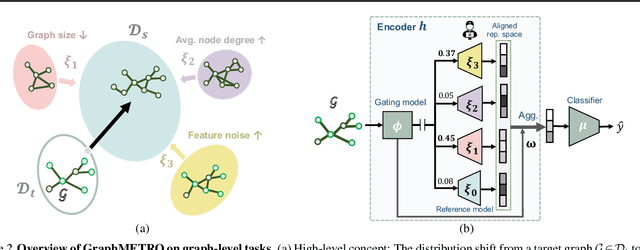
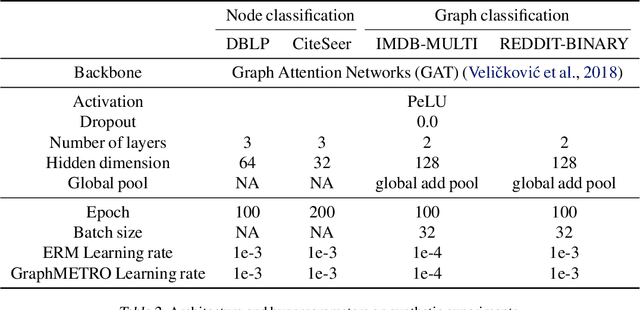
Graph Neural Networks' (GNNs) ability to generalize across complex distributions is crucial for real-world applications. However, prior research has primarily focused on specific types of distribution shifts, such as larger graph size, or inferred shifts from constructed data environments, which is highly limited when confronted with multiple and nuanced distribution shifts. For instance, in a social graph, a user node might experience increased interactions and content alterations, while other user nodes encounter distinct shifts. Neglecting such complexities significantly impedes generalization. To address it, we present GraphMETRO, a novel framework that enhances GNN generalization under complex distribution shifts in both node and graph-level tasks. Our approach employs a mixture-of-experts (MoE) architecture with a gating model and expert models aligned in a shared representation space. The gating model identifies key mixture components governing distribution shifts, while each expert generates invariant representations w.r.t. a mixture component. Finally, GraphMETRO aggregates representations from multiple experts to generate the final invariant representation. Our experiments on synthetic and realworld datasets demonstrate GraphMETRO's superiority and interpretability. To highlight, GraphMETRO achieves state-of-the-art performances on four real-world datasets from GOOD benchmark, outperforming the best baselines on WebKB and Twitch datasets by 67% and 4.2%, respectively.
Holistic Evaluation of Text-To-Image Models
Nov 07, 2023
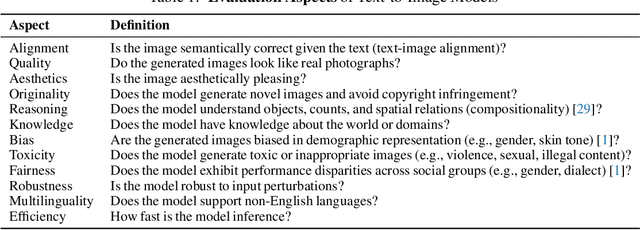


The stunning qualitative improvement of recent text-to-image models has led to their widespread attention and adoption. However, we lack a comprehensive quantitative understanding of their capabilities and risks. To fill this gap, we introduce a new benchmark, Holistic Evaluation of Text-to-Image Models (HEIM). Whereas previous evaluations focus mostly on text-image alignment and image quality, we identify 12 aspects, including text-image alignment, image quality, aesthetics, originality, reasoning, knowledge, bias, toxicity, fairness, robustness, multilinguality, and efficiency. We curate 62 scenarios encompassing these aspects and evaluate 26 state-of-the-art text-to-image models on this benchmark. Our results reveal that no single model excels in all aspects, with different models demonstrating different strengths. We release the generated images and human evaluation results for full transparency at https://crfm.stanford.edu/heim/v1.1.0 and the code at https://github.com/stanford-crfm/helm, which is integrated with the HELM codebase.
Context-Aware Meta-Learning
Oct 17, 2023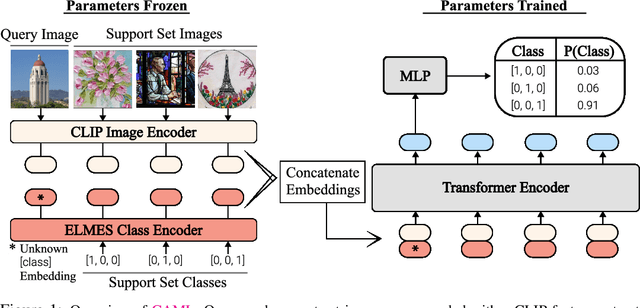
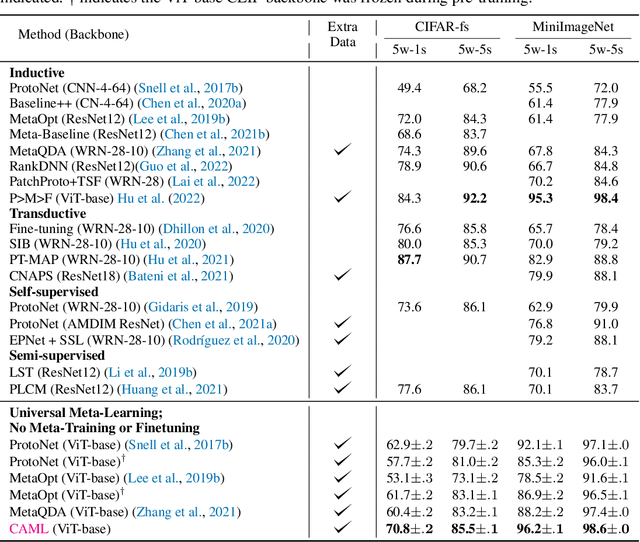
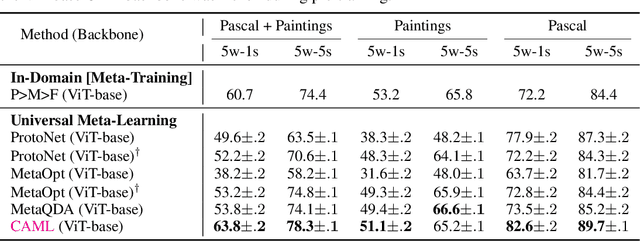
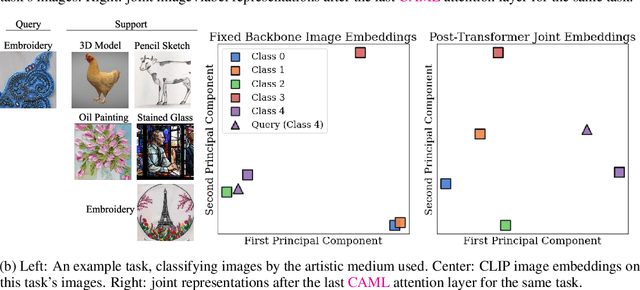
Large Language Models like ChatGPT demonstrate a remarkable capacity to learn new concepts during inference without any fine-tuning. However, visual models trained to detect new objects during inference have been unable to replicate this ability, and instead either perform poorly or require meta-training and/or fine-tuning on similar objects. In this work, we propose a meta-learning algorithm that emulates Large Language Models by learning new visual concepts during inference without fine-tuning. Our approach leverages a frozen pre-trained feature extractor, and analogous to in-context learning, recasts meta-learning as sequence modeling over datapoints with known labels and a test datapoint with an unknown label. On 8 out of 11 meta-learning benchmarks, our approach -- without meta-training or fine-tuning -- exceeds or matches the state-of-the-art algorithm, P>M>F, which is meta-trained on these benchmarks.
In-Context Learning for Few-Shot Molecular Property Prediction
Oct 13, 2023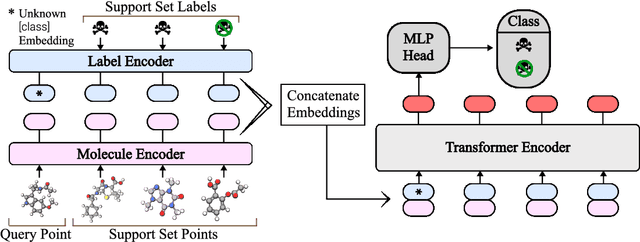
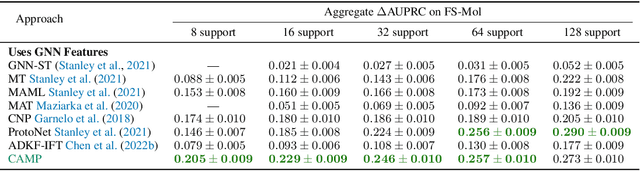
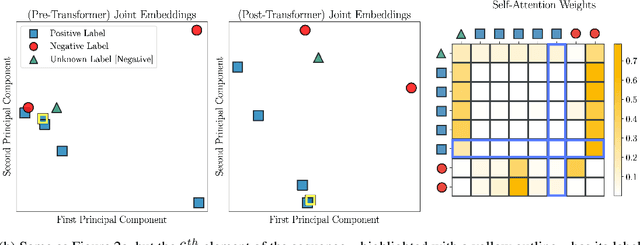
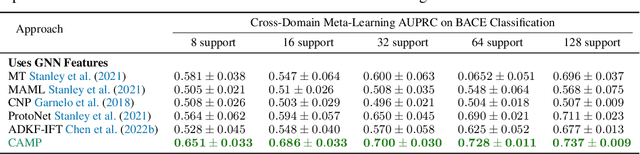
In-context learning has become an important approach for few-shot learning in Large Language Models because of its ability to rapidly adapt to new tasks without fine-tuning model parameters. However, it is restricted to applications in natural language and inapplicable to other domains. In this paper, we adapt the concepts underpinning in-context learning to develop a new algorithm for few-shot molecular property prediction. Our approach learns to predict molecular properties from a context of (molecule, property measurement) pairs and rapidly adapts to new properties without fine-tuning. On the FS-Mol and BACE molecular property prediction benchmarks, we find this method surpasses the performance of recent meta-learning algorithms at small support sizes and is competitive with the best methods at large support sizes.
Large Language Models as Analogical Reasoners
Oct 07, 2023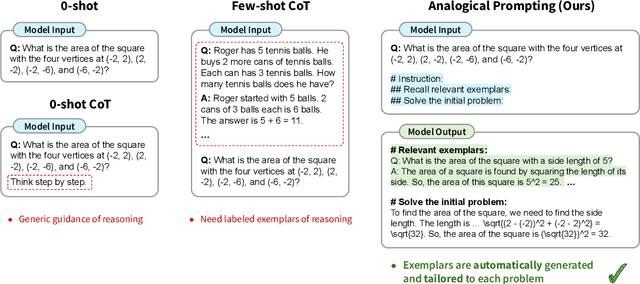
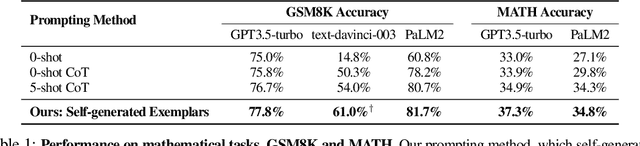
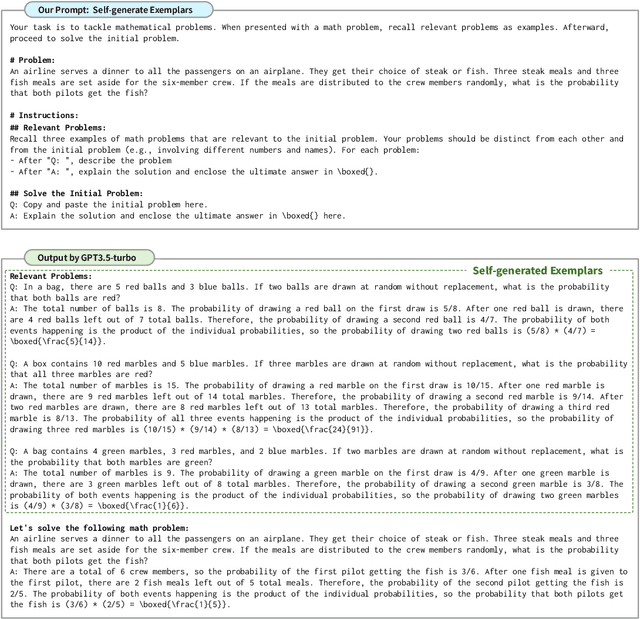
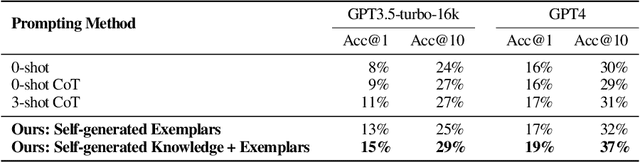
Chain-of-thought (CoT) prompting for language models demonstrates impressive performance across reasoning tasks, but typically needs labeled exemplars of the reasoning process. In this work, we introduce a new prompting approach, Analogical Prompting, designed to automatically guide the reasoning process of large language models. Inspired by analogical reasoning, a cognitive process in which humans draw from relevant past experiences to tackle new problems, our approach prompts language models to self-generate relevant exemplars or knowledge in the context, before proceeding to solve the given problem. This method presents several advantages: it obviates the need for labeling or retrieving exemplars, offering generality and convenience; it can also tailor the generated exemplars and knowledge to each problem, offering adaptability. Experimental results show that our approach outperforms 0-shot CoT and manual few-shot CoT in a variety of reasoning tasks, including math problem solving in GSM8K and MATH, code generation in Codeforces, and other reasoning tasks in BIG-Bench.