 Add to Chrome
 Add to Firefox
 Add to Edge
SeisCLIP: A seismology foundation model pre-trained by multi-modal data for multi-purpose seismic feature extraction
Sep 05, 2023
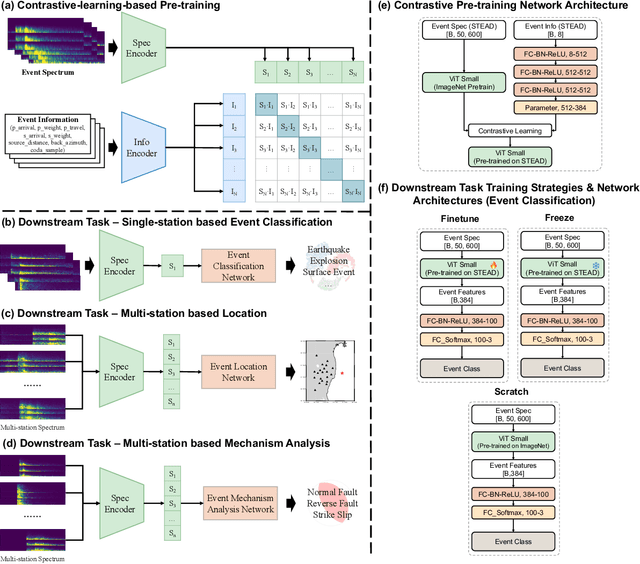
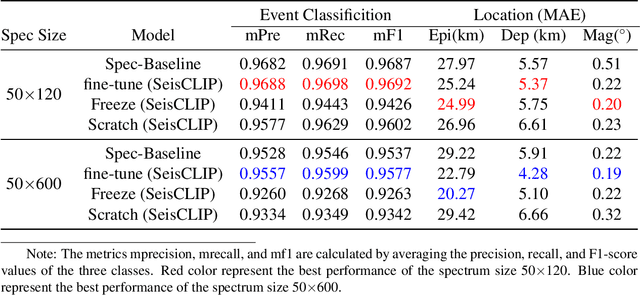
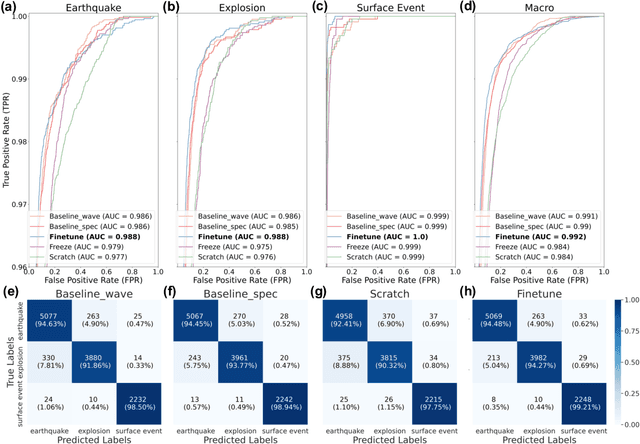
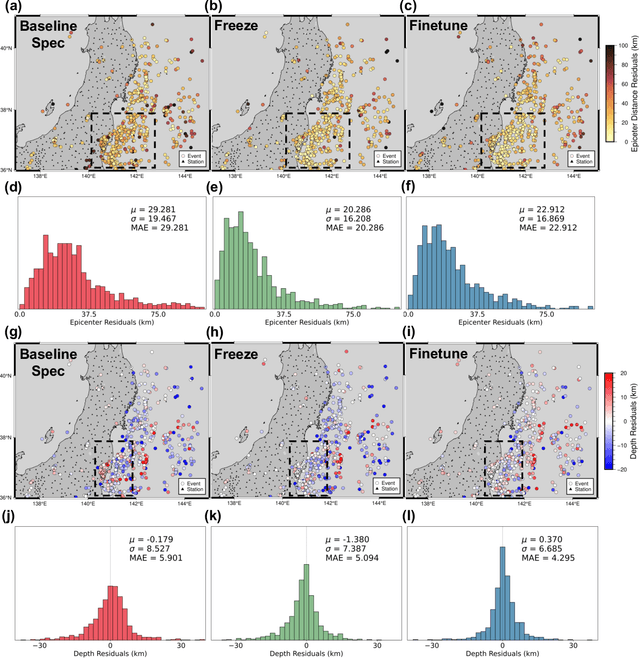
Training specific deep learning models for particular tasks is common across various domains within seismology. However, this approach encounters two limitations: inadequate labeled data for certain tasks and limited generalization across regions. To address these challenges, we develop SeisCLIP, a seismology foundation model trained through contrastive learning from multi-modal data. It consists of a transformer encoder for extracting crucial features from time-frequency seismic spectrum and an MLP encoder for integrating the phase and source information of the same event. These encoders are jointly pre-trained on a vast dataset and the spectrum encoder is subsequently fine-tuned on smaller datasets for various downstream tasks. Notably, SeisCLIP's performance surpasses that of baseline methods in event classification, localization, and focal mechanism analysis tasks, employing distinct datasets from different regions. In conclusion, SeisCLIP holds significant potential as a foundational model in the field of seismology, paving the way for innovative directions in foundation-model-based seismology research.

Heterogeneous Multi-Task Gaussian Cox Processes
Aug 29, 2023This paper presents a novel extension of multi-task Gaussian Cox processes for modeling multiple heterogeneous correlated tasks jointly, e.g., classification and regression, via multi-output Gaussian processes (MOGP). A MOGP prior over the parameters of the dedicated likelihoods for classification, regression and point process tasks can facilitate sharing of information between heterogeneous tasks, while allowing for nonparametric parameter estimation. To circumvent the non-conjugate Bayesian inference in the MOGP modulated heterogeneous multi-task framework, we employ the data augmentation technique and derive a mean-field approximation to realize closed-form iterative updates for estimating model parameters. We demonstrate the performance and inference on both 1D synthetic data as well as 2D urban data of Vancouver.
Incorporating Neuro-Inspired Adaptability for Continual Learning in Artificial Intelligence
Aug 29, 2023
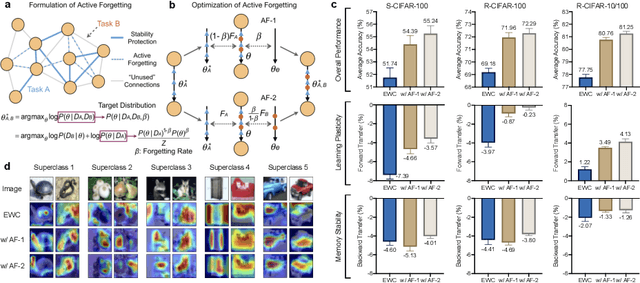

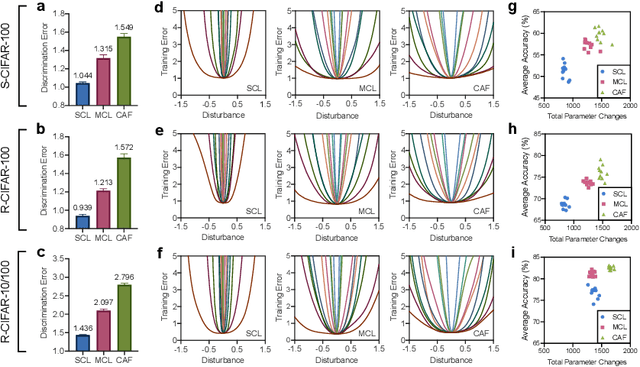
Continual learning aims to empower artificial intelligence (AI) with strong adaptability to the real world. For this purpose, a desirable solution should properly balance memory stability with learning plasticity, and acquire sufficient compatibility to capture the observed distributions. Existing advances mainly focus on preserving memory stability to overcome catastrophic forgetting, but remain difficult to flexibly accommodate incremental changes as biological intelligence (BI) does. By modeling a robust Drosophila learning system that actively regulates forgetting with multiple learning modules, here we propose a generic approach that appropriately attenuates old memories in parameter distributions to improve learning plasticity, and accordingly coordinates a multi-learner architecture to ensure solution compatibility. Through extensive theoretical and empirical validation, our approach not only clearly enhances the performance of continual learning, especially over synaptic regularization methods in task-incremental settings, but also potentially advances the understanding of neurological adaptive mechanisms, serving as a novel paradigm to progress AI and BI together.
Towards Accelerated Model Training via Bayesian Data Selection
Aug 21, 2023Mislabeled, duplicated, or biased data in real-world scenarios can lead to prolonged training and even hinder model convergence. Traditional solutions prioritizing easy or hard samples lack the flexibility to handle such a variety simultaneously. Recent work has proposed a more reasonable data selection principle by examining the data's impact on the model's generalization loss. However, its practical adoption relies on less principled approximations and additional clean holdout data. This work solves these problems by leveraging a lightweight Bayesian treatment and incorporating off-the-shelf zero-shot predictors built on large-scale pre-trained models. The resulting algorithm is efficient and easy-to-implement. We perform extensive empirical studies on challenging benchmarks with considerable data noise and imbalance in the online batch selection scenario, and observe superior training efficiency over competitive baselines. Notably, on the challenging WebVision benchmark, our method can achieve similar predictive performance with significantly fewer training iterations than leading data selection methods.
6G Network Business Support System
Jul 19, 2023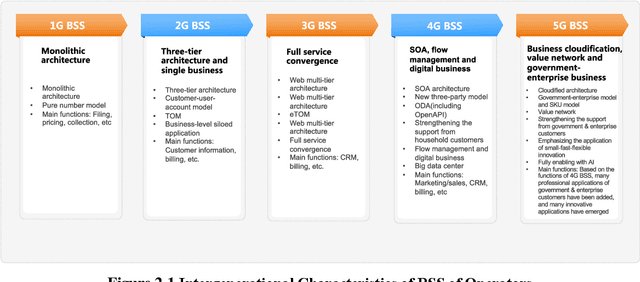
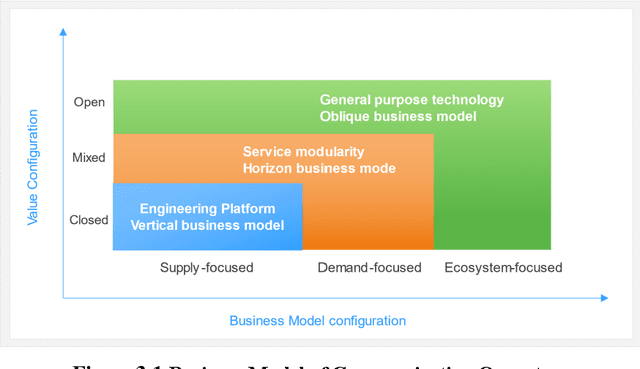
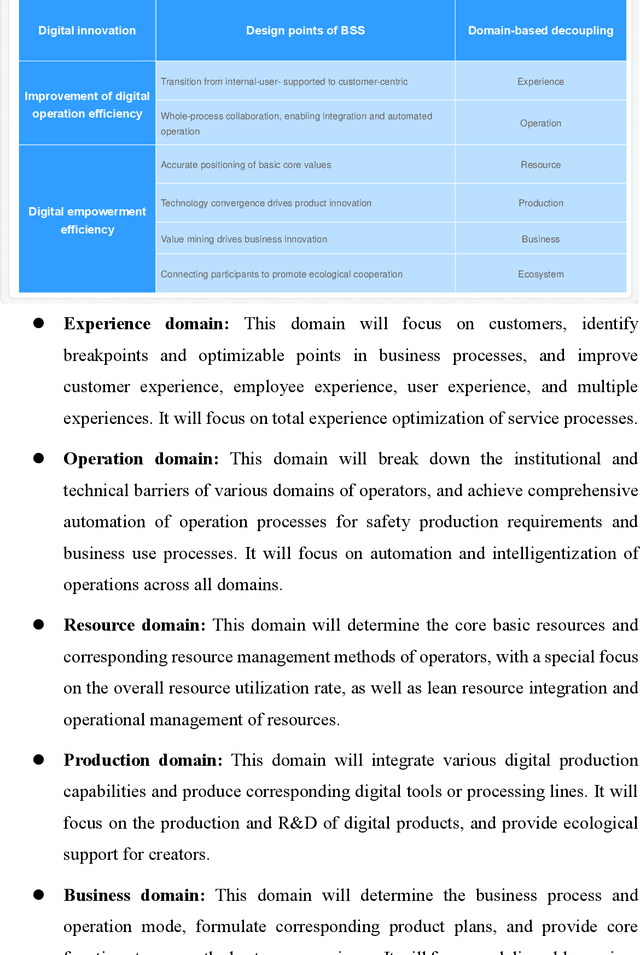

6G is the next-generation intelligent and integrated digital information infrastructure, characterized by ubiquitous interconnection, native intelligence, multi-dimensional perception, global coverage, green and low-carbon, native network security, etc. 6G will realize the transition from serving people and people-things communication to supporting the efficient connection of intelligent agents, and comprehensively leading the digital, intelligent and green transformation of the economy and the society. As the core support system for mobile communication network, 6 6G BSS need to integrate with new business models brought about by the development of the next-generation Internet and IT, upgrade from "network-centric" to "business and service centric" and "customer-centric". 6G OSS and BSS systems need to strengthen their integration to improve the operational efficiency and benefits of customers by connecting the digital intelligence support capabilities on both sides of supply and demand. This paper provides a detailed introduction to the overall vision, potential key technologies, and functional architecture of 6G BSS systems. It also presents an evolutionary roadmap and technological prospects for the BSS systems from 5G to 6G.
Multi-task multi-station earthquake monitoring: An all-in-one seismic Phase picking, Location, and Association Network (PLAN)
Jun 24, 2023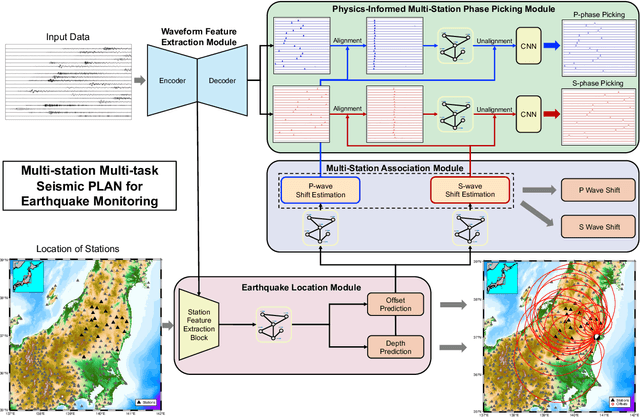
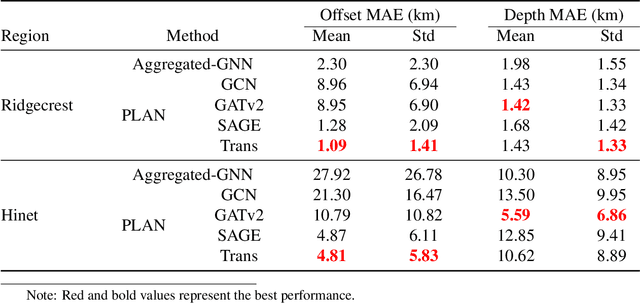
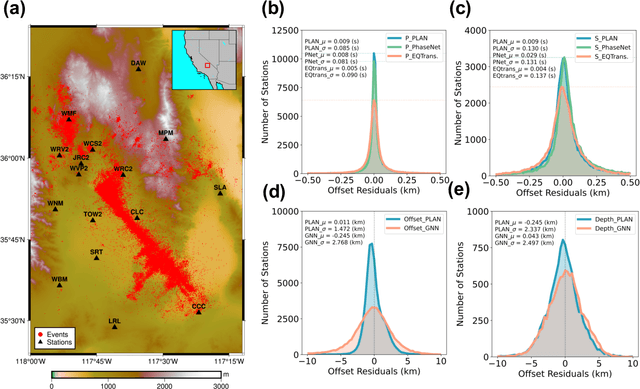
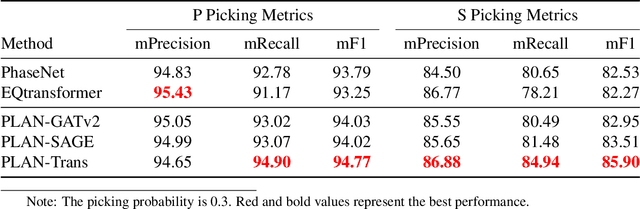
Earthquake monitoring is vital for understanding the physics of earthquakes and assessing seismic hazards. A standard monitoring workflow includes the interrelated and interdependent tasks of phase picking, association, and location. Although deep learning methods have been successfully applied to earthquake monitoring, they mostly address the tasks separately and ignore the geographic relationships among stations. Here, we propose a graph neural network that operates directly on multi-station seismic data and achieves simultaneous phase picking, association, and location. Particularly, the inter-station and inter-task physical relationships are informed in the network architecture to promote accuracy, interpretability, and physical consistency among cross-station and cross-task predictions. When applied to data from the Ridgecrest region and Japan regions, this method showed superior performance over previous deep learning-based phase-picking and localization methods. Overall, our study provides for the first time a prototype self-consistent all-in-one system of simultaneous seismic phase picking, association, and location, which has the potential for next-generation autonomous earthquake monitoring.
Training Transformers with 4-bit Integers
Jun 22, 2023Quantizing the activation, weight, and gradient to 4-bit is promising to accelerate neural network training. However, existing 4-bit training methods require custom numerical formats which are not supported by contemporary hardware. In this work, we propose a training method for transformers with all matrix multiplications implemented with the INT4 arithmetic. Training with an ultra-low INT4 precision is challenging. To achieve this, we carefully analyze the specific structures of activation and gradients in transformers to propose dedicated quantizers for them. For forward propagation, we identify the challenge of outliers and propose a Hadamard quantizer to suppress the outliers. For backpropagation, we leverage the structural sparsity of gradients by proposing bit splitting and leverage score sampling techniques to quantize gradients accurately. Our algorithm achieves competitive accuracy on a wide range of tasks including natural language understanding, machine translation, and image classification. Unlike previous 4-bit training methods, our algorithm can be implemented on the current generation of GPUs. Our prototypical linear operator implementation is up to 2.2 times faster than the FP16 counterparts and speeds up the training by up to 35.1%.
Stabilizing GANs' Training with Brownian Motion Controller
Jun 18, 2023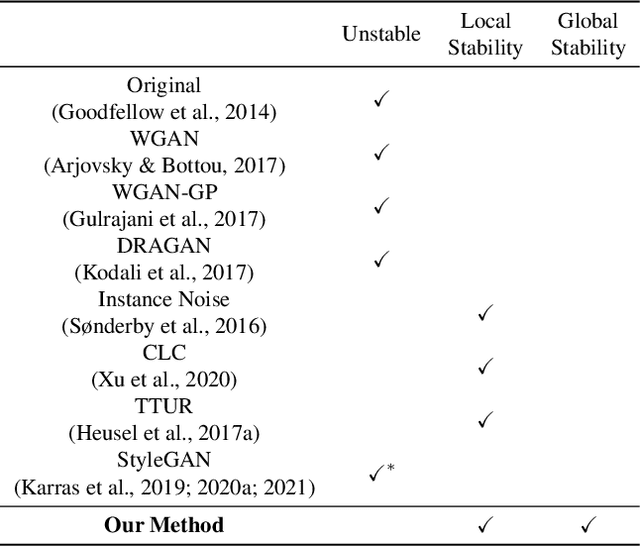
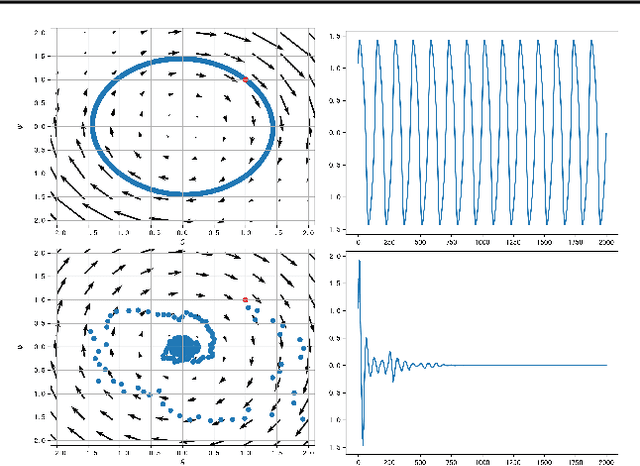
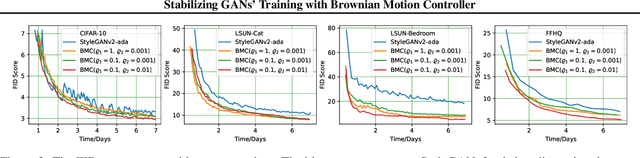
The training process of generative adversarial networks (GANs) is unstable and does not converge globally. In this paper, we examine the stability of GANs from the perspective of control theory and propose a universal higher-order noise-based controller called Brownian Motion Controller (BMC). Starting with the prototypical case of Dirac-GANs, we design a BMC to retrieve precisely the same but reachable optimal equilibrium. We theoretically prove that the training process of DiracGANs-BMC is globally exponential stable and derive bounds on the rate of convergence. Then we extend our BMC to normal GANs and provide implementation instructions on GANs-BMC. Our experiments show that our GANs-BMC effectively stabilizes GANs' training under StyleGANv2-ada frameworks with a faster rate of convergence, a smaller range of oscillation, and better performance in terms of FID score.
PINNacle: A Comprehensive Benchmark of Physics-Informed Neural Networks for Solving PDEs
Jun 15, 2023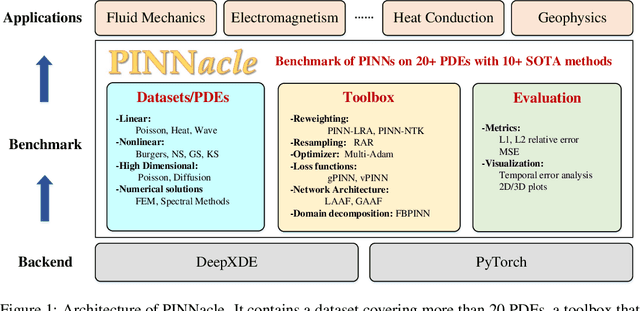
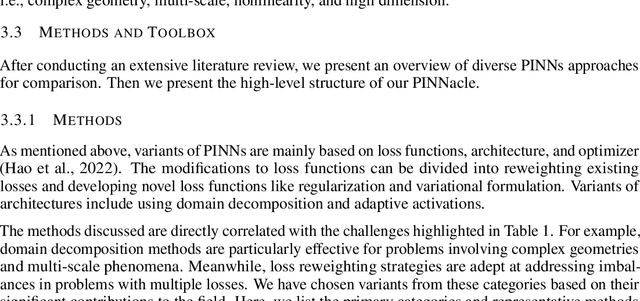
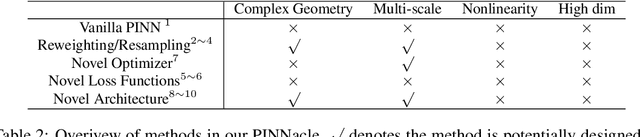
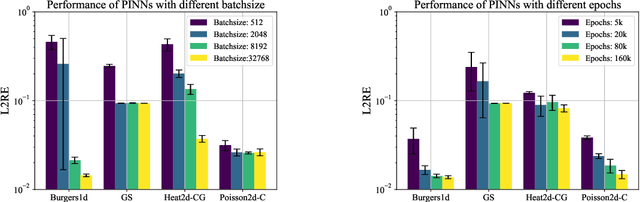
While significant progress has been made on Physics-Informed Neural Networks (PINNs), a comprehensive comparison of these methods across a wide range of Partial Differential Equations (PDEs) is still lacking. This study introduces PINNacle, a benchmarking tool designed to fill this gap. PINNacle provides a diverse dataset, comprising over 20 distinct PDEs from various domains including heat conduction, fluid dynamics, biology, and electromagnetics. These PDEs encapsulate key challenges inherent to real-world problems, such as complex geometry, multi-scale phenomena, nonlinearity, and high dimensionality. PINNacle also offers a user-friendly toolbox, incorporating about 10 state-of-the-art PINN methods for systematic evaluation and comparison. We have conducted extensive experiments with these methods, offering insights into their strengths and weaknesses. In addition to providing a standardized means of assessing performance, PINNacle also offers an in-depth analysis to guide future research, particularly in areas such as domain decomposition methods and loss reweighting for handling multi-scale problems and complex geometry. While PINNacle does not guarantee success in all real-world scenarios, it represents a significant contribution to the field by offering a robust, diverse, and comprehensive benchmark suite that will undoubtedly foster further research and development in PINNs.
MultiAdam: Parameter-wise Scale-invariant Optimizer for Multiscale Training of Physics-informed Neural Networks
Jun 05, 2023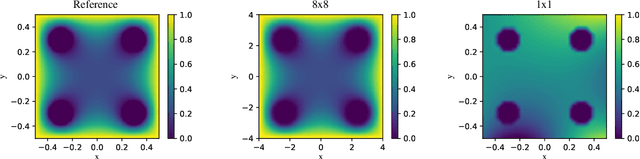
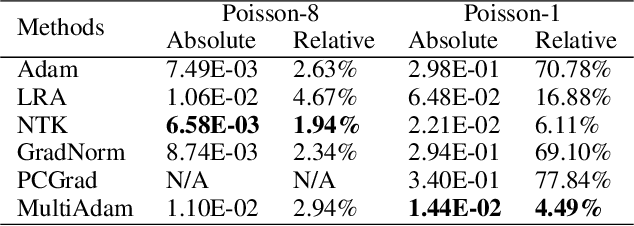
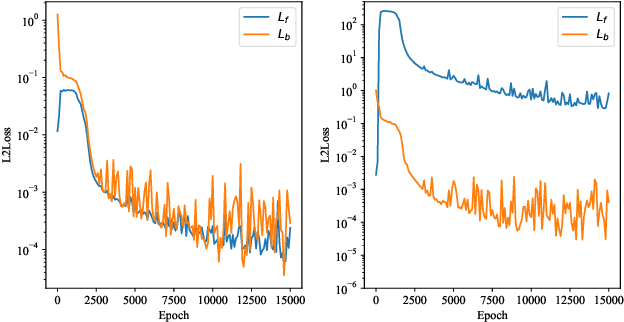
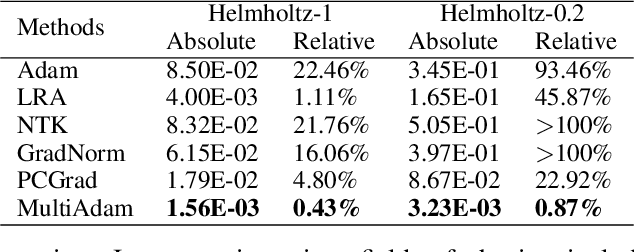
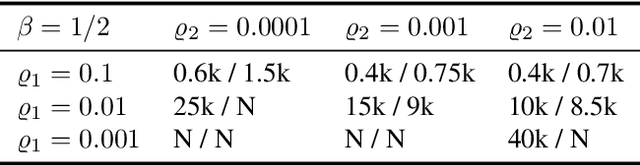
Physics-informed Neural Networks (PINNs) have recently achieved remarkable progress in solving Partial Differential Equations (PDEs) in various fields by minimizing a weighted sum of PDE loss and boundary loss. However, there are several critical challenges in the training of PINNs, including the lack of theoretical frameworks and the imbalance between PDE loss and boundary loss. In this paper, we present an analysis of second-order non-homogeneous PDEs, which are classified into three categories and applicable to various common problems. We also characterize the connections between the training loss and actual error, guaranteeing convergence under mild conditions. The theoretical analysis inspires us to further propose MultiAdam, a scale-invariant optimizer that leverages gradient momentum to parameter-wisely balance the loss terms. Extensive experiment results on multiple problems from different physical domains demonstrate that our MultiAdam solver can improve the predictive accuracy by 1-2 orders of magnitude compared with strong baselines.