 Add to Chrome
 Add to Firefox
 Add to Edge
Flexible-weighted Chamfer Distance: Enhanced Objective Function for Point Cloud Completion
May 20, 2025
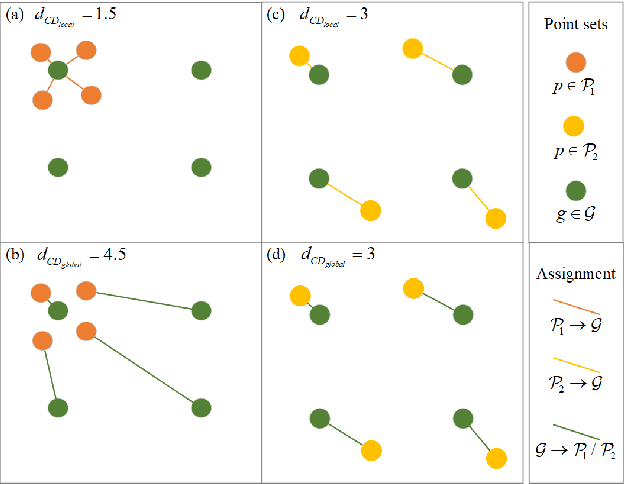
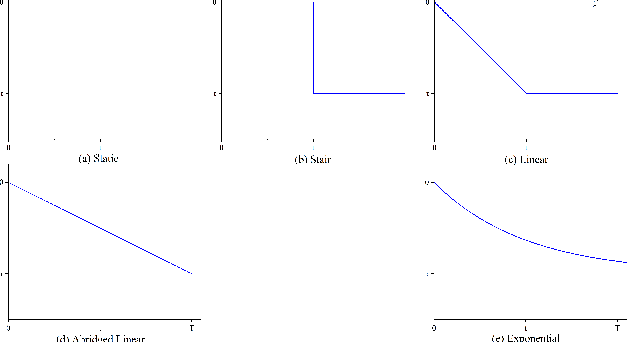
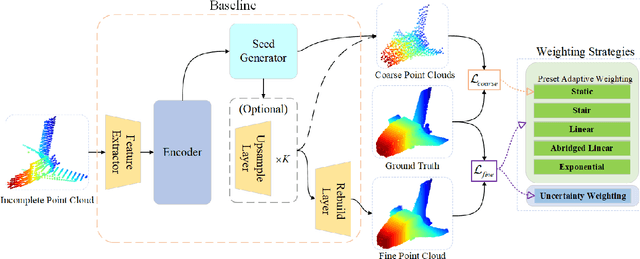
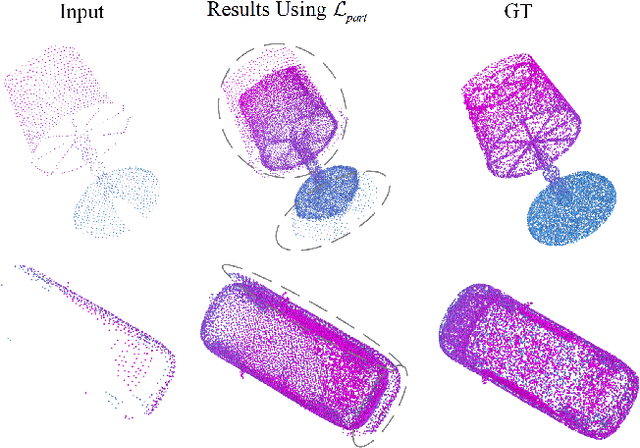
Chamfer Distance (CD) comprises two components that can evaluate the global distribution and local performance of generated point clouds, making it widely utilized as a similarity measure between generated and target point clouds in point cloud completion tasks. Additionally, CD's computational efficiency has led to its frequent application as an objective function for guiding point cloud generation. However, using CD directly as an objective function with fixed equal weights for its two components can often result in seemingly high overall performance (i.e., low CD score), while failing to achieve a good global distribution. This is typically reflected in high Earth Mover's Distance (EMD) and Decomposed Chamfer Distance (DCD) scores, alongside poor human assessments. To address this issue, we propose a Flexible-Weighted Chamfer Distance (FCD) to guide point cloud generation. FCD assigns a higher weight to the global distribution component of CD and incorporates a flexible weighting strategy to adjust the balance between the two components, aiming to improve global distribution while maintaining robust overall performance. Experimental results on two state-of-the-art networks demonstrate that our method achieves superior results across multiple evaluation metrics, including CD, EMD, DCD, and F-Score, as well as in human evaluations.

Pure Component Property Estimation Framework Using Explainable Machine Learning Methods
May 14, 2025Accurate prediction of pure component physiochemical properties is crucial for process integration, multiscale modeling, and optimization. In this work, an enhanced framework for pure component property prediction by using explainable machine learning methods is proposed. In this framework, the molecular representation method based on the connectivity matrix effectively considers atomic bonding relationships to automatically generate features. The supervised machine learning model random forest is applied for feature ranking and pooling. The adjusted R2 is introduced to penalize the inclusion of additional features, providing an assessment of the true contribution of features. The prediction results for normal boiling point (Tb), liquid molar volume, critical temperature (Tc) and critical pressure (Pc) obtained using Artificial Neural Network and Gaussian Process Regression models confirm the accuracy of the molecular representation method. Comparison with GC based models shows that the root-mean-square error on the test set can be reduced by up to 83.8%. To enhance the interpretability of the model, a feature analysis method based on Shapley values is employed to determine the contribution of each feature to the property predictions. The results indicate that using the feature pooling method reduces the number of features from 13316 to 100 without compromising model accuracy. The feature analysis results for Tb, Tc, and Pc confirms that different molecular properties are influenced by different structural features, aligning with mechanistic interpretations. In conclusion, the proposed framework is demonstrated to be feasible and provides a solid foundation for mixture component reconstruction and process integration modelling.
Reinforcement Learning (RL) Meets Urban Climate Modeling: Investigating the Efficacy and Impacts of RL-Based HVAC Control
May 11, 2025Reinforcement learning (RL)-based heating, ventilation, and air conditioning (HVAC) control has emerged as a promising technology for reducing building energy consumption while maintaining indoor thermal comfort. However, the efficacy of such strategies is influenced by the background climate and their implementation may potentially alter both the indoor climate and local urban climate. This study proposes an integrated framework combining RL with an urban climate model that incorporates a building energy model, aiming to evaluate the efficacy of RL-based HVAC control across different background climates, impacts of RL strategies on indoor climate and local urban climate, and the transferability of RL strategies across cities. Our findings reveal that the reward (defined as a weighted combination of energy consumption and thermal comfort) and the impacts of RL strategies on indoor climate and local urban climate exhibit marked variability across cities with different background climates. The sensitivity of reward weights and the transferability of RL strategies are also strongly influenced by the background climate. Cities in hot climates tend to achieve higher rewards across most reward weight configurations that balance energy consumption and thermal comfort, and those cities with more varying atmospheric temperatures demonstrate greater RL strategy transferability. These findings underscore the importance of thoroughly evaluating RL-based HVAC control strategies in diverse climatic contexts. This study also provides a new insight that city-to-city learning will potentially aid the deployment of RL-based HVAC control.
ALFEE: Adaptive Large Foundation Model for EEG Representation
May 07, 2025While foundation models excel in text, image, and video domains, the critical biological signals, particularly electroencephalography(EEG), remain underexplored. EEG benefits neurological research with its high temporal resolution, operational practicality, and safety profile. However, low signal-to-noise ratio, inter-subject variability, and cross-paradigm differences hinder the generalization of current models. Existing methods often employ simplified strategies, such as a single loss function or a channel-temporal joint representation module, and suffer from a domain gap between pretraining and evaluation tasks that compromises efficiency and adaptability. To address these limitations, we propose the Adaptive Large Foundation model for EEG signal representation(ALFEE) framework, a novel hybrid transformer architecture with two learning stages for robust EEG representation learning. ALFEE employs a hybrid attention that separates channel-wise feature aggregation from temporal dynamics modeling, enabling robust EEG representation with variable channel configurations. A channel encoder adaptively compresses variable channel information, a temporal encoder captures task-guided evolution, and a hybrid decoder reconstructs signals in both temporal and frequency domains. During pretraining, ALFEE optimizes task prediction, channel and temporal mask reconstruction, and temporal forecasting to enhance multi-scale and multi-channel representation. During fine-tuning, a full-model adaptation with a task-specific token dictionary and a cross-attention layer boosts performance across multiple tasks. After 25,000 hours of pretraining, extensive experimental results on six downstream EEG tasks demonstrate the superior performance of ALFEE over existing models. Our ALFEE framework establishes a scalable foundation for biological signal analysis with implementation at https://github.com/xw1216/ALFEE.
Predicting Stress in Two-phase Random Materials and Super-Resolution Method for Stress Images by Embedding Physical Information
Apr 26, 2025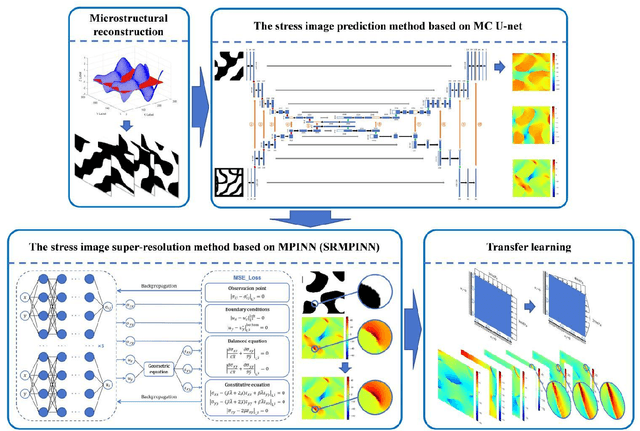
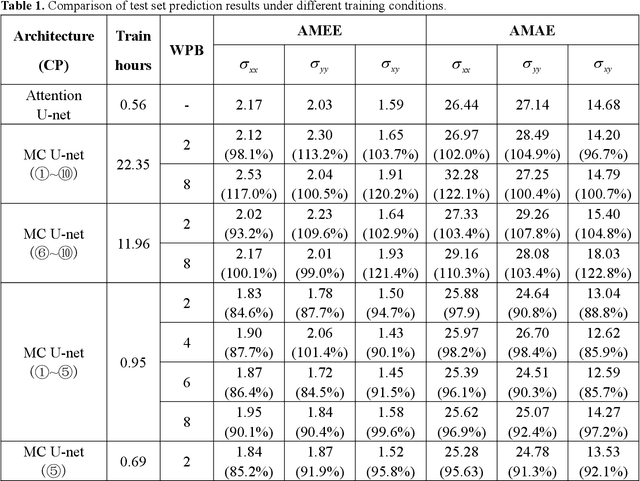
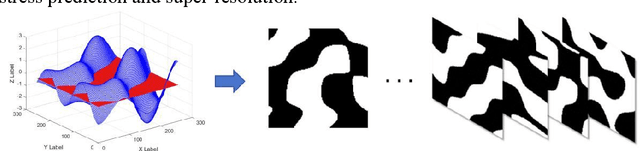
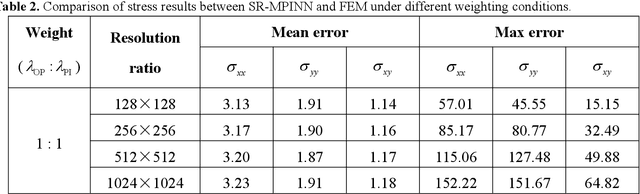
Stress analysis is an important part of material design. For materials with complex microstructures, such as two-phase random materials (TRMs), material failure is often accompanied by stress concentration. Phase interfaces in two-phase materials are critical for stress concentration. Therefore, the prediction error of stress at phase boundaries is crucial. In practical engineering, the pixels of the obtained material microstructure images are limited, which limits the resolution of stress images generated by deep learning methods, making it difficult to observe stress concentration regions. Existing Image Super-Resolution (ISR) technologies are all based on data-driven supervised learning. However, stress images have natural physical constraints, which provide new ideas for new ISR technologies. In this study, we constructed a stress prediction framework for TRMs. First, the framework uses a proposed Multiple Compositions U-net (MC U-net) to predict stress in low-resolution material microstructures. By considering the phase interface information of the microstructure, the MC U-net effectively reduces the problem of excessive prediction errors at phase boundaries. Secondly, a Mixed Physics-Informed Neural Network (MPINN) based method for stress ISR (SRPINN) was proposed. By introducing the constraints of physical information, the new method does not require paired stress images for training and can increase the resolution of stress images to any multiple. This enables a multiscale analysis of the stress concentration regions at phase boundaries. Finally, we performed stress analysis on TRMs with different phase volume fractions and loading states through transfer learning. The results show the proposed stress prediction framework has satisfactory accuracy and generalization ability.
Global Stress Generation and Spatiotemporal Super-Resolution Physics-Informed Operator under Dynamic Loading for Two-Phase Random Materials
Apr 26, 2025Material stress analysis is a critical aspect of material design and performance optimization. Under dynamic loading, the global stress evolution in materials exhibits complex spatiotemporal characteristics, especially in two-phase random materials (TRMs). Such kind of material failure is often associated with stress concentration, and the phase boundaries are key locations where stress concentration occurs. In practical engineering applications, the spatiotemporal resolution of acquired microstructural data and its dynamic stress evolution is often limited. This poses challenges for deep learning methods in generating high-resolution spatiotemporal stress fields, particularly for accurately capturing stress concentration regions. In this study, we propose a framework for global stress generation and spatiotemporal super-resolution in TRMs under dynamic loading. First, we introduce a diffusion model-based approach, named as Spatiotemporal Stress Diffusion (STS-diffusion), for generating global spatiotemporal stress data. This framework incorporates Space-Time U-Net (STU-net), and we systematically investigate the impact of different attention positions on model accuracy. Next, we develop a physics-informed network for spatiotemporal super-resolution, termed as Spatiotemporal Super-Resolution Physics-Informed Operator (ST-SRPINN). The proposed ST-SRPINN is an unsupervised learning method. The influence of data-driven and physics-informed loss function weights on model accuracy is explored in detail. Benefiting from physics-based constraints, ST-SRPINN requires only low-resolution stress field data during training and can upscale the spatiotemporal resolution of stress fields to arbitrary magnifications.
AlphaZero-Edu: Making AlphaZero Accessible to Everyone
Apr 20, 2025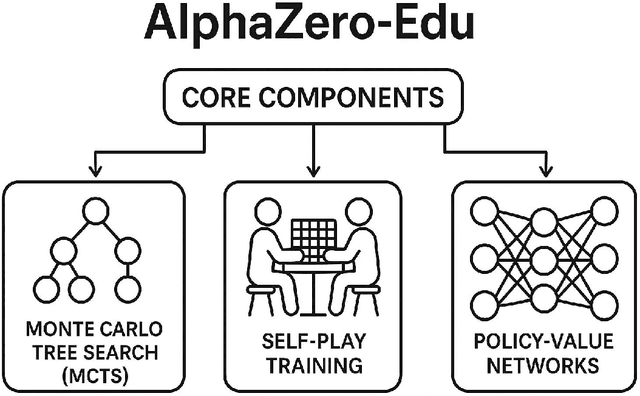
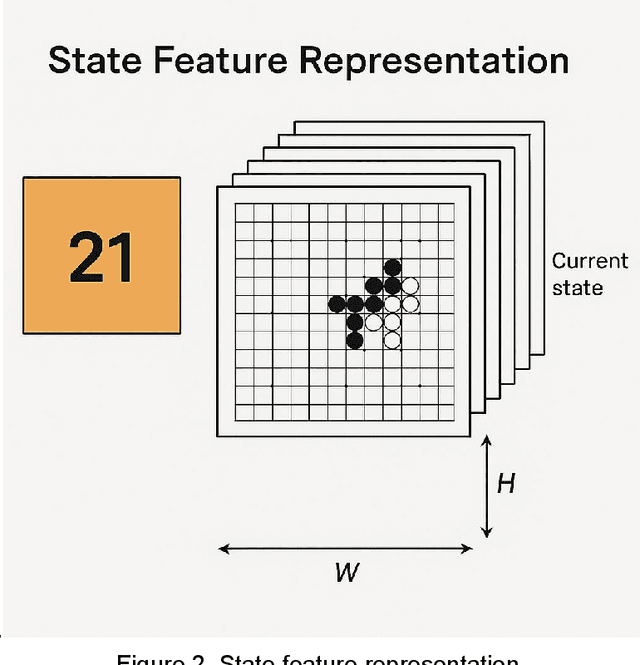
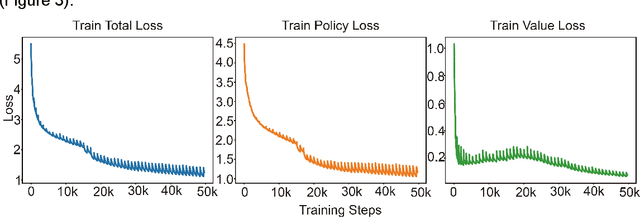
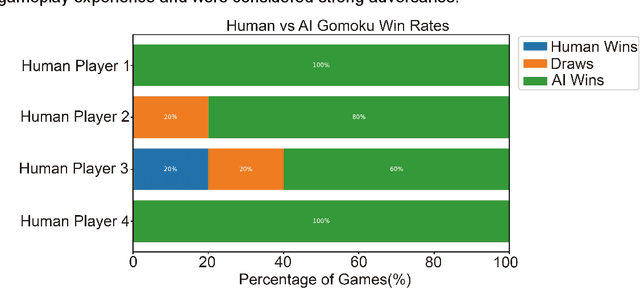
Recent years have witnessed significant progress in reinforcement learning, especially with Zero-like paradigms, which have greatly boosted the generalization and reasoning abilities of large-scale language models. Nevertheless, existing frameworks are often plagued by high implementation complexity and poor reproducibility. To tackle these challenges, we present AlphaZero-Edu, a lightweight, education-focused implementation built upon the mathematical framework of AlphaZero. It boasts a modular architecture that disentangles key components, enabling transparent visualization of the algorithmic processes. Additionally, it is optimized for resource-efficient training on a single NVIDIA RTX 3090 GPU and features highly parallelized self-play data generation, achieving a 3.2-fold speedup with 8 processes. In Gomoku matches, the framework has demonstrated exceptional performance, achieving a consistently high win rate against human opponents. AlphaZero-Edu has been open-sourced at https://github.com/StarLight1212/AlphaZero_Edu, providing an accessible and practical benchmark for both academic research and industrial applications.
GOAT-TTS: LLM-based Text-To-Speech Generation Optimized via A Dual-Branch Architecture
Apr 15, 2025While large language models (LLMs) have revolutionized text-to-speech (TTS) synthesis through discrete tokenization paradigms, current architectures exhibit fundamental tensions between three critical dimensions: 1) irreversible loss of acoustic characteristics caused by quantization of speech prompts; 2) stringent dependence on precisely aligned prompt speech-text pairs that limit real-world deployment; and 3) catastrophic forgetting of the LLM's native text comprehension during optimization for speech token generation. To address these challenges, we propose an LLM-based text-to-speech Generation approach Optimized via a novel dual-branch ArchiTecture (GOAT-TTS). Our framework introduces two key innovations: (1) The modality-alignment branch combines a speech encoder and projector to capture continuous acoustic embeddings, enabling bidirectional correlation between paralinguistic features (language, timbre, emotion) and semantic text representations without transcript dependency; (2) The speech-generation branch employs modular fine-tuning on top-k layers of an LLM for speech token prediction while freezing the bottom-k layers to preserve foundational linguistic knowledge. Moreover, multi-token prediction is introduced to support real-time streaming TTS synthesis. Experimental results demonstrate that our GOAT-TTS achieves performance comparable to state-of-the-art TTS models while validating the efficacy of synthesized dialect speech data.
Bridging the Gap between Continuous and Informative Discrete Representations by Random Product Quantization
Apr 07, 2025Self-supervised learning has become a core technique in speech processing, but the high dimensionality of its representations makes discretization essential for improving efficiency. However, existing discretization methods still suffer from significant information loss, resulting in a notable performance gap compared to continuous representations. To overcome these limitations, we propose two quantization-based discretization methods: Product Quantization (PQ) and Random Product Quantization (RPQ). PQ partitions the original feature space into multiple subspaces and independently quantizes each sub-vector, producing a fused set of discrete units that retain diverse information from different subspaces, thus mitigating the loss associated with single-cluster quantization. RPQ further enhances representation diversity by randomly sampling a fixed proportion of feature dimensions multiple times to construct sub-vectors, thereby better capturing the variability in the data distribution. Theoretical analysis shows that RPQ reduces the correlation coefficient rho (where 0 <= rho <= 1) between sub-quantizers. Its quantization error is lower-bounded by the product of rho and epsilon-kms, where epsilon-kms denotes the quantization error of a single K-means quantizer. Experimental results on a combined dataset built from LibriSpeech and ML-SUPERB show that PQ and RPQ outperform standard K-means discretization, achieving relative improvements of 21.8 percent and 20.0 percent in WER on LibriSpeech, and 24.1 percent and 19.6 percent in CER on ML-SUPERB, respectively. Moreover, their performance is competitive with, and in some cases even surpasses, that of continuous SSL representations.
WonderTurbo: Generating Interactive 3D World in 0.72 Seconds
Apr 03, 2025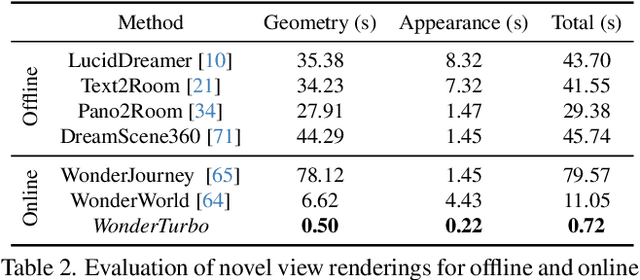
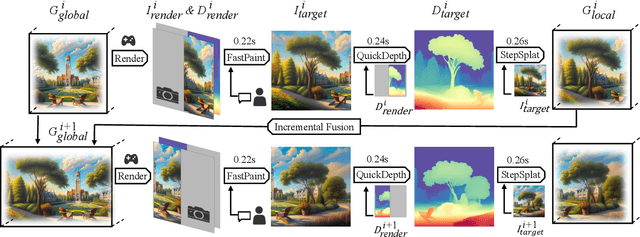
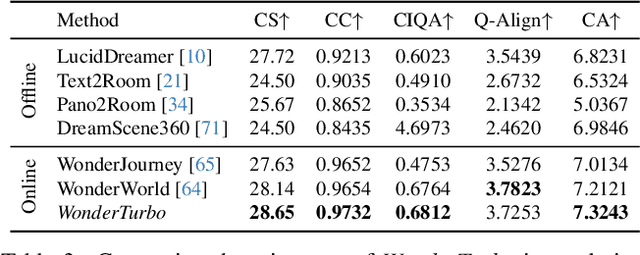
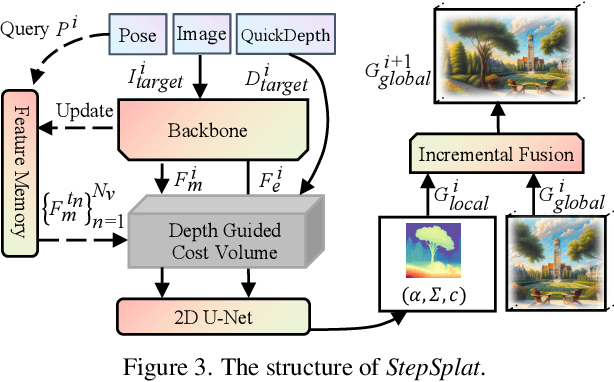
Interactive 3D generation is gaining momentum and capturing extensive attention for its potential to create immersive virtual experiences. However, a critical challenge in current 3D generation technologies lies in achieving real-time interactivity. To address this issue, we introduce WonderTurbo, the first real-time interactive 3D scene generation framework capable of generating novel perspectives of 3D scenes within 0.72 seconds. Specifically, WonderTurbo accelerates both geometric and appearance modeling in 3D scene generation. In terms of geometry, we propose StepSplat, an innovative method that constructs efficient 3D geometric representations through dynamic updates, each taking only 0.26 seconds. Additionally, we design QuickDepth, a lightweight depth completion module that provides consistent depth input for StepSplat, further enhancing geometric accuracy. For appearance modeling, we develop FastPaint, a 2-steps diffusion model tailored for instant inpainting, which focuses on maintaining spatial appearance consistency. Experimental results demonstrate that WonderTurbo achieves a remarkable 15X speedup compared to baseline methods, while preserving excellent spatial consistency and delivering high-quality output.