 Add to Chrome
 Add to Firefox
 Add to Edge
A Neuro-Symbolic Framework Combining Inductive and Deductive Reasoning for Autonomous Driving Planning
Mar 12, 2026
Existing end-to-end autonomous driving models rely heavily on purely data-driven inductive reasoning. This "black-box" nature leads to a lack of interpretability and absolute safety guarantees in complex, long-tail scenarios. To overcome this bottleneck, we propose a novel neuro-symbolic trajectory planning framework that seamlessly integrates rigorous deductive reasoning into end-to-end neural networks. Specifically, our framework utilizes a Large Language Model (LLM) to dynamically extract scene rules and employs an Answer Set Programming (ASP) solver for deterministic logical arbitration, generating safe and traceable discrete driving decisions. To bridge the gap between discrete symbols and continuous trajectories, we introduce a decision-conditioned decoding mechanism that transforms high-level logical decisions into learnable embedding vectors, simultaneously constraining the planning query and the physical initial velocity of a differentiable Kinematic Bicycle Model (KBM). By combining KBM-generated physical baseline trajectories with neural residual corrections, our approach inherently guarantees kinematic feasibility while ensuring a high degree of transparency. On the nuScenes benchmark, our method comprehensively outperforms the state-of-the-art baseline MomAD, reducing the L2 mean error to 0.57 m, decreasing the collision rate to 0.075%, and optimizing trajectory prediction consistency (TPC) to 0.47 m.

AlphaZero-Edu: Making AlphaZero Accessible to Everyone
Apr 20, 2025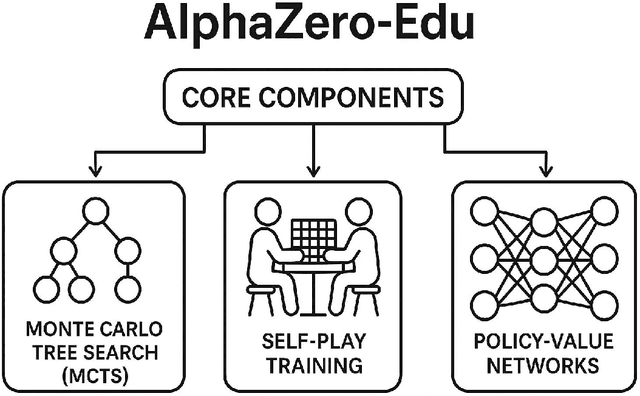
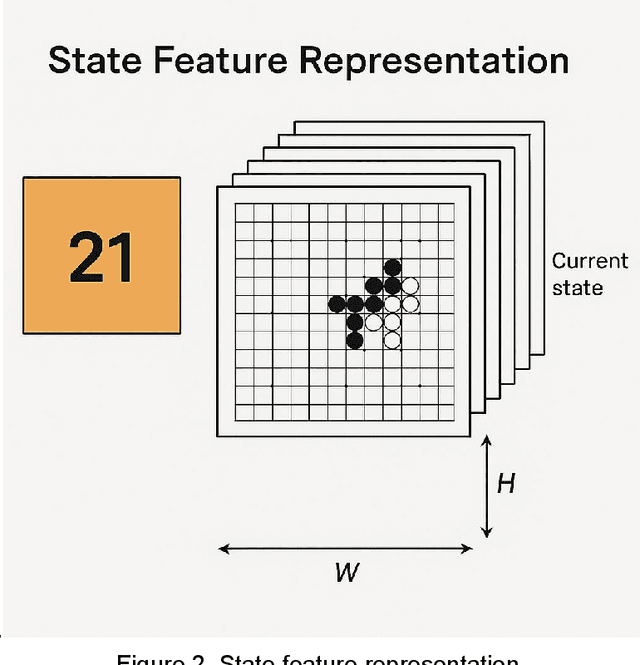
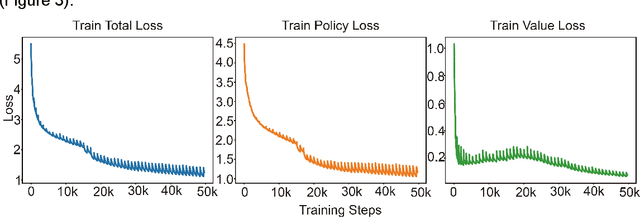
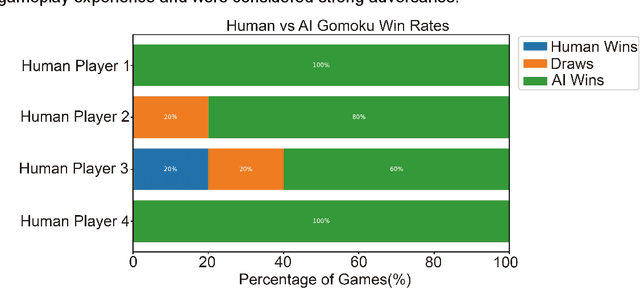
Recent years have witnessed significant progress in reinforcement learning, especially with Zero-like paradigms, which have greatly boosted the generalization and reasoning abilities of large-scale language models. Nevertheless, existing frameworks are often plagued by high implementation complexity and poor reproducibility. To tackle these challenges, we present AlphaZero-Edu, a lightweight, education-focused implementation built upon the mathematical framework of AlphaZero. It boasts a modular architecture that disentangles key components, enabling transparent visualization of the algorithmic processes. Additionally, it is optimized for resource-efficient training on a single NVIDIA RTX 3090 GPU and features highly parallelized self-play data generation, achieving a 3.2-fold speedup with 8 processes. In Gomoku matches, the framework has demonstrated exceptional performance, achieving a consistently high win rate against human opponents. AlphaZero-Edu has been open-sourced at https://github.com/StarLight1212/AlphaZero_Edu, providing an accessible and practical benchmark for both academic research and industrial applications.
Detection of Strongly Lensed Arcs in Galaxy Clusters with Transformers
Nov 11, 2022Strong lensing in galaxy clusters probes properties of dense cores of dark matter halos in mass, studies the distant universe at flux levels and spatial resolutions otherwise unavailable, and constrains cosmological models independently. The next-generation large scale sky imaging surveys are expected to discover thousands of cluster-scale strong lenses, which would lead to unprecedented opportunities for applying cluster-scale strong lenses to solve astrophysical and cosmological problems. However, the large dataset challenges astronomers to identify and extract strong lensing signals, particularly strongly lensed arcs, because of their complexity and variety. Hence, we propose a framework to detect cluster-scale strongly lensed arcs, which contains a transformer-based detection algorithm and an image simulation algorithm. We embed prior information of strongly lensed arcs at cluster-scale into the training data through simulation and then train the detection algorithm with simulated images. We use the trained transformer to detect strongly lensed arcs from simulated and real data. Results show that our approach could achieve 99.63 % accuracy rate, 90.32 % recall rate, 85.37 % precision rate and 0.23 % false positive rate in detection of strongly lensed arcs from simulated images and could detect almost all strongly lensed arcs in real observation images. Besides, with an interpretation method, we have shown that our method could identify important information embedded in simulated data. Next step, to test the reliability and usability of our approach, we will apply it to available observations (e.g., DESI Legacy Imaging Surveys) and simulated data of upcoming large-scale sky surveys, such as the Euclid and the CSST.