 Add to Chrome
 Add to Firefox
 Add to Edge
3DifFusionDet: Diffusion Model for 3D Object Detection with Robust LiDAR-Camera Fusion
Nov 07, 2023
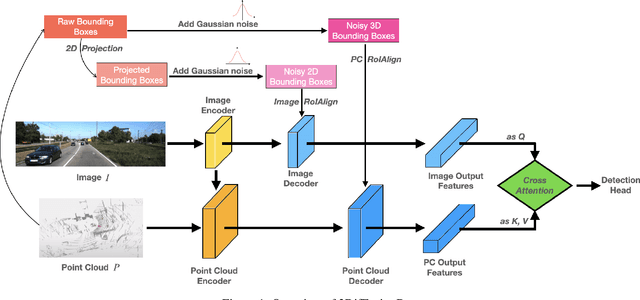
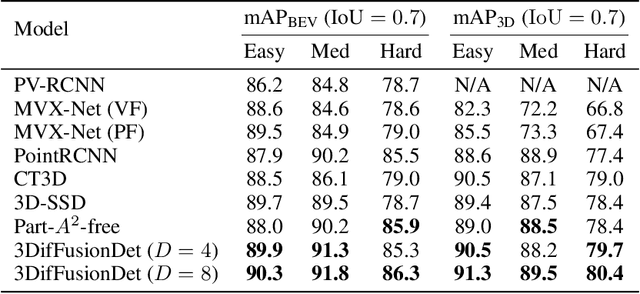
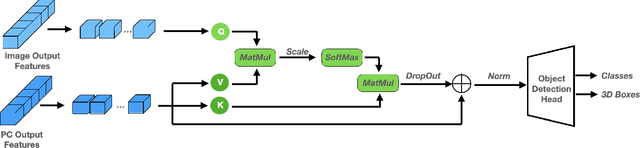
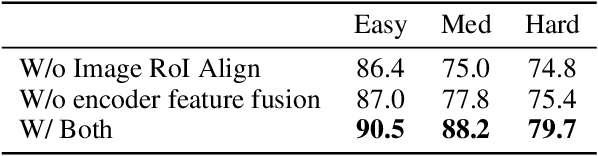
Good 3D object detection performance from LiDAR-Camera sensors demands seamless feature alignment and fusion strategies. We propose the 3DifFusionDet framework in this paper, which structures 3D object detection as a denoising diffusion process from noisy 3D boxes to target boxes. In this framework, ground truth boxes diffuse in a random distribution for training, and the model learns to reverse the noising process. During inference, the model gradually refines a set of boxes that were generated at random to the outcomes. Under the feature align strategy, the progressive refinement method could make a significant contribution to robust LiDAR-Camera fusion. The iterative refinement process could also demonstrate great adaptability by applying the framework to various detecting circumstances where varying levels of accuracy and speed are required. Extensive experiments on KITTI, a benchmark for real-world traffic object identification, revealed that 3DifFusionDet is able to perform favorably in comparison to earlier, well-respected detectors.

Stochastic Smoothed Gradient Descent Ascent for Federated Minimax Optimization
Nov 02, 2023In recent years, federated minimax optimization has attracted growing interest due to its extensive applications in various machine learning tasks. While Smoothed Alternative Gradient Descent Ascent (Smoothed-AGDA) has proved its success in centralized nonconvex minimax optimization, how and whether smoothing technique could be helpful in federated setting remains unexplored. In this paper, we propose a new algorithm termed Federated Stochastic Smoothed Gradient Descent Ascent (FESS-GDA), which utilizes the smoothing technique for federated minimax optimization. We prove that FESS-GDA can be uniformly used to solve several classes of federated minimax problems and prove new or better analytical convergence results for these settings. We showcase the practical efficiency of FESS-GDA in practical federated learning tasks of training generative adversarial networks (GANs) and fair classification.
Driving behavior-guided battery health monitoring for electric vehicles using machine learning
Sep 25, 2023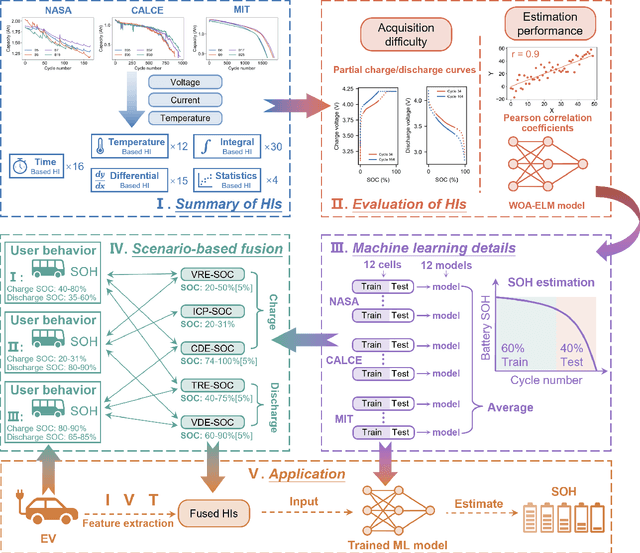


An accurate estimation of the state of health (SOH) of batteries is critical to ensuring the safe and reliable operation of electric vehicles (EVs). Feature-based machine learning methods have exhibited enormous potential for rapidly and precisely monitoring battery health status. However, simultaneously using various health indicators (HIs) may weaken estimation performance due to feature redundancy. Furthermore, ignoring real-world driving behaviors can lead to inaccurate estimation results as some features are rarely accessible in practical scenarios. To address these issues, we proposed a feature-based machine learning pipeline for reliable battery health monitoring, enabled by evaluating the acquisition probability of features under real-world driving conditions. We first summarized and analyzed various individual HIs with mechanism-related interpretations, which provide insightful guidance on how these features relate to battery degradation modes. Moreover, all features were carefully evaluated and screened based on estimation accuracy and correlation analysis on three public battery degradation datasets. Finally, the scenario-based feature fusion and acquisition probability-based practicality evaluation method construct a useful tool for feature extraction with consideration of driving behaviors. This work highlights the importance of balancing the performance and practicality of HIs during the development of feature-based battery health monitoring algorithms.
A Health Monitoring System Based on Flexible Triboelectric Sensors for Intelligence Medical Internet of Things and its Applications in Virtual Reality
Sep 13, 2023The Internet of Medical Things (IoMT) is a platform that combines Internet of Things (IoT) technology with medical applications, enabling the realization of precision medicine, intelligent healthcare, and telemedicine in the era of digitalization and intelligence. However, the IoMT faces various challenges, including sustainable power supply, human adaptability of sensors and the intelligence of sensors. In this study, we designed a robust and intelligent IoMT system through the synergistic integration of flexible wearable triboelectric sensors and deep learning-assisted data analytics. We embedded four triboelectric sensors into a wristband to detect and analyze limb movements in patients suffering from Parkinson's Disease (PD). By further integrating deep learning-assisted data analytics, we actualized an intelligent healthcare monitoring system for the surveillance and interaction of PD patients, which includes location/trajectory tracking, heart monitoring and identity recognition. This innovative approach enabled us to accurately capture and scrutinize the subtle movements and fine motor of PD patients, thus providing insightful feedback and comprehensive assessment of the patients conditions. This monitoring system is cost-effective, easily fabricated, highly sensitive, and intelligent, consequently underscores the immense potential of human body sensing technology in a Health 4.0 society.
SPEED: Streaming Partition and Parallel Acceleration for Temporal Interaction Graph Embedding
Sep 11, 2023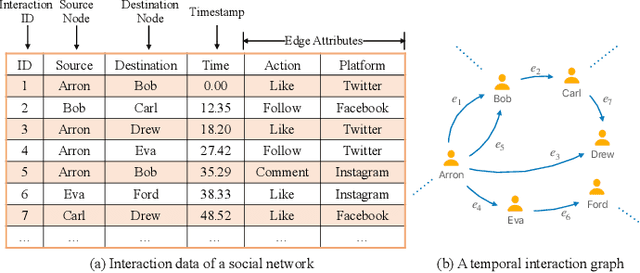


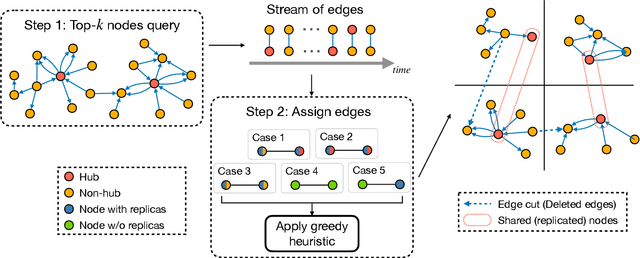
Temporal Interaction Graphs (TIGs) are widely employed to model intricate real-world systems such as financial systems and social networks. To capture the dynamism and interdependencies of nodes, existing TIG embedding models need to process edges sequentially and chronologically. However, this requirement prevents it from being processed in parallel and struggle to accommodate burgeoning data volumes to GPU. Consequently, many large-scale temporal interaction graphs are confined to CPU processing. Furthermore, a generalized GPU scaling and acceleration approach remains unavailable. To facilitate large-scale TIGs' implementation on GPUs for acceleration, we introduce a novel training approach namely Streaming Edge Partitioning and Parallel Acceleration for Temporal Interaction Graph Embedding (SPEED). The SPEED is comprised of a Streaming Edge Partitioning Component (SEP) which addresses space overhead issue by assigning fewer nodes to each GPU, and a Parallel Acceleration Component (PAC) which enables simultaneous training of different sub-graphs, addressing time overhead issue. Our method can achieve a good balance in computing resources, computing time, and downstream task performance. Empirical validation across 7 real-world datasets demonstrates the potential to expedite training speeds by a factor of up to 19.29x. Simultaneously, resource consumption of a single-GPU can be diminished by up to 69%, thus enabling the multiple GPU-based training and acceleration encompassing millions of nodes and billions of edges. Furthermore, our approach also maintains its competitiveness in downstream tasks.
Unsupervised Multi-document Summarization with Holistic Inference
Sep 08, 2023


Multi-document summarization aims to obtain core information from a collection of documents written on the same topic. This paper proposes a new holistic framework for unsupervised multi-document extractive summarization. Our method incorporates the holistic beam search inference method associated with the holistic measurements, named Subset Representative Index (SRI). SRI balances the importance and diversity of a subset of sentences from the source documents and can be calculated in unsupervised and adaptive manners. To demonstrate the effectiveness of our method, we conduct extensive experiments on both small and large-scale multi-document summarization datasets under both unsupervised and adaptive settings. The proposed method outperforms strong baselines by a significant margin, as indicated by the resulting ROUGE scores and diversity measures. Our findings also suggest that diversity is essential for improving multi-document summary performance.
iLoRE: Dynamic Graph Representation with Instant Long-term Modeling and Re-occurrence Preservation
Sep 05, 2023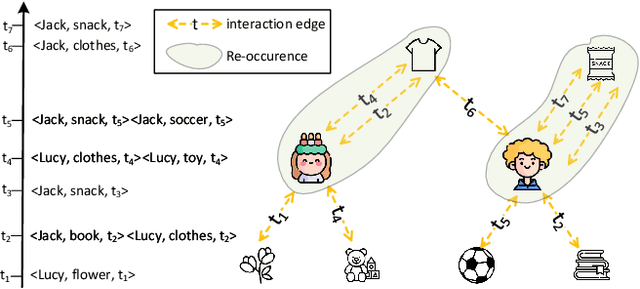
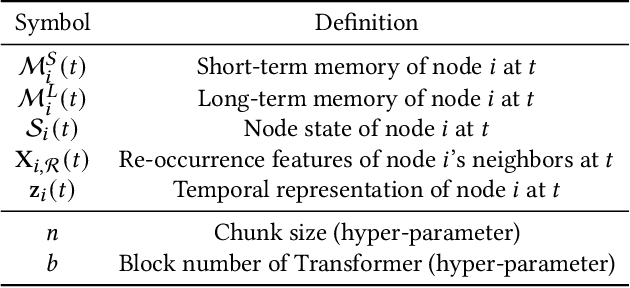
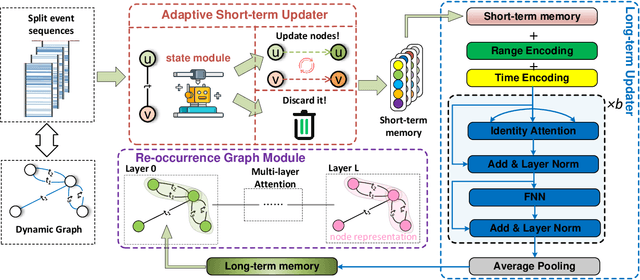

Continuous-time dynamic graph modeling is a crucial task for many real-world applications, such as financial risk management and fraud detection. Though existing dynamic graph modeling methods have achieved satisfactory results, they still suffer from three key limitations, hindering their scalability and further applicability. i) Indiscriminate updating. For incoming edges, existing methods would indiscriminately deal with them, which may lead to more time consumption and unexpected noisy information. ii) Ineffective node-wise long-term modeling. They heavily rely on recurrent neural networks (RNNs) as a backbone, which has been demonstrated to be incapable of fully capturing node-wise long-term dependencies in event sequences. iii) Neglect of re-occurrence patterns. Dynamic graphs involve the repeated occurrence of neighbors that indicates their importance, which is disappointedly neglected by existing methods. In this paper, we present iLoRE, a novel dynamic graph modeling method with instant node-wise Long-term modeling and Re-occurrence preservation. To overcome the indiscriminate updating issue, we introduce the Adaptive Short-term Updater module that will automatically discard the useless or noisy edges, ensuring iLoRE's effectiveness and instant ability. We further propose the Long-term Updater to realize more effective node-wise long-term modeling, where we innovatively propose the Identity Attention mechanism to empower a Transformer-based updater, bypassing the limited effectiveness of typical RNN-dominated designs. Finally, the crucial re-occurrence patterns are also encoded into a graph module for informative representation learning, which will further improve the expressiveness of our method. Our experimental results on real-world datasets demonstrate the effectiveness of our iLoRE for dynamic graph modeling.
DiffSmooth: Certifiably Robust Learning via Diffusion Models and Local Smoothing
Aug 28, 2023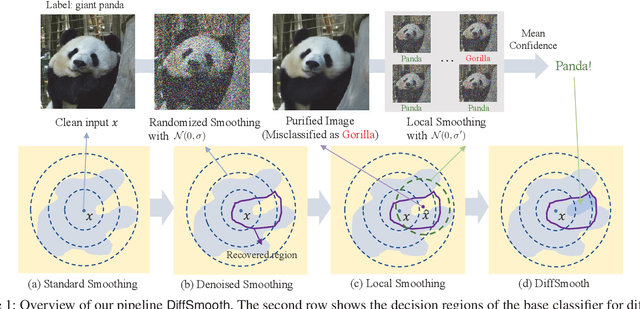
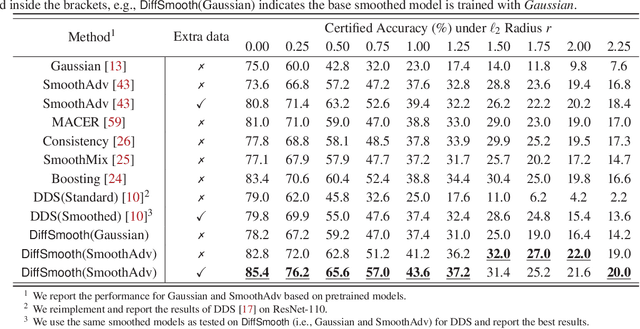
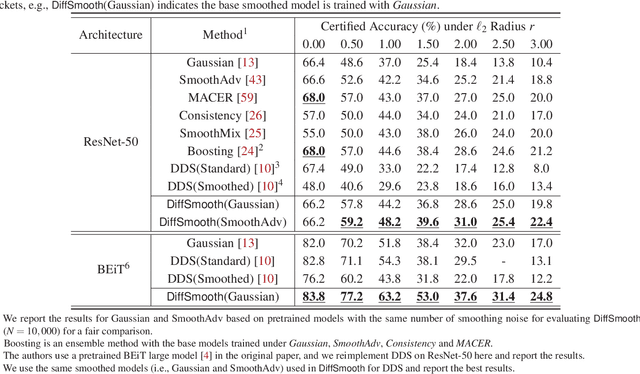
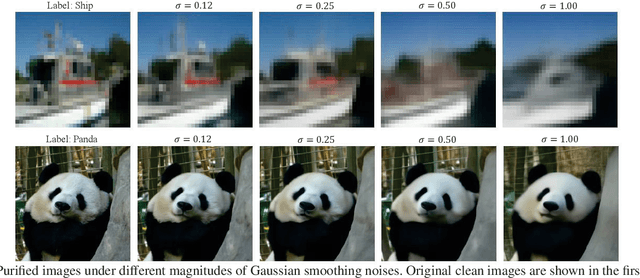
Diffusion models have been leveraged to perform adversarial purification and thus provide both empirical and certified robustness for a standard model. On the other hand, different robustly trained smoothed models have been studied to improve the certified robustness. Thus, it raises a natural question: Can diffusion model be used to achieve improved certified robustness on those robustly trained smoothed models? In this work, we first theoretically show that recovered instances by diffusion models are in the bounded neighborhood of the original instance with high probability; and the "one-shot" denoising diffusion probabilistic models (DDPM) can approximate the mean of the generated distribution of a continuous-time diffusion model, which approximates the original instance under mild conditions. Inspired by our analysis, we propose a certifiably robust pipeline DiffSmooth, which first performs adversarial purification via diffusion models and then maps the purified instances to a common region via a simple yet effective local smoothing strategy. We conduct extensive experiments on different datasets and show that DiffSmooth achieves SOTA-certified robustness compared with eight baselines. For instance, DiffSmooth improves the SOTA-certified accuracy from $36.0\%$ to $53.0\%$ under $\ell_2$ radius $1.5$ on ImageNet. The code is available at [https://github.com/javyduck/DiffSmooth].
Generic Attention-model Explainability by Weighted Relevance Accumulation
Aug 20, 2023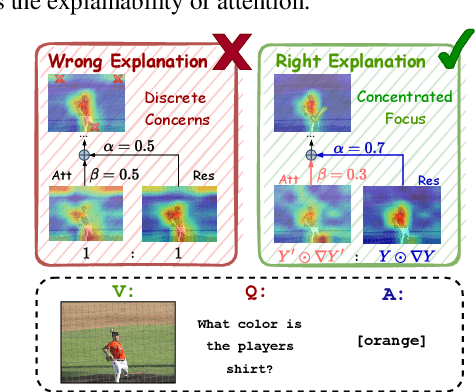
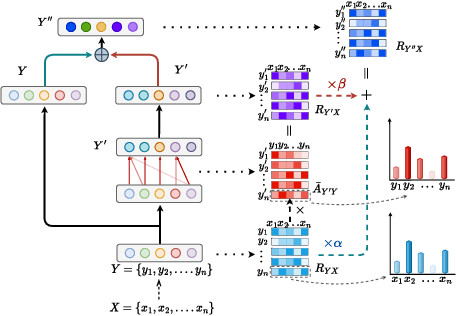
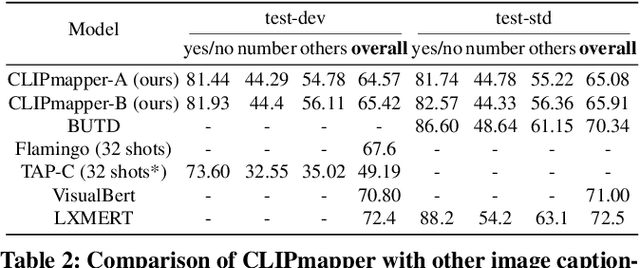

Attention-based transformer models have achieved remarkable progress in multi-modal tasks, such as visual question answering. The explainability of attention-based methods has recently attracted wide interest as it can explain the inner changes of attention tokens by accumulating relevancy across attention layers. Current methods simply update relevancy by equally accumulating the token relevancy before and after the attention processes. However, the importance of token values is usually different during relevance accumulation. In this paper, we propose a weighted relevancy strategy, which takes the importance of token values into consideration, to reduce distortion when equally accumulating relevance. To evaluate our method, we propose a unified CLIP-based two-stage model, named CLIPmapper, to process Vision-and-Language tasks through CLIP encoder and a following mapper. CLIPmapper consists of self-attention, cross-attention, single-modality, and cross-modality attention, thus it is more suitable for evaluating our generic explainability method. Extensive perturbation tests on visual question answering and image captioning validate that our explainability method outperforms existing methods.
RestoreFormer++: Towards Real-World Blind Face Restoration from Undegraded Key-Value Pairs
Aug 14, 2023Blind face restoration aims at recovering high-quality face images from those with unknown degradations. Current algorithms mainly introduce priors to complement high-quality details and achieve impressive progress. However, most of these algorithms ignore abundant contextual information in the face and its interplay with the priors, leading to sub-optimal performance. Moreover, they pay less attention to the gap between the synthetic and real-world scenarios, limiting the robustness and generalization to real-world applications. In this work, we propose RestoreFormer++, which on the one hand introduces fully-spatial attention mechanisms to model the contextual information and the interplay with the priors, and on the other hand, explores an extending degrading model to help generate more realistic degraded face images to alleviate the synthetic-to-real-world gap. Compared with current algorithms, RestoreFormer++ has several crucial benefits. First, instead of using a multi-head self-attention mechanism like the traditional visual transformer, we introduce multi-head cross-attention over multi-scale features to fully explore spatial interactions between corrupted information and high-quality priors. In this way, it can facilitate RestoreFormer++ to restore face images with higher realness and fidelity. Second, in contrast to the recognition-oriented dictionary, we learn a reconstruction-oriented dictionary as priors, which contains more diverse high-quality facial details and better accords with the restoration target. Third, we introduce an extending degrading model that contains more realistic degraded scenarios for training data synthesizing, and thus helps to enhance the robustness and generalization of our RestoreFormer++ model. Extensive experiments show that RestoreFormer++ outperforms state-of-the-art algorithms on both synthetic and real-world datasets.