 Add to Chrome
 Add to Firefox
 Add to Edge
S2Aligner: Pair-Efficient and Transferable Pre-Training for Sparse Text-Attributed Graphs
May 20, 2026
Pre-training on text-attributed graphs (TAGs) is central to building transferable graph foundation models, where LLM-as-Aligner methods align graph and text representations through the semantic knowledge of large language models. However, these methods usually assume that node texts provide sufficient and reliable supervision, an assumption often violated in real-world sparse TAGs. When textual anchors are missing, noisy, or uneven across domains, graph structures must be aligned with weak semantic evidence, leading to unreliable structure-semantics correspondence and sparsity-induced transfer bias. This paper presents S2Aligner, a sparsity-aware and structure-enhanced LLM-as-Aligner framework for graph-text pre-training on sparse TAGs. The key idea is to decouple semantic alignment from structural modeling, allowing topology-aware signals to enhance alignment without contaminating the shared semantic space. Specifically, S2Aligner decomposes graph-text representations into semantic and structural components, uses structure-oriented reconstruction with consistency control to inject reliable topology cues into text representations, and suppresses inconsistent structural signals under textual sparsity. Moreover, S2Aligner introduces sparsity-aware cross-domain risk balancing, which calibrates domain risks through a global-domain density ratio and downweights unreliable sparse samples via graph reliability estimation. Theoretical analysis shows that this objective reduces cross-domain generalization gaps by controlling domain risk discrepancy. Extensive experiments across diverse graph domains, sparsity levels, and downstream tasks demonstrate that S2Aligner consistently outperforms existing baselines.

HAVEN: Hierarchically Aligned Multimodal Benchmark for Unified Video Understanding
May 19, 2026While Multimodal Large Language Models (MLLMs) exhibit strong performance on standard video tasks, their ability to faithfully summarize and reason over complex narratives remains poorly evaluated. Existing summarization benchmarks fragment supervision across isolated granularities, such as keyframes, key shots, or disjointed text summaries, failing to capture the inherently hierarchical structure of cross-modal alignment. To address this critical gap, we introduce HAVEN, a hierarchically aligned multimodal benchmark for unified video understanding. HAVEN pioneers a fully granular (frame, shot, and video levels) and fully multimodal (video and text) dataset architecture, complete with explicit, continuous alignment between modalities. Built upon this unified annotation paradigm, we propose a comprehensive evaluation suite spanning summarization, temporal reasoning, multimodal grounding, and saliency ranking. Extensive benchmarking of state-of-the-art MLLMs exposes a persistent gap between surface-level textual fluency and grounded multimodal understanding. Ultimately, HAVEN advances the evaluation of multimodal systems beyond traditional QA formats, offering a rigorous, standardized testbed to drive future research in interpretable, hierarchical video understanding. We publicly release the dataset, benchmark suite, and evaluation protocols.
Global Context or Local Detail? Adaptive Visual Grounding for Hallucination Mitigation
Apr 27, 2026Vision-Language Models (VLMs) are frequently undermined by object hallucination--generating content that contradicts visual reality--due to an over-reliance on linguistic priors. We introduce Positive-and-Negative Decoding (PND), a training-free inference framework that intervenes directly in the decoding process to enforce visual fidelity. PND is motivated by our key finding of a critical attention deficit in VLMs, where visual features are empirically under-weighted. Our framework corrects this via a dual-path contrast: The positive path amplifies salient visual evidence using multi-layer attention to encourage faithful descriptions, directly counteracting the attention deficit. Simultaneously, the negative path identifies and degrades the core object's features to create a strong counterfactual, which penalizes ungrounded, prior-dominant generation. By contrasting the model's outputs from these two perspectives at each step, PND steers generation towards text that is not just linguistically probable, but visually factual. Extensive experiments on benchmarks like POPE, MME, and CHAIR show that PND achieves state-of-the-art performance with up to 6.5% accuracy improvement, substantially reducing object hallucination while also enhancing descriptive detail--all without requiring any model retraining. The method generalizes effectively across diverse VLM architectures including LLaVA, InstructBLIP, InternVL, and Qwen-VL.
V-tableR1: Process-Supervised Multimodal Table Reasoning with Critic-Guided Policy Optimization
Apr 22, 2026We introduce V-tableR1, a process-supervised reinforcement learning framework that elicits rigorous, verifiable reasoning from multimodal large language models (MLLMs). Current MLLMs trained solely on final outcomes often treat visual reasoning as a black box, relying on superficial pattern matching rather than performing rigorous multi-step inference. While Reinforcement Learning with Verifiable Rewards could enforce transparent reasoning trajectories, extending it to visual domains remains severely hindered by the ambiguity of grounding abstract logic into continuous pixel space. We solve this by leveraging the deterministic grid structure of tables as an ideal visual testbed. V-tableR1 employs a specialized critic VLM to provide dense, step-level feedback on the explicit visual chain-of-thought generated by a policy VLM. To optimize this system, we propose Process-Guided Direct Alignment Policy Optimization (PGPO), a novel RL algorithm integrating process rewards, decoupled policy constraints, and length-aware dynamic sampling. Extensive evaluations demonstrate that V-tableR1 explicitly penalizes visual hallucinations and shortcut guessing. By fundamentally shifting multimodal inference from black-box pattern matching to verifiable logical derivation, V-tableR1 4B establishes state-of-the-art accuracy among open-source models on complex tabular benchmarks, outperforming models up to 18x its size and improving over its SFT baseline
MPCI-Bench: A Benchmark for Multimodal Pairwise Contextual Integrity Evaluation of Language Model Agents
Jan 13, 2026As language-model agents evolve from passive chatbots into proactive assistants that handle personal data, evaluating their adherence to social norms becomes increasingly critical, often through the lens of Contextual Integrity (CI). However, existing CI benchmarks are largely text-centric and primarily emphasize negative refusal scenarios, overlooking multimodal privacy risks and the fundamental trade-off between privacy and utility. In this paper, we introduce MPCI-Bench, the first Multimodal Pairwise Contextual Integrity benchmark for evaluating privacy behavior in agentic settings. MPCI-Bench consists of paired positive and negative instances derived from the same visual source and instantiated across three tiers: normative Seed judgments, context-rich Story reasoning, and executable agent action Traces. Data quality is ensured through a Tri-Principle Iterative Refinement pipeline. Evaluations of state-of-the-art multimodal models reveal systematic failures to balance privacy and utility and a pronounced modality leakage gap, where sensitive visual information is leaked more frequently than textual information. We will open-source MPCI-Bench to facilitate future research on agentic CI.
SKATER: Synthesized Kinematics for Advanced Traversing Efficiency on a Humanoid Robot via Roller Skate Swizzles
Jan 08, 2026Although recent years have seen significant progress of humanoid robots in walking and running, the frequent foot strikes with ground during these locomotion gaits inevitably generate high instantaneous impact forces, which leads to exacerbated joint wear and poor energy utilization. Roller skating, as a sport with substantial biomechanical value, can achieve fast and continuous sliding through rational utilization of body inertia, featuring minimal kinetic energy loss. Therefore, this study proposes a novel humanoid robot with each foot equipped with a row of four passive wheels for roller skating. A deep reinforcement learning control framework is also developed for the swizzle gait with the reward function design based on the intrinsic characteristics of roller skating. The learned policy is first analyzed in simulation and then deployed on the physical robot to demonstrate the smoothness and efficiency of the swizzle gait over traditional bipedal walking gait in terms of Impact Intensity and Cost of Transport during locomotion. A reduction of $75.86\%$ and $63.34\%$ of these two metrics indicate roller skating as a superior locomotion mode for enhanced energy efficiency and joint longevity.
StrucSum: Graph-Structured Reasoning for Long Document Extractive Summarization with LLMs
May 29, 2025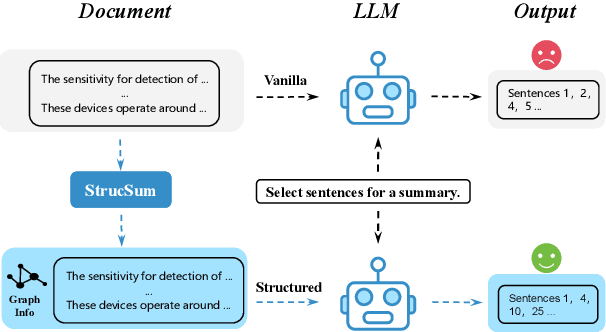
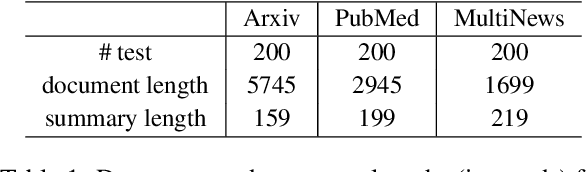
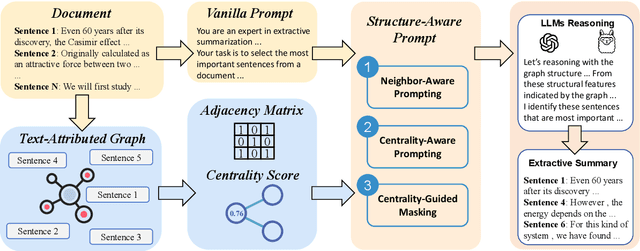
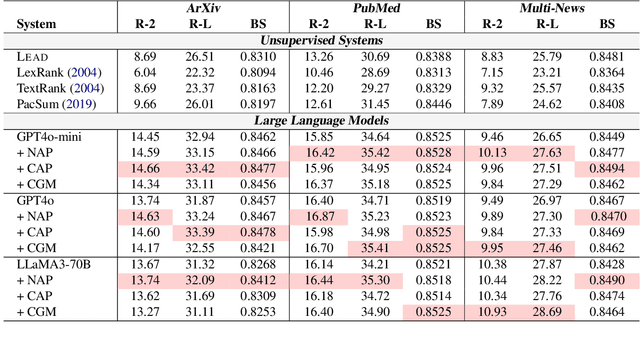
Large language models (LLMs) have shown strong performance in zero-shot summarization, but often struggle to model document structure and identify salient information in long texts. In this work, we introduce StrucSum, a training-free prompting framework that enhances LLM reasoning through sentence-level graph structures. StrucSum injects structural signals into prompts via three targeted strategies: Neighbor-Aware Prompting (NAP) for local context, Centrality-Aware Prompting (CAP) for importance estimation, and Centrality-Guided Masking (CGM) for efficient input reduction. Experiments on ArXiv, PubMed, and Multi-News demonstrate that StrucSum consistently improves both summary quality and factual consistency over unsupervised baselines and vanilla prompting. Notably, on ArXiv, it boosts FactCC and SummaC by 19.2 and 9.7 points, indicating stronger alignment between summaries and source content. These findings suggest that structure-aware prompting is a simple yet effective approach for zero-shot extractive summarization with LLMs, without any training or task-specific tuning.
MermaidFlow: Redefining Agentic Workflow Generation via Safety-Constrained Evolutionary Programming
May 29, 2025Despite the promise of autonomous agentic reasoning, existing workflow generation methods frequently produce fragile, unexecutable plans due to unconstrained LLM-driven construction. We introduce MermaidFlow, a framework that redefines the agentic search space through safety-constrained graph evolution. At its core, MermaidFlow represent workflows as a verifiable intermediate representation using Mermaid, a structured and human-interpretable graph language. We formulate domain-aware evolutionary operators, i.e., crossover, mutation, insertion, and deletion, to preserve semantic correctness while promoting structural diversity, enabling efficient exploration of a high-quality, statically verifiable workflow space. Without modifying task settings or evaluation protocols, MermaidFlow achieves consistent improvements in success rates and faster convergence to executable plans on the agent reasoning benchmark. The experimental results demonstrate that safety-constrained graph evolution offers a scalable, modular foundation for robust and interpretable agentic reasoning systems.
Wi-Chat: Large Language Model Powered Wi-Fi Sensing
Feb 18, 2025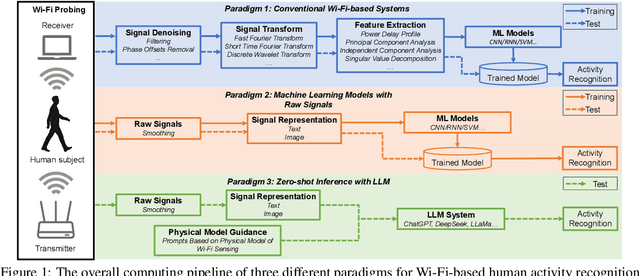
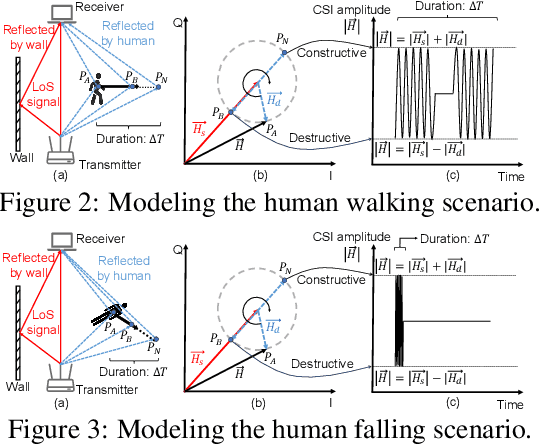
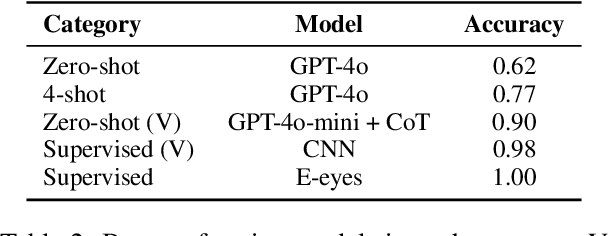
Recent advancements in Large Language Models (LLMs) have demonstrated remarkable capabilities across diverse tasks. However, their potential to integrate physical model knowledge for real-world signal interpretation remains largely unexplored. In this work, we introduce Wi-Chat, the first LLM-powered Wi-Fi-based human activity recognition system. We demonstrate that LLMs can process raw Wi-Fi signals and infer human activities by incorporating Wi-Fi sensing principles into prompts. Our approach leverages physical model insights to guide LLMs in interpreting Channel State Information (CSI) data without traditional signal processing techniques. Through experiments on real-world Wi-Fi datasets, we show that LLMs exhibit strong reasoning capabilities, achieving zero-shot activity recognition. These findings highlight a new paradigm for Wi-Fi sensing, expanding LLM applications beyond conventional language tasks and enhancing the accessibility of wireless sensing for real-world deployments.
DomainSum: A Hierarchical Benchmark for Fine-Grained Domain Shift in Abstractive Text Summarization
Oct 21, 2024Most research on abstractive summarization focuses on single-domain applications, often neglecting how domain shifts between documents affect performance and the generalization ability of summarization models. To address this issue, we introduce DomainSum, a hierarchical benchmark designed to capture fine-grained domain shifts in abstractive summarization. We categorize these shifts into three levels: genre, style, and topic, and demonstrate through comprehensive benchmark analysis that they follow a hierarchical structure. Furthermore, we evaluate the domain generalization capabilities of commonly used pre-trained language models (PLMs) and large language models (LLMs) in in-domain and cross-domain settings.